
Reviewed · SPANISH CIVIL WAR TOURS
The Spanish Civil War & Franco Barcelona Walking Tour
Barcelona’s Civil War story is written in places most visitors walk past without noticing. This 2.5-hour historical walk links Plaça de Catalunya, La Rambla, old churches, and bomb-damaged corners of the Old Town to the political violence that shaped modern Spain.
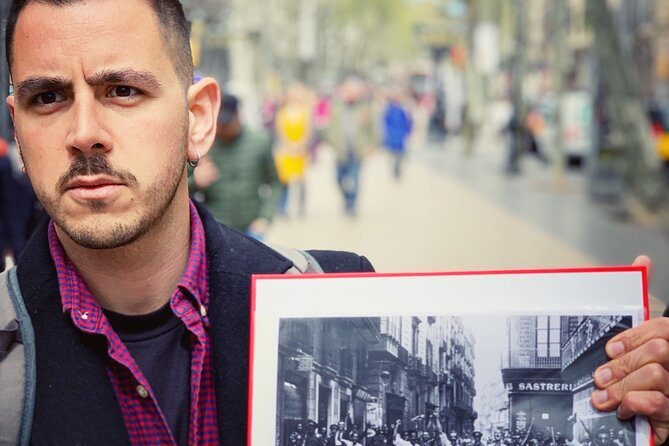
I like two things right away: the guides use historic photographs and posters to connect today’s streets with the 1930s, and they explain the tangled mix of republicans, anarchists, socialists, communists, nationalists, and fascists in plain English. The main drawback is that the subject is demanding, and the tour includes plenty of walking and dense political detail.
Key points to know before booking
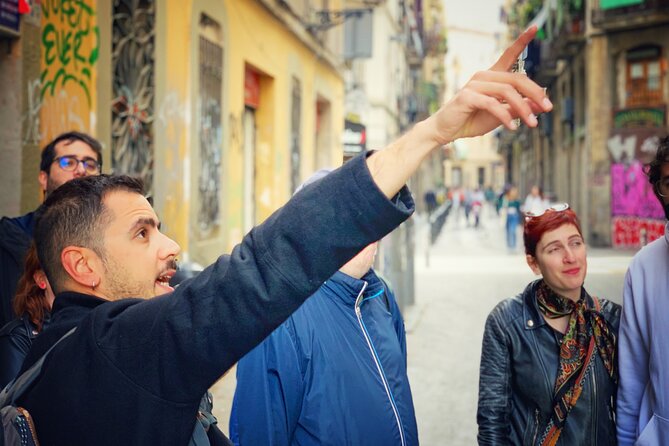
- See Civil War traces in ordinary streets: The route uses Plaça de Catalunya, La Rambla, the old hospital, and Plaça Sant Felip Neri as history lessons.
- Expect a serious political explanation: You will learn how rival factions on the Republican side fought each other as well as Franco’s forces.
- Guides make a major difference: Henrieta, Chrysa, Evan, Yannis, Filipa, Evangelos, Onno, and other guides are praised for clear storytelling and patient answers.
- Plaça Sant Felip Neri brings the war close: Its damaged walls make the conflict feel physical rather than remote.
- Wear comfortable shoes: The walk is described as walking-intensive, though some guides keep the pace gentler and offer breaks.
- Budget an extra €1: A guide radio headset is required and paid separately at the meeting point.
Why this Barcelona history walk is different
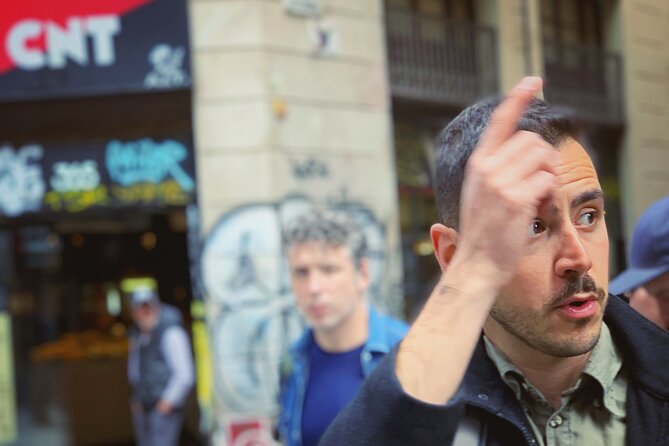
Most first-time Barcelona walks focus on Gaudí, medieval lanes, food, or Roman remains. This one asks you to look at the city as a place shaped by class conflict, political idealism, military revolt, foreign intervention, bombing, dictatorship, and memory.
I like that the tour does not reduce the Spanish Civil War to a simple battle between two neat sides. Barcelona was a center of republican resistance, but the republican camp itself included groups with sharply different goals. Anarcho-syndicalists, communists, socialists, Catalan nationalists, and other factions did not always cooperate.
That complexity matters. Without it, you miss why Barcelona became such an important setting during the war and why the city’s political scars can still feel sensitive. Guides such as Henrieta, Chrysa, Evan, Yannis, and Filipa are repeatedly praised for making difficult material understandable without stripping away its complications.
You should still arrive ready to concentrate. This is not a casual stroll with a few historical footnotes. The guide may introduce many organizations and political figures, then connect them to events at the next street corner. If you know little about the war, the early explanation is especially important.
More Walking Tours in Barcelona
- Barcelona Tapas and Wine Experience Small-Group Walking Tour
★ 5.0 · 5,804 reviews - Barcelona: Tapas Walking Tour with Food, Wine, and History
★ 4.8 · 4,261 reviews - Barcelona Tapas Walking Tour: Food, Wine & History
★ 4.5 · 1,928 reviews
Starting at Plaça de Catalunya
The meeting point is outside Foot Locker at Plaça de Catalunya, 20. This is a practical place to begin because the square is easy to reach by public transportation and sits between the newer city and the Old Town.
The opening stop lasts about 10 minutes. Here, your guide sets the political stage and explains why this central square mattered during the Civil War. That preparation helps you understand the later stops instead of treating each building as an isolated sight.
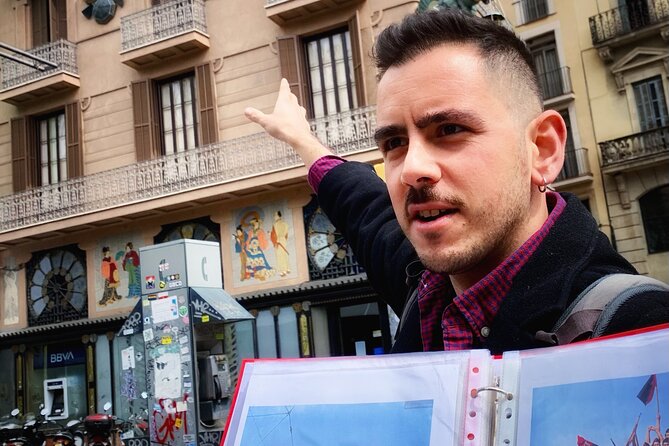
I would pay close attention at the beginning. The tour covers a lot of names and groups, and the first explanation gives you the basic map of the conflict. Guides use images to help, and the radio headset can make a real difference when the street is noisy or the group is spread out.
The group can include as many as 25 people. That is not a private walk, but it is small enough for questions when the guide manages the pace well. The €1 headset fee is not included in the tour price and is paid to an outside provider at the meeting point.
Following the conflict along La Rambla
The walk continues to La Rambla, where you spend about 10 minutes looking at several places linked to the Civil War. Today, this famous avenue is filled with movement, shops, and people heading between the city center and the port. The tour asks you to picture it during a period of street fighting, political tension, and fear.
This is one of the useful features of the route. You are not being taken only to formal monuments. You are learning how major events affected working streets and everyday urban life. The contrast between present-day La Rambla and its wartime role gives the history a sharper edge.
The guide may show photographs, posters, or maps so you can compare the current view with the past. That visual method is valuable because the city has changed, and many Civil War events have no large plaque or museum display to explain them.
One practical caution: some parts of the route are in crowded public areas. The headset helps you follow the guide, especially if you are standing near traffic or a large group. Keep your attention on the guide rather than expecting every stop to offer a visible memorial.
The Antic Hospital de la Santa Creu
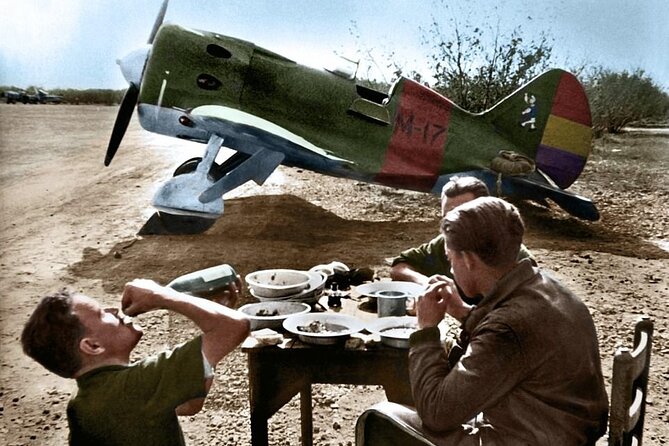
The Antic Hospital de la Santa Creu is a former hospital dating to the 15th century. The stop lasts about five minutes, but its value comes from the building’s age and its place within the Old Town route.
Here, the guide adds another layer to the story. Barcelona’s Civil War was not staged on a separate battlefield outside the city. It played out among older civic buildings, religious sites, workplaces, and homes. The hospital helps you see how the conflict became part of the city’s existing fabric.
The short stop also gives the route some breathing room after the opening political explanation. I would not expect a long interior visit or an extended architectural tour. This is a historical waypoint, not a separate museum experience.
That distinction is important when you judge the price. You are paying for the guide’s interpretation and the connection between locations, not for admission to a series of attractions.
More Civil War history in Barcelona:
- Barcelona: The Spanish Civil War Historical Walking Tour
★ 4.9 · 239 reviews - Private Tour Spanish Civil War & Franco’s Dictatorship
★ 5.0 · 116 reviews - Bilbao: Gaztelugatxe, Bermeo, Mundaka, Gernika, & Wine Tour
★ 4.5 · 1,407 reviews - From Bilbao: Gaztelugatxe, Gernika, and Mundaka Group Tour
★ 4.8 · 1,112 reviews
The church and its unexpected wartime connection
Next comes the Basilica de Santa Maria del Pi, an old church with a Civil War connection that is not obvious from its peaceful appearance. The listed stop is about five minutes, and admission to the basilica is not included.
This is a good example of the tour’s method. It takes a familiar religious building and places it within the political and social pressures of 1930s Barcelona. The guide explains the connection, then relates it to the wider story of religion, ideology, and conflict.
You should not assume that this part includes a full church visit. Since admission is not included and the stop is brief, the focus is the exterior setting and the historical explanation. If you want to enter the basilica, treat that as a separate decision and check the opening conditions for your visit.
The short stop can also appeal to you if you prefer history in small pieces. Rather than spending an hour inside one museum, you move through the city and collect clues from different types of buildings.
Plaça Sant Felip Neri and the visible scars of war
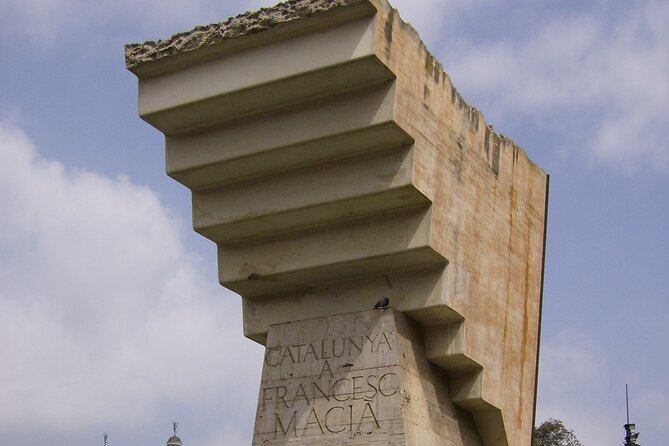
Plaça Sant Felip Neri is the emotional center of the walk. The square is known for its beauty, but its damaged surfaces also recall the destruction of the Civil War. The stop lasts about five minutes, yet it can stay with you longer than some of the more heavily explained locations.
The power here comes from the contrast. The square feels intimate and calm, while the marks of violence make it one of the clearest reminders that Barcelona was not simply a backdrop to national politics. Ordinary urban spaces carried the impact.
Your guide helps separate what you can see from what must be explained. The physical traces offer a starting point, while photographs and stories restore some of the missing context. This is also a place where a respectful tone matters. The subject includes death, political repression, and the long effects of dictatorship.
If you are mainly looking for cheerful sightseeing, this stop may feel heavy. If you want to understand how war remains present in a city’s buildings and memories, it is one of the most worthwhile parts of the route.
Making sense of the political factions
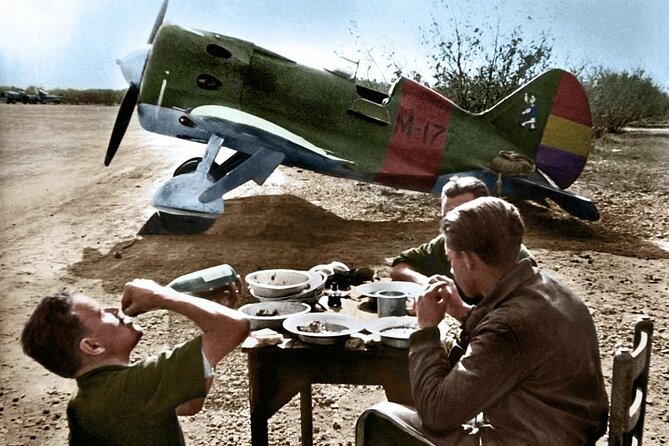
The hardest job on this tour is explaining the factions. The Spanish Civil War was not just a contest between Franco and a single republican government. Barcelona’s working-class politics, anarcho-syndicalist movement, communist influence, socialist groups, Catalan interests, and military forces all shaped what happened.
A good guide must explain who wanted what, who cooperated, and who turned against former allies. This is where guides such as Evan and Yannis have received especially strong praise for making the subject clear. Chrysa is also described as patient and careful when answering detailed questions, while Henrieta is praised for covering both sides of the conflict and the period from 1936 through late 1938.
I would ask questions as you go, rather than saving everything for the final minute. The route works best as a conversation. You can ask a guide to repeat a name, explain a faction, or clarify how Barcelona’s local events fit into the broader war.
The guide may not use the exact same route or teaching style every time. That is both a strength and a possible weakness. A passionate historian can make the walk outstanding, while a less organized presentation could leave you struggling to track the names. The available feedback includes one serious complaint about a confusing, poorly ordered explanation, so choose the tour knowing that the individual guide matters.
From Civil War to Franco’s dictatorship
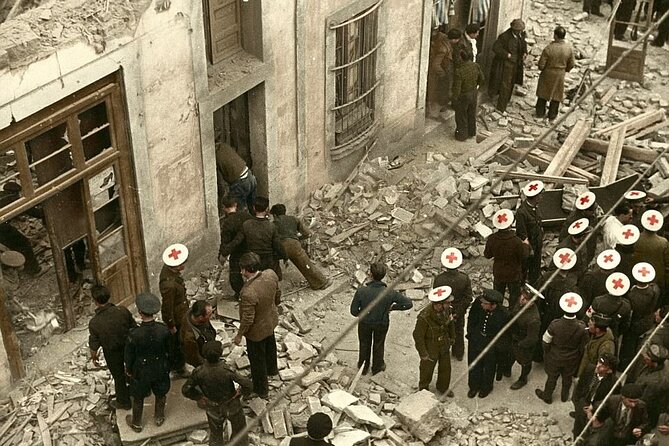
The experience does not stop in 1939. It also covers stories from Franco’s dictatorship and considers how the war shaped Spanish identity and Barcelona’s later political life.
That longer view gives the tour more value than a short battlefield account. You learn not only what happened during the conflict, but also how its aftermath affected public memory, political expression, and the way Spain discussed or avoided its recent past.
Several guides finish with suggestions for books, films, or articles. That is useful if the walk awakens your interest but leaves you wanting more. Two and a half hours cannot explain every military campaign, political argument, and personal story, so further reading is part of the sensible follow-up.
The tour also helps you understand why certain subjects remain sensitive. You are not asked to treat the Civil War as a museum piece detached from modern Spain. Instead, the guide connects the period to questions about memory, fascism, repression, working-class movements, and regional identity.
How much walking and concentration should you expect?
The advertised duration is about two hours and 30 minutes. The listed stops add up to only part of that time, which means the rest is spent walking between locations and listening to explanations along the route.
The walking is generally within central Barcelona and the Old Town, but you should wear comfortable shoes. One account calls it walking-intensive, while another says the walking was minimal, so your experience may depend on the guide’s exact route, pace, and the group’s needs.
The route is conducted in English. Most people can participate, and service animals are allowed. Since the walk takes place outdoors and requires good weather, bring sensible clothing for Barcelona’s conditions.
I would book it early in your stay, especially if you want the historical background to shape the rest of your visit. The tour gives you a set of ideas to carry into museums, churches, civic buildings, and ordinary streets later in the trip.
Is $47.16 a fair price?
At $47.16 per person, this is not the cheapest walking tour in Barcelona. You are not paying for a major admission ticket, and the route includes several short exterior stops. The €1 radio headset fee is also separate.
The value depends on how much you want interpretation. If you already know the Spanish Civil War well and prefer to explore alone, the cost may feel high. You could visit these public places without paying an admission fee.
I think the price makes better sense if you want a clear framework for a difficult subject. A strong guide spends the full walk connecting locations, political movements, images, and Franco-era stories. You are buying access to a local explanation that would take considerable reading to assemble on your own.
The group discount may help if you are booking for several people. The maximum group size is 25, so ask yourself how much you value a personal exchange with the guide. The tour is best for you if you plan to listen closely and ask questions, not simply follow along for a scenic walk.
Who should book this experience?
I would choose this tour if you enjoy political history, modern European history, architecture with a story, or serious city walks. It is also a strong choice if you have visited Barcelona before and want to see beyond Gaudí and the usual medieval highlights.
It suits you especially well if you know little about Franco’s dictatorship but want an accessible introduction. Guides are expected to explain the background rather than assume specialist knowledge, and several have been praised for turning a complicated subject into a clear lesson.
Families with older teenagers may find it worthwhile, though the material is serious. Young children may not have much to gain from the political detail. The walk is also a good fit for students, teachers, and anyone planning to read more about Spain afterward.
You might skip it if you want a relaxed, lighthearted morning or if you dislike long explanations in public spaces. The tour asks for attention, and the subject includes violence, repression, and unresolved questions about memory.
Practical details before you go
The tour begins at Foot Locker, Plaça de Catalunya, 20, in Barcelona’s Ciutat Vella. It ends somewhere else, but the supplied details do not specify the final location, so check the booking information before arranging your next activity.
Confirmation is provided when you book. The tour is offered in English, accepts mobile tickets, and is available near public transportation. It requires good weather and a minimum number of participants. If poor weather or low enrollment cancels the experience, you are offered another date or a full refund.
You can cancel for a full refund up to 24 hours before the start time. Changes or cancellations made less than 24 hours before the start are not accepted for a refund.
Should you book the Spanish Civil War and Franco Barcelona Walking Tour?
Book it if you want Barcelona to make more sense as a modern political city, not just a beautiful one. The best guides, including Henrieta, Chrysa, Evan, Yannis, and Filipa, bring unusual care to a difficult subject and use photographs, local sites, and patient explanations to connect the past with the streets around you.
Go in with comfortable shoes, an open mind, and enough attention for names and competing political groups. If you prefer a short overview or a purely visual sightseeing walk, choose something lighter. If you want the scars, arguments, and human stories behind Barcelona’s polished center, this is a worthwhile early-trip investment.
FAQ
How long does the Spanish Civil War and Franco Barcelona Walking Tour last?
The tour lasts approximately two hours and 30 minutes.
What language is the tour offered in?
The tour is offered in English.
Where does the tour begin?
It begins at Foot Locker, Plaça de Catalunya, 20, Ciutat Vella, 08002 Barcelona, Spain.
Where does the tour end?
The tour ends at a different location, but the supplied details do not specify the exact ending point.
Is the radio headset included in the price?
No. A guide radio headset costs €1 per person and is paid at the meeting point to an external provider.
What places are visited?
The route includes Plaça de Catalunya, La Rambla, the Antic Hospital de la Santa Creu, the Basilica de Santa Maria del Pi, and Plaça Sant Felip Neri.
Can I cancel for a full refund?
Yes. You must cancel at least 24 hours before the experience start time for a full refund. If the tour is canceled because of poor weather or insufficient enrollment, you are offered another date or a full refund.
Recently added around Barcelona
- Park Guell Guided Tour with Skip the Line Tickets★ 4.0 · 739 reviews
- Entrance to the Mirador Torre Glories Barcelona★ 4.5 · 193 reviews
- Bohemian Barcelona Neighborhood Evening Tapas & Wine Tour★ 5.0 · 419 reviews
- Transfers From Cruise Port to Barcelona Airport★ 4.5 · 155 reviews
- Authentic Flamenco Show Barcelona : Intimate Casa Sors Experience★ 5.0 · 809 reviews
- Barcelona Expert Tour with Local Guide in Eco Tuk Tuk Private★ 5.0 · 216 reviews
- Barcelona Sunset Cruise with Light Snacks and Open Bar★ 5.0 · 476 reviews
- Barcelona: Sagrada Familia, Park Guell & Tapas Private Tour★ 5.0 · 903 reviews
Spanish Civil War Tours, compared.
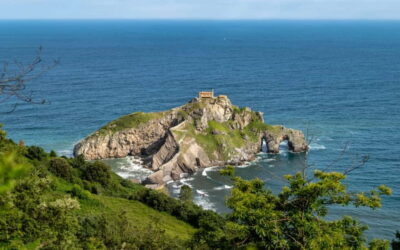
Gaztelugatxe, Bermeo, Mundaka, Gernika, & Wine Tour
Read our review →
Gaztelugatxe, Gernika, and Mundaka Group Tour
Read our review →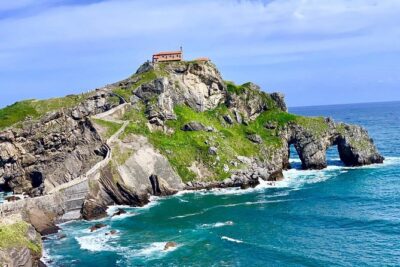
Gaztelugatxe, Mundaka and Gernika Tour from Bilbao
Read our review →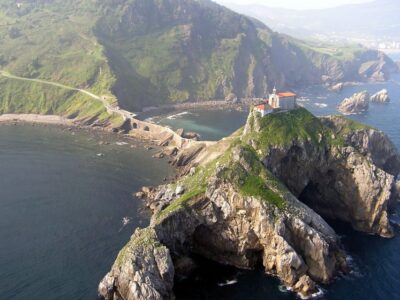
Gaztelugatxe with access, Bermeo and Gernika from Bilbao
Read our review →
Bizkaia Bridge, Gaztelugatxe, Bermeo and Gernika from Bilbao
Read our review →
Browse the lists this tour appears in