
Reviewed · SPANISH CIVIL WAR TOURS
Spanish Civil War start of 2 World War, Guernica Franco
Madrid’s Civil War story comes alive not in a museum case, but along ordinary streets. This walking tour connects bomb-scarred buildings near Callao, the Senate, the Temple of Debod, Picasso’s Guernica, and Franco’s Victory Arch into one clear account of how Spain split and how Madrid endured.
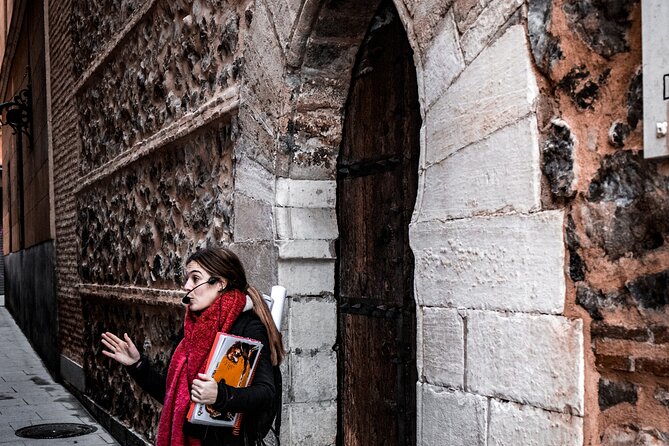
I like the way the route combines street evidence with visual material, so you are not asked to follow a long lecture from memory alone. I also like the human scale: wartime music, food and money, blood transfusions, Christmas truces, and daily life help explain what the conflict felt like beyond troop movements.
The main drawback is the pace. In two and a half hours, you get a strong overview rather than a full study of every political faction or battle, and the route finishes at Arco de Moncloa, well west of the starting point. Wear comfortable shoes and allow time for the walk between stops.
Key points to know before you book
- Seven locations link Madrid’s streets to the Civil War: The route runs from Plaza del Callao to the Victory Arch near Moncloa.
- The tour explains causes as well as battles: You will examine the two divided Spains, Franco, propaganda, foreign funding, and the 900-day siege.
- Guernica is treated as a story about civilians: Picasso, the bombing of civilians, and art under fire form one of the route’s central sections.
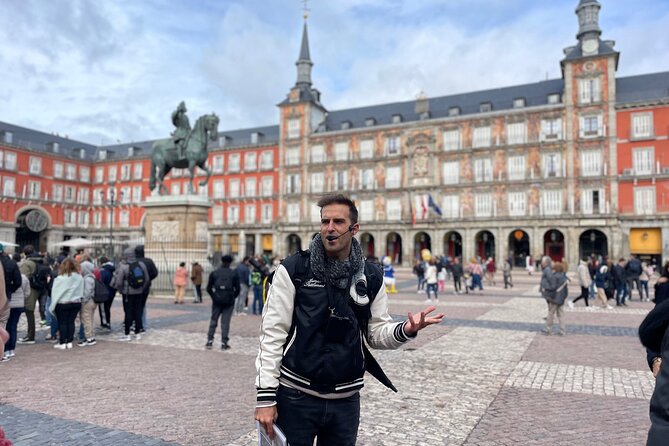
- Guides use more than spoken commentary: Maps, images, audio, videos, and other prepared material support the explanations.
- The final stop raises an honest question: The Victory Arch is presented as a monument to preserve, alter, or remove.
- The price is unusually low: At $3.62 per group of up to 15, the value is excellent, though tips are not included and are encouraged.
Why this Madrid walk matters
Many Madrid sightseeing walks focus on royal buildings, grand plazas, and food. This one asks you to read the city through the wounds left by the Spanish Civil War. That makes it useful for anyone who wants to understand why Madrid, Franco, fascism, anarchism, socialism, and the coming Second World War remain closely connected in Spanish memory.
The route does not treat the war as a neat fight between two simple teams. At the Senate, you examine the political crisis that split Spain and the competing forces behind the conflict. That is important because the war’s causes were not limited to one military uprising or one political slogan.
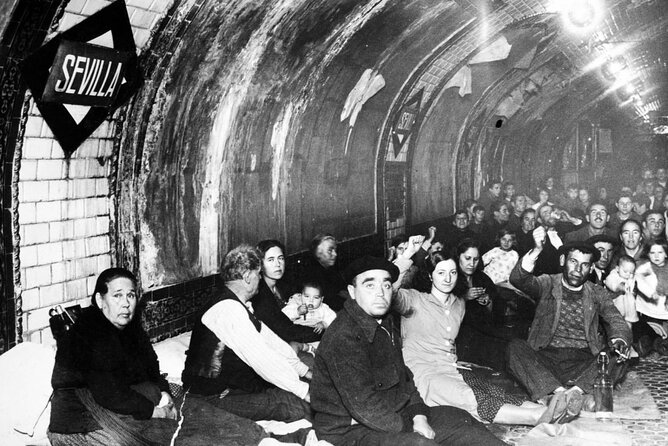
You also get a sense of why Madrid mattered. The capital became a symbol of resistance during a siege that lasted about 900 days. The city faced bombardment, shortages, fear, and propaganda while still trying to function. The tour’s focus on everyday life gives the history a human face without losing sight of the larger political struggle.
Guides named in the feedback include Victor, Maikel, Adria, Chato, and Guillermo. Your guide may be someone else, but the experience is built around a personal, conversational presentation. Chato, in particular, is noted for extending the tour beyond its planned two and a half hours, though you should not count on extra time when planning your day.
More Civil War history in Basque Country:
- Bilbao: Gaztelugatxe, Bermeo, Mundaka, Gernika, & Wine Tour
★ 4.5 · 1,407 reviews - From Bilbao: Gaztelugatxe, Gernika, and Mundaka Group Tour
★ 4.8 · 1,112 reviews - Gaztelugatxe, Mundaka and Gernika Tour from Bilbao
★ 5.0 · 706 reviews
From Plaza del Callao to the first bombings
The meeting point is on C. del Postigo de San Martín, close to Plaza del Callao in central Madrid. This is a practical starting point for a walking tour because you are already in one of the city’s busiest central areas, near public transportation.
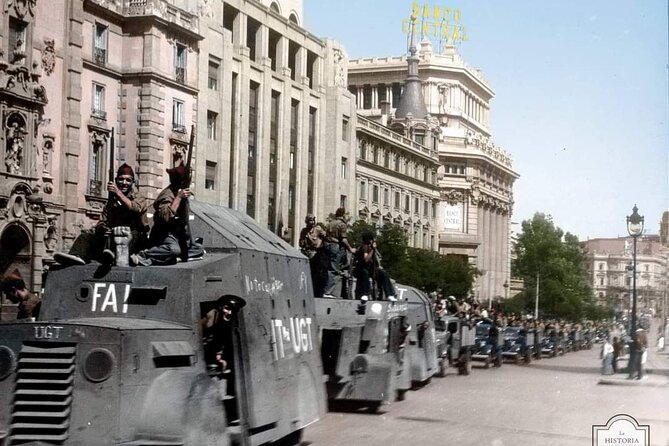
The first stop looks at bombings in central Madrid and the scars left on buildings. Instead of treating the conflict as something that happened far away, the guide points out how the city itself became a target. The subject is made more personal through a discussion of life during wartime, including the striking question of whether people still went to the movies.
That detail matters. It shows how civilians tried to preserve ordinary habits while violence continued around them. A cinema outing may sound trivial beside a military campaign, but it helps you picture the tension of daily life in a city under attack.
You spend about 15 minutes here. It is a short opening section, so expect a quick orientation rather than a long examination of each building. The route works best if you pay attention to the guide’s images and explanations instead of expecting large museum-style displays at every stop.
The Senate and the making of two Spains
At the Palacio del Senado, the tour turns to the question of how the Spanish Civil War began. The phrase two divided Spains captures the central theme of this section, though the guide also deals with the complexity behind that division.
You will look at the political and social forces that brought Spain to war, then consider how the conflict became a testing ground connected to the wider European crisis. Calling Spain a World War II test range points to the way tactics, weapons, alliances, and political ideas collided there before the larger war began.
The stop lasts about 20 minutes, making it one of the longer sections. I consider that a good choice. Without this background, the later discussion of Franco, propaganda, and foreign support can seem like a list of names. Here, the guide gives you a framework for understanding why the capital became such an important prize.
This is also the point where the tour may feel most demanding for anyone with little background in Spanish politics. The guide uses maps and other visual aids, which should help, but you will get more from the stop if you are ready to concentrate.
Plaza de España and Madrid’s 900-day siege
At Plaza de España, the subject shifts to Francisco Franco and the defense of Madrid. The tour covers the capital’s 900-day siege, a period that shaped both the city’s identity and the political mythology surrounding the war.
The phrase Madrid under pumps is part of the wartime vocabulary explored here. The exact meaning is explained by the guide during the walk, along with other sayings from the period. These expressions help you hear the conflict as people experienced it, rather than only through formal military language.
You will also examine how Madrid defended itself and how Franco became central to the war and its aftermath. The stop lasts about 15 minutes, so the guide has to move briskly from military pressure to political symbolism.
This section is especially useful if you want to understand why Madrid became more than a capital under attack. It became a symbol. That symbolic role continued long after the fighting ended, which sets up the later discussion of the Victory Arch and dictatorship.
A few more Basque Country half-days worth comparing
- From Bilbao: Gaztelugatxe, Bermeo and Gernika Day Trip
★ 4.8 · 583 reviews - Bilbao: Basque Food Tour with Guide
★ 4.9 · 504 reviews - Gaztelugatxe with access, Bermeo and Gernika from Bilbao
★ 4.6 · 372 reviews - San Sebastian E-bike trour: Basque History and Cultural.
★ 5.0 · 367 reviews
Temple of Debod, war finance, and propaganda
The next stop at the Temple of Debod adds subjects that are easy to overlook on a battlefield-focused tour: money and ideas. You will learn who paid for the war and how each side used propaganda to shape public opinion.
That combination is one of the tour’s strengths. Wars require supplies, weapons, transport, and political backing, but they also require stories that persuade people to keep fighting. By placing funding and propaganda together, the guide shows how military power and public belief supported one another.
The Temple of Debod itself provides a memorable setting, though the ancient Egyptian monument is not a Civil War site. Its inclusion gives you a change of scene and a chance to consider a monument that belongs to a different time and political story. Nearby, the sculpture dedicated to those who fell in the Civil War brings the focus back to Spain’s own dead.
This stop takes about 20 minutes. It is a good place to pause and think about how monuments select what to remember. The tour is not only telling you what happened. It is also asking who gets honored, who gets blamed, and how public spaces carry political meaning.
Paseo del Pintor Rosales and the civilian story of Guernica
At Paseo del Pintor Rosales, the route turns to Picasso and Guernica, with special attention to the bombing of civilians. This is likely to be the emotional center of the walk.
You will not be visiting the Guernica painting itself on this route. Instead, the guide uses the subject to explain how an attack on civilians became a lasting symbol of modern war. The discussion places Picasso’s work alongside the real experience of people caught in bombardments, making the connection between art and suffering clear.
The stop also covers the Prado Museum and art under fire. That widens the subject beyond one famous painting. Madrid’s cultural treasures faced danger during the conflict, and the question became how to protect art while the city was under attack.
The reference to Christmas in truce adds another human detail. A temporary pause in fighting offers a brief look at the fragile moments when enemies stopped shooting, even while the wider war continued.
You spend about 20 minutes here. If you want a full art-history lesson on Picasso or the Prado, this section will be too short. If you want to understand why Guernica became such a powerful image of civilian suffering, it gives you a useful foundation.
Air Force headquarters and the war’s final turn
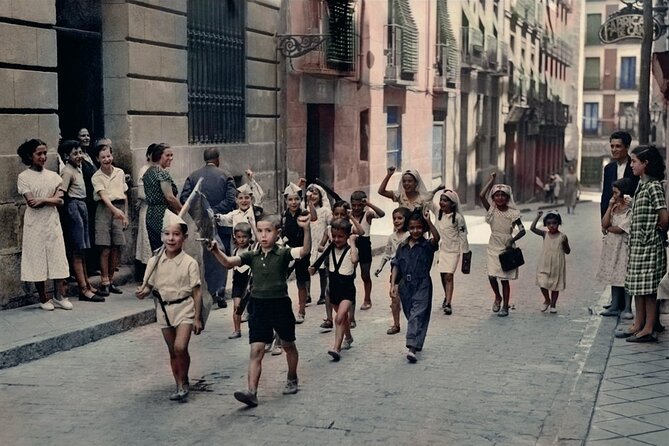
At the Cuartel General del Ejército del Aire, the tour brings together music, medical care, and the end of the war. The song They Won’t Happen and Sun Face represent the role of music and political culture in the conflict.
Music can reveal how competing movements tried to build loyalty. It also helps explain why the war was fought through symbols and emotion as well as weapons. The guide places these songs within the political atmosphere of the time.
The stop then turns to the first remote blood transfusion. That medical detail shows the practical side of wartime innovation. In the middle of death, doctors and volunteers were also developing ways to save lives. It is a small subject, but it gives the tour one of its most unusual details.
The final part explains how the end of the Civil War led into World War II and Franco’s dictatorship. The tour does not present the peace as a clean break. Instead, it connects military victory to the political system that followed.
You spend about 15 minutes here. This is another quick stop, so listen for the links between the subjects. Music, medical treatment, defeat, dictatorship, and the approaching world conflict may seem separate at first, but together they show how war reaches into culture, science, and government.
The Victory Arch and the question of memory
The final stop is the Arco de la Victoria, or Victory Arch, near Moncloa. The route ends at Arco de Moncloa, Av. de la Memoria, 32, close to Metro Moncloa.
The monument prompts a direct question: should it be destroyed, preserved, or changed? That is a fitting end because the tour has spent the past two and a half hours showing that the Civil War is not locked in the past. Its monuments, songs, images, and political arguments still shape how Spain remembers the conflict.
You will also reflect on wars more generally. The arch is not simply a photo stop. It becomes a way to consider what public memorials do when they honor victory for one side in a conflict that caused suffering for many.
The stop lasts about 20 minutes. Since you finish west of the historic center, check your plans before booking. The nearby Moncloa Metro station makes the end point useful, but you will not be returning to Callao with the group.
What the price means in practical terms
At $3.62 per group of up to 15, this is exceptional value if the price shown at booking remains current. Even with a tip, you are paying very little for a 2.5-hour guided walk with prepared maps, images, audio, videos, and follow-up recommendations for Madrid.
The low price comes with one important expectation. Tips are not included, and the tour asks you to value the guide’s effort at the end. I would plan to tip if the presentation is useful, especially because the guide supplies historical material and personal attention rather than simply leading you from one address to another.
The maximum listed group size is 30, while the price is described as applying to a group of up to 15. Confirm the exact group arrangement when booking if group size matters to you. A larger group can make it harder to hear or see visual material, while a smaller group usually makes questions easier.
The tour is offered in English and uses a mobile ticket. Confirmation is sent at booking, and service animals are allowed. Most people can take part, but the walk includes several city stops over two and a half hours, so comfortable footwear is sensible.
Free cancellation is available up to 24 hours before the start time for a full refund. Changes or cancellations inside that 24-hour window are not accepted and are not refunded.
Who will get the most from this experience
I would choose this tour if you want political context, street-level history, and a clear explanation of how the Civil War connects to Franco’s dictatorship and World War II. It suits first-time visitors who want to understand Madrid beyond its royal and artistic highlights.
It is also a good fit if you have already seen Picasso’s Guernica or plan to visit the Prado. The tour gives the painting a wartime setting, then explains how art and cultural institutions faced danger during the conflict.
You may want a different experience if you prefer interior access, military museums, or a slow study of individual battle sites. Most of this route is outdoors, and several stops last only 15 or 20 minutes. The strength is the full story told across the city, not an extended visit to one building.
I would also avoid booking it immediately before a fixed appointment. Guides may sometimes give extra time, as Chato did for one group, but that is a bonus rather than something you should plan around.
Should you book the Madrid Civil War walking tour?
Book it if you want a thoughtful introduction to the Spanish Civil War in Madrid and value a guide who can connect buildings, monuments, music, art, medicine, and politics. The strongest parts are the clear historical structure, the visual aids, the attention to civilian life, and the final discussion of Franco’s Victory Arch.
The tour will not answer every question about Spain between 1936 and 1939. It is an overview, delivered at walking pace, with limited time at each location. Still, the price is hard to argue with, and the route gives you a much sharper understanding of Madrid’s streets than a standard sightseeing walk.
For a first visit, I would book it early in your stay. You can then use the guide’s personalized Madrid recommendations to shape the rest of your plans, while the city’s landmarks still feel fresh in your mind.
FAQ
Where does the tour begin?
It begins at C. del Postigo de San Martín, 26, in Madrid’s Centro district, near Plaza del Callao.
Where does the tour end?
It ends at Arco de Moncloa, Av. de la Memoria, 32, in Moncloa-Aravaca. Metro Moncloa is nearby.
How long does the walking tour last?
The scheduled duration is approximately 2 hours and 30 minutes.
Is the tour offered in English?
Yes. English is listed as the available language.
What is included in the experience?
The tour includes a local guide, exclusive maps, images, audio, videos, and other material. It also includes a link to personalized recommendations for things to do in Madrid and ongoing personalized attention from the guide after the tour.
Can I cancel for a full refund?
Yes. You can cancel at least 24 hours before the local start time for a full refund. Cancellations or changes made less than 24 hours before the start time are not accepted and are not refunded.
Recently added around Basque Country
- Gaztelugatxe Access, Bermeo & Gernika guided tour from Bilbao★ 4.5 · 103 reviews
- Gaztelugatxe, Mundaka and Gernika Tour from Bilbao★ 5.0 · 706 reviews
- Basque Cooking Experience: Market Tour & Hands-On Class English★ 5.0 · 144 reviews
- San Sebastian E-bike trour: Basque History and Cultural.★ 5.0 · 367 reviews
- Bizkaia Bridge, Gaztelugatxe, Bermeo and Gernika from Bilbao★ 4.5 · 299 reviews
- Bilbao: San Juan de Gaztelugatxe and Walk along Basque Coast★ 4.9 · 114 reviews
- From Bilbao: Gaztelugatxe, Bermeo and Gernika Day Trip★ 4.8 · 583 reviews
- Gaztelugatxe with access, Bermeo and Gernika from Bilbao★ 4.6 · 372 reviews
Spanish Civil War Tours, compared.
Gaztelugatxe, Bermeo, Mundaka, Gernika, & Wine Tour
Read our review →
Gaztelugatxe, Gernika, and Mundaka Group Tour
Read our review →
Gaztelugatxe, Mundaka and Gernika Tour from Bilbao
Read our review →
The Spanish Civil War & Franco Barcelona Walking Tour
Read our review →
Gaztelugatxe with access, Bermeo and Gernika from Bilbao
Read our review →
Bizkaia Bridge, Gaztelugatxe, Bermeo and Gernika from Bilbao
Read our review →
Browse the lists this tour appears in