
Reviewed · SPANISH CIVIL WAR TOURS
Almería: Visit to the shelters of the Spanish Civil War
Almería’s Spanish Civil War shelters turn a city history lesson into a walk below street level. You follow nearly one kilometer of the original underground network, built within a larger 4.5-kilometer system that once protected about 40,000 people from bombing raids.
I like the small hospital, complete with an operating room, and the private room where children left drawings on the walls. I also like the guide’s anecdotes, which help you picture how these galleries worked as part of daily life. The main drawback is clear: the tour is in Spanish, and the tunnels have no natural light. Some guides speak English well and can explain key points, but you should not count on a full English tour.
Key things to know before going
- Nearly one kilometer underground: You see a substantial section of Almería’s shelter system, not just a short display room.
- A hospital beneath the city: The route includes an operating room and a small private room with children’s artwork.
- Two underground depths: Parts of the visit reach 9 meters below ground, with an optional or more adventurous descent to 16 meters.
- Spanish-led tour: Information panels include English, and some guides can offer extra explanations in English.
- Short and focused: The visit lasts about 75 minutes and begins and ends beside Manuel Pérez García Square.
- Not suitable for everyone: The galleries have no natural light and are not suitable for wheelchair users, people with mobility impairments, or people with claustrophobia.
Entering Almería’s wartime shelter system
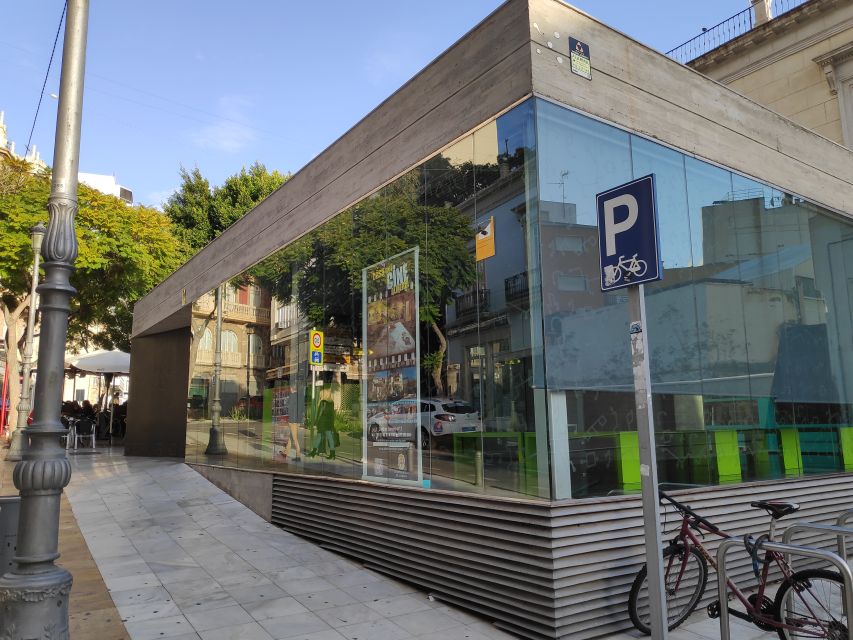
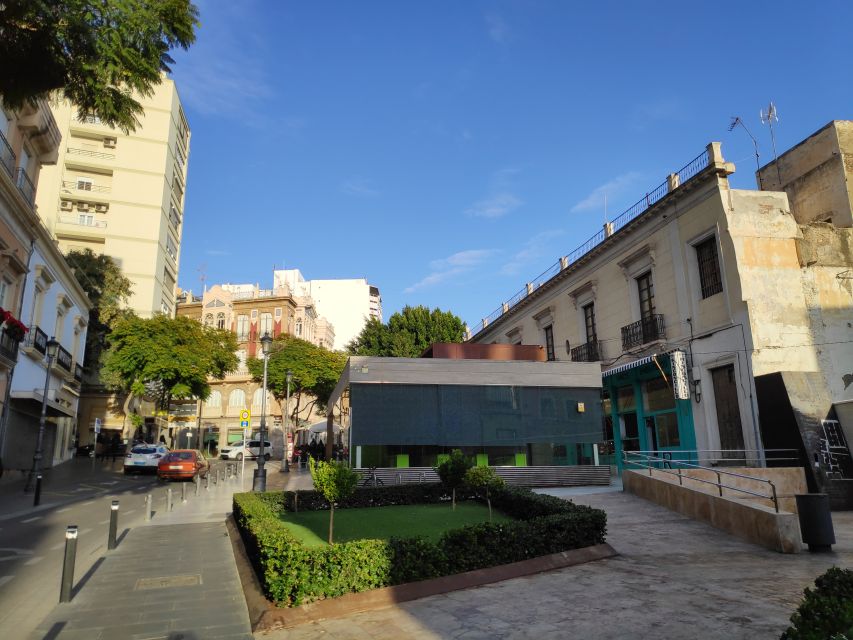
Your visit begins at the monument entrance next to Manuel Pérez García Square. Arrive 10 minutes early, since the group enters at a set time and the underground route is not a place to rush around looking for the door.
The first useful fact is the scale. Almería’s shelters covered about 4.5 kilometers and were designed to protect around 40,000 people. This visit shows close to one kilometer of that network, giving you enough time to understand its purpose without turning the experience into a long, repetitive tunnel walk.
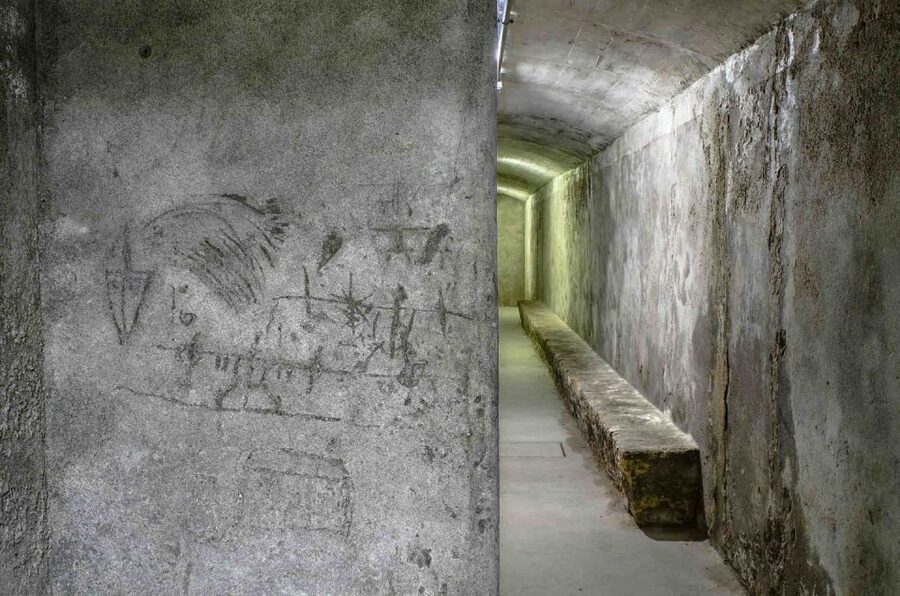
The galleries were built during the Spanish Civil War, when bombing threatened the city. Underground shelters were not decorative memorials at the time. They were practical spaces meant to keep people alive. As you move through them, the plain walls and narrow passages make that purpose easier to grasp than a paragraph in a museum case.
I find this kind of site valuable because it connects a large historical event to ordinary decisions. People had to leave their homes, find the entrance, move underground, and wait. The shelter tells that story through its shape and surviving rooms.
The monument entrance is also convenient for a city visit. You do not need a separate transfer, and the activity returns to the same meeting point. Transport, food, and drinks are not included, so plan this as a compact stop in central Almería rather than a full-day outing.
More Civil War history in Almeria:
- Almeria: Spanish Civil War Shelters Ticket and Official Tour
★ 4.5 · 159 reviews - Bilbao: Gaztelugatxe, Bermeo, Mundaka, Gernika, & Wine Tour
★ 4.5 · 1,407 reviews - From Bilbao: Gaztelugatxe, Gernika, and Mundaka Group Tour
★ 4.8 · 1,112 reviews
Walking nearly one kilometer of galleries
The route takes you through a long section of the underground passages. You are not simply looking at a preserved room behind glass. You walk through the spaces that formed part of the protection system, with a live guide explaining how the shelters were used and adding anecdotes about their less visible history.
That guided element matters. A tunnel can look like a tunnel if nobody explains its role. With context, details such as the underground layout, changes in depth, and separate rooms begin to make sense. The guide helps turn the route from a walk through masonry into a story about a city under attack.
The tour language is Spanish. This is the main practical issue for anyone who does not understand Spanish. English information panels are available in the tunnels, and the experience can still work for English speakers who are comfortable reading as they go. Some guides have a very good command of English and may give you extra explanations or translate parts of the talk, but that depends on the guide and the group.
If you want the fullest experience, some Spanish will help. If you speak little or no Spanish, consider asking at the start whether the guide can explain key points in English. That simple question may make the difference between following the story and merely following the group.
The 75-minute duration is well judged for this setting. It gives the guide time to cover the history and the key rooms while keeping the visit fairly compact. Underground spaces can feel tiring when a tour runs on too long, especially if you are also fitting Almería’s streets, museums, and other sights into the same day.
The underground hospital and operating room
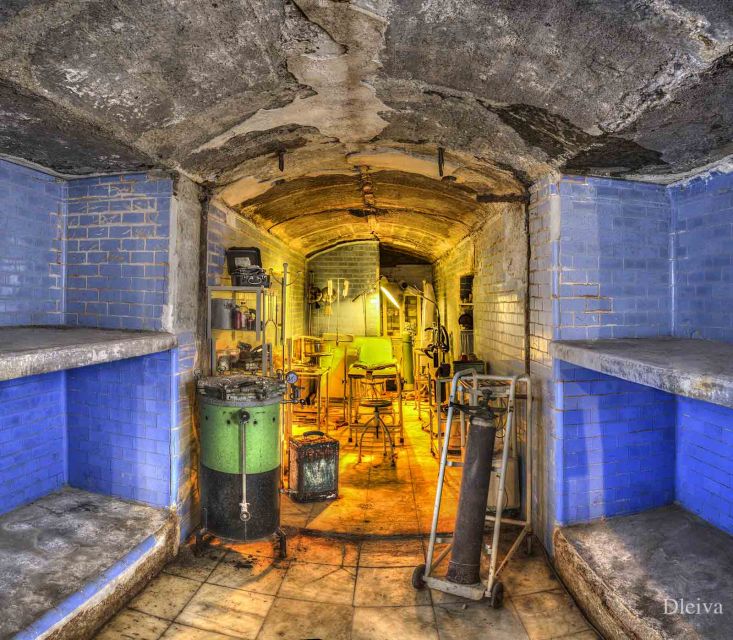
One of the strongest parts of the route is the small hospital. The presence of medical facilities shows that the shelters were planned as more than places where people crouched during an air raid. Injured people needed treatment, and a functioning underground refuge required spaces for urgent care.
The operating room gives the hospital a particularly direct impact. You can see how the shelter system tried to continue essential services below the city. It also helps you understand the risks of wartime bombing in a more personal way. The issue was not only finding cover. It was dealing with injuries, fear, and the need to care for people while the danger continued above.
The hospital is modest, which is part of its value. You should not expect a large medical exhibition or a room packed with objects. Instead, the space works as a piece of physical evidence. The plain setting lets the guide’s explanation carry much of the meaning.
This stop is likely to appeal to anyone interested in military history, social history, or the practical side of civilian life during war. It is also useful for families with older children who can handle the subject matter and the underground setting. The tour presents the shelters as real working spaces, not as an abstract date on a timeline.
Children’s drawings on the shelter walls
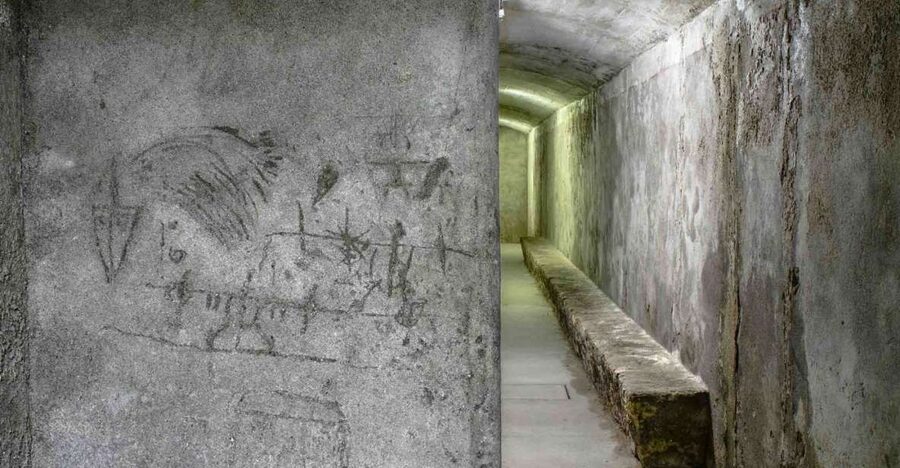
A private room offers one of the most human details on the route. Look closely at the walls and you can see artwork left behind by children. These drawings bring a personal note to a place usually described through numbers, dates, and military events.
The figure of 40,000 people is hard to picture. A child’s drawing makes the shelter feel occupied. It suggests that families did not experience these galleries only as a piece of civic engineering. They waited here, spent time here, and tried to create some normal life while the city faced danger.
I like this detail because it changes the mood of the visit without turning the site into a sentimental display. The drawings are a small trace of the people the shelter was built for. They remind you that the history here belongs to children and families as much as to armies and politicians.
Take a moment in this room rather than hurrying after the group. Since the tour is guided, you will need to stay with the route, but there should be time to look carefully when the guide stops. If the explanation is in Spanish, the visual detail still communicates something on its own.
A few more Almeria half-days worth comparing
- Cabo de Gata Active. Guided kayak and snorkel route through coves of the Natural Park
★ 5.0 · 1,531 reviews - From Almeria: Tabernas Desert 4WD Joyriding Tour
★ 4.9 · 1,344 reviews - Fort Bravo Entrance Ticket
★ 4.0 · 470 reviews - Cabo de Gata: Natural Park Kayaking and Snorkel Excursion
★ 4.7 · 442 reviews
Descending to 9 and 16 meters below Almería
The route includes a descent to about 9 meters underground. For those who are comfortable in confined spaces, there is also a way to reach a full 16 meters below ground. The deeper section adds a stronger sense of how much of the shelter system lay beneath the city.
The depth is not presented as a thrill ride. It helps explain the design of the refuge. Moving farther below street level gives you a better idea of the effort involved in building and maintaining such a network, as well as the distance between everyday city life and the protected spaces below it.
You should take the claustrophobia warning seriously. The galleries have no natural light, and underground passages can feel very different from a normal museum room. People who dislike enclosed spaces may find the route uncomfortable, particularly in the deeper sections.
The activity is also not suitable for wheelchair users or people with mobility impairments. Comfortable shoes are required, and that is sensible advice rather than a formality. You will be walking through underground galleries and handling the changes in level that come with an old shelter system.
Large bags and luggage are not allowed, and pets cannot join the activity. If you are arriving with a suitcase, arrange storage before reaching the meeting point. The site is much easier to enjoy when you are carrying only what you need.
The old pantry at the lowest level
The old pantry is another unusual part of the visit. It gives the underground system a domestic feel and shows that the shelter included more than passageways and emergency medical rooms.
A pantry may sound less dramatic than an operating room, but it helps you understand how people used the galleries over time. A large shelter had to support people during periods of danger. The presence of storage space points to planning, supplies, and the practical work needed to keep an underground refuge functioning.
This is where the guide’s anecdotes can add real value. The architecture gives you the outline, but stories help fill in the human details. Since the tour is conducted in Spanish, your understanding of this section will depend on your language skills and on how much English the guide can provide.
For visitors who care about everyday history, the pantry may be one of the most interesting spaces. It moves the focus away from battles and toward food, care, waiting, and survival. Those ordinary concerns often explain a historical site better than grand political statements.
What the $14 price gets you
At $14 per person, this is a strong-value history stop. The price covers the local guide, entrance to the surviving Civil War shelter areas, and insurance. For 75 minutes, you get access to a place that is difficult to understand from the street, along with explanations that give the rooms a clear purpose.
The value is especially good if you already plan to spend time in central Almería. There is no separate transport cost, and the tour begins and ends at the same central meeting point. You will need to arrange your own food and drinks, but the short duration makes that easy to fit around lunch or another city visit.
The price does not remove the language issue. A low-cost tour in Spanish may be a good choice if you can follow Spanish or are comfortable using the English panels. If you need a fully English-speaking guide, check the available tour details carefully before booking and ask whether English explanation will be possible.
Flexible booking is another useful point. You can cancel up to 24 hours before the activity for a full refund, and you can reserve while paying later. These terms help if your Almería plans are still changing, though you should still check the exact time available for your date.
Who will enjoy this visit most
I would choose this experience if you want to understand how civilians experienced the Spanish Civil War. It is a good fit for people interested in Almería’s local past, military history, underground architecture, and the daily problems of living through bombing.
It also works well for visitors with limited time. The tour lasts 75 minutes, stays in one area, and returns to the starting point. You can place it between other central sights without giving up an entire morning or afternoon.
You should think twice if you dislike dark, enclosed places. The galleries have no natural light, and the lower sections may feel tight. You should also avoid booking if you use a wheelchair or have significant mobility limitations, since the activity is not suitable for wheelchair users or people with mobility impairments.
Language is the other deciding factor. English-speaking visitors have received useful support from guides who could explain parts of the tour in English, and the tunnel panels include English information. Still, Spanish is the official tour language, so this is best for you if you can manage a Spanish-led visit with some English help rather than requiring guaranteed full interpretation.
Practical advice for a smooth visit
Arrive 10 minutes before the start time at the entrance beside Manuel Pérez García Square. The activity ends at the same place, so you do not need to arrange a pickup or find your way back from another neighborhood.
Wear comfortable shoes. You will be walking through underground galleries, and the route includes changes in depth. Keep your belongings light because luggage and large bags are not allowed.
Bring only what you need, and do not plan to bring a pet. The underground galleries have no natural light, so do not expect an open, airy museum environment. If you have claustrophobia, this is not the right attraction for you.
If you need English help, ask the guide at the beginning. The most useful approach is to follow the visual information in the panels and listen for the sections the guide can explain in English. One guide may offer more English support than another, so a little flexibility will help.
Should you book the Almería shelters tour?
Book it if you want a direct, local account of the Spanish Civil War and can manage a Spanish-led tour. The hospital, operating room, children’s drawings, deep galleries, and pantry give the visit more range than a simple tunnel walk. At $14, it offers a lot of historical substance for a short city activity.
Skip it if enclosed underground spaces make you anxious, if you need step-free access, or if you require a guaranteed English-language tour. For everyone else, this is one of Almería’s more meaningful monuments, especially when you take time to notice the small human details beneath the impressive scale.
FAQ
How long does the Almería shelters tour last?
The tour lasts 75 minutes.
Where does the activity begin?
It begins at the entrance to the monument next to Manuel Pérez García Square.
Where does the activity end?
The activity ends back at the meeting point.
What language is the tour conducted in?
The live tour guide speaks Spanish. English information panels are available, and some guides may explain parts of the visit in English.
How far underground does the visit go?
The route reaches about 9 meters underground, with access to a section that reaches 16 meters for those who are comfortable with it.
Is the tour suitable for wheelchair users?
No. The activity is not suitable for wheelchair users or people with mobility impairments.
What should I bring?
Bring comfortable shoes. Pets, luggage, and large bags are not allowed.
Recently added around Almeria
- Almeria: Alcazaba Guided Tour★ 4.2 · 186 reviews
- Almeria: Spanish Civil War Shelters Ticket and Official Tour★ 4.5 · 159 reviews
- Cabo de Gata: Kayak & Snorkel Excursion in Natural Park★ 4.6 · 266 reviews
- Cabo de Gata: Yacht Tour to the 5 Best Beaches★ 4.6 · 225 reviews
- Tabernas: MiniHollywood Oasys Entry Ticket & Optional Buffet★ 4.5 · 268 reviews
- San José: Cabo de Gata Natural Park Kayak and Snorkel Tour★ 4.8 · 235 reviews
- Kayak y snorkell por las mejores calas del Parque Natural Cabo de Gata★ 4.5 · 152 reviews
- Cabo de Gata: Natural Park Kayaking and Snorkel Excursion★ 4.7 · 442 reviews
Spanish Civil War Tours, compared.
Gaztelugatxe, Bermeo, Mundaka, Gernika, & Wine Tour
Read our review →
Gaztelugatxe, Gernika, and Mundaka Group Tour
Read our review →
Gaztelugatxe, Mundaka and Gernika Tour from Bilbao
Read our review →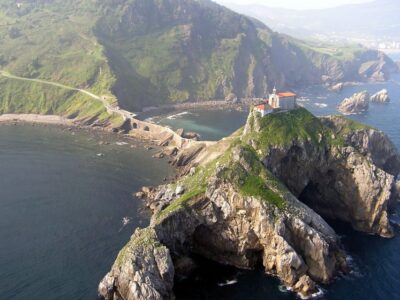
The Spanish Civil War & Franco Barcelona Walking Tour
Read our review →
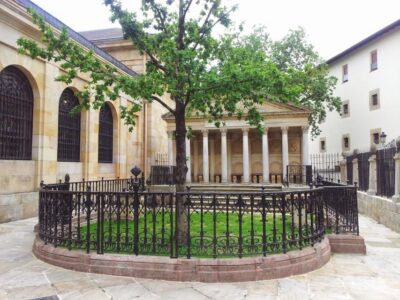
Gaztelugatxe with access, Bermeo and Gernika from Bilbao
Read our review →
Bizkaia Bridge, Gaztelugatxe, Bermeo and Gernika from Bilbao
Read our review →Browse the lists this tour appears in