
Reviewed · SPANISH CIVIL WAR TOURS
Private Tour Spanish Civil War & Franco’s Dictatorship
Barcelona’s Civil War story is written into ordinary streets. On this private walking tour, you move from Plaça Catalunya to Plaça Sant Felip Neri, seeing where political conflict, street fighting, aerial bombing, and repression shaped the city. The most striking stop is the church square at Sant Felip Neri, where wartime damage remains visible.
I like the one-guide-for-your-group format, which gives you room to ask questions about anarchism, George Orwell, the International Brigades, and Franco’s dictatorship. I also like the route itself: it uses familiar central Barcelona streets to explain an often overlooked part of the city’s past. The main drawback is the price, $181.41 per person, which is a serious outlay for a 2-hour-30-minute walk, especially if you are traveling alone or as a couple.
Key points at a glance
- See the Telefonica building at Plaça Catalunya, a key setting for the struggle between competing political forces during the Civil War.
- Pass the La Rambla hotel linked with George Orwell, adding a personal and literary angle to the tour.
- Learn why Raval mattered, with its working-class suffering, resistance, and anarchist politics.
- Find Civil War traces at Santa Maria del Pi, including a little-known connection to the International Brigades.
- End at Plaça Sant Felip Neri, where aerial bombing damage is still visible.
- Use the private format to shape the discussion, with flexible timing and an English-speaking guide focused only on your group.
Barcelona’s Civil War told through six city-center stops
This is not a museum visit with display cases and a fixed lecture. It is a guided walk through central Barcelona, using buildings and squares as evidence. You get a connected story rather than six unrelated sights.
The route covers major questions: Who controlled the streets? How did ordinary people suffer? What role did anarchists and foreign volunteers play? How did the war end, and what changed under Franco? The guide also connects military events with cultural oppression, giving you a clearer sense of what the dictatorship meant beyond the battlefield.
The walk is offered in English and lasts about two and a half hours. Since it is private, only your group takes part. That matters here because the subject can lead in many directions, from political ideology to family memory, literature, religion, and architecture.
The tour is listed at $181.41 per person. That is not a budget walk. Its value depends on your interest in modern Spanish history and on the size of your group. A private group of several people can share the cost, and group discounts are available. For a single person or a couple, the price is harder to justify unless this subject is a major reason for your visit.
More Private Tours in Barcelona
- Tour Welcome Barcelona with Local Guide in Eco Tuk Tuk Private
★ 5.0 · 1,882 reviews - Barcelona Private Tour by Sidecar Motorcycle
★ 5.0 · 1,750 reviews - Barcelona Helicopter, Sailboat & Old Town Private Walking Tour
★ 5.0 · 1,395 reviews
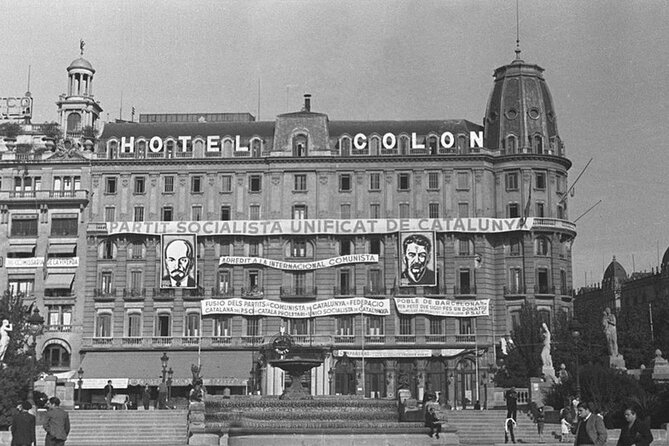
Plaça Catalunya and the fight for Telefonica

The tour begins outside Foot Locker at Plaça de Catalunya, 20. This is a practical meeting point in a busy central area, close to public transportation and easy to reach from other parts of the city.
The first half-hour focuses on the fight over the Telefonica building during the Spanish Civil War. That gives the tour an immediate start with politics made physical. A telephone exchange was not just a workplace. Control of communications meant influence, information, and power.
You will not simply hear a list of dates here. The guide uses the building and surrounding square to explain the forces competing for Barcelona. This is a good opening because it shows how the war affected the city center, not only distant battlefields.
Plaça Catalunya is also one of the busiest points on the route. You may need to concentrate while the city carries on around you. That is part of the lesson, but it can also make detailed listening harder than in a quiet museum room.
La Rambla and George Orwell’s Barcelona
The next stop takes about 20 minutes and moves to La Rambla. Here, the guide points out the hotel where George Orwell stayed during the Civil War.
This stop gives the war a human and literary face. Orwell’s experience in Barcelona is often one of the most accessible ways for English-speaking visitors to connect with the conflict. The setting helps link the city’s political struggle with the observations of a foreign writer who saw the atmosphere at close range.
The stop is brief, so expect a focused explanation rather than a long literary discussion. You will also be on one of Barcelona’s busiest streets, which can affect how easily you hear every detail.
Still, the location is useful. La Rambla is a place many people visit for its shops, cafés, and central position. This tour asks you to look again and consider how the same street functioned during war. I like that shift in viewpoint. It turns a familiar promenade into part of the political story.
Raval, anarchism, and working-class suffering
From La Rambla, the walk continues to Plaça de Vicenç Martorell in the Raval neighborhood. The stop lasts about 20 minutes and addresses the area’s role as a center of working-class suffering, resistance, and anarchism.
This is one of the more important parts of the tour because it moves beyond famous names and major buildings. The history of the Civil War was also the history of local workers, political movements, neighborhood hardship, and competing ideas about how society should be organized.
The guide discusses anarchism as a force in Barcelona’s wartime life. That subject can be difficult to grasp through a standard sightseeing route, so having the explanation tied to the Raval makes the discussion more concrete.
You should expect serious subject matter here. The focus is not on picturesque streets or light entertainment. If you want only Barcelona’s architecture and food culture, this portion may feel heavy. If you want to understand the social forces behind the conflict, it is essential.
The short walking distance between stops also helps the story develop. Instead of treating the war as a distant national event, you begin to see how political beliefs and class tensions affected specific parts of Barcelona.
More Civil War history in Barcelona:
- The Spanish Civil War & Franco Barcelona Walking Tour
★ 5.0 · 539 reviews - Barcelona: The Spanish Civil War Historical Walking Tour
★ 4.9 · 239 reviews - Bilbao: Gaztelugatxe, Bermeo, Mundaka, Gernika, & Wine Tour
★ 4.5 · 1,407 reviews - From Bilbao: Gaztelugatxe, Gernika, and Mundaka Group Tour
★ 4.8 · 1,112 reviews
The old hospital and the war’s human cost
Antic Hospital de la Santa Creu is a 15th-century hospital that treated many wounded soldiers and civilians. The guide spends about 20 minutes here, discussing both the end of the war and cultural oppression under the dictatorship.
This is where the tour shifts from street conflict to human cost. Hospitals show what war does after the slogans and political arguments. Wounded soldiers and civilians passed through this building, giving the site a direct connection to the suffering produced by the conflict.
The stop also helps you understand that the end of the war did not mean a return to normal life. The discussion of Franco’s dictatorship broadens the tour beyond 1936 to 1939. You learn how cultural life was also affected after the fighting ended.
That wider time frame is one of the tour’s strengths. The experience is not limited to battles or political factions. It asks you to consider the long effects of victory, defeat, and state control.
The hospital is also an architectural stop, but the tour’s purpose is historical rather than a full architectural visit. If you want extensive information about the building’s art and construction, you may need a separate visit.
Santa Maria del Pi and the International Brigades
At the Basilica de Santa Maria del Pi, the guide points out a little-known remnant of the Spanish Civil War in plain sight. The discussion centers on the International Brigades and lasts about 30 minutes.
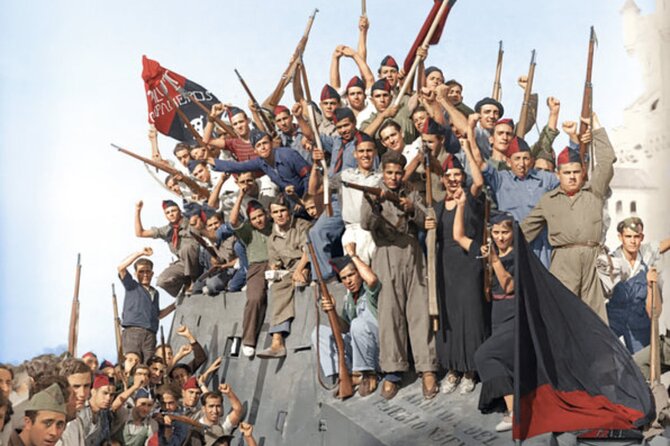
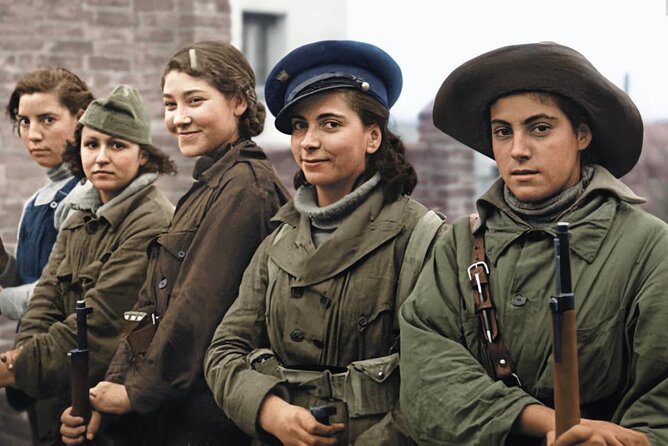
The International Brigades brought volunteers from outside Spain into the conflict. Their presence shows that the Civil War was not only a domestic struggle. It drew political attention and personal commitment from abroad, with men coming to fight for causes they considered important.
A church is an effective place for this part of the story because it adds another layer to the political and cultural divisions of the period. The guide uses what remains at the basilica to connect an existing landmark with a wartime story many people would otherwise walk past.
This is also a good example of why a guide can add value to a city walk. Without an explanation, you might see the basilica only as a beautiful old church. With context, a small remnant becomes a clue to international involvement in the war.
The stop takes a substantial portion of the tour, so you have time to ask questions. On a private tour, you can spend more time on the International Brigades if that subject interests you, or move along if your attention is focused elsewhere.
Plaça Sant Felip Neri and the scars of bombing
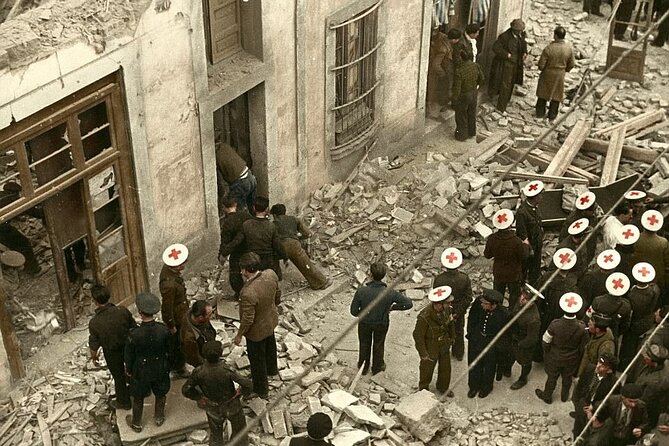
The final stop is Plaça Sant Felip Neri, near the Cathedral. The tour spends about 30 minutes here, making it the longest stop along with the opening discussion at Plaça Catalunya.
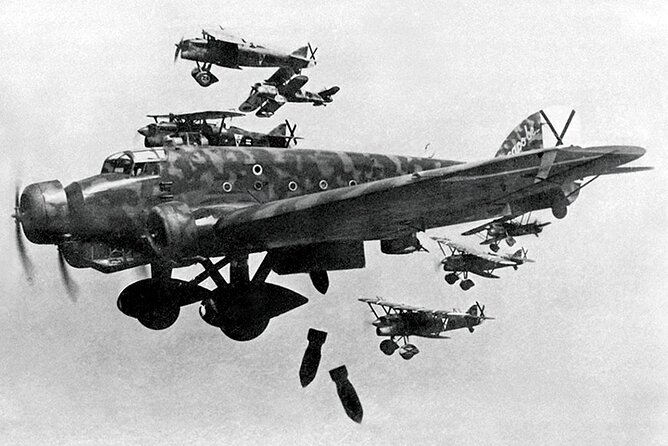
This square contains the most visible damage from aerial bombing on the route. The guide explains the bombing here and the involvement of the Axis powers in the war. The physical marks give the subject a force that words alone cannot provide.
You should take your time here. The square is not merely a backdrop for a lecture. Its damaged surfaces make the cost of air attacks visible, especially when you connect them with the civilians discussed earlier at the hospital.
Ending here works well. The route begins with control of communications and political power, then moves through social conflict, medical suffering, international involvement, and aerial warfare. The final square leaves you with a clear reminder that the war reached ordinary people in the heart of Barcelona.
The tour ends at Plaça Nova, close to the Cathedral. That location is useful if you plan to continue sightseeing in the Gothic Quarter. It also means you finish near a major landmark rather than being returned to the original meeting point.
Why a private guide matters on this subject
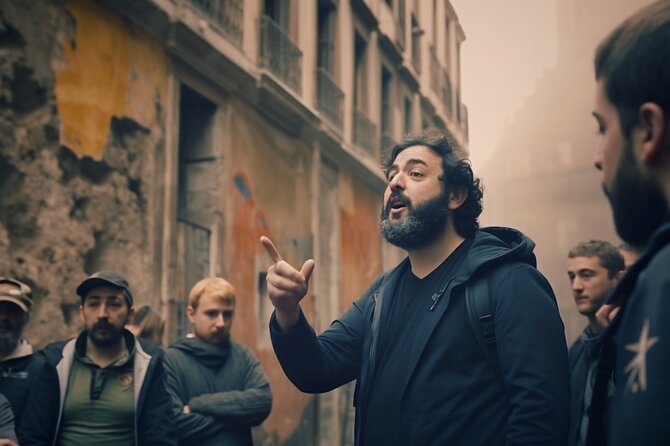
A private tour is especially useful for a complicated political subject. The Spanish Civil War cannot be reduced to a simple tale of good and bad sides. The route covers competing political forces, anarchism, international volunteers, military conflict, civilian suffering, and dictatorship.
A private guide can adjust the conversation to your interests. You can ask for more detail about George Orwell, the International Brigades, the Raval, or the transition from war to repression. If you are traveling with family or friends, you do not need to follow the pace or questions of a larger group.
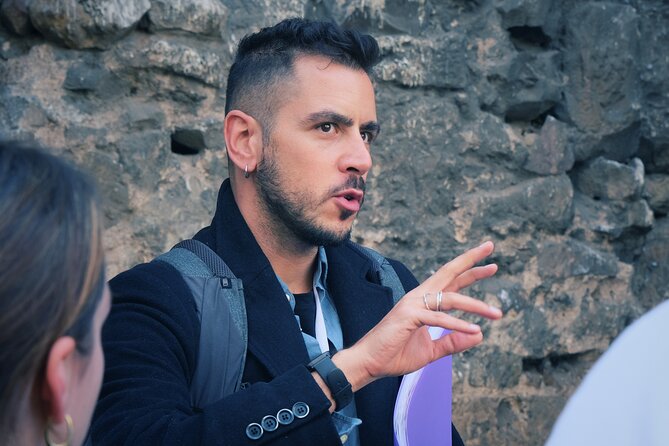
The guide is the main value of the experience. Yannis is specifically praised for his passion and command of the subject, and the tour is designed around an expert guide rather than admissions to indoor attractions. When booking, it is sensible to check whether Yannis is assigned to your date, since guide availability can vary.
The private setup also makes the tour more personal, but it does not guarantee that every stop will feel quiet. Several locations are in central Barcelona, where street noise and foot traffic are part of the setting.
Timing, walking, and practical planning
The route takes approximately 2 hours and 30 minutes. Admission is free at each listed stop, and no food or drinks are included, so plan to eat before or after the walk.
The starting point is Foot Locker at Plaça de Catalunya, 20, in Ciutat Vella. The endpoint is Plaça Nova, close to the Cathedral. Since the tour does not return you to the start, think of it as part of your day’s route through central Barcelona.
The experience is offered in English. It is near public transportation, and most people can take part. Service animals are allowed. The details provided do not specify the exact walking distance, so wear comfortable shoes and allow yourself enough energy for a city walk lasting more than two hours.
The tour requires good weather. If poor weather causes cancellation, you are offered another date or a full refund. You can cancel for a full refund up to 24 hours before the start time, but cancellations or changes made within 24 hours are not accepted.
Flexible tour times are useful if you are fitting this between a museum visit, meal, or evening plan. The exact flexibility depends on availability, so choose a time that leaves room for the full walk rather than scheduling another activity too tightly afterward.
Who gets the best value from the $181.41 price
I would recommend this tour most strongly to visitors who already want to understand modern Spanish history. The subject is serious, and the price makes more sense when the Civil War and Franco’s dictatorship are central interests rather than a last-minute sightseeing choice.
It also suits people who prefer questions and conversation to a large scheduled group. Families, friends, students, and small private groups can make better use of the format than solo visitors. Group discounts may improve the value, but the exact savings are not provided.
The cost includes the expert guide only. There are no entry fees, meals, or special transport included. That means you are paying for interpretation, route planning, and the chance to discuss the subject privately.
For many people, $181.41 per person will feel expensive for a walk. I would compare it with the value of your time. If you would otherwise spend a day passing these places without understanding them, the guide can change how you see central Barcelona. If you prefer low-cost independent sightseeing, you may find the price too high.
Should you book this Barcelona Civil War tour?
Book it if you want a focused, serious look at Barcelona’s Spanish Civil War sites, especially the Telefonica building, Orwell’s La Rambla connection, the Raval, Santa Maria del Pi, and the bomb damage at Plaça Sant Felip Neri. The private format is a real advantage for asking questions and setting the pace.
Think twice if your main goal is a general introduction to Barcelona, if you dislike political history, or if $181.41 per person strains your budget. There are no meals or indoor admission tickets included, and the walk depends on good weather.
For the right audience, this is a strong choice: a compact route, a clear historical theme, and visible traces that make the past harder to ignore. If possible, ask whether Yannis will lead your tour, since his passion is a notable part of the experience.
FAQ
How long does the private Barcelona Civil War tour last?
The tour lasts approximately 2 hours and 30 minutes.
What language is the tour offered in?
The tour is offered in English.
Where does the tour start?
It starts at Foot Locker, Plaça de Catalunya, 20, Ciutat Vella, 08002 Barcelona, Spain.
Where does the tour end?
It ends at Plaça Nova, Ciutat Vella, 08002 Barcelona, close to the Cathedral.
Is this a private tour?
Yes. Only your group participates in the activity.
What is included in the price?
An expert tour guide is included. Tips, lunch, and drinks are not included.
Recently added around Barcelona
- Entrance to the Mirador Torre Glories Barcelona★ 4.5 · 193 reviews
- Park Guell Guided Tour with Skip the Line Tickets★ 4.0 · 739 reviews
- Bohemian Barcelona Neighborhood Evening Tapas & Wine Tour★ 5.0 · 419 reviews
- Transfers From Cruise Port to Barcelona Airport★ 4.5 · 155 reviews
- Authentic Flamenco Show Barcelona : Intimate Casa Sors Experience★ 5.0 · 809 reviews
- Barcelona Expert Tour with Local Guide in Eco Tuk Tuk Private★ 5.0 · 216 reviews
- Barcelona Sunset Cruise with Light Snacks and Open Bar★ 5.0 · 476 reviews
- Barcelona: Sagrada Familia, Park Guell & Tapas Private Tour★ 5.0 · 903 reviews
Spanish Civil War Tours, compared.
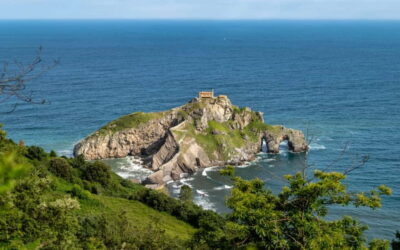
Gaztelugatxe, Bermeo, Mundaka, Gernika, & Wine Tour
Read our review →
Gaztelugatxe, Gernika, and Mundaka Group Tour
Read our review →
Gaztelugatxe, Mundaka and Gernika Tour from Bilbao
Read our review →
The Spanish Civil War & Franco Barcelona Walking Tour
Read our review →
Gaztelugatxe with access, Bermeo and Gernika from Bilbao
Read our review →
Bizkaia Bridge, Gaztelugatxe, Bermeo and Gernika from Bilbao
Read our review →Browse the lists this tour appears in