
Reviewed · GOTHIC QUARTER TOURS
Barcelona Gothic Quarter’s Deepest Secrets & Sangria
Barcelona’s Gothic Quarter is best understood one narrow lane at a time. This walking tour moves from Plaça de Catalunya through Roman ruins, medieval churches, Civil War sites, the old Jewish quarter, Picasso-linked places, and the waterfront, ending with sangria near Port Vell.
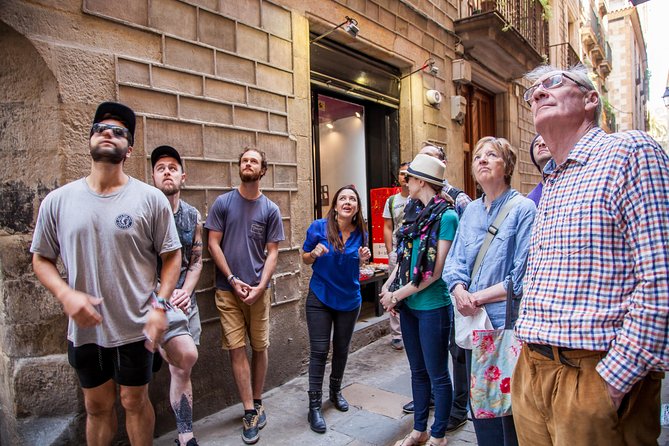
I like the small maximum of 15 people, which makes it easier to hear stories in crowded lanes and ask questions. I also like that guides such as Juliana, Valentina, Daniel, and Sabrina add practical Barcelona advice, not just dates and monuments.
The main consideration is the amount of walking. The route covers a wide stretch from the city center to Barceloneta, and some stops are brief or viewed from outside. If you want long interior visits, this is not that kind of tour.
Key points before you book
- Roman Barcelona and medieval Barcelona in one walk: See sections of the original Roman wall, ancient ruins, the Jewish quarter, Gothic churches, and government squares.
- Small-group format: The group can include up to 15 people, with occasional departures becoming much smaller.
- Stories beyond the postcard sights: Expect Civil War history at Plaça Sant Felip Neri, George Orwell connections, Picasso-related places, and Gaudí’s early work.
- A practical first-day orientation: The route helps you understand how Las Ramblas, the Gothic Quarter, Barceloneta, and Port Vell fit together.
- Sangria at the finish: The included drink gives the walk a relaxed social ending.
- Three hours on foot: Wear comfortable shoes and allow extra energy for cobbled streets, crowds, and warm weather.
What this Gothic Quarter walk is really about
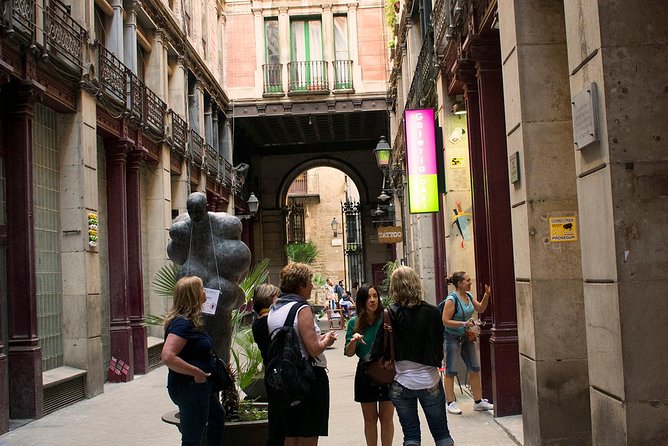
Many Barcelona walks focus on the cathedral, Plaça Sant Jaume, and a few photogenic lanes. This one tries to connect those familiar places with smaller details that are easy to pass without a guide.
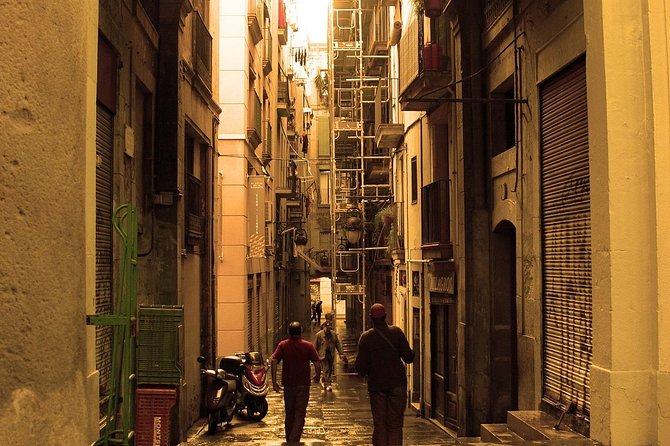
That matters in the Gothic Quarter because the area can feel confusing. Roman remains sit beside medieval buildings, restored façades can look older than they are, and several lanes open into tiny squares without much explanation. A good guide gives you a mental map, so the quarter becomes more than a pretty maze.
The guides also bring different personalities to the walk. Juliana and Julianna receive repeated praise for lively storytelling and practical help. Valentina is noted for adapting the walk and answering questions, while Daniel is described as humorous and full of information. Sabrina has also led the route, sharing both local advice and historical context.
You should expect a conversational tour rather than a formal lecture. The strongest part of the experience is the way the guide can connect a building, a political event, and a neighborhood custom in one short stop.
More Gothic Quarter walks:
- Barcelona Gothic Quarter Tapas & Taverns Food & Wine Tour
★ 5.0 · 1,470 reviews - Barcelona: Gothic Quarter Ghosts and Legends Walking Tour
★ 4.7 · 1,443 reviews - Barcelona: Old Town and Gothic Quarter Walking Tour
★ 4.8 · 1,393 reviews
Starting at Plaça de Catalunya
The meeting point is Cafe Zurich at Plaça de Catalunya, 1. This is a useful starting place because the square sits between the newer Eixample district and the older center, giving the tour a natural doorway into the Gothic Quarter.
The introduction lasts about 15 minutes. Use that time to get settled, check that you can hear the guide, and ask about the route. The square is a major city-center meeting point and is near public transportation, which makes arrival fairly simple.
From here, the walk moves toward Las Ramblas. That opening section gives you a basic sense of Barcelona’s layout before the route turns into the older streets.
Las Ramblas and Carrer Petritxol
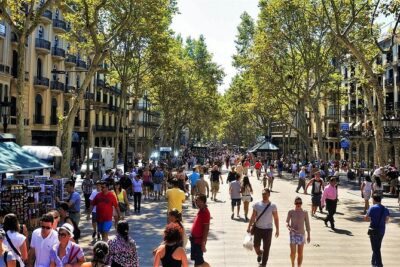
Las Ramblas is Barcelona’s best-known pedestrian boulevard, lined with shops, cafés, historic buildings, and heavy foot traffic. The stop is brief, about 15 minutes, so do not expect a full tour of every market stall or building.
Instead, use it as a lesson in how the city’s public life works. Las Ramblas links Plaça de Catalunya with the old port, and the route later follows that same broad direction toward Barceloneta.
Carrer Petritxol offers a change of pace. Known as one of Barcelona’s sweetest streets, it is associated with chocolate shops and traditional treats. One account of the experience describes time to sample chocolates and shop for some to take home. That is a useful bonus, but it should not be treated as the central food portion of the tour.
The included sangria comes later. Food beyond that drink is not listed as included, so budget separately if you choose to eat at the final restaurant stop.
Santa Maria del Pi and Barcelona Cathedral
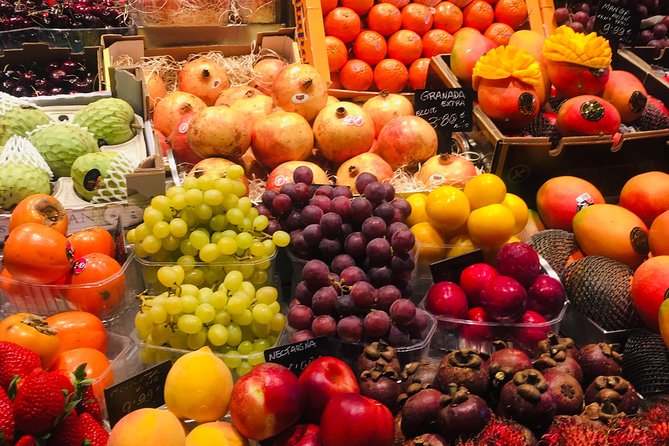
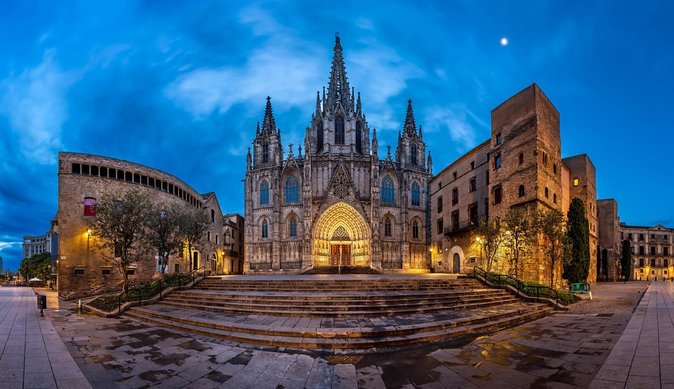
The Basilica of Santa Maria del Pi is a compact five-minute stop. Its Gothic character helps explain the quarter’s name and gives you a look at one of the district’s important churches.
The Barcelona Cathedral follows, also for about five minutes. That is enough for an exterior introduction and some context, but not a proper cathedral visit. Admission to both churches is not included, so you should not assume the group will enter.
If you plan to visit the cathedral afterward, the tour can make that visit far more rewarding. A guide can point out details that might otherwise seem decorative or mysterious. One account describes learning why 13 geese live at the cathedral, along with the stories connected to its chapels and shrines.
For that reason, I like taking this experience early in a Barcelona stay. You can return to the cathedral later with a better sense of what you are seeing. Just check opening hours separately, since the walking tour does not include entry.
A few more Barcelona half-days worth comparing
- Barcelona: Sagrada Familia Entry Ticket with Audio Guide
★ 4.6 · 105,312 reviews - Barcelona: Park Güell Admission Ticket
★ 4.4 · 76,534 reviews - Barcelona: Casa Batlló Entry with Self-Audioguide Tour
★ 4.7 · 25,359 reviews - Barcelona: 24 or 48-Hour Hop-On Hop-Off Bus Tour
★ 4.4 · 20,872 reviews
Roman walls and the old Jewish quarter
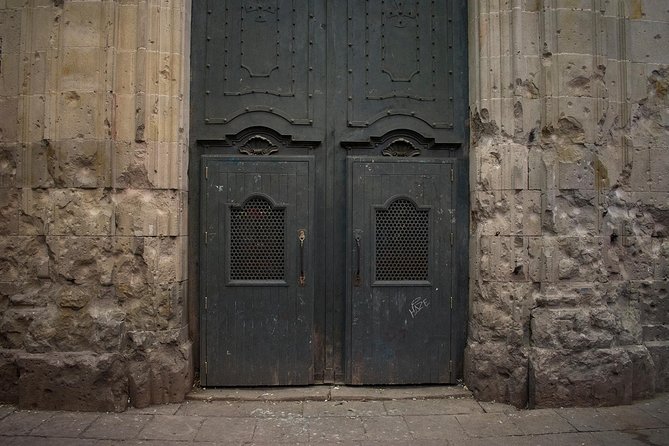
The Roman layer is one of the best reasons to book a guided walk here. The route includes ancient Roman ruins and sections of the original Roman wall. These remains are not presented as a separate archaeological visit, but they appear within the streets and buildings of the modern quarter.
That setting is the point. You are not standing in a large isolated ruin. You are looking at pieces of the old city while daily Barcelona continues around you.
The Jewish quarter adds another layer. The tour introduces the historic neighborhood and the synagogue, giving you a chance to consider the people and communities that shaped medieval Barcelona. The stop is brief, so anyone wanting a detailed religious or architectural visit should plan additional time on their own.
This portion suits anyone who enjoys seeing how several centuries overlap in one small area. It also rewards close attention. Look up, down, and into side lanes rather than walking only from one major square to the next.
The city’s darker stories at Plaça Sant Felip Neri
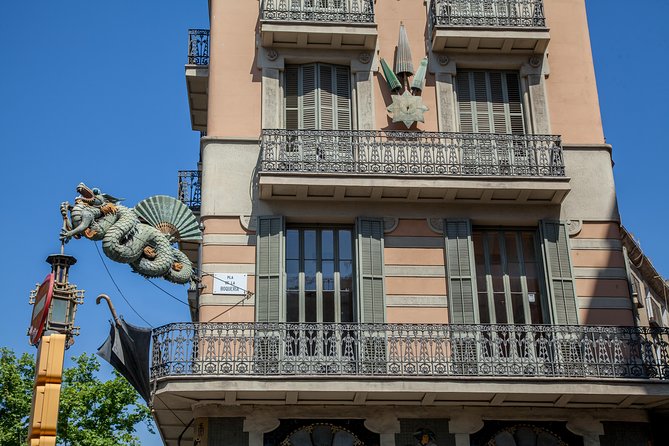
Plaça Sant Felip Neri is one of the most emotionally serious stops. The tour connects the square with the Spanish Civil War and the difficult political history of Barcelona.
The setting is small and quiet compared with the major streets nearby. That contrast gives the story weight. It also helps explain why the tour is called a look at the Gothic Quarter’s deepest secrets, rather than simply a tour of churches and plazas.
The guide’s job matters here. Dates alone can make political history feel remote. A strong storyteller can explain what happened in a way that connects the square’s walls, the neighborhood, and the wider conflict.
This is not a light sightseeing loop all the way through. You will hear about violence, political struggle, and the darker side of Spain’s past. That balance is welcome, especially for anyone who wants more than attractive streets and photo stops.
Plaça Sant Jaume and Barcelona’s public life
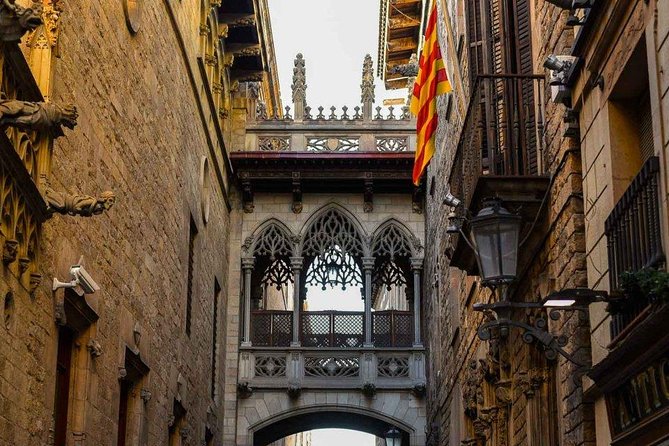
Plaça Sant Jaume is Barcelona’s government square. The stop is short, about five minutes, but its location gives the guide a chance to explain the city’s political center and the continuing importance of Catalan public life.
The nearby Archivo Histórico de la Ciudad of Barcelona adds another historical reference, including links to the Crown of Aragon. Again, the experience is about orientation and storytelling, not an extended archive visit.
These stops work best when taken together. The Roman wall explains the city’s beginnings, the Jewish quarter and churches show medieval development, and Plaça Sant Jaume connects the old center to present-day government.
Picasso, Miró, Dalí, and Gaudí connections
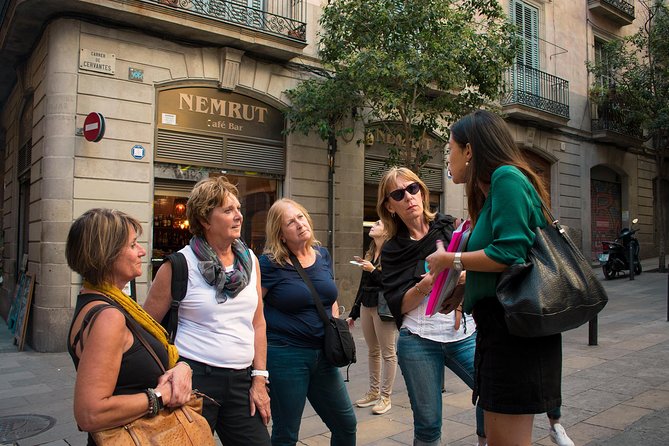
The tour includes the Royal Artistic Circle of Barcelona, described as a place connected with Gaudí’s first artistic work. It also passes the city’s prestigious applied arts school, where Picasso studied and where Miró and Dalí are also associated.
These art references are useful because Barcelona’s creative identity is often reduced to Gaudí’s major buildings. This route gives you a wider view, linking the Gothic Quarter to the artists and schools that shaped the city’s modern reputation.
The tour also identifies Miró’s birthplace. Some stops last only five minutes, so do not expect an art museum visit or a detailed biography of every artist. What you get is a series of connections, enough to help you notice how art, education, architecture, and neighborhood life overlap.
One especially appealing detail is the chance to see actual Picasso art, according to one account of the route. Since the exact viewing conditions can vary, treat that as a possible highlight rather than a guaranteed gallery-style display.
George Orwell Square and the Civil War
Plaça George Orwell, often called Plaça Tripi, is another stop tied to the Spanish Civil War. The tour uses the square to discuss George Orwell and the conflict, adding a literary angle to the political history already introduced at Plaça Sant Felip Neri.
This part gives the walk some variety. You move from church history and Roman remains to modern literature, political struggle, and Barcelona’s changing public spaces.
The stop is only about five minutes, so it works as a focused story rather than a long discussion. If Orwell’s connection to the Spanish Civil War interests you, ask the guide questions while the group is there.
Toward Barceloneta and the port
The route continues toward Barceloneta, where the subject changes from the medieval center to Barcelona’s relationship with the beach and port. A final stop includes the Pailebot Santa Eulalia and a story concerning the tortures of the city’s patron saint.
Barceloneta is a useful ending because it shows a different side of Barcelona. The Gothic Quarter is all tight lanes and old stone, while the waterfront opens the city toward the sea.
The tour ends at Port Vell in Ciutat Vella. The route is therefore not a loop back to Plaça de Catalunya. Plan your next move from the port, not from the original meeting point.
This ending also makes sense with the sangria. After several hours of walking, a drink and conversation provide a gentler finish than simply being released in another plaza.
The sangria and possible food stop
Sangria is included, and it is meant to be shared at the end of the experience. The drink gives you a chance to ask final questions and get personal recommendations for the rest of your stay.
Several accounts describe the closing food stop warmly, with mentions of tapas, olives, paella, and a restaurant near Barceloneta. One specifically names Pasa Tapas Barceloneta. Since the official inclusions list only sangria, you should regard any meal or additional tasting as optional and pay for food separately.
That distinction matters at $65.33 per person. The price is reasonable if you want a three-hour guided orientation, a small group, historical storytelling, and an included drink. It is less attractive if you mainly want entry to major monuments, a full meal, or extensive time inside churches.
I see the best value for someone arriving early in a Barcelona visit. A guide can help you understand the center, point out places worth returning to, and offer practical suggestions for restaurants or later sightseeing.
Group size, pace, and practical comfort
The maximum group size is 15 people. That is small enough for questions and easier movement through narrow lanes, though the Gothic Quarter can still be crowded. Some departures may be much smaller, including one described as a two-person tour.
The pace combines short explanations with steady walking. Many listed stops last only five minutes, while the main Gothic Quarter section is described as about an hour. The full experience lasts roughly three hours, so the route between stops accounts for a meaningful part of the time.
Wear shoes suited to uneven streets. The tour is near public transportation and most people can participate, but the available information does not promise a fully step-free route or special mobility arrangements.
The experience is offered in English and comes with a mobile ticket. Confirmation arrives at booking. Free cancellation is available up to 24 hours before the start time, while later cancellations or changes are not accepted. A minimum number is required, and if that number is not reached, you are offered another date or a full refund.
Who should book Barcelona’s Gothic Quarter tour
I would choose this walk if you want context before exploring on your own. It suits first-time visitors, history fans, people curious about the Civil War, and anyone who finds the old center hard to navigate.
It is also a good match for families with older children. One account describes a son becoming fascinated by the political and historical stories, which makes sense because the route shifts between Roman ruins, churches, artists, war, and the sea.
You may want something else if your priority is entering every major building. The cathedral and Santa Maria del Pi are listed as stops, but admission is not included. You may also prefer a shorter walk if heat, crowds, or long periods on your feet are a concern.
Should you book it?
Book this tour if you want Barcelona explained through connected stories rather than a checklist of monuments. The small group, broad route, strong guide personalities, and sangria finish make it a useful first or second-day activity.
The best guides on this route appear to be warm storytellers who invite questions and adjust the conversation to the group. Juliana, Valentina, Daniel, Sabrina, and Angelina have all led versions of the experience, with especially strong praise for Juliana and Valentina.
Skip it if you want a museum-heavy tour, guaranteed interior access, or a sit-down meal included in the price. For everyone else, $65.33 buys a solid orientation to the old city, with enough unusual details to make your later walks through Barcelona much more rewarding.
FAQ
Where does the tour start?
The tour starts at Cafe Zurich, Plaça de Catalunya, 1, in Barcelona.
Where does the tour end?
It ends at Port Vell in Ciutat Vella.
How long does the experience last?
The tour lasts approximately three hours.
What language is the tour offered in?
The experience is offered in English.
How many people can join the tour?
The maximum group size is 15 people.
Is sangria included?
Yes. Sangria is included in the experience.
Are cathedral and church admission fees included?
No. Admission to Santa Maria del Pi and Barcelona Cathedral is not included.
Is the tour close to public transportation?
Yes. The meeting point is near public transportation.
What is the cancellation policy?
You can cancel up to 24 hours before the start time for a full refund. Cancellations or changes made less than 24 hours before the start time are not accepted. If the minimum number of participants is not reached and the tour is canceled, you are offered another date or a full refund.
Recently added around Barcelona
- Park Guell Guided Tour with Skip the Line Tickets★ 4.0 · 739 reviews
- Entrance to the Mirador Torre Glories Barcelona★ 4.5 · 193 reviews
- Bohemian Barcelona Neighborhood Evening Tapas & Wine Tour★ 5.0 · 419 reviews
- Transfers From Cruise Port to Barcelona Airport★ 4.5 · 155 reviews
- Authentic Flamenco Show Barcelona : Intimate Casa Sors Experience★ 5.0 · 809 reviews
- Barcelona Expert Tour with Local Guide in Eco Tuk Tuk Private★ 5.0 · 216 reviews
- Barcelona Sunset Cruise with Light Snacks and Open Bar★ 5.0 · 476 reviews
- Barcelona: Sagrada Familia, Park Guell & Tapas Private Tour★ 5.0 · 903 reviews
Gothic Quarter Tours, compared.

Barcelona Gothic Quarter Tapas & Taverns Food & Wine Tour
Read our review →
Gothic Quarter Ghosts and Legends Walking Tour
Read our review →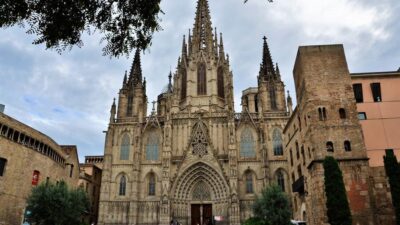
Barcelona Old Town & Gothic Quarter Small Group Tour
Read our review →
El Born and Gothic Quarter Wine & Tapas Bar Tour
Read our review →
Kids and Family Gothic Quarter Walking Tour in Barcelona
Read our review →
Browse the lists this tour appears in