
Reviewed · WALKING TOURS
Barcelona: Old Town and Gothic Quarter Walking Tour
Barcelona’s oldest streets reveal themselves best on foot, and this tour gives you a useful thread to follow through the city’s Roman, medieval, and modern layers. You begin at Plaça de Sant Jaume, pass Roman walls and medieval palaces, then finish among the cafés and narrow lanes of El Born.
I like the small-group limit of 15, which makes it easier to hear the guide and ask questions. I also like the mix of landmarks and everyday city life: ancient masonry, Catalan Gothic churches, flower stalls on La Rambla, and the food counters of La Boqueria.
The main consideration is the pace and length. The core walk is described as 2.5 hours, though some departures may last up to four hours, and the route covers a lot of ground. Wear good shoes, and do not bring luggage or a large bag.
Key points at a glance
- Roman Barcelona in Plaça de Sant Jaume: Learn why this square has remained a political center of Catalonia for more than 2,000 years.
- Ancient walls and Pati Llimona baths: See surviving Roman structures and hear about daily life in the city’s earliest period.
- La Rambla and La Boqueria: Pair Barcelona’s famous boulevard with one of its best-known food markets.
- Catalan Gothic highlights: Pass Barcelona Cathedral and Santa Maria del Mar, two major medieval churches.
- El Born finale: End in one of the city’s most atmospheric areas, near Passeig del Born.
- Strong guide-led storytelling: Guides including Alba, Joris, Nilo, Isabel, Ane, and Steven are praised for humor, local suggestions, and clear explanations.
Why this walk is a smart first look at Barcelona
Barcelona can feel confusing at first. Its old center is a knot of lanes, plazas, churches, market streets, and fragments of Roman stone. This walk gives you a map in your head before you set off on your own.
The route also avoids treating the Gothic Quarter as a collection of pretty façades with no story behind them. Your guide explains how Roman Barcelona developed, how medieval power shaped the streets, and how present-day cafés, shops, markets, and public squares fit into that older framework.
At $21 per person, the tour is good value if you want a short introduction rather than a private, highly specialized walk. You are paying for an English- or Spanish-speaking guide, a compact route through several central districts, and the chance to ask questions as you go.
The value depends heavily on your guide. Names praised in recent experiences include Alba, Joris, Nilo, Isabel, Ane, Steven, Laura, and Jose Carlos. The strongest descriptions focus on guides who explain architecture clearly, add local stories, answer questions, and suggest places to eat afterward. A private group is also available if you want more control over the conversation and pace.
More Walking Tours in Barcelona
- Barcelona Tapas and Wine Experience Small-Group Walking Tour
★ 5.0 · 5,804 reviews - Barcelona: Tapas Walking Tour with Food, Wine, and History
★ 4.8 · 4,261 reviews - Barcelona Tapas Walking Tour: Food, Wine & History
★ 4.5 · 1,928 reviews
Plaça de Sant Jaume and the Roman beginning
The tour starts at Plaça de Sant Jaume, with the listed meeting point at the Movistar Centre or another location depending on the option booked. Check your confirmation carefully, since the meeting place can vary.
This square is one of the best places to understand Barcelona’s long civic story. The Roman Forum once stood here, and the square has remained a political center of Catalonia for more than 2,000 years. It is not just an open space to photograph. It helps explain why this part of the city still carries public and political weight.
A good guide can make an otherwise ordinary-looking plaza useful to you. You learn to picture the Roman settlement beneath the modern streets and to notice how later buildings were placed around that older core.
This opening also sets the tone for the rest of the walk. The tour is not only about famous monuments. It is about reading Barcelona as a layered city, where Roman planning, medieval power, Catalan identity, and modern daily life all occupy the same few blocks.
Roman walls and the Pati Llimona baths
One of the most rewarding parts of the route is the walk beside one of the best-preserved Roman walls in the world. The wall gives you something solid to look at while the guide explains how Barcelona was protected and organized in its earliest era.
You also hear about the Roman baths at Pati Llimona. These remains offer a more personal view of the ancient city than a wall alone. Baths point to routines, social life, and the simple needs of people who lived here many centuries ago.
This is where a guide earns the price of admission. Roman ruins can be easy to pass without understanding what you are seeing. A clear explanation turns old stone into a picture of how the city worked.
Do not expect an archaeological museum visit or a long stop at every Roman site. This is a walking overview, so the emphasis is on context and connections. If you want a specialist Roman archaeology tour, this route may feel broad. If you want to understand the basic shape of Barcelona’s origins, it works well.
The Gothic Quarter’s lanes and medieval power
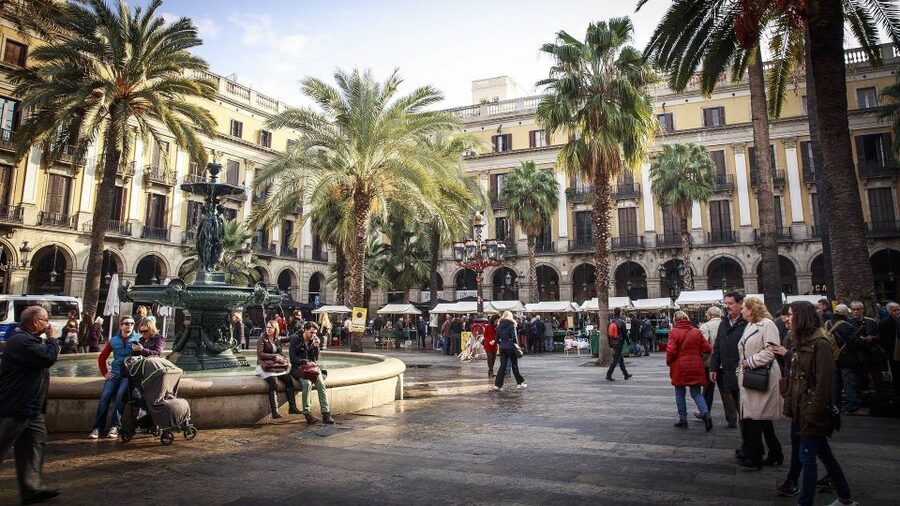
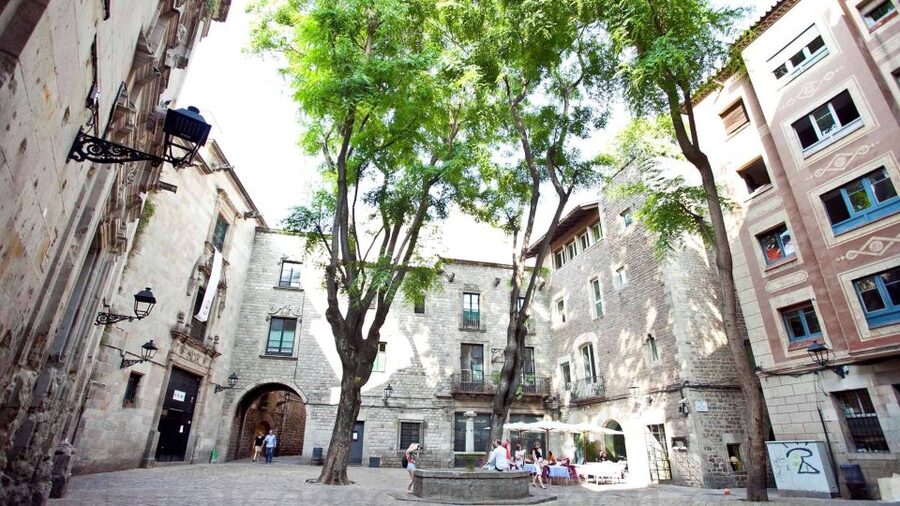
The Gothic Quarter is the center of the tour. Its narrow streets and medieval buildings create a strong sense of place, but the real benefit comes from learning how to look beyond the surface.
Plaça del Rei is a key stop. It includes the Palace of the Viceroy and the Palau Reial, the royal complex associated with the famous welcome given to Christopher Columbus by Ferdinand and Isabella after his journey to the Americas.
The square gives the guide room to discuss monarchy, trade, empire, and the way Barcelona connected to wider European events. You are not simply checking off a palace. You are placing the city inside the political world of medieval and early modern Spain.
The quarter is also a pleasant place to wander between formal stops. You pass cafés, small shops, and lively lanes where the old district functions as a real neighborhood and not only as an outdoor museum.
That mix is one of the walk’s strengths. Your guide may point out details that you would otherwise miss, from architectural features to small symbols tucked into old buildings. Steven, one guide praised for using puzzles and encouraging people to look for dragons and a two-tailed mermaid, shows how a good walk can turn sightseeing into a kind of visual treasure hunt without becoming childish.
More Gothic Quarter walks:
- Barcelona Gothic Quarter Tapas & Taverns Food & Wine Tour
★ 5.0 · 1,470 reviews - Barcelona: Gothic Quarter Ghosts and Legends Walking Tour
★ 4.7 · 1,443 reviews - Barcelona Old Town & Gothic Quarter Small Group Tour
★ 5.0 · 1,308 reviews - Barcelona: El Born and Gothic Quarter Wine & Tapas Bar Tour
★ 4.8 · 674 reviews
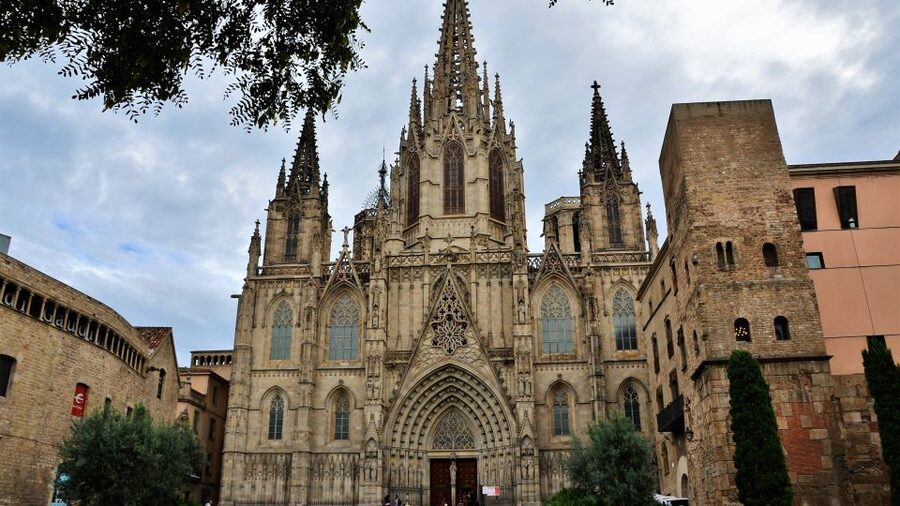
Barcelona Cathedral and Catalan Gothic style
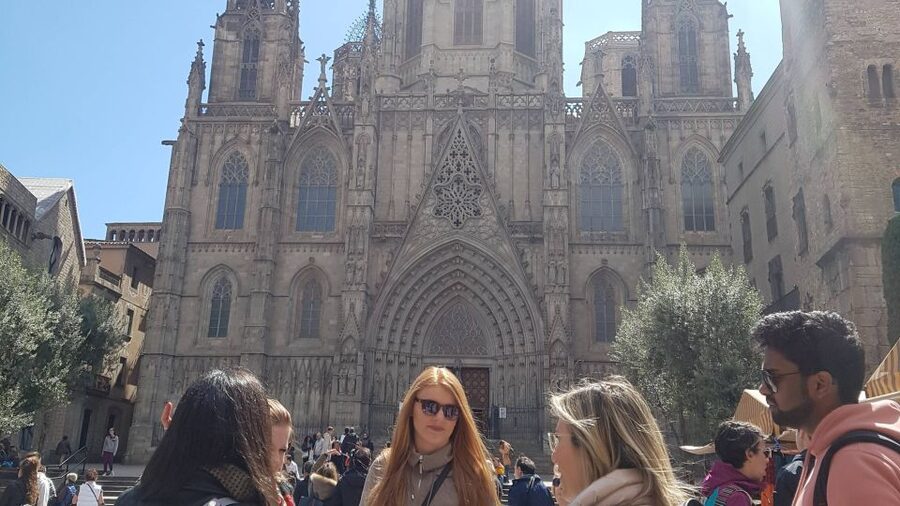
Barcelona Cathedral appears along the route, with the itinerary listing it as a sight to pass by. That distinction matters. You should expect an exterior view and an explanation, not necessarily an organized interior visit.
The cathedral is an important example of medieval Gothic architecture. Your guide can help you notice the vertical lines, carved details, and the way the building fits into the surrounding quarter. The setting is as useful as the church itself, since the cathedral sits within a dense network of old streets and small public spaces.
The tour gives you a broad introduction to Catalan Gothic design rather than a technical architecture lecture. That suits most first-time visitors. You get enough background to recognize the style later at other sites, while the route keeps moving.
If entering the cathedral is a priority, plan to return on your own and check current opening arrangements. The walk does not promise an interior visit.
La Rambla, Barcelona’s famous public stage
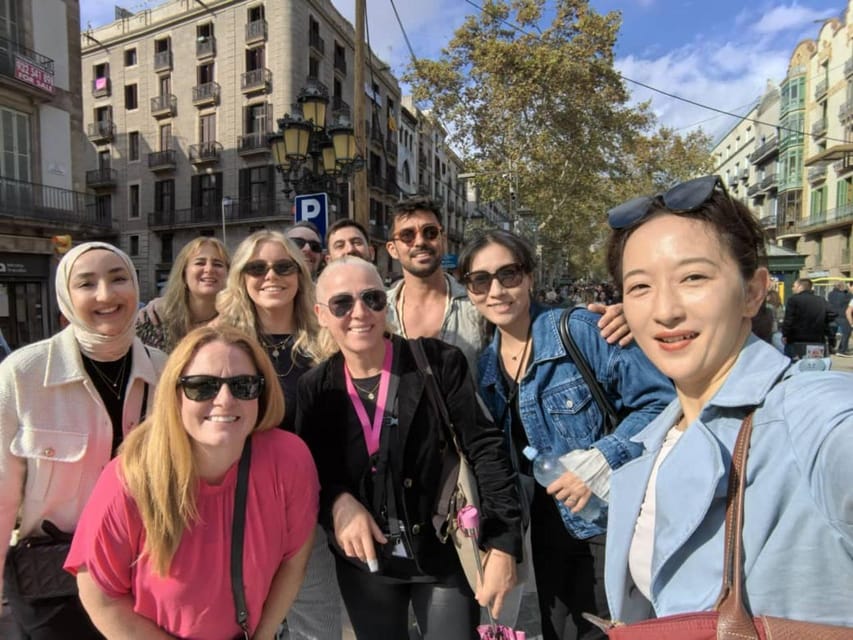
From the Gothic Quarter, the route continues toward La Rambla. This broad boulevard is one of Barcelona’s best-known public spaces, lined with flower stalls, outdoor cafés, eateries, entertainers, and constant foot traffic.
It is a change of mood from the tight medieval lanes. La Rambla is open, theatrical, and easy to understand at a glance. A guide adds value by explaining how it fits into the city rather than leaving you to experience it as a busy path between attractions.
The route passes along La Rambla rather than presenting it as a full stop with an extended program. That is sensible. The boulevard is best understood through movement, people-watching, and short explanations.
Keep your attention on your belongings here. The activity notes that the guide may vary by meeting point and that large bags are not allowed, while one guide was specifically praised for paying attention to group safety and belongings. You should still use normal city awareness, especially in crowded public areas.
La Boqueria and Barcelona’s food culture
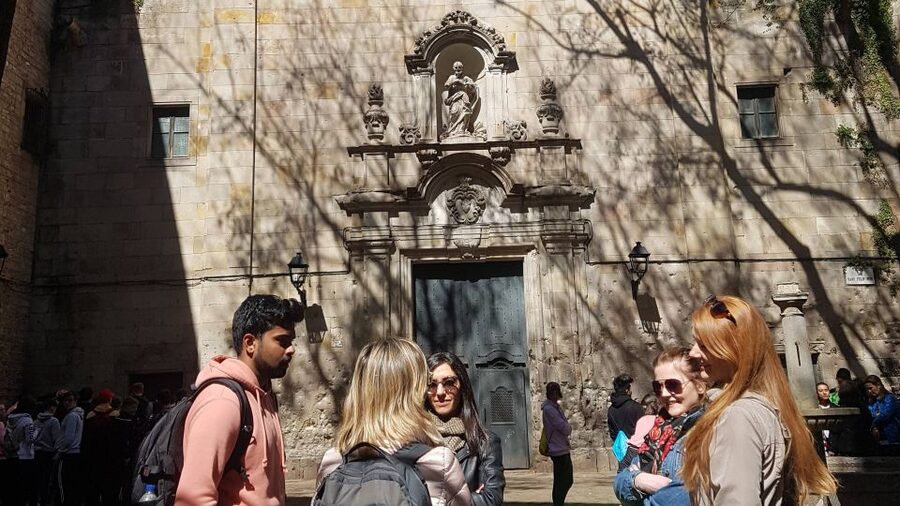
La Boqueria is one of the route’s most appealing stops. More than 300 stalls offer local products, making the market a useful window into Catalan food culture.
You can expect a guided look at the market rather than a meal included in the tour. Personal expenses are not covered, so any food or drink you buy is yours to pay for.
The market works well in this itinerary because it gives the history a sensory side. After hearing about Roman streets and medieval power, you see the modern city shopping, eating, and selling food in a lively central space.
Go with realistic expectations. La Boqueria can be crowded, and a walking tour cannot give you time to inspect every stall. The benefit is orientation: you learn what the market is, how it fits into the city center, and where you may want to return later.
Several guides are praised for restaurant and food suggestions, including Alba, Ane, Stephen, Laura, and Nilo. Ask for recommendations during or after the walk, but remember that personal tastes vary and the tour does not include a food tasting program.
Plaça Reial and the change toward El Born
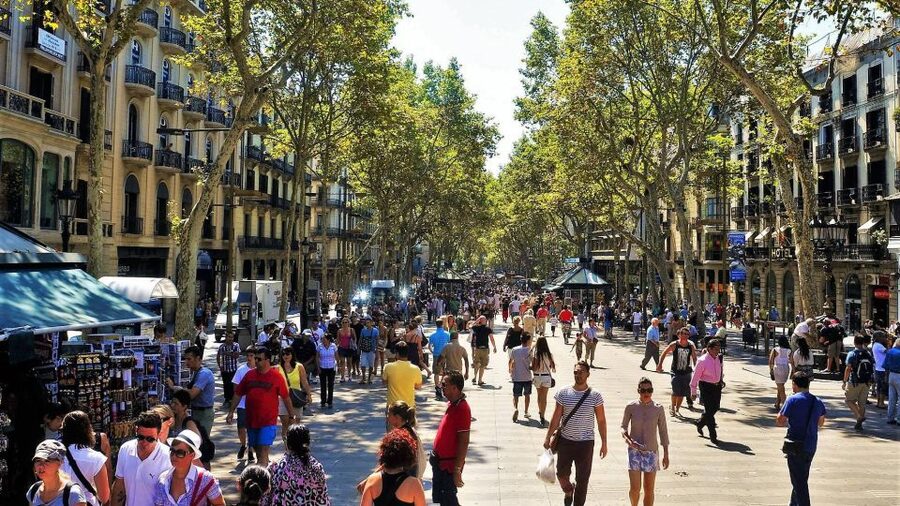
Plaça Reial appears as another guided stop. Its broad arcade-lined setting offers a clear contrast with the Gothic Quarter’s tight lanes and gives you a chance to pause in a more spacious urban square.
The route then heads toward El Born. This area is known for cafés, shops, and streets that combine older buildings with a younger social scene. It is a good place to finish because you are left in a district that invites further exploring rather than beside a single attraction where the day simply ends.
You finish at Passeig del Born. That location is useful for lunch, a drink, or more walking, though the tour does not include any onward activity. Treat the endpoint as a starting point for your own afternoon.
The route also passes or views Santa Maria del Mar and the Palace of Catalan Music. These are listed as sightseeing stops rather than full guided visits. You should expect exterior context and a chance to see their place in the city, not a reserved entrance or extended interior tour.
Santa Maria del Mar and Catalan Gothic engineering
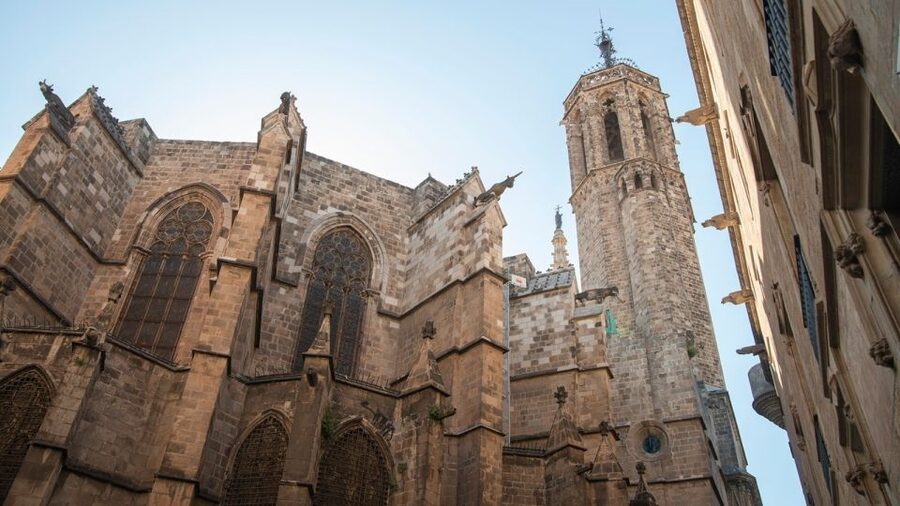
Santa Maria del Mar is among the most memorable architectural sights on the route. The church is a major example of Catalan Gothic design, and the guide explains how it was built in an unusually short period for a medieval project.
That detail helps you appreciate the building as an engineering achievement, not only as a handsome church. The story connects construction methods, civic ambition, and the ability of a medieval community to organize a large building project.
The itinerary lists Santa Maria del Mar as a sight to pass by. If you want to study the interior, return separately. The tour’s job is to place the church in the story of Barcelona and show you where it belongs in relation to El Born and the old city.
What the guides add to the experience
The strongest feature of this activity is the human guide. The route is good, but Barcelona’s old center is full of details that need explanation.
Guides praised by name include Alba, Joris, Nilo, Isabel, Ane, Steven, Laura, Jose Carlos, Mariah, Montse, Isabella, Boris, Jana, Edward, and Stephanie. The feedback repeatedly points to a few useful qualities: clear English, humor, enthusiasm, good pacing, and a willingness to answer questions.
One guide with a background in architecture was praised for bringing extra detail to the buildings. Another asked for input from the group and adjusted the discussion to match its interests. Several guides were praised for making sure everyone could hear and remain together.
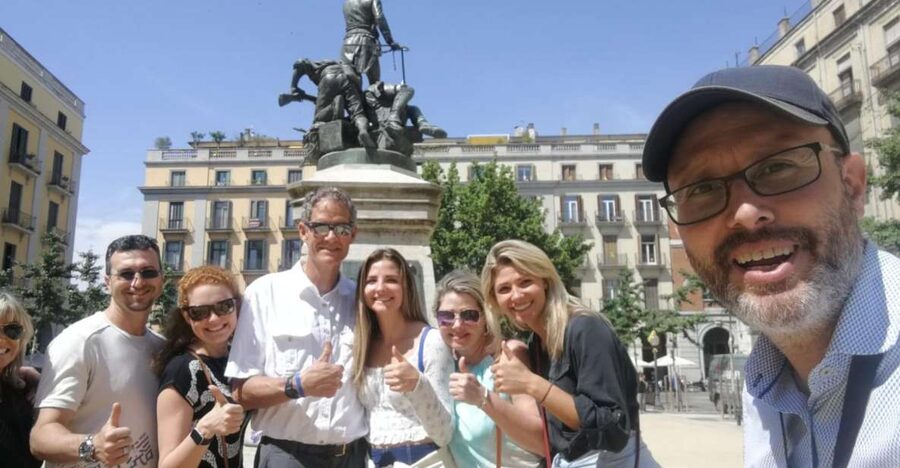
That makes the maximum of 15 people important. You do not get the intimacy of a one-on-one walk unless you book a private group, but a group this size is far easier to manage than a large crowd. You can usually hear the explanation, ask a question, and keep track of the guide in narrow streets.
Guide quality can vary from departure to departure, as it does with any activity built around different people. Still, the repeated praise for warmth, humor, local advice, and historical explanation is a strong sign that the format works best when you engage with the guide. Ask questions. Mention what interests you. The walk becomes more useful when you treat it as a conversation.
Timing, comfort, and who should book
The advertised duration is 2.5 hours, with available options ranging from 2.5 to four hours. Check the exact departure when booking. A shorter version may suit a first morning in Barcelona, while a longer departure gives the guide more room for questions and side details.
You will be walking on city streets for the entire experience. Comfortable shoes are essential. The route includes old streets, market areas, open squares, and busy public spaces, so a small day bag is more practical than luggage or a large backpack.
Children under two can join for free. The tour may suit families with older children who enjoy stories and city sights, though the length and amount of walking may be tiring for very young children.
This is a good choice for:
- First-time visitors who want a clear introduction to central Barcelona
- History fans who want Roman and medieval context
- Visitors who prefer walking to a bus-based overview
- People who want food-market and neighborhood atmosphere alongside monuments
- Anyone who values local restaurant suggestions and a chance to ask questions
It is less suitable if you want long interior visits, a meal included, or a slow photographic walk with lots of free time. The route covers several districts, so you trade depth at each building for a wider view of the old center.
Free cancellation is available up to 24 hours before the activity, and you can reserve now and pay later. Those terms are useful if your Barcelona schedule is still shifting, but the key decision is still the walking route and guide-led format.
Should you book the Barcelona Old Town and Gothic Quarter walk?
I would book this tour for a first or second day in Barcelona, especially at $21. It gives you the city’s basic structure, introduces the Roman and medieval center, and leaves you near El Born with practical ideas for the rest of your stay.
Book it if you want stories, orientation, and a broad look at major sights. Choose another activity if your priority is entering every church, studying architecture in detail, or eating your way through La Boqueria.
The best strategy is to take the walk early in your visit. Use the guide’s suggestions to decide where to return, then spend later hours inside the places that caught your attention. For a modest price and a manageable group size, this is a useful way to get your bearings without reducing Barcelona to a list of photo stops.
FAQ
How long does the Barcelona Old Town and Gothic Quarter Walking Tour last?
The tour is listed as lasting 2.5 to four hours, depending on the option and departure selected. Check availability for the exact duration.
What languages are available?
The tour is offered with a live guide in English or Spanish.
How much does the tour cost?
The listed price is $21 per person. Personal expenses, such as food and drinks at La Boqueria, are not included.
Where does the tour start and finish?
The meeting point may vary by booking option, with the Movistar Centre listed as a starting location. The tour finishes at Passeig del Born, 08003 Barcelona.
How large is the group?
The small-group tour has a maximum of 15 participants. A private group option is also available.
What should I bring?
Wear comfortable shoes for several hours of walking. Do not bring luggage or large bags.
Recently added around Barcelona
- Park Guell Guided Tour with Skip the Line Tickets★ 4.0 · 739 reviews
- Entrance to the Mirador Torre Glories Barcelona★ 4.5 · 193 reviews
- Bohemian Barcelona Neighborhood Evening Tapas & Wine Tour★ 5.0 · 419 reviews
- Transfers From Cruise Port to Barcelona Airport★ 4.5 · 155 reviews
- Authentic Flamenco Show Barcelona : Intimate Casa Sors Experience★ 5.0 · 809 reviews
- Barcelona Expert Tour with Local Guide in Eco Tuk Tuk Private★ 5.0 · 216 reviews
- Barcelona Sunset Cruise with Light Snacks and Open Bar★ 5.0 · 476 reviews
- Barcelona: Sagrada Familia, Park Guell & Tapas Private Tour★ 5.0 · 903 reviews
Walking Tours, compared.

Barcelona Tapas and Wine Experience Small-Group Walking Tour
Read our review →
Tapas Walking Tour with Food, Wine, and History
Read our review →
Albaicín and Sacromonte Guided Sunset Walking Tour
Read our review →
Toledo Tour & Vineyard Walk with Wine Tasting from Madrid
Read our review →

Barcelona Tapas Walking Tour: Food, Wine & History
Read our review →
Madrid Old Town & Royal Palace Walking Tour Skip the Line Ticket
Read our review →
Browse the lists this tour appears in