
Reviewed · GOTHIC QUARTER TOURS
Barcelona Gothic Quarter Old Town Private Tour
Barcelona’s Gothic Quarter is best understood on foot, where a Roman wall, a quiet church square, a medieval lane, and a modern café may all appear within a few minutes of one another. This private walk with Patrick Taggart uses that compact setting to explain how Barcelona grew from its Roman roots into the city you see today. The guide is also a professional actor, so you can expect a more lively presentation than a basic point-and-date walk.
I like the private format, since you can ask questions, slow down for photos, or adjust the route to suit your group. I also like the practical start-of-trip value: Patrick gives food suggestions, orientation tips, and help with onward plans. The main consideration is pace. This is a long walking tour, and the amount of information can feel heavy if you are tired, traveling with young children, or have only a short window.
Key points to know before booking
- Roman Barcelona is part of the main story: Roman tombs, the old Roman quarter, and later medieval districts appear along the walk.
- Patrick Taggart leads the experience: He is praised for clear English, humor, patience, and an ability to explain the difference between fact and local folklore.
- You walk from pickup to the first stop: Car pickup is not offered, though the meeting point is near public transportation.
- The route covers major Gothic Quarter sights: Expect Las Ramblas, Santa Maria del Pi, the Jewish Quarter, the Cathedral, and Plaza del Rey.
- The private setting gives you room to adapt: The pace and amount of material can change for families, tight schedules, or photo stops.
- Plan for roughly two and a half hours: One account found the duration unclear, so confirm the start and finish timing before you go.
Why this makes a strong first walk in Barcelona
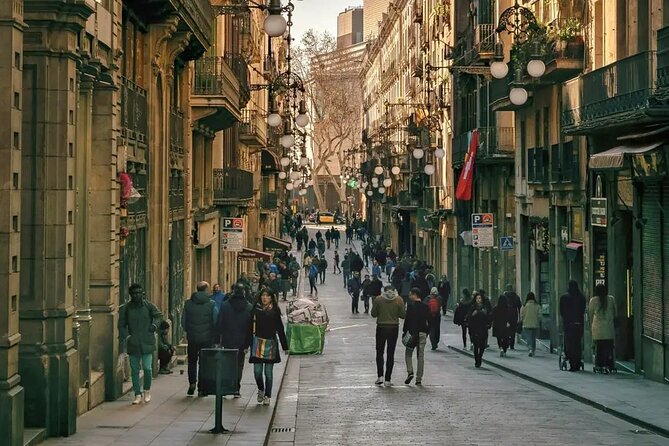
I would place this tour near the beginning of a Barcelona stay. The Gothic Quarter is easy to reach, but it is not always easy to read. Its lanes can feel like a maze, and important sights often sit beside ordinary doorways or modern businesses without much explanation.
A guide gives you a framework. Instead of seeing isolated buildings, you begin to connect the Roman settlement, the medieval city, the Jewish Quarter, religious power, and the present-day neighborhood. That context makes later walks through central Barcelona more rewarding.
The private format matters here. A large group usually has to keep moving, even when someone wants to ask about a street name or stop for a photograph. With your own guide, you can ask about architecture, local customs, restaurants, or the city’s past without waiting for a formal question period.
Patrick’s approach appears especially useful for first-time visitors. He explains the area in plain English, adds humor, and encourages questions. Several accounts describe him as patient and easy to talk with, which is valuable in a district where one simple question can lead from Roman engineering to medieval religion or modern neighborhood life.
There is also a theatrical element. As a professional actor, Patrick brings energy and storytelling to the walk. That does not replace solid information, but it can help the past feel less like a list of dates. If you enjoy a guide who talks with you rather than simply reciting facts, this style should suit you.
More Private Tours in Barcelona
- Tour Welcome Barcelona with Local Guide in Eco Tuk Tuk Private
★ 5.0 · 1,882 reviews - Barcelona Private Tour by Sidecar Motorcycle
★ 5.0 · 1,750 reviews - Barcelona Helicopter, Sailboat & Old Town Private Walking Tour
★ 5.0 · 1,395 reviews
Starting near Carrer de Rivadeneyra
The listed meeting point is Carrer de Rivadeneyra, 21, in Barcelona’s Ciutat Vella. You should note one practical detail before booking: pickup is on foot, not by car. The guide walks with you from the meeting point to the first part of the route.
That arrangement fits this part of Barcelona. Cars are of limited use in the narrow central lanes, and walking lets you begin orienting yourself immediately. Still, allow enough time to reach the meeting point, particularly if you are arriving from another neighborhood or carrying luggage.
The tour operates Monday through Sunday from 9:00 a.m. to 6:00 p.m. The flexible timing is useful for fitting the walk around a flight arrival, a later museum visit, or an evening meal. If you are starting after a long journey, an afternoon time may be easier than an early morning start.
The listed end point is Via Laietana, 1802, also in Ciutat Vella. Since this is a walking experience, wear comfortable shoes and expect uneven pavement, narrow lanes, and plenty of standing while the guide explains what you are seeing.
Las Ramblas and the first look at old Barcelona
Las Ramblas provides a useful opening because it connects the central city with the older quarters. It is one of Barcelona’s best-known avenues, but its fame can make it easy to rush through without understanding how it relates to the surrounding streets.
From here, the tour moves toward the Gothic Quarter. The contrast is part of the appeal. A broad, highly visited avenue gives way to smaller lanes and older fragments, where the city’s layers are less obvious unless someone points them out.
I would not expect a long stop at every sight. The route covers a lot of ground in about two and a half hours, so the value lies in the guide’s explanations and in seeing how the pieces fit together. If you want extended interior visits, formal museum time, or long architectural studies, this may feel too brisk.
The tour is also a useful orientation walk for food. Patrick has given specific restaurant suggestions during tours, and some groups returned to places he recommended later in their stay. Those tips can be worth more than a generic list because they come while you are standing in the neighborhood and deciding where to eat.
Roman tombs and Barcelona’s first city
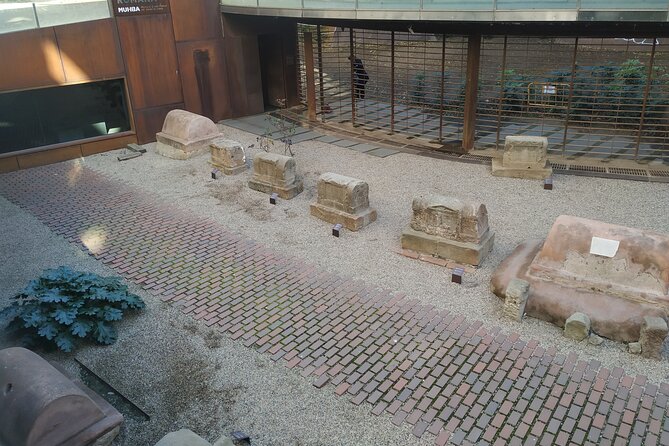
The Roman tombs are one of the most useful reminders that the Gothic Quarter is not simply a medieval district. Roman Barcelona sits underneath and beside the city you see now, and the tombs help make that early period tangible.
This part of the walk is valuable for visitors who want more than a parade of famous façades. You learn to look for evidence of the ancient settlement rather than treating the quarter as one uniform historic zone. Patrick is particularly strong at linking Roman occupation to the later growth of Barcelona.
The Roman quarter adds another layer. The exact visual impact will depend on what is accessible during your visit, but the subject itself gives the tour a clear backbone. You are not only hearing that Barcelona is old. You are seeing how its oldest urban roots still shape the center.
The guide also discusses the difference between documented history and stories passed down over time. That distinction is helpful in a city with many legends. You can enjoy the colorful tales without mistaking every old story for proven fact.
More Gothic Quarter walks:
- Barcelona Gothic Quarter Tapas & Taverns Food & Wine Tour
★ 5.0 · 1,470 reviews - Barcelona: Gothic Quarter Ghosts and Legends Walking Tour
★ 4.7 · 1,443 reviews - Barcelona: Old Town and Gothic Quarter Walking Tour
★ 4.8 · 1,393 reviews - Barcelona Old Town & Gothic Quarter Small Group Tour
★ 5.0 · 1,308 reviews
Santa Maria del Pi and the church square
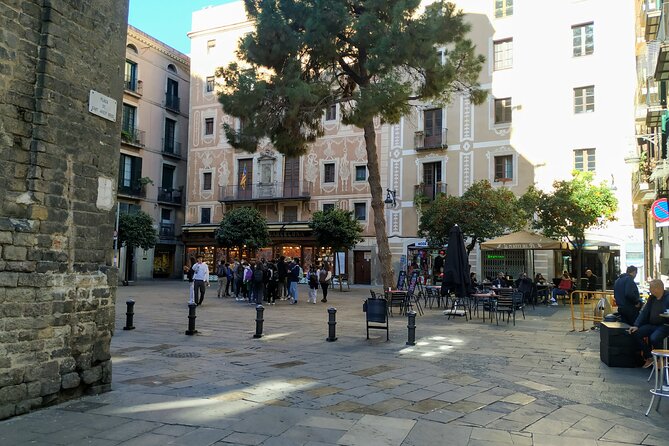
Plaza Santa Maria del Pi and its church offer a change of mood. After the movement of Las Ramblas and the narrow Roman-era streets, the square gives you room to pause, look upward, and consider the religious architecture that shaped the medieval city.
The church is included as a sight on the route, but an admission ticket is not included. You should treat the tour as an exterior-focused walking experience unless your booking details confirm interior access. That distinction matters if you are hoping to spend time inside every church or monument.
I like this stop because it shows how public space and religion worked together in the old city. The square is not just a backdrop for photographs. It helps explain how people gathered, worshiped, traded, and moved through the medieval quarter.
The stop also gives you a natural chance to take photos. One of the strengths of a private walk is that the guide can allow time for pictures instead of urging the entire group forward. If photography matters to you, say so early.
The Jewish Quarter and the city’s layered identity
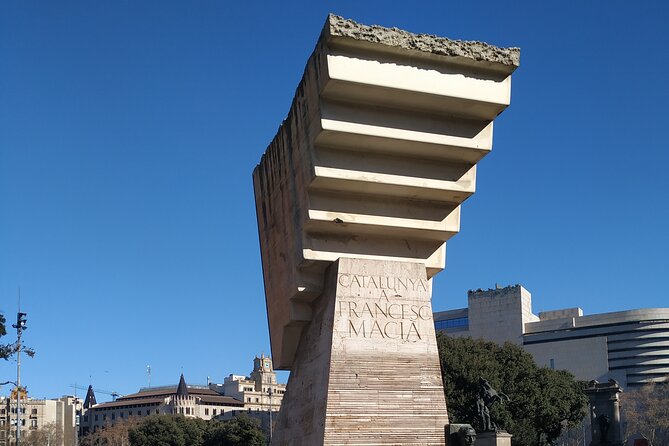
The Jewish Quarter brings a different part of Barcelona’s past into view. This section is important because it prevents the Gothic Quarter from being reduced to churches, royal buildings, and Roman remains.
You can expect the guide to place the quarter within the broader story of Barcelona and explain how communities shaped the old city. The lanes are compact, so the information can come quickly. Ask questions if you want more detail about daily life, religious communities, or how the district changed over time.
This is one reason I prefer a private guide for the Gothic Quarter. The subject can raise questions that do not fit neatly into a scripted stop. You may want to pause on one detail, while another group might prefer to keep moving. Here, the route can respond to your interests.
The quarter also reinforces a central lesson of the walk: Barcelona is made of overlapping communities and time periods. A Roman foundation, a medieval religious center, a Jewish neighborhood, and a modern social district can occupy the same small area.
The Cathedral and Plaza del Rey
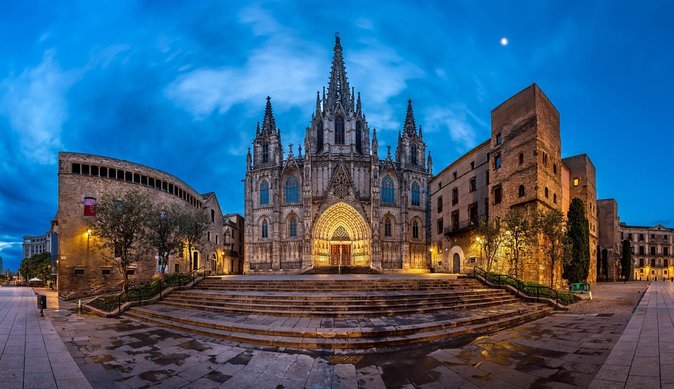
The Cathedral is one of the major landmarks on the route, and Plaza del Rey gives the walk another strong historical setting. These are the kinds of places that many people photograph before knowing what they are seeing.
Patrick’s role is to provide the missing frame. He explains the setting, points out details you might pass without noticing, and connects the buildings to the city’s wider development. His style is conversational, so you can ask for clarification rather than relying on a set speech.
Plaza del Rey is especially useful for understanding the political and royal side of Barcelona’s past. Together, the Cathedral and the square shift the tour from private streets and community districts toward institutions that shaped the city.
The route does not include admission tickets. That keeps the base price focused on the walking guide, but it also means you should budget separately if you want to enter paid sites. The tour can still work well without interior admissions because the main promise is interpretation of the Gothic Quarter itself.
The guide’s style and the value of a private group
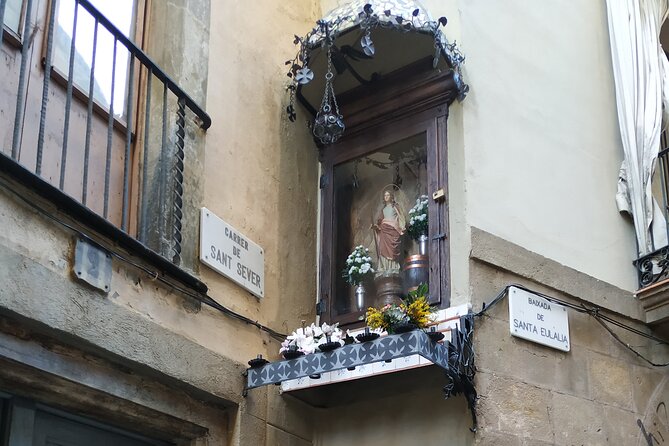
The strongest part of this experience is the guide. Patrick is repeatedly described as punctual, friendly, engaging, and very well informed about the Gothic Quarter. He answers questions patiently and adjusts his presentation to the group in front of him.
That flexibility has practical benefits. One person had to shorten the walk, and Patrick changed the pace and content so the most important material was still covered. A private tour cannot make time disappear, but it can help you avoid wasting your limited time.
Families should think carefully about the length. A family of seven, including children aged 7, 9, and 11, enjoyed the tour, and Patrick worked well with the children. Still, the younger children began to lose energy toward the end. Plan a snack or rest afterward, and do not assume that a two-and-a-half-hour historical walk will feel short to a child.
The private setup is also useful for mixed interests. One person may care about Roman archaeology, another about architecture, and another about restaurants. Patrick’s conversational approach allows those interests to share the same walk.
One account names Dasha as the guide rather than Patrick. Since Patrick Taggart is the named experience provider, I would confirm the assigned guide when booking if having Patrick specifically is important to you.
Price, timing, and what the $78.64 buys
At $78.64 per person, this is not the cheapest way to see the Gothic Quarter. The value depends on the size of your group and how much you want from a guide.
For two people, the price buys a private, roughly two-and-a-half-hour introduction with room for questions and personal recommendations. That can be worthwhile on your first day, when a good orientation may shape the rest of your stay. For a larger group, the private format can compare more favorably with several individual tickets for a group experience, especially when discounts are available.
You are paying for the guide, not a package of admissions or transportation. The price includes a private tour guide, while church or monument entry fees are not included. I would see this as a history and orientation service rather than a sightseeing bundle.
Check the timing before you reserve. The stated duration is approximately two hours and 30 minutes, but the schedule also identifies a 15-minute Gothic Quarter stop, which can be confusing when compared with the full walking time. One person also found the duration unclear and had only about one hour and 45 minutes available. Confirm the start and end time if your day is tightly planned.
Comfort, weather, and cancellation details
This is an outdoor walking activity, so weather matters. If poor weather causes cancellation, you are offered another date or a full refund. You can also cancel for a full refund up to 24 hours before the start time. Changes or cancellations made inside that 24-hour window are not refunded.
Most people can participate, and service animals are allowed. The experience is near public transportation, but the walk itself remains the main physical demand. If you have mobility concerns, ask for details before booking rather than assuming every old-city lane will be easy.
Good shoes are the simplest preparation. Bring water, leave room for photo stops, and avoid scheduling a demanding attraction immediately afterward. The guide may adjust the pace, but you will still spend much of the experience walking and standing.
Who should book this Gothic Quarter walk?
I would recommend it most strongly to first-time visitors, couples, families who want a private guide, and anyone who prefers conversation over a large-group script. It is also a good choice if you arrive with little background on Barcelona and want the city’s Roman and medieval story explained in one sitting.
It suits curious visitors who want local food suggestions and practical orientation as much as landmark facts. Patrick’s ability to answer questions and help with onward plans adds value that a printed guidebook cannot provide in the moment.
I would think twice if you dislike long explanations, want extensive interior visits, or have only a very short time in the center. The guide has plenty of material, and one account found him long-winded even while praising his passion and skill. That is a style issue, not a flaw for everyone, but it is worth knowing.
Should you book it?
Book this tour if you want the Gothic Quarter to make sense, not just look old. The private format, flexible pacing, Roman and Jewish history, major churches, and personal city advice make it a strong first-day introduction.
Skip it if you prefer to explore independently with a map, need a short highlight walk, or want admission to several interiors included in the price. For most first-time visitors who value a thoughtful guide and direct answers, the $78.64 cost is reasonable, especially with a larger group or a tight Barcelona schedule.
FAQ
How long does the tour last?
The experience lasts approximately two hours and 30 minutes. Confirm the exact timing before booking because the schedule also includes a 15-minute stop description, and one account found the duration unclear.
Who guides the tour?
The experience provider is Patrick Taggart, and Patrick is the guide named in most of the supplied details. One account names Dasha, so confirm the assigned guide if a specific guide matters to you.
What sights are included?
The walking route covers Las Ramblas, Roman tombs, Plaza Santa Maria del Pi and its church, the Roman quarter, the Jewish Quarter, the Cathedral, and Plaza del Rey.
Are admission tickets included?
No. Admission tickets are not included. The listed inclusion is a private tour guide.
Where does the tour start and end?
It starts at Carrer de Rivadeneyra, 21, Ciutat Vella, Barcelona. It ends at Via Laietana, 1802, Ciutat Vella. Car pickup is not offered, and you walk from the meeting point to the first stop.
What is the cancellation policy?
You can cancel at least 24 hours before the start time for a full refund. Cancellations or changes made less than 24 hours before the start time are not refunded. If poor weather cancels the tour, you can choose another date or receive a full refund.
Recently added around Barcelona
- Park Guell Guided Tour with Skip the Line Tickets★ 4.0 · 739 reviews
- Entrance to the Mirador Torre Glories Barcelona★ 4.5 · 193 reviews
- Bohemian Barcelona Neighborhood Evening Tapas & Wine Tour★ 5.0 · 419 reviews
- Transfers From Cruise Port to Barcelona Airport★ 4.5 · 155 reviews
- Authentic Flamenco Show Barcelona : Intimate Casa Sors Experience★ 5.0 · 809 reviews
- Barcelona Expert Tour with Local Guide in Eco Tuk Tuk Private★ 5.0 · 216 reviews
- Barcelona Sunset Cruise with Light Snacks and Open Bar★ 5.0 · 476 reviews
- Barcelona: Sagrada Familia, Park Guell & Tapas Private Tour★ 5.0 · 903 reviews
Gothic Quarter Tours, compared.

Barcelona Gothic Quarter Tapas & Taverns Food & Wine Tour
Read our review →
Gothic Quarter Ghosts and Legends Walking Tour
Read our review →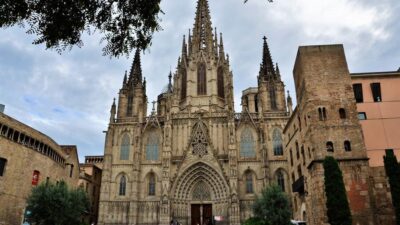
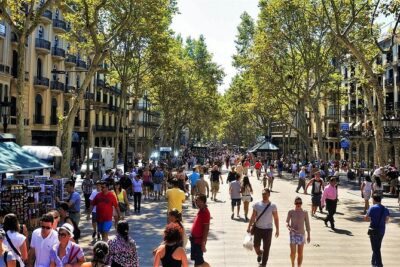
Barcelona Old Town & Gothic Quarter Small Group Tour
Read our review →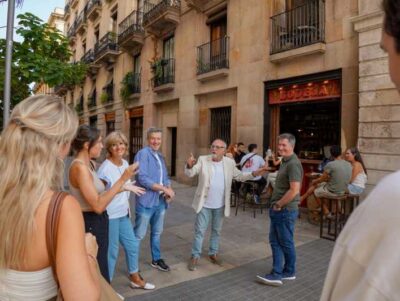
El Born and Gothic Quarter Wine & Tapas Bar Tour
Read our review →
Kids and Family Gothic Quarter Walking Tour in Barcelona
Read our review →
Browse the lists this tour appears in