
Reviewed · ANDALUSIA TOURS
Jerez: Royal Andalusian School of Equestrian Art Admission
The finest part of this Jerez experience is the chance to see Andalusian horses at work, not just polished for a performance. You move from the elegant palace and gardens into the working stables, tack room, saddlery, and training rings. I especially like the close look at daily horse care and the excellent museums, both included in the roughly $18 admission.
The main catch is that this is not the famous horse show. It is a school visit with training, and the daily program can change. Saturday is a weaker choice because horse training and saddlery visits are excluded, while some English tours may begin later than expected.
Key points to know before you go
- See training rather than only a finished show: Watch horses and riders work in the outdoor rings or indoor arena, except Saturdays.
- Tour working areas: The guided route includes the stables, octagonal tack room, and saddlery.
- Allow time for four distinct sights: Gardens, palace rooms, the Equestrian Art Museum, and carriage museum are all part of the visit.
- Guides add real value: Guides such as Elena, Javi, and Harry have been praised for clear explanations and helpful answers.
- Plan around the morning schedule: The audio-visual presentation is available until 11:00 AM, and English tours may start later.
- Expect a quiet, polished setting: The horses, buildings, and facilities are kept in notably good condition.
Why this is more than a horse stable visit
Jerez is one of Andalusia’s great horse towns, and this school gives you a look at the tradition from several angles. You see the horse as performer, working animal, cultural symbol, and carefully trained athlete.
The visit also avoids the narrow focus of a show. You can watch training, see the rooms where equipment is stored and repaired, and learn how the school presents its own past. That makes the admission useful even if you do not know much about dressage.
At about $18 per person, I consider this good value. You are paying for access to several facilities, not a single short presentation. The palace, gardens, Equestrian Art Museum, carriage collection, stables, and training spaces give the visit enough variety to fill two hours comfortably. If you take your time in the museums or wait to watch more training, you may spend longer.
The experience suits horse lovers best, but you do not need to ride or follow equestrian sport to enjoy it. The palace architecture, museum displays, carriages, costumes, and gardens give non-riders plenty to see.
More horse shows in Andalusia:
- Cordoba: Equestrian Show General Entry
★ 4.5 · 2,333 reviews - Fuengirola: Spanish Horse Show with Optional Dinner/Flamenco
★ 4.1 · 249 reviews - Equestrian Show Royal Stables of Córdoba
★ 4.0 · 241 reviews
Start with the audio-visual presentation
You begin at the visitor reception center. An audio-visual presentation introduces the history of equestrian art in Andalusia, but it is available only until 11:00 AM. If this introduction matters to you, check the starting time carefully and aim for the morning.
This opening film can help you understand what follows. The school’s horses and riders are not simply performing tricks. Their movements reflect a long tradition of training, control, and cooperation between horse and rider. An introduction also gives the museum displays more meaning later.
Do not assume the presentation will always run exactly as expected. One past visit had the introductory film canceled without notice, and another had a delayed English start while the school gathered enough English-speaking participants. The rest of the visit remained worthwhile, but I would keep your schedule flexible.
Walk through the gardens to the palace
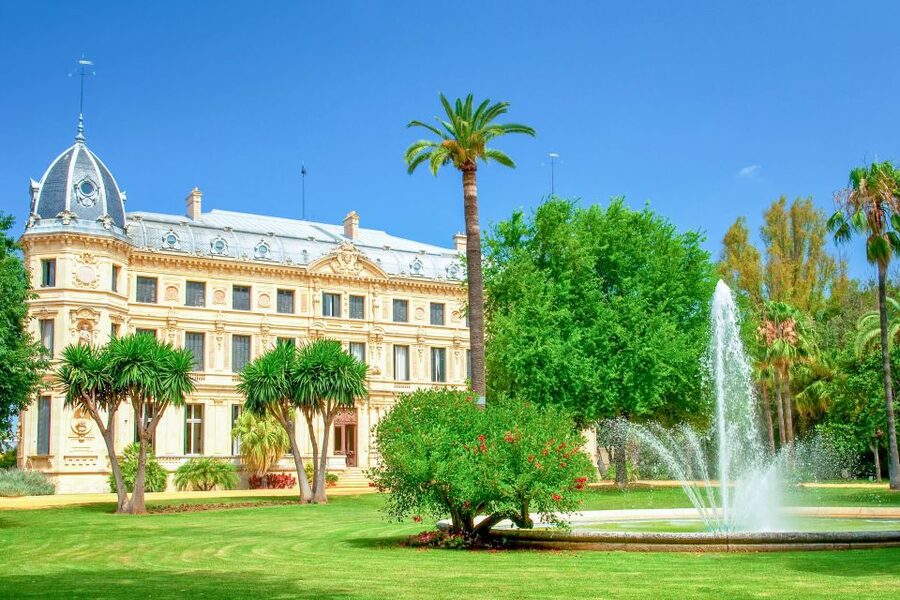
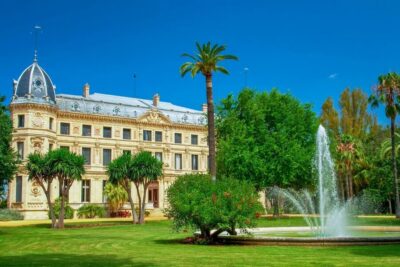
From reception, you enter the gardens. The grounds feature exotic plants and a large central fountain, whose water jets draw your eye toward the palace.
This is a pleasant opening because the school does not feel like a plain sporting complex. The gardens create a calm transition from the city into the school grounds. Take a few minutes here rather than hurrying straight to the indoor exhibits.
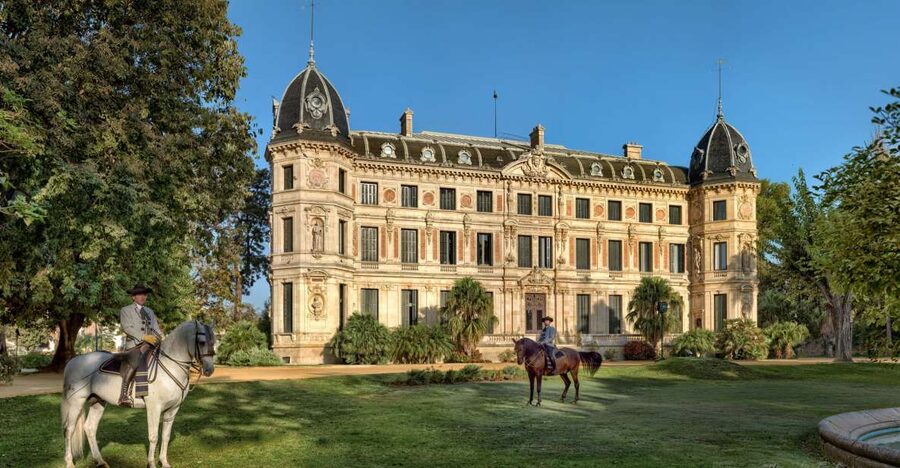
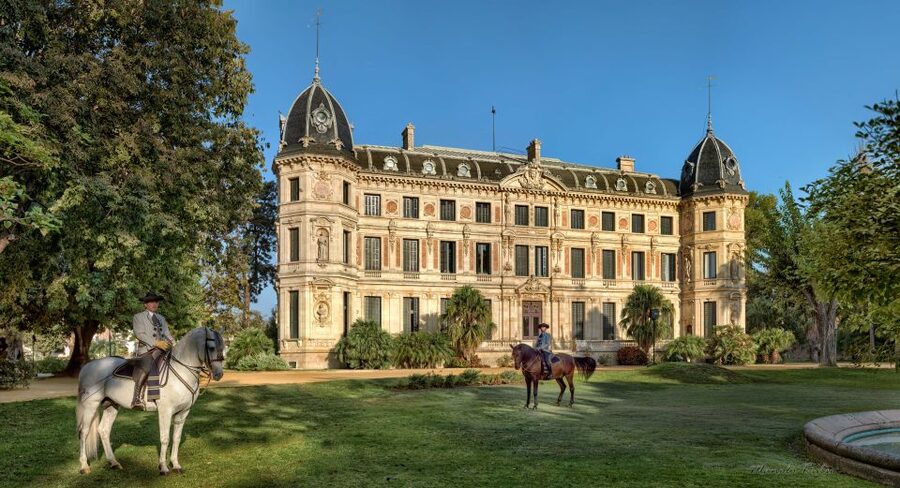
The palace was designed by Charles Garnier and reflects 19th-century architecture. On the ground floor, you can see rooms decorated in their original style. This section is relatively compact, but it gives the visit a sense of place and explains why the school feels like a cultural institution as well as a training center.
Access to individual palace areas can change. A past visit found the house closed for filming, so do not treat every room as guaranteed on every date. The management can alter the program.
Spend time in the 11-room Equestrian Art Museum
The Museum of Equestrian Art is in the basement and contains 11 rooms devoted to the origins and development of equestrian art in Andalusia.
This is one of the strongest parts of the admission, especially for anyone who wants context rather than only a quick look at horses. The museum explains the role of the horse in the region and connects local tradition with the school’s work.
Interactive exhibits help make the material easier to follow. Some displays include video elements, though not every screen has always been operating. Even with occasional technical problems, the museum covers the school, the regional horse tradition, and the movements horses are trained to perform.
I would visit the museum either before or after the stables, depending on the schedule. If you watch training first, you will recognize more of the movements and equipment in the displays. If you visit the museum first, you will have a better framework for understanding what you see in the arena.
A few more Andalusia half-days worth comparing
- Jerez de la Frontera: How the Andalusian Horses Dance
★ 4.6 · 6,168 reviews - Jerez de la Frontera: Andalusian Horse Dance and Museums
★ 4.7 · 1,289 reviews - Seville: Flamenco Show with Andalusian Dinner at La Cantaora
★ 4.4 · 954 reviews - Andalusian Horses Dance Show
★ 4.5 · 483 reviews
See the saddlery and working tack room
The guided visit continues into the saddlery, where harnesses are made and repaired. This is a practical detail that many horse shows leave out, yet it explains how much work supports a polished performance.
The master harness maker and apprentices carry out this labor, except on Saturdays. You may see the tools, materials, and careful maintenance behind the equipment used each day.
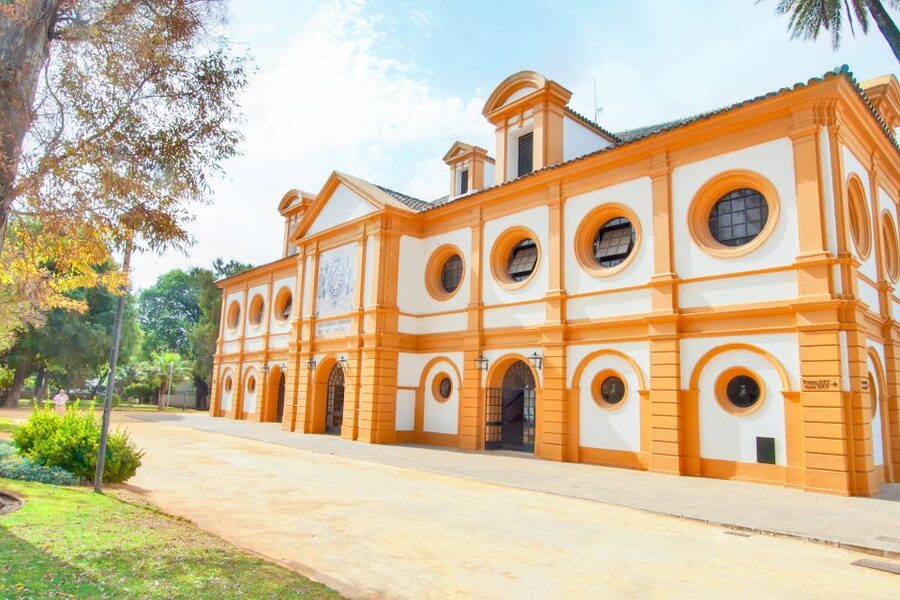
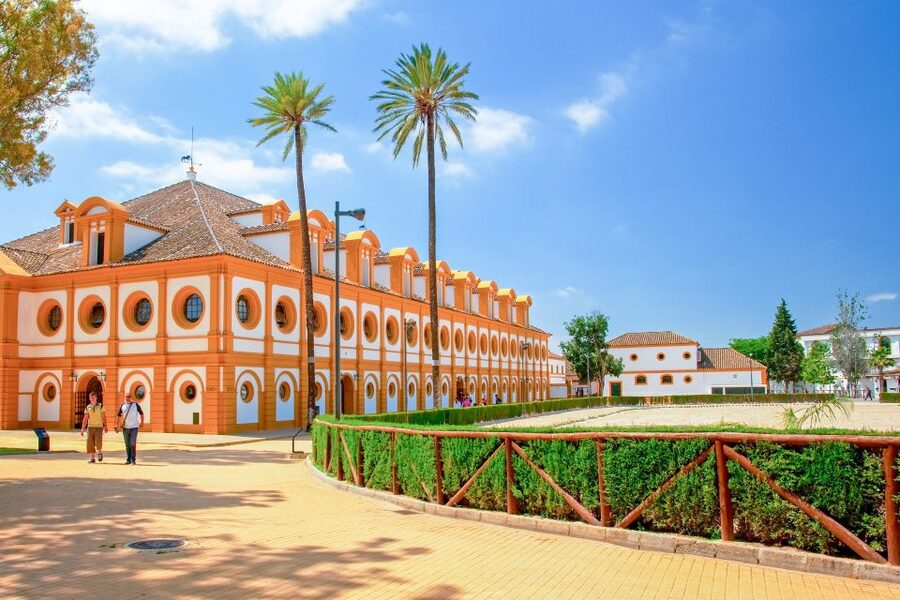
The tack room is another memorable stop. It sits at the center of the octagonal stables and stores the harnesses used for daily training and shows. One important feature is its humidity control, which helps protect leather and other equipment.
You cannot simply wander through all these working areas alone. The guided tour provides access and interpretation, so choosing an option with a guide is worthwhile. Guides such as Elena, Javi, and Harry have been praised for explaining the facilities clearly and answering questions. Language options include Spanish, English, French, and German.
Meet the horses in the octagonal stables
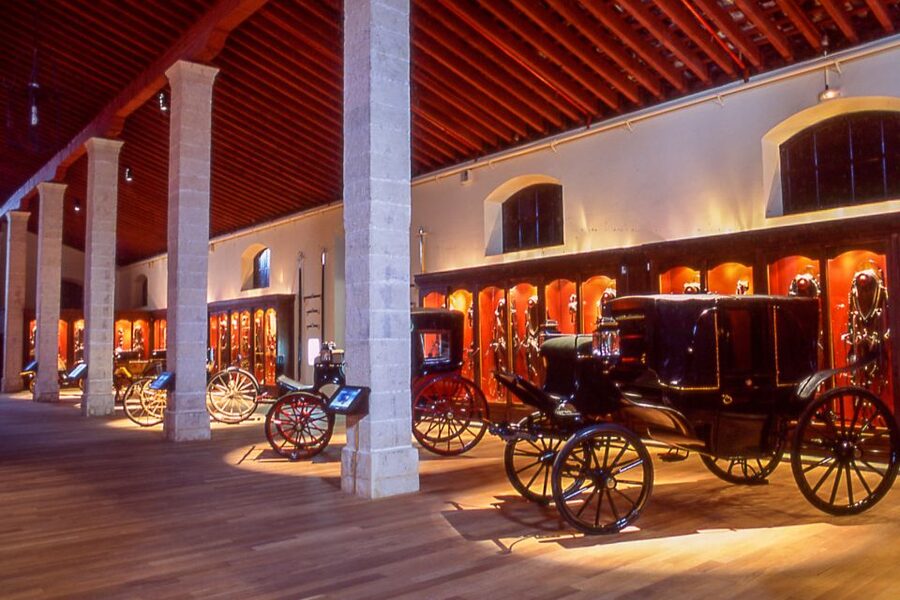
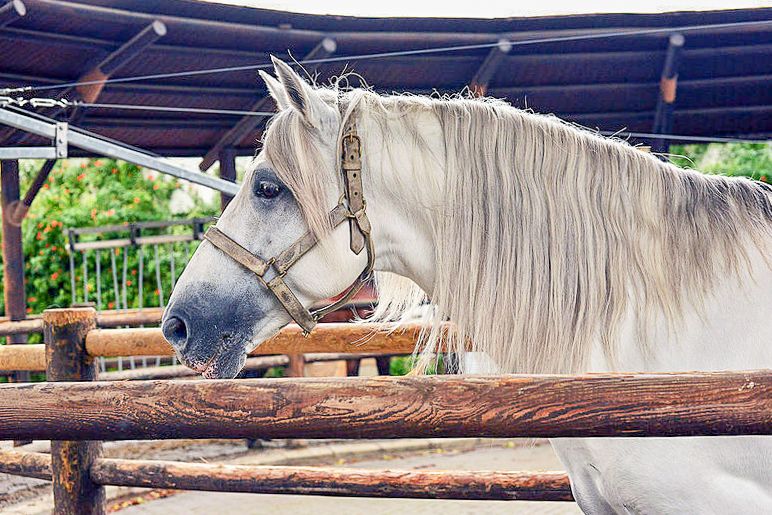
The stables are arranged around the central tack room. Here you see some of the school’s most emblematic horses in their own environment.
This is not a petting zoo. You may be able to get close to the horses, and one past visit included the chance to pat them, but touching is not something you should expect as a standard part of the admission. Another visitor wished the school had brought a horse out for visitors to touch, since some horses could only be viewed through their stalls.
That limitation is reasonable. These are working animals, and the school’s focus is care and training rather than casual contact. I found the chance to observe their condition, surroundings, and handling more valuable than a quick photo or pat.
The stables are kept very clean, and the horses are presented in excellent condition. You can ask questions about how they are housed and cared for. If you love horses, this is likely to be the emotional center of the visit.
Watch training in the outdoor rings and indoor arena
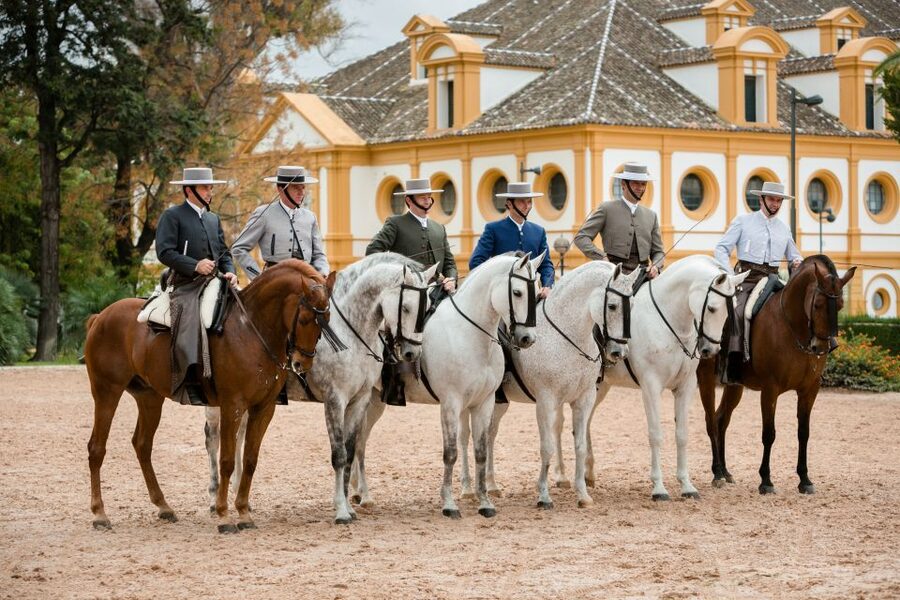
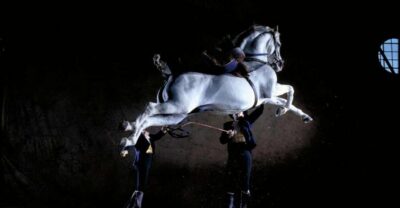
Training is the part that gives this admission its special character. You may watch horses and riders working in the outdoor exercise rings, and the indoor arena provides another setting for daily practice.
The indoor arena was designed in an authentic Andalusian style and holds 1,600 people. During an ordinary training session, the focus is on practice rather than showmanship. That can be more revealing than a finished performance because you see repetition, correction, and concentration.
You might see stallions being lunged, riders working through exercises, or carriage driving. The exact program depends on the school’s schedule, and Saturday is excluded for the regular training access described here.
Photography rules can differ by area. One past visit found that photographs were not allowed inside the arena. Follow staff instructions, especially around horses and riders.
You may be tempted to compare training with the school’s famous performance, but they are different experiences. Training is quieter and less theatrical. It is also usually cheaper and gives you more access to the school’s working side. If you want the full staged spectacle, look for a separate performance ticket rather than assuming this admission includes it.
Finish at the carriage museum
The carriage museum completes the route. Its collection includes vehicles, horses, harnesses, and equestrian costumes.
The displays help tie together the practical and ceremonial sides of Andalusian riding culture. After seeing harnesses in the tack room and riders in training, you can look at how those skills and materials appear in formal transport and presentation.
The carriage museum is included, but do not leave it until the last minute. A past visit skipped it because of the heat, which is a useful reminder that the school grounds can take more energy than expected, particularly on a hot day.
The route can take about two hours, though some people spend nearly four hours when they add museum time and linger around the training areas. Give yourself room to pause. The visit works best when you do not treat it as a quick checklist.
Timing, tickets, and practical details
Pre-booking is sensible, especially if you need a particular language or want to fit the school around other plans in Jerez. Bring your printed receipt or show it on your phone at the ticket office.
If you buy a discounted ticket, bring proof of eligibility. Without the required document, you may have to pay the difference to the standard ticket price, if tickets remain available.
The meeting point can vary by the option you book, so check your confirmation rather than relying on a general map pin. The site is wheelchair accessible, though the management may change parts of the program.
Bottles, cans, animals, and objects considered unsuitable by management are not allowed inside the grounds. The cafeteria has had limited opening times, and one past visit found it closed, so do not count on it for a full meal or even a guaranteed drink.
The admission allows free cancellation up to 24 hours in advance, and a reserve-now, pay-later option may be available. Those terms are useful if your Jerez schedule is still shifting, but confirm the exact conditions attached to your chosen option.
Who will get the most from this visit
I would choose this experience if you want to understand how the horses live and train, not only watch them perform. It is especially good for:
- Horse lovers who want access to stables and training spaces
- Visitors interested in Spanish traditions and regional culture
- Families or mixed groups who need more than one type of attraction
- Architecture and museum fans who also enjoy live demonstrations
- Anyone who cannot attend a full horse show but still wants to see the school
It may be less satisfying if your only goal is a dramatic choreographed performance. The daily training can be fascinating, but it is not staged for the audience and may be affected by the schedule.
I also would not make Saturday my first choice. The horse training and saddlery elements are not available then, and those are two of the most distinctive parts of the visit.
Should you book the Royal Andalusian School?
Yes, if you are in Jerez and have even a moderate interest in horses, Spanish culture, museums, or elegant historic buildings. The price is modest for the amount included, and the strongest moments come from seeing the real working areas: the stables, humidity-controlled tack room, saddlery, and training rings.
Book a weekday morning if possible. Check the language and meeting point, allow extra time for the museums, and do not confuse this admission with the separate horse show. If training is important to you, avoid Saturday and keep your schedule flexible in case the English start time shifts.
FAQ
How long does the visit last?
The stated duration is two hours. You may spend longer if you take your time in the museums, gardens, and training areas.
What is included in the admission?
Full admission to the Royal Andalusian School facilities is included. This covers the gardens, palace areas, Equestrian Art Museum, stables, tack room, training areas, and carriage museum, subject to the day’s program.
Is the horse show included?
The admission described here is for the school visit and training access. It is not presented as admission to the separate staged performance.
Can I watch the horses train?
Yes, horse training takes place in the outdoor exercise rings and indoor arena, except Saturdays. The exact program can change.
Can I visit on a Saturday?
You can visit on a Saturday, but horse training and saddlery visits are not available that day according to the stated schedule.
What languages are available for the guided tour?
Guided options are available in Spanish, English, French, and German.
Is the experience wheelchair accessible?
Yes, the activity is listed as wheelchair accessible.
Is the audio-visual presentation always available?
The audio-visual presentation is available until 11:00 AM. The management may alter or change the program.
What should I bring to collect my ticket?
Bring your printed receipt or display it on your mobile device at the ticket office. If you purchased a discounted ticket, also bring proof of eligibility.
Can I bring bottles, cans, or animals inside?
No. Bottles, cans, animals, and objects that management considers unsuitable are not allowed inside the grounds.
Recently added around Andalusia
- Guided tour of Baeza with entrance Baeza Cathedral★ 5.0 · 107 reviews
- Oil tourism in Pulpí Discover the World of EVOO★ 5.0 · 133 reviews
- Jaén 2.5-Hour Tour: Cathedral, Arabs Baths and Old City★ 4.7 · 135 reviews
- Cadiz: Andalusian Horses and Bulls Country Show★ 4.6 · 189 reviews
- Estepona: Andalusian Flamenco Show Entry Ticket with Drink★ 4.5 · 236 reviews
- Jaén: 3-hour tour, Cathedral, Jewish Quarter and Arab Baths★ 4.8 · 211 reviews
- Málaga: Traditional Andalusian Tapas and Wine Tour★ 4.7 · 167 reviews
- Seville: Flavors of Andalucía Guided Food Tour with Tastings★ 4.9 · 332 reviews
Andalusia Tours, compared.
Flamenco Show with Andalusian Dinner at La Cantaora
Read our review →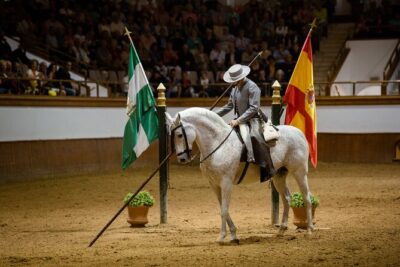

Flavors of Andalucía Guided Food Tour with Tastings
Read our review →
Estepona: Andalusian Flamenco Show Entry Ticket with Drink
Read our review →
Jaén: 3-hour tour, Cathedral, Jewish Quarter and Arab Baths
Read our review →Browse the lists this tour appears in