
Reviewed · CHURCHES & MONASTERIES
From Madrid: Escorial Monastery & Valley of the Fallen Trip
The most striking part of this half-day trip is the contrast between El Escorial’s royal restraint and the sheer scale of the Valley of the Fallen. One site presents Spain’s monarchy through chapels, tombs, books, and carefully planned rooms. The other cuts a basilica into a mountain and marks it with a cross visible for miles.
I like the clean, central departure point and the fact that admission to both monuments is included. I also like the guide-led visit, especially when guides such as Jorge, Carmen, Manuel, or Alex bring the buildings to life with clear explanations. The main drawback is time: the Valley of the Fallen visit can feel rushed, and El Escorial has too many rooms, stairs, and details to cover fully in one short outing.
Key points to know before booking
- El Escorial is the main event: See the Habsburg Palace, Chapter House, Basilica, royal library, and royal burial chambers.
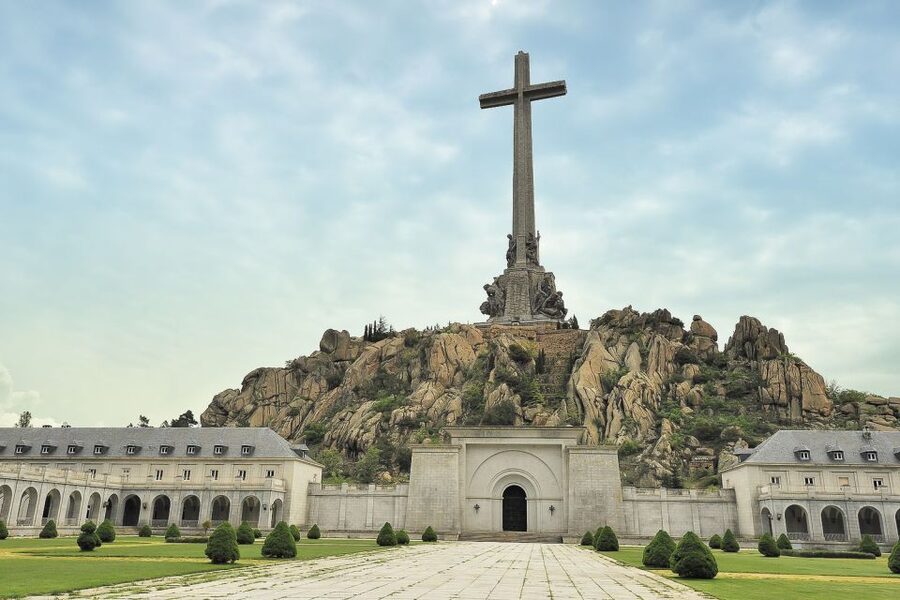
- The Valley of the Fallen is dramatically different: Enter an underground basilica built into the Sierra de Guadarrama beneath a 152-meter cross.
- This is a half-day trip: Allow about 5 to 5.5 hours from Madrid, including roughly 1 hour of outbound travel and 45 minutes back.
- The guide matters: The tour runs in English and Spanish, with a radio system and a maximum of 30 people per guide.
- Expect stairs and walking: Full accessibility is not guaranteed, and the tour is not suitable for wheelchair users.
- The basilica is partly self-guided: Regulations prevent the guide from giving explanations inside the Valley of the Fallen church.
Why El Escorial is worth the trip from Madrid
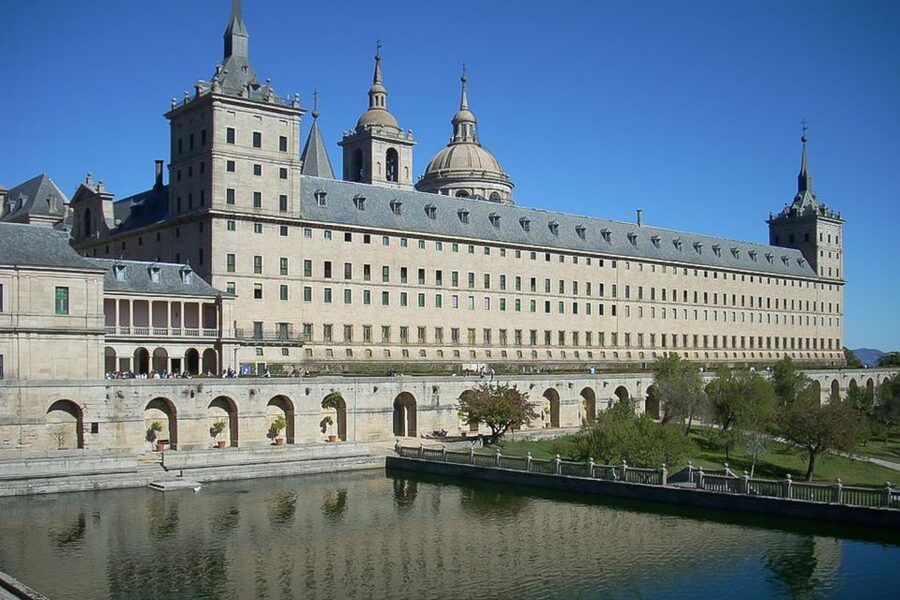
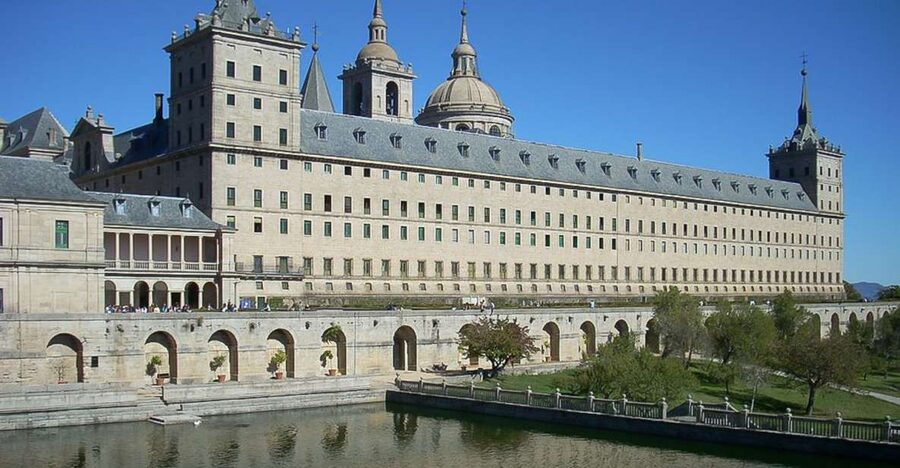
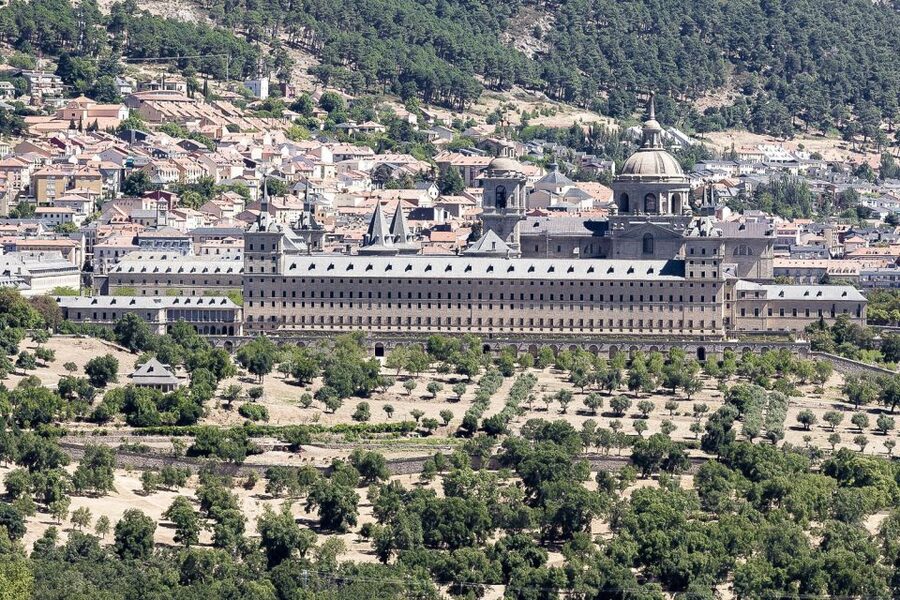
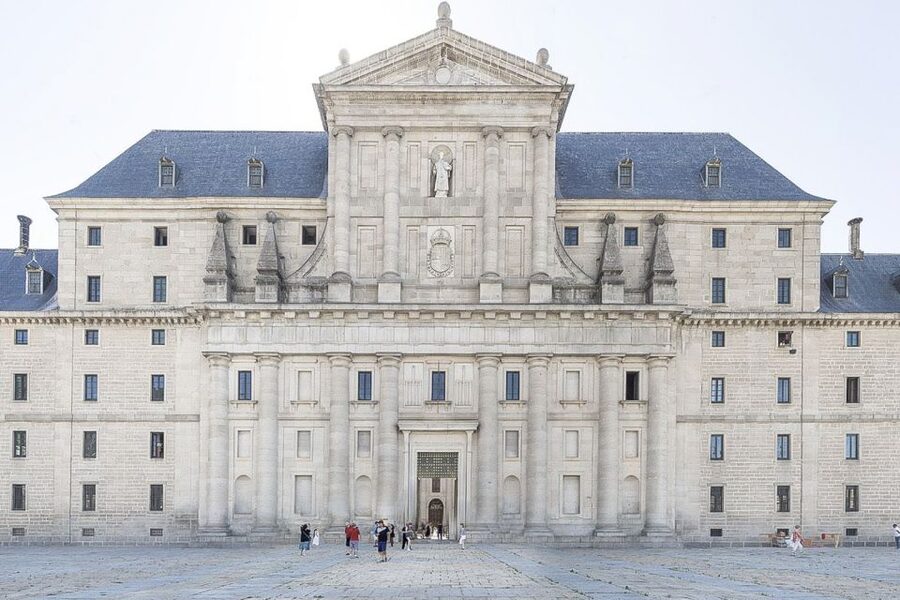
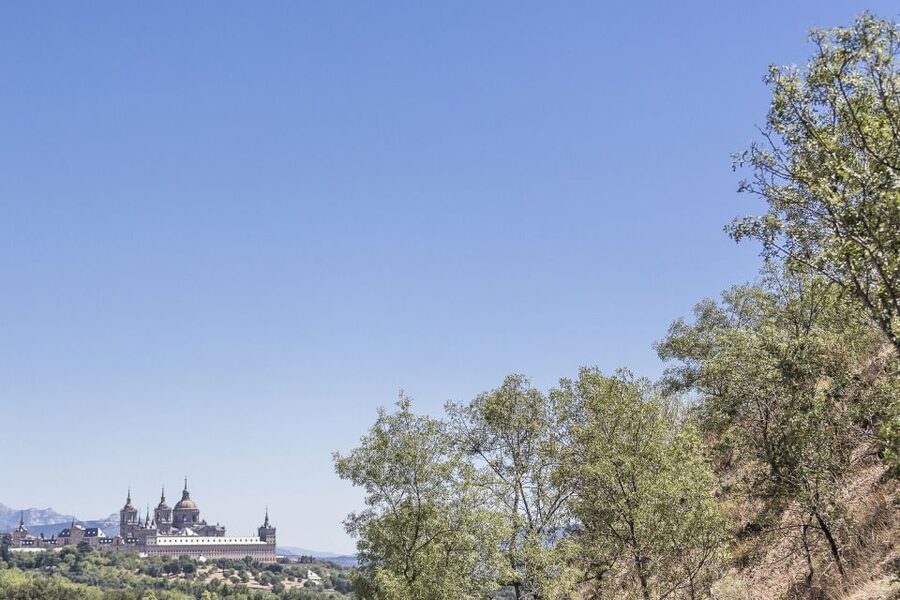
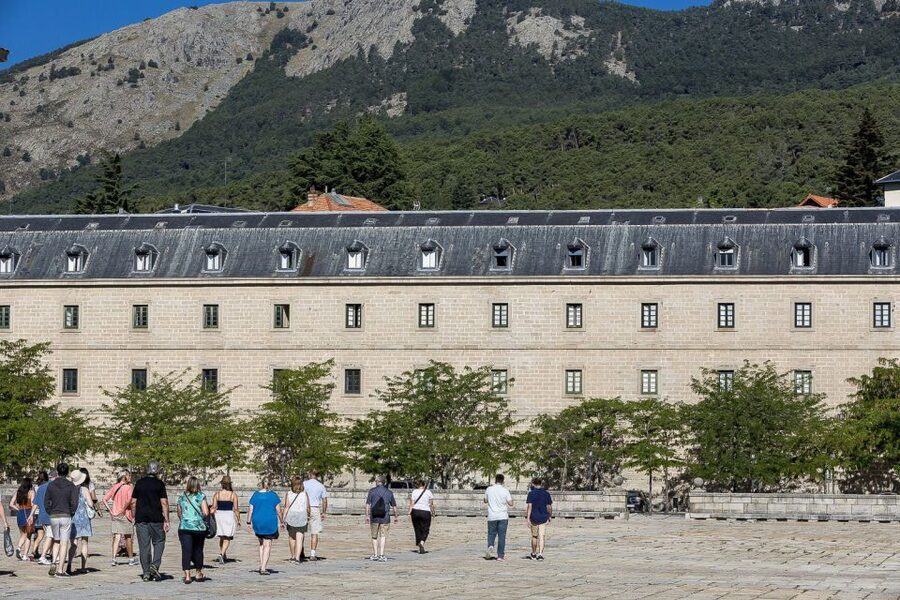
El Escorial is not simply a royal palace with a few grand rooms attached. It is a huge Renaissance complex that joins a monastery, palace, church, mausoleums, library, and ceremonial spaces into one carefully ordered building.
That combination gives the visit its force. You are not just looking at royal apartments. You are seeing how Spain’s rulers connected faith, government, family, and political power in the 16th century. The building’s symmetry can feel almost severe, but that restraint is part of its character.
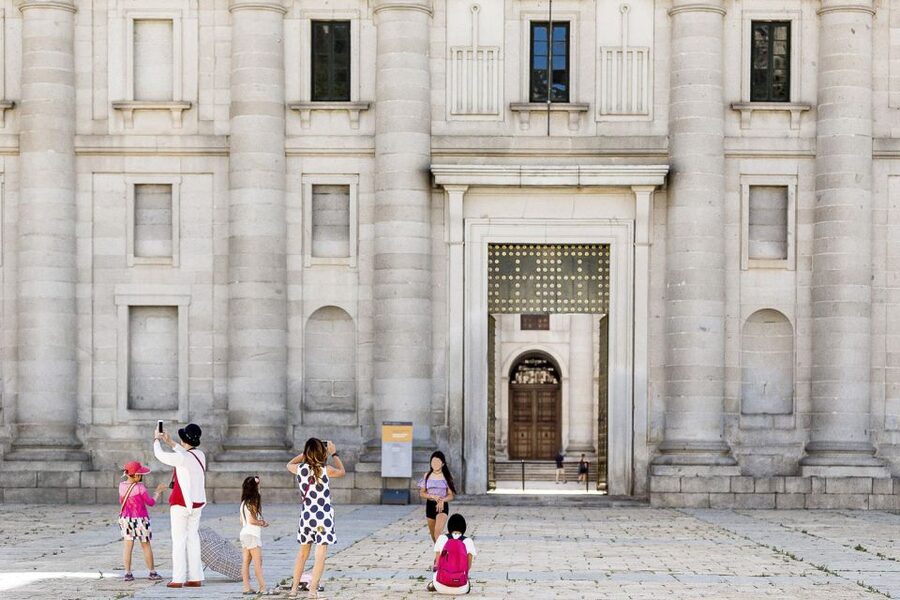
The guided route focuses on the most important interiors. You can expect to see the Habsburg Palace, the Chapter House, the Basilica, and the library. You will also visit the royal burial areas, where kings, queens, princes, princesses, and consorts were laid to rest.
The royal tombs are among the most memorable parts of the visit. The Kings and Princes Mausoleum gives you a direct link to the people who shaped Spain’s monarchy. It is a compact, formal space, and the number of names and generations represented there makes the room feel more significant than its size suggests.
The palace rooms are another strong point. They help you picture the practical side of royal life, rather than only its ceremony. The complex was designed to serve several purposes at once, and the tour shows how those functions fitted together.
More churches and monasteries in Madrid:
- Escorial Monastery and the Valley of the Fallen Tour from Madrid
★ 5.0 · 2,494 reviews - From Madrid: Escorial Monastery and the Valley of the Fallen
★ 4.7 · 1,434 reviews - Escorial Monastery and the Valley of the Fallen from Madrid
★ 4.0 · 1,023 reviews
Inside the library, basilica, and royal rooms
The library adds welcome variety to the visit. Its presence reminds you that El Escorial was not only a place for royal display or religious ritual. It was also a center for study and preservation, with a design that reflects the intellectual ambitions of the period.
The Basilica provides the grandest interior moment. Its scale and formal arrangement give the building a strong visual center, while the surrounding rooms explain how the monastery and palace worked around it.
Guides are an important part of this stop. The tour is offered in English and Spanish, and a radio guide system helps you follow the commentary while moving through large rooms. The bilingual format can mean that explanations take longer, and one piece of feedback specifically described a guide speaking too quickly for some listeners. If you have trouble with fast speech or a strong accent, stay close to the guide and ask for a slower explanation.
The group can reach up to 30 people per guide. That is not a tiny private visit, but the radio system makes it easier to hear than a standard walk-and-talk tour. Private and small-group options are also available, so check the option you choose if a quieter experience matters to you.
Do not expect plenty of time to wander every corner. The route is designed to show the main interiors, and some areas may be closed or changed by Patrimonio Nacional, the body that manages the monument. Gardens and outdoor views can receive less attention than the interior highlights. If you want a slow look at the exterior, maze, or gardens, you may need a separate visit.
The Valley of the Fallen and its underground basilica
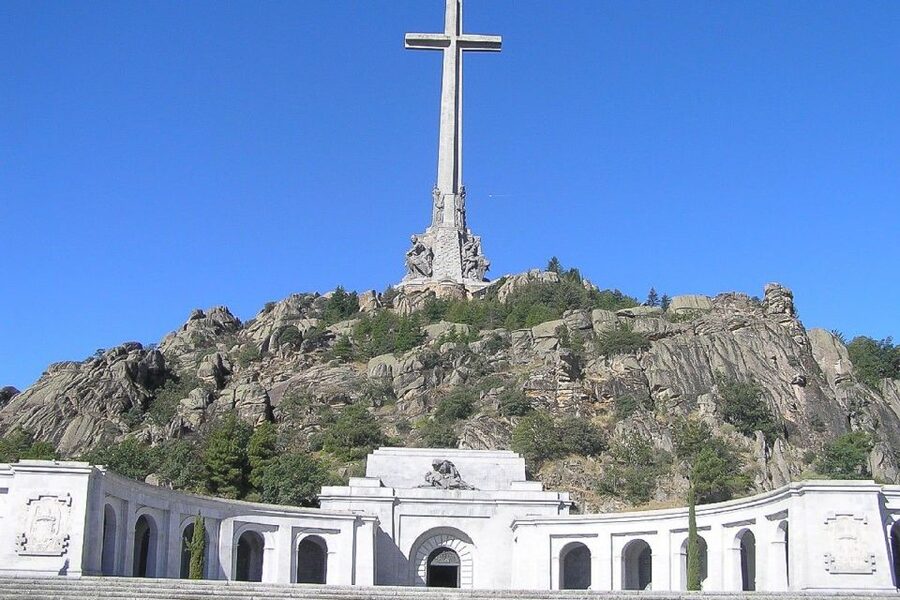
After El Escorial, the coach makes the short trip to the Valley of the Fallen, about 9 kilometers away in the Sierra de Guadarrama. The cross usually gives you your first sense of the site’s scale. At 152 meters, it is the defining feature of the monument and can be seen from a great distance.
The basilica is built into the mountain rather than placed beside it. That makes the arrival feel unusual: you enter a monument that seems to disappear into the rock, then find a church carved into the hillside beneath the enormous cross.
The setting is impressive, but the site also carries difficult political and historical associations. The Valley of the Fallen was created as a memorial connected to the Spanish Civil War and the Franco era. A guide can provide context outside the basilica, but regulations mean that no live explanation is given inside. Once you enter, part of the visit is on your own.
That arrangement has two practical effects. First, you should pay close attention to the outdoor explanation because it supplies much of the background. Second, you should not expect the same guided commentary inside the church that you receive at El Escorial.
The allocated visit is about 50 minutes. That is enough to see the main monument and basilica, but it is not generous. Several people found this stop too short, especially when the coach arrived late or when the group needed extra time to move through the site. If you want a detailed study of the memorial, this half-day trip may leave you wanting more.
The outdoor views can be a major reward. On a clear day, the cross and mountain setting make a powerful sight. Fog can change the experience completely. A thick mist may hide the cross, so the visual impact depends partly on the weather.
Photography rules matter here. One past visitor specifically noted that photographs were not permitted at both locations. Follow the guide and posted instructions rather than assuming you can take pictures inside.
How the five to five-and-a-half hours are used
The schedule is efficient, but tight. You meet at the local partner’s office at C/ San Nicolás 15, beside Plaza de Ramales in central Madrid, and should arrive 15 minutes before departure.
The main travel and visit sequence is:
- About 1 hour by air-conditioned coach to the El Escorial area
- About 1.5 hours on a guided visit through the monastery
- About 20 minutes by coach to the Valley of the Fallen
- About 50 minutes at the basilica and memorial
- About 45 minutes returning to Madrid
The final drop-off is listed at Plaza de Oriente, near the Royal Palace. That location is useful if you plan to continue sightseeing in central Madrid, but it is not hotel drop-off.
The coach is one of the tour’s practical strengths. You avoid arranging regional transport, finding the right entrances, and coordinating the two monuments yourself. The vehicles used for this service are air-conditioned, and feedback specifically praised the buses as clean, modern, spacious, and comfortable.
Traffic or city events can affect the schedule. A triathlon once caused a delayed start and left less time at the Valley of the Fallen. The operator also reserves the right to change or cancel the route for force majeure reasons. That is normal for organized excursions, but you should avoid booking a tight, nonrefundable activity immediately after this one.
A few more Madrid half-days worth comparing
- Madrid: Tour Bernabéu Entry Ticket
★ 4.5 · 21,573 reviews - Madrid: Prado Museum Entry Ticket
★ 4.6 · 17,509 reviews - Madrid: Royal Palace Fast-Access Admission Ticket
★ 4.6 · 13,856 reviews - Madrid: “Emociones” Live Flamenco Performance
★ 4.8 · 12,866 reviews
The guide can make or break the day
The strongest part of this experience is often the human one. A good guide gives you the basic facts, but also helps you notice why the buildings look and function as they do.
Guides named Jorge, George, Carmen, Manuel, Alex, and Joseph have all been associated with particularly useful or memorable tours. Jorge was praised for detailed explanations and a kind manner. Carmen was described as firm about the rules and good at keeping a group moving. Manuel combined historical information with humor, while Alex presented the material in an engaging way.
The bilingual setup deserves a realistic explanation. The guide must move between English and Spanish, and that can lengthen the commentary. Most English speakers should be able to follow the main points, but the quality depends on the individual guide’s pace, accent, and organization.
The radio system helps, especially in large interiors. Keep the receiver close, remain within range, and do not drift far from the group. If you prefer to study each room at your own pace, a fully guided group visit may feel restrictive.
The operator limits each guide to 30 people, which prevents the group from becoming enormous. Still, the experience is not built around long periods of quiet exploration. The guide takes you to the major sights, gives context, and keeps the day on schedule.
Price and value at $78
At $78 per person, the price is reasonable for a half-day excursion that includes transport from central Madrid, admission to El Escorial, entry to the Valley of the Fallen and its basilica, a local official guide, and a radio system.
The value is strongest if you want to see both monuments without renting a car or working out the transport yourself. Admission costs, fuel, navigation, and the time needed to connect the two sites are bundled into one booking.
The price is less compelling if you mainly want a slow visit to El Escorial. The schedule gives you the highlights, but not a full day for the monastery’s gardens, exterior, or every interior room. You are paying for convenience and historical orientation, not unlimited time at either site.
Food and drinks are not included. There is a café near the bus area at the Valley of the Fallen, but you should not count on a proper meal during the trip. Eat before departure or carry something suitable if permitted.
The tour offers free cancellation up to 24 hours before departure and a reserve-now, pay-later option. Those terms are useful if your Madrid plans may change.
Who should book this excursion?
I would choose this trip if you want two major monuments in one morning or afternoon and prefer a guide to handle the transport and entrances. It works especially well for first-time visitors to Madrid who want to place Spanish monarchy, religion, and 20th-century political memory in the same day.
It is also a good match for anyone who enjoys grand architecture but does not want to spend a whole day outside Madrid. The air-conditioned coach keeps the journey simple, and the return to Plaza de Oriente leaves you near more central sights.
You should think twice if you have reduced mobility. There are many stairs, including a reported 75-step route to the crypts, and full accessibility cannot be guaranteed. The experience is not suitable for wheelchair users.
You should also reconsider it if you need long, unhurried visits. The two sites are substantial, and the Valley of the Fallen portion is the most likely to feel short. Clear weather is another advantage, since fog can hide the cross and soften the outdoor views.
Wear comfortable shoes and suitable clothing. This is a walking visit once you arrive, not a coach-only sightseeing ride.
Should you book the El Escorial and Valley of the Fallen trip?
Book it if you want an efficient introduction to two very different monuments and value a clean coach, included admissions, and a guide who can connect the sites to Spain’s royal and political past.
Skip it if your main goal is to explore El Escorial at a slow pace, spend time in the gardens, or examine the Valley of the Fallen in depth. For most visitors with only half a day, though, the $78 price is fair. You will see a great deal, learn the basic story, and return to Madrid before the day is gone. Just allow for stairs, bilingual commentary, changing weather, and a schedule that favors highlights over lingering.
FAQ
Where does the tour depart from?
The meeting point is the local partner’s office at C/ San Nicolás 15, next to Plaza de Ramales in central Madrid.
How early should I arrive?
You should check in 15 minutes before departure.
How long does the experience last?
The tour lasts about 5 to 5.5 hours, depending on the selected starting time and the day’s conditions.
Is hotel pickup available?
Hotel or apartment pickup in Madrid may be available as an optional service. You must provide the accommodation details when booking if you want to request it.
Where does the tour finish?
The listed drop-off point is Plaza de Oriente, 28013 Madrid, near the Royal Palace. Two drop-off locations may be available depending on the selected option.
Is transportation included?
Yes. The tour uses an air-conditioned coach for the journey from Madrid to the monuments and back.
Are admission tickets included?
Yes. Admission to the Royal Monastery of El Escorial, the Valley of the Fallen, and its basilica is included.
Is the tour offered in English?
Yes. The tour operates in English and Spanish, with a live guide and radio guide system.
Can wheelchair users join?
No. The activity is not suitable for wheelchair users. It includes walking and many stairs, and full accessibility cannot be guaranteed.
Are explanations given inside the Valley of the Fallen basilica?
No. Under the site’s regulations, the guide gives information outside the basilica. You visit the interior on your own.
Are food and drinks included?
No. Food and drinks are not included in the tour price.
What should I bring?
Wear comfortable shoes and appropriate clothing for a walking visit.
Recently added around Madrid
- Tour Madrid: Secrets in a Electric Tuk Tuk★ 4.6 · 155 reviews
- Madrid: Tasty Tapas Tour & Visit to a Terrace with Views★ 4.5 · 118 reviews
- Madrid: Flamenco Show&Drink at Tablao 1911 (World’s Oldest)★ 4.7 · 253 reviews
- Small Group Prado Museum Guided Tour with Skip the Line★ 4.2 · 106 reviews
- Madrid: Street Art Tour with Local Graffiti Hunter★ 4.8 · 270 reviews
- Madrid: Afternoon Prado Museum Tour with Skip-the-Line Entry★ 4.4 · 491 reviews
- Madrid: Royal Palace Guided Tour with Skip-the-Line Entry★ 4.5 · 780 reviews
- Secret Food Tours Madrid★ 4.9 · 134 reviews
Churches & Monasteries, compared.
Toledo Tour from Madrid: Cathedral, Synagogue & St. Tome’s Church
Read our review →
Montserrat Monastery Half Day Experience from Barcelona
Read our review →
Montserrat Monastery Small Group or Private Tour Hotel pick-up
Read our review →
Montserrat Tour with Transport & Basilica Option
Read our review →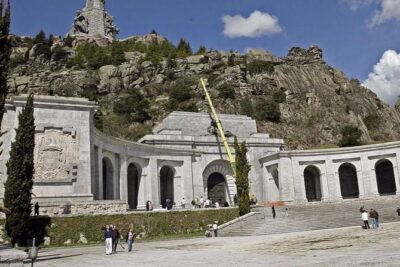
Escorial Monastery and the Valley of the Fallen Tour from Madrid
Read our review →
Montserrat Small Group: Monastery, Black Madonna & Natural Park
Read our review →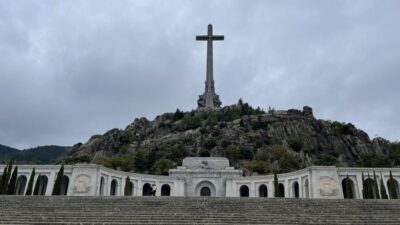
Escorial Monastery and the Valley of the Fallen
Read our review →Browse the lists this tour appears in