
Reviewed · PRADO MUSEUM TICKETS
Small Group Prado Museum Guided Tour with Skip the Line
The best part of this Prado Museum tour is the focus: in two hours, you get straight to major works by Goya, Velázquez, El Greco, and Rubens with an English-speaking guide. I like the small-group format because it gives you room to ask questions, and the separate entrance saves precious Madrid sightseeing time.
I also like the way the tour connects paintings to politics, religion, and daily life instead of treating the Prado as a parade of famous names. Guides such as Juan, Eve, Enrique, Carla, and Nerea have been praised for clear explanations and lively storytelling. The trade-off is that two hours goes quickly, especially if you want a long look at El Greco or Goya’s Black Paintings.
Key points
- Four major Spanish and European masters: See key works by Goya, Velázquez, El Greco, and Rubens.
- Small-group attention: Ask questions and stay connected to the guide more easily than in a large group.
- Skip-the-line entry: Use a separate entrance rather than spending your museum time in a ticket queue.
- Strong guide-led storytelling: Past guides including Juan, Eve, Enrique, Nerea, and Carla have been praised for explaining symbolism, technique, and context.
- A manageable two-hour visit: The route gives you a solid introduction without turning the Prado into an all-day endurance test.
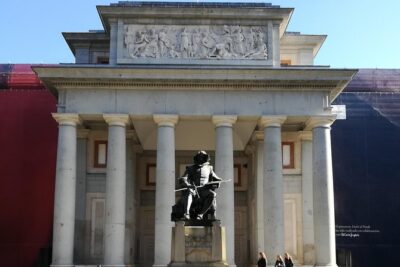
- Easy central meeting point: Meet at the Monument to Velázquez on Paseo del Prado 11 and finish there.
Starting at Madrid’s Velázquez Monument
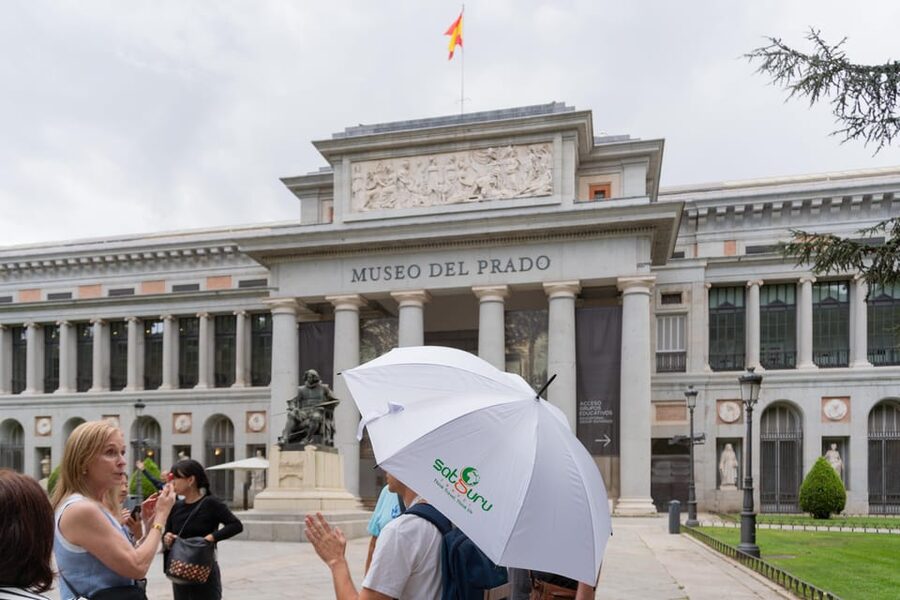
Your tour begins at the Monument to Velázquez, outside the Prado on Paseo del Prado 11. This is a sensible meeting point because the statue sits right by the museum, so you are not wasting time crossing Madrid before the visit begins.
Arrive early. The courtesy waiting time is only 10 minutes, and museum tours work best when everyone enters together. The activity requires a minimum number of participants, too. If that number is not reached, you will be contacted and offered alternatives.
The meeting point also gives your guide a chance to set the plan before entering. You can expect a short introduction to the Prado and its place in Madrid’s art district, followed by access through the separate entrance.
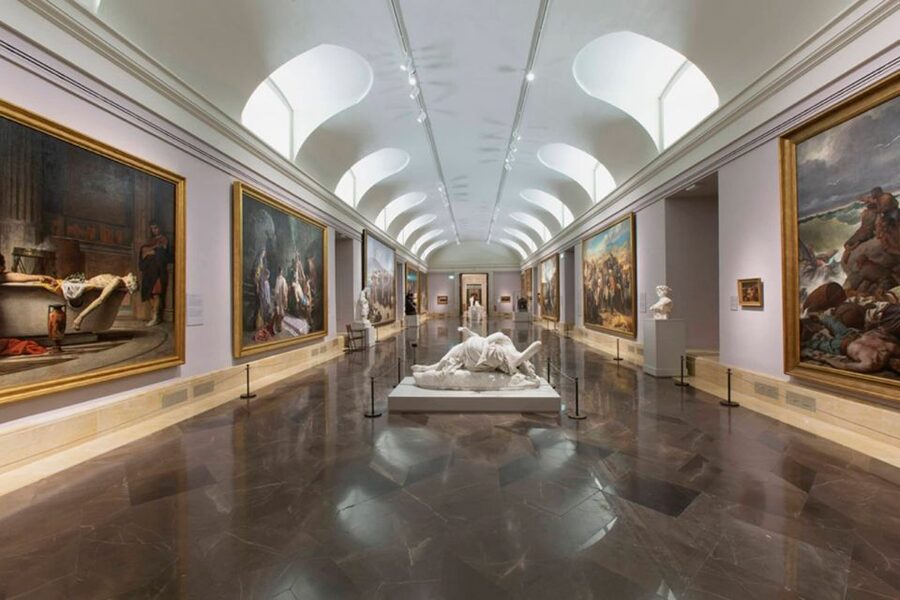
The museum itself covers works from the 12th century through the early 20th century. You will not see every room in two hours, and that is a good thing. The Prado is too large for a rushed march through every gallery. A useful guide chooses important works and helps you understand why they matter.
More Museum Tours in Madrid
- Madrid: Prado Museum Entry Ticket
★ 4.6 · 17,509 reviews - Madrid: Reina Sofía Museum Entrance Ticket
★ 4.5 · 6,889 reviews - Madrid: Small Group of Prado Museum Tour & Optional Tapas
★ 4.6 · 2,437 reviews
Why skip-the-line entry matters at the Prado
The Prado is one of Madrid’s essential stops, and its popularity can turn the entrance into a slow start. Skip-the-line access lets you spend those minutes with paintings rather than standing outside with a ticket in hand.
This does not mean the museum will be quiet. The galleries can still be busy, and famous paintings attract their own small crowds. The benefit is more precise: you avoid the main entry wait and begin the guided portion sooner.
That matters most if your Madrid schedule is tight. A two-hour museum visit can fit neatly between lunch, the Royal Palace, Retiro Park, or another city stop. It also helps families and solo visitors who would rather have a clear plan than wander through hundreds of rooms without knowing where to begin.
The separate entrance is included with the skip-the-line ticket. Food and drinks are not included, and there is no hotel pickup or transfer, so you make your own way to the monument.
Goya’s troubled Spain in two hours
Francisco de Goya is one of the main reasons to choose this tour. His work changes dramatically across his career, and the guide uses that change to explain Spain’s political and social turmoil.
The Third of May 1808 is likely to be one of the key stops. It shows Spanish civilians facing a French firing squad, but the painting is not simply a record of an event. Goya gives the central figure a bright white shirt and an open, almost pleading pose. The result is direct and painful, with none of the clean heroics found in traditional battle painting.
A good explanation helps you notice the details: the anonymous soldiers, the frightened faces, and the sharp contrast between the victims and the firing squad. You come away seeing the painting as an argument against war, not just a famous image from a textbook.
The tour also introduces Goya’s Black Paintings, a group of dark, unsettling works made late in his life. These paintings are harder to read than The Third of May 1808, and that is part of their power. Your guide can give you a way into their strange figures, heavy shadows, and anxious mood.
Goya can easily take over the whole visit. If he is your main reason for visiting, tell the guide early. The route also needs to cover Velázquez, El Greco, and Rubens, so you may not have time for every Goya work you want to see.
Velázquez and the puzzle of Las Meninas
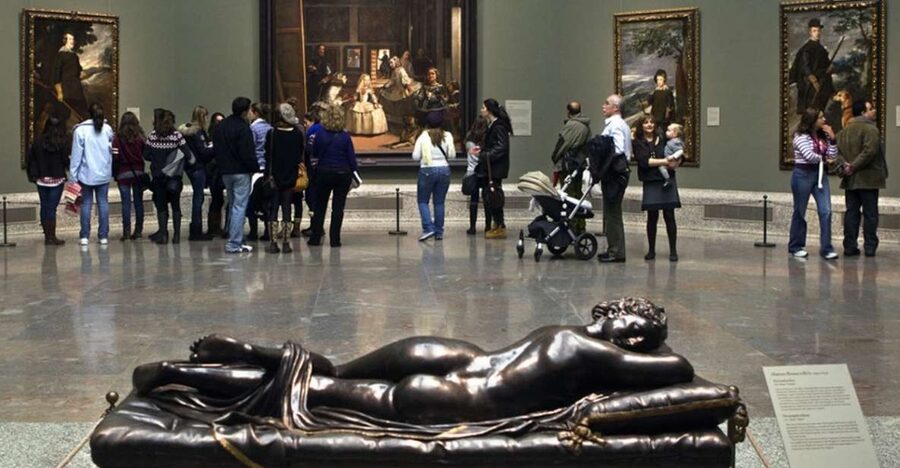
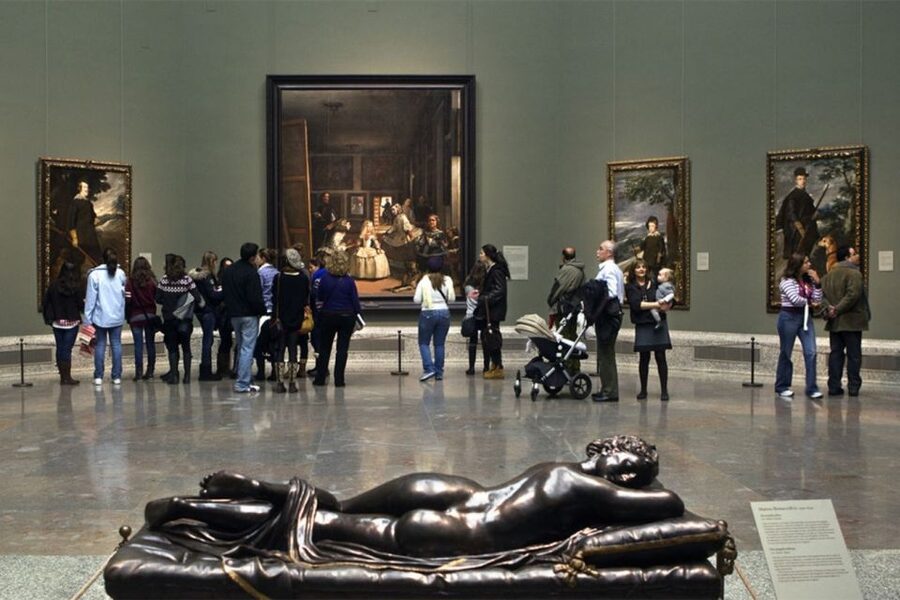
Diego Velázquez’s Las Meninas is the Prado’s great test of attention. At first glance, you see a young princess, attendants, a dog, and the painter himself. Look longer and the scene becomes a puzzle about who is looking at whom.
The mirror at the back, the open doorway, and the position of Velázquez all raise questions about the king and queen, the viewer, and the act of painting. Your guide can point out how the work plays with space and viewpoint without turning the explanation into a technical lecture.
This is where a small group earns its keep. Las Meninas is famous, so many people know the name but not why the painting is considered so important. A guide can direct your eyes to the figures and details that are easy to miss from a distance.
The tour does not ask you to admire the painting simply because art historians have declared it great. Instead, you get a practical way to look at it. Notice the lighting, the expressions, the mirror, and the strange feeling that the royal family may be standing where you are standing.
More Skip-the-Line Tickets in Madrid
- Madrid: Royal Palace Expert Guided Tour with Skip-the-Line
★ 4.7 · 6,986 reviews - Madrid: Royal Palace Skip-the-line Guided Tour
★ 4.9 · 3,146 reviews - Madrid: Royal Palace Skip-the-Line Guided Tour
★ 4.5 · 2,140 reviews - Madrid: Prado Museum Guided Tour with Skip-the-Line Ticket
★ 4.5 · 2,018 reviews
El Greco’s stretched figures and spiritual force
El Greco brings a sharp change in mood and style. His figures are tall, narrow, and often seem to reach beyond ordinary human proportions. Colors can feel intense, and religious scenes carry a strong sense of movement between the physical world and the divine.
The Burial of the Count of Orgaz is the important work here. It combines a lower scene of mourners and the dead man’s burial with a higher heavenly vision. The painting asks you to move your eyes up and down, from recognizable people to saints, angels, and the afterlife.
This is also the section most likely to feel brief. One guide was praised for the overall visit but was said to move too quickly through El Greco. If this artist matters to you, say so before the museum route begins. A short request can help the guide give his work the attention you want.
El Greco is especially useful for understanding how the Prado is not only a collection of Spanish national art. His work reflects broader European religious and artistic currents, while still feeling unmistakably tied to Spain.
Rubens brings Baroque drama
Peter Paul Rubens supplies a different kind of energy. His paintings are full of motion, strong bodies, rich color, and theatrical composition. After the tension of Goya, the intellectual puzzle of Velázquez, and the spiritual intensity of El Greco, Rubens can feel almost physical.
The Descent from the Cross is a key example. The figures form a complex diagonal as they lower Christ from the cross. The composition makes your eye travel through the bodies, fabric, and gestures, while the emotional force comes from the people struggling to support the body.
Your guide can explain how Rubens used anatomy, movement, and light to make a large religious scene feel immediate. You may also hear about his place in the Baroque period and the political and religious pressures that shaped European art.
The Rubens section gives the tour a useful change of pace. You are not seeing four versions of the same artistic style. You are moving from Goya’s bleak modernity to Velázquez’s controlled realism, El Greco’s spiritual vision, and Rubens’ grand theatrical art.
What the small-group format changes
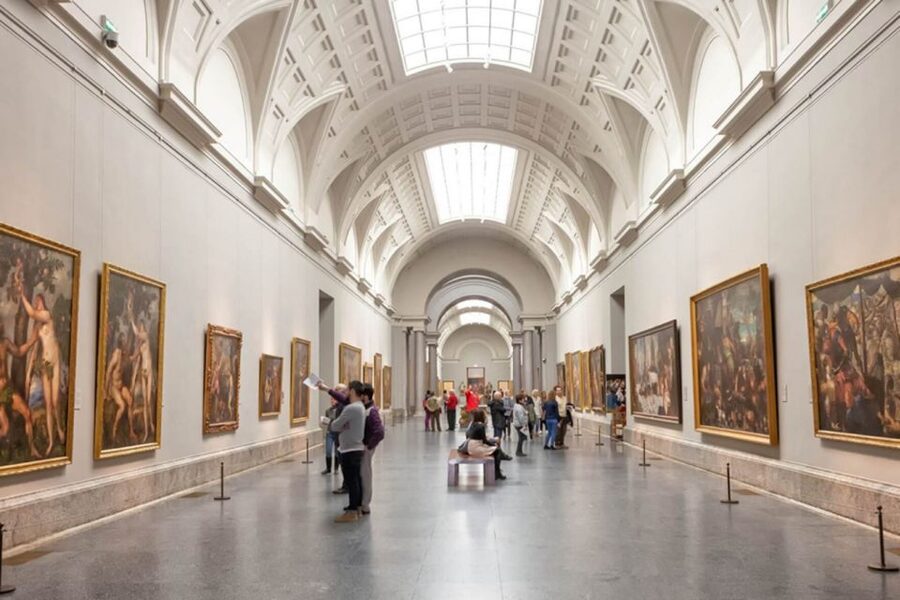
The tour is designed to be more personal than a large museum group. That does not guarantee a private visit, but it should make it easier to hear the guide, ask a question, and stay with the group in crowded rooms.
That difference matters at the Prado. A guide speaking to a large crowd may need to repeat basic directions or gather people in hallways. In a smaller group, you can usually stay closer to the painting and take part in the discussion.
Several guides have been praised for different strengths. Juan was noted for creating a friendly setting for a solo visitor. Eve was praised for pointing out small features that an inexperienced art viewer might miss. Enrique was described as turning art history into a creative story and asking questions that encouraged closer looking.
Nerea was praised for patience and enthusiasm, while Carla was noted for explaining symbolism and unusual details. The actual guide depends on the date and group, so you should not book expecting one particular person. The useful point is that the experience depends heavily on the guide’s ability to turn a famous painting into something you can actually read.
The tour is listed with a live English-speaking guide, and the description also refers to a bilingual guide. If you need a language other than English, confirm the available language before booking.
Is two hours enough for the Prado?
Two hours is enough for a guided introduction, not enough for the entire museum. That distinction should shape your expectations.
I like the length for a first visit. The Prado can become tiring when you try to cover too much, and a focused route helps you remember what you saw. One guide even noted that two hours is a good fit because the museum can be busy and mentally tiring.
You will probably leave with a working map of the collection: Goya for conflict and human suffering, Velázquez for perception and royal power, El Greco for religious intensity, and Rubens for Baroque movement. You can then return on your own if you want more time with a particular artist.
If you already know the Prado well, this may feel too introductory. The tour is built around major works and broad context, not a specialist study of one painter or period. I would choose it for a first or second Prado visit, especially if you want help deciding what deserves your attention.
The $67 price and who gets good value
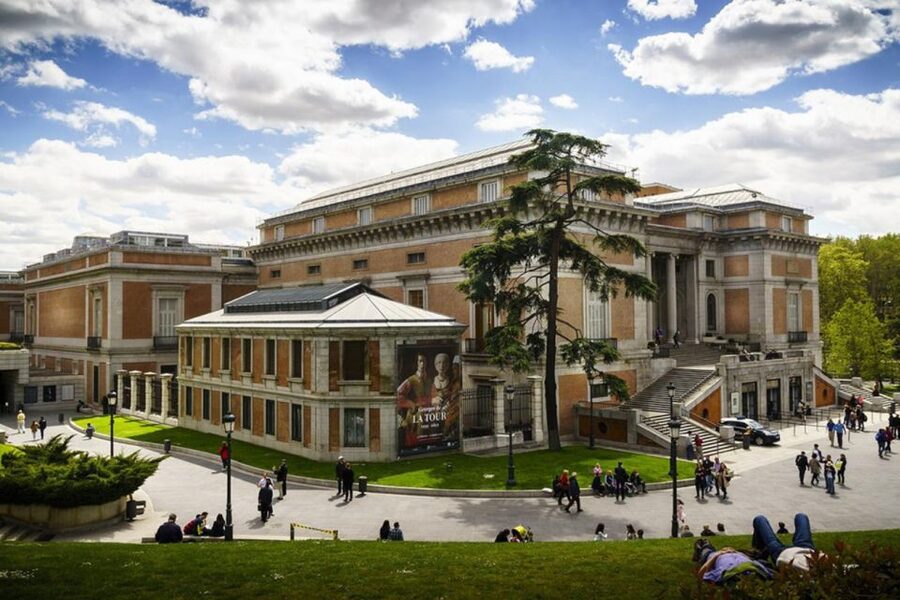
At $67 per person, this is not the cheapest way to enter the Prado. You are paying for the museum ticket, separate entry, a two-hour guided route, and the chance to ask questions in a small group.
The value is strongest if you are not comfortable choosing works on your own. The Prado holds far more art than most people can sensibly see in one visit. A strong guide saves you from wandering, points out details you might miss, and gives the paintings a clear place in Spanish and European art.
The price also makes sense for a short Madrid stay. If you have only a day or two, a guided visit reduces the risk of spending your museum time lost in the galleries or stuck in an entrance line.
The value is weaker if you already have art training, want a quiet self-guided visit, or plan to spend half a day studying one artist. In those cases, an ordinary museum ticket and your own plan may suit you better.
Practical details before you book
The tour begins and ends at the Monument to Velázquez, Paseo del Prado 11, 28014 Madrid. There is no hotel pickup, private transfer, food, or drink included.
The museum is listed as wheelchair accessible. Bring only what you need. A practical tip from the experience is not to rely on bringing water inside, since it may be taken away at the museum entrance. Warm clothing is also unnecessary for the indoor portion.
The tour does not operate on some holidays, including December 25 and January 1. Check the available start times for your chosen date, since the exact schedule is not fixed in the general description.
You can cancel up to 24 hours before the activity for a full refund. The reserve-now-and-pay-later option lets you hold a place without paying immediately, which is useful when your Madrid plans are still changing.
Should you book this Prado Museum tour?
Book it if you want a clear, efficient first look at the Prado and prefer an expert to choose the essential works. It is especially suitable for solo visitors, families who need a manageable museum visit, and anyone who wants context rather than a silent walk from gallery to gallery.
I would also choose it if Goya, Las Meninas, El Greco, or Rubens is high on your list. Tell the guide which artist matters most to you, since two hours leaves little room for every major room.
Skip it if you want to set your own pace, linger for a long time, or already know the Prado’s collection. For most first-time visitors, though, the combination of skip-the-line entry, a small group, and a focused route makes $67 a reasonable price for a strong introduction to Madrid’s great art museum.
FAQ
Where does the Prado Museum tour meet?
The tour starts at the Monument to Velázquez, Paseo del Prado 11, 28014 Madrid.
Where does the activity end?
The activity ends back at the Monument to Velázquez, the starting meeting point.
How long does the tour last?
The guided museum visit lasts two hours. Starting times depend on availability for your selected date.
What artists are included in the tour?
The route focuses on major works by Francisco de Goya, Diego Velázquez, El Greco, and Peter Paul Rubens.
Is skip-the-line entry included?
Yes. The tour includes skip-the-line tickets and access through a separate entrance.
Is a guide included?
Yes. A professional live guide is included. The activity information lists English, with the description also referring to a bilingual guide.
Is the Prado Museum wheelchair accessible on this tour?
The activity is listed as wheelchair accessible.
Are food, drinks, hotel pickup, or transfers included?
No. Food and beverages are not included, and there is no hotel pickup or transfer.
Can I cancel or pay later?
You can cancel up to 24 hours in advance for a full refund. You can also reserve your place and pay later, subject to the booking terms.
More Prado Tickets
- Madrid: Prado Museum Guided Tour With Fast Access
★ 4.8 · 1,785 reviews - Prado Museum Small Group Tour with Skip the Line Ticket
★ 5.0 · 1,738 reviews - Royal Palace & Prado Museum Skip the Line Guided Tour
★ 4.5 · 1,347 reviews - Madrid: Prado Museum Ticket with In-App Audio Guide
★ 3.6 · 1,154 reviews
Recently added around Madrid
- Tour Madrid: Secrets in a Electric Tuk Tuk★ 4.6 · 155 reviews
- Madrid: Tasty Tapas Tour & Visit to a Terrace with Views★ 4.5 · 118 reviews
- Madrid: Flamenco Show&Drink at Tablao 1911 (World’s Oldest)★ 4.7 · 253 reviews
- Madrid: Street Art Tour with Local Graffiti Hunter★ 4.8 · 270 reviews
- Madrid: Afternoon Prado Museum Tour with Skip-the-Line Entry★ 4.4 · 491 reviews
- Madrid: Royal Palace Guided Tour with Skip-the-Line Entry★ 4.5 · 780 reviews
- Secret Food Tours Madrid★ 4.9 · 134 reviews
- Madrid: Santiago Bernabéu Stadium Guided Tour★ 4.4 · 230 reviews
Prado Museum Tickets, compared.

Small Group of Prado Museum Tour & Optional Tapas
Read our review →
Prado Museum Guided Tour with Skip-the-Line Ticket
Read our review →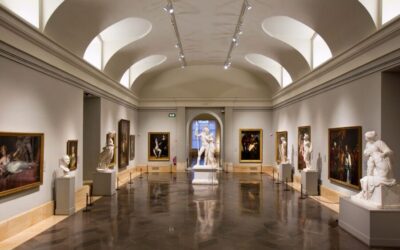
Prado Museum Small Group Tour with Skip the Line Ticket
Read our review →
Royal Palace & Prado Museum Skip the Line Guided Tour
Read our review →

Prado Museum Guided Tour with Skip-the-Line Ticket
Read our review →Browse the lists this tour appears in