
Reviewed · MUSEUMS
Bilbao: San Mamés Museum and Stadium Tour
San Mamés is more than a football ground. For Athletic Club, it is a proud Basque meeting place, and this visit lets you walk from the players’ tunnel to pitchside, then explore the club’s story through a lively museum. You can sit in the dugout, see the changing room, visit the press area, and picture the noise on match day.
I like the freedom to move at your own pace, and I like the museum’s mix of old objects with modern video and interactive displays. The main catch is that the audio guide uses your own phone and headphones, and some visitors found the setup confusing or impossible without a good mobile connection.
Key things to know before visiting

- Pitchside access: Walk out through the tunnel, reach the edge of the field, and sit in the dugout.
- A museum with plenty to do: See around 500 original football objects, plus videos, graphics, interactive systems, and four audiovisual productions.
- Self-guided and flexible: You can take your time instead of following a fixed group.
- Bring your own gear: A charged smartphone and headphones are needed for the audio guide.
- Allow more than an hour: A quick visit is possible, but families and football fans may spend several hours.
- Watch the calendar: Match days, training, and other stadium events can change access and opening times.
Why San Mamés matters in Bilbao
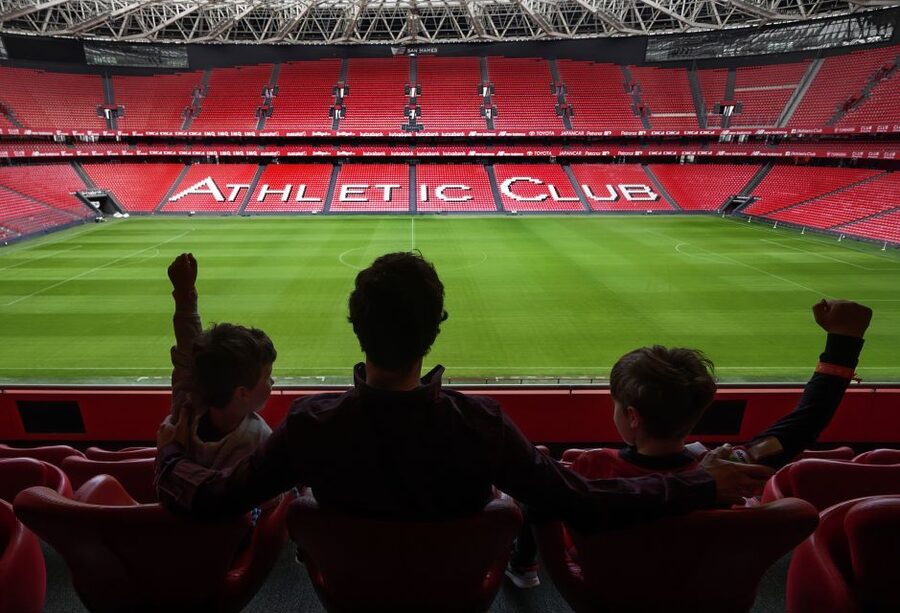
Athletic Club is not simply a team that happens to play in Bilbao. The club’s identity is closely tied to the Basque Country, and the museum explains that connection through its trophies, images, objects, and audiovisual displays.
You do not need to arrive as a devoted football supporter. The visit works because it shows how a club can carry local memory. Even visitors who are not serious football fans have found the stadium interesting, especially when they reach the working areas normally hidden from the public.
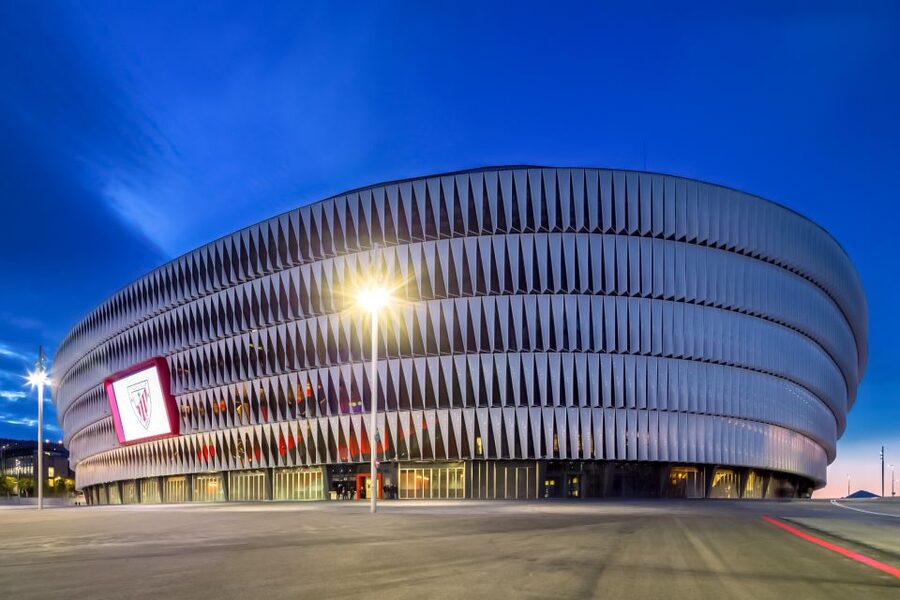
The setting also gives the tour a sense of occasion. San Mamés is known as The Cathedral of Football, and the name makes more sense once you move through the tunnel and look toward the pitch. The stadium is modern, tidy, and built for a large crowd, but the tour keeps your attention on the people and traditions behind Athletic Club.
At $19 per person, this is a strong-value Bilbao activity if you have any interest in sport, local identity, design, or behind-the-scenes places. It also makes a useful rainy-day stop because much of the experience takes place indoors.
More Museum Tours in Bilbao:
- Bilbao: Guggenheim Museum Skip-the-Line Guided Tour & Dinner
★ 4.6 · 456 reviews - Bilbao: Guggenheim Museum Tour with Skip-the-Line Tickets
★ 4.7 · 372 reviews - Bilbao: Private & Exclusive Guggenheim Museum Guided Tour
★ 4.8 · 296 reviews
Starting between Gates 19 and 20
You begin at the museum entrance between Gates 19 and 20 of San Mamés. That detail matters because a large stadium can have several entrances, and finding the correct one saves needless circling.
The visit is self-guided with an audio guide available in English, Spanish, Basque, and French. You scan a QR code with your phone, so arrive with your smartphone charged and your headphones ready. Bring your own earphones rather than assuming equipment will be supplied.
The audio system is useful for adding context as you move around, but it is not the strongest part of the visit for everyone. Some people found the instructions unclear, and one visitor could not use it because there was no free Wi-Fi available at the stadium. I would prepare before arrival by making sure your phone can access the guide and by carrying headphones that connect easily.
The upside is control. You are not rushed from one stop to the next. If a video catches your attention, you can stay. If a display is mainly for serious football historians, you can move on.
The Athletic Club Museum: objects, film, and club identity

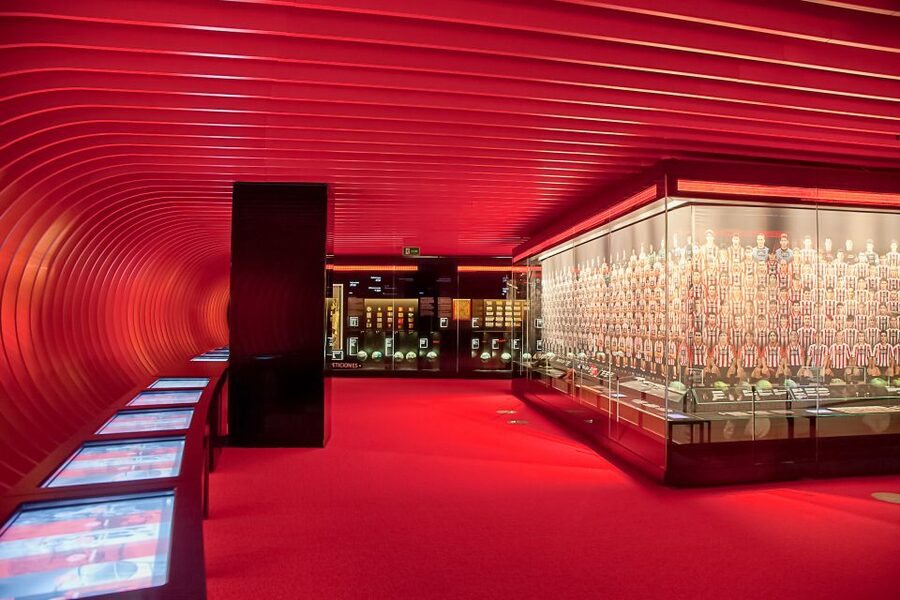
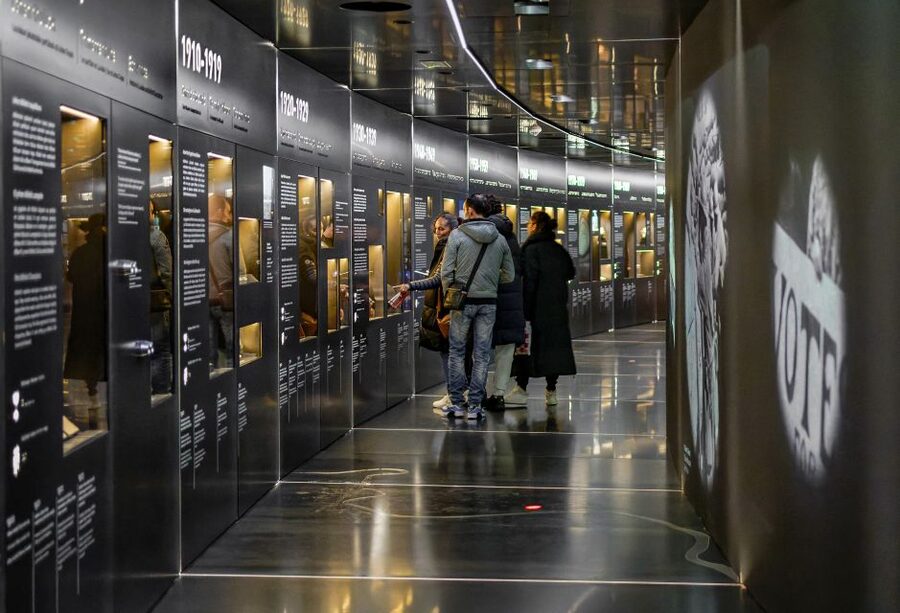
The museum is not just a trophy room with glass cases. It uses about 500 original football-related objects to tell the story of Athletic Club across more than a century.
You will see trophies, clothing, graphics, photographs, and other material connected with the club. The displays cover both the team’s past and its present, so the museum gives you a sense of continuity rather than presenting old victories as isolated moments.
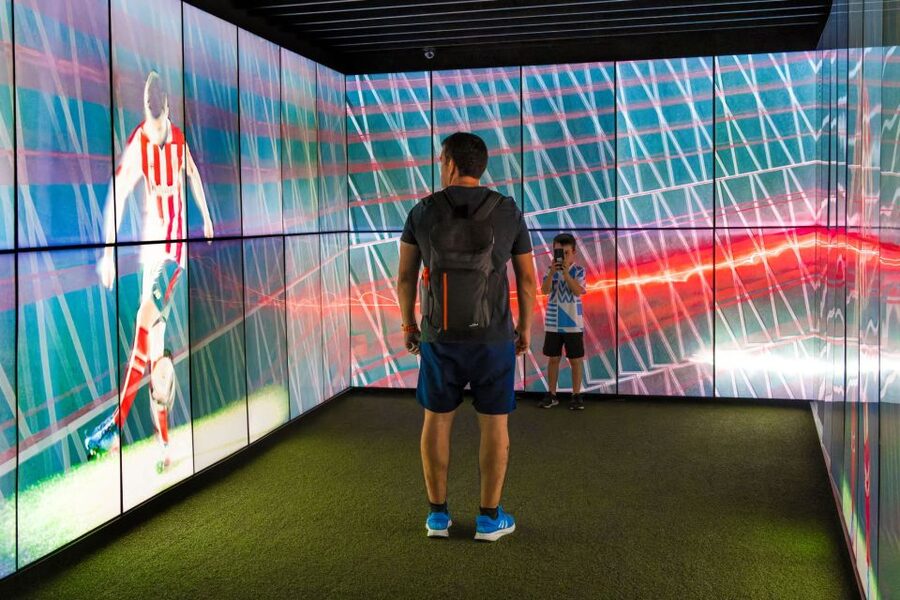
The technology adds variety. There are four audiovisual productions, 13 interactive systems, around 600 videos, and a large video wall. A playroom provides entertainment for children, making the museum a better family stop than a quiet display of framed shirts and faded photographs.
I would plan extra time here. One hour is enough for a quick visit, but you can spend several hours if you watch the films, read the material, and try the interactive features. Families with children and teenagers should not feel they need to rush through the museum before reaching the stadium areas.
The museum also helps explain why Athletic Club matters to Basque supporters. You see football records, but you also see a club presented as part of a wider regional culture. That local context is one of the best reasons to visit, even if you do not know the current team lineup.
Walking the tunnel and reaching the pitch
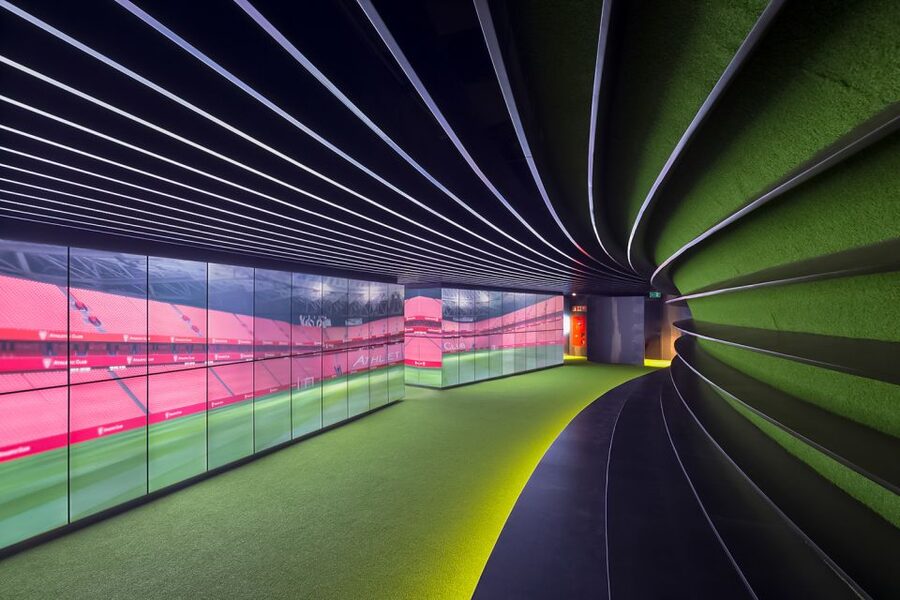
The most memorable part for many people is the move from museum displays into the stadium itself. You walk through the players’ tunnel and out toward pitchside, following the route that footballers take before a match.
This is where the tour becomes physical. Instead of only looking at photographs of match day, you stand at grass level and see the field from the players’ side of the barrier. You can imagine the noise, pressure, and ceremony of a real fixture without having to attend a match.
You can also visit the dugouts and sit where coaches and substitutes watch the game. It is a small detail, but it changes your view of the stadium. From the stands, football is about the full field and the crowd. From the dugout, the action feels closer and more tactical.
The access is unusually generous for a stadium visit. You can reach areas that many football grounds keep off limits, including the tunnel, changing rooms, press room, VIP area, dugouts, and pitchside spaces. Exact access can change because San Mamés remains a working stadium, but the normal route gives you a good look behind the public face of the ground.
There is some walking and climbing steps. One family found the stadium easy to navigate, while another visitor specifically noted the amount of walking and stairs. If you have limited mobility, the tour is wheelchair accessible, but it is still sensible to allow time and avoid treating the visit as a quick photo stop.
A few more Bilbao half-days worth comparing
- Bilbao: 1- or 2-Hour Sightseeing Boat Tour
★ 4.2 · 1,723 reviews - The Award-Winning Bilbao Food Tour & Wine Pairing by Basque Local
★ 5.0 · 967 reviews - Bilbao: Guided Highlights Small Group or Private E-Bike Tour
★ 4.8 · 608 reviews - Bilbao: Bilbao Estuary and Abra Bay Boat Tour
★ 4.2 · 585 reviews
The changing room, press room, and working stadium
The home changing room gives you a closer look at the practical side of football. It is less about grand architecture and more about imagining the preparation before players take the field.
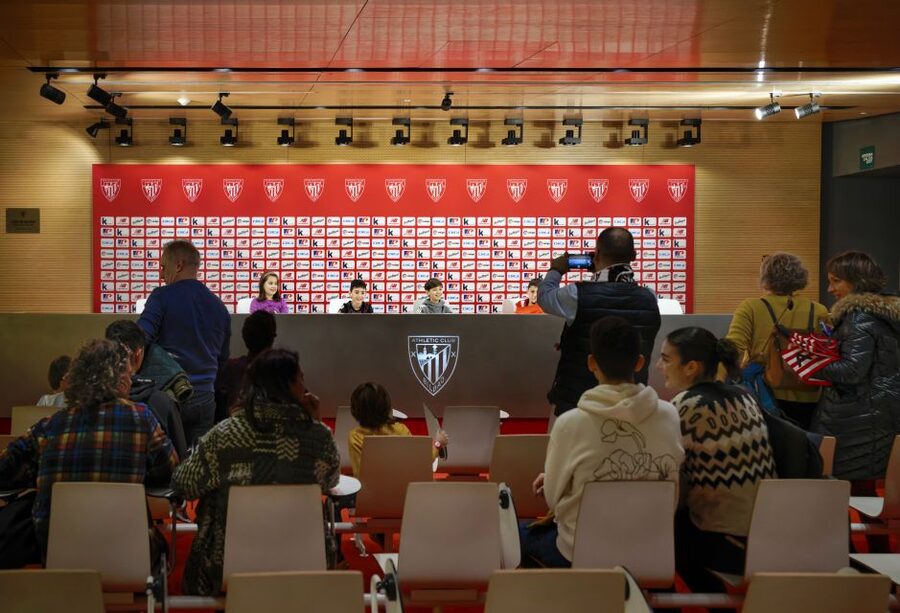
The press room offers a different view. This is where match reactions and club announcements become part of the public story. Standing there helps connect what happens on the pitch with the interviews and analysis that follow.
The VIP area adds another layer, showing how different parts of the stadium serve different audiences. Taken together, these rooms make the visit feel like a tour of a functioning sports venue rather than a museum located inside an empty building.
The stadium itself is a major part of the appeal. It is modern and spacious, with a clean layout that makes it easy to follow the route. The self-guided format works particularly well here because you can stop for photographs, read the information, and take in the scale without being pushed along by a group.
Interactive features for families and nonfans
A football museum can be hard work for someone who does not follow the sport. San Mamés makes a good effort to avoid that problem.
The videos and interactive systems give you something to do rather than asking you to read wall text for an hour. The playroom is useful for younger children, while penalty-style or game-related features can keep older children and teenagers involved. The exact activities available during your visit may vary, but the museum is designed for more than silent viewing.
I would recommend this to families with children from school age upward, especially if at least one person in the group enjoys football. Children can move between the audiovisual material and interactive displays, while adults can spend more time on the club’s story.
The tour also works for couples or solo visitors who are not major football fans. A stadium is a large public building with a clear purpose, and seeing its hidden working areas is interesting in its own right. The visit becomes even more worthwhile when you pay attention to Athletic Club’s role in Basque culture rather than focusing only on trophies.
How long should you plan?
The activity is listed as valid for one day, but that does not mean you need a full day at the stadium. It means you can visit during the available opening period on your selected date.
A brisk visit may take about an hour. If you watch the films, use the interactive displays, read the museum material, and pause at each stadium stop, plan for two or three hours. Families may need longer because children tend to spend extra time at the playroom and interactive stations.
The museum closes at 7:00 PM from November through February and at 8:00 PM from March through October. Check the current start times before setting out, particularly if you are visiting near the end of the day.
Match days need special care. If a match falls during museum opening hours, the museum closes two hours before kickoff, and stadium access ends four hours before kickoff. Training behind closed doors and other events can also alter the route or schedule. A match-day visit may be tempting, but it is the time when you most need to verify the hours.
Audio guide or a live guide?
This experience includes an audio guide, not a standard live guide. That is a good fit if you prefer to stop and start as you please.
Earlier guided visits have included guides such as Paulo and Maialen, who were praised for their club knowledge and language skills. The current format gives you more independence, but you do not get the easy question-and-answer exchange that comes with a live guide.
The audio content covers the museum and stadium route, and it can help you understand the meaning behind displays that might otherwise seem unfamiliar. Still, the technical side deserves attention. Bring a charged phone, your own headphones, and a reliable connection for scanning the QR code. If the audio fails, the museum and stadium remain worth visiting, but you will lose part of the explanation.
Directions inside the stadium could also be clearer. I would follow signs carefully, ask staff if you are unsure, and allow a few extra minutes at the start to get oriented.
Is $19 good value?
At $19, the price is modest for the amount of access included. You are not paying only to see a museum. You also get the tunnel, changing room, press room, VIP area, dugouts, and pitchside route, along with the interactive exhibits.
The value is strongest if you take your time. A rushed 45-minute visit would make the ticket feel less special, while two hours or more gives you time to use the displays and enjoy the stadium without rushing.
Compared with the cost of attending a major football match, this is an inexpensive way to understand Athletic Club and see San Mamés from close range. It is also a sensible choice for families because different age groups can find something to enjoy.
The price does not remove every limitation. The audio guide depends on your own device, and access may be reduced around matches or private stadium activity. Even so, the combination of museum content and near-total stadium access gives the ticket solid value.
Who should book this San Mamés visit?
I would book it if you follow Athletic Club, enjoy European football, or want to understand how sport fits into Basque identity. You will get the most from the trophies, club material, and stadium spaces.
I would also recommend it to families. Children can use the interactive displays and playroom, while adults can explore the changing room, tunnel, and press room. The tour is easy to take at your own pace, which helps when different members of your group want different amounts of time.
You do not need to be a football fan, but you should be open to a museum built around one club. If you want a general introduction to Bilbao’s art, food, or architecture, choose another attraction. If you want a close look at a major stadium and a club with strong local meaning, this is a smart $19 stop.
Should you book the San Mamés Museum and Stadium Tour?
Yes, with two small conditions: check the schedule around match days, and prepare your phone and headphones before you arrive.
The best parts are the pitchside access, the changing room and tunnel route, and a museum that uses film and interactive displays instead of relying only on static exhibits. The self-guided format lets you linger, and the price is fair for a visit that can fill one to three hours.
Book it if you want to see how Athletic Club lives inside Bilbao. Skip it only if you have no interest in football museums or if your schedule cannot handle possible changes around a match.
FAQ
Where does the San Mamés tour begin?
The visit begins at the Athletic Club Museum entrance between Gates 19 and 20 of San Mamés Stadium.
What is included in the ticket?
The ticket includes entry to the Athletic Club Museum and the San Mamés Stadium tour with an audio guide.
Which languages are available for the audio guide?
The audio guide is available in English, Spanish, Basque, and French.
Do I need to bring my own phone?
Yes. You need your own charged smartphone to use the audio guide.
Do I need to bring headphones?
Yes. You need to bring your own headphones or earphones for the audio guide.
What stadium areas can I visit?
The route includes the home changing room, players’ tunnel, pitchside area, dugouts, press room, and VIP area. Access can change because of matches, training, or other events.
Is the tour wheelchair accessible?
Yes, the activity is listed as wheelchair accessible.
Are pets allowed?
Pets are not allowed, although assistance dogs are permitted.
Does the museum close earlier in winter?
Yes. From November through February, it closes at 7:00 PM. From March through October, it closes at 8:00 PM.
Can the visit change on match days?
Yes. If a match takes place during museum opening hours, the museum closes two hours before kickoff and stadium access ends four hours before kickoff. Other events and behind-closed-doors training can also change the schedule.
Recently added around Bilbao
- The Original Bilbao Food Tour with Wine Pairings★ 4.9 · 120 reviews
- Bilbao: City Highlights Guided Bike Tour★ 4.8 · 171 reviews
- Bilbao old town walking tour★ 4.6 · 151 reviews
- Bilbao: Bilbao Cathedral and San Anton Church Entry Ticket★ 4.4 · 107 reviews
- Bilbao: Guggenheim Like Never Before: VIP Access. Small Group.Top★ 4.5 · 190 reviews
- The Authentic Bilbao Pintxos, Food & Wine Tour with a Local★ 5.0 · 360 reviews
- The Award-Winning Bilbao Food Tour & Wine Pairing by Basque Local★ 5.0 · 967 reviews
- Basque Best Bites – #1 Food & Wine tour of Bilbao★ 5.0 · 268 reviews
Museums, compared.

FC Barcelona Museum “Barça Immersive Tour” Ticket
Read our review →
Park Güell and Gaudí House Museum Entry Ticket
Read our review →
Puro Flamenco Show with Optional Museum Ticket
Read our review →
Girona & Dali Museum Small Group Tour with Pick-up from Barcelona
Read our review →
Oceanogràfic, Hemisfèric & Science Museum Combo
Read our review →Browse the lists this tour appears in