
Reviewed · REINA SOFIA MUSEUM TICKETS
Madrid: Reina Sofía Museum Entrance Ticket
Picasso’s Guernica is the reason many people buy this ticket, and it earns the attention. The huge painting is powerful in person, especially when you see the studies and related works that explain how Picasso built its fractured, grieving world. The Reina Sofía also gives you a strong look at Dalí, Miró, and other Spanish artists who shaped 20th-century art.
I like the freedom of a full-day ticket and the chance to explore more than 21,000 works without joining a guided group. I also like that an online ticket can help you pass the ticket-buying line, which matters when a long queue forms. The drawback is the museum’s layout: closed galleries, confusing signs, and a huge collection can make the visit feel less orderly than it should.
Key points
- Guernica is the main event: See Picasso’s monumental anti-war painting alongside related works and historical material.
- A major Spanish art collection: The museum includes around 20 works by Salvador Dalí and important paintings by Joan Miró.
- More than paintings: Photography, film, sound, and dance share space with traditional art forms.
- Self-guided and flexible: Your ticket is valid for one day, so you can set your own pace and return to favorite galleries during that visit.
- Online tickets can save time: Direct entry may be available for ticket holders, although queues and access arrangements can vary.
- Plan around the hours: The museum is closed Tuesdays, several major holidays, and some Sundays, so check the schedule before you go.
Why Guernica makes this museum visit worthwhile
If you visit only one room at the Reina Sofía, make it the gallery containing Guernica. Picasso painted this enormous work in response to the 1937 bombing of the Basque town of Guernica during the Spanish Civil War. You do not need a degree in art history to feel its force. The screaming figures, broken bodies, frightened animals, and stark black-and-white surface communicate panic before you have read a word of explanation.
The painting is large enough to change the mood of the room. Give yourself time to look from a distance, then move closer to study the faces and fractured forms. The museum’s related Picasso material helps you understand the work as a process, not simply as an isolated masterpiece. That context adds real value to the admission price.
The room can become crowded, especially around the most popular viewing spots. Be patient, and do not expect a quiet, private encounter. Selfie takers can block the sightline, so moving a few steps to the side or waiting for a gap often gives you a better view than trying to push toward the center.
More Museum Tours in Madrid
- Madrid: Prado Museum Entry Ticket
★ 4.6 · 17,509 reviews - Madrid: Small Group of Prado Museum Tour & Optional Tapas
★ 4.6 · 2,437 reviews - Madrid: Prado Museum Guided Tour with Skip-the-Line Ticket
★ 4.5 · 2,018 reviews
Finding the entrance through the Nouvel courtyard
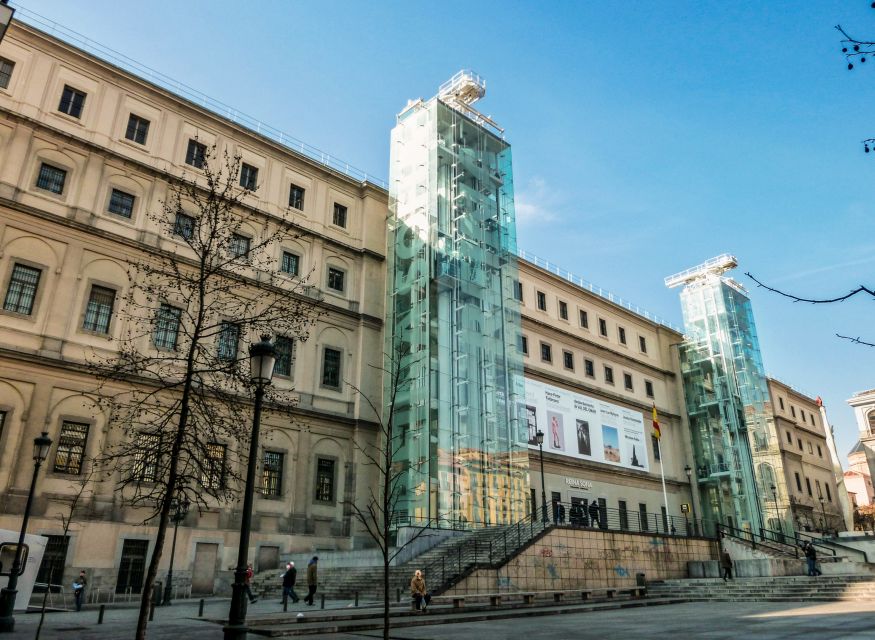
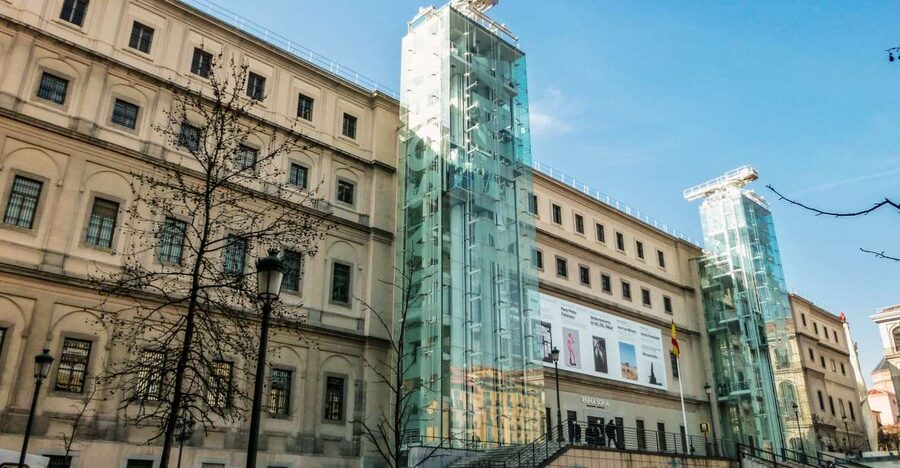
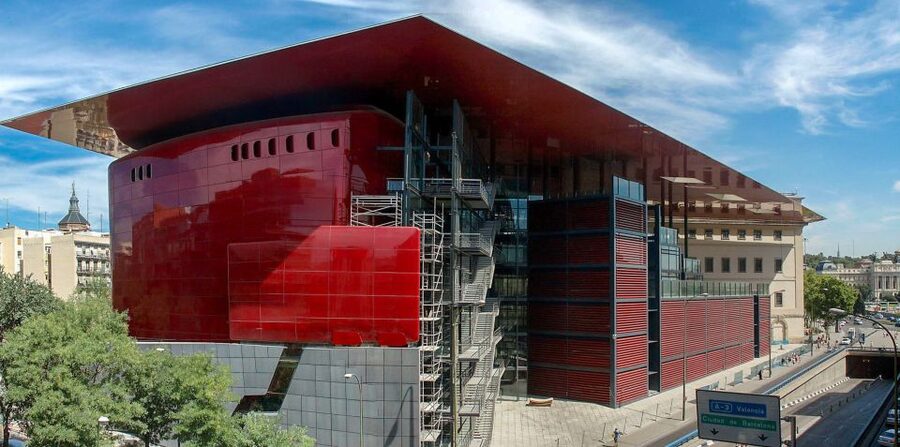
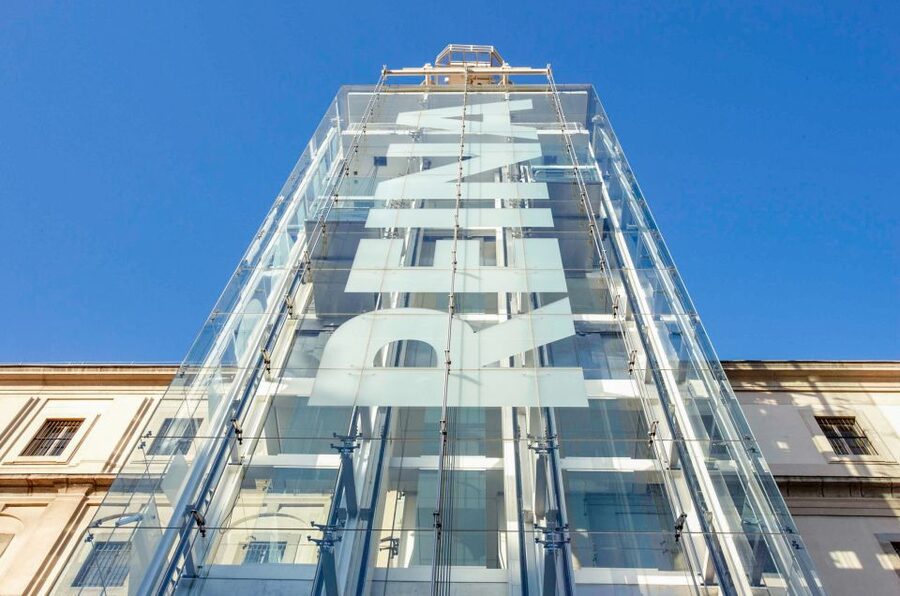
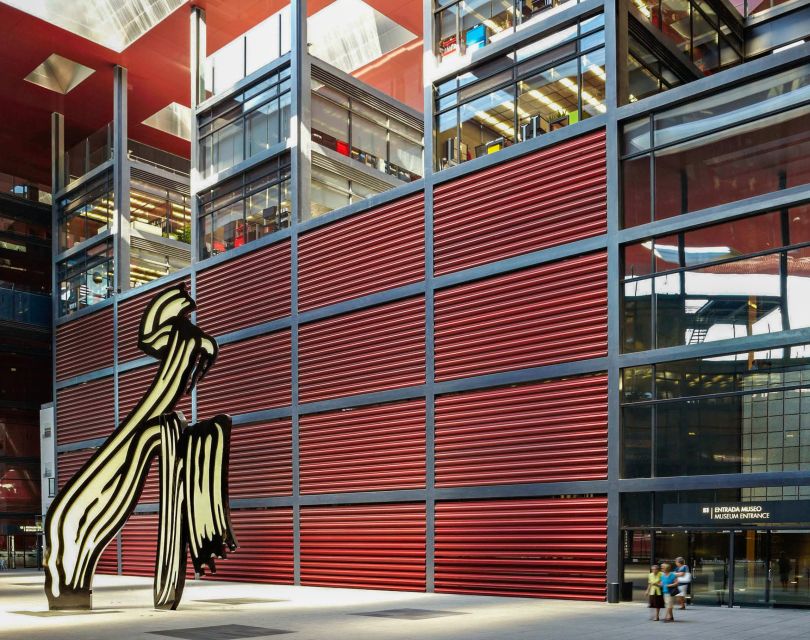
The listed access point is through the Nouvel courtyard at Ronda de Atocha 2. This is important because the Reina Sofía uses several buildings and entrances, and the museum can feel confusing before you even reach the galleries.
Have your ticket ready on your phone. An online ticket does not promise that every queue will disappear, but it can save you from waiting at the ticket counter. That advantage is especially useful around midday, when entry lines may grow quickly. Arriving early also gives you a calmer start and more time before the museum becomes crowded.
The museum is wheelchair accessible. Bags, purses, and backpacks should stay within the recommended 40 by 30 by 10 centimeter size. Large bags and luggage are not allowed, so this is not a good stop for storing airport baggage or a large day pack.
Food and drinks are prohibited in the galleries. Sharp objects, tools, toys, balls, and entertainment items are also not allowed. Only closed folding umbrellas are permitted. Assistance dogs are allowed, as are emotional support dogs when properly justified.
How to plan your route through a huge collection
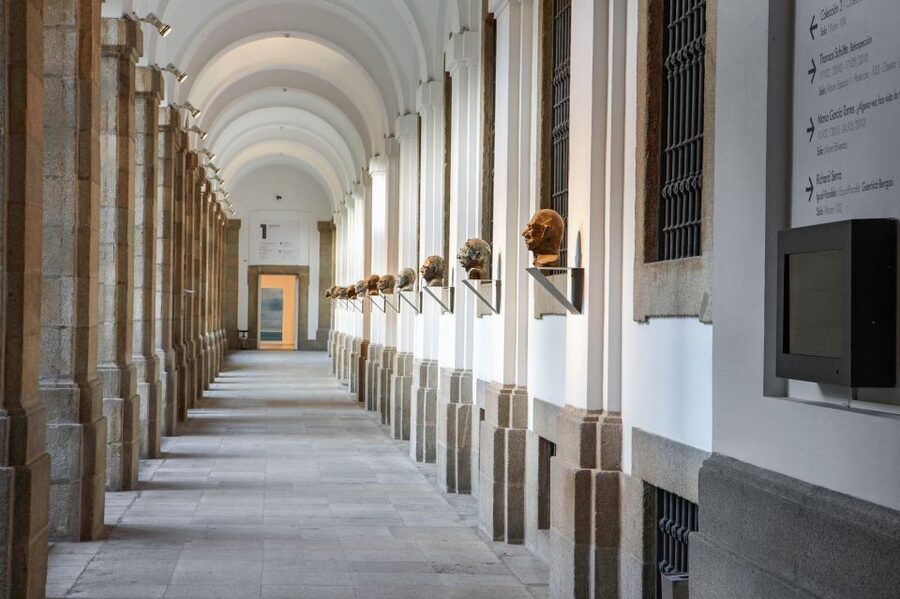
The Reina Sofía is not a small, tidy museum that you can absorb in an hour. More than 21,000 works are currently displayed in the main building, and the collection covers painting, sculpture, photography, film, sound, and dance. You can spend half a day here without rushing, and a full day is reasonable if you read labels carefully.
The museum’s displays do not always follow a simple chronological path. Different media sit alongside one another, and separate rooms may suggest several ways to understand the same period. That approach can be rewarding, but it also means you should not expect every floor to be equally full or easy to follow.
Some areas may be closed during your visit. Previous visitors have found empty or unavailable floors and felt they had missed a large part of the collection. Temporary exhibitions that require an hourly schedule are not included with this basic entrance ticket. Check what is open on the day, and avoid building your entire plan around a particular gallery unless you can confirm access.
I suggest starting with the museum map and marking two or three priorities. Put Guernica first, then choose either Dalí, Miró, Picasso’s other works, or the film and photography rooms. After those priorities, wander. This keeps a large museum from becoming a tiring hunt for famous names.
Dalí’s strange, precise world
The Reina Sofía displays around 20 canvases by Salvador Dalí, including El gran masturbador. Dalí’s work is often the most immediately approachable part of the collection because the images are strange, detailed, and packed with recognizable objects that behave in impossible ways.
Look closely at the surfaces and small forms rather than treating the paintings as quick visual jokes. Dalí’s surrealism depends on precision. The more carefully you examine the picture, the more unstable its logic becomes.
The Dalí rooms also offer a useful contrast with Picasso. Picasso breaks form apart and rebuilds it from sharp angles and overlapping views. Dalí often makes the impossible look carefully observed and almost photographic. Seeing both artists in the same museum helps you understand that Spanish modern art was not one single style.
If you enjoy reading wall texts, allow extra time here. If you prefer to move quickly, these works still give you some of the museum’s most memorable visual moments.
More Reina Sofia tickets:
- Madrid: Reina Sofía Museum Guided Tour
★ 4.3 · 659 reviews - Reina Sofia Museum Small Group Tour -6 people maximum-
★ 5.0 · 433 reviews - Madrid: Guided Tour of Reina Sofía Museum with Entry Ticket
★ 4.9 · 363 reviews - Madrid: Reina Sofia and Prado Museum Tickets and Guided Tour
★ 4.6 · 342 reviews
Miró and the power of simple color
Joan Miró’s paintings bring a different mood. His bright primary colors, spare shapes, and floating marks can look simple at first glance, but that simplicity is carefully controlled. The works reward you when you slow down and notice the balance between empty space, color, and line.
Miró is a good reason to avoid spending your entire visit in front of Guernica. His work shows another side of Spanish modernism, one that feels more playful and open while still carrying a strong personal language.
The collection includes many artists beyond the headline names. You will find a broad look at 20th-century Spanish art, including the changing ideas of cubism and surrealism. The museum is most useful when you let the famous paintings serve as anchors, then pay attention to the less familiar works around them.
Film, photography, sound, and dance
The Reina Sofía does not treat modern art as a collection of paintings alone. Photography, film, sound, and dance appear alongside more traditional forms. This makes the visit feel closer to a record of artistic experiments than to a standard sequence of framed canvases.
The film section can be a welcome change after several rooms of still images. It also helps explain how artists responded to new technology, public events, and changing ideas about what could count as art. You may not want to watch every film from beginning to end, but the moving-image displays are worth building into your route.
This broader approach may not suit someone looking only for famous paintings. It does suit you if you like seeing how art crosses between media. Keep an eye on the opening hours of individual galleries, since not every room is always available.
Using the audio guide without losing your own route
The entrance ticket does not include a guide inside the museum. An audio guide can be purchased there for €4.50. That is a modest extra cost if you want help identifying important works or understanding the collection’s themes.
An audio guide can also keep you from walking past a less famous work that deserves attention. It gives structure to a museum that can otherwise feel hard to navigate. The tradeoff is that you may spend too much time following the device instead of looking freely.
I would use it selectively. Listen to the explanations for Guernica, key Dalí and Miró works, and any section where the historical setting is unclear. Then remove the headphones for a while and look at the art without commentary. You will get both context and breathing room.
If you prefer to use your own phone for notes or research, download anything you need before entering. Museum staff instructions must be followed, and the museum may not offer the kind of detailed personal help you would receive on a private tour.
What the $14 ticket is really buying
At about $14 per person, this is a strong-value museum ticket if you care about modern art or want to see Guernica without paying for a private guide. You are paying for access to a major collection, not for a narrated tour or a tightly organized itinerary.
The value improves if you stay several hours. A quick visit focused only on Guernica still has meaning, but you will get more for your money by adding Dalí, Miró, Picasso’s related works, and the film or photography areas.
The ticket is valid for one day rather than a short timed visit, though you should check the available starting times when booking. That flexibility lets you choose a quieter period or fit the museum around other Madrid plans.
The price does not include the €4.50 audio guide. It also does not cover temporary exhibitions that require an hourly schedule. If those exhibitions are your main reason for visiting, confirm their ticket rules before booking this basic admission.
Best times and opening-hour traps
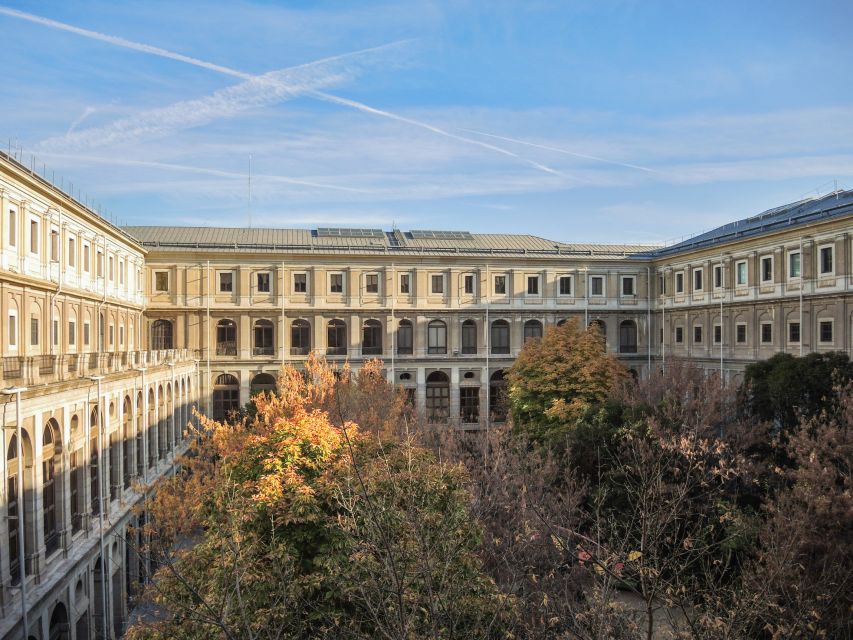
The museum is open Mondays from 10 a.m. to 9 p.m., Wednesdays through Saturdays from 10 a.m. to 9 p.m., and Sundays from 10 a.m. to 2:30 p.m. It is closed every Tuesday, with occasional Sunday closures also noted, so check the date carefully.
The museum offers free admission during these periods:
- Monday through Saturday, 7 p.m. to 9 p.m.
- Sundays and public holidays, 12:30 p.m. to 2:30 p.m.
Free entry can create busy periods, so a paid ticket may be worth the cost if your schedule is tight. The strongest practical reason to book ahead is not luxury. It is time. A direct-entry ticket can help you avoid joining a line for people who still need to buy admission.
The museum is closed on January 1 and 6, May 1 and 15, November 9, and December 24, 25, and 31. Holiday opening times deserve special attention because Madrid’s museum schedule changes more than many visitors expect.
Who will enjoy this museum most
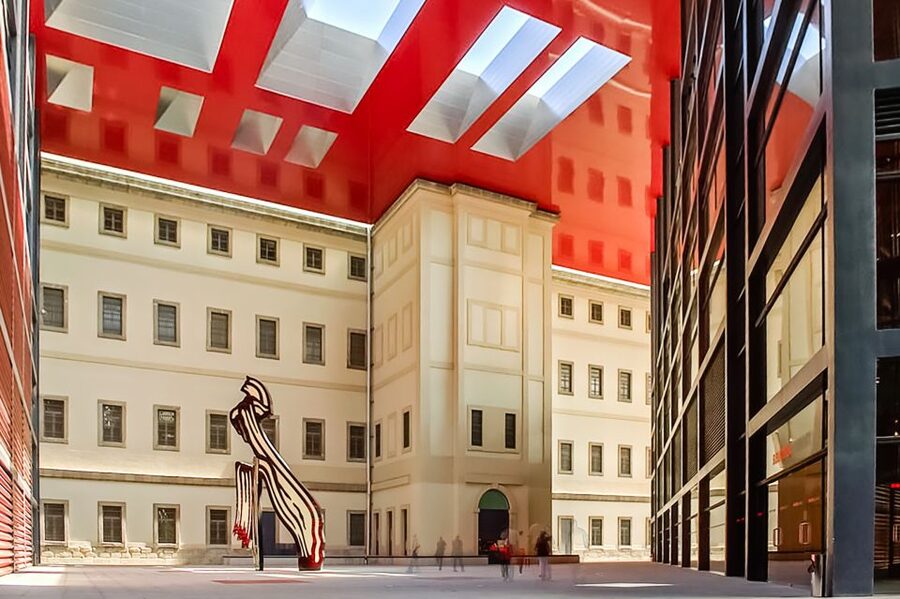
I recommend the Reina Sofía to anyone with an interest in Picasso, Dalí, Miró, the Spanish Civil War, or 20th-century art. It also suits independent visitors who like choosing their own route rather than keeping pace with a guide.
Families can visit, but children should remain under adult supervision. The size and subject matter may be tiring for younger children, especially in galleries dealing with war and suffering. A short list of highlights is better than promising to see everything.
The museum is less suitable if you want a polished, simple path from one famous painting to the next. Signs can be confusing, some galleries may be closed, and the collection is large enough to test your attention. You need a little patience and a willingness to adjust your plan.
Practical tips for a smoother visit
Arrive early if you want the quietest possible start. The museum can become much busier later in the morning, and an online ticket may let you enter more directly than people buying tickets at the door.
Wear comfortable shoes. The building is large, and you may cover more ground than expected while searching for particular artists or galleries. Keep your bag small to avoid problems at security.
Do not assume that every floor will be open. Ask about current gallery access when you arrive, then revise your route. If a floor is closed, spend more time with the open Picasso, Dalí, and Miró rooms rather than treating the visit as a failure.
Allow at least two hours for a focused visit. Give yourself half a day if you want to read labels and include film, photography, and less famous artists. A full day makes sense only if modern art is a major interest or if you prefer a slow museum pace.
Should you book the Reina Sofía ticket?
Book it if Guernica is on your Madrid list, especially if you have limited time and want to avoid buying admission at the museum. The $14 price is fair for access to a large national collection, and the one-day validity gives you room to set your own pace.
Book with realistic expectations. This is not a guided tour, the audio guide costs extra, and the layout can be confusing. Check opening hours, confirm which galleries are available, keep your bag small, and arrive with two or three priorities instead of trying to see all 21,000 works.
If you want modern Spanish art, this ticket is an easy choice. If you prefer a small museum with a simple route, the Reina Sofía may feel like work, but the chance to stand before Guernica makes that effort worthwhile.
FAQ
How long is the Reina Sofía ticket valid?
The entrance ticket is valid for one day. Check availability for the starting times offered when you book.
What is included with the ticket?
The ticket includes admission to the Reina Sofía Museum and the booking and handling fee.
Is an audio guide included?
No. An audio guide can be purchased inside the museum for €4.50.
Is a museum guide included?
No. This is a self-guided entrance ticket, and no tour guide inside the museum is included.
Can I see Picasso’s Guernica with this ticket?
Yes. Picasso’s Guernica is one of the main works displayed at the Reina Sofía.
What other artists can I see?
The collection includes around 20 canvases by Salvador Dalí, including El gran masturbador, as well as works by Joan Miró and other 20th-century Spanish artists.
Is the museum open every day?
No. The museum is closed every Tuesday and occasionally on Sundays. It also closes on January 1 and 6, May 1 and 15, November 9, and December 24, 25, and 31.
Can I bring luggage or food into the museum?
No. Luggage, large bags, food, and drinks are not permitted. Bags and backpacks should be no larger than the recommended 40 by 30 by 10 centimeters.
Recently added around Madrid
- Tour Madrid: Secrets in a Electric Tuk Tuk★ 4.6 · 155 reviews
- Madrid: Tasty Tapas Tour & Visit to a Terrace with Views★ 4.5 · 118 reviews
- Madrid: Flamenco Show&Drink at Tablao 1911 (World’s Oldest)★ 4.7 · 253 reviews
- Small Group Prado Museum Guided Tour with Skip the Line★ 4.2 · 106 reviews
- Madrid: Street Art Tour with Local Graffiti Hunter★ 4.8 · 270 reviews
- Madrid: Afternoon Prado Museum Tour with Skip-the-Line Entry★ 4.4 · 491 reviews
- Madrid: Royal Palace Guided Tour with Skip-the-Line Entry★ 4.5 · 780 reviews
- Secret Food Tours Madrid★ 4.9 · 134 reviews
Reina Sofia Museum Tickets, compared.
Reina Sofia Museum Small Group Tour -6 people maximum-
Read our review →
Guided Tour of Reina Sofía Museum with Entry Ticket
Read our review →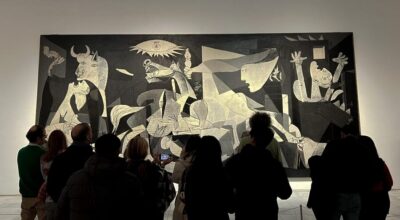
Reina Sofia and Prado Museum Tickets and Guided Tour
Read our review →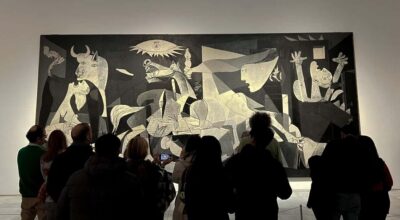
Reina Sofía Guided Tour with Skip-the-Line Tickets
Read our review →
Reina Sofía Museum Ticket with In-App Audio Guide
Read our review →
Browse the lists this tour appears in