
Reviewed · MUSEUMS
Alicante: Bullring and Bullfighting Museum Entry Ticket
Alicante’s bullring is more than a place where bullfights once took place. This late 19th-century building lets you walk into the ring, look toward Santa Bárbara Castle, and see the small chapel where bullfighters prayed before facing a bull. The audio guide fills in the story without asking you to sit through a live bullfight.
I like the freedom to explore at your own pace, and I like the access to areas you would not see from the public seating, including the bull pens and infirmary. The main drawback is that concerts and other events can alter the ring, so a stage or festival setup may take away some of the original atmosphere.
Key points to know before you go
- A self-guided visit lasting about one hour: You move through the bullring and museum with an audio guide rather than a live escort.
- Behind-the-scenes spaces: The route includes the chapel, bull pens, infirmary, ring, and seating areas.
- Six audio-guide languages: Choose Spanish, English, French, Italian, German, or Polish.
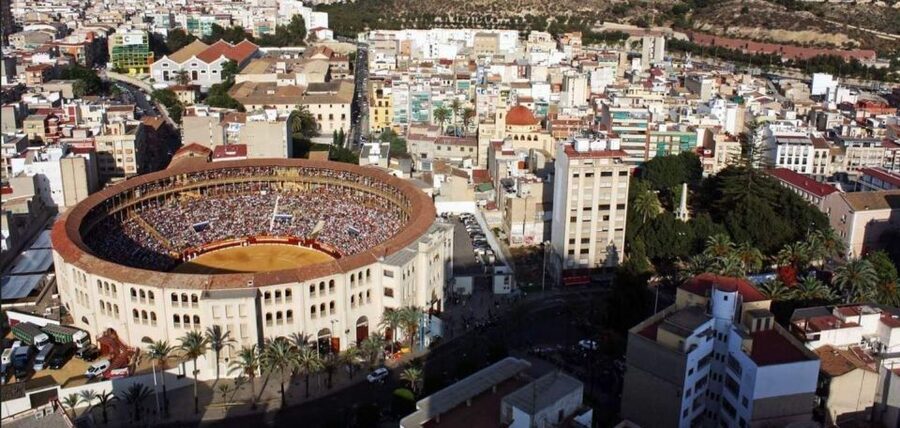
- Alicante views from the seating: Look across the city toward the castle from the upper parts of the bullring.
- Local matadors take center stage: Exhibits cover Vicente Blau, José María Manzanares, Francisco Antón, and Luis Francisco Esplá.
- A good option without attending a bullfight: You can examine the tradition, art, clothing, and architecture on its own terms.
Entering Alicante’s historic bullring
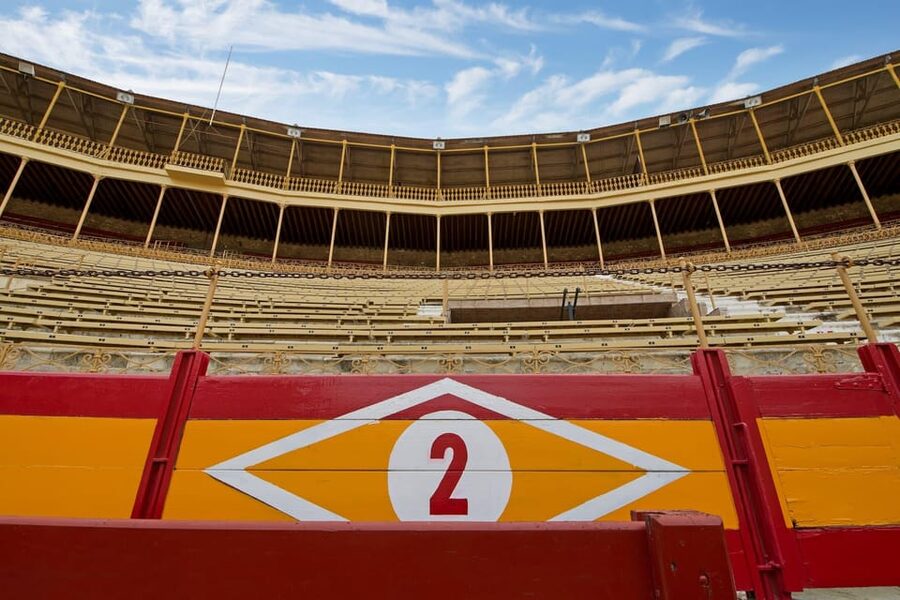
The visit begins at the bullring’s main entrance. From there, you make your way through a building dating from the late 19th century, when bullfighting had a firm place in Alicante’s public life.
The architecture is part of the attraction. You are not entering a modern museum built around a few display cases. You are walking through an active cultural venue that still hosts concerts, tennis, and an ice rink at different times. That modern use gives the building a practical life beyond bullfighting, though it also means the ring may not always look exactly as it did during a traditional event.
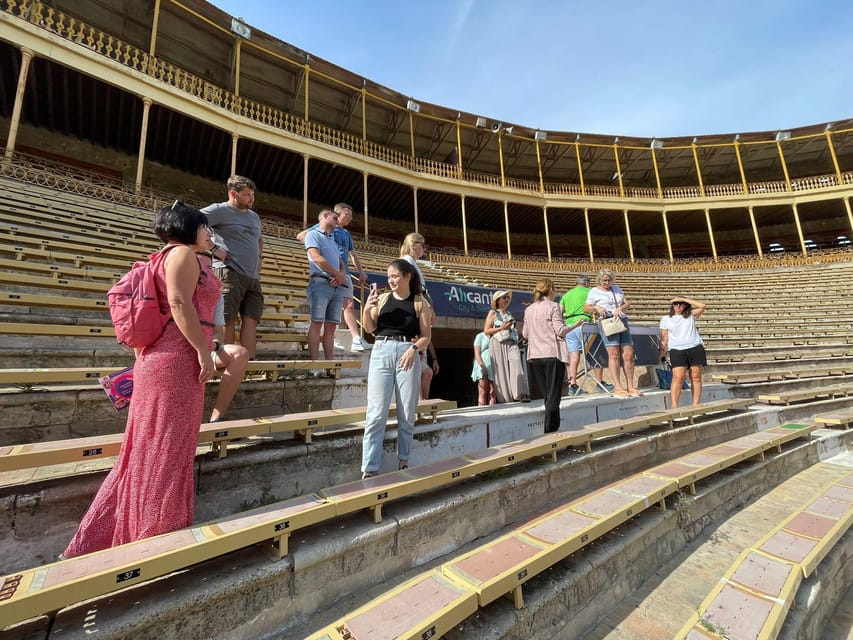
You receive an audio guide and information leaflet, then follow the route independently. This format works well if you prefer to stop for photographs, replay a section, or move quickly through material that does not hold your attention. It also means you should not expect a scheduled talk or a guide leading a group from room to room.
The audio guide is offered in six languages: Spanish, English, French, Italian, German, and Polish. The welcome or on-site assistance is listed in Spanish and English, while the recorded material gives you wider language choice. If you need help at the entrance, English or Spanish is the safest expectation.
More bullring visits in Alicante:
- Madrid: Las Ventas Bullring Tour with Audio Guide
★ 4.6 · 3,154 reviews - Seville: Bullring Guided Tour with a Skip-the-Line Ticket
★ 4.6 · 1,626 reviews - From Costa del Sol: Ronda Village Tour w/ Maestranza Ticket
★ 3.9 · 478 reviews
Stepping into the ring
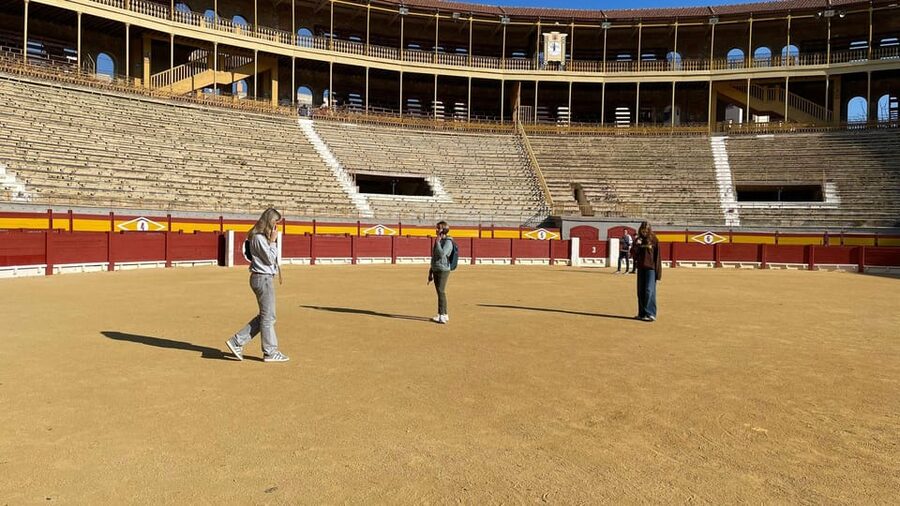
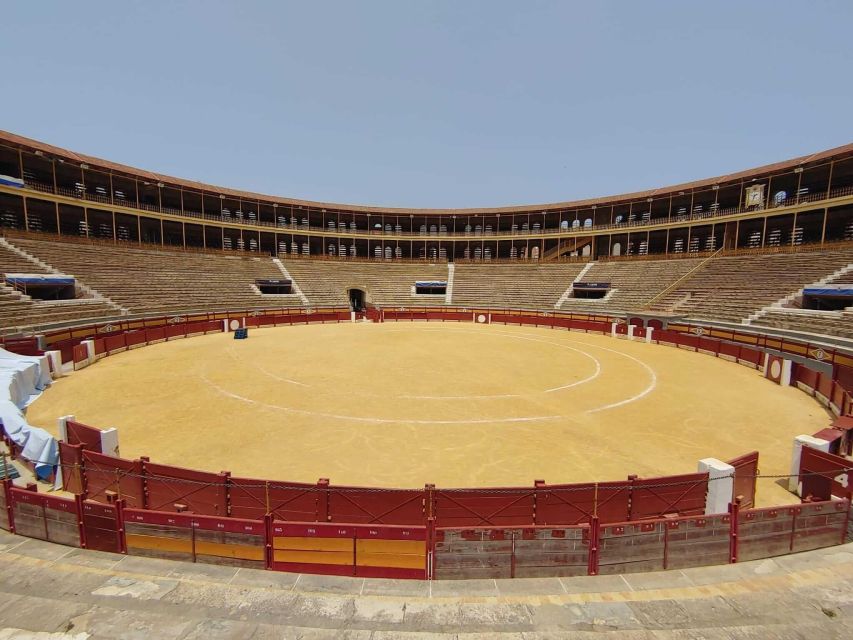
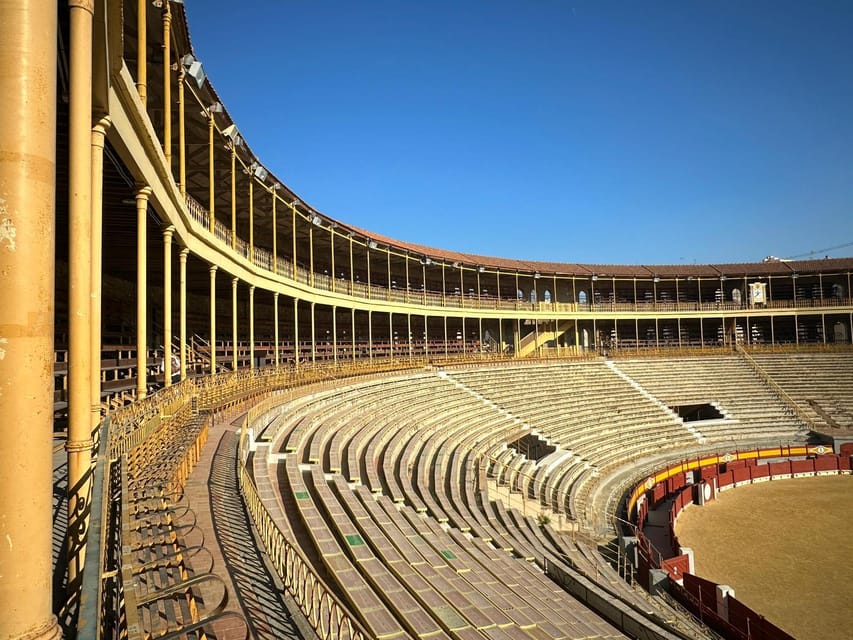
The central moment comes when you enter the ring itself. From the floor, the shape of the building becomes easier to understand. The surrounding seating rises around you, and the audio guide explains how this space functioned during bullfights and festivals.
For many people, this is the reason to book. You can picture the movement of a bullfighter in the arena rather than simply looking at a photograph from behind a barrier. The visit does not include a live bullfight, so you can consider the custom, symbolism, and setting without having to watch a performance.
From the seating areas, you also get views across Alicante and toward the castle. This is a useful detail for anyone who likes combining cultural sights with city views. The vista is not the main reason to come, but it adds scale and helps place the bullring within Alicante.
The exact condition of the arena may vary. A concert stage, Oktoberfest installation, or other event setup has sometimes occupied part of the ring. If the open arena is important to you, check ahead about scheduled events. The museum can still be worthwhile, but the floor may not have the clear appearance shown in promotional photographs.
The chapel, bull pens, and infirmary
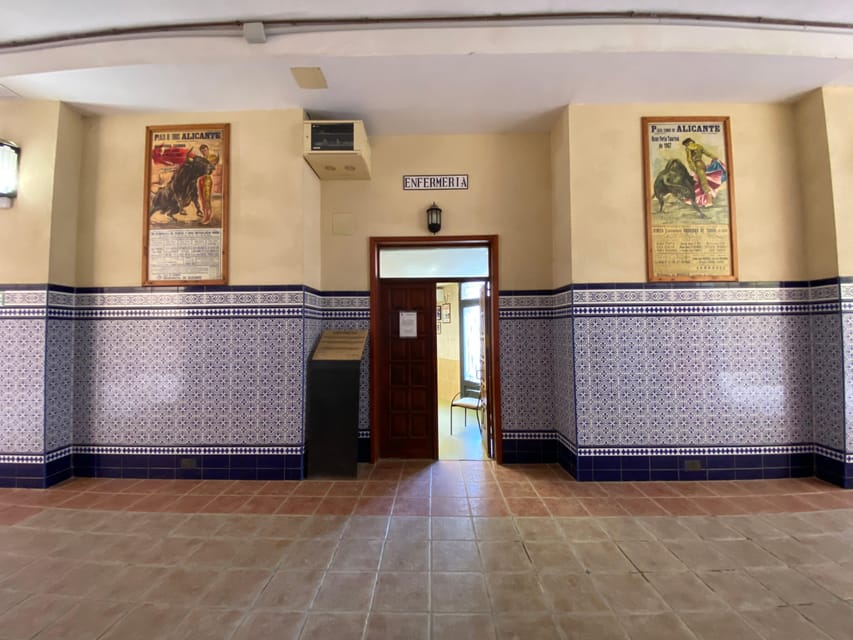
The route reaches beyond the public seating. You see the chapel where Alicante bullfighters prayed before a bullfight, a small space that gives the tradition a personal and religious side. Even if you have no interest in bullfighting as a sport, the chapel helps explain the ritual surrounding the event.
You also visit the bull pens and infirmary. These areas give the tour a more practical edge. Instead of seeing only costumes and heroic portraits, you get a sense of the working parts behind the spectacle.
I find these sections more revealing than a simple walk around the arena. They show that the building was designed for a full event, with separate areas for animals, performers, preparation, and medical care. The audio guide helps explain how these spaces fit together.
The infirmary may be a sobering stop. The experience deals with a tradition built around physical risk, and the building’s original purpose cannot be separated from that fact. The tour presents the subject as culture and history, but it does not turn the bullring into a neutral photo backdrop.
The Taurino Museum and Alicante’s matadors
After the building tour, you visit the Taurino Museum. Here, the emphasis shifts from architecture to people, objects, and memory.
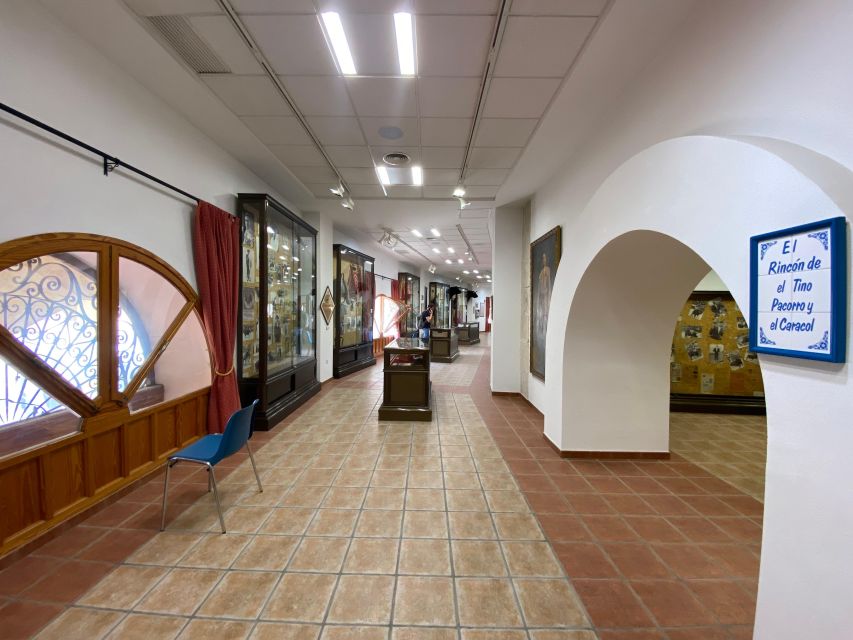
Displays include art connected with bullfighting and bullfighter suits. Clothing is especially useful for understanding how the public image of a matador was created. The embroidered suits, formal presentation, and careful display help show the ceremony surrounding an event before a bull ever entered the ring.
The museum also introduces major matadors from Alicante, including Vicente Blau, José María Manzanares, Francisco Antón, and Luis Francisco Esplá. Their names give the museum a local focus. This is not only a general explanation of Spanish bullfighting, but also an account of figures connected with the city.
You can watch videos about bullfighting culture during the visit. These are helpful if you want more than written labels, although the experience remains largely self-directed. Give yourself enough time to listen rather than rushing through the displays simply to reach the ring.
The museum is compact enough to fit into a one-hour visit, but your pace matters. If you listen to every audio section and watch the videos, you may want to stay toward the full hour. If you mainly want the arena and architecture, you can finish more quickly.
More Museum Tours in Alicante:
- Museum of Illusions Alicante Entrance ticket
★ 4.5 · 105 reviews - Madrid: Prado Museum Entry Ticket
★ 4.6 · 17,509 reviews - Barcelona: FC Barcelona Museum “Barça Immersive Tour” Ticket
★ 4.4 · 10,944 reviews - Madrid: Reina Sofía Museum Entrance Ticket
★ 4.5 · 6,889 reviews
What the audio guide adds
The audio guide provides structure without forcing you into a group timetable. It explains the building, bullfighting festivals, local matadors, and the cultural background of the tradition. That is important here because the bullring’s meaning is not always obvious from its architecture alone.
I would use the guide in two passes. First, listen while moving through the building so you know where the route leads. Then pause at the ring, chapel, and museum displays that interest you most. This keeps the visit from becoming a race through numbered points.
The self-guided format is also useful for a mixed-interest group. One person can spend longer with the suits and art, while another takes photographs from the seating or studies the architecture. You do not have to keep pace with a live guide.
The trade-off is personal contact. There is no live guide included, and you will not have someone on hand to answer detailed questions throughout the visit. Staff assistance is available at the venue, but the main interpretation comes from the recording.
Is the one-hour visit good value at $14?
At $14 per person, this is reasonably priced for a city attraction that combines a historic building, a museum, and access to areas beyond the main arena. You are paying for more than admission to a viewing gallery. The ticket includes the audio guide and the route through the chapel, bull pens, infirmary, ring, and museum.
The value depends on your interest. If you only want a quick photograph of the bullring, the ticket may feel unnecessary. If you want to understand Alicante’s connection with bullfighting and see the building from inside, the price is easier to justify.
The ticket also gives you an alternative to attending a live bullfight. That matters for visitors who want cultural context but do not want to watch an event involving animals. You can examine the history, objects, rituals, and architecture at a calmer pace.
For a one-hour attraction, timing is straightforward. The bullring and museum are open Monday through Saturday from 10:00 AM to 4:00 PM. The narrow opening window makes this better as a morning or early afternoon activity than as a late-day stop.
Because the visit is self-guided, arriving when the venue is quieter can improve the experience. You will have more freedom to listen, take photographs, and look across the ring without a crowd moving around you. On the other hand, scheduled events can matter more than crowd levels. A quiet visit with a stage under construction may still feel incomplete.
Who will enjoy this visit most?
I would recommend it to anyone interested in Alicante’s local identity, Spanish traditions, historic architecture, or unusual city museums. It also suits first-time visitors who want an activity that takes about an hour and does not require a full morning.
The visit is especially useful for:
- People who want to learn about bullfighting without seeing a live event
- Architecture fans interested in a late 19th-century monument
- Visitors who prefer an audio guide to a fixed group tour
- Families or friends with different levels of interest, since each person can move at a personal pace
- Museum visitors who enjoy costumes, paintings, films, and local biographies
- Anyone looking for a short indoor activity during Alicante sightseeing
You should think twice if you want a polished, uninterrupted arena setting. The venue also hosts other events, and the original ring may be partly covered or altered. You should also be comfortable with some walking through the building. One account describes quite a few stairs, even though the activity is listed as wheelchair accessible. If access is important to you, contact the venue before booking and ask which parts of the route are available on your date.
Practical planning for your visit
Go to the main entrance of the bullring. There is no separate meeting point elsewhere in Alicante, and no transportation is included.
Plan for roughly one hour, but do not treat that as a strict limit. The official duration is one hour, and that is enough for a steady visit. You may want a little more flexibility if you listen to all the recordings, watch the videos, and stop often for photographs.
The tour runs Monday through Saturday between 10:00 AM and 4:00 PM. Check the available starting times before you reserve, since the opening hours are limited and the venue can be used for other events.
Cancellation is free up to 24 hours before the scheduled visit, and you can reserve now and pay later. These options are useful if your Alicante plans depend on weather, ferry timing, or a changing sightseeing schedule.
Photography is clearly part of the appeal, especially from the ring and seating. Still, respect any restrictions around museum displays and event setups. The best photographs may come from looking across the empty arena toward the castle rather than trying to capture every exhibit.
Bullfighting as culture, not just spectacle
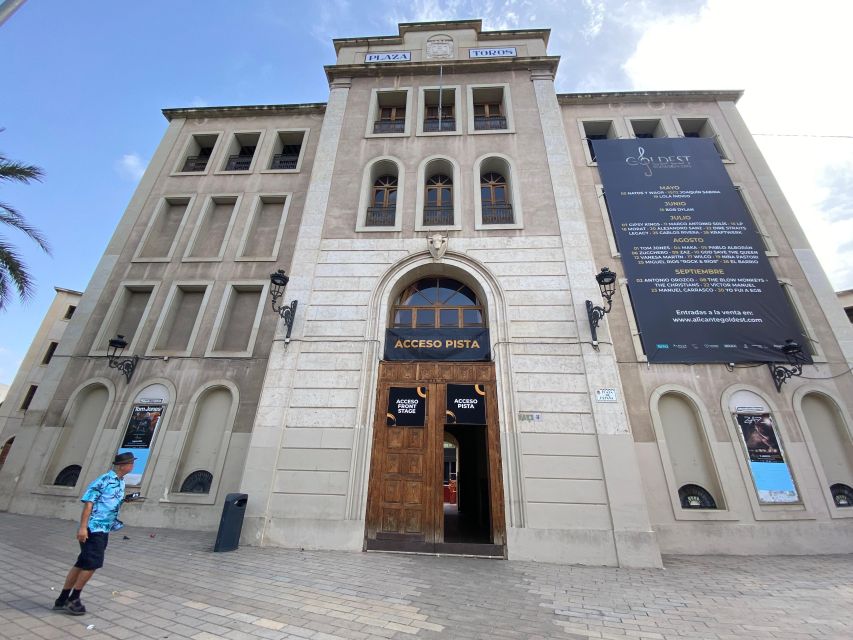
This visit works best when you approach it as a look at one part of Alicante’s cultural past, not as a simple endorsement of bullfighting. The building shows how sport, ceremony, religion, art, local fame, and public entertainment came together in one place.
The chapel adds ritual. The bull pens and infirmary add practical detail. The museum’s suits and art show presentation. The portraits and biographies connect the tradition to Alicante itself. The videos and audio guide then tie these pieces into a broader explanation.
That range is what gives the experience substance. You can leave with a better sense of why the bullring mattered locally, even if you remain personally uncomfortable with the activity it was built to host.
The visit is also a reminder that historic buildings do not always survive as frozen monuments. Alicante’s bullring now accommodates concerts, tennis, and an ice rink. That continued use keeps the building active, but it can also interfere with the original atmosphere. Both sides are worth keeping in mind.
Should you book the Alicante bullring tour?
Book it if you want a short, affordable cultural stop with access to the arena and behind-the-scenes rooms. The multilingual audio guide, castle views, chapel, museum displays, and local matador exhibits make it more worthwhile than a simple entrance into the seating area.
Skip it if you have little interest in bullfighting, historic venues, or museum displays, or if your schedule only allows a late afternoon visit. Before booking, check whether a concert or other event will change the arena. With a clear ring, this is a strong one-hour addition to an Alicante itinerary. With a stage or festival setup, expect a good museum visit but a less complete view of the bullring itself.
FAQ
Where does the visit begin?
Go to the main entrance door of the bullring.
How long does the visit take?
The stated duration is one hour. You can move at your own pace with the audio guide.
What are the opening hours?
The bullring and museum are open Monday to Saturday from 10:00 AM to 4:00 PM.
Is a live guide included?
No. The visit is self-guided. An audio guide and information leaflet are included, and the host or greeter language is Spanish and English.
Which languages are available for the audio guide?
The audio guide is available in Spanish, English, French, Italian, German, and Polish.
What areas can you see?
The route includes the bullring, seating areas, the chapel, bull pens, infirmary, and Taurino Museum. You also see art, bullfighter suits, videos, and information about Alicante matadors.
Is the experience wheelchair accessible?
The activity is listed as wheelchair accessible. However, one account notes that there are quite a few stairs, so contact the venue before visiting if you need to confirm access to every part of the route.
Can you cancel the booking?
Yes. You can cancel up to 24 hours in advance for a full refund. Reserve now and pay later is also available.
Recently added around Alicante
- Parasailing in Alicante★ 4.5 · 116 reviews
- Alicante: Small-Group Countryside Wine Tour with 4 Tastings★ 5.0 · 162 reviews
- Paella & Sangria Class with Tapas and Market Visit★ 5.0 · 122 reviews
- Museum of Illusions Alicante Entrance ticket★ 4.5 · 105 reviews
- Alicante Wine Tasting and Tapas Club★ 5.0 · 126 reviews
- Alicante City & Beach Bike Tour★ 5.0 · 113 reviews
- Alicante Tuk Tuk Overview Tour★ 4.6 · 131 reviews
- Alicante: Santa Bárbara Castle Wine Tasting with Cold Cuts★ 4.3 · 165 reviews
Museums, compared.

FC Barcelona Museum “Barça Immersive Tour” Ticket
Read our review →
Park Güell and Gaudí House Museum Entry Ticket
Read our review →
Puro Flamenco Show with Optional Museum Ticket
Read our review →
Girona & Dali Museum Small Group Tour with Pick-up from Barcelona
Read our review →
Oceanogràfic, Hemisfèric & Science Museum Combo
Read our review →Browse the lists this tour appears in