
Reviewed · BULLRING TOURS
Seville: Bullring Guided Tour with a Skip-the-Line Ticket
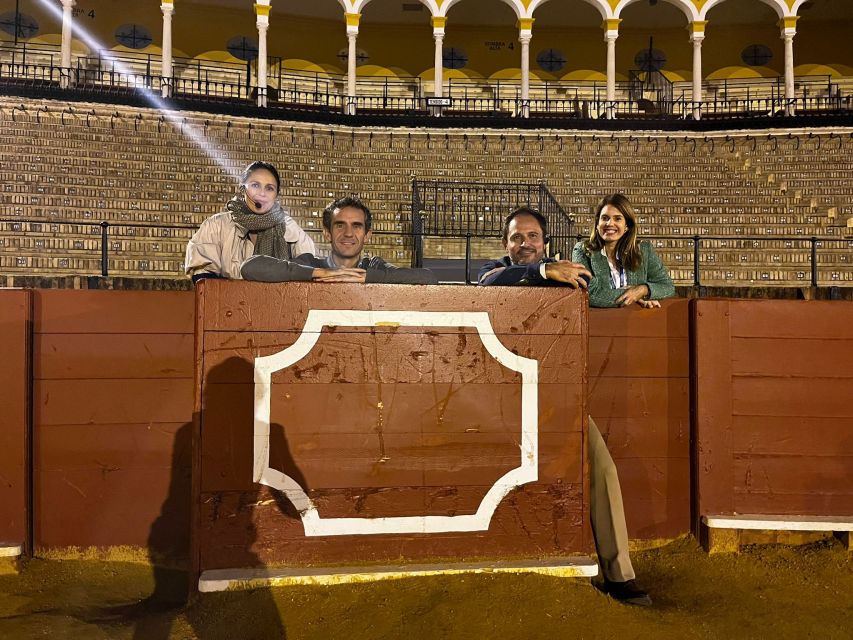
Seville’s bullring is more than a pretty oval of yellow-and-white arches. This 60-to-75-minute guided visit explains how a corrida works, who takes part, and why the tradition still matters to parts of Spanish culture. You’ll see the museum, chapel, horses’ courtyard, and arena from the same main gate used by bullfighters.
I like the skip-the-line entry, which gets you past the ticket queue, and I like the headsets, since you can hear the guide even while moving through the building. The main thing to consider is that you may not walk onto the sand during bullfighting season. In that case, you admire the ring from the seats instead.
Key points to know before you book
- A short, focused visit: Plan on about one hour to 75 minutes, with a clear route through the museum and bullring.
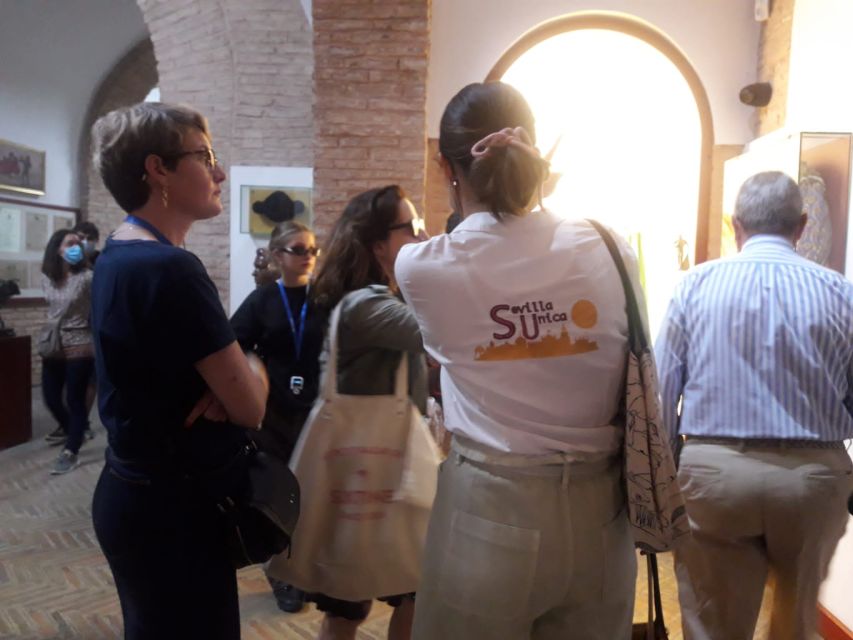
- Four museum sections: See costumes, capes, and displays explaining the people, rules, and purpose of a bullfight.
- A symbolic arena entrance: You pass through the main gate much as a bullfighter would before reaching the center of the ring.
- Margarita is a frequently praised guide: Her explanations, humor, and willingness to answer questions have made her a favorite on some departures.
- A useful choice for the curious but undecided: You can learn about bullfighting without committing to attend an actual fight.
- Seasonal access matters: During bullfighting season, the arena may be viewed from the seating area rather than entered from the sand.
Why Seville’s bullring deserves your time
The Plaza de Toros de la Real Maestranza is one of Seville’s most recognizable buildings, but its meaning is easy to miss if you only photograph the façade. A guided visit gives you the working vocabulary of the place: the arena, front rows, bull pens, main gates, costumes, horses, and the people who make up a corrida.
That context matters because bullfighting is not explained well by a quick look inside. It is a long-running tradition with ceremony, training, clothing, music, status, and strict roles. You may dislike the practice itself, and this tour does not require you to approve of it. I think that is one of its strengths. You can learn why it has mattered in Seville while keeping your own view of the modern event.
The visit is also easy to fit into a day of sightseeing. The bullring is within walking distance of Seville’s center, and the meeting point is listed at either P.º de Cristóbal Colón, 12 or Calle Circo, 7, depending on the option you book. Check the exact location before setting out so you do not lose time at the wrong corner.
More Skip-the-Line Tickets in Seville
- Alcazar and Cathedral of Seville Tour with Skip the Line Tickets
★ 4.5 · 4,579 reviews - Alcázar of Seville Skip-the-Line Tickets and Guided Tour
★ 4.6 · 3,941 reviews - Seville: Alcazar Skip-the-Line Guided Tour with Tickets
★ 4.3 · 2,188 reviews
Inside the four-part Bullfight Museum
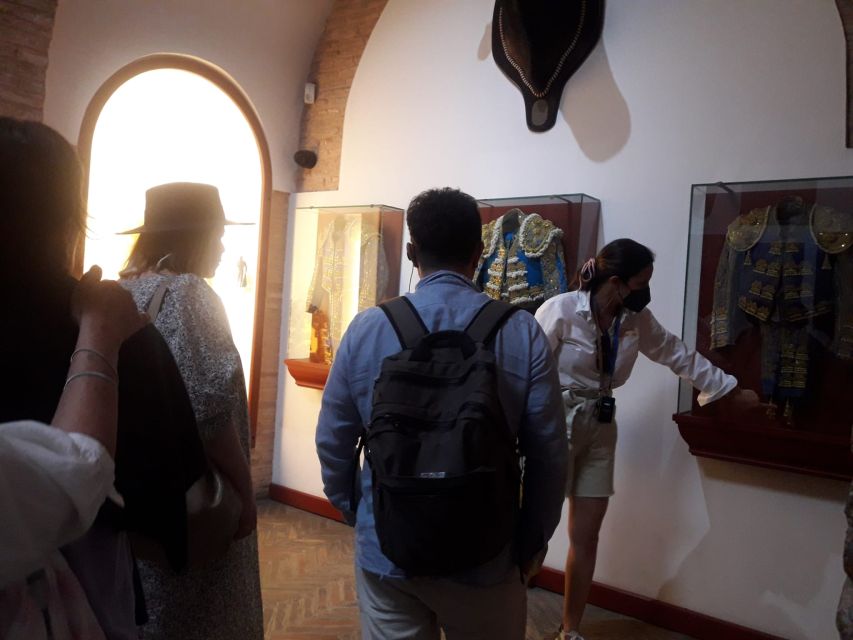
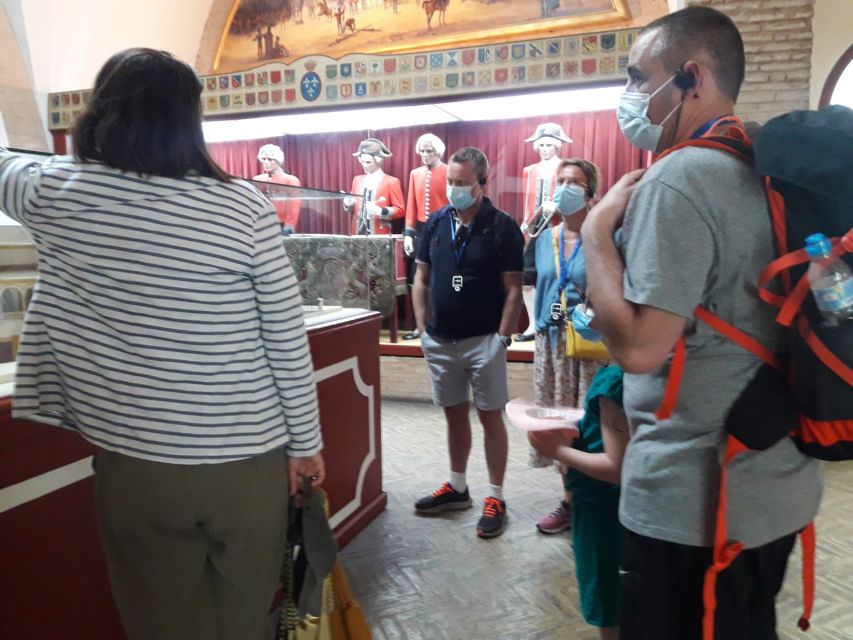
The tour begins in the Bullfight Museum, which is divided into four sections. This is where the guide gives the visit its shape. Instead of seeing isolated objects behind glass, you learn how each item fits into the event.
You’ll hear about the purpose of bullfighting, the parts of a fight, and the various roles involved. That includes the matador and the other participants who work around him. The explanations help you understand that a corrida is not simply a person and a bull in an arena. It is a carefully ordered performance with its own terms, clothing, signals, and traditions.
The museum also displays original bullfighter costumes and capes. These are among the most useful objects for understanding the visual side of the tradition. The costumes are not just decorative. Their cut, color, and ornament help show the formal nature of the event and the public image a bullfighter presents.
I would give the museum your full attention rather than treating it as a quick hallway on the way to the arena. The bullring itself is dramatic, but the museum gives you the background needed to read what you see later. It is also the best part of the visit for anyone who wants historical and cultural context without watching an actual fight.
The amount of detail depends on the guide and the group. Some departures have been especially strong on specific bullfighters and bulls, while others focus more on the broad history and customs. Margarita is a name that comes up often for her passionate explanations, humor, and patience with questions. She is not guaranteed for every departure, so book with the understanding that the guide may vary.
The horses’ courtyard and the small chapel
From the museum, you move into the horses’ courtyard. This space provides a practical look at the older workings of the bullring and the animals involved in its ceremonies.
The courtyard is not as grand as the arena, but it helps make the building feel like a working place rather than a monument. Your guide explains how the horses fit into the tradition and how the bullring functioned around the event. It is a short stop, but it adds another layer to the visit.
Next comes the chapel where bullfighters pray before the fight. This is a quiet and personal counterpoint to the noise and spectacle associated with the arena. You can pause here for a few minutes and consider the mixture of faith, fear, ritual, and public performance that surrounds a bullfight.
I find this pairing of courtyard and chapel especially useful. One shows the practical side of the event, while the other shows its private and ceremonial side. Together, they make the bullring feel less like a simple sports venue and more like a place built around a complete social ritual.
Entering through the main gate
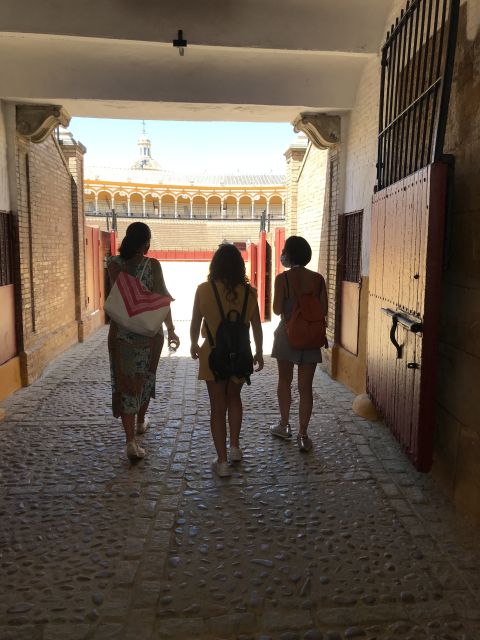
The most theatrical part of the visit comes when you pause at the main gate. The guide draws attention to the wooden door, then you enter the arena as a bullfighter would.
That moment is carefully staged, but it works. Hearing the door open and walking through the same entrance gives you a physical sense of the transition from the working areas into the public arena. You are not just looking at the ring from outside. You are following the route that gives the building its emotional force.
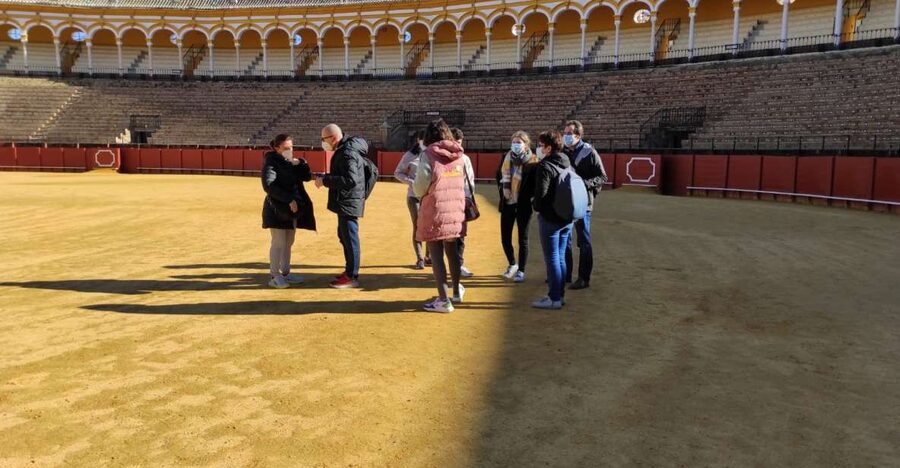
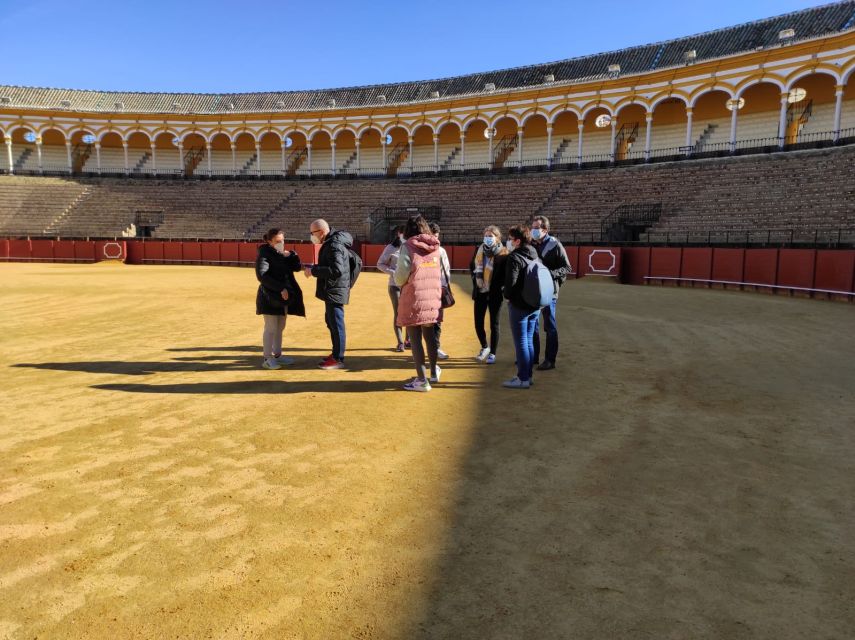
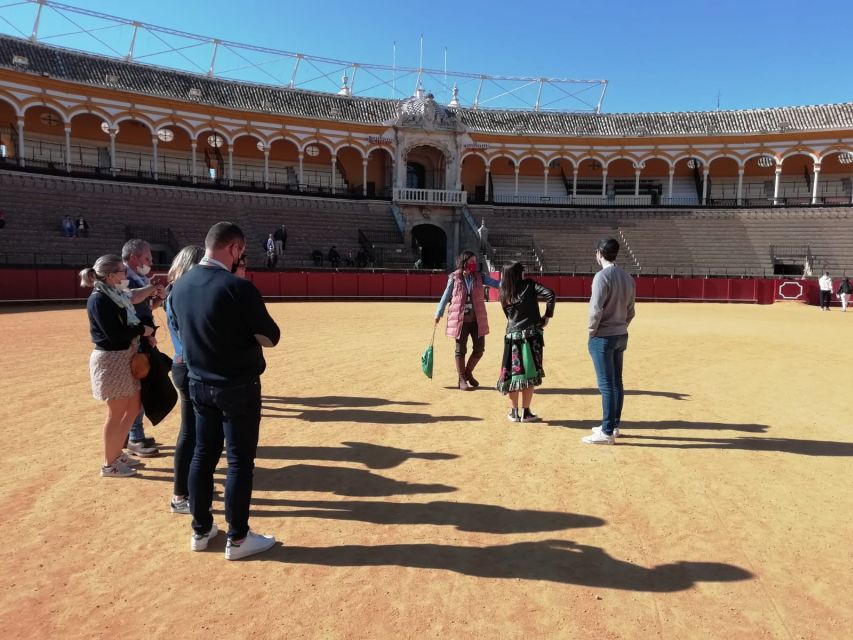
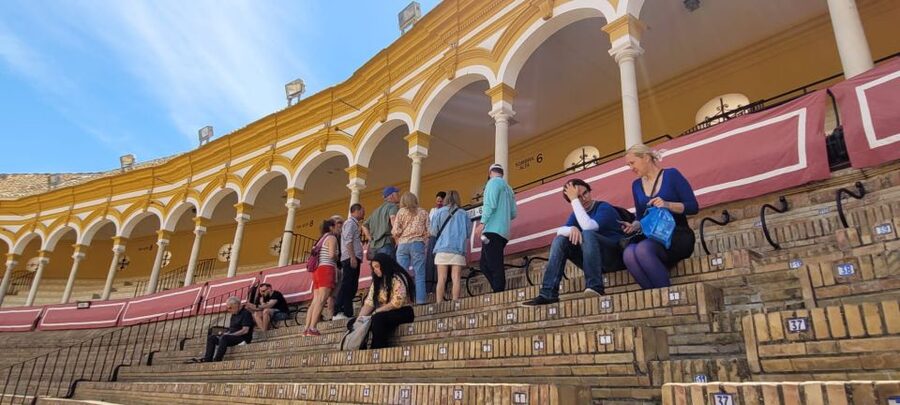
If access to the sand is allowed, you can admire the bullring from the middle of the arena. From there, the seating rises around you, and the scale of the building becomes much clearer. The front rows, known as the tendidos, form a great ring of painted seats and balconies. From the center, you can also look toward the bull pens, or toriles, where the bulls enter the event.
The Prince’s Gate is another major point of interest. If a matador has earned the honor of crossing it after a successful performance, the reception is especially celebratory. Your guide explains why this gate matters and how it fits into the status system of the bullring.
One important caution: arena access is not guaranteed in every season. During bullfighting season, you may admire the ring from the seating area instead of walking across the sand. This is the biggest difference between the ideal version of the tour and what some departures actually provide. If stepping into the arena is your main reason for booking, check the current conditions before you pay.
More bullring visits in Seville:
- Madrid: Las Ventas Bullring Tour with Audio Guide
★ 4.6 · 3,154 reviews - From Costa del Sol: Ronda Village Tour w/ Maestranza Ticket
★ 3.9 · 478 reviews - Alicante: Bullring and Bullfighting Museum Entry Ticket
★ 4.6 · 326 reviews - Malaga: Gibralfaro Castle, Bullring and Port Segway Tour
★ 4.8 · 298 reviews
What the guide adds beyond an audio tour
The official guide is the reason to choose this experience instead of simply visiting alone. You receive a headset, which is a practical touch in a large open building. It lets you follow the explanation without standing shoulder to shoulder with the guide.
A good guide also adjusts the visit to the group. You can ask about the costumes, the order of the fight, the role of the horses, or the meaning of the gates. Several guides have been praised for taking time with questions, and small groups can make it easier to ask follow-ups.
The English quality may vary. Most feedback is strongly positive, but some people found certain guides difficult to understand at times, especially when English was spoken with a strong Spanish accent. Headsets help with volume, but they cannot fix every language issue. If clear English is essential to you, confirm the language selected when booking and arrive ready to listen closely.
The Spanish-language version is also available. If you speak Spanish comfortably, that option may offer a more natural connection to the subject.
Price, timing, and practical value
At $32 per person, this is not the cheapest quick stop in Seville. You are paying for admission, a live guide, headsets, and skip-the-line access. The value depends on what you want from the bullring.
If you only want a photograph of the arena, the price may feel high. If you want to understand the building and the tradition, the fee is fair. A self-guided visit can show you the same spaces, but it may not explain why the chapel, toriles, tendidos, and Prince’s Gate matter. The guide connects those pieces.
The tour lasts between one hour and 75 minutes. That is long enough to give the subject real attention without taking over your day. You can pair it with nearby sights along the river or in central Seville, but leave enough time to reach the correct meeting point.
Skip-the-line entry is useful when the ticket queue is long, but it does not mean you can arrive late. Access is not permitted once the tour has started. I would arrive early, especially if you need to find Calle Circo or P.º de Cristóbal Colón.
Bring your passport or identity card. Children need identification too, and anyone using a senior, student, or child fare must show proof of eligibility. Students should bring a valid student card. A reusable water bottle is also sensible, particularly on a hot Seville day.
The site is wheelchair accessible, though the guide cannot control changes to opening times, access restrictions, or security rules. Those conditions can affect the exact route.
Who will enjoy this bullring visit
I recommend this tour to anyone curious about Seville’s traditions, even if you have no interest in attending a bullfight. Several parts of the visit are historical and architectural rather than graphic or event-based. The museum, chapel, courtyard, and arena give you plenty to think about without requiring you to watch a corrida.
It also suits families with older children who can follow a guided explanation. The experience is short, visual, and built around real objects and spaces. Younger children may enjoy the arena but have less interest in the historical details.
It is a good match for first-time visitors who want a cultural activity that is different from Seville’s churches and palaces. The bullring offers another view of the city, one tied to local identity, public ceremony, and debate.
I would be more cautious if you are firmly opposed to any presentation of bullfighting. The tour explains the tradition in a generally appreciative cultural frame, even though learning about it does not mean you must support it. The guide may discuss the skill, ritual, and status connected to the art form, so this is not an anti-bullfighting presentation.
Should you book the Plaza de Toros tour?
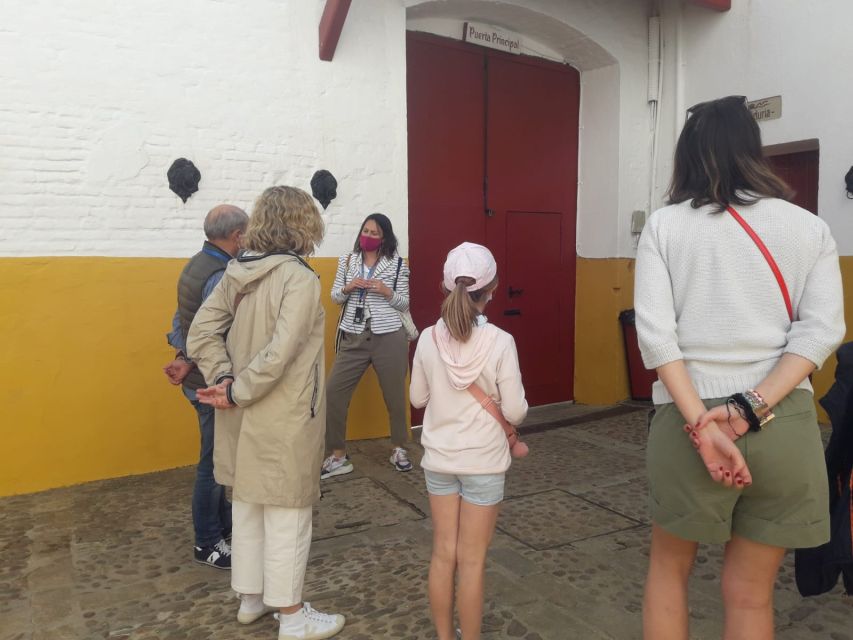
Book it if you want more than a quick look inside Seville’s bullring. The strongest parts are the clear explanation of how a corrida works, the original costumes and capes, the chapel, and the walk through the main gate. At its best, a passionate guide such as Margarita turns an unfamiliar tradition into something you can understand, question, and place within Seville’s culture.
Think twice if your only goal is to stand on the arena floor, since seasonal restrictions may keep you in the seats. Also check the meeting point and arrive early, because late entry is not allowed.
For most curious visitors, $32 is a reasonable price for a focused introduction to one of Seville’s most distinctive cultural sites. You do not need to want a bullfight to find the building, ceremony, and history worth your time.
FAQ
How long does the guided bullring tour last?
The visit lasts about one hour to 75 minutes, depending on the departure and pace of the group.
What language is the tour offered in?
Live guided tours are available in English and Spanish. The tour is conducted in the language selected when booking.
Does the ticket skip the entrance line?
Yes. The price includes skip-the-line admission to the Plaza de Toros de la Real Maestranza.
Can I walk onto the arena floor?
You may enter the arena and view it from the center, but during bullfighting season the arena may instead be admired from the seats.
What will I see inside the bullring?
The route includes the Bullfight Museum, the horses’ courtyard, the chapel, the main gate, the arena, the tendidos, the toriles, and the Prince’s Gate.
Do I need identification?
Yes. Bring a passport or identity card. Children need identification as well. Senior, student, and child fares require proof of eligibility, and students should bring a valid student card.
Can I cancel the booking?
You can cancel up to 24 hours before the activity for a full refund. A reserve-now, pay-later option is also available.
Recently added around Seville
- Seville: Alcázar Fast-Track Access with Guided Tour★ 4.2 · 432 reviews
- Seville: Small Group Jewish Quarter Tour with Tapas & Drinks★ 5.0 · 119 reviews
- Seville: Sunset Roof Top Walking Tour★ 4.5 · 122 reviews
- Seville: Small-Group Jewish Quarter Discovery Walking Tour★ 4.9 · 499 reviews
- Seville: VIP Exclusive Early Access Tour of The Alcazar★ 4.8 · 276 reviews
- Seville: Authentic and Romantic Horse-Drawn Carriage Ride★ 4.5 · 341 reviews
- Seville: Flamenco Show at Tablao Almoraima in Triana★ 4.6 · 483 reviews
- Seville: Sunset and Evening Paddle Boarding Tour★ 4.8 · 355 reviews
Bullring Tours, compared.

From Costa del Sol: Ronda Village Tour w/ Maestranza Ticket
Read our review →

Gibralfaro Castle, Bullring and Port Segway Tour
Read our review →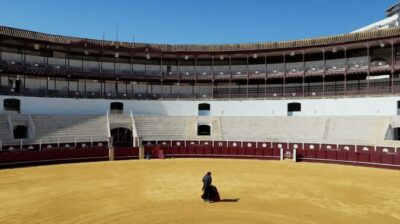
Tour of Malagueta Bullring & Immersive Exhibition
Read our review →Browse the lists this tour appears in