
Reviewed · CASTILE TOURS
Royal Site of San Lorenzo de El Escorial Entrance Ticket
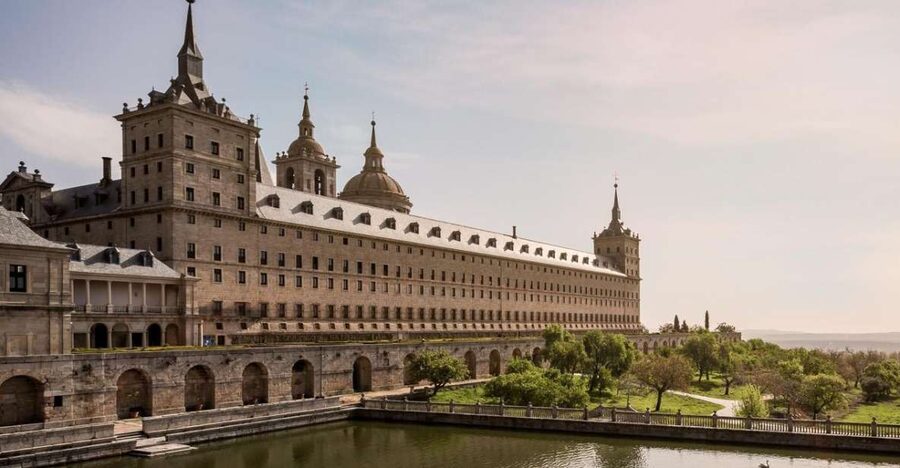
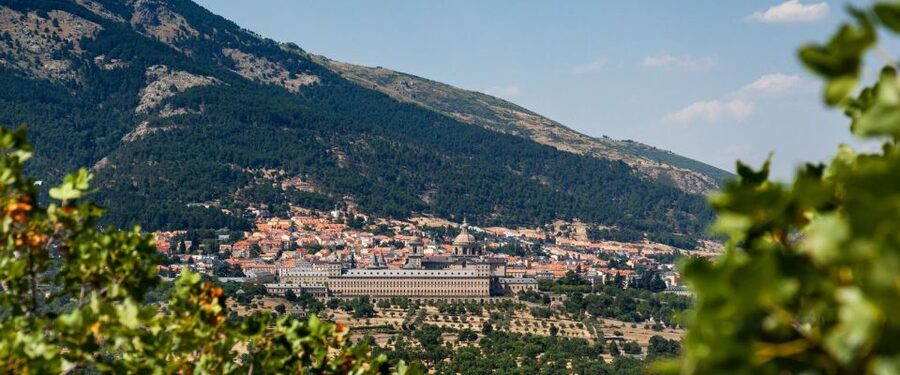
El Escorial is one of Spain’s great power statements: a severe stone complex built for prayer, royal memory, art, and government. Inside, you’ll find a monastery, palace, basilica, library, and royal crypt joined within one grand Renaissance project.
I like the freedom of a self-guided visit and the chance to see the building largely unchanged. I also like the gardens, where the views reach toward the Sierra de Guadarrama and, on a clear day, the Valley of the Fallen. The main drawback is simple: no guide is included, and some visitors have had trouble finding the right entrance or using the advertised express access.
Key points to know before you go
- Philip II’s royal project: See the complex created during the reign of Philip II and learn how religion, monarchy, and art met in the Spanish Golden Age.
- Several sights in one ticket: The admission covers access to the monastery complex, including the basilica, palace areas, library, gardens, and royal crypt.
- Italian and Flemish influence: Look for the mixture of artistic styles that shaped Spain’s Renaissance interiors.
- Gardens with mountain views: The exterior grounds offer a calmer break from the formal rooms and may open views toward the Sierra de Guadarrama and Valley of the Fallen.
- Self-guided and flexible: You can explore at your own pace, but the ticket does not include a guide or a dedicated explanation of the building.
- Plan for an uphill arrival: From the train station, the walk takes about 25 to 30 minutes and climbs toward the monastery.
Why El Escorial feels different from Madrid’s other royal sights
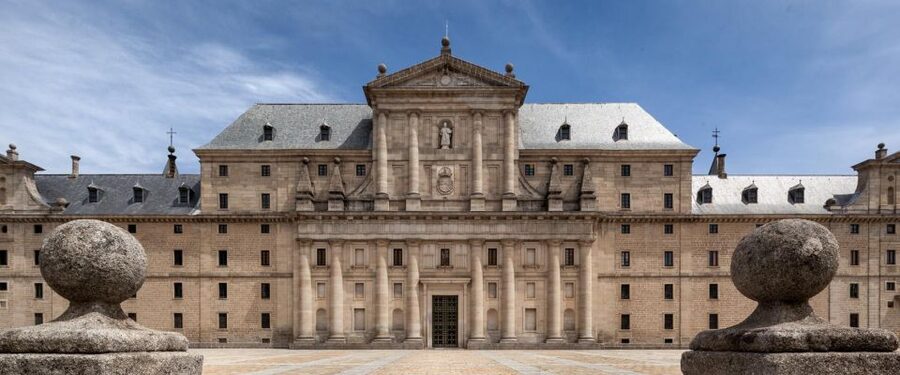
I find El Escorial more imposing than pretty at first glance. The exterior has a broad, plain stone character. One visitor compared it to a prison, which sounds harsh but captures the first impression: little decoration, long walls, and a serious, almost military mood.
That restraint is part of the point. Philip II wanted a place that joined royal authority with religious duty. The monastery was created for the monks of the Order of St. Jerome, while the complex also served as a royal residence and a memorial for Spain’s rulers. It was not built as a lighthearted country retreat.
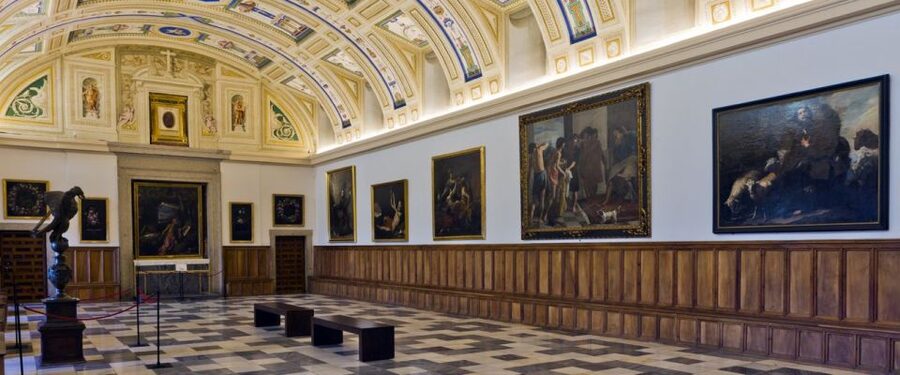
Once you enter, the mood changes. Frescoes, royal decoration, chapels, and carefully planned spaces replace the hard outer shell. I like this contrast because it makes the building feel purposeful rather than merely grand. The plain exterior tells you to expect discipline. The interior shows where Spain’s money, faith, and artistic ambition went.
The ticket gives you a full day of access, but that does not mean you need an entire day inside. It means you can take your time, pause in the gardens, and avoid rushing through a complicated building that rewards patience.
A few more Castile half-days worth comparing
- From Madrid: El Escorial and Valley’s Basilica Half Day Tour
★ 4.4 · 638 reviews - From Madrid: Day Trip to Ávila and Salamanca w/ Guided Tour
★ 4.5 · 456 reviews - Madrid: Cuenca Day Tour with or without Enchanted City
★ 4.8 · 398 reviews
Arriving from Madrid by train
The journey from Madrid to El Escorial takes under an hour by train, according to the practical experience provided for this visit. That makes the monastery a realistic day trip rather than an exhausting side trip.
From the station, allow about 25 to 30 minutes on foot, with an uphill stretch. That walk is manageable for many people, but it matters if you have limited mobility, heavy bags, or little time before a closing period. The activity is not suitable for people with mobility impairments, so check the route and your own comfort before booking.
I would treat the walk as part of the outing, not as a quick transfer. You are heading toward a large historic complex in the foothills of the Sierra de Guadarrama, and the uphill approach helps explain why the site feels removed from central Madrid. Still, wear comfortable shoes and avoid leaving your arrival until the last possible moment.
The meeting and entrance details deserve care. The ticket is meant to provide an express security check, but two people reported being directed to the wrong place and ending up in a long queue, with one saying they were asked to pay again. The practical lesson is to read your booking confirmation closely, identify the correct entrance before you arrive, and keep your ticket ready.
Entering a building built for monks and kings
The complex is most interesting when you remember that it had several jobs at once. It was a monastery for the Hieronymite monks, a royal residence, a place of worship, a burial site, and a showcase for Spain’s cultural ambitions.
You are not simply walking through one palace. You are moving through an organized world in which religious life and royal power shared the same walls. Emperor Charles V and his wife were connected with the site, and the royal presence remains clear in the palace rooms and burial areas.
The untouched layout is a major reason to visit. The building has been largely preserved in its original arrangement, allowing you to understand how the different functions fitted together. I prefer this kind of place to a heavily reconstructed attraction because the spaces retain some of their original seriousness.
The scale can also be tiring. El Escorial is not a small house with a few decorated rooms. Give yourself time to adjust to the plan, and do not expect every room to deliver the same visual impact. Some passages and functional areas matter because they explain how the complex worked, while others are more memorable for their art or royal associations.
The basilica and its long artistic program
The Basilica of San Lorenzo was erected in 1574 and forms the spiritual center of the complex. Its importance is not only architectural. The basilica shows how the project connected royal ambition with Catholic devotion during a period when religion shaped public life and political identity.
Inside, look beyond the size of the church. The artwork took years to complete, and the decoration reflects the artistic currents favored by the Spanish court. Italian and Flemish forms appear alongside local religious traditions, giving the interior a broader European character.
I would slow down here rather than treating the basilica as a passage between other rooms. The scale, formal arrangement, and accumulated artwork give you a clear sense of the project’s purpose. Philip II was not commissioning a private chapel. He was creating a major religious and royal center.
The basilica may be less immediately easy to understand without a guide. Since the ticket includes admission only, you will need to use any available information inside or prepare before you arrive. If you want the political and religious details explained as you go, an independently arranged guide or a good written guidebook would add value.
Same base in Castile, a completely different kind of day:
- Salamanca Sightseeing Walking Tour with Local Guide. Spanish
★ 4.7 · 312 reviews - Avila & Salamanca Tour with Tickets to Cathedral + Medieval Wall
★ 4.5 · 250 reviews - Tour Guiado En Tuk Tuk Recorre Avila De La Forma Mas Comoda
★ 4.4 · 235 reviews - Salamanca: Cathedral of Salamanca Ticket with Audio Guide
★ 4.6 · 197 reviews
The royal crypt and the memory of Spain’s rulers
The crypt gives the visit a more personal edge. This is where royals connected with El Escorial are buried, turning the complex from a display of power into a place of family memory and mortality.
I find burial sites useful because they bring grand architecture back to human scale. The palace rooms and basilica can feel abstract, but the crypt reminds you that the people who ordered and used these spaces were also concerned with succession, remembrance, and death.
The crypt is also one reason to avoid rushing. You are seeing more than decorative rooms. You are following the way Spanish monarchy presented itself across generations. The building was designed to preserve a political and religious story, and the royal burial areas make that story tangible.
Keep your expectations measured. This is a historic burial space, not a theatrical exhibit. Its effect comes from the setting and the knowledge of who is there, not from entertainment or modern interpretation.
The library, palace, and Renaissance interiors
The library is one of the stops that gives El Escorial an intellectual dimension. The complex was not only a place for prayer and royal ceremony. It also represented learning, record keeping, and the cultural ambitions of the Spanish Golden Age.
The palace areas show the royal side of the project. As you move through them, you can compare the practical religious spaces with rooms designed for monarchy. That contrast is one of the best reasons to visit independently, since you can spend more time in the areas that interest you rather than follow a fixed group pace.
The interiors also reveal the wide artistic network behind the complex. Italian and Flemish styles were adapted within a Spanish royal setting, while later work associated with architect and artist Juan de Villanueva adds another layer to the site’s story.
Pay attention to how the building’s decoration changes from one function to another. Chapels, formal rooms, library spaces, and palace areas do not communicate the same message. Even without a guide, you can read the building through those changes: devotion in one area, royal ceremony in another, learning somewhere else.
Juan de Villanueva and the later artistic story
The experience highlights works connected with Juan de Villanueva, an important architect and artist associated with Spain’s later architectural tradition. His presence helps you see El Escorial not as a building frozen in one moment, but as a place whose artistic meaning continued to develop.
This is useful context for anyone interested in architecture. The monastery began as a major Renaissance project, yet the site also carries later interventions and artistic ideas. You can look for the conversation between the original Renaissance plan and the work linked with Villanueva.
I would not expect a specialist architecture tour from this ticket. There is no guide included, and the available information may not explain every attribution in detail. Still, the ticket gives you access to the setting, which is the essential first step for appreciating the building’s long artistic life.
Gardens and the view toward the mountains
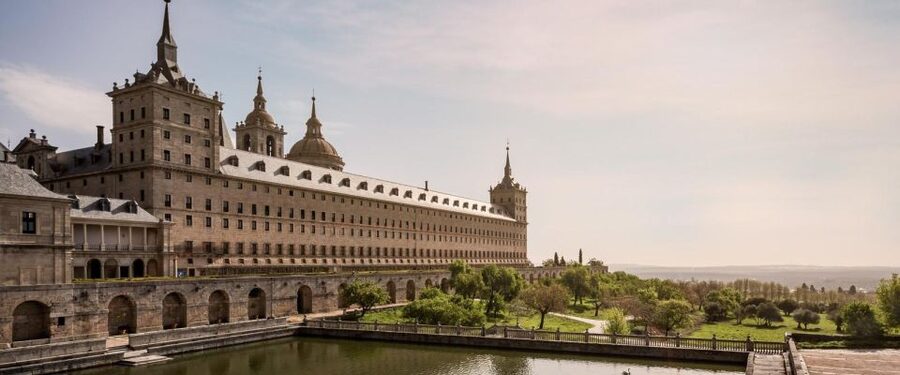
The gardens provide welcome relief after the formal interiors. They are maintained in a clear, orderly style that suits the monastery’s disciplined architecture. I like them because they let you step away from the rooms and see how the complex sits against the surrounding countryside.
On a clear day, you may be able to look toward the Valley of the Fallen’s basilica and the Sierra de Guadarrama mountain range. Fog and cold can change the experience. One January visit had limited weather but still found the monastery worthwhile, while the gardens were expected to offer their best views in clearer conditions.
That is a useful reminder not to judge the exterior only by the weather. Fog can hide the distant view, but it may also make the stone buildings feel more solemn. If the forecast is poor, focus on the interiors and treat the gardens as a short pause rather than the main reason for the trip.
The gardens also help you understand the complex’s setting. El Escorial was not placed in the middle of Madrid’s busy streets. Its position gives the royal monastery room to command attention and connect architecture with the mountains around it.
What the $21 ticket is worth
At $21 per person, this is a reasonable admission price if you want to see the full complex and prefer to explore independently. You are paying for access to a major historic site with several distinct parts, not just one decorated room.
The value depends on how you use it. If you rush in, take a few photographs, and leave, the price may feel high. If you take time with the basilica, library, palace areas, crypt, gardens, and artistic details, the ticket offers much more.
The express security access could make the ticket more useful, especially on a busy day. However, the entrance instructions must be clear. Reports of wrong directions and long queues show why you should not assume that the fast entry will work without checking where to go.
A guided tour would offer more historical context, but it is not part of this purchase. That keeps the cost lower and gives you freedom, though you give up the convenience of having someone explain Philip II’s plans, the religious setting, the royal burials, and the artwork as you walk.
Who will enjoy this visit most
I would recommend El Escorial to you if you like architecture, royal history, religious art, and places that reward slow looking. It also suits anyone wanting a substantial day trip from Madrid without committing to a multi-day journey.
It is a particularly good choice for:
- People interested in Philip II and Spain’s Golden Age
- Visitors who enjoy self-guided historic buildings
- Architecture fans who want to compare Renaissance planning with later work
- Anyone who wants gardens and mountain views alongside formal interiors
- Independent visitors comfortable reading and interpreting a site without a guide
I would be more cautious if you have mobility limitations, dislike uphill walks, or want a fully narrated experience. The building is large and the approach from the train station takes time. The lack of a guide also means you need to supply some of the context yourself.
The activity is non-refundable, so I would check the weather, transport plan, and entrance instructions before purchasing. A cold or foggy day does not ruin the visit, but clear conditions give the gardens and distant views more appeal.
Should you book the El Escorial entrance ticket?
Yes, if you want the freedom to explore one of Spain’s most important royal and religious complexes at your own speed. The basilica, royal crypt, library, palace areas, gardens, and preserved layout make this far more than a quick photo stop.
Book it with realistic expectations. You are buying admission, not a guided history lesson. Check the entrance location carefully, allow time for the uphill walk from the station, and consider arranging your own guide or reading material if the story matters as much to you as the architecture.
For independent visitors, the $21 price is fair. For visitors who want every room explained and a smooth, escorted arrival, a guided option may be the better choice.
FAQ
Where is the Royal Site of San Lorenzo de El Escorial?
It is in the Community of Madrid, Spain.
How much does the entrance ticket cost?
The listed price is $21 per person.
How long is the ticket valid?
The activity has a duration of one day. Starting times depend on availability.
What does the ticket include?
It includes admission to the Monastery of San Lorenzo de El Escorial.
Is a guide included?
No. The ticket includes admission only, and a guide is not included.
Can I skip the line?
The activity includes an express security check. You should still check the exact entrance instructions, since incorrect directions may result in a regular queue.
Is the visit suitable for people with mobility impairments?
No. The activity is listed as unsuitable for people with mobility impairments. The walk from the train station also takes about 25 to 30 minutes uphill.
Recently added around Castile
- Guided Tour of Albarracín and Casa Noble★ 5.0 · 105 reviews
- From Madrid: Alcalá de Henares & Cervantes Museum Day Trip★ 4.5 · 108 reviews
- Avila & Salamanca Tour with Tickets to Cathedral + Medieval Wall★ 4.5 · 250 reviews
- From Madrid: Day Trip to Ávila and Salamanca w/ Guided Tour★ 4.5 · 456 reviews
- Cuenca: Medieval Old Town★ 4.7 · 152 reviews
- From Madrid: El Escorial and Valley’s Basilica Half Day Tour★ 4.4 · 638 reviews
- Madrid: Cuenca Day Tour with or without Enchanted City★ 4.8 · 398 reviews
- Salamanca: Cathedral of Salamanca Ticket with Audio Guide★ 4.6 · 197 reviews
Castile Tours, compared.
El Escorial and Valley’s Basilica Half Day Tour
Read our review →
Salamanca Sightseeing Walking Tour with Local Guide. Spanish
Read our review →
Avila & Salamanca Tour with Tickets to Cathedral + Medieval Wall
Read our review →
Tour Guiado En Tuk Tuk Recorre Avila De La Forma Mas Comoda
Read our review →
Browse the lists this tour appears in