
Reviewed · MUSEUMS
From Madrid: Alcalá de Henares & Cervantes Museum Day Trip
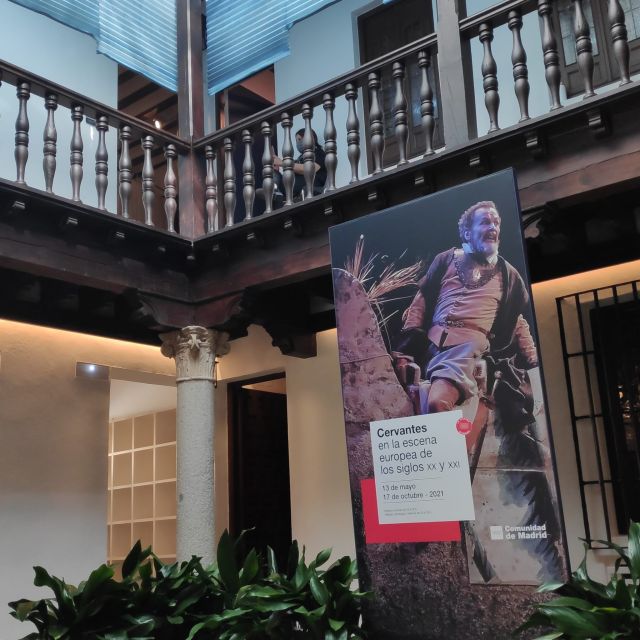
Alcalá de Henares brings Cervantes’s world to life in a way a book display never could. You’ll walk through the reconstructed home where the author of Don Quixote was born, then see the chapel linked to his baptism and the square marked by his statue.
I like the tour’s strong literary focus and the way it adds Roman-era history, royal connections, and university life to the Cervantes story. I also like that transportation and two key admission tickets are included. The main drawback is time: the guided visit lasts about two and a half hours, and the route can feel rushed.
Key points to know before booking
- Cervantes’s birthplace: Walk through reconstructed 16th-century rooms at the Miguel de Cervantes Birthplace Museum.
- University of Alcalá: Enter the oldest university in Spain and hear how Cardinal Cisneros helped establish it.
- Royal connections: See the Archbishop’s Palace, associated with Castilian monarchs and the birthplace of Catherine of Aragon.
- Cathedral legends: Hear the story of the child martyrs linked to Alcalá’s Magisterial Cathedral.
- Five-hour schedule: Allow 35 minutes each way by coach, 2.5 hours for the guided tour, and 30 minutes of free time.
- Spanish-language outing: The live guide speaks Spanish, and the tour returns to central Madrid.
Why Alcalá de Henares makes a good half-day trip
Madrid can fill several days without effort, but its busy streets do not tell the whole story of the Community of Madrid. Alcalá de Henares offers a change of pace and a more focused historical visit. Its story reaches back to Roman times, then moves through medieval religious life, royal power, university culture, and the literary career of Miguel de Cervantes.
The city is also a UNESCO World Heritage City. That label matters here because the visit is not built around a single isolated sight. The university, cathedral, palace, squares, and Cervantes sites work together as a compact historical center.
You get a guided introduction rather than a full day of independent wandering. That makes this a practical choice if you want to see Alcalá without solving the transport, ticket, and route-planning puzzle yourself.
The tradeoff is pace. Five hours sounds generous until you subtract the drive from Madrid and back. The schedule allows roughly 2.5 hours with the guide, followed by 30 minutes of free time. You will see the main places, but you should not expect a slow architectural study or time to visit every museum in town.
More Museum Tours in Castile:
- Madrid: Prado Museum Entry Ticket
★ 4.6 · 17,509 reviews - Barcelona: FC Barcelona Museum “Barça Immersive Tour” Ticket
★ 4.4 · 10,944 reviews - Madrid: Reina Sofía Museum Entrance Ticket
★ 4.5 · 6,889 reviews
Meeting in Madrid and riding to Alcalá
The group meets outside the shopping gallery at San Bernardo 7. Build in a little extra time to find the exact meeting point, especially if you do not know Madrid’s central streets well. The coach ride takes about 35 minutes each way, giving you a short break from the city before the walking portion begins.
Transportation is included in the $55 price, which makes the outing easier to compare with an independent visit. You are not paying only for a guide. The fee also covers entry to the Miguel de Cervantes Birthplace Museum and the University of Alcalá.
The bus portion also affects your expectations. This is a half-day excursion, not a full regional tour with several stops. You leave Madrid, spend the main part of the morning or afternoon in Alcalá, and return to San Bernardo 7.
Food and drinks are not included. Since the free period lasts about 30 minutes, you should not count on a long restaurant meal during the organized visit. Bring water, and plan ahead if you need a proper meal before or after the excursion.
Inside the Miguel de Cervantes Birthplace Museum
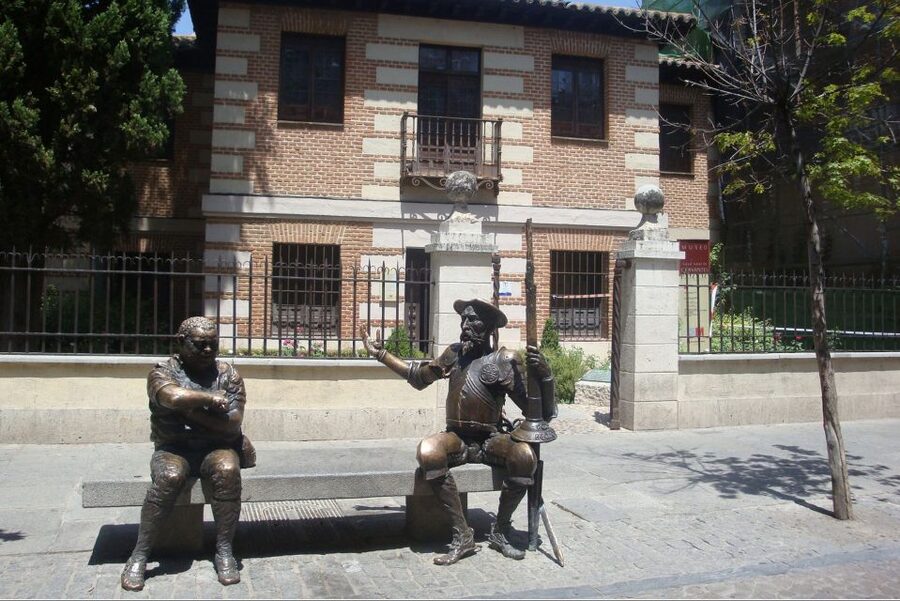
The most personal stop is the Miguel de Cervantes Birthplace Museum. Here, you enter the house associated with Cervantes’s birth and see rooms reconstructed to reflect 16th-century domestic life.
The value of this visit is scale. Cervantes becomes less like a name on a monument and more like a person connected to a household, a family, and the customs of his time. The rooms help explain how people lived, even though the museum is presented through a later reconstruction rather than an untouched home.
You will hear about Cervantes’s family and the places linked to his life and work. That context helps you understand why Alcalá claims such an important place in Spanish literary culture. If you know Don Quixote, the stop gives the author a physical setting. If you have not read the novel, the museum still works as a window into everyday life in the 16th century.
The visit is especially useful for readers who prefer real places to abstract literary commentary. You can see the kind of home connected to Cervantes’s early life, then walk to nearby sites tied to his baptism and memory.
Keep in mind that this is not a long museum session. The tour has several stops to cover, so you may need to move through the rooms with the group rather than linger over every display.
The baptism chapel and Plaza de Cervantes
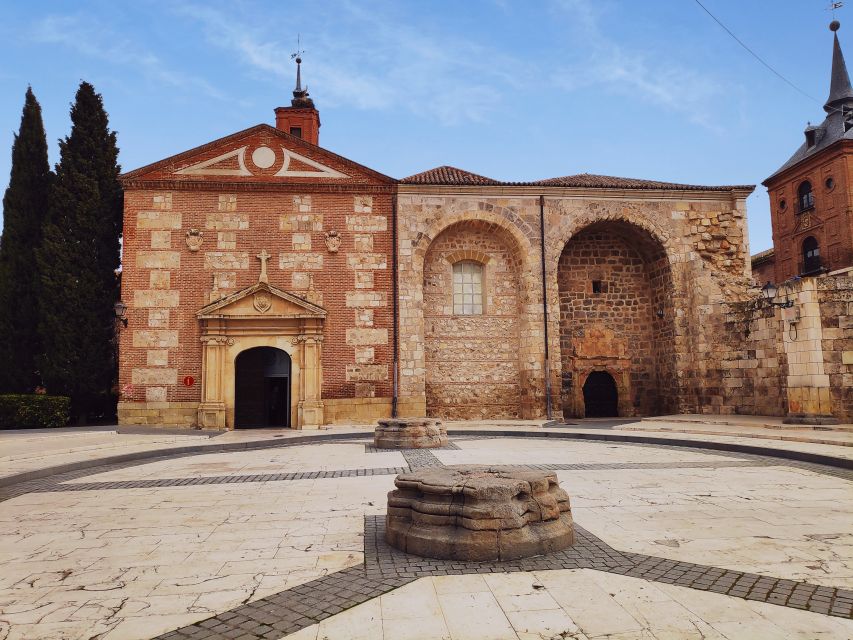
The tour continues to the chapel connected with Cervantes’s baptism. This stop fills in an important part of the author’s personal story. It also shows how closely religious institutions shaped daily life in Alcalá during his period.
Your guide points out places tied to Cervantes’s family and to the later publication of his work. Those connections give the walk a useful structure. You are not simply moving from one pretty building to the next. The route follows the author’s biography through the city.
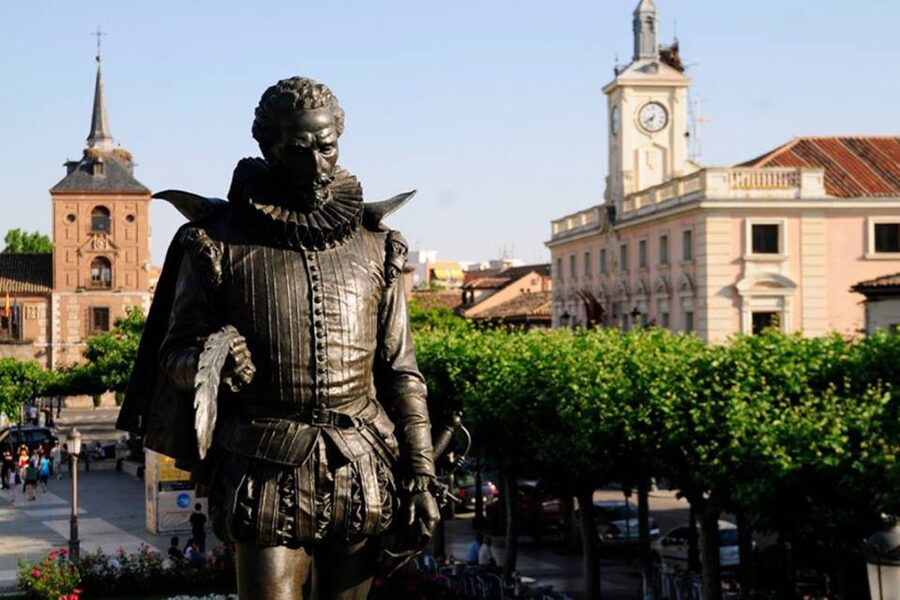
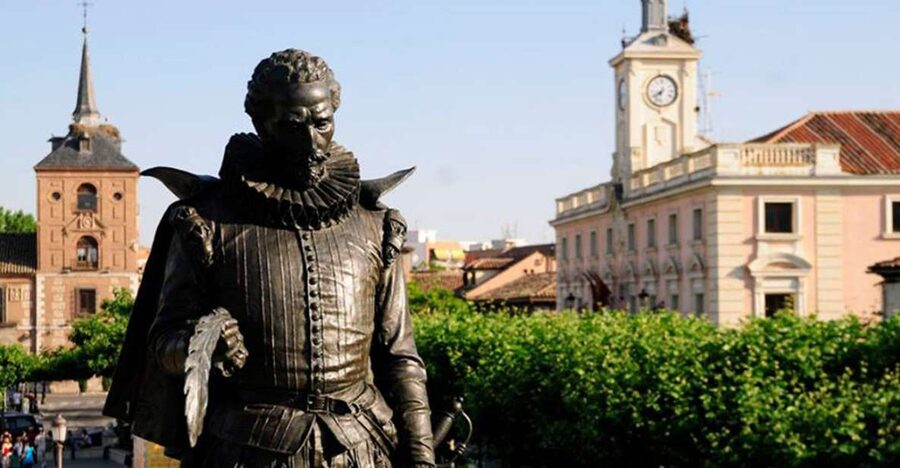
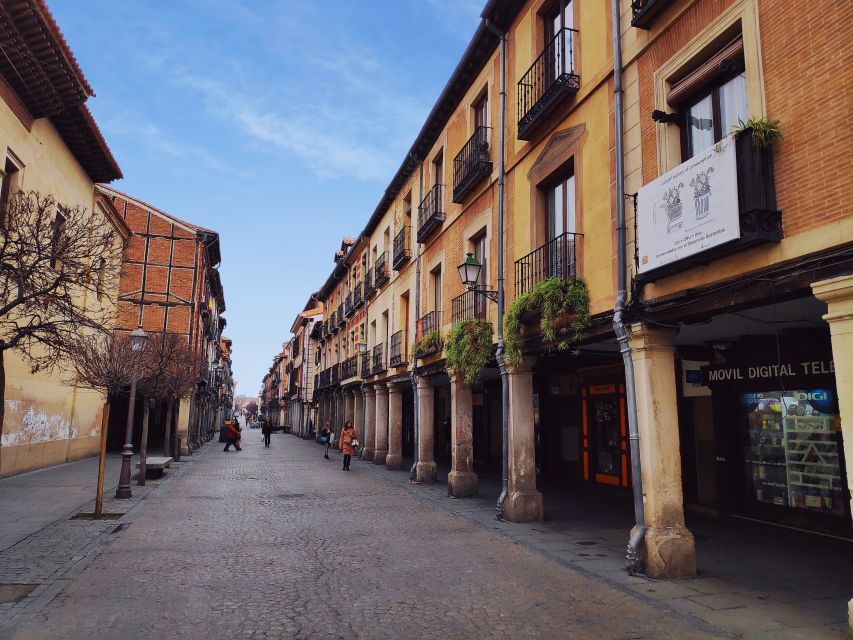
In Plaza de Cervantes, you’ll see the author’s statue in an elegant public square. It is an easy place to understand Cervantes’s place in local identity. Alcalá does not treat him as a distant literary figure. His name is woven into the streets, institutions, and public spaces.
This part of the tour also gives you a chance to notice the city between indoor visits. Wear comfortable shoes because the experience includes walking through historic streets and entering old buildings. Sunscreen and water are sensible in warm weather, while warm clothing helps in cooler months.
A few more Castile half-days worth comparing
- From Madrid: Day Trip to Ávila and Salamanca w/ Guided Tour
★ 4.5 · 456 reviews - Barcelona in 1 Day: Sagrada Familia, Park Guell,Old Town & Pickup
★ 5.0 · 13,541 reviews - Three Cities in One Day: Segovia, Avila and Toledo from Madrid
★ 5.0 · 8,402 reviews - From Madrid: Guided Day Trip to Toledo by Bus
★ 4.1 · 5,280 reviews
The University of Alcalá and Cardinal Cisneros
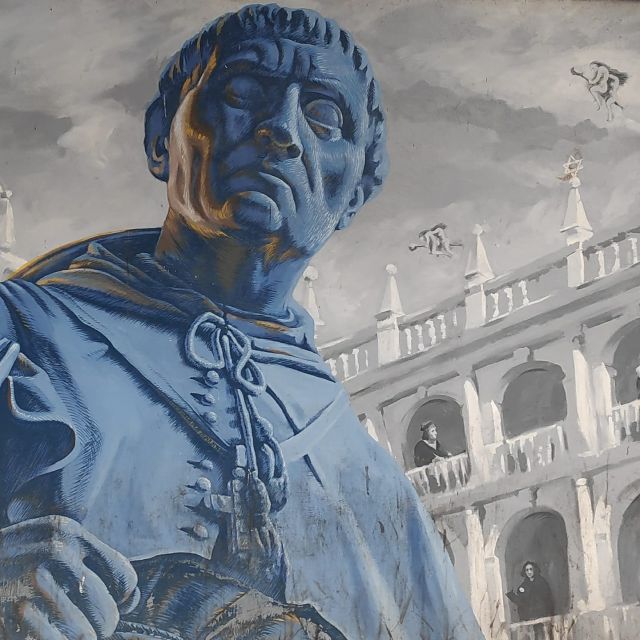
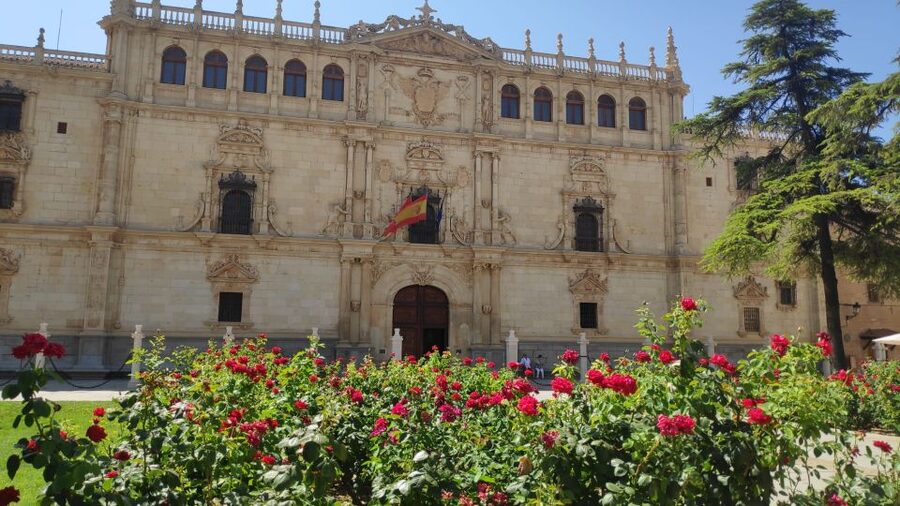
The University of Alcalá is one of the strongest reasons to choose this excursion. The tour takes you through the halls of what is described as the oldest university in Spain and explains the role of Cardinal Cisneros in its creation.
This is more than a quick photo stop. The university helps explain why Alcalá became a center of learning and why the city mattered beyond its connection with Cervantes. Its presence shaped the city’s intellectual and religious life for centuries.
I like this part because it broadens the outing. A Cervantes tour could easily become a single-author biography. The university adds a second theme: the development of education and scholarship in Spain.
The guided entry is also practical. Admission is included, and the group can go directly inside rather than spending part of the short visit arranging tickets. Since the tour is in Spanish, you’ll get the most from it if you can follow spoken Spanish at a comfortable pace.
You should also expect the university visit to feel brisk. One recent booking account suggested adding an hour because the listed sights were covered quickly. That is a fair concern. The university has enough historical and architectural interest to reward a slower visit, but the schedule is designed to introduce it, not exhaust it.
The Magisterial Cathedral and the child martyrs
At Plaza de los Santos Niños, the tour reaches the Magisterial Cathedral. Here, the guide explains the story of the child martyrs associated with the cathedral.
This stop adds an older and more religious layer to Alcalá’s history. The cathedral is not included simply as another grand building. Its meaning comes from the local story attached to it, and the guide’s explanation gives the place a human focus.
You may find this part more meaningful if you enjoy the legends and traditions connected to historic churches. If you prefer architecture alone, the amount of time here may feel short. The tour is structured around the story, so listen closely as the guide explains the connection between the cathedral and the child martyrs.
The cathedral also helps break up the literary focus. By this point, you have seen Cervantes’s home and baptism site, the university, and the public square. The cathedral shows how several different forces shaped Alcalá: religion, education, royal power, and literature.
The Archbishop’s Palace and Catherine of Aragon
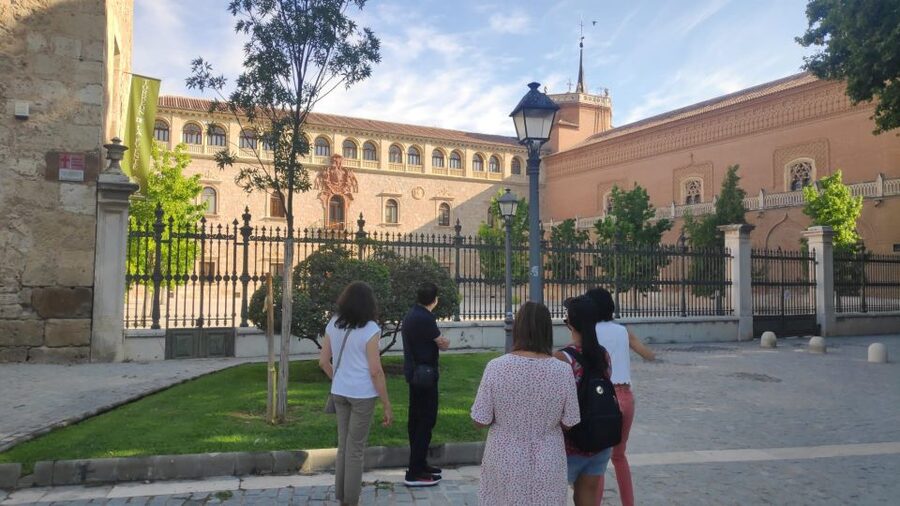
The final major stop is the Archbishop’s Palace. You’ll see the splendid building associated with Castilian monarchs and learn that Catherine of Aragon, the English queen, was born there.
That detail gives the palace a wider European connection. Alcalá’s history was not confined to local affairs. Royal family, church authority, and international dynastic politics all passed through the city.
The palace also helps round out the visual side of the trip. After the smaller domestic spaces of the Cervantes museum and the formal halls of the university, you get a sense of the scale and power of the religious and royal institutions that once shaped Spain.
As with the cathedral, the experience depends on the guide’s explanation. The outing does not promise a long independent interior visit at every site, and the supplied details specifically include tickets only for the Cervantes museum and University of Alcalá. Expect to admire and learn about the palace as part of the guided route rather than assume you will explore every room inside.
How the timing feels in real use
The stated schedule is easy to understand:
- About 35 minutes from Madrid to Alcalá
- Roughly 2.5 hours of guided touring
- About 30 minutes of free time
- About 35 minutes back to Madrid
That leaves little room for delay. A late start, a slow group, or bad weather can make the route feel compressed. One recent account described a guide arriving later than expected, with an uncomfortable beginning that improved as the tour continued. Another account praised the explanations and said the rainy weather did not prevent the group from completing the planned visits.
The practical lesson is simple: keep your schedule flexible after returning to Madrid. Do not book an important museum entry, train, or meal reservation too close to the expected finish.
The free period is useful but modest. You may use it to take photos, get a snack, look around the square, or enjoy a short independent walk. It is not enough for a relaxed lunch and several extra sights.
Guide quality and language
The live tour is conducted in Spanish. That is an important point, not a footnote. If you understand Spanish, the guide’s storytelling should add much more than the admission tickets alone. You’ll hear how the sites connect, rather than simply viewing them as separate buildings.
The guide’s role matters most at the cathedral, baptism chapel, university, and palace. The buildings carry history, but the explanations turn them into a connected story. One recent booking account specifically identified a guide named David and praised his explanations, though guide assignments can vary.
The experience has not been perfectly consistent. A late arrival was reported on one occasion, while another booking was canceled after a disagreement about an alternative activity. Those details make it wise to confirm the meeting instructions and keep your plans adaptable.
Still, the strongest pattern is clear: when the tour runs as intended, the guide is central to its value. The experience is not designed as an audio-guide substitute or a simple transfer to Alcalá.
Is $55 a fair price?
At $55 per person, the tour offers reasonable value if you want transport, a Spanish-speaking guide, and admission to the Cervantes museum and University of Alcalá in one package.
An independent visit could cost less if you are comfortable arranging transport, finding each location, and studying the history yourself. But that approach takes time and planning. You would also lose the continuous story connecting Cervantes, Cardinal Cisneros, the cathedral, the palace, and Alcalá’s Roman roots.
I see the price as fair for someone who values convenience and interpretation. It is less compelling for an independent-minded visitor who wants hours of free time or already knows the city well.
The strongest value comes from the compact format. You can add a major historical town to a Madrid stay without giving up a full day. Just remember that the lower price and shorter duration also mean a faster pace.
Who should book this Alcalá day trip?
I would recommend it to you if you:
- Want a short outing from Madrid rather than a full-day excursion
- Enjoy Cervantes, Spanish literature, or historic homes
- Prefer a guide to explain religious and royal history
- Want transport and admission handled together
- Can follow a Spanish-language tour
- Are comfortable walking through historic streets and buildings
I would be more cautious if you need step-free access. The experience is not suitable for wheelchair users. You should also think twice if you dislike fixed schedules, need a long meal break, or want to explore Alcalá at your own pace.
Bring comfortable shoes, water, sunscreen, and warm clothing as needed. Since food and drinks are not included, plan your meal around the 30-minute break and the return to Madrid.
Final call: book it for context, not lingering
Book this trip if your main goal is to understand why Alcalá de Henares matters and to see the places connected with Cervantes in a single morning or afternoon. The birthplace museum and university are the strongest parts, while the cathedral and Archbishop’s Palace add welcome depth.
Skip it if you want a slow, open-ended visit or if you do not understand Spanish well enough to follow a live explanation. The schedule is tight, and the experience can feel rushed.
For the right reader, $55 buys a tidy introduction to a UNESCO World Heritage City, with transport, a guide, and key entries included. Just arrive ready to walk, listen, and keep moving.
FAQ
How long does the Alcalá de Henares trip last?
The experience lasts five hours, including the coach ride from Madrid, the guided visit, free time in Alcalá, and the return journey.
Where is the meeting point?
You meet at San Bernardo 7 in Madrid, outside the shopping gallery.
How long is the coach ride to Alcalá de Henares?
The coach ride takes about 35 minutes each way.
How much guided time is included in Alcalá?
The guided tour in Alcalá lasts about 2.5 hours, followed by about 30 minutes of free time.
Which museum is included?
Admission to the Miguel de Cervantes Birthplace Museum is included.
Is entry to the University of Alcalá included?
Yes. The University of Alcalá ticket is included in the tour price.
What language is the tour conducted in?
The live tour guide speaks Spanish.
Are food and drinks included?
No. Food and drinks are not included, so you should bring water and plan for meals outside the organized visit.
Is the tour suitable for wheelchair users?
No. The experience is not suitable for wheelchair users.
Recently added around Castile
- Guided Tour of Albarracín and Casa Noble★ 5.0 · 105 reviews
- Avila & Salamanca Tour with Tickets to Cathedral + Medieval Wall★ 4.5 · 250 reviews
- From Madrid: Day Trip to Ávila and Salamanca w/ Guided Tour★ 4.5 · 456 reviews
- Cuenca: Medieval Old Town★ 4.7 · 152 reviews
- From Madrid: El Escorial and Valley’s Basilica Half Day Tour★ 4.4 · 638 reviews
- Madrid: Cuenca Day Tour with or without Enchanted City★ 4.8 · 398 reviews
- Royal Site of San Lorenzo de El Escorial Entrance Ticket★ 4.4 · 239 reviews
- Salamanca: Cathedral of Salamanca Ticket with Audio Guide★ 4.6 · 197 reviews
Museums, compared.

FC Barcelona Museum “Barça Immersive Tour” Ticket
Read our review →
Park Güell and Gaudí House Museum Entry Ticket
Read our review →
Puro Flamenco Show with Optional Museum Ticket
Read our review →
Girona & Dali Museum Small Group Tour with Pick-up from Barcelona
Read our review →
Oceanogràfic, Hemisfèric & Science Museum Combo
Read our review →Browse the lists this tour appears in