
Reviewed · HORSES
Jerez de la Frontera: How the Andalusian Horses Dance
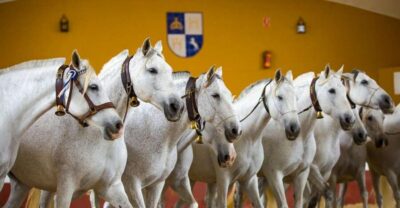
The Andalusian horses take center stage here, stepping, spinning, and trotting through a polished equestrian ballet at Jerez’s Royal Andalusian School. You’ll see far more than a simple horse show: the program combines classical dressage, cattle-working skills, carriage driving, and traditional Spanish riding.
I like the variety, especially the contrast between the precise Pas de Deux and the fast, practical movements of Doma Vaquera. I also like the setting and presentation: Spanish music, old-style costumes, and a final group carrousel give the performance a strong sense of place. The main consideration is that you cannot choose a specific seat, and the school may change the program.
Key things to know before you go
- The performance lasts 90 minutes to two hours, depending on the program scheduled that day.
- Doma Vaquera uses one-handed riding, with horses changing pace, galloping, and performing tight turns.
- Classical dressage includes advanced exercises, such as piaffe, passage, Spanish walk, and airs above the ground.
- Carriage driving adds a completely different spectacle, with coachmen handling traditional harnesses and horse-drawn vehicles.
- The final carrousel brings several horses and riders together, making a strong closing number.
- The $31 price is good value if you enjoy horses, dressage, or Andalusian culture, though casual visitors may find the show more formal than theatrical.
Why this Jerez horse show is special
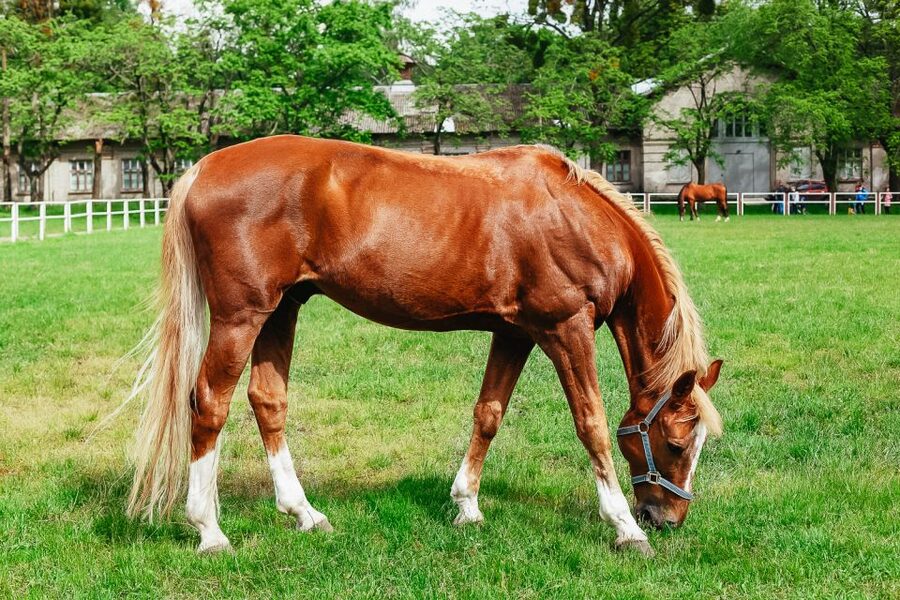
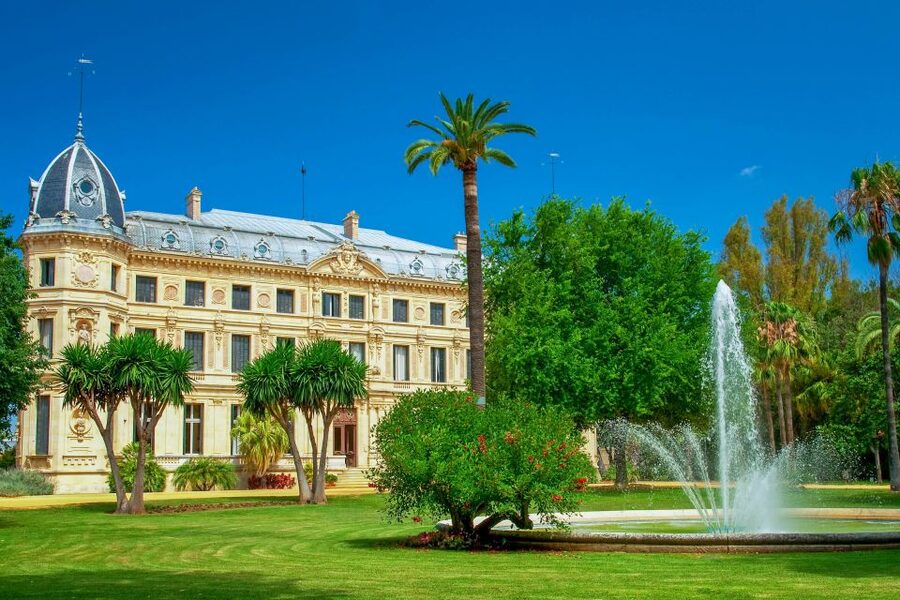
Jerez de la Frontera is one of Andalusia’s best places to see the connection between horses, ceremony, and working traditions. At the Royal Andalusian School of Equestrian Art, the horse is not treated as a prop. The entire performance depends on control, trust, timing, and years of training.
You’ll watch horses and riders in an arena as they move through six to eight choreographies. The exact selection is scheduled by the school, so you should not expect every named number at every performance. Still, the range is broad enough to give you a clear picture of Spanish equestrian art.
The presentation is formal without being stuffy. Riders wear costumes based on 18th-century Spanish styles, while classical music and traditional Spanish melodies shape the mood. The result feels closer to a ballet with living, breathing performers than to a sporting event.
That distinction matters. If you want a loud, fast rodeo-style show, this may feel too controlled. If you appreciate the details of posture, rhythm, and obedience, you’ll have plenty to watch.
More Horse Riding in Andalusia:
- Jerez de la Frontera: Andalusian Horse Dance and Museums
★ 4.7 · 1,289 reviews - Andalusian Horses Dance Show
★ 4.5 · 483 reviews - Cadiz: Andalusian Horses and Bulls Country Show
★ 4.6 · 189 reviews
Starting at the Royal Andalusian School
You begin at the reservation box office at the Royal Andalusian School of Equestrian Art Foundation. Bring your printed voucher and your passport or ID card. If you bought a discounted ticket, bring proof of eligibility too. Without it, you may have to pay the difference to the full standard price, provided full-price tickets remain available.
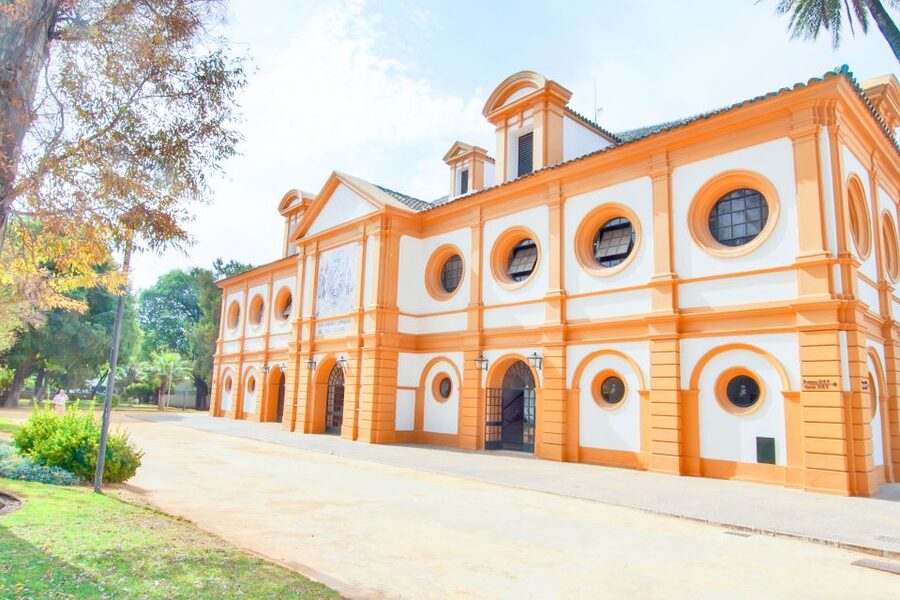
The venue itself adds to the occasion. Several people have enjoyed arriving early enough to walk around the grounds and see riders and trainers in action before or after the main performance. That extra time can help you understand that the show is the public face of a larger training institution.
Ticket categories determine the price, but you do not select a specific row or seat number. Seating is assigned according to the order of purchase or booking. If sitting in a particular area matters to you, book early rather than expecting to choose your exact place at the box office.
The school is wheelchair accessible. The show is generally well organized, and the arena provides good viewing from its seating areas. Still, check your ticket details and arrive with enough time to collect tickets and find your place without rushing.
Doma Vaquera: Spanish riding with working roots
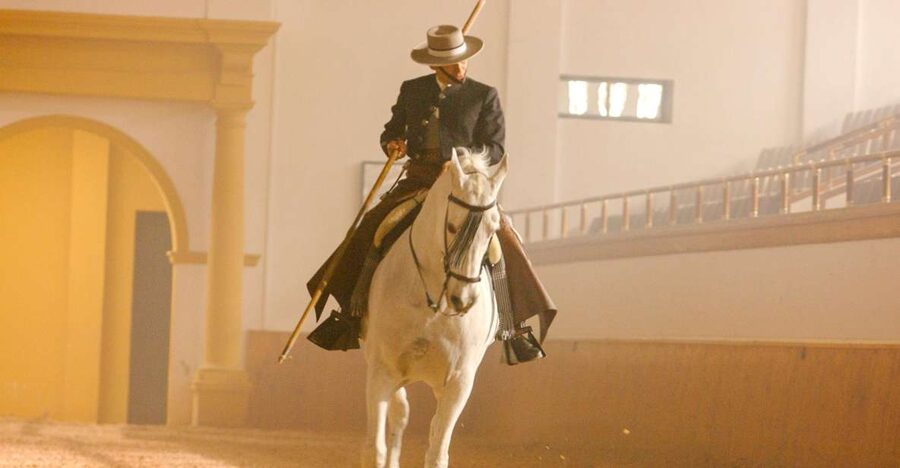
Doma Vaquera is one of the most distinctive parts of the program. It developed from the work of Spanish horsemen who handled cattle, so its movements are not simply decorative. The rider must manage the horse while changing speed and direction, often using one hand.
You’ll see the horse begin at a trot before moving into a gallop. The rider may then change the rhythm, execute a pirouette, or send the horse suddenly forward in an arreón. These transitions are exciting because they look practical rather than purely choreographed.
The rider’s one-handed control is an important detail. Watch the reins, the horse’s balance, and the rider’s posture as the pair work around the arena. Small shifts can direct the horse, even when the movement looks effortless from the seats.
This portion may appeal most to you if you want a connection to rural Andalusia rather than only formal dressage. It shows how high-level riding can grow from everyday work with animals and still become a refined performance tradition.
Classical dressage and the precision of small movements
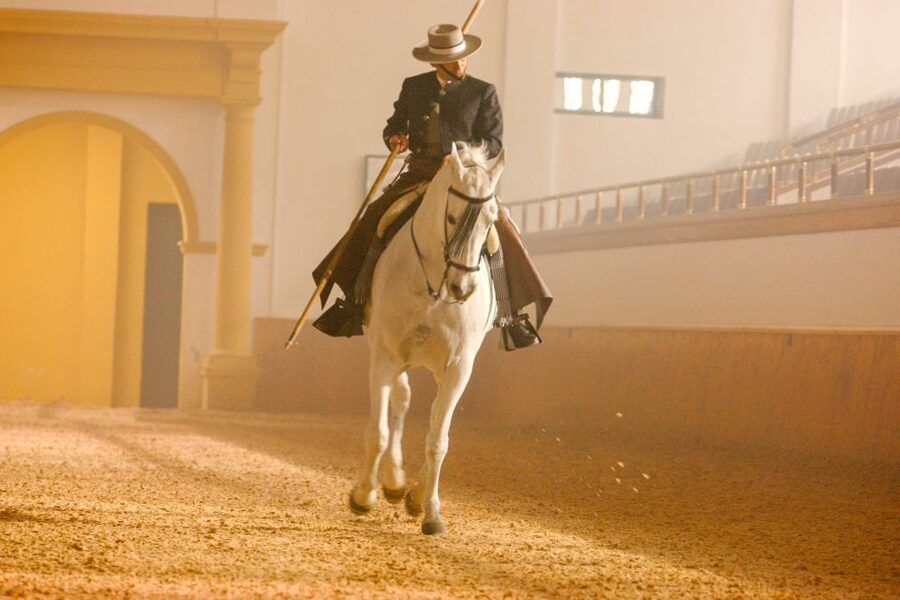
Classical dressage is the most ballet-like section. The school’s repertoire may include The Colts, Airs on Horseback, Pas de Deux, Passage and Piaffer, Domino on Horseback, Airs Above the Ground, and Fantasy.
The Pas de Deux is performed by two horses and riders working in coordination. The pleasure comes from watching separate movements become one pattern. A slight delay, uneven pace, or misplaced step would be obvious, which makes the control impressive even when the action seems quiet.
Passage and piaffe focus on collection and rhythm. The horse appears to move in place or with very short steps, lifting its legs while maintaining balance. These numbers reward close attention. If you are expecting constant galloping, you might wonder at first why a horse taking tiny steps is difficult. The challenge is exactly the controlled power behind those steps.
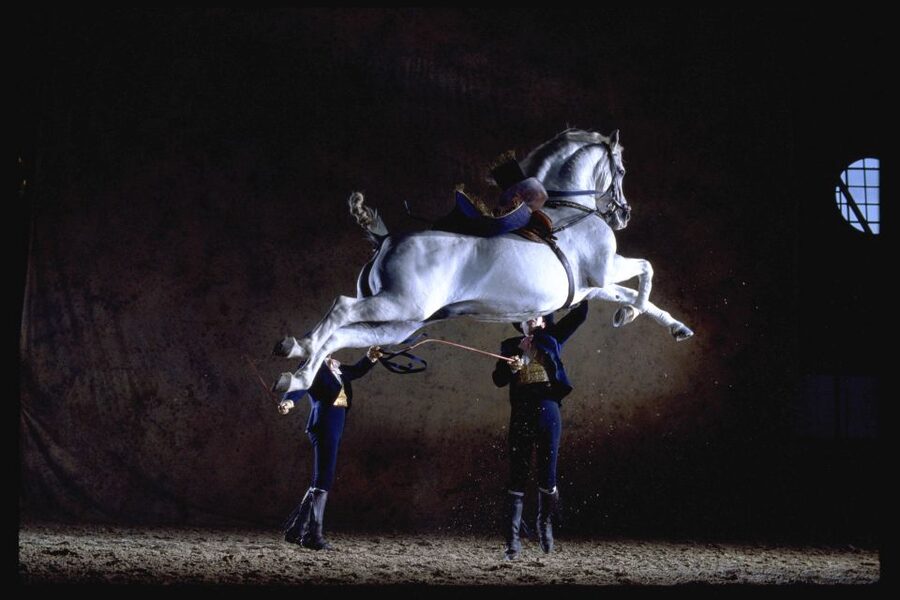
The school may also present airs above the ground. These demanding movements include the horse lifting its front end or making a powerful leap. They are among the most dramatic exercises in classical riding, but they work best when performed with clean form rather than raw speed.
You’ll hear classical music during these numbers. It helps you notice the timing of the horses’ steps and gives the section its formal, almost theatrical character.
A few more Andalusia half-days worth comparing
- Seville: Flamenco Show with Andalusian Dinner at La Cantaora
★ 4.4 · 954 reviews - Jerez: Royal Andalusian School of Equestrian Art Admission
★ 4.6 · 882 reviews - Seville: Flavors of Andalucía Guided Food Tour with Tastings
★ 4.9 · 332 reviews - From Madrid: Gems of Andalusia 6-Day Sightseeing Tour
★ 4.0 · 258 reviews
Carriage driving brings a change of pace
The carriage-driving section breaks up the mounted work. Here, the horses pull carriages using classical harnesses, while coachmen guide them through controlled movements and demonstrations of driving skill.
These carriages once served as transportation. In this setting they are used for sport and exhibition, which gives you a glimpse of an older practical skill preserved for public display.
The scale changes too. A mounted horse can turn tightly and respond to a rider’s legs and hands. A carriage team must work with the vehicle behind them, and the driver must manage the horses, harness, and direction together. That makes the section worth watching closely, even if you are less interested in dressage.
The carriages also add visual variety. After several numbers centered on a rider’s posture and the horse’s footwork, you get a broader scene with wheels, harnesses, and coordinated movement around the arena.
Work in hand and the Spanish walk
Work in Hand shows what the horse can do when the rider is no longer seated. The horse still obeys commands and performs classical Haute École exercises, a demanding level of dressage associated with advanced training.
The listed repertoire may include levades, caprioles, courbettes, piaffe between pillars, and the Spanish walk. These names can sound technical, but you do not need prior dressage knowledge to follow the basic idea: the horse responds to precise cues and performs movements that require strength, balance, and concentration.
The Spanish walk is especially easy to recognize. The horse lifts its front legs high in an elegant, measured step. Levades, courbettes, and caprioles are more athletic, with the horse raising its front end or leaving the ground in controlled movements.
This section rewards you for watching the horse’s body rather than only the large gestures. Look for steadiness, even rhythm, and the way the horse returns to balance after each exercise.
The carrousel makes a fitting finale
The carrousel brings several horses and riders together for a synchronized finish. Instead of focusing on one pair, you watch a group perform advanced exercises in formation.
A group number can be harder to follow than a solo performance, but it creates the strongest visual ending. Riders must maintain spacing and timing while the horses respond to their individual cues. The final effect depends on everyone doing the right thing at the right moment.
For many people, this is the point when the separate parts of the show make sense. Doma Vaquera, classical dressage, work in hand, and carriage driving have shown different traditions. The carrousel gathers the school’s formal presentation into one coordinated closing scene.
Timing, seating, and the overall value
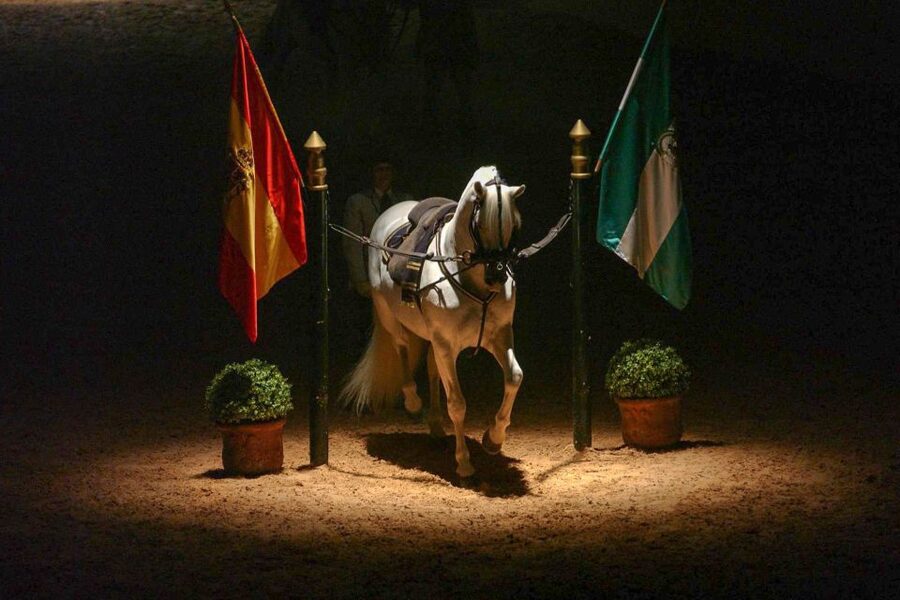
The performance lasts between 90 minutes and two hours. Check the available starting time when booking, since the exact length and program can vary. That is long enough to feel like a proper cultural outing without taking an entire day from your Jerez plans.
At $31 per person, I consider this a fair price for a specialized performance. You are paying for a trained cast of horses and riders, an established venue, costumes, music, arena production, and several distinct styles of riding. It is especially good value if you already have an interest in horses or dressage.
The value is less certain if you are only looking for a quick tourist attraction. Some exercises are subtle, and the formal sections ask you to pay attention. The show does not depend on jokes, narration, or constant action. Its appeal comes from discipline and presentation.
The school also offers flexibility through free cancellation up to 24 hours in advance and a reserve-now, pay-later option. Those terms can help if your Andalusia schedule is still changing, but the practical details of your ticket still matter. Print the voucher, carry identification, and allow time at the reservation box office.
Getting there from Cadiz and planning your visit
Jerez is an easy addition to a stay in Cadiz. You can take the train to Jerez and then use a quick taxi ride to reach the Andalusian horse show. The exact travel time is not provided, so check the current rail and taxi schedules before setting your show time.
The performance works well as a main activity in Jerez rather than a quick stop between other sights. You might find it worthwhile to arrive early, walk around the grounds, and see the school’s setting before taking your seat.
If you hope to browse the gift shop, do it before the performance or check its closing time. The shop may close earlier than you expect, especially if you stay around the grounds after the show.
Photography is allowed only within the venue’s rules. Flash photography is forbidden, as are audio recordings. Leave pets, glass containers, bottles, cans, weapons, and sharp objects outside. Management can refuse other items it considers unsuitable.
The school can change the program, so treat the named repertoire as a guide rather than a guarantee. That is normal for a working performance school, but it is worth knowing if you have your heart set on one particular exercise.
Who should book this experience?
I would choose this show if you enjoy horses, classical dressage, Spanish traditions, or carefully staged cultural performances. It also suits families and mixed-interest groups because the program changes pace and style several times.
You do not need technical knowledge to appreciate the show. Still, reading a little about piaffe, passage, Doma Vaquera, or the Spanish walk beforehand will help you notice what the horses are doing.
It may be less suitable if you want an informal, hands-on activity or a small group tour with a guide explaining every moment. The show is performed in an arena, and its formal style leaves little room for personal interaction with the riders.
The event can also appeal to longtime horse lovers who want to see Andalusian horses working at a high level. Several people have returned years later and still found the performance memorable, which says something about the school’s lasting appeal.
Should you book the Andalusian horse show?
Book it if you want to see a polished piece of Spanish equestrian culture in its home region. The combination of Doma Vaquera, classical dressage, carriage driving, and the final carrousel gives you more range than a single-discipline horse performance.
I would be especially inclined to go while staying in Jerez or Cadiz, since the outing fits naturally into an Andalusian itinerary. At $31, it offers a strong cultural experience at a moderate price.
Skip it only if formal dressage does not interest you or if you need complete control over your seat and exact program. For everyone else, bring your printed voucher, arrive prepared for a carefully paced show, and watch the small movements as closely as the dramatic ones.
FAQ
How long does the Andalusian horse show last?
The performance lasts between 90 minutes and two hours. The exact length depends on the scheduled program and starting time.
Where do I collect my tickets?
Go to the reservation box office at the Royal Andalusian School of Equestrian Art Foundation. You must present your printed voucher.
Do I need identification?
Yes. Bring your passport or ID card. If you purchased a discounted ticket, you also need documentary proof of eligibility.
Can I choose my exact seat?
No. Tickets are sold by price category, without a choice of row or seat number. Seats are assigned according to the order of purchase or booking.
Is the venue wheelchair accessible?
Yes, the activity is wheelchair accessible.
Can I take photographs or bring a bottle?
Flash photography and audio recording are not allowed. Bottles, cans, glass objects, pets, weapons, sharp objects, and other items management considers unsuitable are also prohibited.
Recently added around Andalusia
- Guided tour of Baeza with entrance Baeza Cathedral★ 5.0 · 107 reviews
- Oil tourism in Pulpí Discover the World of EVOO★ 5.0 · 133 reviews
- Jaén 2.5-Hour Tour: Cathedral, Arabs Baths and Old City★ 4.7 · 135 reviews
- Andalusian Horses Dance Show★ 4.5 · 483 reviews
- From Madrid: Gems of Andalusia 6-Day Sightseeing Tour★ 4.0 · 258 reviews
- Cadiz: Andalusian Horses and Bulls Country Show★ 4.6 · 189 reviews
- Estepona: Andalusian Flamenco Show Entry Ticket with Drink★ 4.5 · 236 reviews
- Jaén: 3-hour tour, Cathedral, Jewish Quarter and Arab Baths★ 4.8 · 211 reviews
Horses, compared.
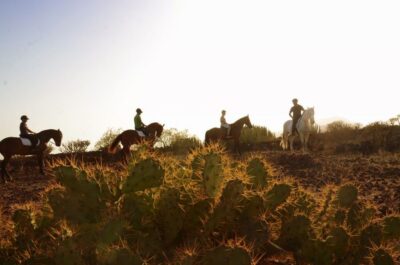
El Salobre: Horse Riding Adventure with Transfer Options
Read our review →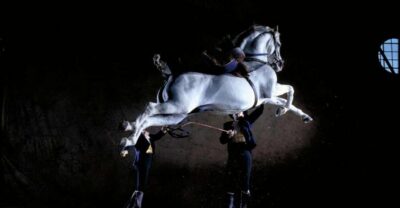
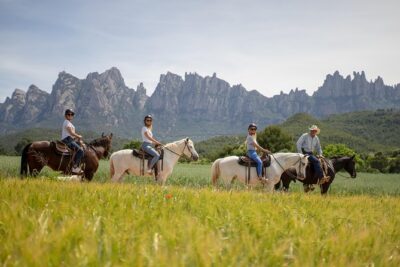
Montserrat Monastery & Horse Riding Experience from Barcelona
Read our review →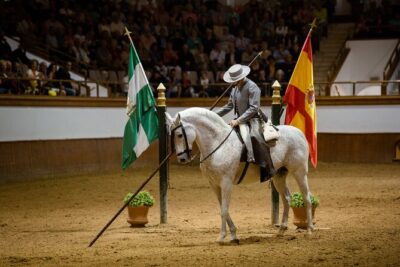
Browse the lists this tour appears in