
Reviewed · MUSEUMS
Seville: Museum of Fine Arts Guided Tour
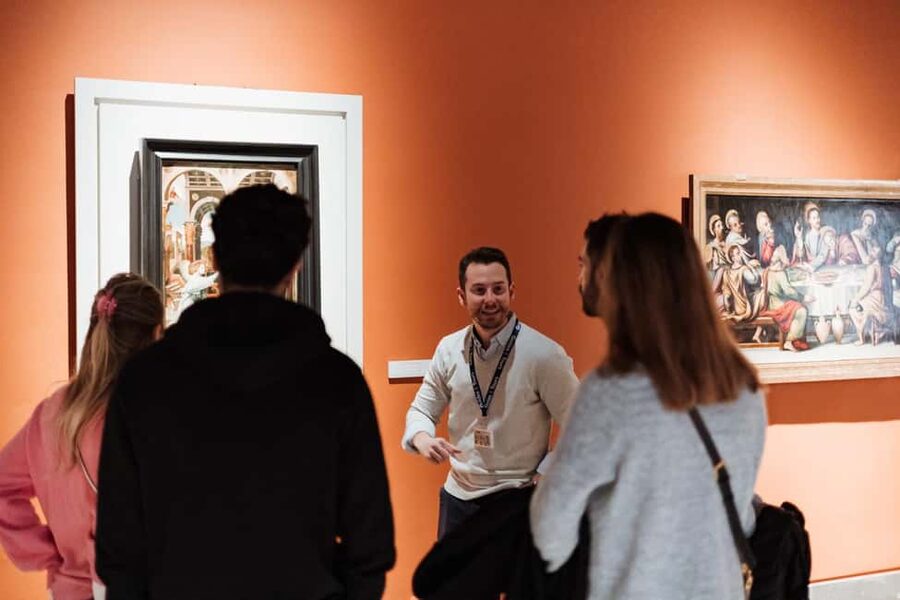
Seville’s Museum of Fine Arts is much more than a quiet collection of paintings. It occupies the former Convent of La Merced, where tiled courtyards, grand cloisters, and old monastic rooms give the art a setting of its own. I especially like the chance to see Murillo’s celebrated works alongside Gothic and Renaissance pieces, and the small-group format of no more than eight people. The one drawback is that two hours calls for selectivity: you will see the museum’s main story, not every room at length.
I also like the price. At $23 per person, admission and a licensed guide are included, making this a sensible choice if Spanish religious art is new to you. Guides such as Julio have been praised for explaining symbolism, politics, and local history in clear English, but the exact guide is not guaranteed, and art lovers hoping for a leisurely, room-by-room visit may prefer to stay afterward and explore alone.
Key points at a glance
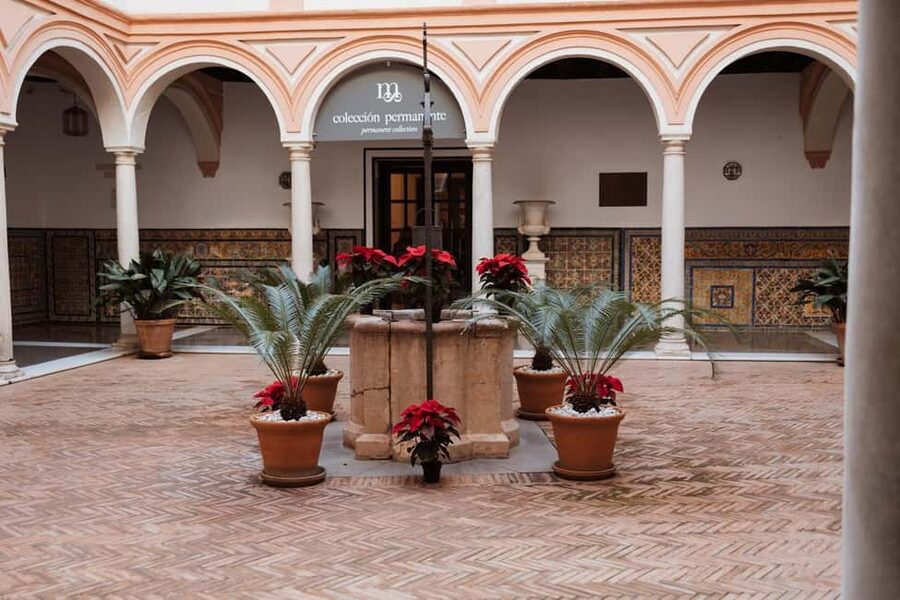
- A former convent makes the building part of the attraction: See the Claustro de los Bojes and the Claustro Mayor, not just the artworks on the walls.
- Murillo receives special attention: The dedicated room helps explain why Bartolomé Esteban Murillo matters so much in Seville.
- The tour covers several centuries: Expect Gothic works, Renaissance sculpture, Baroque painting, and Sevillian Costumbrismo.
- Julio is a frequently praised guide: His tours focus on historical setting, iconography, artistic technique, and the stories behind the images.
- The group is limited to eight: That gives you a better chance to ask questions than on a large museum walk.
- You can remain after the tour: The two-hour visit gives you a guided framework, then allows further independent viewing.
Why this museum deserves two hours
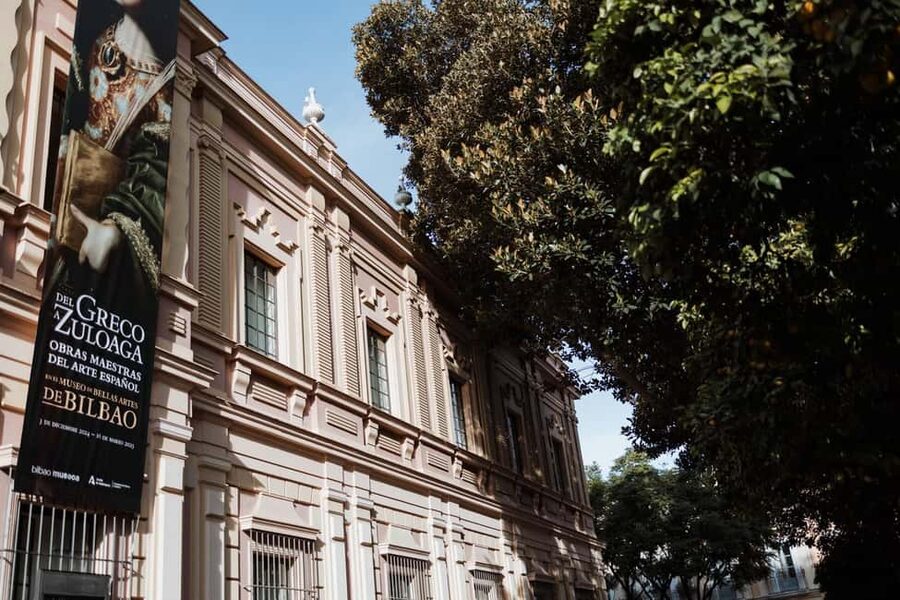
The Museum of Fine Arts of Seville, or Museo de Bellas Artes, gives you a concentrated introduction to the art of Seville and Andalusia. The collection reaches across several periods, but its strongest identity comes from the religious painting and sculpture produced in Seville during the Renaissance and Baroque eras.
That matters because Seville was not simply displaying art made elsewhere. Local artists worked for churches, convents, religious brotherhoods, and civic patrons. Their paintings and sculptures were made for particular settings and purposes. A guide can help you see why a gesture, color, saint, or object appears in a scene instead of leaving you to admire the surface without understanding the message.
I find this especially useful in Spanish art museums, where a painting may look familiar at first glance but contain layers of symbolism. A well-placed explanation can turn a solemn religious scene into a story about devotion, status, politics, or daily life.
The museum also helps you follow artistic change. Gothic works tend to feel different from the more natural Renaissance figures, while Baroque art brings stronger emotion, movement, and theatrical lighting. Later Sevillian Costumbrismo shifts attention toward local customs and everyday scenes. You are not just looking at isolated masterpieces. You are following how artists in Seville responded to changing ideas and patrons.
More Museum Tours in Seville:
- Seville: Puro Flamenco Show with Optional Museum Ticket
★ 4.8 · 6,088 reviews - Seville: Museum of Illusions Entry Ticket
★ 4.2 · 1,196 reviews - Seville: Museum of Flamenco Dance Admission Ticket
★ 4.4 · 197 reviews
Meeting at Plaza del Museo
Your starting point is the Asociación Amigos del Museo de Bellas Artes at Plaza del Museo. The guide waits beside the statue of Murillo, carrying a blue umbrella or wearing a name tag marked Sevilla Guías & Tours.
This is a useful meeting arrangement because Plaza del Museo sits directly beside the museum. You do not need transportation as part of the experience, and the tour returns to the same general point after the visit. Plan to arrive with enough time to identify the guide without rushing. The blue umbrella is the clearest visual marker, especially if other groups are gathering near the entrance.
The tour includes an express security check, so you avoid the ordinary uncertainty of waiting through a long entry process. That does not mean you should arrive at the last second. A calm start helps, especially when you are trying to find a specific guide in a public square.
The activity is wheelchair accessible, and pets are not allowed. Food and drinks are not included, so treat this as a focused museum visit rather than a combined sightseeing and refreshment outing.
Entering the former Convent of La Merced
The first major pleasure is the building itself. The Museum of Fine Arts occupies the former Convent of La Merced, an architectural setting that gives the collection a strong sense of place.
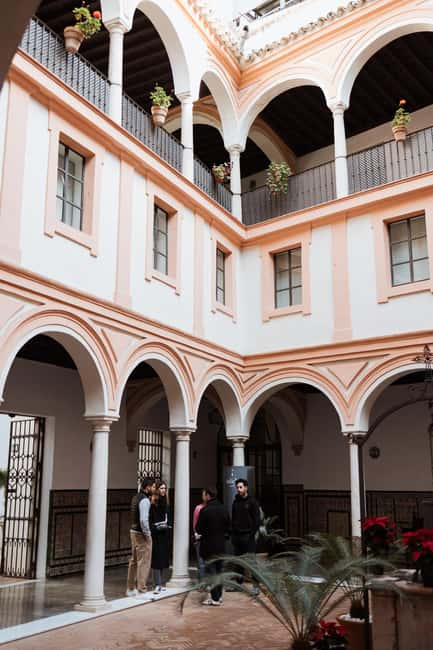
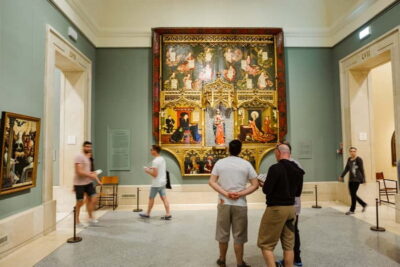
You pass through elegant halls and peaceful cloisters, including the Claustro de los Bojes and the Claustro Mayor. These spaces are not mere corridors between galleries. Their proportions, open courtyards, and Renaissance and Baroque details help you understand the kind of religious world for which much of the collection was created.
I like the way the building slows the visit down. Seville can be noisy and busy outside, yet the cloisters offer a more measured rhythm. You move from open architectural space into rooms filled with paintings and sculpture, then back into the quiet of the convent. That change helps prevent the art from feeling like a flat sequence of framed objects.
The building is also useful for visitors who are not confident in museums. Even if a particular painting does not speak to you, the former convent gives you something concrete to notice: arches, courtyards, decoration, and the relationship between sacred architecture and sacred art.
From Gothic Seville to the Renaissance
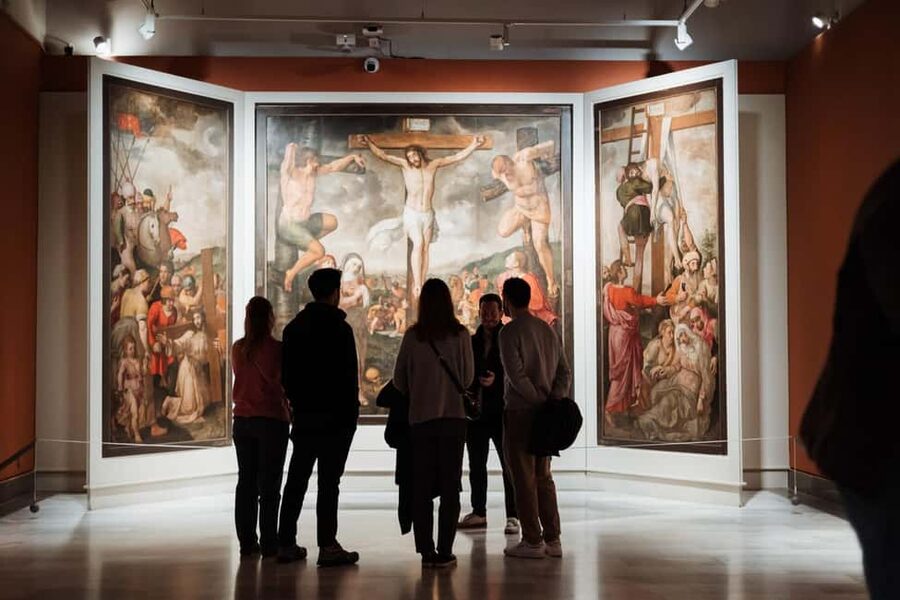
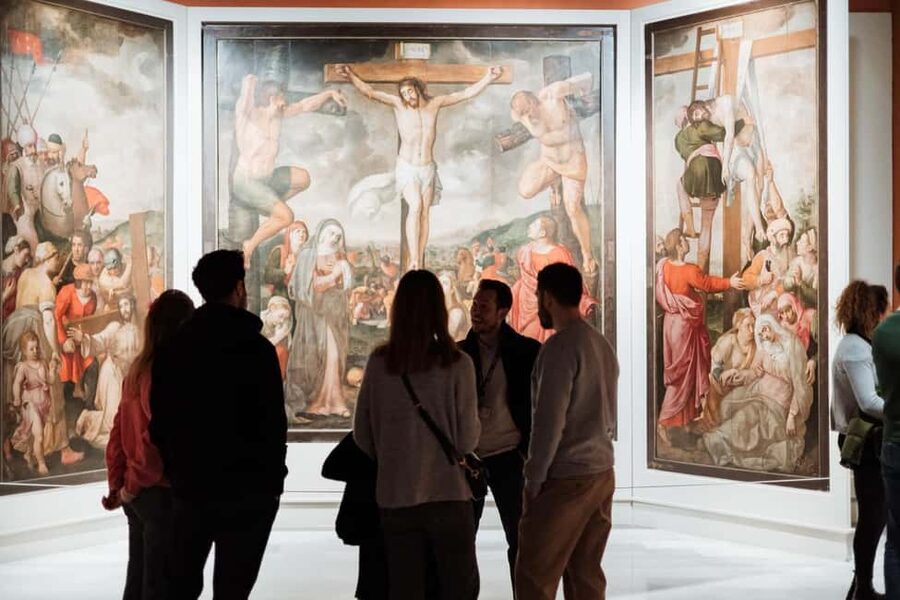
The early part of the visit introduces Gothic works from Seville and other parts of Andalusia. This section gives you a foundation for reading the later paintings. You may notice flatter compositions, more formal figures, and a strong emphasis on recognizable religious subjects.
The guide’s role is important here. Without context, early religious art can appear stiff or repetitive. With an explanation of its purpose, symbols, and setting, you can begin to understand why artists emphasized certain gestures and arrangements.
The Renaissance section shows a change in the treatment of the human figure and the organization of space. One highlighted work is Saint Jerome Penitent by Torrigiano, a Renaissance masterpiece that brings sculpture into the story. It is a useful reminder that the museum is not only about paintings. Sculpture gives you another way to see the period’s interest in anatomy, expression, and physical presence.
This is one point where a small group helps. You can ask why a particular work matters, how it differs from a Gothic example, or what you should look for in the carving. In a group of eight or fewer, those questions are practical rather than disruptive.
A few more Seville half-days worth comparing
- Seville: Royal Alcázar Entry Ticket
★ 4.6 · 28,378 reviews - Seville: Cathedral and La Giralda Entry Ticket
★ 4.5 · 24,592 reviews - Seville: Live Flamenco Dancing Show Ticket at the Theater
★ 4.7 · 16,396 reviews - Seville: Casa de la Memoria Flamenco Show
★ 4.8 · 12,964 reviews
Murillo’s room and the Sevillian Baroque
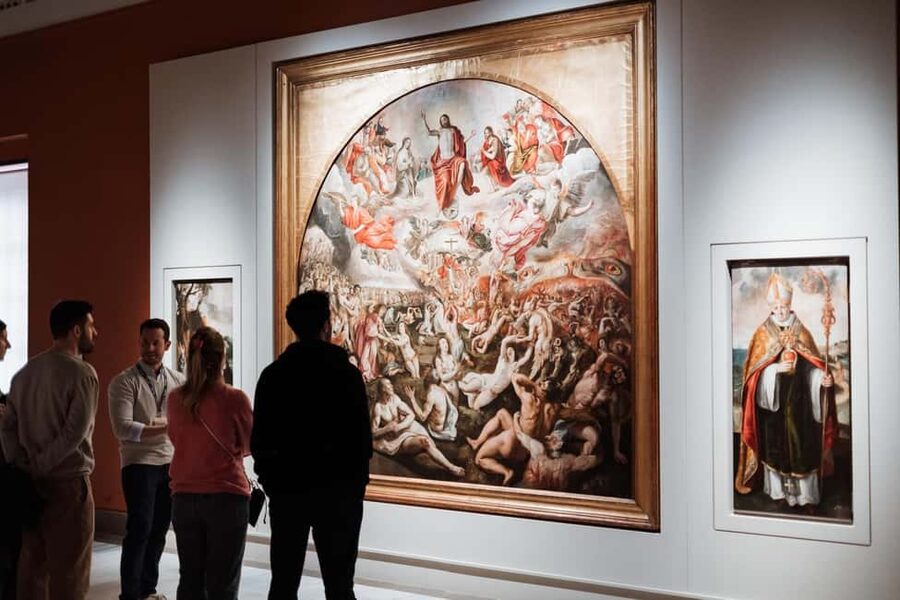
The section devoted to Bartolomé Esteban Murillo is likely to be the emotional center of the tour. Murillo is one of Seville’s best-known painters, and the dedicated room lets you see selected works together rather than as a single isolated picture.
A good guide will connect Murillo’s style to Seville’s religious and social setting. Look for the ways figures communicate tenderness, sorrow, devotion, or calm. The value of the explanation is not just identifying the subject. It is understanding why the painting was made, how viewers were expected to respond, and what made Murillo’s approach distinctive.
The tour also includes other major Sevillian artists and a broader selection of Baroque works. Baroque art often rewards close looking. Strong contrasts of light and shadow, energetic movement, and dramatic expressions can seem obvious at first, but the details become more meaningful when you know what the artist wanted you to notice.
Julio is frequently associated with this experience and is described as a historian with a strong grasp of iconography and period context. His approach, as reflected in the available feedback, is to explain symbolism without making the material feel like a lecture. He has also been praised for answering questions, adjusting explanations for people with little art background, and offering additional advice about Seville when asked.
That kind of guide is particularly helpful if you are visiting with family or friends who have different levels of interest. One person can enjoy the visual drama, another can follow the historical story, and both can remain part of the same conversation.
Looking at Seville through Costumbrismo
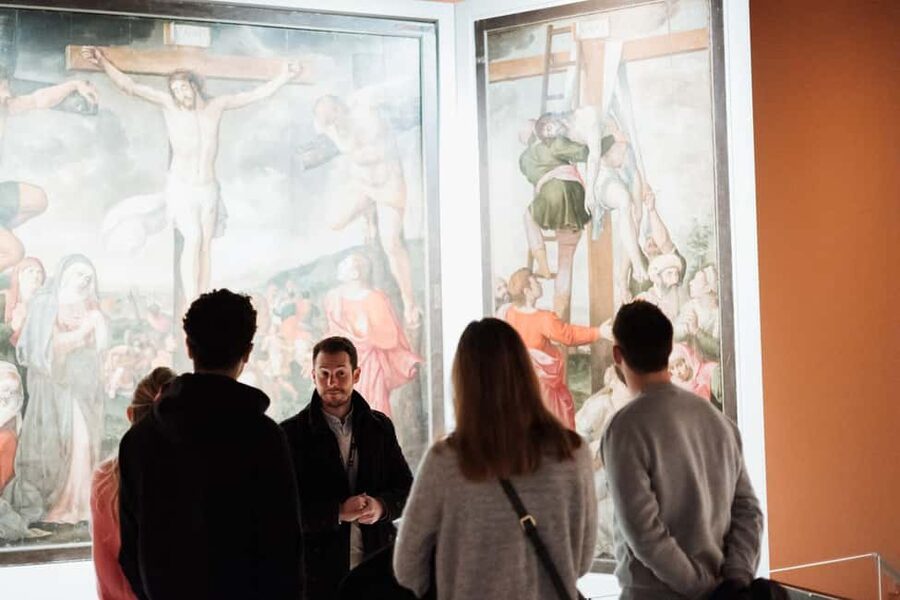
The collection also includes Sevillian Costumbrismo, a style concerned with local customs, people, and scenes of daily life. This part broadens the visit beyond saints, convents, and grand religious commissions.
It gives you a chance to see Seville as a lived-in city, not only as a center of ecclesiastical art. The shift in subject matter can make the museum feel more accessible, especially if you prefer scenes connected to ordinary life.
The tour’s wider historical approach helps link these works to the rest of the collection. You can compare the way artists present a saint, a biblical scene, or a local custom. The subjects change, but questions about identity, belief, social behavior, and place remain.
The museum’s collection is large enough that a two-hour tour cannot cover every artist or gallery in detail. That is the main limitation. The guide must choose works, and you may leave with a list of rooms you still want to see. I see this as a useful trade-off rather than a flaw, provided you plan to stay afterward.
What the two-hour format feels like
Two hours is long enough to establish a clear route without exhausting most visitors. You will spend the time walking between architectural spaces, pausing for selected paintings and sculptures, and listening to explanations about the artists and their setting.
The experience is not designed for a fast checklist. The strongest moments come when the guide stops at one work and explains what you might otherwise miss: an iconographic clue, a connection to Seville, a change in style, or the social purpose of the image.
The small group of up to eight participants gives the tour a personal feel. You can hear the guide more easily than on a crowded walk, and one earlier version of the experience used an earpiece to make listening easier. Equipment can vary, so do not assume an audio device is always provided, but the limited group size remains a real advantage.
The tour finishes back at the Asociación Amigos del Museo de Bellas Artes. Afterward, you can continue looking around the museum for as long as you wish. I recommend reserving this extra time if Murillo interests you or if you prefer to examine sculpture and architectural details without a group moving on.
Is $23 a fair price?
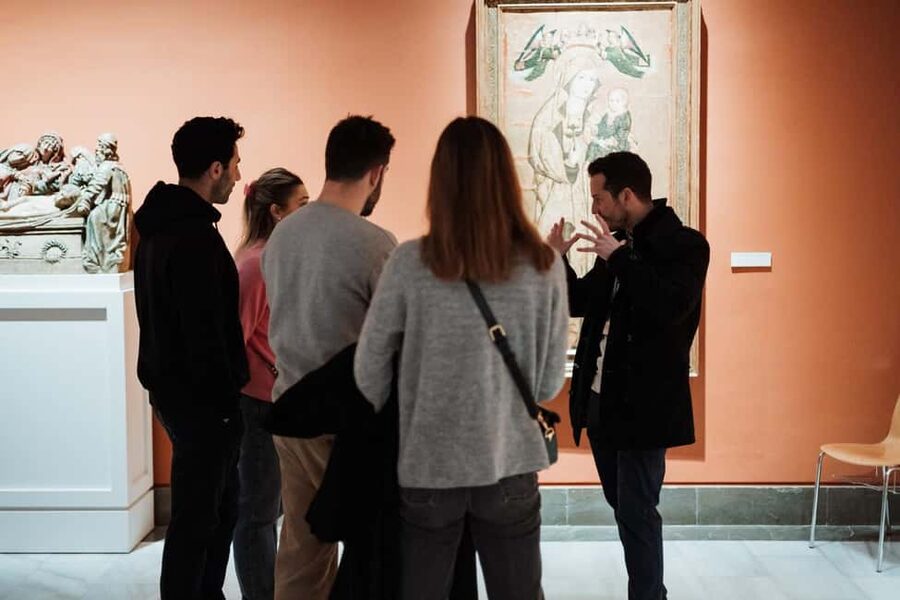
At $23, the tour sits in the affordable range for a specialist museum visit. Your ticket to the Museum of Fine Arts and a licensed English or Spanish-speaking guide are included. You are paying not only for entry, but for a selected route through a collection that can be difficult to place in context on your own.
The value is strongest if you are unfamiliar with Spanish art. A guide can save you from spending the first part of your visit trying to work out which artists and rooms deserve attention. The explanations also add meaning that a simple label may not provide, especially around symbolism and Seville’s artistic development.
The value is less certain if you already have extensive knowledge of Sevillian painting and want to choose your own route. In that case, you may prefer admission without a fixed tour, if available, and a long independent visit. Still, the price is modest enough that the small-group instruction can make sense even for experienced museum visitors who want a local perspective.
The reserve-now, pay-later option and free cancellation up to 24 hours before the start add useful flexibility. Those policies matter if your Seville schedule is still changing.
Who should book this museum tour?
I would choose this experience for a first visit to Seville’s art museum, especially if you want a clear introduction to Murillo, the Sevillian Baroque, and the building’s former convent life.
It also suits you if:
- Religious art is not your usual subject, but you want help reading it.
- You prefer a guide who can explain historical context and symbolism.
- You are visiting with someone who has little museum experience.
- You value a small group and the chance to ask questions.
- You want to continue independently after the guided portion.
- You would rather spend $23 on a focused local explanation than wander without a plan.
You may want a different approach if you dislike guided pacing or need several hours to study each work. The tour is selective by design. It gives you a strong framework, then leaves the final choice to you.
Should you book the Museum of Fine Arts guided tour?
Book it if you want the museum to make sense as a story about Seville, not simply a collection of attractive paintings. The former convent, the cloisters, Torrigiano’s Saint Jerome Penitent, the Murillo room, and the shift from Gothic to Renaissance and Baroque art give the visit plenty of variety.
The best reason to book is the guide’s role. Julio has received especially strong praise for clear English, historical explanation, symbolism, patience, and an engaging manner, though another guide may lead your group. At $23, the combination of admission, a two-hour small-group tour, and the freedom to remain afterward is good value.
Skip it only if you strongly prefer complete independence or already know the museum well. For most first-time visitors, the tour provides a useful starting point, and the museum gives you enough to explore once the guide has shown you how to look.
FAQ
How long is the Museum of Fine Arts guided tour?
The guided visit lasts two hours.
What is included in the price?
The $23 price includes entrance to the Museum of Fine Arts of Seville and an expert licensed guide. The tour is offered in English or Spanish.
Where does the tour meet?
Meet at the Asociación Amigos del Museo de Bellas Artes in Plaza del Museo, next to the statue of Murillo. The guide carries a blue umbrella or has a Sevilla Guías & Tours name tag.
How large is the group?
The tour is limited to eight participants.
Can I stay in the museum after the guided tour?
Yes. After the two-hour tour, you can remain at the museum and continue exploring independently.
Is the museum tour wheelchair accessible?
Yes, the activity is listed as wheelchair accessible.
Can I cancel the booking?
You can cancel up to 24 hours in advance for a full refund. A reserve-now, pay-later option is also available.
Recently added around Seville
- Seville: Alcázar Fast-Track Access with Guided Tour★ 4.2 · 432 reviews
- Seville: Small Group Jewish Quarter Tour with Tapas & Drinks★ 5.0 · 119 reviews
- Seville: Sunset Roof Top Walking Tour★ 4.5 · 122 reviews
- Seville: Small-Group Jewish Quarter Discovery Walking Tour★ 4.9 · 499 reviews
- Seville: VIP Exclusive Early Access Tour of The Alcazar★ 4.8 · 276 reviews
- Seville: Authentic and Romantic Horse-Drawn Carriage Ride★ 4.5 · 341 reviews
- Seville: Flamenco Show at Tablao Almoraima in Triana★ 4.6 · 483 reviews
- Seville: Sunset and Evening Paddle Boarding Tour★ 4.8 · 355 reviews
Museums, compared.

FC Barcelona Museum “Barça Immersive Tour” Ticket
Read our review →
Park Güell and Gaudí House Museum Entry Ticket
Read our review →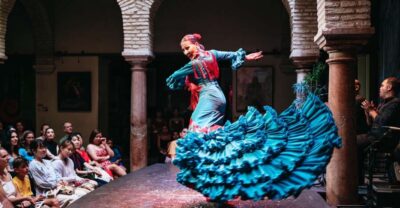
Puro Flamenco Show with Optional Museum Ticket
Read our review →
Girona & Dali Museum Small Group Tour with Pick-up from Barcelona
Read our review →
Oceanogràfic, Hemisfèric & Science Museum Combo
Read our review →Browse the lists this tour appears in