
Reviewed · CITY TOURS
Seville: Italica Roman Ruins City Tour
Italica gives you a rare chance to walk through a Roman city without leaving the Seville area. Founded in 206 BC, it later produced emperors Trajan and Hadrian, and its broad amphitheater gained a new audience as a Game of Thrones filming site. I especially like the remarkable mosaics and the way a good guide turns broken walls into a picture of Roman homes, politics, and spectacle. The main drawback is timing: some groups can be large, and multilingual explanations may stretch the two-hour visit.
I also like the simple meeting point at the site entrance and the included skip-the-line ticket. Guides such as Juanra, Miguel, Jesus, Carlos, Manuel, and Barbara have been praised for clear, lively explanations, with several visitors finding their English easy to follow. If you arrive independently, though, you may need to wait for a scheduled group coming from Seville, and one reported tour started 15 minutes late.
Key points to know before visiting Italica
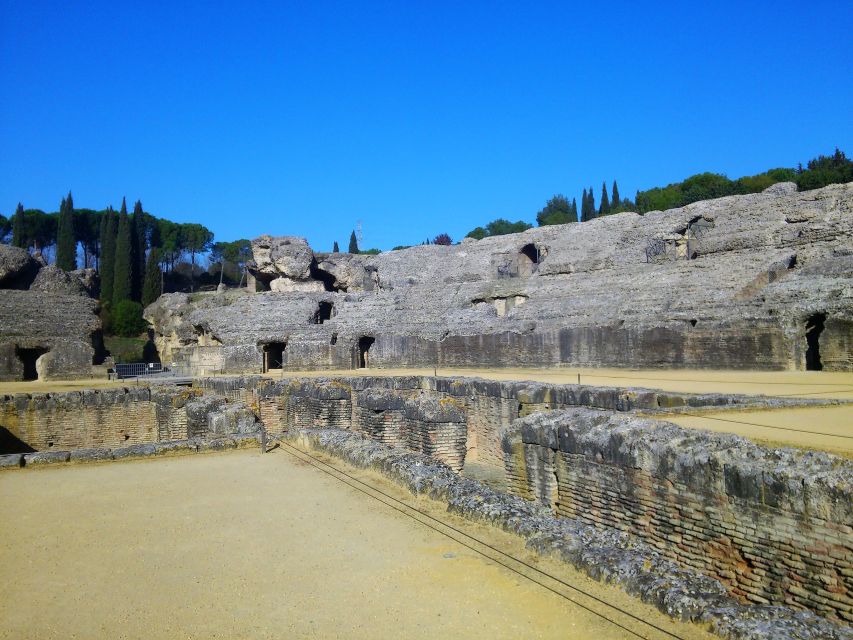
- The amphitheater is the headline sight: Walk into the arena made famous as a Game of Thrones location, then see its passages and viewing points.
- This was Spain’s first Roman city: Italica began in 206 BC after the Battle of Ilipa and grew under Trajan and Hadrian.
- The mosaics are a major reward: Carefully preserved floor designs give the ruined homes color and detail.
- The guide makes a real difference: Strong guides such as Manuel, Carlos, Jesus, Juanra, and Barbara have been praised for lively storytelling and clear answers.
- The visit lasts two hours: About 15 minutes focuses on the amphitheater, with roughly 75 minutes for the wider Italica site.
- Transport is not included: You must reach Avenida de Extremadura 2 in Santiponce on your own.
Why Italica deserves time away from Seville
Seville is full of grand churches, palace gardens, and lively plazas. Italica offers a different kind of sight: open Roman ruins spread across the remains of an ancient city, only about 8 kilometers northwest of the center.
The site began in 206 BC, after Rome defeated the forces of Carthage and its allies at the Battle of Ilipa. That makes Italica the first Roman city founded in Spain. It was not a small military outpost for long. The city expanded under Emperor Hadrian in the second century, and it became the birthplace of both Trajan and Hadrian, two of Rome’s most important emperors.
That imperial connection gives the ruins unusual weight. You are not simply looking at old stones. You are walking through a city linked to the rulers who helped shape Rome at the height of its power.
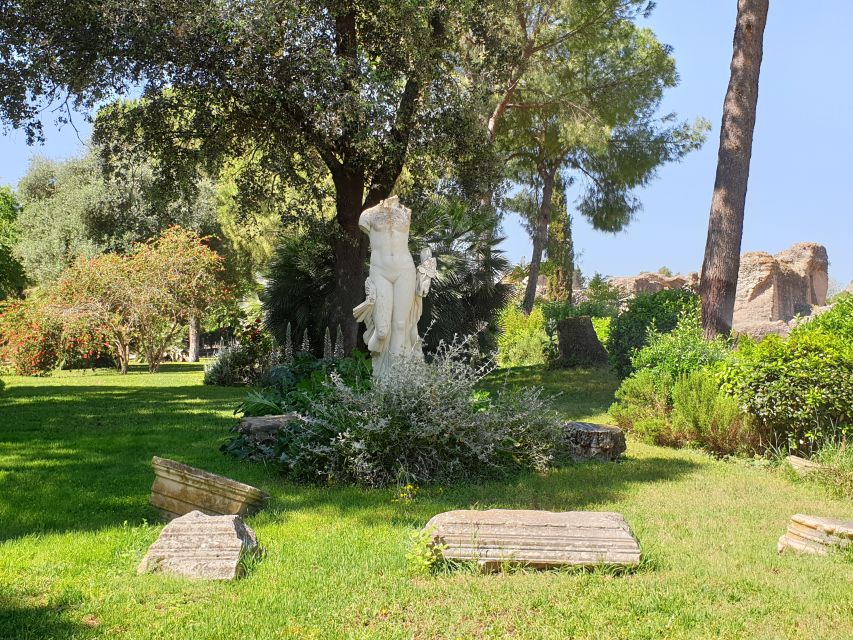
Still, Italica is best understood through its physical details. The remains of homes, streets, mosaics, and public buildings show how Roman life worked on the ground. A guide can point out what you might otherwise miss, explain the purpose of a structure, and help you picture a functioning city rather than a collection of fragments.
More City Tours in Seville
- Seville: City Sightseeing Hop-On Hop-Off Bus Tour
★ 4.0 · 4,633 reviews - Seville: Highlights City Bike Tour
★ 4.8 · 2,168 reviews - City Sightseeing Seville Hop-On Hop-Off Bus Tour
★ 4.0 · 1,782 reviews
Entering the amphitheater made famous by Game of Thrones
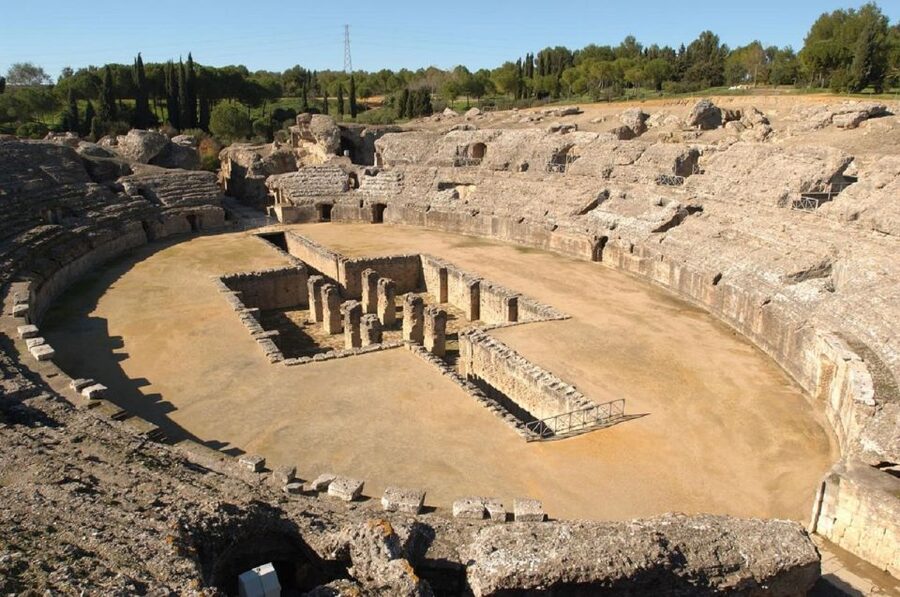
The amphitheater receives about 15 minutes of guided attention, and it is the obvious first highlight. Its scale is impressive even when you know little about Roman architecture. You can enter the arena, look up toward the seating areas, and see the corridors used to move people and performers around the building.
The Game of Thrones connection adds a modern hook, but the amphitheater is worth seeing even if you have never watched the series. HBO used it as a filming location for scenes in the show, and the arena’s worn stone, underground passages, and monumental shape explain why it works so well on camera.
One particularly enjoyable detail is the chance to look through the amphitheater’s vomitorium, the passage system that helped people enter and leave the seating area. After the guided portion, you may have time to explore some of these corridors and find different views into the arena. The word sounds unpleasant to modern ears, but in Roman architecture it referred to a passage for crowds, not what the English word suggests.
The amphitheater stop is short compared with the rest of the site. That is sensible because there is much more to Italica, but it can feel quick if this is the sight you came mainly to see. Pay attention to the guide’s explanation, then use any free time to look through the passageways and study the arena from several angles.
Walking through Italica’s Roman homes and streets
Most of the tour is spent exploring Italica itself. The main site visit lasts about 75 minutes, though the exact pace depends on group size, language arrangements, and questions.
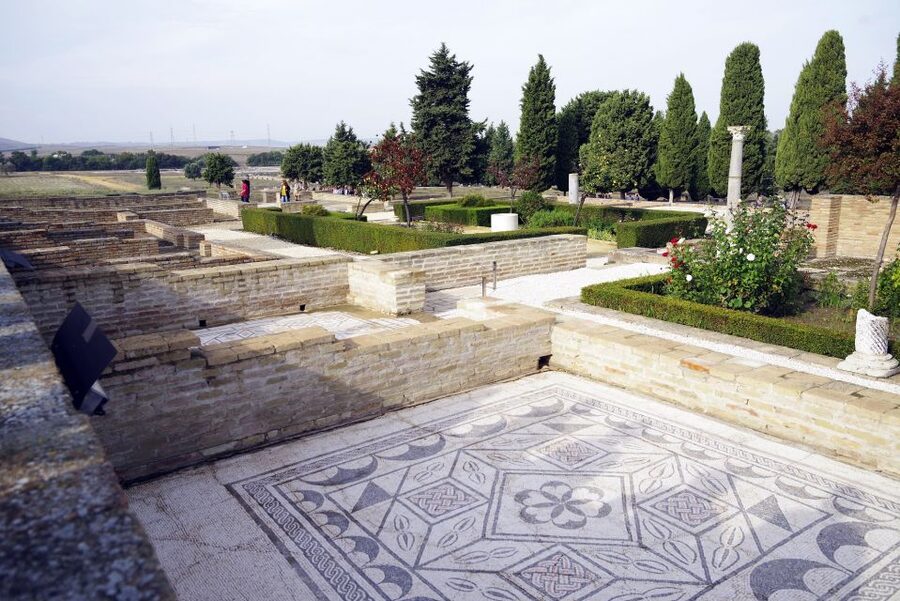
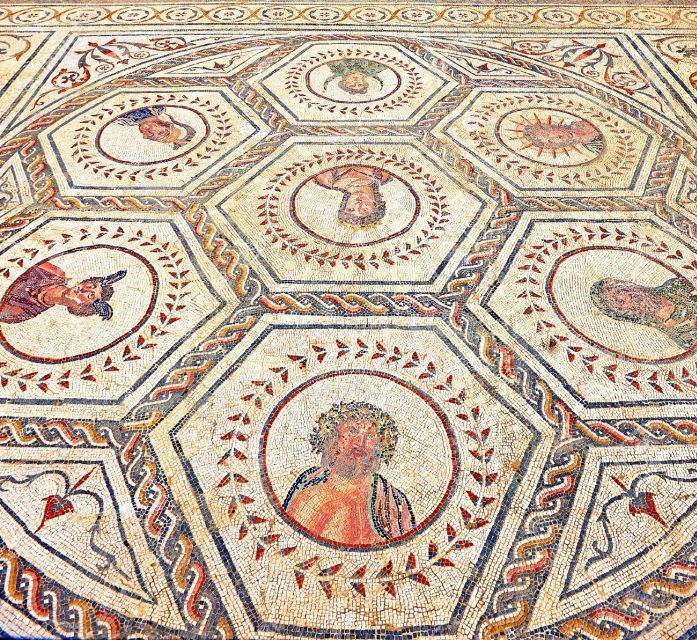
The houses are one of the most rewarding parts. Their walls may be incomplete, but the floor mosaics add color and precision. Designs preserved in the homes show that these were not rough frontier dwellings. They belonged to a substantial Roman city with money, taste, and a strong connection to the wider empire.
I would give the mosaics your full attention. From a distance, they can look like decorative patterns. Up close, the geometry, borders, and small images reveal the skill involved in making them. A guide can also explain how the rooms fit together and what the layout suggests about Roman domestic life.
The ruins may not always make their original purpose obvious. This is where the tour earns its price. Without explanation, you might walk past a wall or tiled floor and move on. With a guide, you get clues about what you are seeing and why it mattered.
The visit also gives you a feel for the city’s size. Italica was not just an amphitheater with a few houses nearby. Its streets and buildings formed a proper urban center, and the surviving remains show how far the city expanded during Hadrian’s rule.
What a good guide adds to the stones
The strongest part of this experience is the human explanation. Several guides have received especially warm praise for their style, including Juanra, Miguel, Jesus, Carlos, Manuel, and Barbara.
Carlos has been described as passionate and engaging. Jesus was praised for bringing the ruins to life with plenty of useful detail, while Manuel was noted for fluent English, strong answers, and a smooth delivery. Barbara was appreciated for explaining each stop and inviting questions. Juanra’s enthusiasm helped make the stories and mosaics memorable.
These details matter because Italica is not a museum with labels beside every object. The site asks you to use your imagination. A guide helps connect the amphitheater to Roman public life, the mosaics to private homes, and the city’s imperial connections to the larger story of Rome.
The guide’s language ability can also shape your day. Tours are available in Spanish, English, French, and Italian. Italian and French departures require a minimum number of participants. If that number is not reached, you may be offered another language or a full refund.
Multilingual groups can create a practical problem. One group found that explanations in both French and English made the tour too long, while another felt that the guide moved too quickly or did not wait long enough. This is not a reason to avoid the visit, but it is worth checking the language and group arrangement when booking.
A few more Seville half-days worth comparing
- Seville: Royal Alcázar Entry Ticket
★ 4.6 · 28,378 reviews - Seville: Cathedral and La Giralda Entry Ticket
★ 4.5 · 24,592 reviews - Seville: Live Flamenco Dancing Show Ticket at the Theater
★ 4.7 · 16,396 reviews - Seville: Casa de la Memoria Flamenco Show
★ 4.8 · 12,964 reviews
Timing, group size, and the two-hour format
Two hours is enough for a useful introduction to Italica, but it is not an unhurried archaeological study. The planned structure gives you about 15 minutes at the amphitheater and 75 minutes across the wider site, leaving some flexibility for walking, photos, and transitions.
A small group will usually make the experience easier. You can hear the guide clearly, ask questions, and stay close to the explanations. The tour offers private or small-group options, which may suit families and visitors who want more room for questions.
Larger groups can be less comfortable. One visitor found the group too big, and a mixed-language format made the visit longer than expected. Another noted that the guide had to follow the schedule of a bus group. If you care about a relaxed pace, check the group type before paying rather than assuming every departure will feel intimate.
The schedule also matters if you have a train, museum reservation, or lunch booking in Seville. A reported 15-minute late start pushed the rest of the day back. Allow some breathing room after the tour, especially if the group is traveling together from Seville.
Getting to the meeting point in Santiponce
The meeting point is the main entrance to the Italica archaeological site at Avenida de Extremadura 2, 41970 Santiponce, Seville. The activity does not include transport, so reaching the entrance is your responsibility.
This is close enough to Seville to make a half-day outing practical, but the tour is not a door-to-door excursion. You need to plan the trip to Santiponce and arrive at the stated entrance, where the guide will be waiting.
That arrangement has one clear advantage: once you arrive, you are already at the archaeological site. You do not lose tour time crossing town or collecting tickets. The included skip-the-line admission also means you can head into the ruins rather than dealing with the ticket queue.
There is one point to watch. If you arrive independently, the group may be organized around a coach coming from Seville. One visitor had to wait for that bus before joining the tour. If you value complete control over the start time, a private option may be worth considering if available for your date.
Is the $21 price good value?
At $21 per person, the tour is fairly priced for a two-hour guided visit that includes the entrance ticket and a live guide. You are paying not only for access, but also for the context that makes the ruins readable.
The value is strongest if you are not already familiar with Roman urban history. The amphitheater is easy to appreciate on your own, but the homes, mosaics, and city layout benefit from explanation. The guide helps you see the difference between a decorative floor, a private room, and a public structure.
The price is less compelling if you prefer to wander alone for a long time or study every ruin at your own speed. The tour follows a set route and schedule. You may have some time to look around after the guided portion, but this is primarily a guided introduction rather than an all-day archaeological visit.
For families, the cost can be worthwhile because stories and visual details help younger visitors stay interested. The amphitheater gives the visit an immediate focus, and the Game of Thrones connection can provide an easy starting point before the guide moves into Roman history.
Who will enjoy Italica most
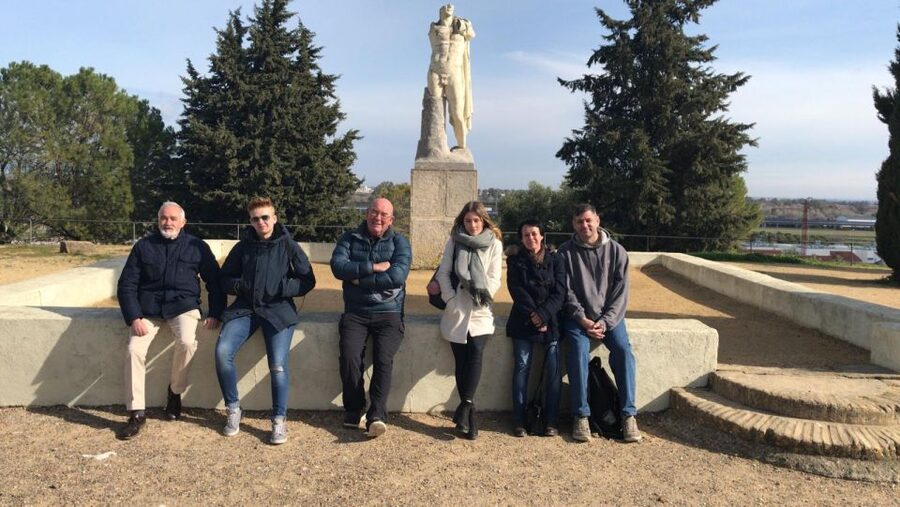
I would recommend this tour to anyone with an interest in Roman Spain, ancient cities, architecture, or Game of Thrones filming locations. It also suits visitors who want a worthwhile outing beyond Seville’s historic center without committing to a full-day trip.
History fans will appreciate the link to Trajan and Hadrian, while casual visitors can focus on the amphitheater and mosaics. Families may find the balance useful: there is a recognizable television connection, a large arena, and enough visual detail to keep the visit from becoming a lecture.
The tour is less suited to someone who dislikes group schedules or needs a very slow pace. It is also not ideal if you want transport included, since you must arrange your own route to Santiponce.
If you choose an English tour, confirm the language at booking. If you choose French or Italian, remember that the departure requires a minimum number. Those details can affect how smoothly the visit runs.
My verdict on the Italica city tour
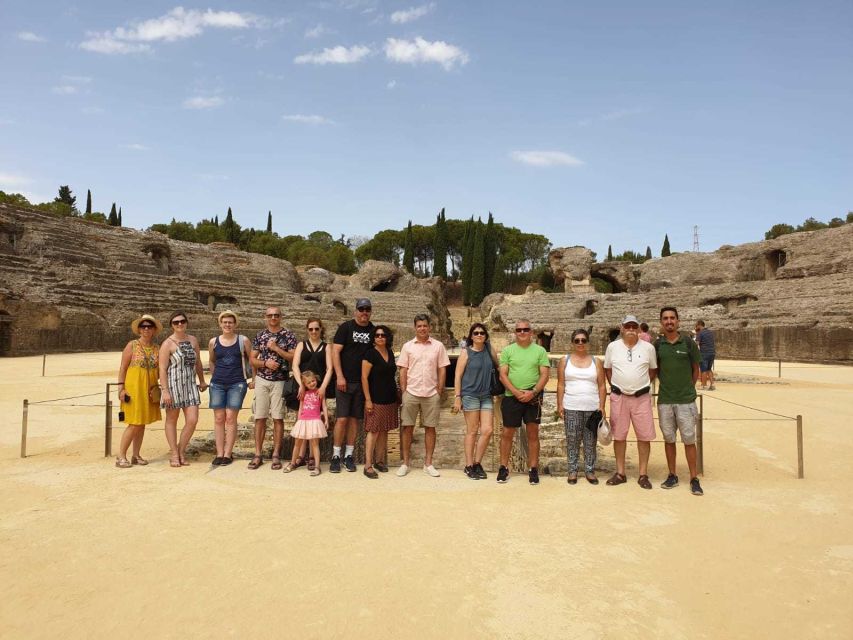
I would book this tour if you want a short, well-organized introduction to one of Andalusia’s most important Roman sites. The combination of the amphitheater, detailed mosaics, imperial connections, and a strong local guide gives the visit more substance than a quick photo stop.
The best reason to choose it is the explanation. Guides such as Manuel, Carlos, Jesus, Barbara, Juanra, and Miguel have helped turn the ruins into an understandable story, and clear English has been a repeated strength. The main cautions are group size, possible multilingual delays, and the lack of included transport.
Book it if you value context and want the ticket arrangements handled for you. Choose a private or small-group departure if you want more time for questions. If you prefer complete freedom, you can still visit Italica independently, but you will lose the guided stories that make the mosaics, streets, and amphitheater easier to read.
FAQ
Where does the Italica tour meet?
The meeting point is at the main entrance to the Italica archaeological site, Avenida de Extremadura 2, 41970 Santiponce, Seville.
How long does the tour last?
The tour lasts two hours. About 15 minutes is devoted to the amphitheater, followed by roughly 75 minutes exploring the wider Italica site, with time for transitions and photos.
Is transportation from Seville included?
No. Transportation to the meeting point is not included, so you must arrange your own way to the entrance in Santiponce.
What languages are available?
The tour is available in Spanish, English, French, and Italian. French and Italian departures require a minimum number of participants. If that number is not reached, you may be offered another language or a full refund.
Does the price include admission to Italica?
Yes. The price includes a skip-the-line entrance ticket and a local guide. Food and drinks are not included.
Can I cancel the booking?
You can cancel up to 24 hours in advance for a full refund. The activity also allows you to reserve now and pay later.
Recently added around Seville
- Seville: Alcázar Fast-Track Access with Guided Tour★ 4.2 · 432 reviews
- Seville: Small Group Jewish Quarter Tour with Tapas & Drinks★ 5.0 · 119 reviews
- Seville: Sunset Roof Top Walking Tour★ 4.5 · 122 reviews
- Seville: Small-Group Jewish Quarter Discovery Walking Tour★ 4.9 · 499 reviews
- Seville: VIP Exclusive Early Access Tour of The Alcazar★ 4.8 · 276 reviews
- Seville: Authentic and Romantic Horse-Drawn Carriage Ride★ 4.5 · 341 reviews
- Seville: Sunset and Evening Paddle Boarding Tour★ 4.8 · 355 reviews
- Seville: Tapas, Taverns and History Guided Walking Tour★ 4.9 · 515 reviews
City Tours, compared.



City Sightseeing Barcelona Hop-On Hop-Off Bus Tour: 24 or 48-Hour
Read our review →


Granada City Train 1 or 2-Day Hop-On Hop-Off Ticket
Read our review →

Barcelona City Tour Hop-On Hop-Off with Optional Boat
Read our review →Browse the lists this tour appears in