
Reviewed · WALKING TOURS
Private Barcelona Old Town and Gothic Quarter Walking Tour
Barcelona’s oldest streets are best read slowly, and this private walk gives you a guide to do the reading. In about two and a half hours, you move from Roman Barcelona to medieval squares, La Rambla, Boqueria Market, and the Born District. Guides such as Montse, Isabel, Olga, and Baggio have been praised for turning dates and stonework into clear, lively stories.
I like the private format, since you can ask questions, change the pace, and spend more time on places that catch your eye. I also like the practical advice: guides have pointed people toward local tapas, authentic flamenco, shops, and places worth returning to later. The main caution is that the tour covers a lot of ground, and the meeting-time information can be confusing, so confirm the exact start time before you go.
Key points at a glance
- Roman walls beneath modern Barcelona: Ciutat Vella and the Gothic Quarter reveal the city’s earliest layers through alleys, columns, and old defensive remains.
- A private guide, not a fixed script: Your group alone takes part, allowing the route and explanations to fit your interests and walking pace.
- Nine major sights in one walk: The route includes La Rambla, Boqueria Market, Barcelona Cathedral, Plaça del Rei, Plaça Reial, and Santa Maria del Mar.
- Strong local guidance: Guides including Isabel, Montse, Olga, Alba, Juan, and Baggio have been praised for humor, clear explanations, and personal attention.
- A useful first-day orientation: You finish in El Born, with a better sense of where to eat, what to revisit, and how Barcelona’s past connects to Catalonia today.
- Plan for city walking: Food and drinks are not included, hotel transport is not provided, and the tour lasts about 2 hours 30 minutes.
From Roman Barcelona into Ciutat Vella
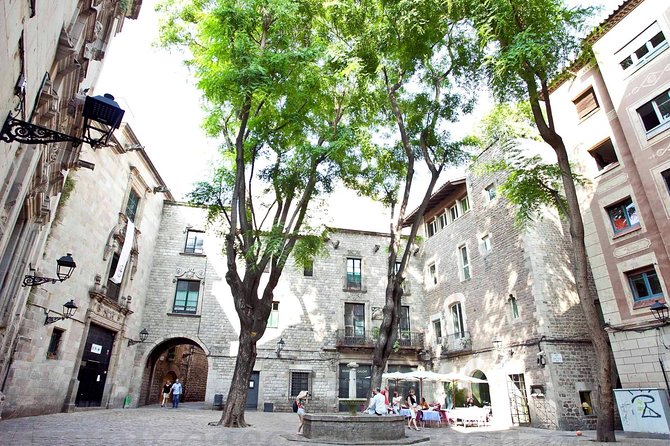
The tour begins in Ciutat Vella, Barcelona’s old city. This is where the city’s earliest story comes into focus, with narrow lanes and traces of Roman Barcelona tucked among later buildings.
Your guide will help you look past the polished surfaces. The old streets can seem like a maze if you walk them alone, but their bends and tight passages begin to make sense when you hear how the city grew. The antique feel is part of the fun, though the setting is not a preserved medieval village. Modern buildings and later repairs sit beside ancient remains.
The first section is listed at about 30 minutes. That is enough time to get your bearings and hear the basic story without turning the walk into a lecture. Guides have been especially good at answering questions about the city’s past, rather than simply reciting facts.
This is also where a private tour earns its keep. If Roman Barcelona interests you, you can ask for more context. If your group would rather focus on food, Catalan politics, or architecture, you can steer the conversation in that direction.
More Private Tours in Barcelona
- Tour Welcome Barcelona with Local Guide in Eco Tuk Tuk Private
★ 5.0 · 1,882 reviews - Barcelona Private Tour by Sidecar Motorcycle
★ 5.0 · 1,750 reviews - Barcelona Helicopter, Sailboat & Old Town Private Walking Tour
★ 5.0 · 1,395 reviews
Gothic Quarter details that are easy to miss
The Gothic Quarter, or Barri Gòtic, occupies the center of the walk. It grew around the old Roman settlement, and its lanes mix ancient traces with buildings from much later periods. That blend can be confusing at first. Your guide’s job is to explain which parts are genuinely old, which were altered, and how the district became the place you see today.
I like this part of the route because it gives you both history and present-day Barcelona. Small boutiques, bars, restaurants, and busy pedestrian lanes fill the old streets. You are not walking through a museum. You are passing through a working neighborhood with layers of age under your feet.
The route can include Roman walls, columns, an old aqueduct, the former city boundary, St. Jordi’s door, and Barcelona’s photomosaic tile wall. These are easy to pass without noticing. A guide such as Montse has also used the walk to explain the city’s old influential families, Catalan identity, and Barcelona’s relationship with Madrid.
That wider context matters. You may see a fine church or an old wall on your own, but the political and cultural story helps you understand why the city feels distinct within Spain. Several guides have been praised for making Catalan history clear without burying you in dates.
Barcelona Cathedral and the story of Saint Eulalia
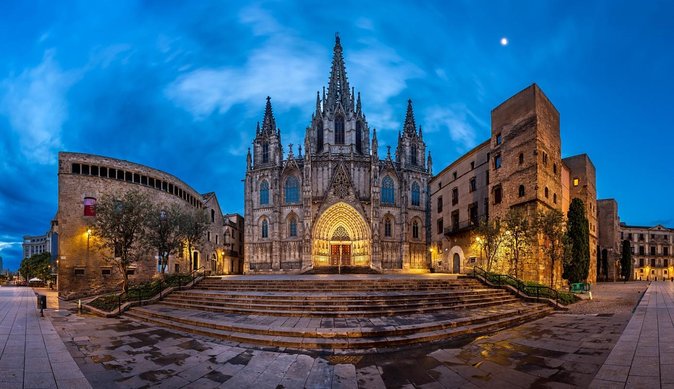
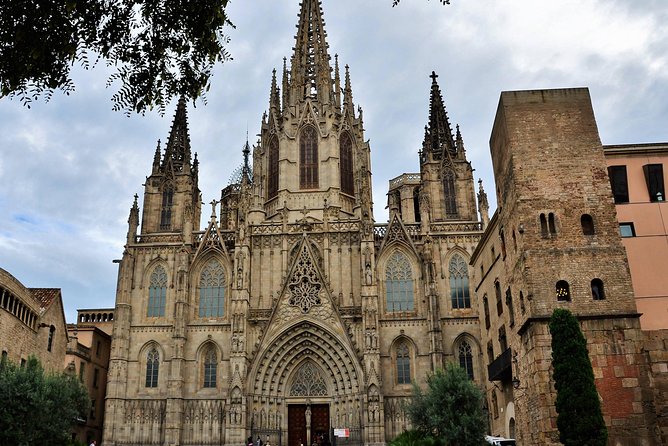
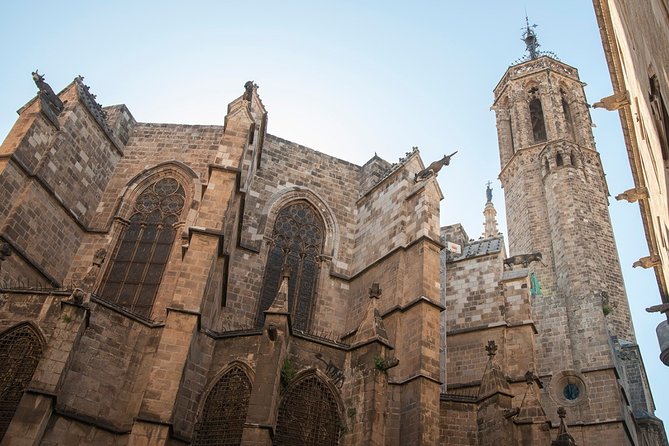
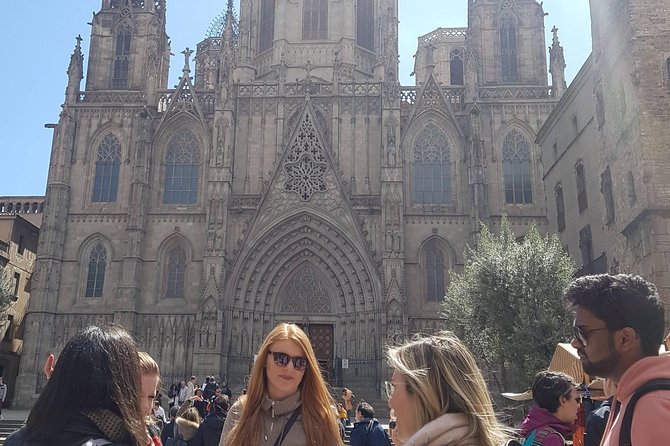
Barcelona Cathedral is one of the route’s major landmarks. You will pass by and admire its towers and gargoyles, with the building dedicated to Saint Eulalia, a young saint associated with the city. It is also the seat of Barcelona’s archbishopric.
The tour information describes an exterior visit rather than a guaranteed entrance. That distinction matters. If you want to see the interior, ask your guide what is possible on your date, but do not book this walk expecting an included cathedral admission.
The outside gives you plenty to discuss. Gargoyles draw the eye, while the cathedral’s position in the old quarter helps show how religious and civic life once centered on the same compact area. Your guide can put the building in context with the streets and squares around it.
La Rambla and the Boqueria pause
From the old quarter, the walk reaches La Rambla, Barcelona’s famous pedestrian boulevard. This is the most open and people-focused part of the route, with street performers, cafés, food shops, and a constant flow of activity.
La Rambla is worth seeing, but it is also where you should keep your attention on your belongings and your group. The street can feel crowded, and it is less intimate than the Gothic lanes. The benefit of having a private guide here is simple: you are less likely to drift past the wrong entrance or miss the explanation while looking around.
The route passes in front of La Boqueria, Barcelona’s best-known food market. Its colorful stalls show off Catalan ingredients and food traditions, including the cured Iberian ham associated with Spain. The market is a visual stop first. Food and drinks are not included, so plan to pay separately if you want to sample anything.
A guide can also help you decide what deserves a closer look later. That is useful because Boqueria can feel overwhelming on a first visit. You may prefer to return when you are not trying to keep up with a walking group.
One guide, Berta, has also combined local food explanations with a tapas route. That is a separate food-focused experience, not something you should assume is included here. Still, it shows the kind of practical food advice you may get from a guide who knows the city beyond its monuments.
More Walking Tours in Barcelona
- Barcelona Tapas and Wine Experience Small-Group Walking Tour
★ 5.0 · 5,804 reviews - Barcelona: Tapas Walking Tour with Food, Wine, and History
★ 4.8 · 4,261 reviews - Barcelona Tapas Walking Tour: Food, Wine & History
★ 4.5 · 1,928 reviews - Barcelona: Tapas Food Crawl Walking Tour with Tastings
★ 4.9 · 1,798 reviews
Plaça de Sant Jaume and Catalan public life
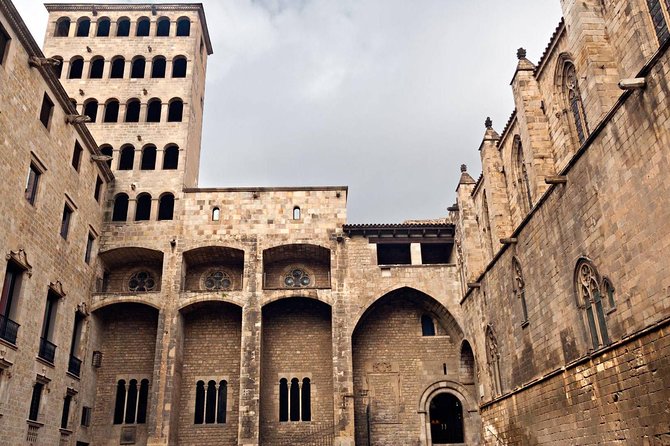
Plaça de Sant Jaume is one of Barcelona’s oldest and most important squares. It remains a center of political life in Catalonia, making it a useful place to discuss the region’s identity and its relationship with the wider Spanish state.
This stop gives the walk more weight than a simple architecture tour. You are not only looking at façades. You are hearing why the square still matters and how Barcelona’s past continues to shape public life.
For me, this is where a good guide can make a real difference. Montse, for example, has been praised for explaining Catalonia’s complicated place within Spain in a way that left people with a clearer understanding of the city. If current culture and politics interest you, say so early. The private format makes that sort of adjustment possible.
Plaça Reial and Plaça del Rei
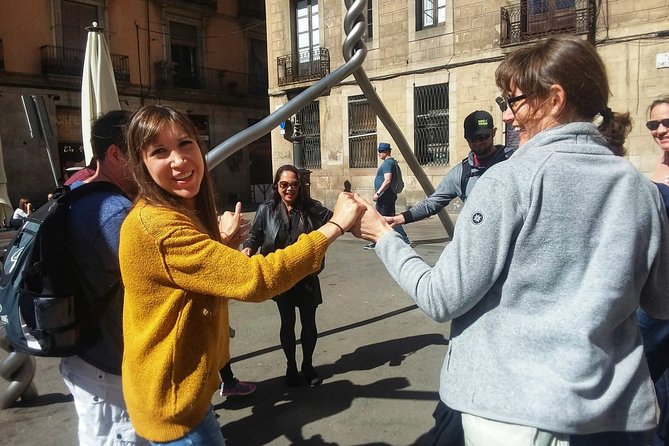
Plaça Reial offers a change of mood. Palm trees, elegant lampposts, a fountain, and yellow-walled buildings give the square a graceful, open feel. It is a popular place to pause, take photographs, and watch the old quarter shift from narrow lanes to a broad public space.
The square also shows how Barcelona’s old center has been adapted for modern life. Restaurants and nightlife sit around a space with a strong architectural identity. Your guide may help you distinguish the polished appearance from the older streets nearby.
Plaça del Rei is quieter and more medieval in character. The Royal Palace and nearby buildings enclose a contained square where the city’s medieval past feels close. This is one of the better places on the route for understanding Barcelona as a royal and commercial center rather than only a modern destination.
The contrast between Plaça Reial and Plaça del Rei is valuable. One feels social and open, while the other is more solemn and enclosed. Together they show how different public spaces can exist within a short walk of one another.
Santa Maria del Mar and the Born District finish
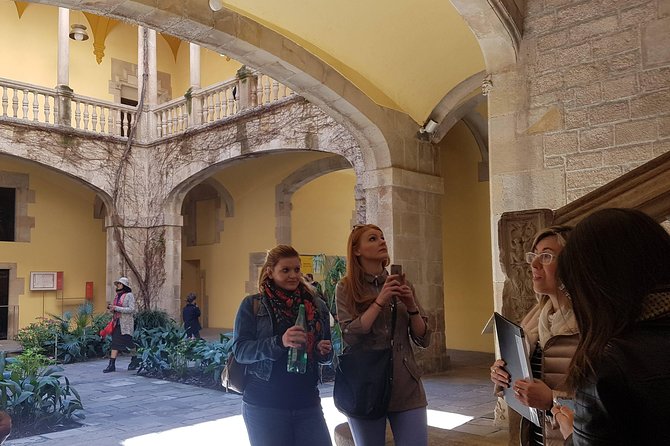
The route ends in the Born District, at Passeig del Born, after passing Basilica de Santa Maria del Mar. This church is a major example of Catalan Gothic architecture and is closely tied to the effort of Barcelona’s citizens who helped build it.
The basilica is not just another grand church. Its meaning comes from the people and working community connected with its construction. Your guide can explain why it matters in Catalan culture and how it fits into the old city’s commercial and religious life.
The end point in El Born is practical. You are left in an area with restaurants, bars, and small shops, so you can continue exploring or stop for lunch. The tour does not include a meal, but guides often offer useful suggestions. One guide, Montse, has pointed people toward fresh local tapas after the walk, while other guides have shared tips about shops and evening activities.
The itinerary lists the Old Town, Gothic Quarter, and Born District as part of the main visit. That is a lot for 2 hours 30 minutes. You should expect an overview with selected details, not a slow examination of every church, street, or market stall.
What the private format is really worth
The price is $96.75 per person. That is a serious amount for a walking tour, especially if you are traveling alone or as a couple. The value improves when you want private attention, have specific interests, or are traveling with family and want to set the pace.
The group discount may also make the cost easier to justify for a larger party, though the exact discount depends on the booking. Since only your group participates, you are not paying for a large public group experience with a fixed script. You are paying for the guide’s time and the ability to ask questions throughout.
I would especially consider it for a first visit to Barcelona. A good introduction can save you time later, helping you decide which churches, markets, squares, and neighborhoods deserve a second look. The tour also suits families. Baggio was praised for making the history accessible to a child without talking down to anyone, and Isabel was noted for making a quieter family feel comfortable.
It may be less useful if you already know the Gothic Quarter well or prefer to wander without a schedule. It is also not the right choice if your priority is interior access to major monuments, since the listed stops focus on passing by and explaining them rather than including admissions.
Guides, pace, and the human side of the walk
The guide is the most important variable in a private tour. The named guides associated with this experience include Steven, Baggio, Montse, Joris, Juan, Isabel, Jose Carlos, Olga, Nilufar, Alba, Miguel, Stephanie, Antonio, Katty, Edward, Berta, Ane, Adriano, Elvida, Oliver, and Donnatella.
The strongest pattern is clear: guides are valued for clear history, humor, warmth, and the ability to adjust the route. Steven’s humor helped keep the history light. Joris used a moderate pace and did not overload the group with facts. Jose Carlos tailored the walk to the group’s interests and time. Alba avoided the heaviest crowds and used emotion and humor to make the past easier to follow.
You can also expect occasional changes if a guide is unavailable. Donnatella stepped in for a sick guide and still delivered a well-received walk. That is reassuring, though your experience will naturally depend on the person assigned to your group.
The pace is generally manageable, but this is still a long urban walk. One person described it as a long tour and advised eating beforehand. That is sensible. There is no included food or drink break, and the route crosses several busy areas.
Meeting point, timing, and useful planning
The stated duration is about 2 hours 30 minutes. The starting location is listed as Carrer de Fontanella, 2, in Ciutat Vella, while the tour description also refers to a central meeting point at Plaça de Catalunya. The end point is Passeig del Born in El Born.
Because the meeting information is presented in more than one way, confirm the exact meeting spot and start time after booking. One person arrived for a stated 9 a.m. start and was told the tour normally began at 9:30. That sort of mismatch can spoil an otherwise good morning.
Wear comfortable walking shoes and eat before you set out. There is no hotel pickup or drop-off, so you will need to reach the starting point on your own and arrange your own return. The route is near public transportation, and service animals are allowed. Most people can participate, but children must be accompanied by an adult.
The tour is offered in English, with other languages available by request. Confirmation is sent at booking. Free cancellation is available up to 24 hours before the start time, while changes or cancellations inside that window are not accepted for a refund.
Who should book this Barcelona walk?
I would book this tour if you want a well-organized first look at Barcelona’s oldest districts, especially if you value conversation over a recorded audio guide. It is a good fit for families, first-time visitors, and anyone who wants help connecting Roman remains, Gothic churches, Catalan politics, and modern street life.
I would also consider it if you have already visited Barcelona but missed the smaller details. Antonio adjusted the walk for a group that had seen the main sights before, and Katty was praised for pointing out places that would have been easy to miss alone.
Think twice if you want a food tour, a cathedral interior visit, or a slow architectural study. Food is not included, and the broad route means you will see many landmarks from the outside. For the strongest value, book it early in your stay, confirm the meeting details, and tell your guide what you care about before the first street.
FAQ
How long is the private Barcelona Old Town tour?
The tour lasts approximately 2 hours 30 minutes.
How much does the tour cost?
The listed price is $96.75 per person. Group discounts are available.
Where does the tour start?
The listed start address is Carrer de Fontanella, 2, Ciutat Vella, Barcelona. The tour information also refers to Plaça de Catalunya as the central meeting area, so confirm the exact meeting point after booking.
Where does the tour finish?
The tour ends at Passeig del Born in Barcelona’s Born District.
What sights are included?
The route includes Ciutat Vella, the Gothic Quarter, La Rambla, La Boqueria, Barcelona Cathedral, Basilica de Santa Maria del Mar, Plaça de Sant Jaume, Plaça Reial, and Plaça del Rei.
Is this a private tour?
Yes. Only your group participates, and the guide can adjust the pace and discussion to your interests.
Is food included?
No. Food and drinks are not included. Hotel pickup and drop-off are also not included.
Can children join the tour?
Yes. Children must be accompanied by an adult. The child rate applies when sharing with two paying adults. The first child is free, and the second and later children are charged at 50 percent of the price based on two adults.
Can I cancel for a refund?
Yes. You can cancel up to 24 hours before the experience for a full refund. Cancellations or changes made less than 24 hours before the start time are not refunded.
More Gothic Quarter Walks
- Barcelona Gothic Quarter Tapas & Taverns Food & Wine Tour
★ 5.0 · 1,470 reviews - Barcelona: Gothic Quarter Ghosts and Legends Walking Tour
★ 4.7 · 1,443 reviews - Barcelona: Old Town and Gothic Quarter Walking Tour
★ 4.8 · 1,393 reviews - Barcelona Old Town & Gothic Quarter Small Group Tour
★ 5.0 · 1,308 reviews
Recently added around Barcelona
- Park Guell Guided Tour with Skip the Line Tickets★ 4.0 · 739 reviews
- Entrance to the Mirador Torre Glories Barcelona★ 4.5 · 193 reviews
- Bohemian Barcelona Neighborhood Evening Tapas & Wine Tour★ 5.0 · 419 reviews
- Transfers From Cruise Port to Barcelona Airport★ 4.5 · 155 reviews
- Authentic Flamenco Show Barcelona : Intimate Casa Sors Experience★ 5.0 · 809 reviews
- Barcelona Expert Tour with Local Guide in Eco Tuk Tuk Private★ 5.0 · 216 reviews
- Barcelona Sunset Cruise with Light Snacks and Open Bar★ 5.0 · 476 reviews
- Barcelona: Sagrada Familia, Park Guell & Tapas Private Tour★ 5.0 · 903 reviews
Walking Tours, compared.

Barcelona Tapas and Wine Experience Small-Group Walking Tour
Read our review →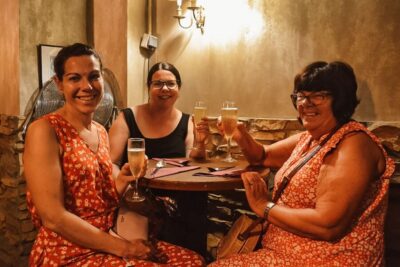
Tapas Walking Tour with Food, Wine, and History
Read our review →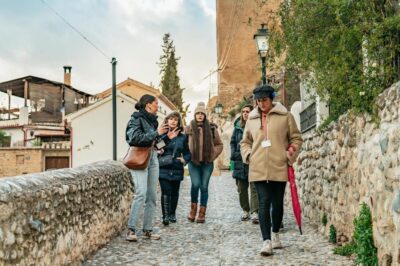
Albaicín and Sacromonte Guided Sunset Walking Tour
Read our review →
Toledo Tour & Vineyard Walk with Wine Tasting from Madrid
Read our review →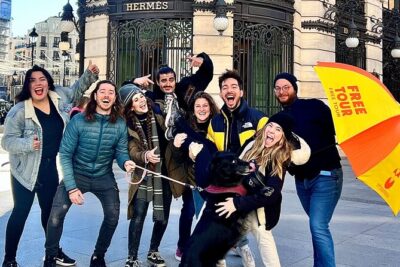
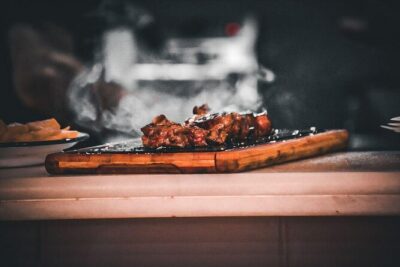
Barcelona Tapas Walking Tour: Food, Wine & History
Read our review →
Madrid Old Town & Royal Palace Walking Tour Skip the Line Ticket
Read our review →
Browse the lists this tour appears in