
Reviewed · WALKING TOURS
Old town walking tour in a small group
Santiago de Compostela’s old town is compact, handsome, and full of details that are easy to miss on your own. This small-group walking tour begins at Praza do Obradoiro, then works around the cathedral’s four great squares before heading to Plaza Cervantes and the Abastos Food Market. Guides such as Carolina, Irene, Maria, and Caroline bring the city’s stories to life with humor and useful local advice.
I like the $7 price, which makes this one of the easiest ways to get your bearings, and I like the route’s focus on both famous monuments and everyday Santiago, especially the market. The main drawback is time: one hour can feel brisk, and even the longer version at 1.5 hours may leave you wishing for more cathedral detail. Also, check the umbrella color before you go, since the instructions mention both blue and orange.
Key points to know before booking
- The route starts at Praza do Obradoiro: You begin in front of Santiago Cathedral, the natural stage for understanding the city.
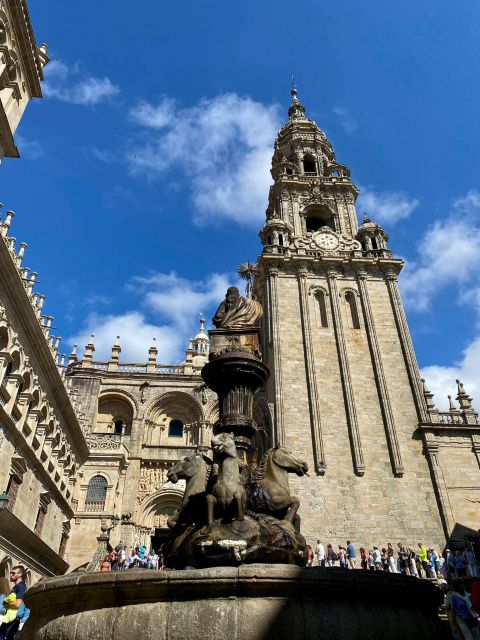
- Four cathedral squares are included: Platerías, Quintana, Inmaculada, and Obradoiro each offer a different view and story.
- The Abastos Food Market adds local flavor: This is not only a monument walk. You also get a look at Santiago’s daily food culture.
- Guides bring different strengths: Carolina is praised for humor and detailed cathedral knowledge, while Irene and Maria are noted for warm, lively explanations.
- The tour is short and practical: Expect roughly 1 to 1.5 hours, with advice on restaurants, the apostle’s tomb, and other sights.
- It is a strong value at $7: The price is modest, cancellation is free up to 24 hours ahead, and you can reserve without paying immediately.
Why this short Santiago walk works so well
The first thing this tour gets right is its scale. Santiago de Compostela’s historic center is made for walking, but its narrow lanes and stone-fronted squares can feel confusing when you first arrive. A guide gives you a simple framework: begin at the cathedral, understand the surrounding squares, then move outward toward the market and old streets.
That order matters. You see the city’s grand religious center first, then connect it to daily life. Instead of spending the whole tour looking at façades from a distance, you finish among the places where residents shop, eat, and move through town.
The price also changes the decision. At $7 per person, you are not committing a large part of your sightseeing budget. You are paying for a local orientation, a short history lesson, and the chance to ask questions before exploring on your own. Several guides also offer restaurant suggestions and practical timing advice for cathedral visits.
The tour has earned a 4.8 rating from 149 reviews, with praise concentrated on the guides’ warmth, clear English, humor, and ability to explain a lot without making the walk feel like a lecture. That does not mean every guide has the same style. Some are more animated, while others use a calmer, story-led approach. The overall format is best for you if you want a friendly introduction rather than a highly specialized architectural tour.
More Walking Tours in Santiago de Compostela:
- Barcelona Tapas and Wine Experience Small-Group Walking Tour
★ 5.0 · 5,804 reviews - Barcelona: Tapas Walking Tour with Food, Wine, and History
★ 4.8 · 4,261 reviews - Granada: Albaicín and Sacromonte Guided Sunset Walking Tour
★ 4.9 · 2,962 reviews
Starting at Praza do Obradoiro
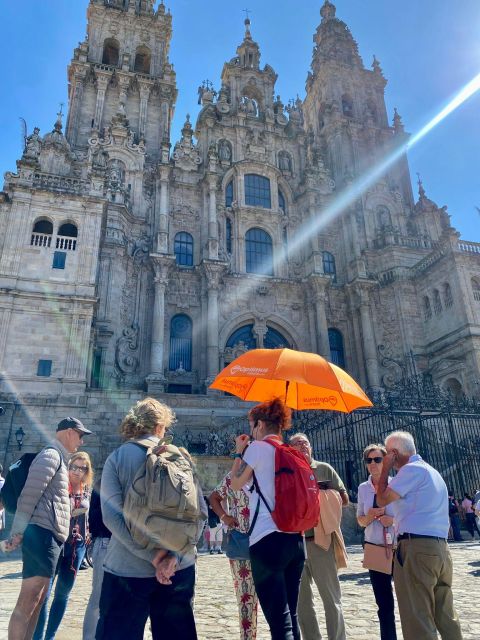
Meet your guide at Praza do Obradoiro, the broad square in front of Santiago Cathedral. The meeting point is easy to recognize, but the guide is identified by an umbrella. The instructions refer to a blue umbrella in one place and an orange umbrella elsewhere, so I would confirm the current color when booking or arrive a little early and ask around if needed.
You are asked to arrive 10 minutes before the start. That is sensible here. The square can be busy, and a late arrival may be hard to fix once the group has moved into the old town.
Praza do Obradoiro is more than a starting point. It is where the city’s religious, civic, and historic sides meet. The cathedral dominates one edge, while grand buildings frame the rest of the square. Your guide uses this space to explain Santiago’s role as a major destination for pilgrims and to set up the stories you will hear throughout the walk.
This is also where you can ask the questions that shape the rest of your visit. If you want to know how to see the apostle’s tomb, when to visit a particular part of the cathedral, or where to eat later, ask early. A few people used their guide’s advice about lining up to hug the apostle and visit the tomb, saving time during the rest of their stay.
The cathedral squares, four views of Santiago
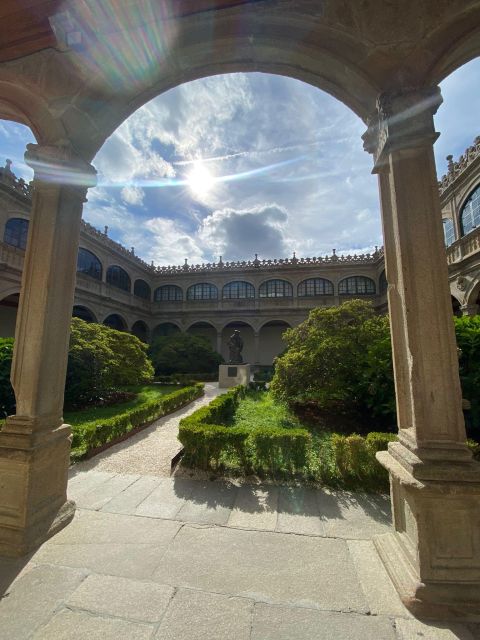
The route continues around the cathedral through Plaza de Platerías, Plaza de Quintana, and Plaza de la Inmaculada, along with the starting square. Each space gives you a different angle on the building and on the city’s development.
Plaza de Platerías is named for the silversmiths who once worked nearby. From here, the cathedral presents a more detailed and intimate face than the enormous front seen from Obradoiro. This is the sort of place where a guide can point out carvings, changes in building style, and small details you might pass without noticing.
Plaza de Quintana has a different feel. Its steps and open stone surfaces make the cathedral seem both close and imposing. The square carries layers of religious and civic history, and it is a good place to hear about the traditions connected with Santiago.
Plaza de la Inmaculada gives you another approach, with the cathedral and surrounding buildings creating a more enclosed urban setting. The sequence of squares helps you understand that the cathedral is not one isolated façade. It is the center of a group of spaces, each designed and used in a different way.
The guides are particularly effective here when they mix architecture with human stories. Carolina is repeatedly praised for making cathedral information lively and funny, while Maria is noted for balancing cultural, historical, and architectural material without overwhelming the group. That balance matters because a short walk can easily become a list of dates and names.
You should not expect an exhaustive cathedral tour from this experience. The focus is on the exterior setting and the old town. If you want a detailed interior visit, a separate cathedral tour would be more suitable. This walk does, however, help you know what you are looking at before you go inside.
Plaza Cervantes and the change from monument to neighborhood
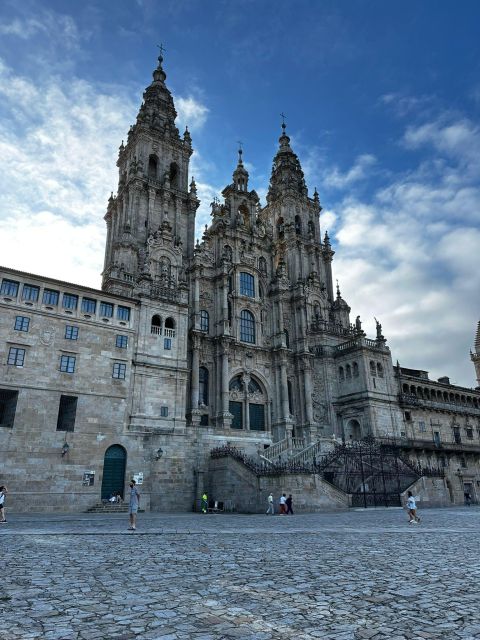
From the cathedral area, the tour reaches Plaza Cervantes. This is a useful transition point. You move away from the great religious complex and see how Santiago’s public life extends into ordinary streets and squares.
The guide can connect the plaza to the city’s civic past while showing you how the old town works as a lived-in place. You are still among historic stone buildings, but the focus shifts from grand architecture to movement, meeting places, shops, and food.
This part of the route is one reason I prefer the walk to a cathedral-only visit. Santiago is not just a pilgrimage destination or a collection of impressive monuments. The old town has a working rhythm, and Plaza Cervantes helps put the larger sights into context.
Guides also use this stretch to offer practical suggestions for the rest of your stay. Past participants particularly valued advice on restaurants and places to explore without a guide. You may want to keep your phone ready to note recommendations, since the tour moves at a steady pace and there may not be time to stop and discuss every option.
A few more Santiago de Compostela half-days worth comparing
- Santiago: Cathedral & Museum Tour + Pórtico of Glory Option
★ 4.7 · 2,116 reviews - From Santiago: Finisterre, Muxia & Costa da Morte Excursion
★ 4.7 · 1,481 reviews - Excursion to Finisterre + Muxia + Costa da Morte (7 stops)
★ 5.0 · 1,367 reviews - Finisterre and Costa da Morte: The Most Complete Tour of Santiago
★ 5.0 · 733 reviews
The Abastos Food Market, a more local stop
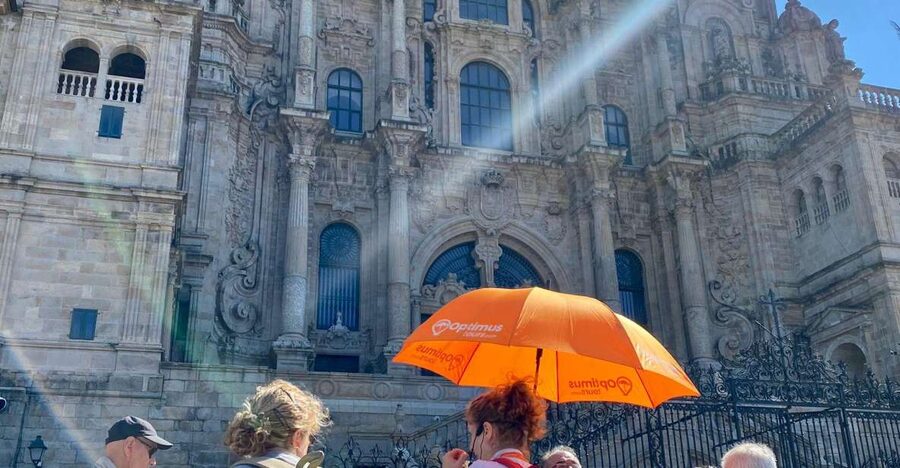
The Abastos Food Market gives the tour a welcome change of pace. Instead of looking only at stone walls and church façades, you see a place connected to Galicia’s food culture and everyday shopping.
The market is one of the most useful stops for anyone staying in Santiago for more than a few hours. Your guide can explain what makes the market important and help you understand its role in local life. The experience is not presented as a food tasting tour, so you should not book it expecting samples or a meal. Its value is in seeing a working market as part of the city’s identity.
This stop also makes the route feel more grounded. You have just spent time learning about sacred buildings and centuries of history. At the market, you get a reminder that Santiago is still a place where people buy food, meet friends, and go about their day.
The exact market experience may vary with opening times and the pace of the group, so treat it as a guided introduction rather than a long browsing session. If you want to shop or eat there, plan to return independently after the walk.
Ancient streets and the return to Obradoiro
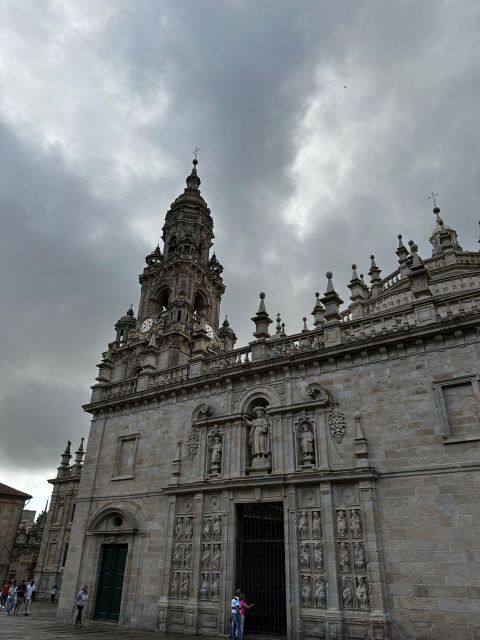
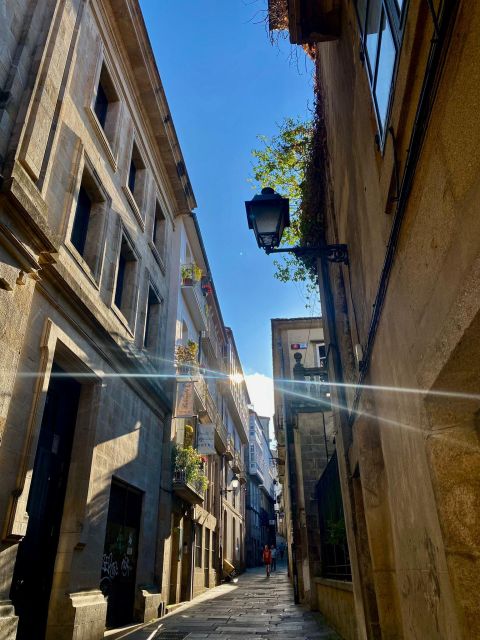
The final part takes you through Santiago’s old streets before returning to Praza do Obradoiro. These lanes are where a guide can be most helpful. The route may look simple on a map, but the stone passages, turns, and changing views make the old town easier to appreciate when someone explains what you are seeing.
You will likely notice the contrast between formal squares and narrower streets. The large spaces were built to display power and architecture. The lanes feel more personal and practical, with a sense of how people have moved through the center for generations.
The walk ends where it began, at Praza do Obradoiro. That makes the tour convenient if you have a cathedral visit, lunch, or another activity planned afterward. It also gives the tour a clear shape rather than leaving you at an unfamiliar corner of the old town.
Because the route is short, I would treat the ending as a starting point for your own exploration. You will have a better mental map, and you can return to the places that caught your attention. The guide’s suggestions may help you decide what deserves more time.
What the guides add to the experience
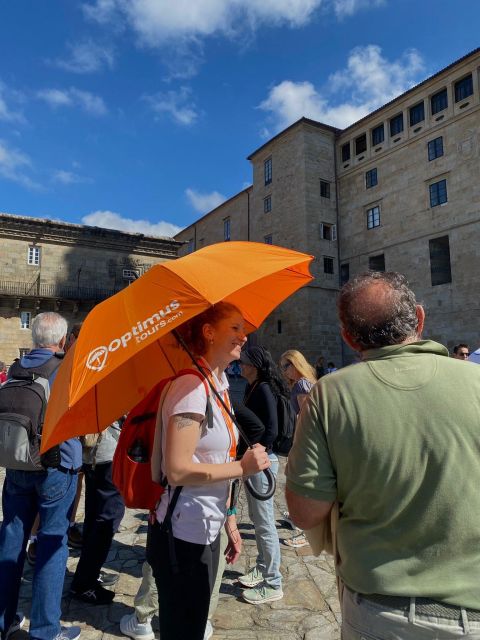
The strongest part of this activity is the guide-to-group connection. The guide is not simply reciting facts. The most praised guides use stories, humor, and conversation to make the information stick.
Carolina is repeatedly described as enthusiastic, funny, and especially strong on Santiago and the cathedral. Her explanations also include practical suggestions, such as how to plan a visit to the apostle’s tomb. Irene is praised for being lively and entertaining, with interesting historical facts and a good sense of humor. Maria is noted for her calm delivery, strong group management, and ability to invite questions while keeping the walk moving.
Other guides named in the feedback include Caroline, Miri, Sylvia, Marella, Blerta, and Veronica. That range tells you that the experience is guide-dependent, as any walking tour is. The common thread is an official guide speaking English or Spanish and presenting Santiago in a friendly, accessible way.
You should feel comfortable asking questions. Several guides are specifically praised for answering them and offering ideas for sights you can visit without a guide. If you prefer a silent, photography-focused walk, the steady commentary may feel like too much. If you want context and a human connection, it is a major benefit.
One practical note concerns sound. A single four-star report mentions poor sound from the speaking system. Most feedback praises the guides’ clear voices and English, but if your hearing is limited, stay close to the guide and ask to repeat anything you miss.
Timing, walking conditions, and accessibility
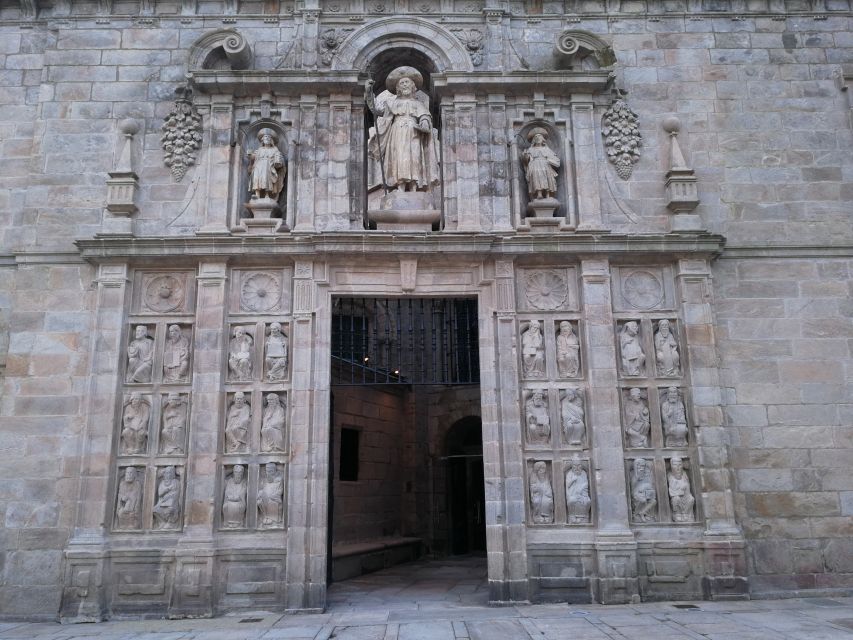
The advertised duration is 1 to 1.5 hours. Some departures may finish closer to one hour, especially in hot weather or when the group moves efficiently. One participant felt the shorter timing was ideal on a hot day, while others wished the introduction had lasted longer.
That range is useful when planning. You can fit the tour into a morning or afternoon without giving up half a day. At the same time, do not expect a slow, detailed examination of every monument. The guide has several stops to cover, so wear comfortable shoes and be ready to keep walking.
The experience is listed as wheelchair accessible. If you need precise information about surfaces, pauses, or access at a particular stop, contact the provider before booking, since the old town includes historic streets and public squares.
English and Spanish are available. The English-speaking guides have been praised for fluent, easy-to-follow delivery, but the group format means the amount of conversation and question time can depend on the size and pace of the group.
Is $7 a good value?
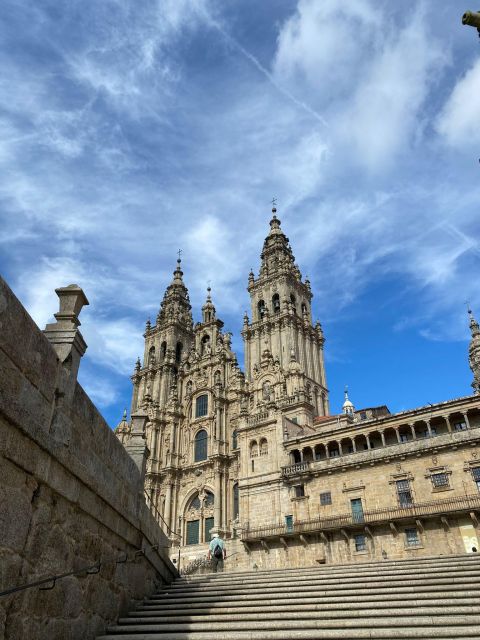
Yes, provided you understand what you are buying. This is not a long specialist tour, a private walk, or a full cathedral interior visit. It is a short orientation led by an official guide, covering the essential old-town sights and adding the market and local recommendations.
At $7, the tour offers unusually good value for a first look at Santiago. You get a route, historical context, answers to questions, and tips that may save you time later. The price is low enough that it can make sense even if you already plan to explore independently.
The strongest value comes from booking it early in your stay. Use the walk to decide where to return, which restaurants to try, and how to plan your cathedral visit. Booking it at the end of your trip would still be pleasant, but you would lose much of the practical benefit.
You can reserve now and pay later, which keeps your plans flexible. Cancellation is free up to 24 hours before the activity for a full refund. Those terms are helpful if your Santiago schedule depends on a pilgrimage arrival, train timing, or changing weather.
Who should book this old-town walk?
I would recommend it to first-time visitors, short-stay visitors, solo travelers who want an easy introduction, and anyone who enjoys history explained in plain language. It also suits people who want restaurant and sightseeing advice from a local guide rather than from a phone screen.
It is a particularly good fit if you have only one day in Santiago. The route covers the cathedral surroundings, Plaza Cervantes, the market, and old streets without taking up most of your schedule.
Families and mixed-age groups may also appreciate the short duration and light humor. The walk does not demand a full day of concentration, and the guides appear comfortable adapting their explanations and answering questions.
You may want something else if you want a highly detailed architectural study, a private tour, a food-focused market visit, or a long cathedral interior experience. In those cases, use this as an orientation and add a separate activity.
Should you book it?
Book this tour if you want a friendly, low-cost introduction to Santiago de Compostela that combines the cathedral squares with the food market and practical local tips. The best reasons to go are the excellent price, the short schedule, and the guides’ ability to make history clear and entertaining.
Go in with realistic expectations. You will see the key areas, but you will not examine every monument in detail. Arrive 10 minutes early, confirm the current umbrella color, stay close enough to hear the guide, and ask about the cathedral and food recommendations before the tour ends. For $7, this is an easy yes for most first visits.
FAQ
How long does the walking tour last?
The tour lasts about 1 to 1.5 hours. Some departures may be closer to one hour.
Where does the tour begin?
Meet your guide at Praza do Obradoiro, in front of Santiago de Compostela Cathedral.
How will I recognize the guide?
The meeting instructions say the guide will have an umbrella. One instruction identifies it as blue, while another says orange, so confirm the current color before the tour.
Which languages are available?
The live tour guide is available in English and Spanish.
Is the tour wheelchair accessible?
Yes, the activity is listed as wheelchair accessible.
Can I cancel or pay later?
You can cancel up to 24 hours in advance for a full refund. You can also reserve now and pay later.
Recently added around Santiago de Compostela
- Santiago: Guided Foodie Tour with Drinks, Tapas & Live Music★ 4.7 · 153 reviews
- Santiago Complete Tour: City, Portico and Cathedral Tickets★ 4.7 · 108 reviews
- Santiago de Compostela: Massage Treatment★ 4.8 · 170 reviews
- From Santiago: Excursion to Ribeira Sacra and Ourense★ 4.6 · 114 reviews
- Masaje del Peregrino★ 5.0 · 243 reviews
- Tapas Tour of Santiago de Compostela★ 4.5 · 191 reviews
- From Santiago: Finisterre, Muxia, Ézaro – 7 stops day tour★ 4.6 · 553 reviews
- Santiago de Compostela Cathedral and Museum Guided Tour★ 4.6 · 511 reviews
Walking Tours, compared.

Barcelona Tapas and Wine Experience Small-Group Walking Tour
Read our review →
Tapas Walking Tour with Food, Wine, and History
Read our review →
Albaicín and Sacromonte Guided Sunset Walking Tour
Read our review →
Toledo Tour & Vineyard Walk with Wine Tasting from Madrid
Read our review →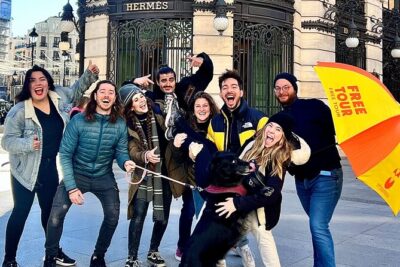

Barcelona Tapas Walking Tour: Food, Wine & History
Read our review →
Madrid Old Town & Royal Palace Walking Tour Skip the Line Ticket
Read our review →
Browse the lists this tour appears in