
Reviewed · SANTIAGO DE COMPOSTELA TOURS
Excursion to Finisterre + Muxia + Costa da Morte (7 stops)
Galicia’s Costa da Morte is a fitting final chapter to a Camino de Santiago journey. In one long day, you move from a medieval stone bridge to Atlantic shrines, the lighthouse at the old end of the world, a waterfall that reaches the sea, a giant granary, and a fishing port. Cape Finisterre and Muxía are the stars, but the smaller stops give the day its sense of place.
I especially like the wide range of sights and the fact that you can see in nine hours what would take several days on foot. I also like the practical value: transportation, a bilingual Spanish and English guide, air conditioning, and an audio guide are included for $59.26. The main drawback is the pace. This is a full coach excursion, not a relaxed private outing, and the bus ride can feel cramped on a busy departure.
- Ponte Maceira begins the day with a scenic bridge closely tied to the route toward Finisterre.
- Muxía’s Santuario da Virxe da Barca combines Atlantic views, legends, and Jacobean tradition.
- Cape Finisterre gives Camino walkers a symbolic finish at the lighthouse and kilometer zero.
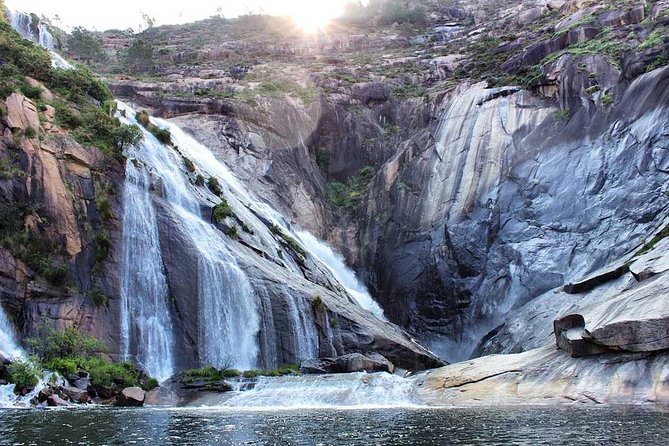
- The Ézaro waterfall is unusually dramatic, flowing directly into the ocean.
- Lunch is flexible but not included, with about 90 minutes in Finisterre town.
- The group can be large, so expect efficient sightseeing rather than a private tour.
Why this coastal day works after Santiago
Santiago de Compostela is often the end point people imagine when they plan the Camino. Yet the route traditionally continues toward Finisterre and Muxía, where pilgrims reach the Atlantic and the western edge of Galicia. This tour lets you make that final connection without walking the extra distance.
At about nine hours and 15 minutes, it is a long day. That is the trade-off for covering several widely separated places. You spend much of the day on the road, but the stops are frequent enough to break up the ride. I would plan it after your main Santiago sightseeing, not on the same day as an important evening commitment.
The price is strong for what is covered. You get private transportation for the group rather than relying on public buses, an air-conditioned vehicle, a Spanish and English guide, and an audio guide. Lunch, drinks, and gratuity cost extra. At this price, the experience is best viewed as an efficient regional overview, not a slow food tour or a private excursion.
Starting in Santiago at 8:45 or 9:00
The published start time is 9:00 a.m., but the first pickup at the Galicia Travels office on Rúa das Casas Reais is listed for 8:45. Other pickup points include the Chapel of the Pillar at 9:00 and the Exe Peregrino Hotel at 9:05.
Galicia Travels contacts you through WhatsApp one or two days before departure to confirm the point and time. Pay attention to that message. If you do not select or communicate a pickup location, the office on Rúa das Casas Reais 31 is the default, and you should arrive before 8:45.
The meeting point is central and designed to be easy to find, but the departure details matter because several pickup points are used. I would not rely only on the original booking confirmation. Check the WhatsApp message and keep your phone available the day before.
The vehicle is air-conditioned and generally clean and comfortable, but this is still a coach tour. One especially important point for tall passengers: a departure may have tight legroom, and the seats may not adjust. If you are over six feet tall, the long hours on the road deserve serious consideration.
A few more Santiago de Compostela half-days worth comparing
- Santiago: Cathedral & Museum Tour + Pórtico of Glory Option
★ 4.7 · 2,116 reviews - From Santiago: Finisterre, Muxia & Costa da Morte Excursion
★ 4.7 · 1,481 reviews - Finisterre and Costa da Morte: The Most Complete Tour of Santiago
★ 5.0 · 733 reviews
Ponte Maceira: a short opening with Camino meaning
The first stop is Ponte Maceira, a stone bridge in a beautiful setting with a strong connection to Santiago and the Camino route toward Finisterre. You have about 25 minutes here, with no admission fee.
That is enough time to see the bridge, take photographs, and get your first look at the rural side of Galicia. The stop is brief, so do not expect a long village visit or a major guided walk. Its value is mainly symbolic and scenic: the day begins by following the same westward direction taken by pilgrims continuing beyond Santiago.
I like this as an opening stop because it eases you into the day. It is less famous than Finisterre, but it gives the tour a clear Camino thread instead of treating the coast as a collection of unrelated photo stops.
Muxía and the stones of Virxe da Barca
The Santuario da Virxe da Barca is one of the more meaningful stops. The sanctuary sits beside the Atlantic and is tied to Jacobean tradition, local legends, and stories connected with the Apostle’s presence in Galicia before Christianity.
You have about 35 minutes, again with free admission. The setting is the main attraction: open sea, unusual rocks, and a religious site shaped by centuries of belief. The church is also associated with The Way, which makes it especially relevant if you have walked the Camino or seen the film.
This stop rewards curiosity. Listen to the guide’s explanation of the stones and the legends rather than treating the sanctuary as just another viewpoint. The visit is short, so you will not have time for a long independent exploration. Still, Muxía often feels more atmospheric than the schedule suggests because the site brings together the sea, pilgrimage, folklore, and Christian tradition.
Cape Finisterre and the lighthouse at kilometer zero
Cape Finisterre is the emotional center of the excursion. The ancient Romans regarded this western point as the end of the known world, and the modern Camino route gives it another meaning as kilometer zero on the road to the coast.
The stop lasts about 40 minutes and includes time around the lighthouse and the broad view over the Costa da Morte. You will want a camera, but do not spend every minute looking through it. The point of Finisterre is the act of standing at the edge, feeling the wind, and looking out across the Atlantic.
For anyone who walked from Porto or completed another section of the Camino, this can be a satisfying final marker. You may have reached Santiago days earlier, but Finisterre gives the journey a physical ending. If you did not walk the Camino, the stop still works because the site’s old end of the world identity is easy to understand.
Weather matters here. Fog, cloud, and rain are common possibilities on the Atlantic coast, and poor weather can lead to cancellation or a change of date. On a clear day, the views are the reward. On a gray day, the lighthouse and sea still have character, but visibility may be limited.
Same base in Santiago de Compostela, a completely different kind of day:
- From Santiago: Finisterre, Muxia, Ézaro – 7 stops day tour
★ 4.6 · 553 reviews - Santiago de Compostela: Finisterre, Muxia & Costa da Morte
★ 4.7 · 526 reviews - Santiago de Compostela Cathedral and Museum Guided Tour
★ 4.6 · 511 reviews - Visit to the Cathedral of Santiago + Portico de la Gloria Option
★ 4.5 · 503 reviews
Finisterre town and a useful 90-minute lunch break
After the cape, the tour gives you about one hour and 30 minutes in Finisterre town. The stop is described as a lunch break in the heart of town, with restaurants offering local food at suitable prices. Lunch is not included, so you can choose your own meal and budget.
This is one of the most useful parts of the schedule. You have enough time for a proper meal rather than a rushed sandwich, and the break gives you a chance to rest after the morning’s sightseeing. If you want seafood or another local dish, this is the obvious place to look, though the tour does not specify a restaurant or provide a meal reservation.
The long lunch stop also gives you flexibility. You can eat slowly, walk around town, or use the time for a swim if conditions and timing allow. One practical tip: if swimming is your goal, do not spend the entire break on a large meal. The stop is generous, but the day continues with several more visits.
Because the town stop is free time, you are responsible for watching the clock. A coach tour cannot wait for individual shoppers or late diners. I would confirm the meeting place with the guide before walking away from the group.
Ézaro Waterfall, where fresh water reaches the Atlantic
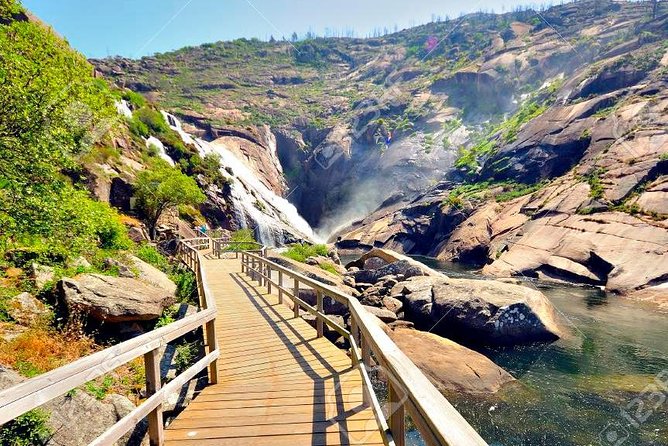
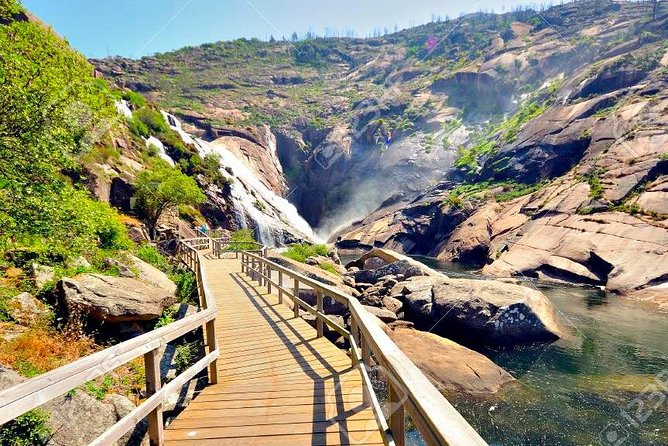
The Ézaro Waterfall is one of the tour’s most unusual natural sights. It is described as the only waterfall in continental Europe that flows directly into the ocean. It lies beside Mount Pindo, a mountain associated with ancient legends and pre-Roman peoples.
You have about 35 minutes here. That is enough for the main view and photographs, but not for a serious hike or long nature walk. The stop works because it adds something different to the day. After churches, bridges, lighthouses, and coastal villages, the waterfall changes the rhythm.
Mount Pindo gives the setting extra interest. Even if you do not have time to explore the mountain, the guide’s explanation can help you see why the place has such a strong role in Galician stories. This is a good example of the tour’s strength: it does not only chase the most famous viewpoint. It also includes a place with a distinct natural feature and local meaning.
Carnota’s giant horreo
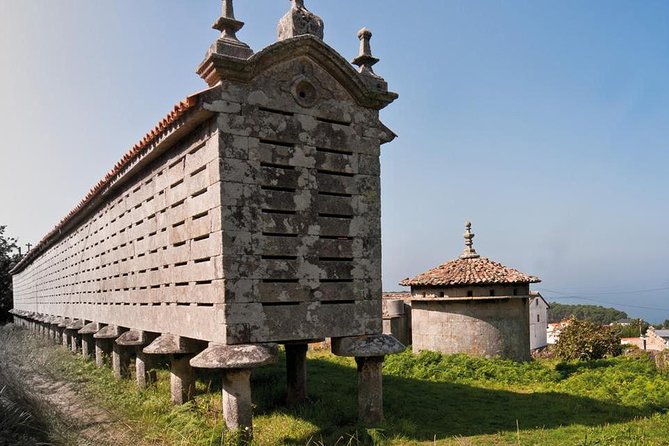
The visit to the Horreo de Carnota lasts about 15 minutes. You see one of Galicia’s longest traditional granaries and learn how this type of building worked within rural Galician culture.
Fifteen minutes is short, but the stop does not need much more unless you have a special interest in vernacular architecture. The granary’s long, raised structure is easy to appreciate quickly, and the guide provides the basic context.
This is a useful reminder that Galicia is not only about pilgrimage and the sea. The horreo belongs to everyday rural life, built to store crops and protect them from damp and animals. The visit may appeal most to people who enjoy architecture, farming traditions, and small details of regional life.
Muros, a final walk through an old port
The last stop is Muros, a former port connected with Santiago during the Middle Ages. You have about 25 minutes of free time to rest and visit the historic center before returning to Santiago.
This is a pleasant closing stop, though it is also the one most likely to feel optional after such a full day. Some people will enjoy the chance to stretch their legs and see another Galician town. Others may feel that the schedule has already delivered its best moments at Muxía, Finisterre, and Ézaro.
I would treat Muros as a final taste rather than a major visit. Twenty-five minutes is enough to walk a little, take in the old port atmosphere, and buy a drink if needed. It is not enough for a thorough look at the town, so keep your expectations in check.
A bilingual guide can shape the whole day
The guide speaks Spanish and English, and an audio guide is also included. The strongest departures have featured guides such as Ash, David, Noelle, Noel, Christian, Ana, and Jose, with praise for clear explanations, humor, helpful answers, and attentive service.
Guide quality can vary by departure, and bilingual tours require patience. Information may be given first in Spanish and then in English, which makes the stops feel shorter than the clock suggests. One particularly negative experience involved an English explanation that was too brief and difficult to understand, while other departures received strong marks for giving both languages equal attention.
That means you should book this tour expecting bilingual commentary, not a private English-only lecture. If you understand Spanish as well, you may find the delivery easier. If English is your only language, stay close to the guide and use the audio guide when available.
The best guides add value between stops by explaining Camino customs, village history, legends, and the meaning of the sites. Their work matters because several visits are brief. Without context, Ponte Maceira, Carnota, and Muxía could blur together. With good commentary, each stop has a clear purpose.
Coach comfort, group size, and what private transportation means
The advertised maximum is 50 participants, and the service uses private transportation for the tour group. That does not mean a private vehicle just for you. You are not riding a public bus, but you should expect a standard organized coach excursion.
Some departures have involved several large coaches, so the overall operation can feel substantial. The advantage is cost and coverage. The drawback is that every stop runs on a timetable, and getting a large group on and off the bus takes time.
The bus is air-conditioned, and departures have been described as clean and safe. Still, bring water and perhaps a small snack. Water and bus bathroom use may cost extra, and lunch is not included. Comfortable shoes are sensible because you will be stepping off repeatedly, even though the tour is not presented as a demanding walking excursion.
Who should book this Costa da Morte tour?
I would recommend it most strongly to:
- People who have completed the Camino and want to continue to Finisterre and Muxía.
- Anyone staying in Santiago without enough time to reach the coast independently.
- Visitors who want several major sights in one day without arranging trains, buses, and taxis.
- People who enjoy a mix of religious sites, local legends, natural scenery, and small towns.
- First-time visitors to Galicia who want a broad introduction beyond Santiago.
I would hesitate if you dislike long coach days, large groups, fixed schedules, or bilingual commentary. If you want to linger at Finisterre, eat slowly, or explore Muros in depth, a private tour would suit you better, but it would cost considerably more.
The tour is also less ideal for anyone expecting seven major attractions of equal importance. The headline stops are Muxía, Cape Finisterre, and Ézaro. Ponte Maceira, Carnota, and Muros are shorter visits that add context and variety, but they are not full excursions by themselves.
Should you book it?
Book this tour if you want maximum coastal coverage for a moderate price and accept the coach format. It is a particularly good fit after the Camino, when Finisterre feels like a meaningful final stop rather than just another lighthouse.
Do not book it expecting solitude, a private guide, or hours in each town. The day is long and carefully packed. For most people with only a few days in Santiago, that is exactly its value: one organized outing that reaches the Atlantic, includes the major Camino landmarks, and adds several distinctly Galician stops along the way.
Free cancellation is available up to 24 hours before departure. The trip depends on suitable weather and a minimum number of participants, so a cancellation caused by weather or low enrollment may result in another date or a full refund.
FAQ
How long does the excursion last?
The experience lasts approximately nine hours and 15 minutes, starting at about 9:00 a.m. and returning to the original meeting point in Santiago.
Is lunch included?
No. The tour allows about one hour and 30 minutes for lunch in Finisterre town, but you pay for your own meal.
Where does the tour depart from?
The default meeting point is the Galicia Travels office at Rúa das Casas Reais 31 in Santiago. Other listed pickup points are the Chapel of the Pillar and the Exe Peregrino Hotel. Galicia Travels confirms the details through WhatsApp one or two days before departure.
Is the tour private?
The transportation is private for the organized group, but the excursion is not a private tour for one person or one party. It can include up to 50 participants.
Are the guides English-speaking?
Yes. The tour is offered in English and includes a Spanish and English guide. An audio guide is also included.
Can I cancel for a full refund?
Yes, if you cancel at least 24 hours before the scheduled start time. Changes or cancellations made less than 24 hours in advance are not accepted for a refund.
Recently added around Santiago de Compostela
- Santiago: Guided Foodie Tour with Drinks, Tapas & Live Music★ 4.7 · 153 reviews
- Santiago Complete Tour: City, Portico and Cathedral Tickets★ 4.7 · 108 reviews
- Santiago de Compostela: Massage Treatment★ 4.8 · 170 reviews
- Old town walking tour in a small group★ 4.8 · 149 reviews
- From Santiago: Excursion to Ribeira Sacra and Ourense★ 4.6 · 114 reviews
- Tapas Tour of Santiago de Compostela★ 4.5 · 191 reviews
- From Santiago: Finisterre, Muxia, Ézaro – 7 stops day tour★ 4.6 · 553 reviews
- Santiago de Compostela Cathedral and Museum Guided Tour★ 4.6 · 511 reviews
Santiago de Compostela Tours, compared.
Santiago: Cathedral & Museum Tour + Pórtico of Glory Option
Read our review →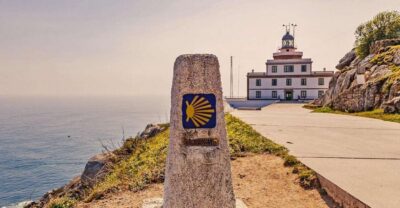
From Santiago: Finisterre, Muxia & Costa da Morte Excursion
Read our review →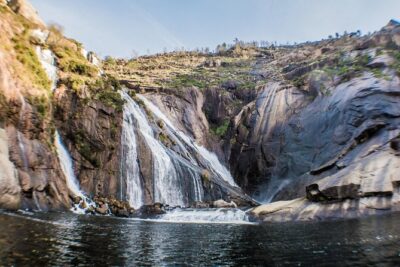
Finisterre and Costa da Morte: The Most Complete Tour of Santiago
Read our review →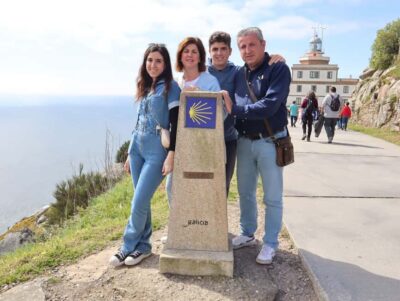
From Santiago: Finisterre, Muxia, Ézaro – 7 stops day tour
Read our review →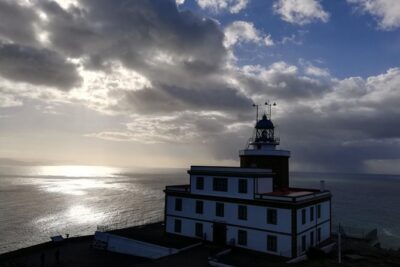
Santiago de Compostela Cathedral and Museum Guided Tour
Read our review →
Visit to the Cathedral of Santiago + Portico de la Gloria Option
Read our review →
Browse the lists this tour appears in