
Reviewed · CORDOBA TOURS
Córdoba: Guided Tour of Azahara Medina
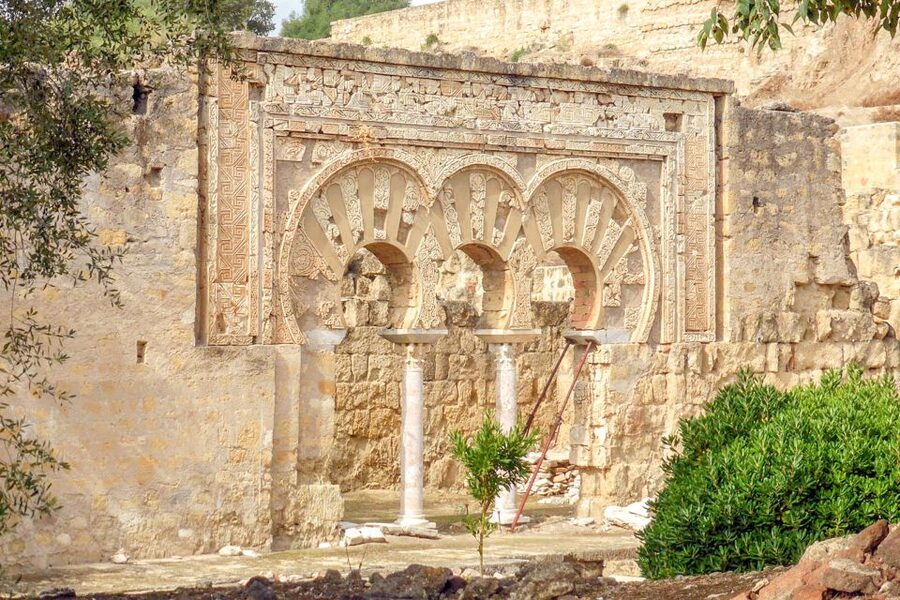
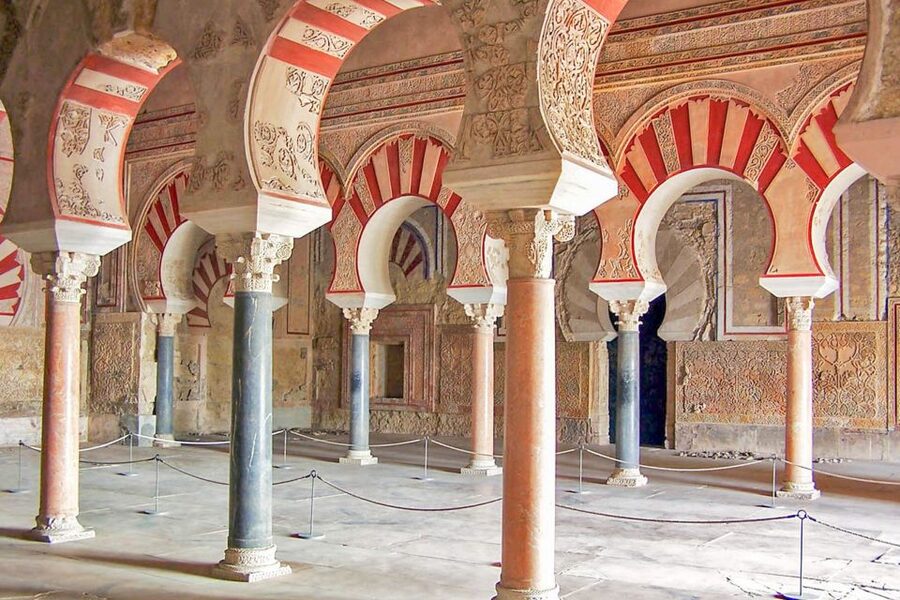
Medina Azahara is where Córdoba’s grand political story turns into sunlit stone. Built by Caliph Abd al-Rahman III in the 10th century, this palace-city once served as the seat of government and a public display of Umayyad power. I like the way this tour begins at the visitor center, where a film helps you picture the city before you meet the partly excavated ruins. I also like the guides’ storytelling, especially the way guides such as Emilio, Almudena, Maria, and Alejandro connect architecture with ordinary life.
The main consideration is the heat. Much of the visit is outdoors, with limited shade, and summer conditions can make a three-hour tour tiring. The bus option also requires careful attention to the meeting point in Córdoba, which some people find difficult to locate.
Key points to know before booking
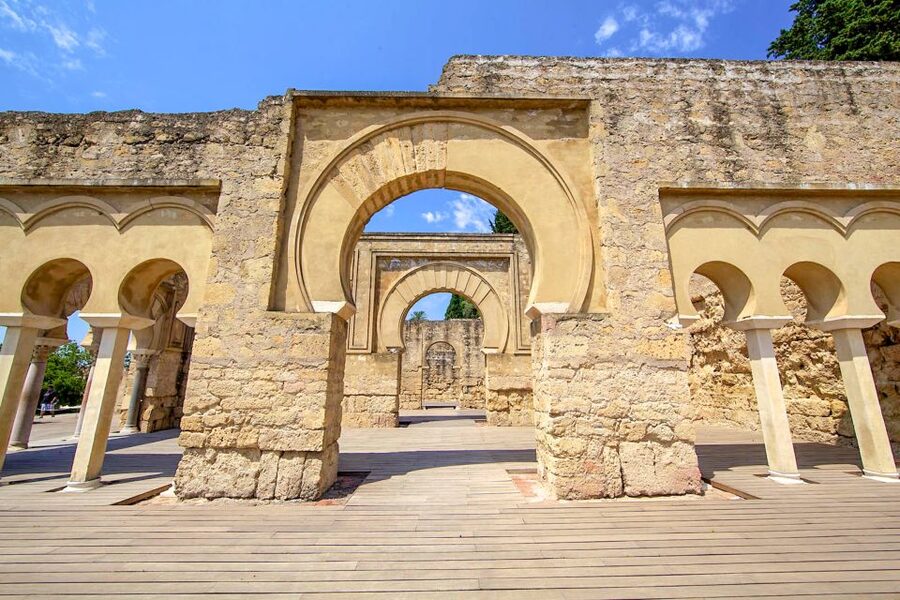
- A palace-city outside Córdoba: Visit the former government center of the Caliphate of Córdoba, about 5 miles, or 8 kilometers, from the city.
- A useful visitor-center introduction: See a film reconstruction and learn about Moorish Spain before walking among the ruins.
- Two transport choices: Choose a tour with transport from Córdoba, or meet at Medina Azahara and arrange your own way there.
- A guide makes the ruins readable: The site is only partly excavated, so explanations help you understand buildings that are no longer complete.
- Strong English and Spanish guiding: Guides including Emilio, Almudena, Maria, Alejandro, and Pilar have been praised for clear explanations, humor, and patience.
- Plan for sun: Bring comfortable shoes, a hat, drinks, and light, comfortable clothing.
Why Medina Azahara matters to Córdoba
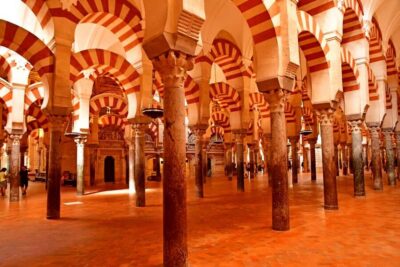
Córdoba’s famous mosque-cathedral tells one part of the city’s Islamic past. Medina Azahara adds another: it shows how the caliphate organized power, government, ceremony, and daily life beyond the old urban center.
Abd al-Rahman III ordered the palace-city in the early 10th century. Its Arabic name, Madinat al-Zahra, means brilliant city. The site was not simply a royal residence. It was designed as an official center of government and as a symbol of the caliph’s authority against his enemies.
That political purpose helps explain the scale and care of the buildings. You are not visiting a single palace with a tidy sequence of rooms. You are walking through the remains of a much larger urban complex, where officials, servants, rulers, and other residents once played different roles.
Only about 12 percent of the city has been excavated, according to information shared by a past visitor. That fact is important. You will see beautiful architectural remains, but you will also see open ground and incomplete sections. The site rewards imagination, and a guide helps supply the missing pieces without pretending the entire city is visible.
A few more Cordoba half-days worth comparing
- Córdoba: Skip-the-Ticket-Line Mosque-Cathedral Guided Tour
★ 4.6 · 9,634 reviews - Cordoba Mosque-Cathedral: Skip-the-Line Guided Tour
★ 4.7 · 6,610 reviews - Córdoba: Jewish Quarter, Mosque, and Alcázar Tour
★ 4.7 · 4,279 reviews
The visitor center gives you the missing map
The visitor center is one of the most valuable parts of the three-hour experience. Begin here instead of rushing straight to the ruins. You will learn about Moorish Spain and watch a film that virtually recreates Medina Azahara as it may have appeared in the 10th century.
That film matters because the remains can otherwise feel fragmented. A wall, terrace, doorway, or line of paving may not immediately tell you how the original rooms connected. The visual reconstruction gives you a working picture before the walking tour begins.
I would pay close attention to this introduction even if you are mainly interested in architecture. It explains why the city was built and helps you read the site as a seat of government rather than just a collection of attractive ruins.
The visitor center also displays archaeological finds. One person wished there had been more time to look through the shop for a book about the people who lived here. If you want a deeper follow-up, allow a little time around the center, but remember that the guided visit has a fixed schedule.
Choosing the bus option from Córdoba
You can book the guided tour with or without the tourist bus. The bus option includes transport from Córdoba to Medina Azahara, a tourist bus from the visitor center to the principal monuments, and the return journey to Córdoba.
This is the simpler choice if you do not have your own transport. It also reduces the need to work out how to connect the visitor center with the main archaeological area. Once at the site, you board the site bus and travel toward the center of the palace-city before beginning the main walking section.
The meeting point can vary according to the option you choose. Pay close attention to the booking details. A specific departure point described by one visitor was the semicircular bus stop across from the Eurostars Hotel, behind the regular bus stops. The stop was called Parada Bus, and the sign was reported to be small. The yellow bus with red lettering was the one to look for.
That detail is worth taking seriously. Give yourself extra time in Córdoba, and do not assume the ordinary city bus stop is the departure point. The arrangement is practical once you find it, but the first few minutes can be confusing.
If you choose the option without transport, you begin at the visitor center and continue with the guided visit from there. This may suit you if you have arranged your own way to the site, but the listing does not include your transportation to Medina Azahara.
Following the route through the palace-city
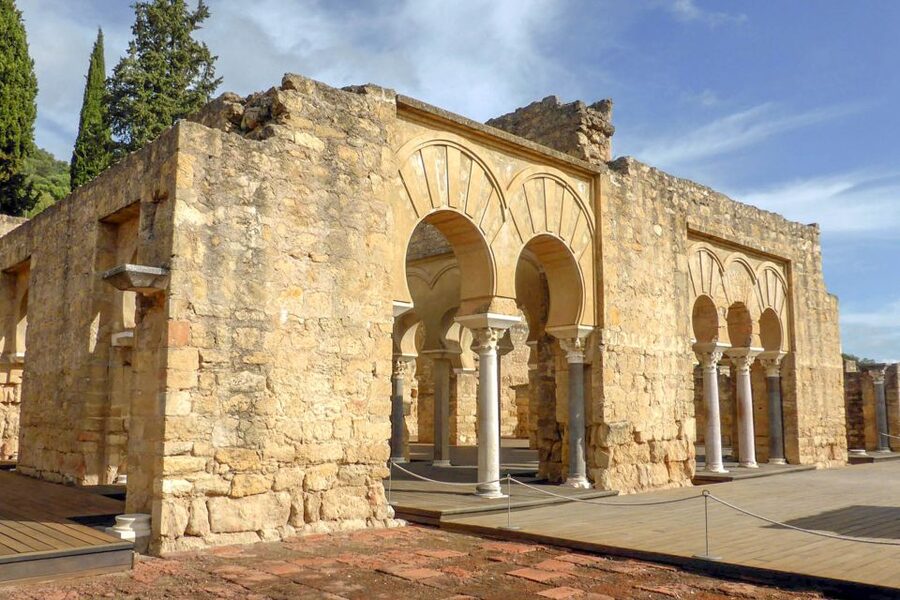
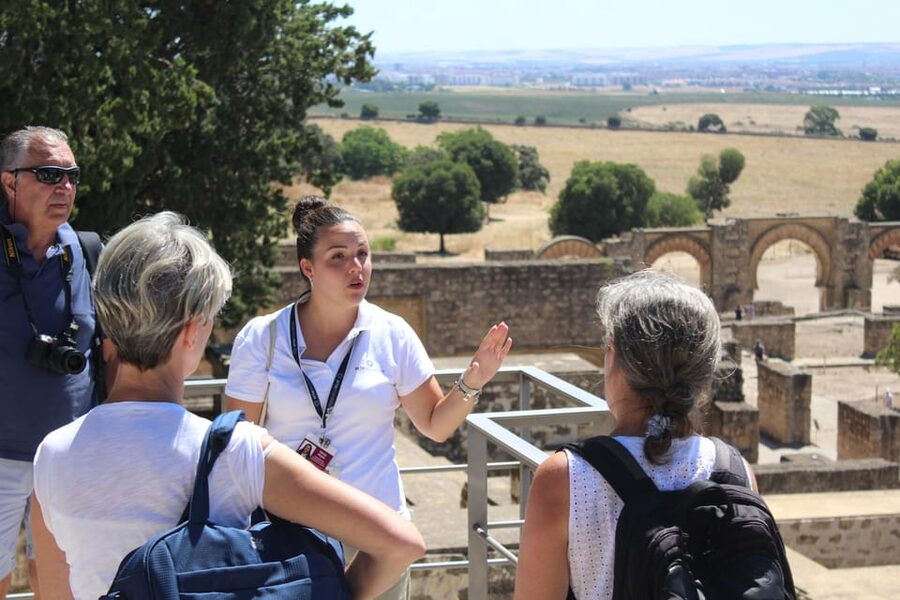
After the visitor-center introduction, the tour heads north through the main sections of Medina Azahara. The guide takes you from one area to another, pointing out architectural details and explaining how the city functioned.
The experience is less about ticking off individual monuments and more about learning how to interpret the remains. A column base, decorative surface, or formal space becomes useful evidence. It can suggest status, purpose, movement, or the careful planning behind the city.
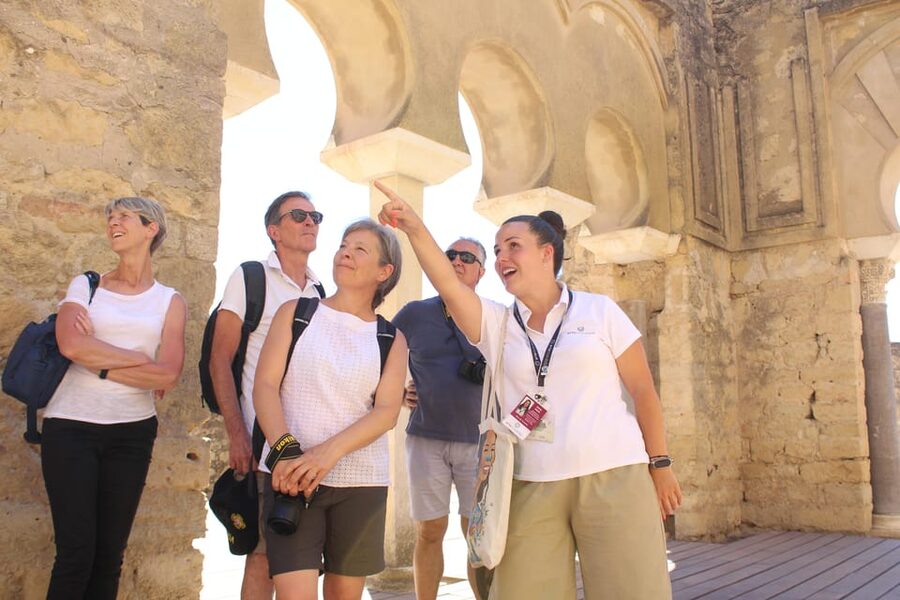
Guides have used different approaches successfully. Emilio is noted for balancing historical detail with likely everyday happenings. Almudena has been praised for explaining the art and history while helping people picture the meaning of the remains. Maria has been described as open to questions and careful about distinguishing firm information from interpretation. Alejandro is known for clear English and detailed explanations of the site.
Those differences matter because the ruins do not explain themselves. The strongest guides tell the story without turning the tour into a dry lecture. They also leave room for questions, which is helpful if you want to understand architecture, religion, government, or the lives of people who worked in the city.
Same base in Cordoba, a completely different kind of day:
- Cordoba: Equestrian Show General Entry
★ 4.5 · 2,333 reviews - Cordoba: Mosque-Cathedral E-Ticket with Audio Guide
★ 4.1 · 2,124 reviews - Cordoba Mosque & Jewish Quarter Tour with Tickets
★ 4.6 · 1,996 reviews - From Seville: Cordoba, the Mosque and Carmona Day Trip
★ 4.5 · 1,967 reviews
What the guide adds to the stones
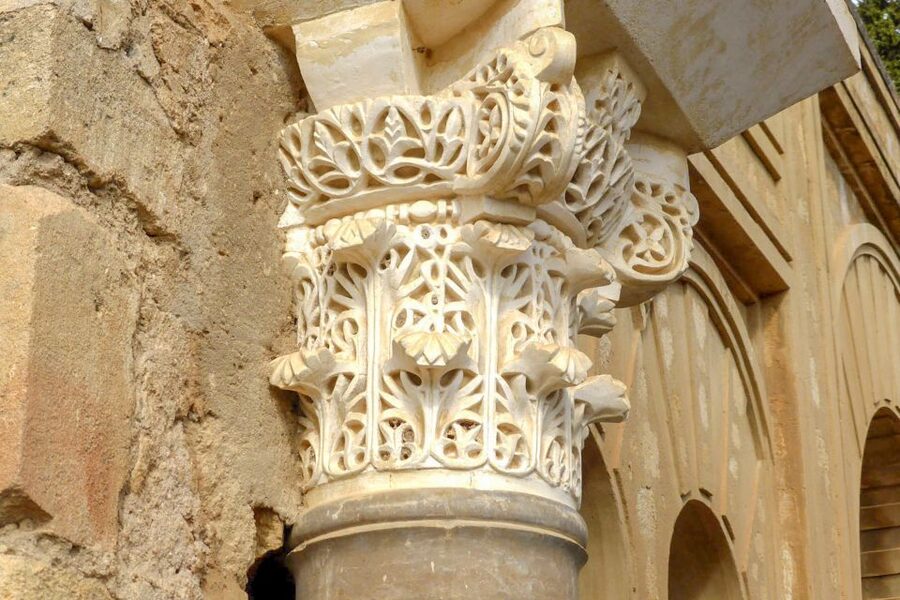
A self-guided walk can show you the physical remains, but a guide gives them sequence and purpose. You learn why the city existed, how it represented caliphal authority, and what the buildings might have meant to the people who used them.
Several guides have been praised for bringing the stones to life with descriptions of daily life. That is the real value here. You are not only looking at walls from a distant period. You are being asked to imagine officials handling government business, workers serving the palace, and residents moving through carefully arranged spaces.
The best explanations also acknowledge uncertainty. Archaeology does not provide every answer, and much of Medina Azahara remains unexcavated. A guide who separates evidence from informed interpretation makes the visit more trustworthy.
The English guiding appears to be a major strength. Visitors have specifically praised clear English from Emilio, Alejandro, and others, along with humor, patience, and willingness to answer questions. Spanish tours are also available. Check your selected language carefully when booking, especially since it is possible to choose the wrong option by accident and need help changing it.
Heat, walking, and what to bring
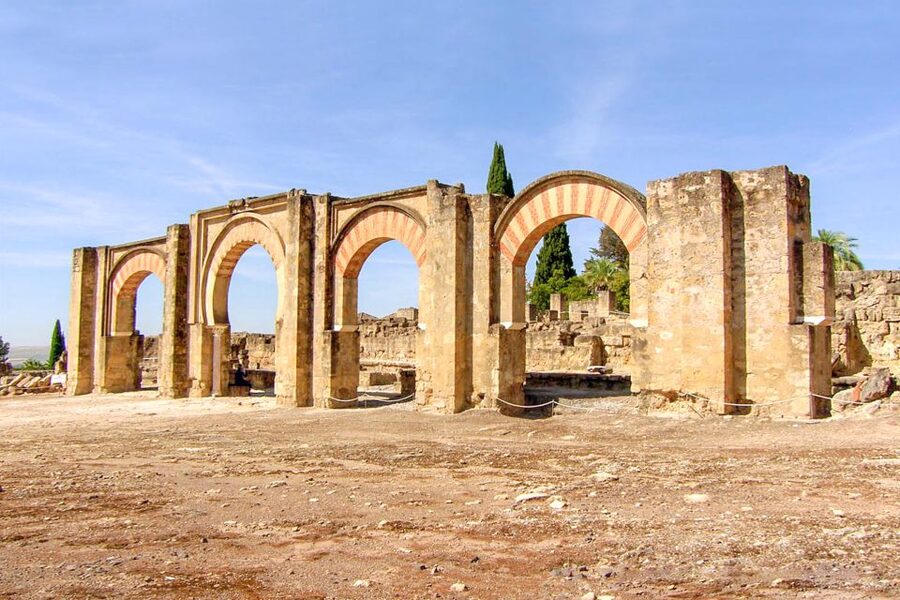
This is an outdoor archaeological visit, so your comfort depends heavily on preparation. Bring comfortable shoes, a hat, drinks, and comfortable clothing. Sunglasses are also sensible in strong sun, based on practical advice from people who visited during summer.
The heat can be intense. Guides may look for shade when possible, but the route still includes exposed areas. One visitor described the conditions as boiling hot, while another noted that the group began to fade in the sun. If you are visiting in July or August, an early or later starting time may feel easier if available, but check the actual departure times before booking.
Comfortable shoes matter even though the tour lasts only three hours. The route takes you through an archaeological site rather than along a smooth city pavement, and you will want to keep your attention on the guide instead of your feet.
Bring more water than you think you need. Food and drinks are not included, so plan to carry your own refreshments. Do not count on finding a convenient café during the guided route.
Is three hours enough?
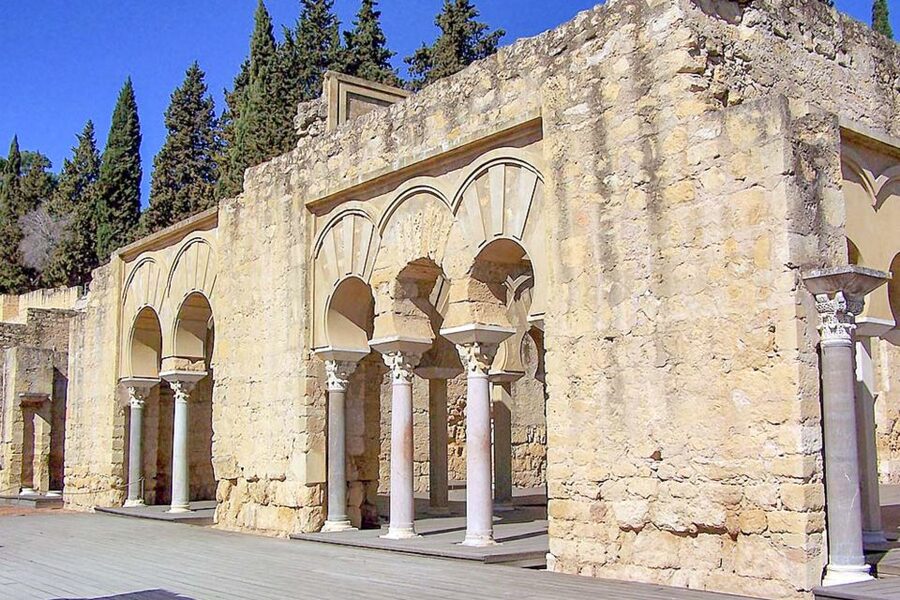
Three hours is a useful length for this outing. It gives you time to travel, see the visitor center, watch the reconstruction film, and explore the main sections without turning the visit into an all-day commitment.
The time can feel tight if you want to study every display, browse for books, and linger over each architectural detail. It is also possible for tours in Spain to run a little longer than the posted time, so avoid scheduling an immediate appointment afterward.
For most visitors, the three-hour format works well. You get a clear introduction and a guided look at the principal areas, while still leaving room in your Córdoba schedule for the mosque-cathedral, old town, or a relaxed meal.
The $23 price and what you receive
At $23 per person, the tour offers solid value if you select the bus option and want a guide. The price includes entrance, the live guide, transport from Córdoba and back when that option is selected, and transportation between the visitor center and the main monuments.
The value comes less from the admission itself than from the organization and interpretation. Medina Azahara is partly excavated, and without context you may spend much of the visit trying to work out what you are seeing. A good guide turns a scattered archaeological site into a readable story.
Check the exact option before paying, since the transport arrangement depends on your booking. If you do not need a transfer from Córdoba, the option without the tourist bus may suit you. If you want the easiest plan, the bus version removes a major practical concern.
Free cancellation up to 24 hours before the tour and a reserve-now, pay-later choice add flexibility. These terms are useful if your Andalusia schedule is still shifting.
Who will enjoy this tour most?
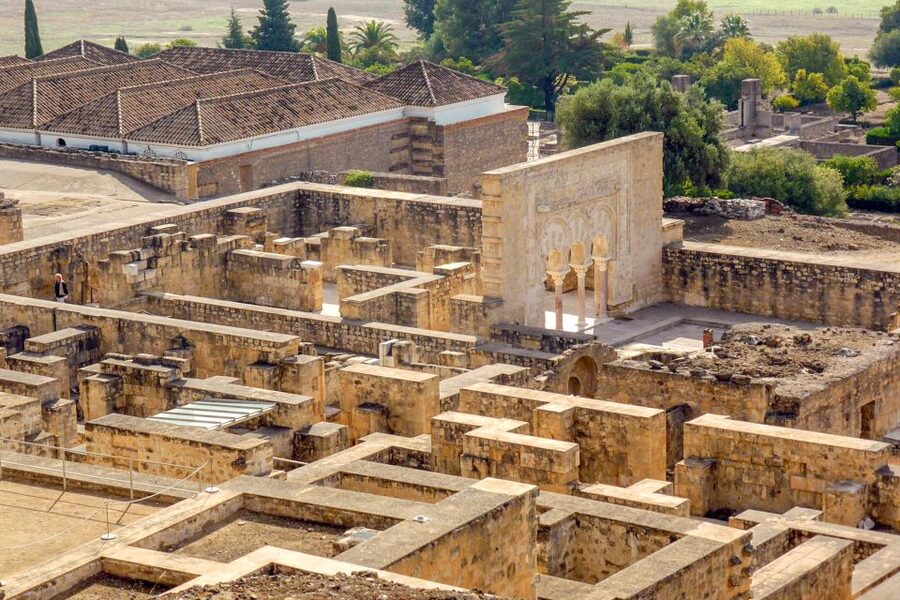
I would recommend it to anyone interested in Córdoba’s Islamic past, political history, archaeology, or architecture. It is especially useful after time in central Córdoba because it shows how the caliphate’s power extended beyond the city’s better-known monuments.
History-minded families can benefit from the reconstruction film and the guide’s stories about daily life. The site is also a good choice for visitors who prefer a focused excursion rather than a full day of sightseeing.
You may enjoy it less if you want a fully restored palace with rooms, furniture, and complete decoration. Medina Azahara is an archaeological site, and the incomplete excavation is part of the experience. You need to be comfortable using your imagination.
The tour may also be demanding in very hot weather. If heat is a serious concern, choose your timing carefully, bring water, and consider whether you will enjoy several hours outdoors.
Practical booking advice
Select English or Spanish with care, then check the meeting point for the exact option you choose. If you are taking the bus from Córdoba, arrive early and look for the correct Parada Bus location rather than assuming it is one of the standard city stops.
Wear shoes suitable for uneven outdoor surfaces. Bring a hat, drinks, and clothing that keeps you comfortable in the sun. A small notebook could be useful if you want to remember names and details for later reading.
The tour has a strong record of positive feedback, with a 4.5 rating from 1,042 reviews. The most consistent praise concerns the guides’ command of the subject, clear English, humor, and ability to make the remains understandable. Names that appear repeatedly in the booking information include Emilio, Almudena, Maria, Alejandro, Pilar, and others.
Should you book Medina Azahara?
Yes, if you want to understand Córdoba as the center of a major caliphate rather than only as a beautiful old city. The visitor-center film, organized transport, and live explanation give you a useful framework for a site that could otherwise feel incomplete.
Book it with realistic expectations. You will see impressive architectural remains, but much of the city is still underground or unexcavated. You will walk in the sun, and the bus meeting point requires care. Bring water, choose the transport option that fits your plans, and let the guide connect the visible stones with the city that once surrounded them.
FAQ
How long does the Medina Azahara guided tour last?
The tour lasts three hours. This includes the visitor-center visit, the guided exploration of the main archaeological areas, and transport time when the bus option is selected.
Is transportation from Córdoba included?
Transportation from Córdoba to Medina Azahara and back is included if you choose the tourist bus option. The tour also includes transport from the visitor center to the main monuments at Medina Azahara.
Can I visit without using the tourist bus from Córdoba?
Yes. A guided option without the tourist bus is available, but you must arrange your own transportation to the visitor center. The meeting point varies according to the option booked.
What languages are available?
Live guided tours are available in English and Spanish. Check the language selected during booking.
What does the visitor-center visit include?
The visitor-center portion introduces Moorish history in Spain and includes a film that virtually recreates Medina Azahara as it may have appeared in the 10th century. Archaeological finds are also displayed there.
What should I bring?
Bring comfortable shoes, a hat, drinks, and comfortable clothing. Sunglasses are also useful in the strong summer sun.
Can I cancel for a full refund?
You can cancel up to 24 hours in advance for a full refund. The activity also offers a reserve-now, pay-later option.
Recently added around Cordoba
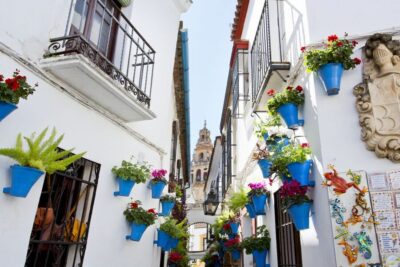
- Sights, Sounds, and Scents of Córdoba’s Patios★ 4.4 · 109 reviews
- Medina Azahara Guided Tour at Night★ 4.6 · 142 reviews
- From Malaga and Costa Del Sol: Cordoba Day Trip★ 4.6 · 212 reviews
- From Malaga: Cordoba Day Trip and Mosque-Cathedral★ 4.5 · 563 reviews
- From Costa del Sol & Malaga: Cordoba Guided Day Tour★ 4.1 · 231 reviews
- Cordoba: Half-Day Medina Azahara Guided Tour★ 4.6 · 288 reviews
- Cordóba: Gardens & Fortress of Catholic Monarchs Guided Tour★ 4.3 · 336 reviews
- Córdoba: Tablao Flamenco at Doble de Cepa with Optional Meal★ 4.4 · 197 reviews
Cordoba Tours, compared.
Skip-the-Ticket-Line Mosque-Cathedral Guided Tour
Read our review →
Cordoba Mosque-Cathedral: Skip-the-Line Guided Tour
Read our review →
Cordoba Mosque & Jewish Quarter Tour with Tickets
Read our review →
Browse the lists this tour appears in