
Reviewed · MUSEUMS
Cartagena : Roman Theatre Museum Entry Ticket
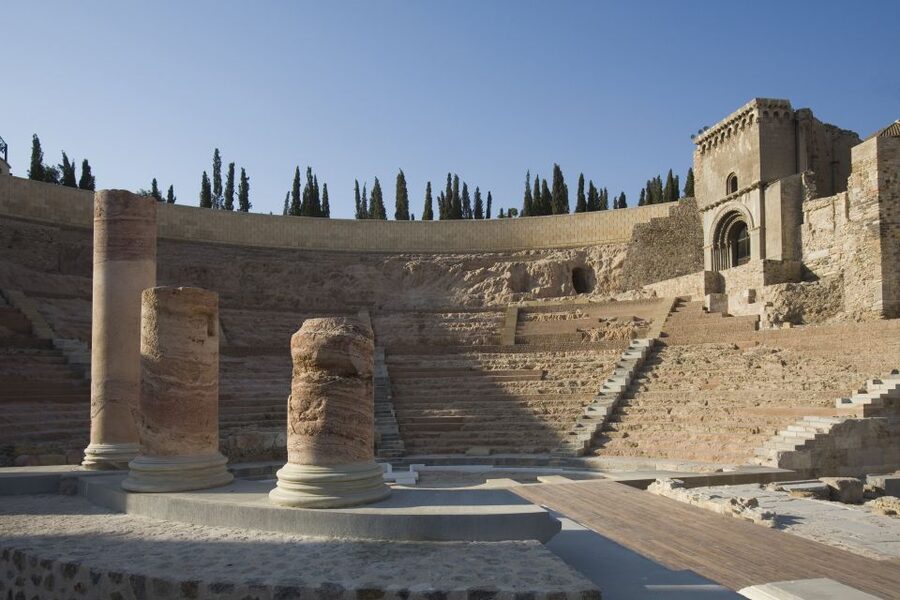
Cartagena’s Roman Theatre was hidden beneath the modern city until its rediscovery, and the visit cleverly tells that story before taking you into the ancient seating area. The museum, designed by Rafael Moneo, is part archaeological display and part history lesson, with the theatre saved for the final reveal.
I like the low $8 price and the freedom to set your own pace. I also like the way the route connects Roman politics, theatre, and daily life, including a mosaic-floored Roman house destroyed when the theatre was built.
The main drawback is physical access. Some open steps have no handrails, and people using wheelchairs may not reach the lower stage area. Finding the entrance can also be confusing, since map directions may bring you to the exit.
Key points
- A 7,000-seat Roman theatre: See one of Spain’s largest ancient theatres and walk around its surviving seating and stage area.
- A museum by Rafael Moneo: The visit begins indoors, with a carefully planned route through archaeological finds and the site’s long burial.
- A house beneath the theatre: Look for mosaic floors from a Roman home destroyed during construction.
- Self-paced and family-friendly: You can move through the museum at your own speed, making the visit easy to fit around other Cartagena sights.
- Optional multilingual audio: Add commentary in Spanish, English, French, German, or Russian.
- Plan for steps and the Sunday cutoff: The museum closes at 2:00 PM on Sundays, and the lower theatre area may be difficult to reach if you have limited mobility.
The museum reveals the theatre slowly
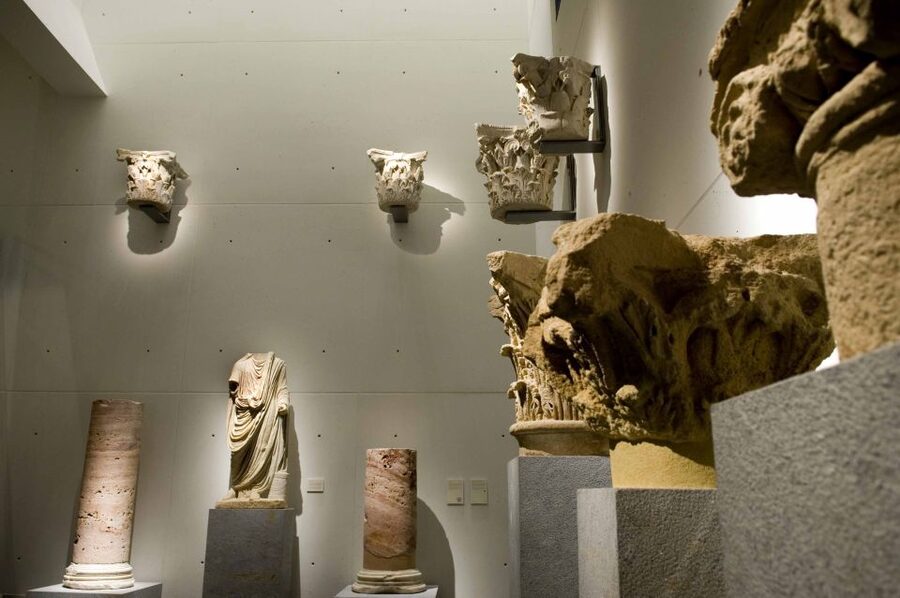
I like that this is not simply a ticket to an open ruin. You begin inside the Roman Theatre Museum, where the building guides you through the story of the site before you see the theatre itself.
That order matters. Cartagena’s Roman theatre was buried for centuries, and the museum explains how layers of later history hid the ancient remains. You get a clearer sense of the surprise involved in finding such a large Roman building beneath the city.
The route is known as the Passageway of History. It covers the development of the theatre site from the 1st century B.C. and places the ruins within the wider story of Roman Cartagena.
The museum uses several floors, with lifts and escalators available. That makes the indoor part manageable for many people, although the archaeological site itself has more serious access limits.
More Museum Tours in Spain:
- Madrid: Prado Museum Entry Ticket
★ 4.6 · 17,509 reviews - Barcelona: FC Barcelona Museum “Barça Immersive Tour” Ticket
★ 4.4 · 10,944 reviews - Madrid: Reina Sofía Museum Entrance Ticket
★ 4.5 · 6,889 reviews
Rafael Moneo’s building is part of the experience
Architect Rafael Moneo designed the museum, and the building gives the visit a strong sense of order. Rather than placing artifacts in a single crowded room, it leads you through the evidence before opening onto the theatre.
I find this especially useful if you know little about Roman performance spaces. The displays explain how plays were staged and why Roman theatre was tied to politics and public life. Entertainment was not separate from power. The art world, public display, and political messages all worked together.
The result is a visit with more substance than a quick look at old stone. You see fragments and objects, but you also learn how the theatre functioned and what it meant to the city.
The museum is self-paced. You can move quickly if you are eager to reach the ruins, or linger over the archaeological material. With children, that flexibility helps. You are not locked into a long guided explanation, and younger visitors can get to the open theatre before losing interest.
Look for the Roman house and its mosaics
One of the most telling details is the remains of a Roman house with mosaic tiles. The house was destroyed when the theatre was constructed, a small but powerful reminder that Roman cities were constantly being rebuilt.
This detail gives the site a human scale. The theatre represents public life and mass entertainment, while the house points to private life. You are looking at the remains of a home that gave way to a major public project.
I would not rush past this section. The theatre is the obvious prize, but the house helps you understand that ancient Cartagena was not a fixed monument. Buildings were altered, demolished, and covered as the city changed.
The artifacts and mosaics also make the museum worthwhile even before you reach the seating area. If you have already seen several Roman ruins in Spain, these smaller details may be more revealing than another view of weathered blocks.
The final reveal is the Roman theatre
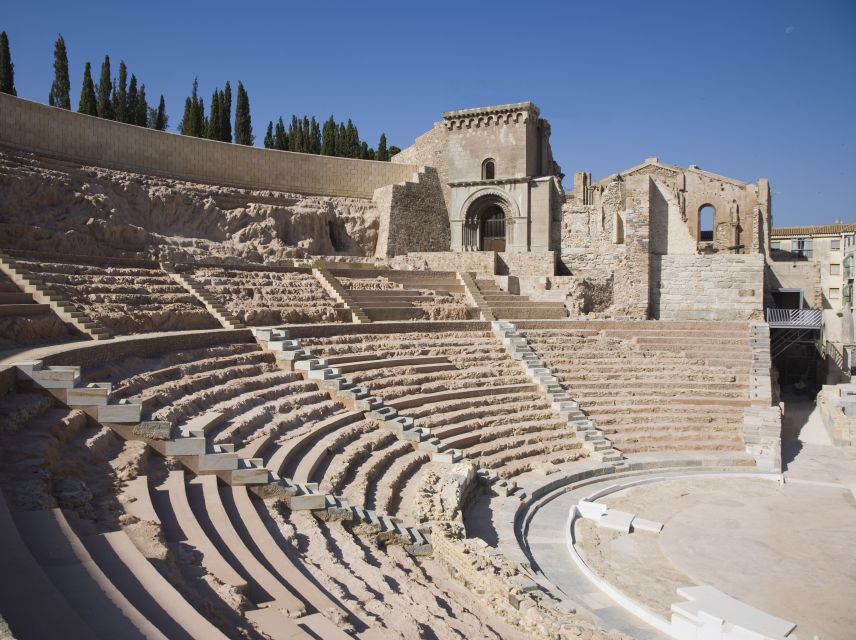
After the museum, you reach the Roman Theatre itself. This was a huge venue, with room for about 7,000 spectators, making it one of the largest ancient theatres in Spain.
The scale becomes clearer once you are inside the remains. The seating rises around the performance space, and you can walk around the surviving theatre area. The outdoor section is not reconstructed as a working venue, so you are seeing archaeological remains rather than a polished stage set.
That is part of its appeal. The theatre feels like a real excavation site connected to the city around it. At the same time, the preserved remains are organized enough for you to understand the basic layout.
Some routes lead down open steps toward the stage area. These steps do not have handrails, and that can make the lower section uncomfortable or impossible for anyone who is unsteady on their feet. People using wheelchairs may need to remain at the upper viewing point.
The attraction is listed as wheelchair accessible, but that should not be read as full access to every part of the ruins. Electric wheelchairs are not allowed, and the lack of rails on some steps is an important limitation. If access is a major concern, ask about the route before you book.
A few more Spain half-days worth comparing
- Cartagena: Roman Theater, Forum, Castle and Panoramic Lift
★ 4.4 · 710 reviews - Calasparra: Almadenes Canyon Rafting with Caves and Rock Art
★ 4.7 · 558 reviews - Cartagena, Spain: Panoramic Double-Decker Bus Tour
★ 4.1 · 526 reviews - Murcia: Canyon of Almadenes Rafting, Caves & Photos
★ 5.0 · 417 reviews
What the audio guide adds
An audio guide is optional, and I would consider adding it if you want more than a quick look. It is available in Spanish, English, French, German, and Russian.
The guide can help explain the theatre’s construction, the way Roman performances worked, and the political role of Roman art. Without commentary, you can still appreciate the size and setting, but some of the smaller archaeological details may be harder to place.
The audio option also suits independent visitors. You can pause, move on, and spend longer in the areas that interest you. It gives you the structure of a guided visit without requiring a fixed group schedule.
A separate guided city experience with a guide named Bruno has also been associated with Cartagena visits, but this entry ticket itself is primarily a museum and theatre admission. Do not assume a live guide is included unless your selected option specifically says so.
Allow enough time for the indoor route
The ticket is valid for one day, and the visit is designed around the museum and theatre rather than a timed, fixed-length tour. That makes it easy to combine with other sights in Cartagena.
You may spend less time if you only want photographs and a quick look. If you use the audio guide and read the displays, plan on giving the museum proper attention before heading outside.
The route works well for families because you can control the pace. It also fits visitors who have only part of a day in Cartagena, especially if the Roman period is high on your list.
Sunday requires extra care. The Roman Theatre Museum closes at 2:00 PM, so a late arrival can leave you with too little time. Check the available starting times when booking rather than treating the ticket as an all-day pass.
Finding the entrance takes a little care
The entrance is through the museum, not directly through the visible theatre remains. This is the detail most likely to trip you up.
Map directions can send you to the museum exit, and the entrance is not always obvious from the surrounding streets. Look for the museum entrance first and allow a few extra minutes to get oriented. If you arrive at the theatre from the wrong side, you may see the ruins but still need to walk around to begin the official visit.
A voucher is required. A screenshot of a QR code is not accepted, so bring the valid voucher in the required form. This is a small but important booking detail.
Food and drinks are not allowed inside. Pets are also prohibited, except for assistance dogs. Alcohol, drugs, and explosive substances are not allowed, and electric wheelchairs cannot enter.
Is $8 good value?
At $8 per person, I consider this one of Cartagena’s better-value paid sights. You are not paying only to look at a single ruin. The price includes the museum and the Roman Theatre site, with an audio guide available as an extra option.
The value is strongest if you take time with the museum. The theatre alone might satisfy a visitor who only wants a photograph, but the indoor route explains how the site was buried, rediscovered, and presented to the public.
The ticket also gives you a structured way to understand Roman Cartagena. Instead of trying to interpret scattered ruins on your own, you see archaeological objects, mosaics, architectural remains, and the theatre in one connected visit.
The only caution is that the experience is not equally accessible in every area. If you cannot manage open steps, you may see the upper portions and viewing area but miss the stage-level section. For most visitors, the price remains modest, but access needs should factor into the decision.
Families get a clear history lesson
I would recommend this to families who want an ancient site that is manageable in size and easy to explore at their own pace. The theatre gives children a strong visual moment, while the museum provides enough context for adults.
The route also offers variety. You move from indoor displays to the open theatre, from household mosaics to a venue built for thousands of spectators. That change of setting can hold attention better than a museum made up entirely of cases and labels.
On hot days, plan sensibly. The outdoor theatre has limited shade, and there is no food or drinks service inside. Bring water for before or after the visit, since refreshments are not allowed within the attraction.
Best for independent visitors, with a few limits
This ticket suits you if you like to stop often, read at your own speed, and choose how much detail you want. The optional audio guide is useful if you want a fuller explanation without joining a live tour.
It is also a good choice for visitors who want a focused historical stop in Cartagena. You get Roman architecture, archaeological finds, an ancient performance venue, and a story about the city’s changing layers.
I would be more cautious if you need step-free access throughout, use an electric wheelchair, or want a live guide included automatically. The museum has lifts and escalators, but the theatre’s open steps and upper-level limits remain important.
The overall rating is 4.4 from 481 bookings, which fits the experience: strong historical content and good value, balanced by confusing signage and uneven access in the ruins.
Should you book the Roman Theatre Museum?
I would book it if you have an interest in Roman sites, want an inexpensive cultural stop, or are visiting Cartagena with children. The museum gives meaning to the ruins, and the 7,000-seat theatre provides the memorable visual finish.
Add the audio guide if you want to understand the political and theatrical context rather than simply walk through. Book ahead during busy periods, since buying at the door can involve long lines.
Skip it only if you have very limited time, cannot manage the outdoor steps, or mainly want an aerial photograph. An outside viewing point may offer a view without entering, but you will miss the museum, mosaics, and the full story of the excavation.
FAQ
Where is the Roman Theatre Museum?
It is in Cartagena, in Spain’s Region of Murcia. The visit begins at the museum entrance and continues to the Roman Theatre site.
What does the ticket include?
The ticket includes entry to the Roman Theatre Museum and the Roman Theatre site. An audio guide is included only if you select that option.
How much does admission cost?
The listed price is $8 per person.
How long is the ticket valid?
The ticket is valid for one day. Available starting times depend on the selected date and option.
Is an audio guide available?
Yes. An optional audio guide is available in Spanish, English, French, German, and Russian.
Is the museum wheelchair accessible?
The museum has lifts and escalators, and the attraction is listed as wheelchair accessible. However, some open steps in the theatre have no handrails, wheelchairs may need to remain at the upper area, and electric wheelchairs are not allowed.
When does the museum close on Sundays?
The Roman Theatre Museum closes at 2:00 PM on Sundays.
Can I bring food or drinks inside?
No. Food and drinks are not allowed inside the attraction.
Can I cancel my booking?
Yes. You can cancel up to 24 hours in advance for a full refund. A reserve now and pay later option is also available.
Recently added around Spain
- Park Guell Guided Tour with Skip the Line Tickets★ 4.0 · 739 reviews
- Entrance to the Mirador Torre Glories Barcelona★ 4.5 · 193 reviews
- Montserrat: Cog-Wheel, Basilica, Black Madonna & Licor Tasting★ 4.5 · 886 reviews
- Bohemian Barcelona Neighborhood Evening Tapas & Wine Tour★ 5.0 · 419 reviews
- Transfers From Cruise Port to Barcelona Airport★ 4.5 · 155 reviews
- Authentic Flamenco Show Barcelona : Intimate Casa Sors Experience★ 5.0 · 809 reviews
- Barcelona Expert Tour with Local Guide in Eco Tuk Tuk Private★ 5.0 · 216 reviews
- Montserrat very early : Hiking, Abbey, very small group★ 5.0 · 127 reviews
Museums, compared.

FC Barcelona Museum “Barça Immersive Tour” Ticket
Read our review →

Park Güell and Gaudí House Museum Entry Ticket
Read our review →
Puro Flamenco Show with Optional Museum Ticket
Read our review →
Girona & Dali Museum Small Group Tour with Pick-up from Barcelona
Read our review →
Oceanogràfic, Hemisfèric & Science Museum Combo
Read our review →Browse the lists this tour appears in