
Reviewed · HISTORICAL TOURS
Barcelona Historical Walking Tour: Gothic Quarter and El Born
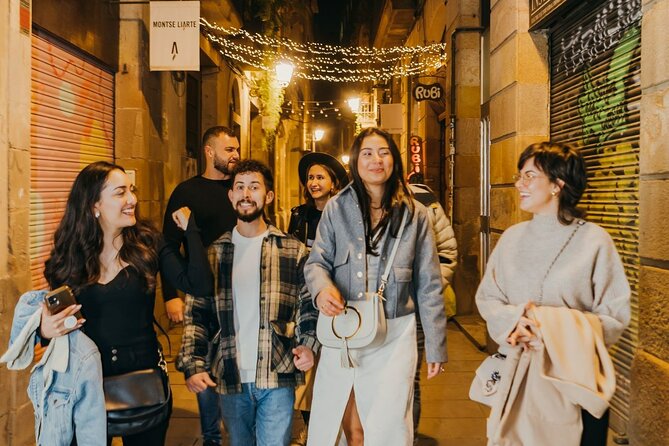
Barcelona’s oldest neighborhoods are best understood on foot, where a Roman wall can appear beside a medieval doorway and a quiet square can carry the marks of war. This two-hour walk links the Gothic Quarter with El Born, using local stories to connect places that are easy to miss on a bus.
I like the way the route mixes big sights with less obvious corners, especially Plaça de Sant Felip Neri, the old Jewish quarter, and Casa de l’Ardiaca. I also like the guides’ flexible storytelling style. Juan has used an iPad to show how places looked in the past, while Lidia, Jordan, Vanesa, and others have been praised for humor, warmth, and keeping children engaged.
The main drawback is the pace. Eleven stops in about two hours means most visits are short, usually around ten minutes. The tour gives you a strong introduction, not a deep visit inside each church or museum. It also ends at Santa Maria del Mar, where admission is not included.
Key points at a glance
- Roman Barcelona beneath the Gothic streets: See remnants of Barcino, including the Roman wall and aqueducts around Casa de l’Ardiaca.
- Picasso and Gaudí connections: Begin near Els 4 Gats, the famous café where artists and modernists gathered.
- A route buses cannot reach: Narrow lanes, small squares, and the former Jewish quarter are explored on foot.
- A practical two-hour introduction: The route covers the Gothic Quarter and El Born without taking up your whole day.
- Guides bring different strengths: Juan, Lidia, Jordan, Vanesa, Petra, Darren, and others have been praised for history, humor, family-friendly delivery, and food tips.
- Church entry costs extra: The Cathedral of Barcelona and Santa Maria del Mar are visited from the outside unless you pay admission separately.
Starting at Els 4 Gats and entering old Barcelona
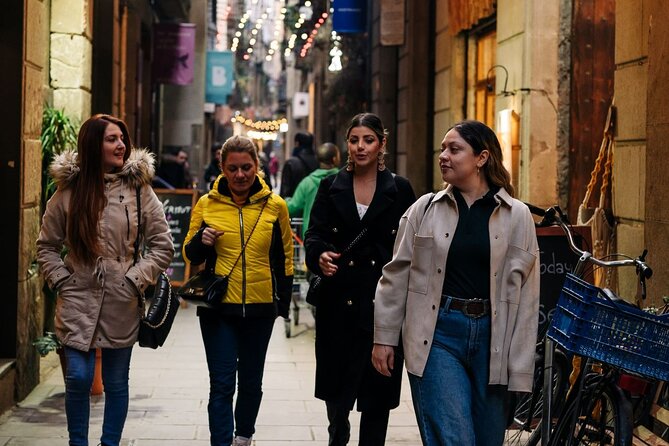
The meeting point is Plaça del Vuit de Març in Ciutat Vella. From there, the route quickly reaches Els 4 Gats, a historic café and restaurant tied to Barcelona’s artistic past.
Els 4 Gats was a gathering place for artists, intellectuals, and modernists, including Pablo Picasso and Antoni Gaudí. Its Art Nouveau design gives the opening stop a clear purpose: you begin with the city’s creative side before moving into its Roman, religious, and political past.
You spend about ten minutes here, and admission is free. Do not expect a long café visit. This is a short orientation stop, with the building and its famous associations doing most of the work.
The guide’s style matters here. A dry list of names would make the café feel like a photo stop. A guide such as Juan, who has been praised for adding trivia and answering questions, can help explain why this particular place mattered to Barcelona’s artists.
More History Tours in Barcelona
- Barcelona: Tapas Walking Tour with Food, Wine, and History
★ 4.8 · 4,261 reviews - Barcelona Tapas Walking Tour: Food, Wine & History
★ 4.5 · 1,928 reviews - Barcelona: 2.5-Hour Bike or E-Bike Historical Tour
★ 4.5 · 1,262 reviews
The mosaic that turns history into a public statement
Next comes El Món Neix en Cada Besada, a large photomosaic created in 2014. Its title means The World Begins with Every Kiss, but the artwork also connects with Catalonia’s defeat on September 11, 1714, during the War of the Spanish Succession.
That defeat helped shape the modern celebration of La Diada, Catalonia Day. The artwork presents freedom as a personal and civic idea, making it a useful place to hear about Catalan identity without leaving the street.
You get about ten minutes here, with no admission fee. The mosaic is also a good photography stop, though the value comes from the explanation around it. I would pay attention to the political and local context rather than treating it as only a colorful wall.
This is one reason a guided walk can be more useful than a self-guided route. You may pass the mosaic alone and enjoy the image, but miss why it carries emotional weight in Barcelona.
Barcelona Cathedral and the story of Saint Eulalia
The Catedral de Barcelona is one of the route’s major sights. This Gothic church honors Saint Eulalia, Barcelona’s patron saint, who was tortured and killed by the Romans.
The cathedral sits in the center of the Gothic Quarter, surrounded by narrow streets and older layers of the city. The stop lasts around ten minutes, so the focus is on the exterior, setting, and story rather than a full architectural visit.
Admission is not included. That detail matters if you want to go inside, explore the church, or spend time with its interior features. The tour can show you where the cathedral fits into the district, but it does not replace a separate visit.
I like this arrangement for a first morning in Barcelona. You get the historical frame before deciding which places deserve extra time later. If religious buildings are central to your plans, set aside a separate visit and check the current entry arrangements when booking.
Casa de l’Ardiaca and the Roman wall

Casa de l’Ardiaca is one of the more unusual stops. The building combines Gothic and Renaissance elements and includes the vertical face of the Roman wall and aqueducts.
This is where Barcelona’s layers become easy to see. The medieval city did not erase Roman Barcino. Parts of the earlier city remain woven into later buildings, streets, and courtyards.
The stop is free and lasts about ten minutes. You will not get an archaeological museum visit here, but the guide can help you understand what you are looking at. I find this kind of stop more rewarding than a simple grand façade because it shows how the city grew over time.
The route also keeps you moving through the Gothic Quarter instead of placing you in front of one landmark for too long. That makes the walk feel like an introduction to the district itself, not just a checklist of monuments.
More Walking Tours in Barcelona
- Barcelona Tapas and Wine Experience Small-Group Walking Tour
★ 5.0 · 5,804 reviews - Barcelona: Tapas Food Crawl Walking Tour with Tastings
★ 4.9 · 1,798 reviews - Barcelona: Gothic Quarter Ghosts and Legends Walking Tour
★ 4.7 · 1,443 reviews - Barcelona Helicopter, Sailboat & Old Town Private Walking Tour
★ 5.0 · 1,395 reviews
Pont del Bisbe and a famous superstition
Carrer del Bisbe was one of the main routes through Roman-occupied Barcino. The Neo-Gothic Pont del Bisbe now crosses the lane and has become one of the Gothic Quarter’s most photographed scenes.
The bridge is also tied to a superstition. Your guide will explain the legend, which adds a little mystery to an otherwise highly decorative passage. This is a good example of the tour’s tone: serious history is mixed with local stories that keep the walk from feeling like a lecture.
You spend about ten minutes here, and there is no admission fee. The narrow street can feel crowded, so do not expect a quiet, private look at the bridge. The benefit is being there with enough context to understand why this small crossing has such a strong place in the city’s image.
Plaça de Sant Felip Neri, a quiet square with scars
Plaça de Sant Felip Neri is one of the most affecting stops. Tucked inside the Gothic Quarter, the square carries a sombre connection to the Spanish Civil War. The damaged walls still show the marks of its tragic past.
The square is visually calm, which makes the history harder to ignore. I would give this stop your full attention. It is not a place for a quick photo and a casual joke, and a good guide should allow the story to set the tone.
The tour allocates about ten minutes. That is enough to explain the basic history, but not enough for a long discussion of the Civil War. If this part of Barcelona’s past interests you, note the square and return later when you can spend more time quietly.
Guides have different personalities, and this stop is where delivery matters most. A warm, careful guide can explain the past without turning tragedy into entertainment.
El Call and Barcelona’s Jewish past
The route then enters MUHBA El Call, the former Jewish quarter. Its narrow streets and medieval architecture offer a look at Barcelona’s Jewish community and its place in the city’s past.
This area is easy to walk through without understanding what it was. The route gives you a basic map of the quarter, along with information about its synagogue and local legends.
Admission to the stop is free, and the scheduled time is around ten minutes. That is enough to identify the area and explain its importance, though not enough for an extended museum visit or a detailed study of Jewish Barcelona.
I especially like this part because it shifts the focus away from royal and church buildings. A city’s story is not only told by palaces and cathedrals. Narrow lanes, community spaces, and changing neighborhoods can reveal just as much.
Plaça de Sant Jaume and the city’s government center

Plaça de Sant Jaume is a major public square surrounded by historic government buildings. It remains a center of civic activity, so you see Barcelona’s past and present sharing the same space.
The stop lasts approximately ten minutes and is free. The square is broad and open compared with the lanes around it, which gives the group a chance to pause and reorient itself.
This is also a useful place to connect the city’s architecture with Catalan politics and public life. The guide can explain the role of the square, while you take in the buildings and watch the city moving around you.
The route does not ask you to spend the whole tour inside monuments. Instead, it shows how public spaces work as part of daily life. That approach suits you if you want to understand Barcelona’s layout and civic identity, not just collect exterior photographs.
Plaça del Rei and Barcelona’s royal past
Plaça del Rei introduces the city’s royal side. The square houses the Royal Palace and has a strong medieval character, but the stop also touches on darker parts of Barcelona’s past.
This contrast is useful. A picturesque square can look polished and grand while carrying stories of power, conflict, and hardship. The guide’s explanation helps prevent the setting from becoming merely a pretty backdrop.
You have about ten minutes here, with no admission fee included for the stop itself. If you want to tour interiors or nearby museum spaces, you should plan that separately. The walk gives you the setting and the main story, not a full palace visit.
A well-told explanation can make this one of the route’s more memorable stops. Guides such as Petra and Craig have been praised for making Barcelona’s past clear and engaging, which is exactly what a place like Plaça del Rei needs.
Plaça de l’Àngel and the legend behind the name
The route continues to Plaça de l’Àngel, once known as Wheat Square because of its role in grain trading. The current name comes from a heavenly legend.
This stop adds an everyday economic detail to the tour. Barcelona was not built only through royal decisions and religious institutions. Markets, food supplies, and trade shaped the city too.
The square is free to visit and receives about ten minutes. It is another place where a local story makes an ordinary urban space easier to remember. I like these short explanations because they give you small facts to carry into the rest of your time in Barcelona.
By this point, the walk has covered Roman, religious, Jewish, royal, political, artistic, and commercial themes. The tour’s value comes from how these subjects are placed close together in a compact area.
Finishing at Santa Maria del Mar in El Born
The final stop is the Basilica de Santa Maria del Mar, one of Barcelona’s finest Catalan Gothic churches. Its connection with the city’s maritime past makes it a fitting finish in El Born, where the route’s focus shifts from the Gothic Quarter toward the old waterfront side of the city.
The church is visited for about ten minutes, and admission is not included. You can admire the exterior with the group, then decide if you want to pay for entry and return for a longer look.
Ending here is practical. Santa Maria del Mar is both a major sight and a useful landmark for continuing your day in El Born. The tour ends at Plaça de Santa Maria, 1, rather than returning you to the starting point.
That one-way design saves backtracking. You may need to arrange your own way back to your hotel or next stop, but you finish in an area with more places to explore. Guides such as Tammy have also provided food and drink suggestions after the walk, which can help you plan the next part of your day.
What two hours and $30.25 really buy you
The price is $30.25 per person. For two hours with a local guide, that is a reasonable price if you want orientation, stories, and a route through several historic districts without planning it yourself.
You are not paying for extended monument access. Two church admissions are specifically not included, and most stops last only about ten minutes. The value is in the connections between places: Picasso and Gaudí at Els 4 Gats, Roman Barcelona under medieval streets, the Civil War scars at Sant Felip Neri, and the Jewish quarter before the finish in El Born.
The group can have up to 20 people, with group discounts available. That is small enough for a useful walking format, though not the same as a private tour. Reviews of the experience describe group sizes as comfortable and the pace as manageable.
The walk is offered in English and uses a mobile ticket. Confirmation arrives at booking, and the meeting point is near public transportation. Most people can take part, but you should still expect regular walking on old city streets.
Guide style, pacing, and the best time to go
The guide is the biggest variable in a storytelling tour. Juan has been praised for his broad knowledge of Spanish history, use of an iPad, food suggestions, and willingness to answer questions. Lidia has been described as energetic, warm, and funny, while Jordan has used comedy to keep the history lively.
Vanesa has done well with families and children. Darren has kept teenagers interested and offered a clear walk through several neighborhoods. Petra, Sonia, Jorge, Sara, Craig, Justin, Mariah, Thami, and Tammy have also been praised for their storytelling, local insight, or ability to keep the group engaged.
You should not assume a particular guide will lead every departure. Still, the pattern is clear: the best parts of this tour depend on a guide who can balance facts with stories and speak clearly to a mixed group.
Morning is the smartest time to book if you can. It is cooler and less busy, and you will have the rest of the day for a church interior, lunch, El Born, or another part of Barcelona.
One caution is worth noting. A past departure received a serious complaint about a guide speaking too softly, and another departure was canceled. Those reports appear to be exceptions within a very high overall rating of 4.9 from 217 reviews and 97 percent recommendation, but they are still useful reminders that operator reliability and guide quality can vary.
Who should book this Barcelona walk
I would choose this tour for a first visit, a short stay, or the first morning of a longer Barcelona trip. It gives you a clear mental map of the Gothic Quarter and El Born, along with enough historical background to make later independent exploring more rewarding.
It also suits families, since several guides have been praised for including children and keeping younger people interested. The walk is described as easy and manageable for most people, though you should be comfortable staying on your feet for about two hours.
I would choose something else if you want long interior visits, detailed art history, or a private pace. The schedule moves quickly, and the churches require separate admission if you want to see them properly inside.
Free cancellation is available up to 24 hours before the start time for a full refund. Changes or cancellations made less than 24 hours before the experience are not refunded, and the cut-off follows local Barcelona time.
Should you book it?
Book this walking tour if you want a strong, story-led introduction to Barcelona’s oldest districts for $30.25. The route covers more than famous façades. It links artists, Roman remains, Catalan identity, religious history, Jewish Barcelona, war damage, royal power, trade, and maritime life in one compact walk.
I would book it early in your visit, ideally in the morning. Use the tour to mark the places you want to revisit, then return to the Cathedral or Santa Maria del Mar when you have time to pay admission and look around properly.
Skip it if you already know the Gothic Quarter well or prefer to explore at your own pace. For most first-time visitors, though, the mix of well-known sights and overlooked corners makes this a practical use of two hours.
FAQ
How long is the Barcelona Historical Walking Tour?
The tour lasts approximately two hours.
What neighborhoods does the tour visit?
The route covers Barcelona’s Gothic Quarter and El Born.
Where does the tour start?
It starts at Plaça del Vuit de Març in Ciutat Vella, Barcelona.
Where does the tour end?
It ends at Basílica de Santa Maria del Mar, Plaça de Santa Maria, 1, in Ciutat Vella.
Is the tour offered in English?
Yes. The tour is offered in English.
What is the price?
The listed price is $30.25 per person. Group discounts are available.
How large can the group be?
The maximum group size is 20 people.
Are church admission fees included?
No. Admission to the Catedral de Barcelona and Basilica de Santa Maria del Mar is not included.
Is the walking tour suitable for most people?
The tour information states that most people can participate. It is a walking experience lasting about two hours.
Can I cancel for a full refund?
Yes, if you cancel at least 24 hours before the experience start time. Cancellations made less than 24 hours before the start time are not refunded.
More Gothic Quarter Walks
- Barcelona Gothic Quarter Tapas & Taverns Food & Wine Tour
★ 5.0 · 1,470 reviews - Barcelona: Old Town and Gothic Quarter Walking Tour
★ 4.8 · 1,393 reviews - Barcelona Old Town & Gothic Quarter Small Group Tour
★ 5.0 · 1,308 reviews - Barcelona: El Born and Gothic Quarter Wine & Tapas Bar Tour
★ 4.8 · 674 reviews
Recently added around Barcelona
- Barcelona Off the Beaten Track Bike Tour★ 5.0 · 676 reviews
- Food and Wine Small Group Tour from Barcelona – Maximum 8 people★ 5.0 · 111 reviews
- Barcelona: Poble Espanyol Admission Ticket★ 3.0 · 159 reviews
- Spanish Wine and Tapas Tour in a Local Neighborhood in Barcelona★ 5.0 · 306 reviews
- Barcelona Guitar Trio & Dance at the Palau de la Musica★ 5.0 · 269 reviews
- Barcelona Sagrada Familia and Guell Park drink and tapa★ 5.0 · 234 reviews
- MNAC Barcelona: National Art Museum of Catalonia Admission Ticket★ 4.5 · 209 reviews
- Combo: Skip the Line Sagrada Familia & Park Guell Guided Tour★ 4.5 · 150 reviews
Historical Tours, compared.
Tapas Walking Tour with Food, Wine, and History
Read our review →
Sevilla Food Tour: Tapas, Wine, History & Traditions
Read our review →
Valencia Old Town Tour with Wine & Tapas in 11th Century Historic Monument
Read our review →
Barcelona Tapas Walking Tour: Food, Wine & History
Read our review →
Ultimate Seville Tapas, Wine & History Small Group Tour
Read our review →
Skip-the-Line Great Mosque-Cathedral History Tour
Read our review →

Madrid Historical Tour with Local Guide in Eco Tuk Tuk Private
Read our review →Browse the lists this tour appears in