
Reviewed · GAUDI ARCHITECTURE TOURS
Barcelona & Gaudi. Regular Tour
Barcelona’s grandest architectural story comes alive on foot, especially when you look beyond Gaudi’s famous curves. This three-hour walk follows the Modernist route through the Eixample, linking Casa Batlló, Casa Milà, Casa Calvet, Casa Amatller, and other landmark façades to the social and political ideas of their time.
I like the small maximum group of 20, which gives a practicing architect room to explain details instead of rushing from one photo stop to the next. I also like the tour’s broader view of Barcelona, with Domènech i Montaner, Puig i Cadafalch, Gaudi, anarchism, bourgeois culture, and utopian socialism all included in the conversation.
The main drawback is clear: you do not enter the buildings. If your top priority is seeing the interiors of Casa Batlló or La Pedrera, you will need separate tickets and extra time. This walk is about façades, ideas, and context.
Key points to know before you book
- Gaudi is placed in his social and religious context, not treated as an isolated genius.
- The walk covers several major Modernist façades, including Casa Batlló, Casa Milà, and Casa Calvet.
- A practicing architect leads the tour, adding professional insight into Barcelona’s design.
- The group is limited to 20 people, a useful size for questions and personal attention.
- The tour stays outside the buildings, so plan separate interior visits if you want them.
- The route lasts about three hours, begins at 10:30 am, and returns to the original meeting point.
Why this Barcelona architecture walk feels different
Many Gaudi walks focus on strange shapes, colorful tiles, and the familiar story of an eccentric architect. This one takes a wider route. You look at Gaudi’s work alongside the buildings of his Modernist peers, then connect the architecture to Barcelona’s expanding city, intellectual bourgeoisie, political unrest, and changing ideas about society.
That approach matters because Gaudi did not work in a vacuum. The Eixample was a place where wealth, ambition, commerce, artistic experimentation, and political tension met. A façade could signal status, faith, taste, and a family’s place in the city. With a practicing architect leading the walk, you get a chance to consider not only what a building looks like, but also how and why it was made.
The tour also follows Gaudi’s changing outlook. Its central story traces a path from social concerns toward a more complete religious vision, ending with his reputation as the last great cathedral builder. That gives the morning a clear purpose instead of making it a loose collection of famous addresses.
The subject matter is serious, but the tone need not be stiff. Pia, one guide associated with this experience, is praised for combining precise information about Gaudi with humor, kindness, and an easy manner. If she leads your walk, you can expect a guide who treats architecture as a human story rather than a list of dates.
More Gaudi houses worth a ticket:
- Barcelona: Casa Batlló Entry with Self-Audioguide Tour
★ 4.7 · 25,359 reviews - Barcelona: Park Güell and Gaudí House Museum Entry Ticket
★ 4.5 · 6,326 reviews - Barcelona: La Pedrera Night Experience
★ 4.4 · 4,633 reviews
Starting at the Monument al Llibre
The meeting point is the Monument al Llibre on Gran Via de les Corts Catalanes, 634, in the Eixample. The start time is 10:30 am, and the activity finishes back at the same point.
This location puts you in a useful part of Barcelona for an architecture walk. The Eixample is where many of the city’s best-known Modernist buildings are found, so the route can move through a concentrated area rather than spending much of the morning on transport.
You receive a mobile ticket, and the tour is offered in English. Public transportation is nearby, which helps if you are staying elsewhere in Barcelona. Since this is a walking experience, wear shoes you can use comfortably for three hours and leave room in your schedule for a relaxed pace.
The group can reach 20 people. That is not a private tour, but it is small enough to hear a guide more easily than in a large coach group. It also suits people who want to ask about architectural details, materials, or the political background without bringing the entire walk to a halt.
La Pedrera and Casa Milà: Gaudi’s moving stonework
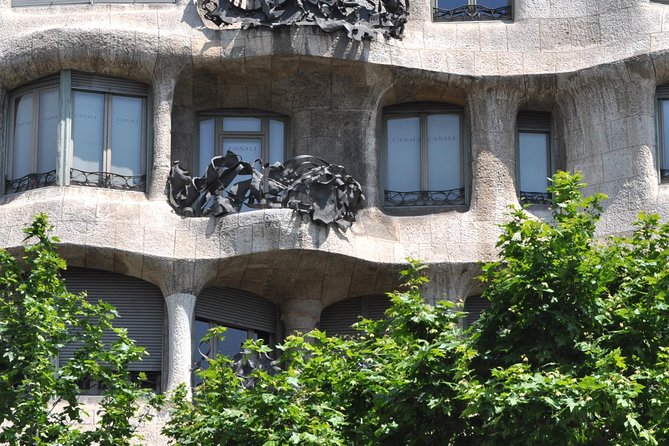
Casa Milà, better known as La Pedrera, is one of the tour’s major stops. Its irregular stone façade and sculptural roofline show Gaudi pushing a city residence away from straight, restrained design.
From the outside, you can study the way the building seems to move. The surfaces do not read like a flat wall with decoration attached. They have a more fluid quality, which helps explain why Gaudi’s work remains so recognizable.
The guide’s job here is not simply to point out a famous address. The walk’s themes include Gaudi’s movement toward total religious absorption, as well as the idea of deliquescent surfaces, a phrase that captures the melting, flowing quality of some Modernist forms. You may find this stop most rewarding if you want to understand how a façade communicates an idea, not just photograph it.
The limitation is that the tour does not take you inside La Pedrera. You will not see its interior spaces as part of the $54.44 experience. Still, an exterior-focused explanation can help you decide later if a separate admission is worth adding to your Barcelona plans.
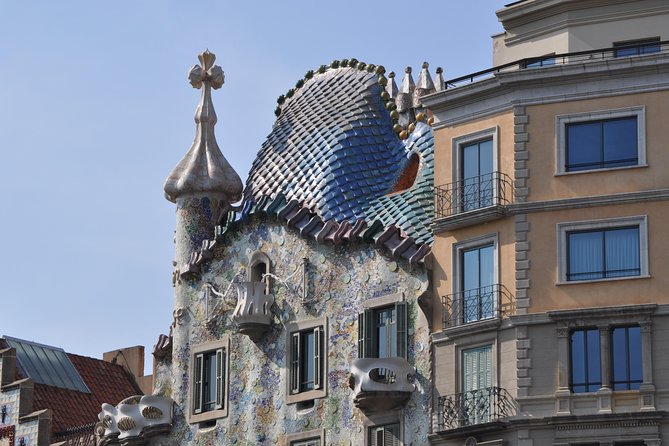
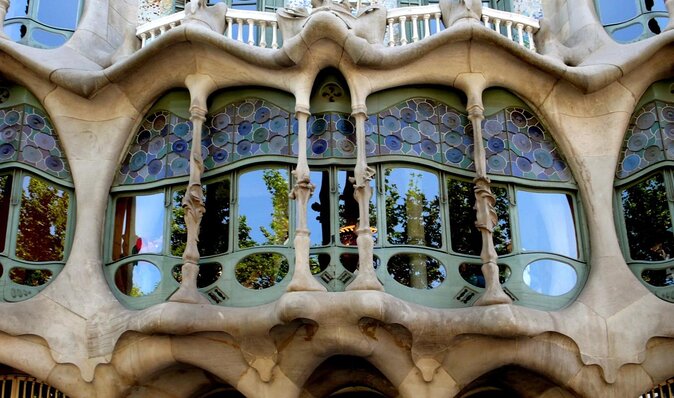
Casa Batlló and the strange beauty of the block
Casa Batlló is another essential Gaudi stop. Its façade is among the most visually arresting in the Eixample, with forms that seem organic rather than conventionally architectural.
The building is part of La Mansana de la Discordia, the famous block where several important Modernist works appear close together. That setting is valuable because it lets you compare different architects within a short walk. Instead of treating Gaudi as the only name that matters, the guide can show how his approach differs from the work beside it.
Casa Batlló is also a good place to think about the relationship between architecture and the city’s wealthy patrons. Modernist buildings were not merely private shelters. Their public façades communicated taste, money, imagination, and a willingness to take part in Barcelona’s cultural competition.
Again, you see the exterior only. Casa Batlló is known for its interior experience, so visitors who want rooms, stairways, and further detail should plan another visit. This tour gives you the setting and interpretation, but not the complete building visit.
A few more Barcelona half-days worth comparing
- Barcelona: Sagrada Familia Entry Ticket with Audio Guide
★ 4.6 · 105,312 reviews - Barcelona: Park Güell Admission Ticket
★ 4.4 · 76,534 reviews - Barcelona: 24 or 48-Hour Hop-On Hop-Off Bus Tour
★ 4.4 · 20,872 reviews - Barcelona: Park Guell Guided Tour with Skip The Line Entry
★ 4.7 · 17,563 reviews
La Mansana de la Discordia and three competing visions
La Mansana de la Discordia is one of the strongest parts of the route because it turns comparison into the main event. The name refers to a block where major Modernist buildings sit side by side, including Casa Batlló, Casa Amatller by Puig i Cadafalch, and Casa Lleó Morera by Domènech i Montaner.
You can see how three architects worked within the same city and period while developing very different visual languages. That is more useful than viewing each building as a separate curiosity. The block shows that Barcelona Modernism was not one fixed style. It was a debate carried out in stone, ceramic, glass, sculpture, and ornament.
Casa Amatller brings Puig i Cadafalch into the story, while Casa Lleó Morera adds Domènech i Montaner’s contribution. Both matter because Gaudi’s fame can overshadow his contemporaries. This part of the walk helps correct that imbalance.
The buildings are viewed from outside, so you will need to pay attention to the guide’s explanation and the details visible from the street. Bring your own curiosity. The stop rewards close looking, especially when you compare rooflines, windows, surface decoration, and the way each building meets the pavement.
Casa Calvet: an earlier, more restrained Gaudi
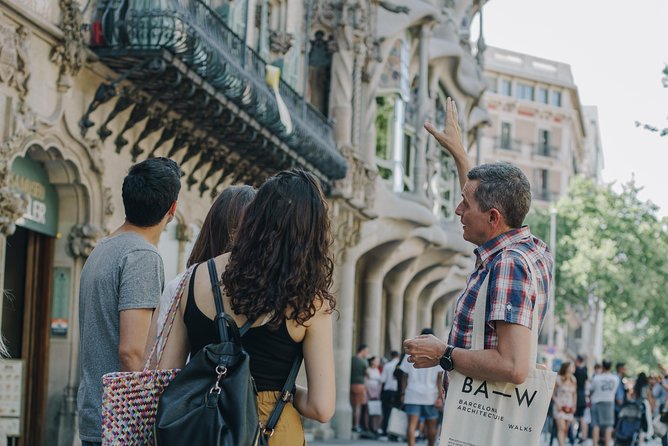
Casa Calvet gives the tour a useful contrast with Gaudi’s more famous works. It is included as part of the route and helps show that his career did not begin with the full visual freedom associated with Casa Batlló or La Pedrera.
Here you can consider Gaudi working within a more conventional urban setting while still adding his own touches. The building belongs in the story of his development, and it gives the guide a chance to explain eclecticism and the changing direction of Modernist architecture.
That historical sequence is one of the walk’s best features. You are not simply shown the most dramatic buildings in random order. The route connects different stages and ideas, so Gaudi’s work becomes easier to follow.
Casa Calvet may appeal most to people who want a fuller picture of Gaudi rather than only his most theatrical façades. If you have already seen photographs of Casa Batlló and La Pedrera, this stop adds a quieter point of comparison.
Fundació Antoni Tàpies and Barcelona’s wider art scene

The Fundació Antoni Tàpies appears on the route as another important architectural and cultural reference. The walk is not limited to Gaudi’s buildings. It places Modernism within Barcelona’s longer artistic conversation.
That wider frame keeps the tour from becoming a single-person biography. You look at the city as a place where architecture, fine art, politics, religion, and social ideas overlap. The guide may also use this stop to explain the end of Modernism and how Barcelona’s artistic identity continued to change.
The experience includes discussion of the Spanish Civil War, anarchism, positivist materialism, beatification, and the intellectual bourgeoisie. Those are demanding subjects, but they help explain why architecture in Barcelona carries more than visual appeal. The city’s buildings reflect arguments about faith, progress, class, national identity, and public life.
If you prefer a light sightseeing walk with little historical discussion, this may feel too dense. If you like connecting art to the society around it, this is where the tour earns much of its value.
Courtyards, Colony Güell, and the larger Gaudi story
The route includes some hidden Eixample courtyards, offering a break from the best-known street façades. These spaces help you notice how the planned city works beyond its grand fronts. They also give the guide a chance to discuss the ordinary urban setting around the spectacular buildings.
The conversation reaches beyond the immediate route to the Crypt of Colony Güell and the Sagrada Família. You do not visit those sites as part of this three-hour walk, but they help complete the story of Gaudi’s later direction.
The Sagrada Família is especially important to the tour’s central idea of Gaudi becoming a cathedral builder. Discussing it in connection with his earlier social concerns gives you a more useful way to understand the shift. You hear about the movement from utopian socialism and materialist thought toward a deeply religious architectural vision.
This broader discussion is valuable, but it also means the tour covers a lot. Three hours can only introduce some of these subjects. The guide may offer a strong framework, yet you should not expect a full academic study of every political and artistic movement mentioned.
Is $54.44 a fair price?
At $54.44 per person, this walk costs more than a basic city stroll, but the comparison is not quite fair. You are paying for a focused architecture tour led by a practicing architect, a small group capped at 20, and a route built around interpretation rather than simple photo stops.
The price makes the most sense if you already know you want context. You will likely get more from it if you are interested in how Barcelona developed, why Modernist architects differed from one another, and how Gaudi’s religious ideas changed his work.
The value is weaker if you mainly want building access. No entrance fees are included because the tour stays outside, and the ticket does not replace a visit to Casa Batlló, La Pedrera, or the Sagrada Família. Those require separate planning.
I would treat this as an orientation walk for serious architecture sightseeing. Afterward, you will have a better basis for choosing which interiors deserve your money and time.
Who should take this three-hour tour?
I would recommend it to you if you enjoy walking, asking questions, and looking closely at buildings. It suits first-time visitors who want a structured introduction, as well as repeat visitors who have seen Gaudi’s façades but want more social and architectural context.
It is also a good fit for students, design-minded visitors, and anyone who finds standard city tours too general. The English format and small group keep the experience straightforward.
You may want to skip it if you need step-free certainty, although the supplied details say most people can participate and service animals are allowed. You should also think twice if your schedule is tight or if you dislike long discussions. The tour lasts about three hours and covers serious material.
Bad weather can affect the walk, and a minimum group size is required. If the experience is canceled for either reason, you are offered another date or experience, or a full refund. You can cancel for a full refund up to 24 hours before the start time. Changes or cancellations inside that window are not accepted.
Should you book Barcelona and Gaudi?
Book this tour if you want Barcelona’s Modernist buildings explained by someone trained to read architecture, not just identify it. The strongest reasons are the small group, the comparison between Gaudi and his peers, and the effort to connect façades with politics, religion, class, and city planning.
Do not book it as your only Gaudi experience if entering the buildings matters to you. Use the walk as a three-hour introduction, then choose separate interior visits based on what catches your eye.
For me, the best reason to go is the change in viewpoint. You begin with famous façades, but you leave with a clearer sense of how Barcelona’s architecture grew from competing ideas. At $54.44, that is a solid buy for an architecture-minded visitor who values explanation as much as sightseeing.
FAQ
How long does the Barcelona and Gaudi tour last?
The tour lasts approximately three hours.
What time does the tour begin?
The tour starts at 10:30 am.
Where does the tour meet?
The meeting point is the Monument al Llibre at Gran Via de les Corts Catalanes, 634, in Barcelona’s Eixample district.
Where does the tour end?
The activity ends back at the original meeting point.
Does the tour go inside Casa Batlló or La Pedrera?
No. The tour visits the buildings from the outside and does not include interior visits.
How many people can join the tour?
The group has a maximum of 20 people.
Recently added around Barcelona
- Park Guell Guided Tour with Skip the Line Tickets★ 4.0 · 739 reviews
- Entrance to the Mirador Torre Glories Barcelona★ 4.5 · 193 reviews
- Bohemian Barcelona Neighborhood Evening Tapas & Wine Tour★ 5.0 · 419 reviews
- Transfers From Cruise Port to Barcelona Airport★ 4.5 · 155 reviews
- Authentic Flamenco Show Barcelona : Intimate Casa Sors Experience★ 5.0 · 809 reviews
- Barcelona Expert Tour with Local Guide in Eco Tuk Tuk Private★ 5.0 · 216 reviews
- Barcelona Sunset Cruise with Light Snacks and Open Bar★ 5.0 · 476 reviews
- Barcelona: Sagrada Familia, Park Guell & Tapas Private Tour★ 5.0 · 903 reviews
Gaudi Architecture Tours, compared.
Park Güell and Gaudí House Museum Entry Ticket
Read our review →

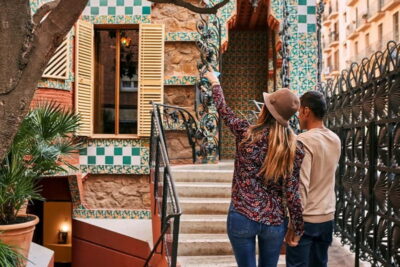
Gaudi’s Casa Vicens Skip-the-Line Entrance Ticket
Read our review →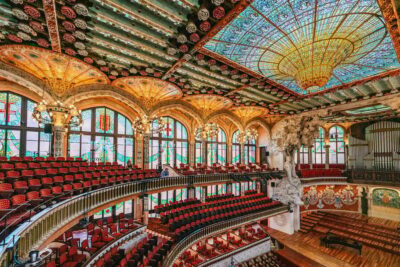
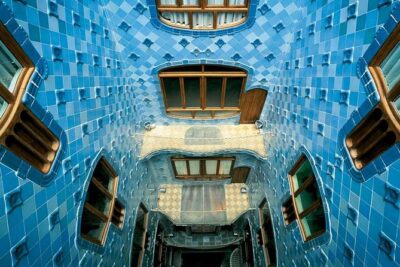
Casa Batllo Admission Ticket with Intelligent Audio Guide
Read our review →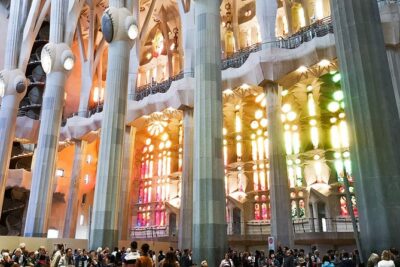
Sagrada Familia & Gaudi Tour Private or Small Group with Tickets
Read our review →Browse the lists this tour appears in