
Reviewed · GAUDI ARCHITECTURE TOURS
Barcelona: Palau de la Música Guided Tour
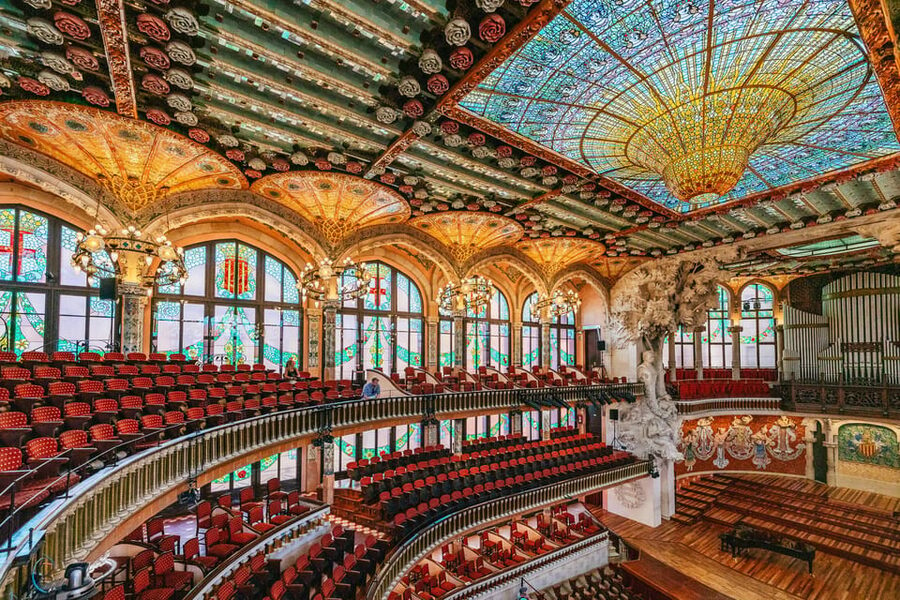
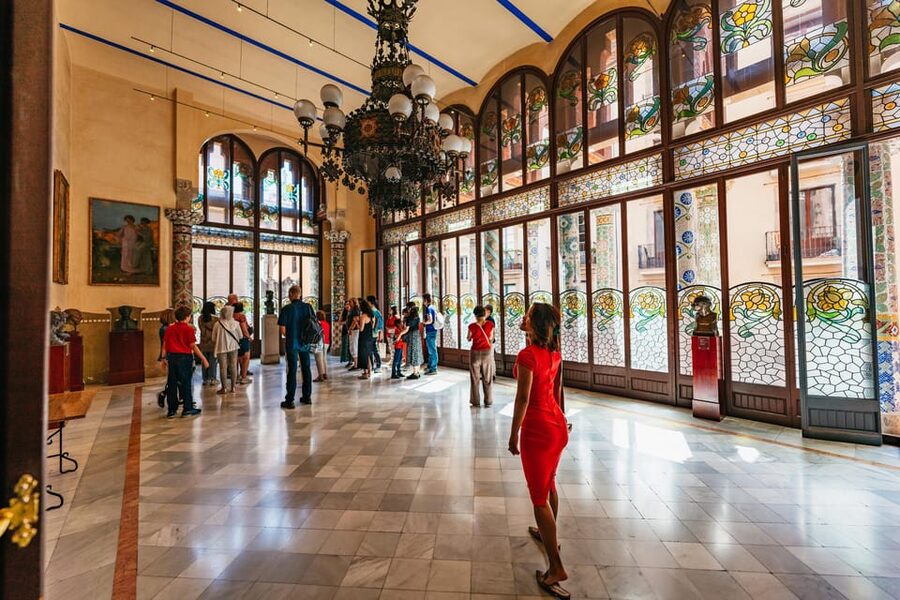
Barcelona’s Palau de la Música Catalana is not just a concert hall. It is a glowing Modernist work of art, packed with flowers, flags, sculpted details, colored glass, and a giant skylight that makes the ceiling seem to float. The guided tour takes you into parts of this working music center that you normally could not see on your own.
I especially like the short, focused route, which fits neatly into a sightseeing day, and the chance to hear the Palau’s organ at the end. Guides such as Yu, Juan, Marco, and Axel have earned praise for clear explanations and good humor. The main drawback is that 50 minutes passes quickly, and sound can suffer if construction, rehearsals, or several groups are using the building at once.
- The 1905 rehearsal hall introduces you to the Orfeó Català choir and the building’s musical purpose.
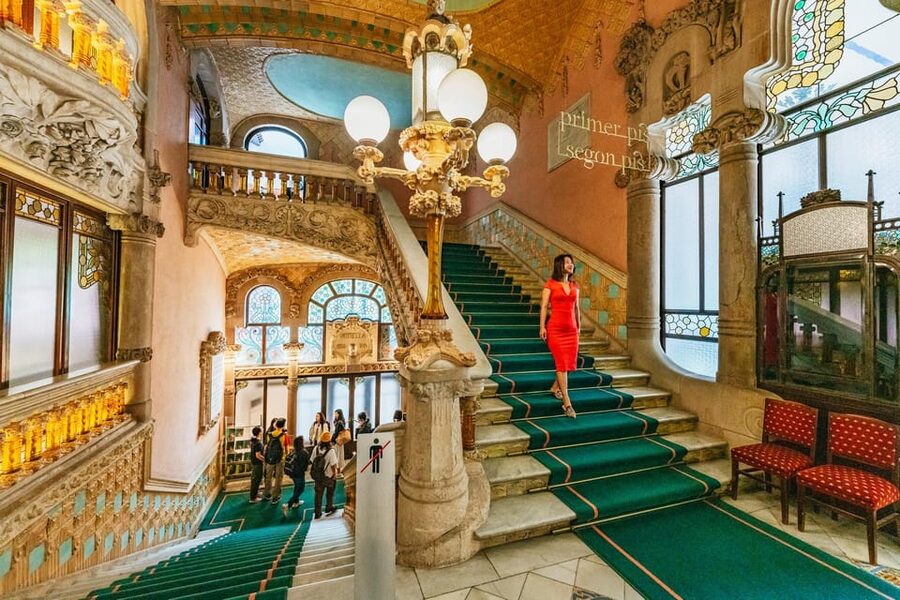
- The grand staircase turns everyday materials into an elaborate display of flowers, flags, and texture.
- Lluís Millet Hall offers a closer look at the columns and balcony inspired by nature.
- The Concert Hall skylight is the tour’s big visual moment, with color and daylight pouring overhead.
- A brief organ performance gives the visit a musical finish, though the exact format can vary.
- The $28 price makes sense if you want context and access, not just a quick look at a beautiful interior.
Why the Palau de la Música deserves your time
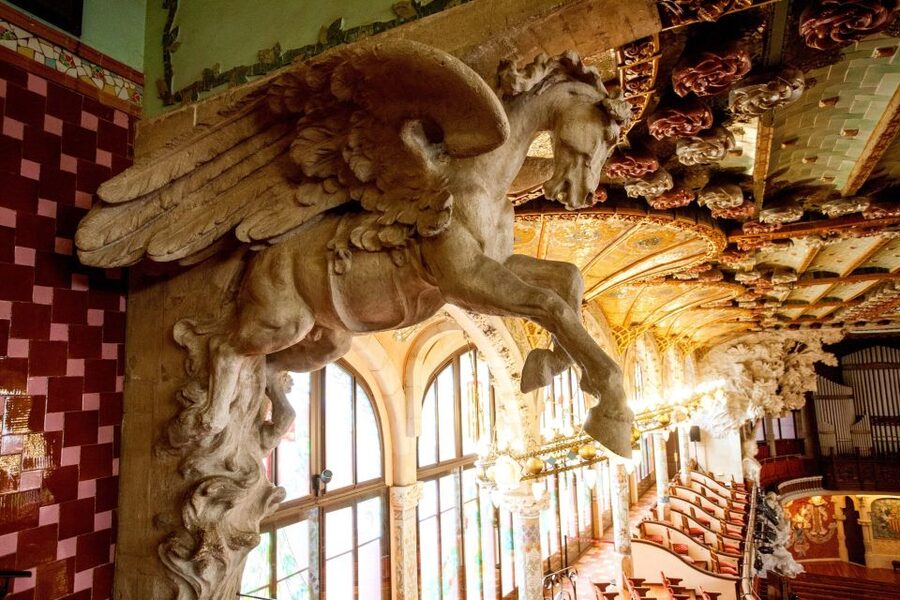
Barcelona has no shortage of famous architecture, but the Palau de la Música Catalana feels different from the city’s grand churches and apartment blocks. It was designed as a home for music, and nearly every surface supports that purpose. Sculptures, floral forms, stained glass, and columns turn the building into a celebration of Catalan culture and performance.
The visit is especially useful because the exterior gives you only a hint of what lies inside. The guided route helps you notice details you could easily miss, including the meaning behind the decorative shapes and the way the building’s spaces connect music, nature, and local identity.
At about 10 minutes on foot from Plaça de Catalunya and Las Ramblas, the Palau is easy to add between other central Barcelona sights. I would not treat it as a full morning excursion. Think of it as a compact architectural stop with enough substance to reward a dedicated visit.
Beginning in the Orfeó Català rehearsal hall
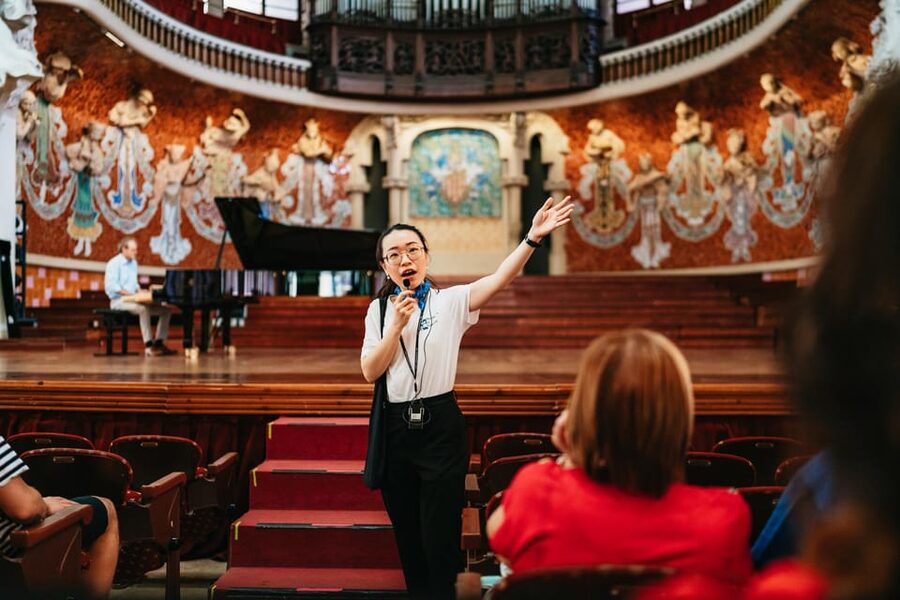
The tour begins in the rehearsal hall of the Orfeó Català, the choir linked closely to the Palau. The foundation stone was laid here in 1905, and the choir has continued rehearsing in the building for more than a century.
That detail gives the tour a useful starting point. You are not entering a frozen museum. You are entering a working music center where choirs, orchestras, school groups, and concert audiences still use the rooms.
You might hear singing or an orchestra rehearsing during your visit. Several bookings have coincided with choir practice, school performances, or orchestral rehearsals, creating an unexpected musical bonus. It is not something to count on, but it shows why the Palau feels more alive than a building visited only for its design.
The rehearsal hall itself is less flashy than the Concert Hall, which is helpful. You first learn what the building does before the decoration takes over. If your guide is good at setting the scene, as Juan, Marco, Yu, and Axel have been for many groups, the history becomes easier to follow.
More Gaudi houses worth a ticket:
- Barcelona: Casa Batlló Entry with Self-Audioguide Tour
★ 4.7 · 25,359 reviews - Barcelona: Park Güell and Gaudí House Museum Entry Ticket
★ 4.5 · 6,326 reviews - Barcelona: La Pedrera Night Experience
★ 4.4 · 4,633 reviews
The grand staircase and its small details
From the rehearsal area, you move to the grand staircase. This is one of the places where a guide adds real value, since the staircase is easy to admire without understanding how much is going on in its decoration.
Look for the layers of material, the floral forms, and the flags worked into the design. The effect is ornate without feeling like a random pile of decoration. The staircase announces that this is a building for public celebration, not a plain utility box for music.
Your guide will explain how different materials and decorative elements work together. Guides have been praised for giving people enough time to take pictures while still keeping the group moving. That balance matters here because you will want to look up, pause on the railings, and photograph details from several angles.
The staircase can also become crowded. The Palau hosts regular activity, and other groups or visitors may share the same spaces. If you are hoping for clean, empty photographs, move quickly when the guide gives you a pause, and keep your camera ready before the group stops.
Lluís Millet Hall and the language of nature
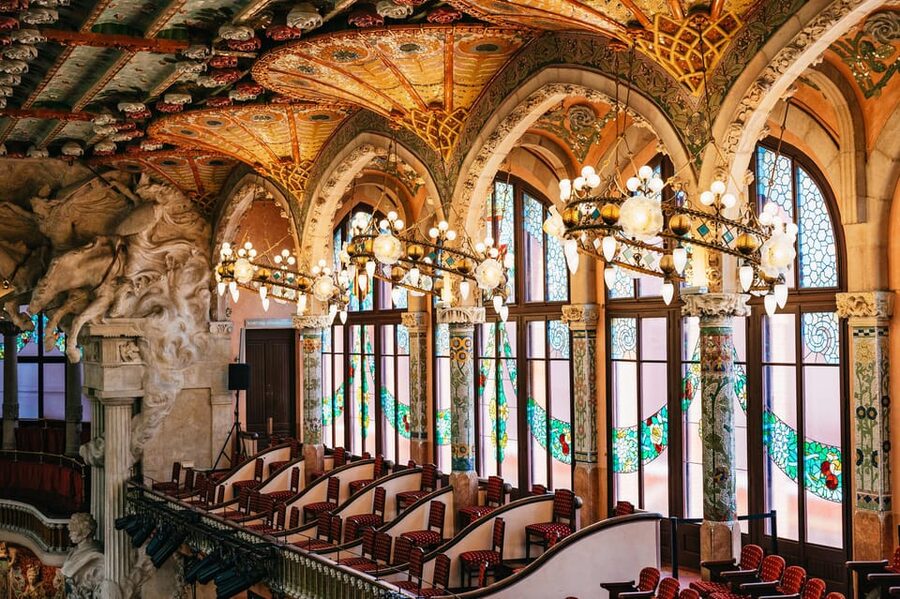
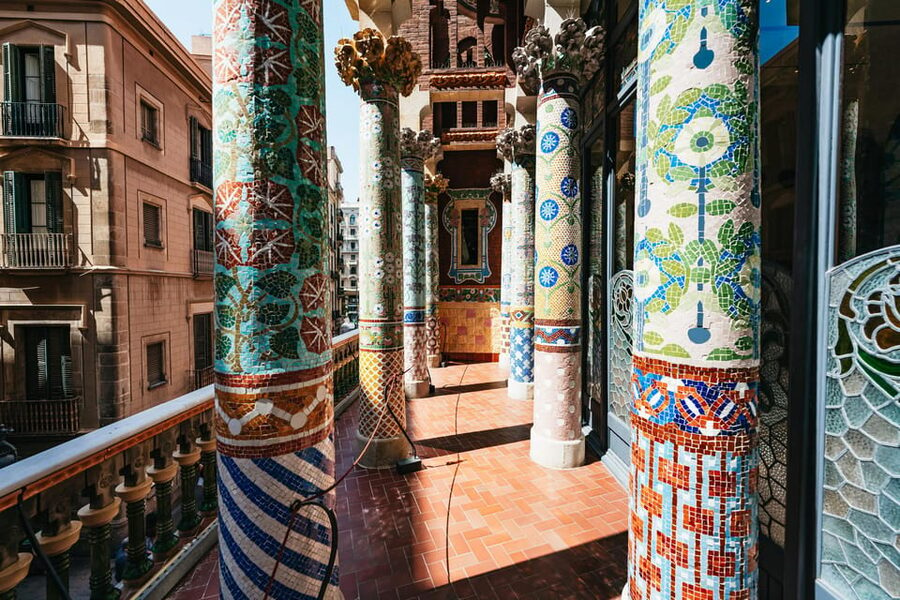
The next stop is the Lluís Millet Hall, named for the co-founder of the Orfeó Català. Its large balcony and columns are designed with natural forms in mind, continuing the building’s link between music and the living world.
This is a quieter stop than the main Concert Hall, but do not rush through it. The balcony gives you a useful view of the interior and helps you understand how the Palau’s decoration works at different levels. The building rewards looking both straight ahead and above your head.
This is also where a clear guide makes a difference. The tour is offered in English, Spanish, Catalan, French, Italian, and Chinese, depending on the option and schedule. Some guides have been especially good at speaking clearly and checking that the whole group is keeping up. One booking praised the use of translation between areas, while another appreciated an audio earpiece that allowed people to keep listening while taking pictures.
The earpieces are not perfect. A few people have found them crackly or difficult to hear, particularly when the building was noisy. If you struggle with the sound, move closer to the guide and mention it early rather than waiting until the tour is nearly over.
The Concert Hall and its famous skylight
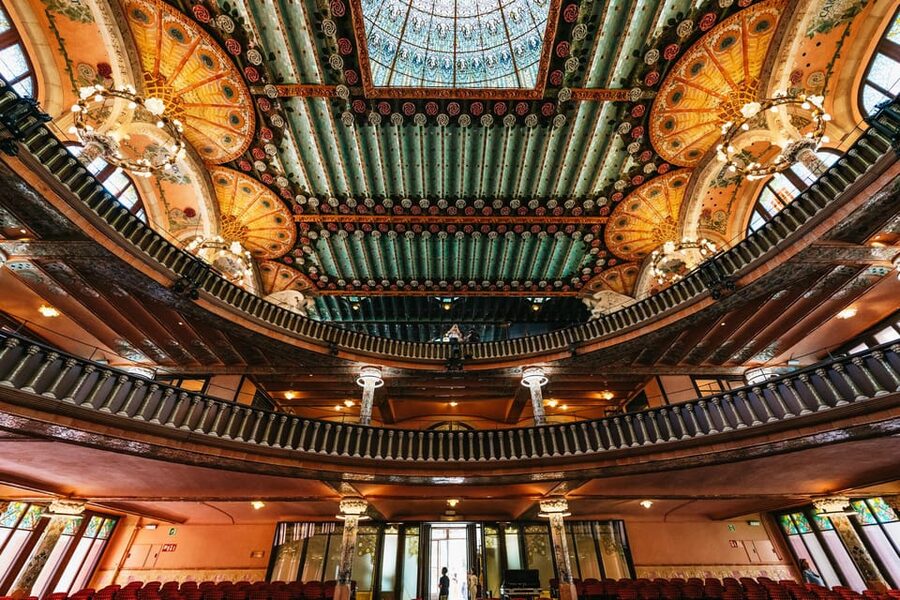
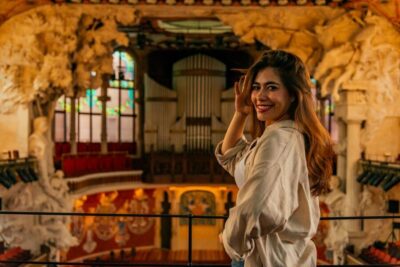
The Concert Hall is the visual high point. You enter a room filled with color, sculptural detail, and light, then head to the second floor to view the grand skylight from above.
The skylight is the feature most likely to stay with you. It draws daylight into the hall and makes the ceiling feel open rather than heavy. The design is a reminder that the Palau was built to make music a public, uplifting experience, not simply to provide rows of seats and a stage.
From the second floor, you can appreciate the hall’s arrangement in a way that is difficult from the entrance level. Look across the balconies, columns, decorative panels, and the ceiling before concentrating on your camera. A camera is worth bringing, but try to give yourself a few seconds without it. The hall is more impressive when you take in the whole volume instead of collecting isolated details.
Some special visits have included time on the stage or a chance to see a school concert. These moments depend on what is happening in the building and are not part of the guaranteed route. The reliable feature is the guided visit to the Concert Hall and the second-floor skylight.
Photography can be awkward if several groups arrive together. One booking found the hall too crowded for easy pictures, while others had enough time for a leisurely look. The best approach is to accept that this is a working venue and focus on the details available during your time there.
A few more Barcelona half-days worth comparing
- Barcelona: Sagrada Familia Entry Ticket with Audio Guide
★ 4.6 · 105,312 reviews - Barcelona: Park Güell Admission Ticket
★ 4.4 · 76,534 reviews - Barcelona: 24 or 48-Hour Hop-On Hop-Off Bus Tour
★ 4.4 · 20,872 reviews - Barcelona: Park Guell Guided Tour with Skip The Line Entry
★ 4.7 · 17,563 reviews
The organ performance at the end
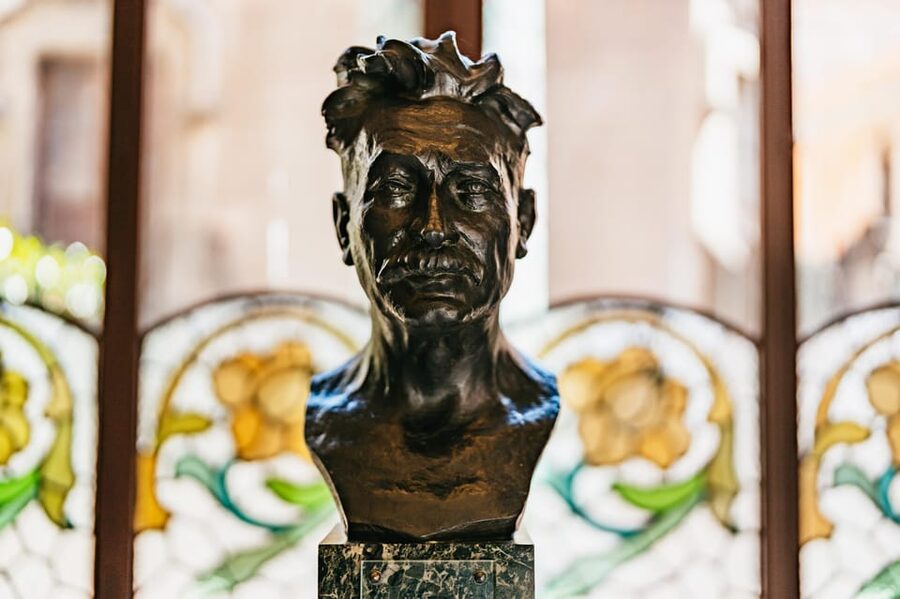
The tour closes with a short performance from the Palau’s organ. After a route centered on sight, this final sound gives the building a proper finish.
The performance is brief, so do not expect a full recital. It is more of an introduction to the hall’s acoustics and the role of music in the space. For many people, this is the emotional high point, especially if organ music is new to them.
The exact presentation can vary. Some groups have heard a live organ demonstration, while one booking described music that seemed live but was actually recorded. The important point is that you should treat this as a short closing feature, not a substitute for a concert.
If you have room in your schedule and enjoy classical music, consider booking an evening concert separately. The guided visit shows you the building; a concert lets you judge its acoustics in the way it was meant to be heard. Concert tickets are not included in the $28 tour.
How much value do you get for $28?
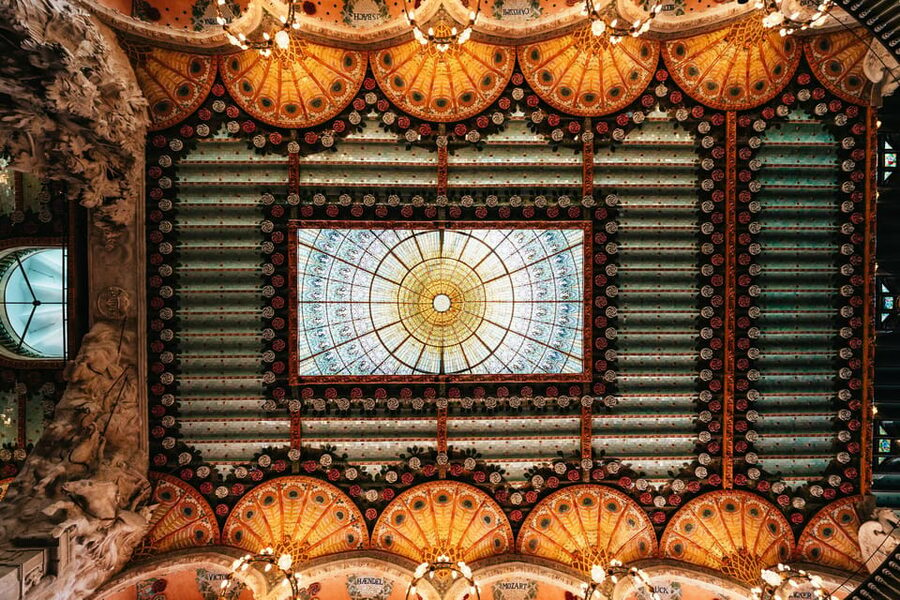
At $28 per person, this is not the cheapest architectural stop in Barcelona. You are paying for entrance, a live guide, and access to a working cultural venue rather than simply walking into a public lobby.
I think the price is fair if you care about design, music, or Barcelona’s Modernist movement. The building is spectacular enough to justify a visit on its own, but the guide explains why the details matter. Without that context, you may see flowers, columns, and colored glass without noticing the connection to Catalan culture and choral music.
The value is also helped by the short duration. A 50-minute tour does not consume half your day. You can place it near Plaça de Catalunya, Las Ramblas, the Gothic Quarter, or other central stops without building your entire schedule around it.
The calculation changes if you mainly want photographs. In that case, a guided visit may feel fast, especially if the group is large or the hall is busy. You also cannot assume that the organ performance will be a full live recital. Book it for the combination of access, explanation, and atmosphere rather than for one guaranteed musical event.
Guides, group pace, and practical comfort
The guide can shape the experience. Yu has been singled out for humor and warmth, while Juan, Marco, and Axel have been praised for clear explanations and strong engagement. Other guides have offered a quieter, more factual style. That variation is normal with rotating language tours.
The best guides give you historical context without burying the building in dates. They also allow enough time for photographs. One useful feature is the listening device, since you can sometimes step a little aside for a picture while still hearing the explanation.
Confirm your arrival time with the supplier before you go. Availability can change by day, and the meeting point may vary by the option you choose. Bring identification for confirmation at the box office.
The Palau is wheelchair accessible. The route takes place indoors, which makes it a helpful option during hot, rainy, or otherwise uncomfortable Barcelona weather. Wear shoes you can walk and stand in comfortably, since the tour moves through several rooms and pauses for commentary.
The café and restaurant are not part of the tour price, but they offer an easy way to extend the visit. Some people have enjoyed lunch or a drink before or after the tour, and the café has attracted both cultural visitors and local diners. The shop is another convenient final stop if you want a small reminder of the building.
Who will enjoy this tour most?
I would recommend it first to anyone who likes architecture but does not want a long academic lecture. The route is short, visual, and easy to understand. You get a clear sense of the Palau’s design without spending hours indoors.
It also suits music lovers, especially if you can add a concert later. The rehearsal hall, choir connection, organ, and active performance spaces make the visit more meaningful than a standard architecture walk.
Families and mixed-age groups should find the 50-minute length manageable. The colors, skylight, and grand staircase give younger visitors something to look at, while the guide provides enough context for adults.
You may want to skip the tour if your schedule is extremely tight or if you strongly dislike group visits. The building can be busy, sound equipment may not work perfectly, and you may have limited time for quiet photography. In that case, attending a concert could be the better way to experience the hall, though it requires a separate ticket and a longer commitment.
Should you book the Palau de la Música guided tour?
Yes, if you want more than a quick look at a beautiful interior. The $28 price buys a focused introduction to one of Barcelona’s most distinctive buildings, with access to the rehearsal hall, grand staircase, Lluís Millet Hall, Concert Hall, second-floor skylight, and a short organ performance.
Book it with realistic expectations. This is not a full concert, and the exact meeting point, guide, sound quality, and chance of seeing a rehearsal can vary. Confirm your time, bring identification and a camera, and arrive ready to look up.
For the best plan, take the guided tour during the day, then attend a separate concert at night if your budget and schedule allow. That pairing lets you understand the Palau’s design first and hear its acoustics in action later.
FAQ
How long does the Palau de la Música guided tour last?
The tour lasts 50 minutes.
How much does the tour cost?
The listed price is $28 per person.
Which languages are available?
Tours are available in Italian, French, English, Chinese, Catalan, and Spanish, depending on the option and schedule.
What areas does the tour visit?
The route includes the Orfeó Català rehearsal hall, grand staircase, Lluís Millet Hall, Concert Hall, and the second-floor view of the grand skylight.
Is an organ performance included?
Yes. The tour ends with a short performance from the Palau’s organ. The exact format may vary, and one booking noted that the music was recorded rather than played live.
Is the Palau de la Música accessible by wheelchair?
Yes, the activity is listed as wheelchair accessible.
Can I attend a concert with the tour ticket?
No. Concert tickets are not included. You need to book a concert separately if you want to hear a full performance in the Concert Hall.
Recently added around Barcelona
- Park Guell Guided Tour with Skip the Line Tickets★ 4.0 · 739 reviews
- Entrance to the Mirador Torre Glories Barcelona★ 4.5 · 193 reviews
- Bohemian Barcelona Neighborhood Evening Tapas & Wine Tour★ 5.0 · 419 reviews
- Transfers From Cruise Port to Barcelona Airport★ 4.5 · 155 reviews
- Authentic Flamenco Show Barcelona : Intimate Casa Sors Experience★ 5.0 · 809 reviews
- Barcelona Expert Tour with Local Guide in Eco Tuk Tuk Private★ 5.0 · 216 reviews
- Barcelona Sunset Cruise with Light Snacks and Open Bar★ 5.0 · 476 reviews
- Barcelona: Sagrada Familia, Park Guell & Tapas Private Tour★ 5.0 · 903 reviews
Gaudi Architecture Tours, compared.
Park Güell and Gaudí House Museum Entry Ticket
Read our review →
Gaudi’s Casa Vicens Skip-the-Line Entrance Ticket
Read our review →
Casa Batllo Admission Ticket with Intelligent Audio Guide
Read our review →
Sagrada Familia & Gaudi Tour Private or Small Group with Tickets
Read our review →
Browse the lists this tour appears in