
Reviewed · MUSEUMS
Barcelona Erotic Museum – Explore Art, History & Fun
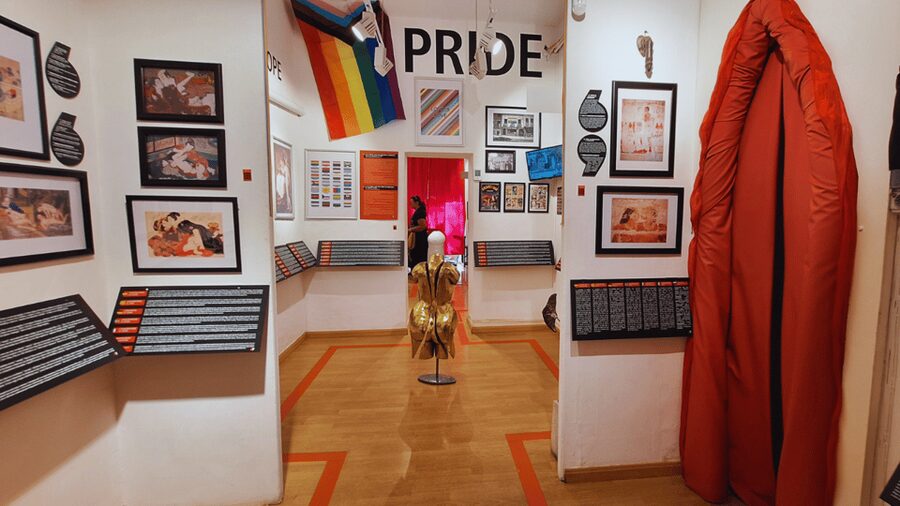
Barcelona’s Erotic Museum puts more than 800 pieces into a compact visit opposite La Boquería market. You’ll see paintings, photographs, sculptures, films, costumes, machines, and other objects linked to sexuality across different eras and cultures. It is part museum, part curiosity cabinet, and part cheeky stop on La Rambla.
I like the audio guide, which adds useful context to objects that could otherwise seem like simple jokes. I also like the welcome drink and the final erotic garden, two details that make the $17 ticket feel more like an outing than a quick shop visit.
The main drawback is length. Most people can see the museum in about an hour, and some rooms lean more heavily on spoken or written information than on substantial objects. The museum is also not wheelchair accessible, so check that point before booking.
Key points to know before you go
- More than 800 objects: Expect erotic paintings, photographs, sculptures, films, machines, costumes, and inventions from different periods and cultures.
- A short central Barcelona stop: The museum is at La Rambla 96 bis, directly opposite La Boquería market.
- Five audio-guide languages: Choose from Catalan, English, French, Spanish, or Dutch.
- A drink at the door: Your ticket includes cava, orange juice, or water, though the drink service may not always match the advertised wording.
- Newer subject areas: Rooms cover swingers, non-monogamy, sexual diversity, and the origins of the Catalan Kamasutra.
- Adults only: Entry is limited to visitors aged 18 and older, and the building is not wheelchair accessible.
What the Barcelona Erotic Museum is really like
This is not a grand national museum with spacious galleries and hours of quiet study. It is a small, theatrical attraction built for a light afternoon stop, with enough historical material to give the experience substance.
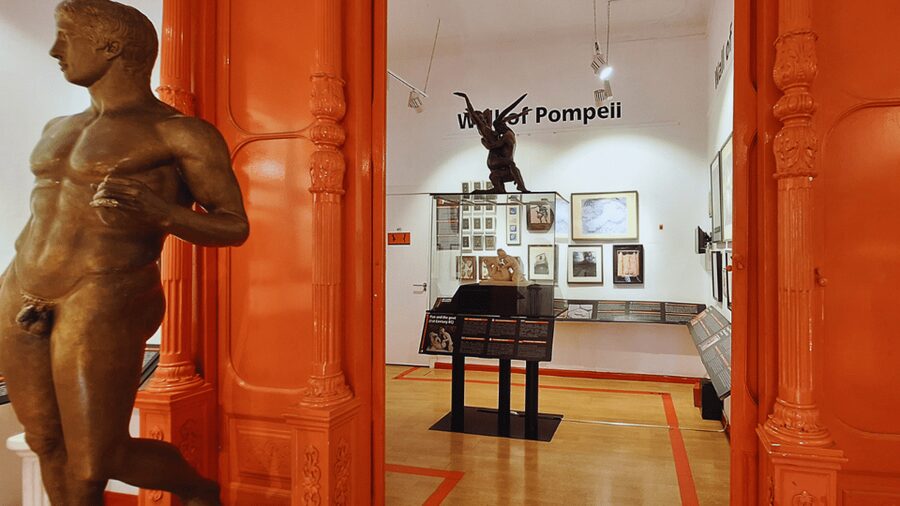
The museum looks at eroticism as part of human life and artistic expression. Its displays connect sex with painting, photography, sculpture, inventions, popular culture, and social customs. Some objects are plainly comic. Others are unusual, historical, or surprisingly detailed.
I would set aside roughly an hour. You can move quickly if you are mainly interested in the visual displays, or take longer with the audio guide and written explanations. One visitor found there was a little too much theory for the amount on display, and that is a fair warning. If you expect a large museum with endless rooms, you may finish sooner than expected.
Still, the short visit works well in Barcelona. You can fit it between La Boquería, the Gothic Quarter, and a walk along Las Ramblas without surrendering half a day.
More History Tours in Barcelona
- Barcelona: Tapas Walking Tour with Food, Wine, and History
★ 4.8 · 4,261 reviews - Barcelona Tapas Walking Tour: Food, Wine & History
★ 4.5 · 1,928 reviews - Barcelona: 2.5-Hour Bike or E-Bike Historical Tour
★ 4.5 · 1,262 reviews
Starting opposite La Boquería on Las Ramblas
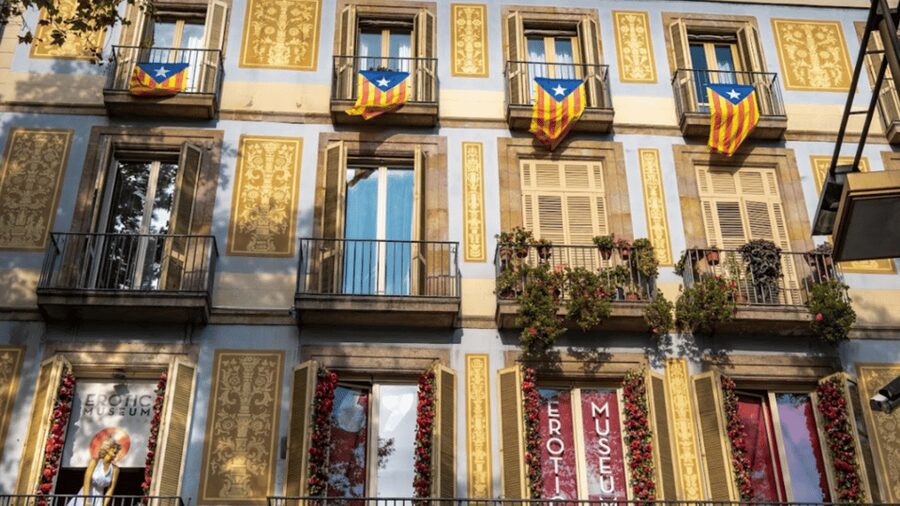
The address is La Rambla, 96 bis, directly across from the famous market. That location is one of the museum’s strongest practical features. You do not need to make a special trip across the city, and the stop pairs naturally with lunch, market browsing, or a stroll through central Barcelona.
Las Ramblas can be crowded and noisy, so give yourself a moment to find the entrance. Once inside, you receive the included drink, listed as cava, orange juice, or water. Some descriptions and visitor accounts refer to champagne or prosecco, but you should expect a glass of sparkling wine rather than a full beverage service. Food and additional drinks are not included.
The welcome drink sets the tone. This is not a solemn art visit. The atmosphere is playful, and the drink gives couples and friends an easy way to relax before looking at material that can feel awkward at first.
One practical note: opening delays have occasionally caused people to wait outside. If you arrive right at opening time, a small buffer is sensible. You can use the time to look across at La Boquería rather than standing with your nose against the door.
The first rooms: eroticism through art and history
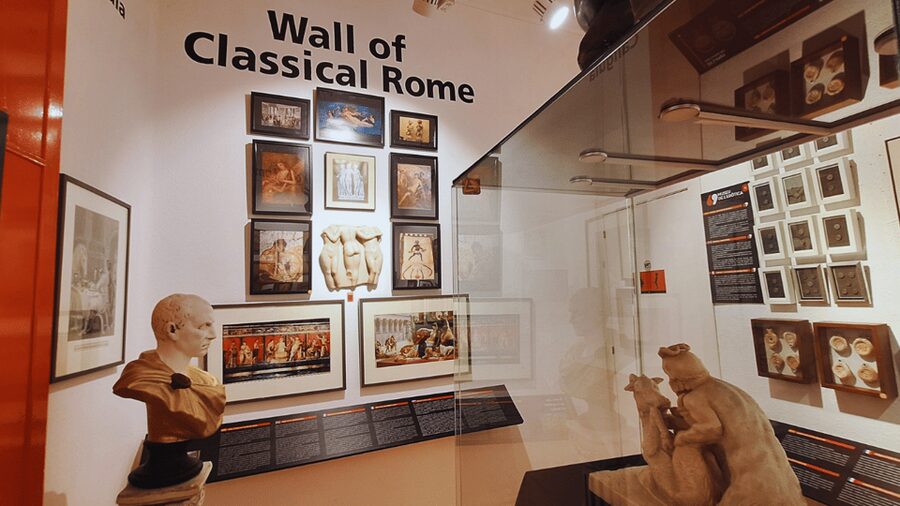
The early rooms introduce the museum’s broad subject: how people have represented desire through art and objects. You might find paintings, photographs, sculptures, and other pieces arranged by period or cultural setting.
The audio guide matters here. Without it, some works may look like amusing oddities with little explanation. With it, you get a clearer sense of what you are seeing and how attitudes toward sex have changed across societies.
The guide is available in Catalan, English, French, Spanish, and Dutch. If English is your preferred language, you can follow the displays without needing to read every wall panel. The spoken information also helps you pace the visit, especially in rooms with several similar objects.
The museum does not treat eroticism as a modern invention. Its approach places sexuality in a wider human story, connecting personal desire with art, customs, freedom, and social rules. That historical angle is the reason the visit can be more informative than its cheeky name suggests.
You will still encounter plenty of humor. The museum does not ask you to behave like you are in a quiet church. That mixture of facts and fun is central to its appeal.
Paintings, photographs, films, and unusual inventions
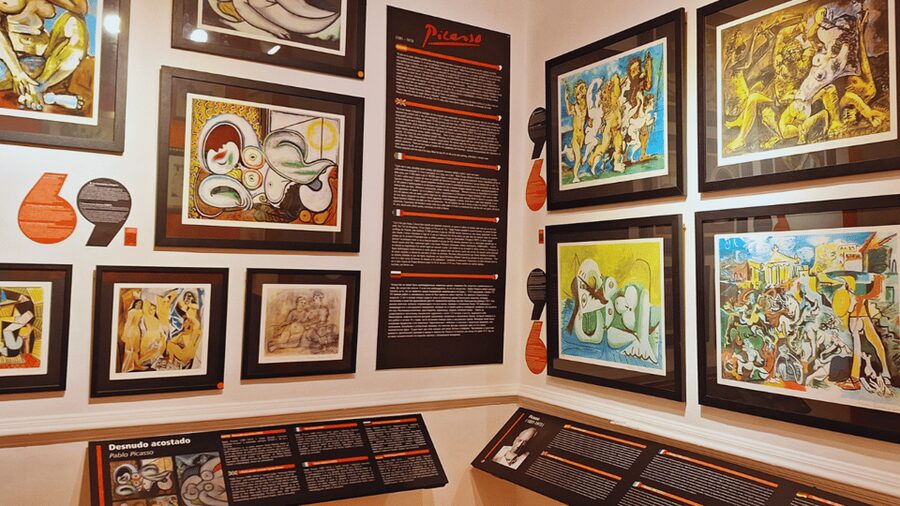
The collection moves beyond paintings. You can expect erotic photography, film-related material, machines, costumes, instruments, and surprising inventions. The variety keeps the visit from becoming a string of similar framed pictures.
Some objects are best understood as historical curiosities. Others show how technology and popular culture have shaped sexual expression. The displays also include material tied to different cultures, with separate areas devoted to particular places and traditions.
The range is useful, but it can also make the museum feel uneven. A few displays have clear visual impact, while others depend on the audio guide or written explanation. If you like context, take your time. If you prefer object-heavy museums, you may feel the collection could show more and explain less.
The tone is adult and sometimes deliberately strange. You should expect explicit material and humorous presentation. This is not an attraction for anyone looking for a neutral, family-friendly art museum.
The museum’s strongest moments come when an unusual object is paired with a concise explanation. The point is not only to shock you. It is to show how people have expressed desire, designed tools, created images, and set social rules over time.
More Museum Tours in Barcelona
- Barcelona: FC Barcelona Museum “Barça Immersive Tour” Ticket
★ 4.4 · 10,944 reviews - Barcelona: Park Güell and Gaudí House Museum Entry Ticket
★ 4.5 · 6,326 reviews - Barcelona: Picasso Museum Skip-the-Line Guided Tour
★ 4.5 · 3,355 reviews - Moco Museum Barcelona Banksy & More
★ 4.6 · 2,340 reviews
The rooms on diversity and non-monogamy
The newer rooms address swingers, non-monogamy, sexual diversity, and sexual freedom. These sections bring the subject closer to modern life and help the museum move beyond historical artifacts.
I appreciate the attempt to present sexuality as broader than one narrow tradition. The museum connects Barcelona with tolerance and sexual diversity, presenting the city as a place shaped by artists, dreamers, and people who challenged social limits.
The coverage is not fully wide-ranging. One thoughtful criticism is that the exhibitions could say more about Black trans identities, people with disabilities, and women artists and designers. If representation across many identity groups is especially important to you, keep that limitation in mind.
That does not make the rooms useless. It simply means the museum offers an introduction rather than a complete account of sexual identity and freedom. You will find topics that are rarely part of a standard city museum, but you should not expect every community or perspective to receive equal attention.
The Catalan Kamasutra and Barcelona’s local angle
A particularly local thread concerns the origins of the Catalan Kamasutra. This gives the visit a Barcelona connection rather than making it a general collection of erotic objects from around the world.
The museum also frames the city itself as part of the story. Barcelona’s artistic reputation, social tolerance, and long attraction for unconventional characters all help explain why this kind of attraction fits naturally on La Rambla.
That local angle is useful because the museum could otherwise feel interchangeable with similar attractions in other cities. The Catalan material gives you something specific to Barcelona, even if the displays also range across international themes.
Listen carefully in this section. The audio guide is where small facts and historical details tend to do the most work. You may not remember every object, but you are more likely to leave with a clearer sense of how local culture and sexual expression have overlapped.
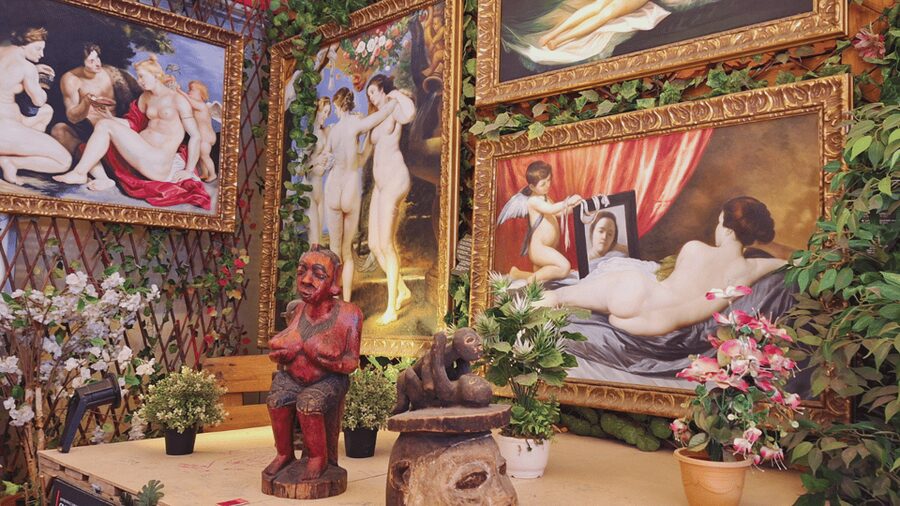
Finishing in the erotic garden
The visit ends in the museum’s erotic garden. It is a change of mood after the indoor displays and provides a visual finale rather than simply leading you back to the exit.
The garden is not a separate day trip or a large public park. Think of it as a compact part of the museum experience. Its value lies in the contrast between the rooms and the final outdoor-style setting.
A live singer may sometimes perform from the balcony, catching you by surprise. That detail adds to the theatrical feel, though it is not something I would treat as the main reason to buy a ticket. It is an occasional extra, not a guaranteed scheduled performance in the information provided.
The museum may also offer a discount in its shop after your visit. The shop is optional, and you do not need to buy anything for the visit to feel complete. It can be worth a quick look if you are interested in novelty gifts or erotic memorabilia.
Is $17 a fair price?
At $17 per person, the museum is reasonably priced for a central Barcelona attraction, but value depends on how you use it. If you spend an hour with the audio guide, enjoy the welcome drink, and combine it with La Boquería, the ticket makes sense as part of a wider afternoon.
If you race through in 20 minutes, the price may feel high for a small museum. The collection is varied, but the space is not enormous, and several sections rely on information rather than large, dramatic displays.
The drink helps soften the cost, though it should not decide your booking. You are paying for the collection, the presentation, the audio guide, and the unusual subject matter. The included cava, juice, or water is a pleasant extra.
I would compare it with the cost of other short attractions in central Barcelona. For couples and friends who enjoy odd museums, the price is fair. For solo visitors who feel uncomfortable in a playful adult setting, the same ticket may not feel like good value.
Who will enjoy this visit most
This museum suits adults who like offbeat attractions, social history, unusual art, and a little silliness. It works especially well for couples, groups of friends, and anyone who wants a break from churches, galleries, and major monuments.
You do not need specialist knowledge. The audio guide gives enough background to make the objects easier to understand, and the museum does not demand a serious academic approach.
I would be more cautious if you dislike explicit displays, public humor, or attractions that mix education with novelty. The museum is designed to entertain as well as inform, and some sections may feel more like curiosities than formal art history.
It can also feel awkward if you visit alone. The material itself is not necessarily the issue. The playful setting and groups of friends can make a solo visit feel more exposed, especially if you are already uncomfortable with the subject.
The museum is for adults only, and that rule is firm. It is not a family stop, and it is not suitable for wheelchair users because the building is not wheelchair accessible.
How to fit it into your Barcelona day
Plan the museum as a short stop rather than the day’s main event. Start at La Boquería, visit the museum across the street, then continue toward the Gothic Quarter or another central sight.
You can also reverse that order. A meal or drink beforehand may help you feel more relaxed, but it is not necessary. The included beverage gives you a small pause at the start, and the museum itself takes about an hour for most people.
Do not schedule it as a rushed appointment immediately before a train or timed attraction. The museum may open slightly late, and you will get more from it if you listen to at least some of the audio guide.
Because the ticket is valid for one day, it works best when you keep the rest of your central Barcelona plans flexible. Free cancellation is available up to 24 hours in advance, and you can reserve now and pay later if you want to keep your schedule open.
Should you book the Barcelona Erotic Museum?
Book it if you want a compact, adult-only attraction with a mix of art, history, unusual objects, and humor. The strongest reasons are the central location, the varied collection of more than 800 pieces, the five-language audio guide, and the easy pairing with La Boquería.
Skip it if you want a major museum with extensive galleries, if you need step-free wheelchair access, or if the subject matter is likely to make you uncomfortable. The museum is short, and some of the experience rests on explanation rather than spectacular objects.
For most suitable visitors, I would call it a good-to-see stop rather than an essential Barcelona sight. At $17, it is worth booking when you are curious, open-minded, and already spending time on Las Ramblas. Give it an hour, use the audio guide, and treat the garden and welcome drink as part of a playful city break, not as the sole reason for the visit.
FAQ
How long does a visit to the Barcelona Erotic Museum take?
The ticket is valid for one day, but the museum itself can usually be visited in about an hour. You may spend longer if you listen closely to the audio guide and read the explanations.
What is included in the ticket?
The ticket includes general entry, the audio guide, and a welcome drink of cava, orange juice, or water. Food and additional drinks are not included.
Which languages are available for the audio guide?
The audio guide is available in Catalan, English, French, Spanish, and Dutch.
Where is the museum located?
The museum is at Museu Eròtic de Barcelona, La Rambla, 96 bis, 08002 Barcelona, directly opposite La Boquería market.
Is the museum suitable for children?
No. The experience is for adults aged 18 and older.
Is the museum wheelchair accessible?
No. The museum is not wheelchair accessible.
Recently added around Barcelona
- Park Guell Guided Tour with Skip the Line Tickets★ 4.0 · 739 reviews
- Entrance to the Mirador Torre Glories Barcelona★ 4.5 · 193 reviews
- Bohemian Barcelona Neighborhood Evening Tapas & Wine Tour★ 5.0 · 419 reviews
- Transfers From Cruise Port to Barcelona Airport★ 4.5 · 155 reviews
- Authentic Flamenco Show Barcelona : Intimate Casa Sors Experience★ 5.0 · 809 reviews
- Barcelona Expert Tour with Local Guide in Eco Tuk Tuk Private★ 5.0 · 216 reviews
- Barcelona Sunset Cruise with Light Snacks and Open Bar★ 5.0 · 476 reviews
- Barcelona: Sagrada Familia, Park Guell & Tapas Private Tour★ 5.0 · 903 reviews
Museums, compared.

FC Barcelona Museum “Barça Immersive Tour” Ticket
Read our review →
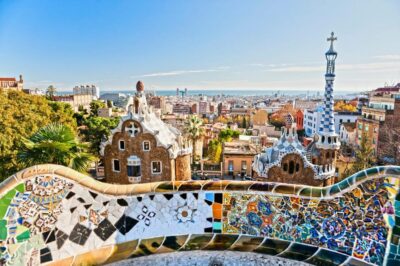
Park Güell and Gaudí House Museum Entry Ticket
Read our review →
Puro Flamenco Show with Optional Museum Ticket
Read our review →
Girona & Dali Museum Small Group Tour with Pick-up from Barcelona
Read our review →
Oceanogràfic, Hemisfèric & Science Museum Combo
Read our review →Browse the lists this tour appears in