
Reviewed · GAUDI ARCHITECTURE TOURS
Barcelona Architecture Walking Tour With Casa Batlló Upgrade
Barcelona’s modernist architecture is much easier to understand when you see it as a conversation between rival architects. This walk begins at Sant Pau, continues past Sagrada Familia, and finishes among the famous façades of Passeig de Gràcia. You get Gaudí, Domènech i Montaner, Puig i Cadafalch, and others in one compact route.
I like the clear choice between a lower-cost exterior tour and an option that adds entry to Casa Batlló. I also like the small chocolate stop at Casa Amatller, which gives the walk a pleasant local touch. The main caution is the pace and street noise. One group found it hard to hear the guide without listening devices, so staying close matters.
Key points before you book
- Sant Pau provides a strong opening: Begin with Lluís Domènech i Montaner’s former hospital complex, one of the world’s largest Art Nouveau sites.
- Sagrada Familia is viewed from outside: You learn about the symbols on its façades, but church admission is not included.
- Casa Batlló is the important upgrade: Add the ticket if you want to explore Gaudí’s interior after the walking portion.
- Passeig de Gràcia brings the big finish: Casa Milà, Casa Batlló, Casa Amatller, and Casa Lleó Morera crowd together here.
- The tour is short but information-heavy: Expect two to two and a half hours, with a maximum group size of 20.
- Guides can shape the experience: Guides such as Perrine and Patricio have been praised for lively explanations of Gaudí, Barcelona, and Catalan culture.
Why this Barcelona architecture walk works
Barcelona can feel like an open-air architecture museum, but the details are easy to miss without help. A dragon-shaped roof, a strange window, or a carved flower may look decorative until someone explains the political, religious, or natural ideas behind it.
This tour gives you that framework. It does not try to take you through every famous building in the city. Instead, it follows a useful line from the Sant Pau complex through the Eixample to Passeig de Gràcia, showing how Catalan modernism developed and how its best-known architects responded to one another.
The price is about $35.07 per person, which is fair for a two-hour guided walk if you mainly want orientation and exterior views. The value changes if you add Casa Batlló admission. That upgrade costs more, but it saves you from arranging a separate visit and puts a major interior at the end of the route.
You should think of this as an architecture introduction, not a full museum tour. Several admission tickets are not included, including Sant Pau and Sagrada Familia. You see and discuss those buildings from outside unless you make separate plans.
More Walking Tours in Barcelona
- Barcelona Tapas and Wine Experience Small-Group Walking Tour
★ 5.0 · 5,804 reviews - Barcelona: Tapas Walking Tour with Food, Wine, and History
★ 4.8 · 4,261 reviews - Barcelona Tapas Walking Tour: Food, Wine & History
★ 4.5 · 1,928 reviews
Starting at Sant Pau’s modernist hospital
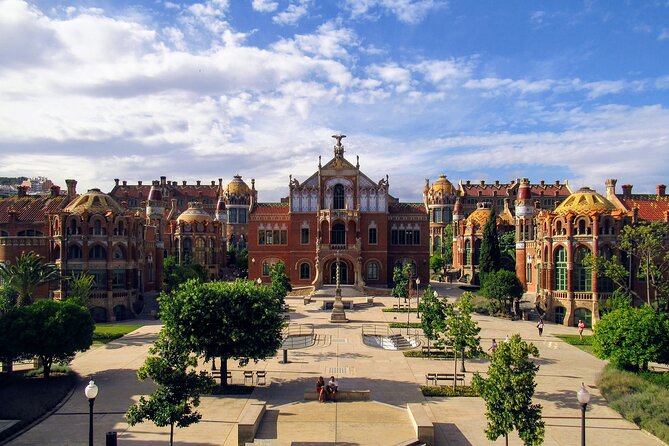
The meeting point is the Recinte Modernista de Sant Pau at Carrer de Sant Antoni Maria Claret, 167. This is a useful starting place because it immediately shows that Barcelona modernism was not limited to private homes and showy apartments.
Lluís Domènech i Montaner designed the complex, which was once one of Barcelona’s most important hospitals. It remained in use until the late 1990s, giving the site a practical past beneath its decorative surfaces.
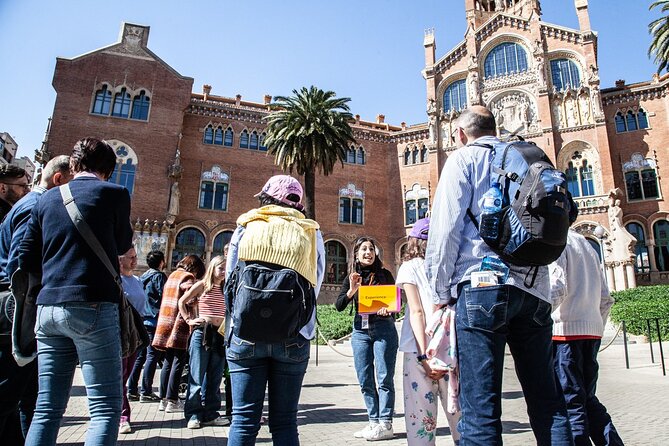
You will spend about 15 minutes here. The guide focuses on the architecture and the site’s former role, but admission is not included. If you want to go inside the complex, plan a separate ticket and visit rather than expecting this short stop to cover the interiors.
The opening also puts the route in context. Domènech i Montaner was one of the major figures in Catalan modernism, and his work gives you a useful comparison point for Gaudí later in the walk. His buildings often combine structure, ornament, light, and local artistic traditions in a way that feels less theatrical than Gaudí but no less carefully considered.
Walking along Avinguda Gaudí to Sagrada Familia
From Sant Pau, the route follows Avinguda Gaudí toward the Basilica de la Sagrada Familia. This is one of the more enjoyable stretches because you are not simply being driven from sight to sight. You move through the city and see the relationship between the hospital complex and Gaudí’s famous church.
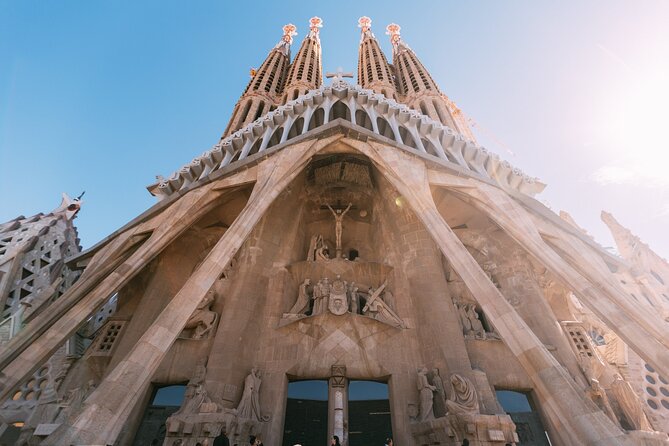
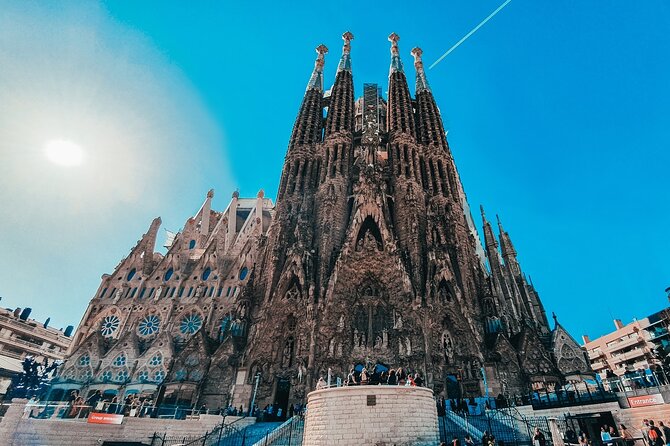
The stop at Sagrada Familia lasts about 30 minutes. You view the basilica from several angles while the guide explains symbols on the façades. That outside perspective is useful because the church can look confusing when seen only in photographs. The carvings, towers, and groups of figures make more sense when someone points out what to notice.
Admission to Sagrada Familia is not included. That is important when planning your day. If you want to see the interior, the tour is best used as a primer, followed by a separate visit. A separate ticket also gives you the time to explore at your own speed instead of trying to fit the church into a short walking-tour stop.
One practical point: this is a city walk, not a quiet lecture room. Traffic, pedestrians, and street sounds can make it hard to catch every sentence. Stay near the guide and ask questions when you need clarification. A past group found the pace too quick and had trouble hearing without listening devices, so this is not the time to hang back at the edge of the group.
The smaller stops near Diagonal
The route continues to CaixaForum Macaya, where you hear the story behind this less familiar modernist building. The stop takes about 10 minutes. It is a good reminder that Barcelona’s architectural character is not made only by the buildings printed on postcards.
Next comes Casa de les Punxes, with about 15 minutes devoted to its unusual, fairy-tale appearance. The building’s pointed towers and decorative details make it one of the more distinctive stops on the route. The guide tells you the story behind what has been called Barcelona’s most fairy-like house.
These shorter stops work best if you enjoy comparison. You can look at how different architects handled towers, balconies, stonework, and ornament. You also get a break from the most famous names, which helps prevent the walk from turning into a simple checklist of Gaudí buildings.
The tradeoff is time. Ten or 15 minutes is enough for an explanation and exterior viewing, but not enough for a full architectural study. If one of these buildings captures your attention, note its name and return later with more time.
More Gaudi houses worth a ticket:
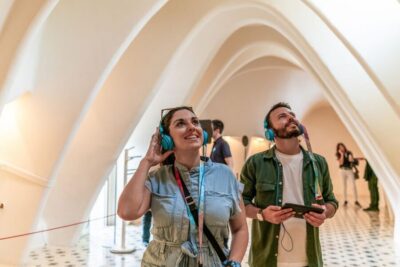
- Barcelona: Casa Batlló Entry with Self-Audioguide Tour
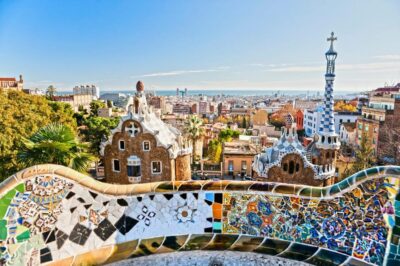
★ 4.7 · 25,359 reviews - Barcelona: Park Güell and Gaudí House Museum Entry Ticket
★ 4.5 · 6,326 reviews - Barcelona: La Pedrera Night Experience
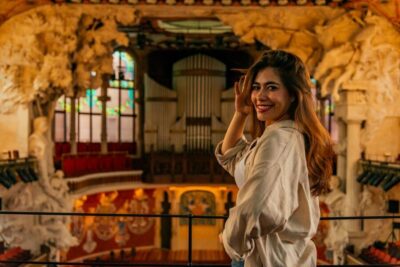
★ 4.4 · 4,633 reviews - Barcelona: Palau de la Música Self-Guided Tour
★ 4.6 · 3,603 reviews
Passeig de Gràcia and the famous disagreement
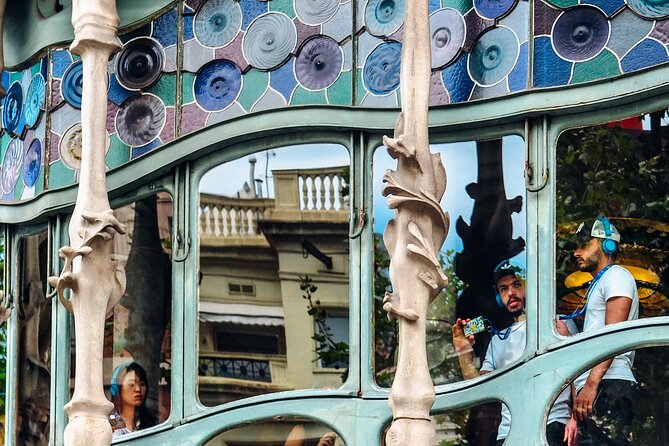
The route reaches Passeig de Gràcia for its main concentration of modernist façades. This grand avenue is home to Casa Milà, Casa Batlló, Casa Amatller, and Casa Lleó Morera, along with other buildings by leading Catalan architects.
The guide explains how architects including Gaudí, Domènech i Montaner, and Puig i Cadafalch shaped this part of the city. The famous cluster is known as the Illa de la Discòrdia, or Block of Discord, a name that suits the competing styles packed close together.
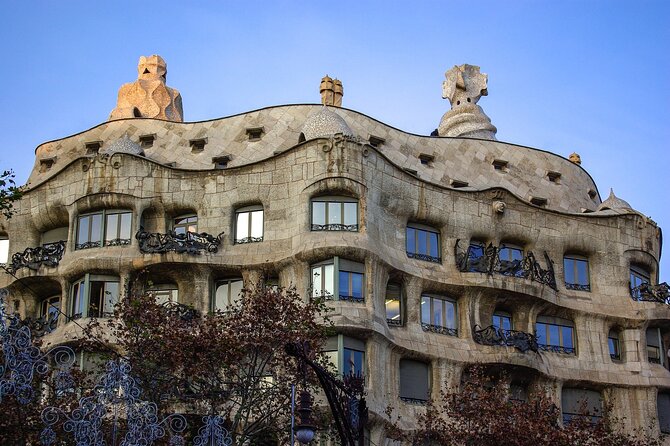
Here, you can compare the buildings almost side by side. Casa Milà has Gaudí’s unusual stone façade and sculptural roofline. Casa Batlló is more playful, with color and organic shapes. Casa Amatller has a more geometric appearance, while Casa Lleó Morera adds another layer to the architectural contest.
The walk spends about 30 minutes in this area. That time is well used if you want help reading façades instead of simply taking pictures. Look up often. The most interesting features are above street level, and the avenue’s traffic can distract you from small details around windows, balconies, and rooflines.
The endpoint is in front of Casa Lleó Morera at Passeig de Gràcia, 35. This makes the tour convenient if you want to continue exploring the avenue, shop in the Eixample, or visit one of the buildings afterward.
Casa Amatller and the chocolate pause
Casa Amatller provides one of the tour’s more unusual details. You enter the ground-level shop for a lesson about Barcelona chocolate and a sample.
This is a small stop, about 15 minutes, but it breaks up the architectural commentary in a pleasant way. It also connects the grand façade with an everyday local product. You are not only looking at a building from across the street. You get a brief reason to step inside and experience part of its commercial life.
The chocolate sample is included, while broader admission to buildings is generally not. Do not confuse this brief shop visit with a full tour of Casa Amatller’s interior. The stop is a taste of the building and its chocolate connection, not a replacement for a dedicated house visit.
The Casa Batlló upgrade: worth the extra cost?
Casa Batlló is the key decision point when booking. The standard walking experience concentrates on exterior architecture, while the upgrade adds admission to Gaudí’s elaborate creation.
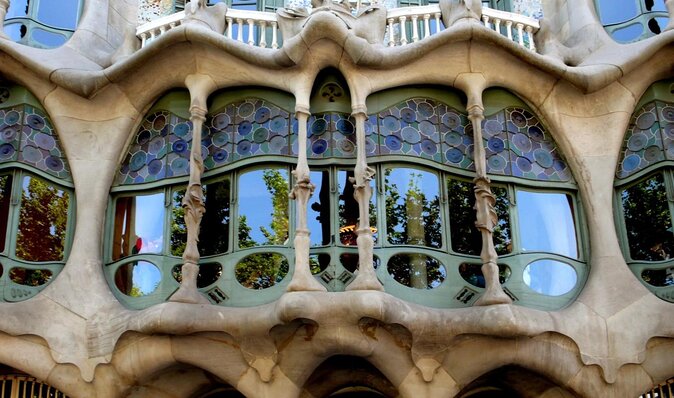
I would consider the upgrade if you already know you want to see one modernist interior. Casa Batlló is famous for its color, unusual forms, and detailed window decoration, and the interior helps explain why the façade attracts so much attention. The add-on also makes the tour feel more complete because you move from street-level observation into one of Gaudí’s major works.
Skip the upgrade if you have already booked Casa Batlló separately or if your priority is keeping the cost low. The walking route still gives you plenty to see from outside, including several major buildings along Passeig de Gràcia.
The timing matters. The complete experience lasts about two to two and a half hours, and the Casa Batlló visit is an optional addition. Check the exact booking option and timing so you know how the interior visit fits with the walking portion and the rest of your day.
What the guides add to the buildings
The best version of this tour depends heavily on the guide. The information can move beyond dates and architect names when the guide explains Barcelona’s cultural, political, and economic setting.
Perrine received especially strong praise for enthusiasm and for connecting the work of Domènech i Montaner, Gaudí, and Sayrach to wider Catalan culture. Patricio was also singled out for clear explanations of Gaudí and his work. Cal was described as engaging and fun, with useful local tips shared by a guide in training.
That range tells you what to hope for, but not what can be guaranteed on your date. Guide quality may vary. One less successful experience involved a guide who walked too quickly, gave little information between stops, and was difficult to hear on noisy streets.
You can improve your odds by staying close, speaking up when you cannot hear, and asking the guide to repeat a point for the whole group. The group limit is 20 people, which is manageable, though it is not the same as a private tour. A very small group can feel far more personal, as happened when Perrine led a walk for only two people, but group size depends on bookings.
Pace, walking, and practical planning
This is a genuine walking tour with several outdoor stops. One participant described a lot of walking but still found it a good way to feel the city. You should wear comfortable shoes and leave room in your schedule for the route to take the full two and a half hours.
The tour is offered in English and uses a mobile ticket. The start is near public transportation, and most people can take part. The end is on Passeig de Gràcia, not back at Sant Pau, so plan your next stop from the Eixample rather than assuming you will return to the starting point.
The tour is usually booked about 28 days in advance. That is a useful sign that you should not leave it until the last minute if your Barcelona dates are fixed, especially if you want the Casa Batlló option.
Free cancellation is available up to 24 hours before the start time. Changes or cancellations inside that 24-hour window are not accepted for a refund, with cut-off times based on Barcelona local time.
Who should choose this tour?
I would choose this walk if you are interested in architecture, city planning, or Catalan modernism and want a useful first look before visiting interiors on your own. It suits first-time visitors who want to connect Sagrada Familia, Sant Pau, and Passeig de Gràcia in one outing.
It is also a good match for history and art students, photographers, and anyone who likes seeing several architects compared in one neighborhood. The chocolate stop helps keep the experience from feeling like two straight hours of façade analysis.
You may want another format if you need a slow pace, guaranteed listening equipment, or long interior visits. The walk is also less suitable if your main goal is to enter Sagrada Familia, since that ticket is not part of the experience.
Should you book the Barcelona architecture walk?
Book it if you want a compact, guide-led introduction to Barcelona’s modernist buildings, especially if the Casa Batlló upgrade appeals to you. The strongest value comes from the route itself: Sant Pau, Sagrada Familia, Casa de les Punxes, Casa Amatller, and the architectural competition along Passeig de Gràcia.
Choose the basic option if you are watching your budget or already have interior tickets. Add Casa Batlló if you want the outside explanations to lead into one of Gaudí’s most elaborate buildings.
The main thing to manage is your expectation. This is a fast-moving city walk with exterior viewing, not a leisurely private seminar. Stay near the guide, ask for repeats when the street noise rises, and plan separate visits for Sagrada Familia or Sant Pau if you want to see inside.
FAQ
How long does the Barcelona architecture walking tour last?
The tour lasts approximately two to two and a half hours.
Where does the tour begin?
It begins at Recinte Modernista de Sant Pau, Carrer de Sant Antoni Maria Claret, 167, Barcelona.
Where does the tour finish?
The tour finishes on Passeig de Gràcia, 35, in front of Casa Lleó Morera.
Is admission to Sagrada Familia included?
No. The tour includes an exterior visit and an explanation of the basilica’s symbols, but admission is not included.
Is Casa Batlló admission included?
Casa Batlló admission is available as an optional upgrade. It is not part of the basic walking option.
Is the chocolate sample at Casa Amatller included?
Yes. A chocolate sample at the Casa Amatller ground-level shop is included.
What is the cancellation policy?
You can cancel up to 24 hours before the experience start time for a full refund. Cancellations or changes made less than 24 hours before the start time are not accepted for a refund.
Recently added around Barcelona
- Food and Wine Small Group Tour from Barcelona – Maximum 8 people★ 5.0 · 111 reviews
- Barcelona Off the Beaten Track Bike Tour★ 5.0 · 676 reviews
- Barcelona: Poble Espanyol Admission Ticket★ 3.0 · 159 reviews
- Spanish Wine and Tapas Tour in a Local Neighborhood in Barcelona★ 5.0 · 306 reviews
- Barcelona Guitar Trio & Dance at the Palau de la Musica★ 5.0 · 269 reviews
- Barcelona Sagrada Familia and Guell Park drink and tapa★ 5.0 · 234 reviews
- Combo: Skip the Line Sagrada Familia & Park Guell Guided Tour★ 4.5 · 150 reviews
- MNAC Barcelona: National Art Museum of Catalonia Admission Ticket★ 4.5 · 209 reviews
Gaudi Architecture Tours, compared.
Park Güell and Gaudí House Museum Entry Ticket
Read our review →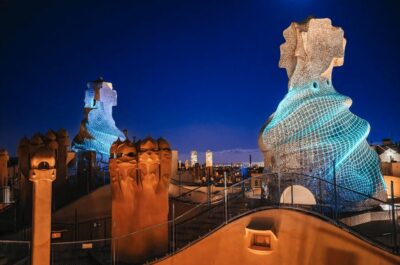
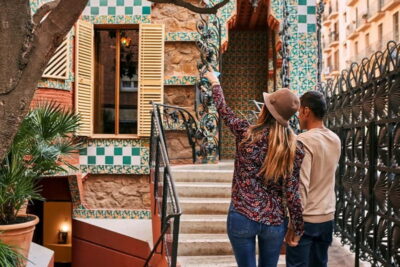
Gaudi’s Casa Vicens Skip-the-Line Entrance Ticket
Read our review →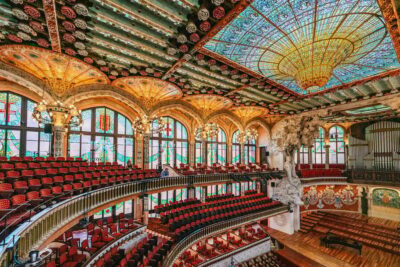
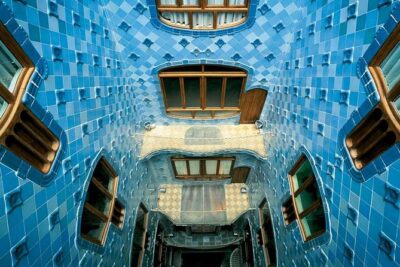
Casa Batllo Admission Ticket with Intelligent Audio Guide
Read our review →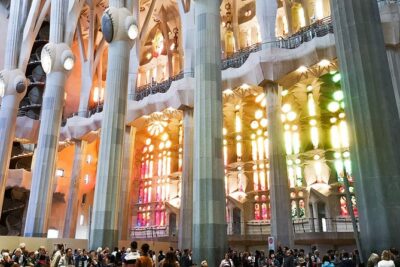
Sagrada Familia & Gaudi Tour Private or Small Group with Tickets
Read our review →Browse the lists this tour appears in