
Reviewed · GAUDI ARCHITECTURE TOURS
Palau de la Musica Catalana Guided Tour
Barcelona’s Palau de la Música Catalana is not just a concert hall. It is a colorful Modernisme showpiece where stained glass hangs overhead, flower mosaics line the façade, and even the staircases deserve a slow look. The concert hall is the star, but the smaller rooms help explain how this unusual building works.
I like the small group of up to 15 people and the short film at the start, which gives the architecture a useful setting instead of leaving you to guess at every symbol. I also like the price: at $26.60, you get admission, a guide, and roughly an hour inside one of Barcelona’s most distinctive buildings. The main drawback is time. Some tours finish a little short of the promised hour, and a rushed guide or weak English can make the details harder to absorb.
Key points to know before booking
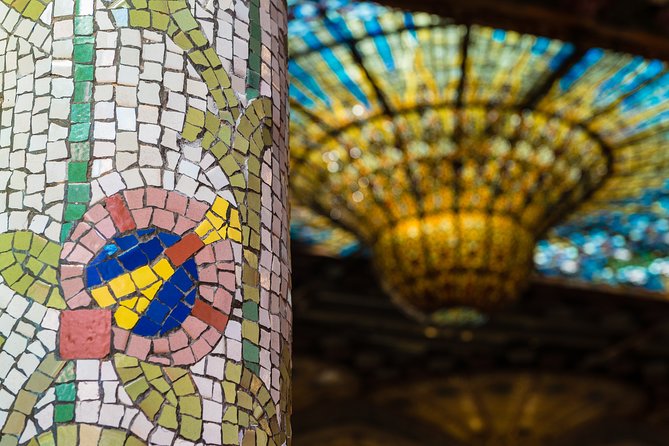
- The inverted-dome skylight is the concert hall’s unforgettable centerpiece.
- The 15-minute film explains the building’s creation and early 20th-century setting before the walk begins.
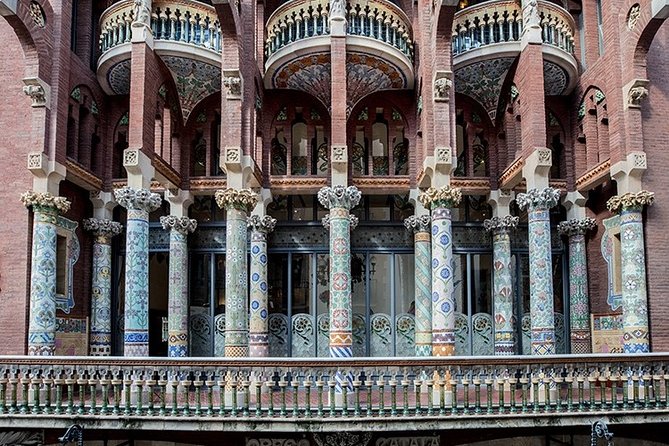
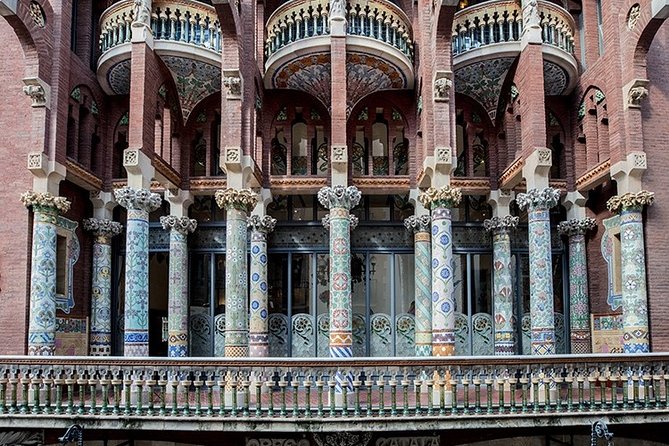
- The Lluís Millet Hall opens onto a balcony colonnade decorated with flower mosaics.
- The maximum group size is 15, making it easier to hear the guide than on a large group visit.
- The tour lasts about one hour, so it fits neatly between other Barcelona plans.
- Advance booking matters, since popular time slots can fill and the tour is booked on average 29 days ahead.
Why the Palau de la Música deserves your time
Barcelona has no shortage of famous architecture. Gaudí gets much of the attention, but the Palau de la Música Catalana offers a different and equally revealing look at Catalan Modernisme.
The building was designed for the Orfeó Català, a major Catalan choral society, and construction began in 1905. Its architect, Lluís Domènech i Montaner, treated the hall as a total work of art. Music, sculpture, tilework, stained glass, ironwork, and natural forms all share the same stage.
That matters because the decoration is not confined to one grand room. You notice it on the way upstairs, under the staircases, around the windows, and in the floral mosaics outside the Lluís Millet Hall. The building rewards close looking.
I would not call this a substitute for seeing a live concert. A performance lets you feel the acoustics in action. But if your schedule does not allow an evening event, the guided visit gives you access to the building’s main spaces without committing to a concert ticket or a formal evening out.
The tour is especially useful if you enjoy architecture but do not know much about Catalan Modernisme. A guide points out the people behind the decoration, including sculptors and artists such as Eusebi Arnau, Pau Gargallo, Lluís Bru, and Antoni Rigalt. Without that help, it is easy to notice only the color and spectacle and miss how many hands shaped the building.
More Gaudi houses worth a ticket:
- Barcelona: Casa Batlló Entry with Self-Audioguide Tour
★ 4.7 · 25,359 reviews - Barcelona: Park Güell and Gaudí House Museum Entry Ticket
★ 4.5 · 6,326 reviews - Barcelona: La Pedrera Night Experience
★ 4.4 · 4,633 reviews
Starting in the Orfeó Català rehearsal hall
You meet at the Palau de la Música Catalana, at C/ Palau de la Música, 4-6, in Barcelona’s Ciutat Vella. The stated meeting point is outside the building, though the entrance can cause a little confusion. One practical note is that the actual gathering spot may be inside, behind the bar, so check the directions on your confirmation and allow a few extra minutes to orient yourself.
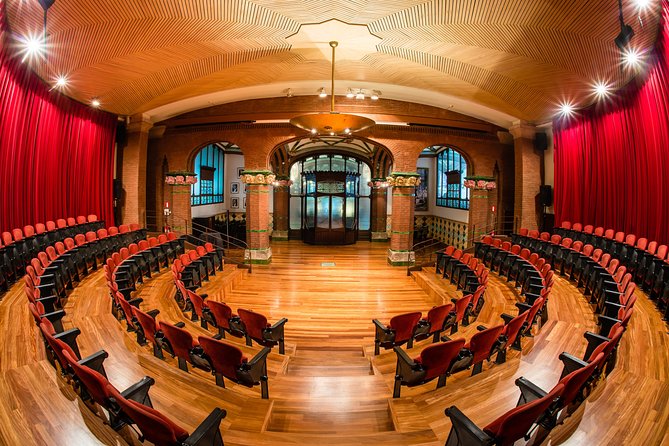
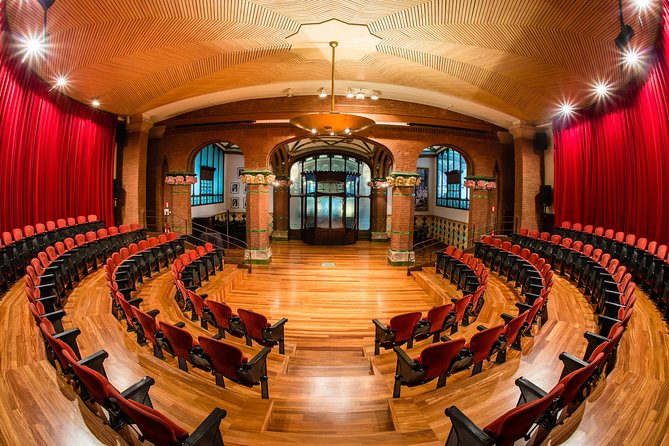
After entering with your included admission ticket, the tour begins in the Orfeó Català rehearsal hall. This is more than a waiting room. It is where the foundation stone was laid in 1905, tying the building directly to the choral society that commissioned it.
A 15-minute audio-visual presentation follows. It explains the hall’s construction and gives some background on Catalan society in the early 20th century. I consider this a smart start. The Palau is visually loud, and the film gives you a few facts to hold onto before the colors and ornament take over.
The clip does add a quarter of the tour’s total length, so you should know what you are choosing. If you want only photographs and a quick look inside, it may feel like time spent indoors watching a screen. If you want context, it makes the later rooms easier to understand.
Climbing the staircase beneath the tilework
The staircase is one of the tour’s quieter pleasures. Most people expect the concert hall to be the main event, but the route upstairs shows how carefully the design continues through ordinary circulation spaces.
Look beneath the stairs for elaborate tiling. Then study the unusual glass balusters supporting the marble handrails. This is a good example of the Palau’s guiding idea: practical parts of the building were given the same artistic care as the auditorium.
The staircase also changes your pace. You cannot simply glance at it from a distance. You climb through the details, seeing the tiles from different angles and noticing how light passes through the glass.
If you have mobility concerns, keep in mind that the itinerary includes ascending stairs. The activity information says most people can participate and that service animals are allowed, but it does not provide a detailed step-free route. Contact the provider before booking if stairs may be a problem.
The bright Lluís Millet Hall
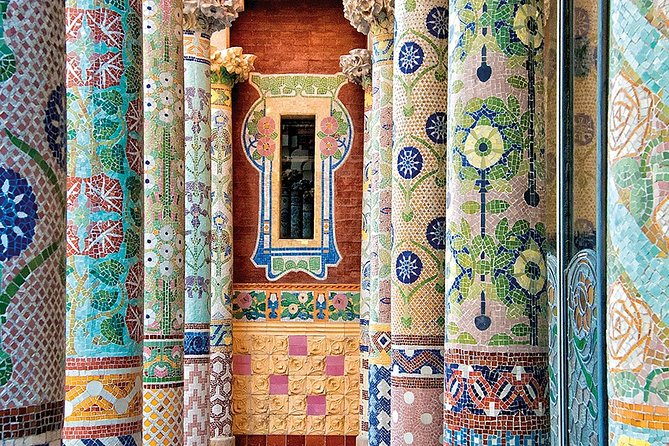
At the top, the Lluís Millet Hall gives you a pause before the grand auditorium. Floor-to-ceiling windows look onto the balcony colonnade on the main façade, where columns carry intricate floral mosaics.
This room is valuable because it lets you examine the exterior decoration from close range. From the street, the façade can look busy and hard to read. Here, the guide can draw your eye to the flower designs and explain the building’s repeated use of natural forms.
The hall is also a reminder that the Palau was designed to be seen from many angles. The building does not save all its best work for the stage. Windows, balconies, columns, and staircases all take part in the composition.
The guide’s presentation style matters here. Most of the feedback is very positive, with high marks for clear explanations and friendly service. Still, one account describes a guide who spoke quickly and mechanically, and another notes some difficulty with English. The small group helps, but it cannot fully solve a rushed presentation. If you have trouble hearing, use the supplied earpiece and adjust its volume. The equipment is designed to let you control the sound.
A few more Barcelona half-days worth comparing
- Barcelona: Sagrada Familia Entry Ticket with Audio Guide
★ 4.6 · 105,312 reviews - Barcelona: Park Güell Admission Ticket
★ 4.4 · 76,534 reviews - Barcelona: 24 or 48-Hour Hop-On Hop-Off Bus Tour
★ 4.4 · 20,872 reviews - Barcelona: Park Guell Guided Tour with Skip The Line Entry
★ 4.7 · 17,563 reviews
Entering the concert hall
Then comes the room that justifies the visit: the main Concert Hall. Give yourself a moment before listening to the explanation. Look up first.
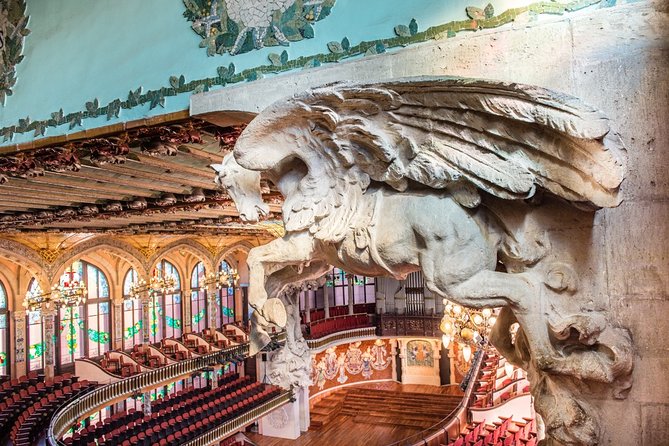
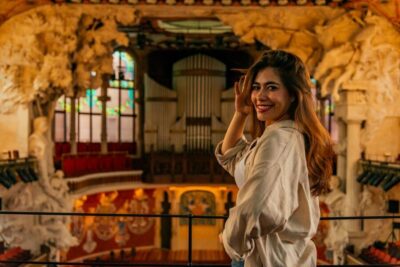
The hall is framed by large stained-glass panels set into arches along the walls. Above you, the central skylight forms an inverted dome. It brings light into the auditorium and gives the ceiling the look of a great glass jewel suspended overhead.
The design is theatrical even when the room is empty. Sculptural work appears around the stage and walls, while the stained glass and color create a warm, almost jewel-box effect. One useful comparison from the visit descriptions is the feeling of being inside a Fabergé egg. That is not a technical description, but it captures the compact, decorated, precious quality of the space.
The guide explains how the decorative program was developed and introduces the artists involved. This is where the tour’s human element pays off. Instead of seeing random figures, flowers, and patterns, you begin to understand the auditorium as a planned combination of architecture, music, nature, and Catalan identity.
You may also hear the organ if it is being played or demonstrated during your visit. The instrument has nearly 3,000 pipes, and occasional rehearsals or practice sessions can add an unexpected live element. Do not book the tour solely in hope of hearing musicians, since rehearsals are not guaranteed, but the possibility makes the room feel like a working concert hall rather than a preserved museum.
That distinction is important. The Palau is still an active venue. You are seeing a place built for music, not only a beautiful historic interior sealed behind glass.
How much information do you get in one hour?
The tour is short and focused. You see the rehearsal hall, watch the film, climb the decorated stairs, visit the Lluís Millet Hall, and enter the main concert hall before finishing near the exit.
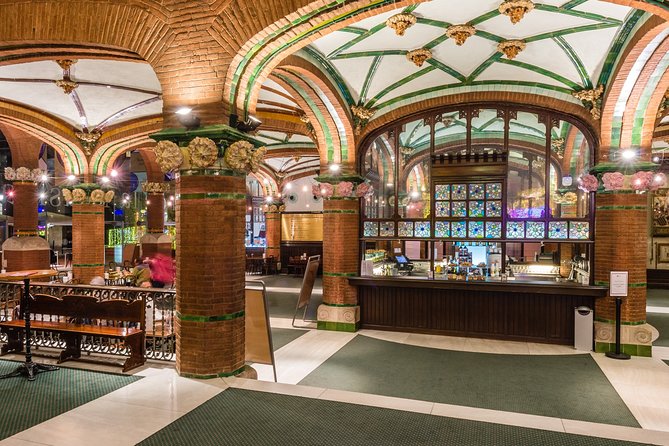
That structure works well for a first visit. You get the essential spaces without spending half a day indoors. It also leaves time for another sight nearby or, if available, a drink or meal at the Palau before moving on.
The tradeoff is depth. An hour cannot explain every sculpture, tile, composer, architect, and political detail connected with the building. A guide may provide a strong overview, but you should not expect a specialist architecture seminar.
Tour quality can vary with the individual guide. Several accounts describe friendly, clear, and well-prepared guides who made the building easy to understand. A smaller number describe fast delivery, limited rapport, or an English-language challenge. I would treat the guide as an important bonus rather than the sole reason to book. The architecture carries much of the experience.
Is $26.60 good value?
At $26.60 per person, the price is fair for Barcelona. Admission is included, as is the local guide and the 15-minute audio-visual presentation. You are paying for access to the key interior spaces and for someone to explain what you are seeing.
The value is strongest if you want context. You could admire photographs of the building or perhaps visit during another event, but the guided route points out details you might otherwise pass. The staircase tiles, glass balusters, floral mosaics, sculptural decoration, and skylight all become more meaningful when someone connects them.
The price is less compelling if you plan to attend a concert in the Palau anyway and will have another chance to see the interior. It is also worth noting that this is not a full-day activity. For some people, one hour is exactly right. Others may wish for more time to linger.
Because popular spaces and time slots can fill, advance booking is sensible. The average booking lead time is about 29 days, though last-minute availability can occur. Choose a departure time that fits your Barcelona plans and avoid placing it too close to another timed attraction.
Who will enjoy this visit most?
I would recommend the tour to:
- First-time visitors who want a clear introduction to Catalan Modernisme.
- Architecture and design fans who enjoy tilework, stained glass, and sculpture.
- Music lovers who want to see the hall where performances and rehearsals still take place.
- Visitors with a spare hour between other activities.
- People who prefer a guided explanation to wandering through a building alone.
- Anyone who wants a major Barcelona sight without committing to a concert ticket.
Families and mixed-age groups can also make good use of the short format. There is plenty to see, and the building offers quick visual rewards even if not everyone wants a long architectural talk.
I would be more cautious if you dislike staircases, need a fully detailed accessibility plan, or want an in-depth specialist tour. The available information confirms service animals are allowed and says most people can participate, but it does not spell out every accessibility detail.
Practical tips for a smoother visit
Book ahead if your schedule is fixed. The tour is offered in English, uses a mobile ticket, and has a maximum of 15 participants, but the popular departure times may not remain open.
Arrive with enough time to find the entrance. The address is easy to locate in Ciutat Vella and the building is near public transportation, yet the gathering instructions can be slightly confusing. Check whether your guide is waiting outside or inside near the bar.
Pay attention during the film. It takes 15 minutes, but it gives useful context before you see the main rooms. If you are tempted to treat it as filler, you may miss the connection between the Orfeó Català, the 1905 foundation stone, and the building’s social purpose.
Bring your attention upward. The best details are often above eye level: the underside of the staircase, the glass balusters, the stained-glass arches, and the inverted-dome skylight.
If the guide gives you an earpiece, adjust the volume before the group begins moving. This small step can make a big difference in the large concert hall.
The tour ends back at the meeting point near the exit. Food and drinks are not included, though the building has places where you may be able to eat or have a drink separately.
Should you book the Palau de la Música tour?
Yes, if you want to see one of Barcelona’s most remarkable interiors in a compact, reasonably priced visit. The concert hall is extraordinary, and the route gives you more than a quick photo stop. You get the staircase, Lluís Millet Hall, floral mosaics, stained glass, sculpture, and the great skylight, along with enough explanation to connect the parts.
I would book it especially if you have already seen plenty of Gaudí and want a different side of Barcelona’s Modernisme. I would also choose it if you have a free hour and cannot fit a concert into your evening.
Skip it only if your schedule is packed with higher priorities, you are uncomfortable with stairs, or you already plan to spend time inside during a performance. For most visitors, $26.60 is a sensible way to see the Palau at close range, with the added benefit of a guide who can point out what your own eyes might miss.
FAQ
How long does the Palau de la Música Catalana guided tour last?
The tour lasts approximately one hour, including a 15-minute audio-visual presentation.
What language is the tour offered in?
The tour is offered in English.
What is included in the ticket?
The ticket includes admission to the Palau de la Música Catalana, a local guide, and the 15-minute audio-visual clip.
Where does the tour begin and end?
It begins at the Palau de la Música Catalana, C/ Palau de la Música, 4-6, in Barcelona’s Ciutat Vella, and ends back near the meeting point by the exit.
How many people can join the tour?
The group has a maximum of 15 participants.
Can I cancel the booking for a refund?
You can cancel up to 24 hours before the experience begins for a full refund. Changes or cancellations made less than 24 hours before the start time are not accepted for a refund.
Recently added around Barcelona
- Food and Wine Small Group Tour from Barcelona – Maximum 8 people★ 5.0 · 111 reviews
- Barcelona Off the Beaten Track Bike Tour★ 5.0 · 676 reviews
- Barcelona: Poble Espanyol Admission Ticket★ 3.0 · 159 reviews
- Spanish Wine and Tapas Tour in a Local Neighborhood in Barcelona★ 5.0 · 306 reviews
- Barcelona Guitar Trio & Dance at the Palau de la Musica★ 5.0 · 269 reviews
- Barcelona Sagrada Familia and Guell Park drink and tapa★ 5.0 · 234 reviews
- MNAC Barcelona: National Art Museum of Catalonia Admission Ticket★ 4.5 · 209 reviews
- Combo: Skip the Line Sagrada Familia & Park Guell Guided Tour★ 4.5 · 150 reviews
Gaudi Architecture Tours, compared.
Park Güell and Gaudí House Museum Entry Ticket
Read our review →
Gaudi’s Casa Vicens Skip-the-Line Entrance Ticket
Read our review →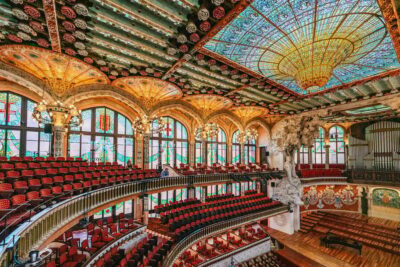
Casa Batllo Admission Ticket with Intelligent Audio Guide
Read our review →
Sagrada Familia & Gaudi Tour Private or Small Group with Tickets
Read our review →Browse the lists this tour appears in