
Reviewed · TAPAS TOURS
Paella & Sangria Class with Tapas and Market Visit
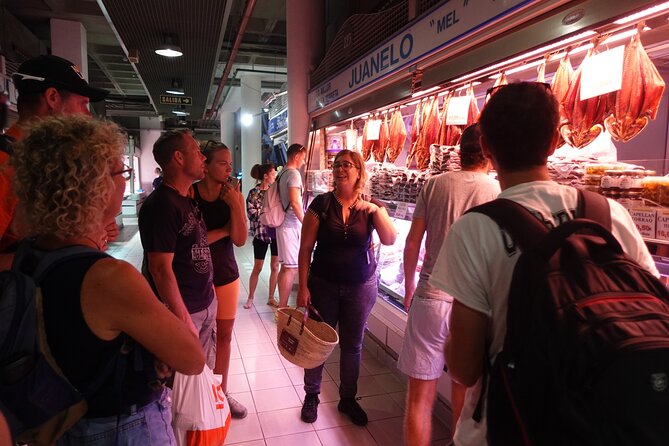
Alicante’s best kitchen lesson starts before you reach the stove. At Mercado Central, Federico leads you through stalls of seafood, produce, cured ham, olives, and local ingredients, explaining what belongs in an Alicante paella and why. Then you walk to a working kitchen and cook the meal from the ground up.
I like the market visit, which gives the class a strong local feel, and the choice of seafood, meat, or vegetarian paella. Everyone gets a job, from preparing the broth and salmorreta to mixing sangria and taking turns with the cooking. The main caution is that the class can fill to 15 or 16 people, so the hands-on time may feel less personal in a full group.
Key points to know before booking
- Market first, kitchen second: Start at Mercado Central, then walk about three blocks to the cooking venue.
- Three paella choices: Select seafood, meat, or vegetarian paella, an important option for mixed groups.
- More than rice: Tapas may include Iberian ham, local sausage, olives, tomato salad, and salted fish.
- Friendly teaching style: Federico, also known as Fred or Freddy, is repeatedly praised for clear explanations, humor, and easy English.
- Small-group format: The experience is promoted for a maximum of 15 participants, while the additional booking information lists up to 16.
- Plan for three and a half hours: You get a market tour, food preparation, cooking, sangria, and a sit-down meal.
Why the market visit makes the class better
Many cooking classes begin with bowls of pre-measured ingredients. This one begins at Plaza 25 de Mayo, outside Alicante’s Mercado Central, where you see the food before it reaches the pan.
The market stop is more than a quick shopping errand. Your guide introduces the ingredients, points out local products, and helps select what the group will use. You may learn about Iberian ham, olives and their brines, local shrimp, squid or cuttlefish, pork, vegetables, and the wine used for sangria.
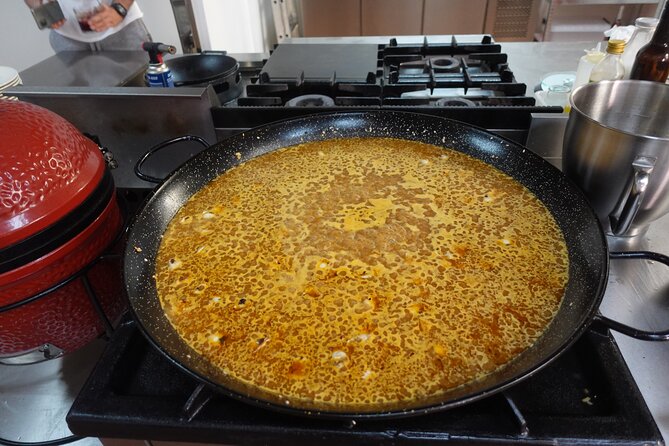
That context matters. Paella is not just rice with seafood piled on top. The style taught here depends on the stock, the sofrito base called salmorreta, and the way the rice absorbs those flavors. Seeing the ingredients at the market helps you understand why the cooking process starts with careful selection rather than a ready-made recipe.
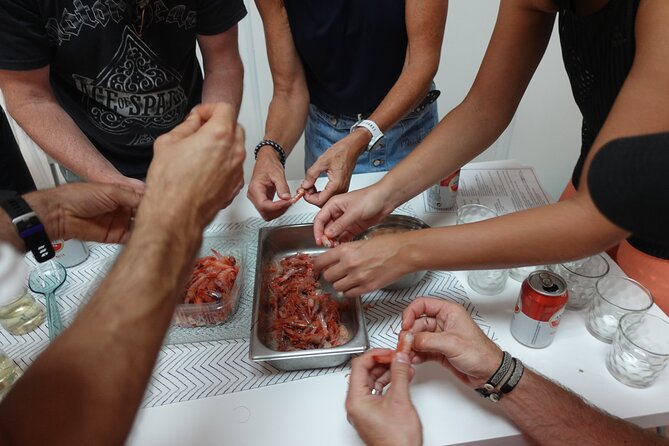
I also like the chance to see how small differences affect Spanish food. Mediterranean shrimp can be smaller than the large ocean shrimp familiar to many North American diners. The class uses local seafood, and the guide explains that size is not the same as quality. You may also encounter sepionet, a small local squid, or cuttlefish from Alicante Bay.
The market is the best part for anyone who enjoys food shopping as much as eating. It is also the least structured section. If you prefer a cooking class with immediate instruction, you may find the first hour slower than expected. For me, that time earns its place because it connects the meal to Alicante rather than making the city a mere backdrop.
More Tapas Tours in Alicante
- Alicante Historic Small Group Tour with Tapas Tasting
★ 5.0 · 559 reviews - Alicante Food and Tapas Tour with a Local Guide
★ 5.0 · 485 reviews - Alicante Paella Cooking Class, Tapas, Drinks and Marketplace
★ 5.0 · 349 reviews
Following the ingredients from stall to stove
After shopping, the group walks to a local restaurant or working kitchen. The walk is short, described in one account as roughly three blocks, and the activity returns to the original meeting point after the meal.
The kitchen is presented as a place where locals eat, not a staged classroom built only for tourists. That distinction is useful, though you should think of this as a social workshop rather than an intensive chef-training session. You will prepare ingredients, listen to instructions, and take turns with key tasks. The aim is to understand the method and enjoy the meal, not master every technical detail in one afternoon.
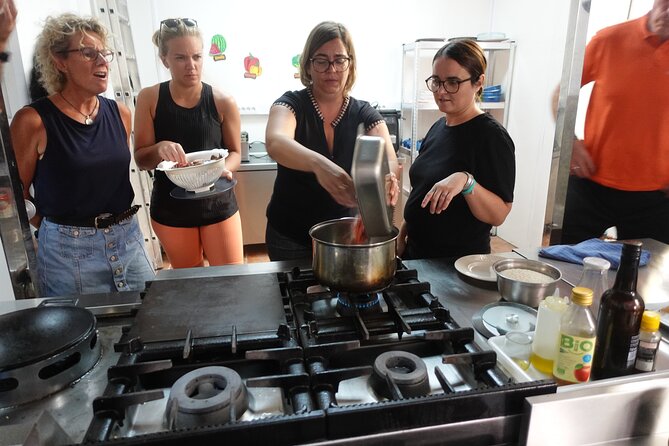
The class covers the building blocks of paella. You may help prepare the stock, work with the salmorreta, handle the seafood or meat, and watch the rice as it cooks. One session included using a blowtorch for fish preparation, though that may depend on the menu and the day.
The guide keeps the group moving while making room for participation. Several details make this work well: recipes are provided, the steps are explained clearly, and people take turns rather than simply watching a chef perform. The class is suitable for beginners because you are guided through each stage.
If your group is small, the experience should feel especially comfortable. A group of five to eight allows everyone more time at the counter and makes it easier to hear the guide at the market. With 15 or 16 people, participation is still built into the format, but you may spend more time waiting for your turn.
What you actually eat during the class
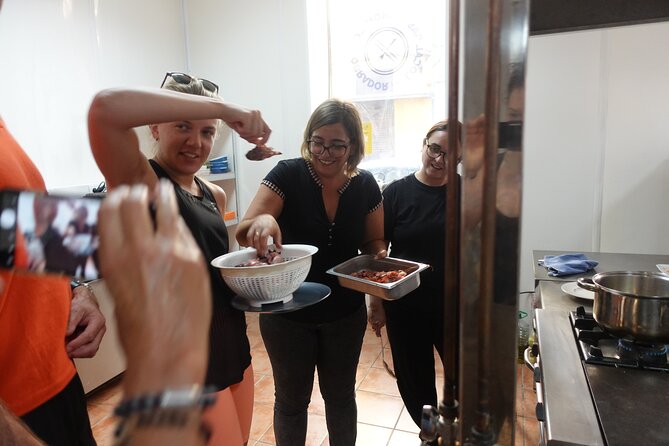
The main event is paella, but the meal includes more than one rice dish. Alongside your chosen seafood, meat, or vegetarian version, the class may serve tapas such as Iberian ham, cured sausage from the mountains, olives, crisps, and tomato salad with salted fish. Fresh fruit may also appear at the end.
That extra food adds real value to the $59.26 price. You are not paying only for a plate of rice and a drink. The fee covers a market visit, an instructor, a chef, ingredients, preparation, cooking, tapas, sangria, and a shared meal over about three and a half hours.
The food style may surprise you if you expect a restaurant paella loaded with large prawns, mussels, and heavy portions of seafood. Alicante-style paella focuses on the rice and the stock. The ingredients provide flavor, but the broth and cooking method do much of the work.
This point matters because one diner found the seafood portions disappointing, especially the small shrimp and baby squid. The operator’s explanation was that the local Mediterranean shrimp are smaller and prized for quality, while the sepionet is a more expensive ingredient than standard squid. The practical lesson is simple: book this class to learn the local approach, not to order a mountain of seafood.
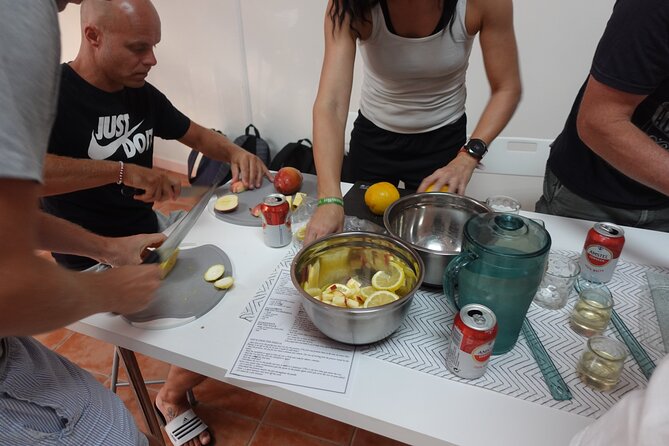
The same applies to the sangria. It is made with wine, orange juice, soda, fruit, syrup, and liqueur. If you prefer straight wine, the drink may taste diluted. If you want traditional sangria, this is the expected formula.
Federico, Fred, or Freddy as your guide
The guide is identified as Federico, though several accounts call him Fred or Freddy. The descriptions consistently point to a host who keeps the tone relaxed, explains ingredients in clear English, and switches between English and Spanish when useful.
That language ability matters in the market. You are not simply following someone from stall to stall. You need explanations about what you are seeing, why certain ingredients are chosen, and how local food traditions differ from versions served abroad.
Federico also appears to be good at drawing shy participants into the work. You may be asked to chop, prepare seafood, mix the sangria, or help with the paella. The group format encourages conversation, and the meal gives everyone a reason to sit down together at the end.
A chef named Maria is also identified in one account as part of the teaching team. The precise staff lineup may vary, but the class is designed around both a guide and kitchen support. That is helpful when the group is cooking several components at once.
The social side is part of the appeal. You may arrive with strangers and leave having shared jobs, jokes, tapas, and a meal. If you want a quiet private lesson, this is not the ideal format. If you enjoy meeting people while eating and cooking, the group setting works in its favor.
More Paella Classes in Alicante:
- Alicante Paella Cooking Class, Tapas, Drinks and Market
★ 4.9 · 301 reviews - Alicante: Paella and Sangría Workshop with Market Visit
★ 4.8 · 158 reviews - Barcelona: Paella Cooking Experience & Boqueria Market Tour
★ 4.8 · 3,661 reviews - Barcelona Paella Cooking Class with Market Visit, Tapas & Sangria
★ 5.0 · 2,531 reviews
Seafood, meat, or vegetarian paella
The menu choice is one of the class’s strongest practical features. You can select seafood, meat, or vegetarian paella, so a couple or family does not need to choose one style for everyone.
The seafood option may use fish, shrimp, squid, or cuttlefish, with the stock doing much of the flavor work. The meat version can include pork and other local ingredients. The vegetarian option gives non-meat eaters a clear path into the class instead of treating them as an afterthought.
You should make your choice when booking or as instructed by the provider. The supplied information confirms that these three styles are offered, but it does not spell out every ingredient in each version or describe how dietary restrictions beyond the three choices are handled.
The class may also prepare more than one type of paella in the same session. One group cooked fish and meat versions together, which can be useful if you want to compare styles. It also gives you a better feel for how the base changes when the main ingredients change.
Do not expect to cook an individual paella pan from start to finish. The experience is collaborative, with participants sharing tasks and food. That makes it social and efficient, but it means you will not have complete control over every part of the recipe.
Sangria, tapas, and the value of the shared table
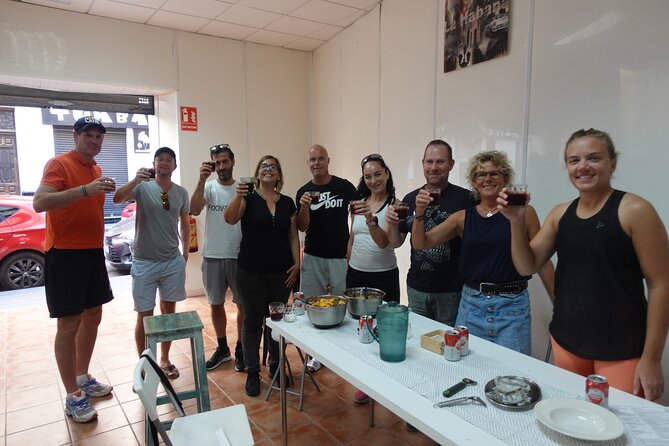
Making your own sangria is a small but enjoyable part of the class. You help combine the wine, juice, soda, fruit, syrup, and liqueur, then let the mixture come together while the food is prepared.
The drink is not treated as an afterthought. It gives the class a second recipe to take home and makes good use of the waiting time while the paella cooks. You also get a practical lesson in the difference between wine served on its own and sangria made for sharing.
Tapas add another useful layer. Iberian ham, sausage, olives, tomato, salted fish, and crisps introduce products you might otherwise pass by in the market. The tomato and salted-fish salad, in particular, helps show how simple Spanish dishes depend on good ingredients rather than complicated preparation.
I like this part because it reflects how people often eat in Spain: several dishes in the middle, conversation around the table, and no rush to finish one course before another appears. It also means the meal feels substantial even if you find the paella seafood portions modest.
Timing, group size, and practical details
Allow about three hours and 30 minutes from start to finish. The time includes the market visit, the walk to the kitchen, preparation, cooking, sangria, tapas, and the final meal.
You meet at Plaza 25 de Mayo, outside Mercado Central in Alicante, and finish back at the meeting point. The location is near public transportation, which makes it easy to pair with other plans in the city. I would avoid booking a tight museum visit or train connection immediately afterward because cooking times and group pacing can vary.
The activity is offered in English and uses a mobile ticket. Confirmation is provided at booking. Alcohol is part of the experience, and the minimum age for drinking is 18.
The group size deserves close attention. The highlights describe a maximum of 15 participants, while the additional information lists a maximum of 16 travelers. Either way, this is a small-to-medium workshop rather than a private class. A group of seven or eight should offer the best balance of conversation and hands-on work.
Free cancellation is available if you cancel at least 24 hours before the local start time. Changes or cancellations inside that window are not accepted for a refund. The activity also requires a minimum number of participants, so a cancellation by the provider may lead to another date, another experience, or a full refund.
Who will enjoy this Alicante cooking class
I would choose this class for first-time visitors who want an introduction to Alicante through food. It works especially well if you are curious about markets, local ingredients, and the social habits around shared meals.
It suits couples, families with adult children, solo visitors who enjoy meeting people, and groups with mixed food preferences. The three paella options make it easier to include seafood eaters, meat eaters, and vegetarians in one booking.
It is also a good pick for cooks who want a recipe they can repeat at home. You learn about the stock, salmorreta, rice, sangria, and ingredient selection rather than merely watching someone else cook.
I would hesitate if your main goal is a long, elaborate seafood feast. The shrimp may be small, the rice is the star, and the sangria contains juice and soda by design. This is a lesson in Alicante’s style, not a luxury tasting menu.
Should you book it?
At $59.26, I see solid value in the combination of market tour, instruction, food, drinks, and a three-and-a-half-hour social experience. The best parts are the walk through Mercado Central, the clear guidance from Federico or Fred, and the chance to take part instead of sitting at the edge of a demonstration.
Book it if you want local food knowledge with a meal attached. Choose it with realistic expectations: the paella centers on the rice and stock, the sangria is mixed with juice and soda, and a full group means shared tasks.
If those points sound appealing, this is one of the more useful ways to spend an afternoon in Alicante. You leave with recipes, a better sense of the local pantry, and a meal you helped make. If you only want the biggest seafood portions or a private cooking lesson, spend your money elsewhere.
FAQ
Where does the paella and sangria class begin?
The class begins at Plaza 25 de Mayo, outside Alicante’s Mercado Central. The activity ends back at the same meeting point.
How long does the experience last?
The experience lasts approximately three hours and 30 minutes, including the market visit, cooking, sangria preparation, tapas, and the final meal.
What types of paella can I choose?
You can choose seafood, meat, or vegetarian paella.
Is the class offered in English?
Yes. The experience is offered in English, and the guide is identified as Federico, also called Fred or Freddy.
How many people can join the class?
The experience is promoted for a maximum of 15 participants, while the additional booking information lists a maximum of 16 travelers.
Can I cancel for a refund?
Yes. You can cancel at least 24 hours before the experience’s local start time for a full refund. Cancellations or changes made less than 24 hours before the start are not refunded.
More Market Tours in Alicante
- Paella Cooking Class, Wine Tasting & Central Market in Valencia
★ 5.0 · 1,150 reviews - Valencian paella cooking class, tapas and visit to Ruzafa market.
★ 5.0 · 828 reviews - Spanish Cooking Class & Triana Market Tour in Sevilla
★ 5.0 · 760 reviews - Seville: 3.5-Hour Spanish Cooking Class & Triana Market Tour
★ 4.9 · 751 reviews
Recently added around Alicante
- Parasailing in Alicante★ 4.5 · 116 reviews
- Alicante: Small-Group Countryside Wine Tour with 4 Tastings★ 5.0 · 162 reviews
- Museum of Illusions Alicante Entrance ticket★ 4.5 · 105 reviews
- Alicante Wine Tasting and Tapas Club★ 5.0 · 126 reviews
- Alicante City & Beach Bike Tour★ 5.0 · 113 reviews
- Alicante Tuk Tuk Overview Tour★ 4.6 · 131 reviews
- Alicante: Paella and Sangría Workshop with Market Visit★ 4.8 · 158 reviews
- Alicante: Santa Bárbara Castle Wine Tasting with Cold Cuts★ 4.3 · 165 reviews
Tapas Tours, compared.
Montserrat & Cogwheel Train, Gourmet Wine Tasting & Tapas/Lunch
Read our review →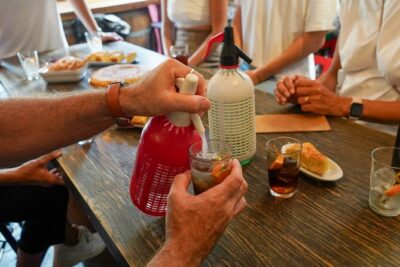
Barcelona Tapas and Wine Experience Small-Group Walking Tour
Read our review →
Montserrat with Black Madonna & Medieval Winery with Tapas/Lunch
Read our review →
Montserrat and Winery Tour with Tapas or Lunch
Read our review →
Tapas Walking Tour with Food, Wine, and History
Read our review →
Sevilla Food Tour: Tapas, Wine, History & Traditions
Read our review →
Valencia Old Town Tour with Wine & Tapas in 11th Century Historic Monument
Read our review →
Sunset or Day Catamaran Cruise with Tapa & Drink
Read our review →Browse the lists this tour appears in