
Reviewed · WALKING TOURS
Madrid: Welcome to Madrid Guided Walking Tour in English
Madrid’s story begins before the palaces and grand boulevards, with the Islamic settlement of Mayrit, a name linked to abundant water. This 2.5-hour walk then follows the city through Habsburg power, Bourbon reform, royal ceremony, and modern democracy. It gives you a useful framework before you tackle Madrid’s museums, food scene, and neighborhoods on your own.
I like the route for two clear reasons: it links major sights in a sensible line, and it gives you historical context rather than a parade of photo stops. Guides such as Sebastian, Daniel, Esme, Dina, Adam, and Joaquin are praised for humor, strong English, and lively storytelling. The main drawback is the pace. You cover a lot of ground, and you may need to take quick photos before the group moves on.
Key points to know before you book
- Madrid’s story unfolds in chronological order: You move from Mayrit and the medieval city to the Habsburgs, Bourbons, 19th-century modernization, and the modern Spanish state.
- The route covers the essential central sights: Expect the Royal Palace, Almudena Cathedral, Plaza de la Villa, Plaza Mayor, Puerta del Sol, Gran Vía, the Prado Museum, and the Congress of Deputies.
- The guides make or break the experience: Sebastian, Daniel, Esme, Dina, Adam, and Joaquin are known for humor, clear English, local details, and easy conversation.
- The tour is best for first-time visitors: You get a strong orientation to central Madrid and useful ideas for what to see, eat, and do later.
- The $31 price needs a little explanation: It covers the booking fee and the guide’s payment for a general pay-as-you-wish format, not a private tour.
- Plan for steady walking: The route is long enough to feel substantial, so wear comfortable shoes and leave museum visits for another time.
Starting beneath the Royal Palace
Meet outside the Teatro Real at Ópera Metro station. Look for the yellow umbrella. This is a practical meeting place in central Madrid, close to the Royal Palace and easy to connect with by metro.
The opening location sets the tone. You are near the city’s royal center, but the guide begins with Madrid’s earlier life as Mayrit. That shift matters. Madrid was not simply built as a royal capital from the start. Its identity developed over several layers, and the first part of the walk helps you understand why the city grew where it did.
Your guide then places the Habsburg and Bourbon periods in the larger story of Spain. Madrid became the political hub of a far-reaching empire under the Habsburgs. Later, Bourbon rulers reshaped the city, with Charles III playing a major role in its modernization.
I appreciate this opening because it gives you a map in your head. Instead of seeing isolated buildings, you begin to understand which parts belong to medieval Madrid, which reflect royal power, and which came from later efforts to make the capital look and function like a major European city.
More Walking Tours in Madrid
- Madrid Walking Tour from Puerta del Sol to Retiro Park
★ 5.0 · 2,285 reviews - Madrid Old Town & Royal Palace Walking Tour Skip the Line Ticket
★ 4.5 · 1,829 reviews - Madrid: Spanish Inquisition and Legends Evening Walking Tour
★ 4.7 · 1,396 reviews
Royal Palace and Almudena Cathedral
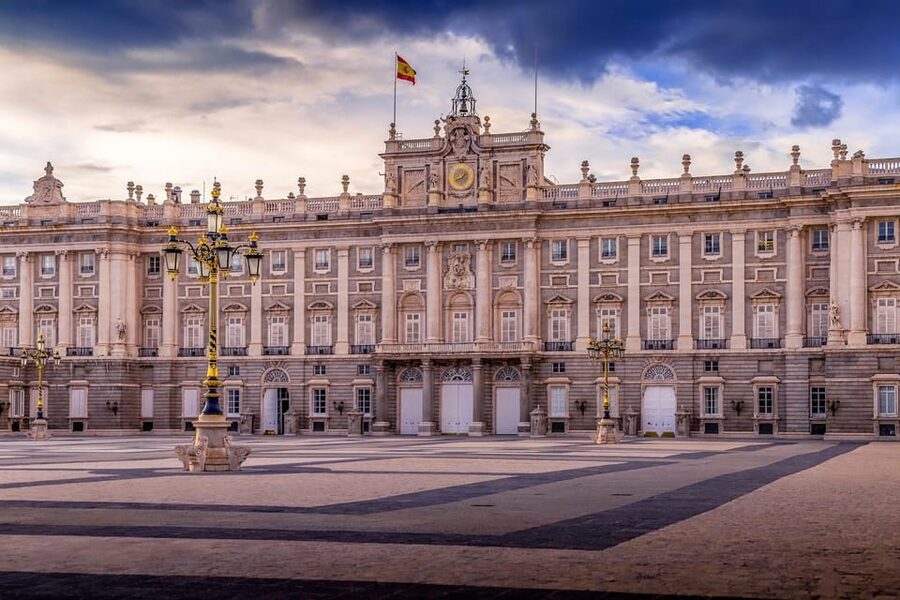
The Royal Palace is one of the tour’s major early sights. The walk does not include an interior visit, so you should not book this as a palace tour. Its value here is visual and historical: the building anchors the story of Madrid as a seat of monarchy and national power.
From there, you see Almudena Cathedral. Its appearance is unusually varied because different architectural ideas shaped it over time. The guide uses the cathedral to explain Madrid’s Catholic identity and the way newer construction sits beside older royal and medieval landmarks.
This stop also helps balance the route. The Royal Palace represents the crown, while the cathedral reflects the religious institutions that shaped Spanish public life. You are not just ticking off two famous buildings. You are seeing two forces that helped define Madrid.
The best guides on this route add social and political background without turning the walk into a lecture. Daniel is praised for presenting Spanish history in an entertaining way, while Esme is described as a natural storyteller with a strong feel for Madrid’s art and past. Those qualities matter here, where the buildings can look impressive but need explanation to become memorable.
Plaza de la Villa and Madrid’s older layers
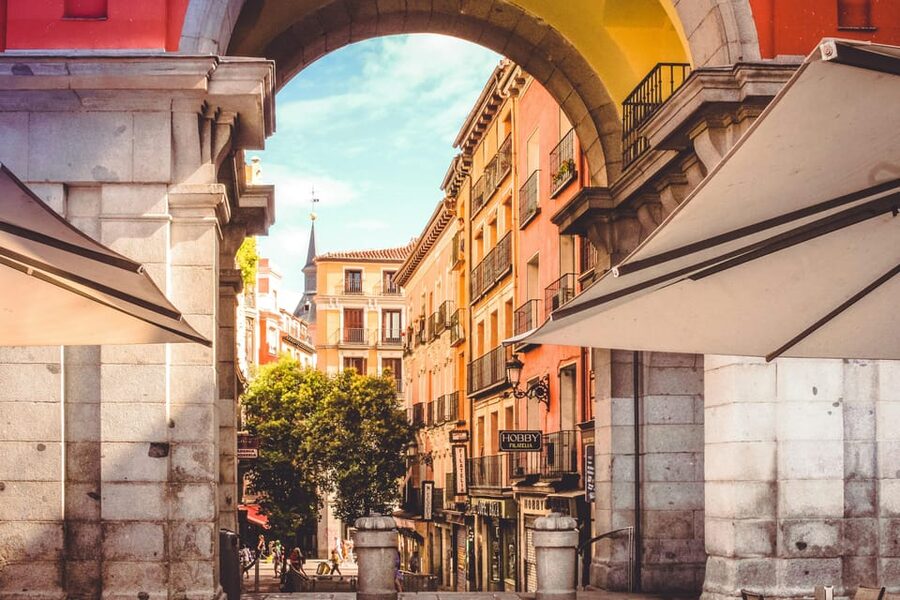
Plaza de la Villa is one of the more rewarding stops because its buildings show several centuries of Madrid in a compact space. You can compare architectural styles from different periods without walking far.
This is where the city feels older and more enclosed than the grand avenues later in the route. The square helps you picture Madrid before the 19th-century expansion and before the capital took on its modern scale.
A guide can also make this stop useful for orientation. You begin to see how the medieval core relates to the royal quarter, the central squares, and the commercial streets beyond. I would pay attention to the transitions between stops, not only the individual landmarks. The route’s strength is the way it connects them.
The walk is conducted in English, and the guides are expected to handle questions along the way. Babiuc specifically valued Daniel’s willingness to answer questions, while other participants praised the easy back-and-forth with guides such as Joaquin and Dina. If you enjoy asking about politics, architecture, or daily life, this format gives you room to do that.
Plaza Mayor, public ceremony, and darker chapters
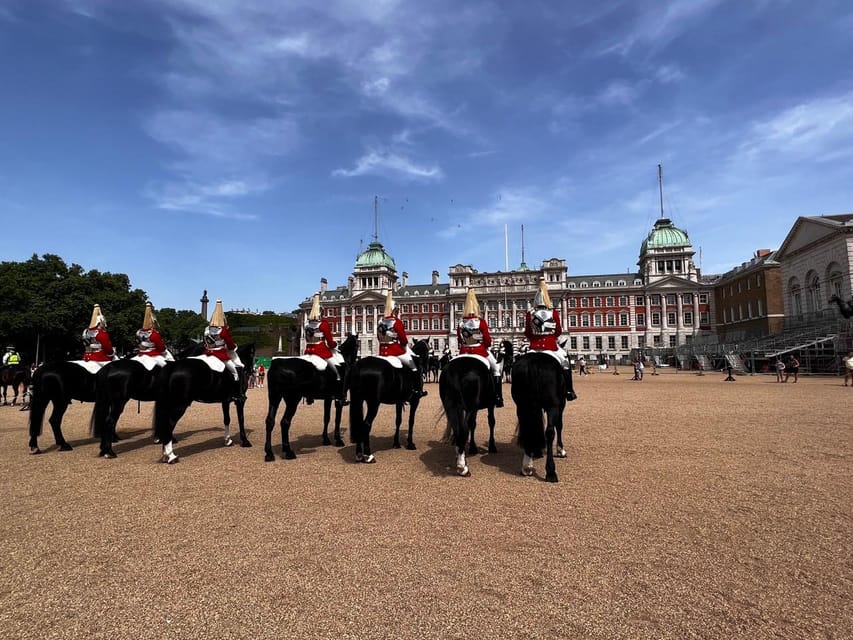
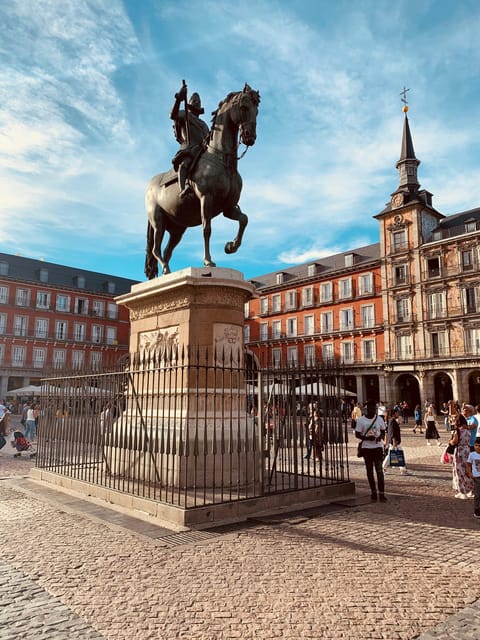
Plaza Mayor brings you into one of Madrid’s best-known public spaces. It has hosted royal celebrations and major public events, but its past also includes Inquisition trials. That contrast is important. The square is handsome and orderly today, yet its history is not only festive.
This is a good place to listen carefully rather than rush for a photo. The guide can connect the square’s formal design with the power of the monarchy and the church. You also get a clearer idea of how public spaces once served as stages for ceremony, punishment, trade, and political display.
The square is likely to be one of the busier parts of the walk, though the supplied information does not promise a particular group size or crowd level. If you want long, uninterrupted photography time, you may find the schedule a little brisk. The route aims to show you many places in one morning or afternoon, not to give you a private photo session at each one.
The practical payoff is strong. After the tour, you can return to Plaza Mayor for a slower look, or use it as a reference point while exploring central Madrid. The guide may also offer food and drink suggestions, as Dina and Adam did for some participants.
Same base in Madrid, a completely different kind of day:
- Madrid: Tour Bernabéu Entry Ticket
★ 4.5 · 21,573 reviews - Madrid: Prado Museum Entry Ticket
★ 4.6 · 17,509 reviews - Madrid: Royal Palace Fast-Access Admission Ticket
★ 4.6 · 13,856 reviews - Madrid: “Emociones” Live Flamenco Performance
★ 4.8 · 12,866 reviews
Puerta del Sol and the city’s central pulse
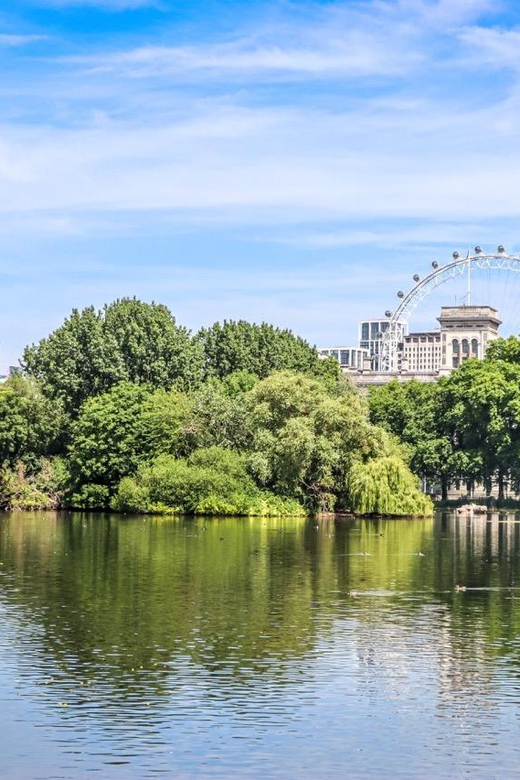
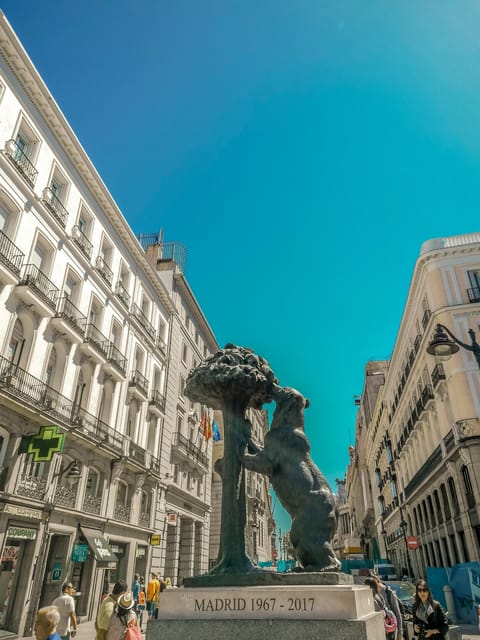
Puerta del Sol is the next major landmark. This is Madrid’s central meeting point and one of the clearest places to feel how the old city connects with the modern capital.
The guide uses Sol to explain Madrid’s civic and commercial life. It is not merely another plaza on the route. Its importance comes from movement, public gatherings, transport links, and its role as a point from which the city spreads outward.
You may want to note the best routes from here to other sights. A strong first-day walk should help you move around independently later, and this tour does that well. It gives you a mental line from Ópera through the older center and toward the newer avenues.
This is also a good moment to ask for practical suggestions. Several guides are praised for recommending restaurants, bars, and further sights. That advice can be more useful than a long list of facts because you can act on it during the rest of your stay.
Goya, the academy, and Madrid’s artistic life
The walk passes the Royal Academy of Fine Arts, where Francisco Goya once studied. This stop adds an artistic thread to a tour that otherwise leans heavily toward royal, religious, and political history.
The academy helps explain why Madrid became such an important cultural center. It links formal artistic training with the city’s larger rise as a capital. The reference to Goya also prepares you for the Prado, where Spanish painting becomes a central part of your visit.
You will not be touring the academy’s interior as part of this walk, so think of the stop as context. If you plan to visit Madrid’s museums, this background helps you see them as part of the city’s development rather than as separate attractions.
Esme and Joaquin receive especially strong praise for bringing art and history to life. Their style, as described through the experience details, is energetic without losing useful information. That balance is important on a walking tour, where too much detail can make the group lose the thread.
Gran Vía and the making of modern Madrid
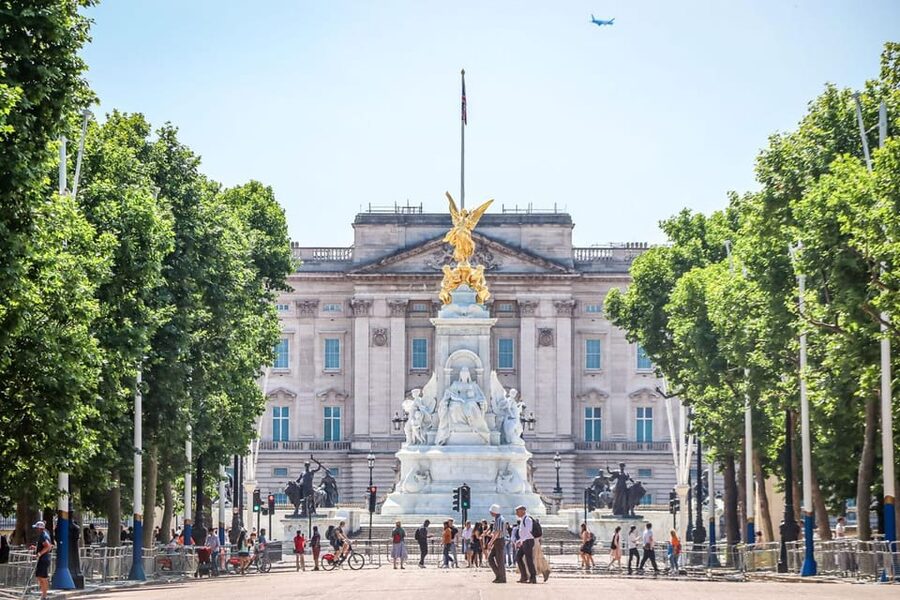
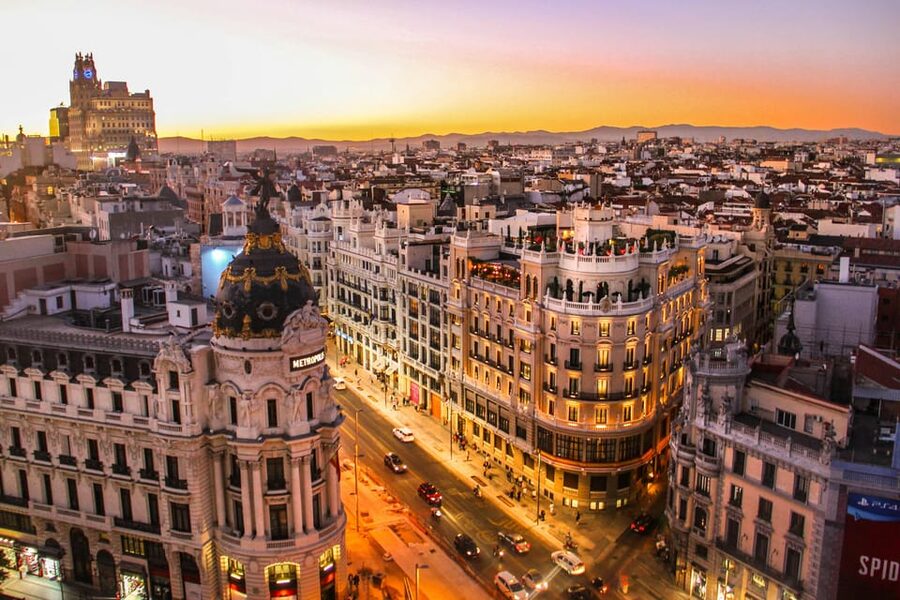
Gran Vía gives the route a noticeable change of scale. After the tighter streets and older squares, you reach the avenue associated with Madrid’s 19th-century modernization and later urban growth.
The guide explains how Madrid changed as it expanded beyond its older core. This is one of the tour’s most useful transitions because it shows that the city did not remain frozen around the palace and Plaza Mayor. New streets, commerce, entertainment, and grand architecture reshaped the capital.
The avenue is also a good reminder that Madrid is more than its medieval center. You see the city’s ambition in its broad planning and large façades. A guide with local experience can add the less obvious details, and Daniel is specifically described as knowing unusual facts beyond the standard sights.
Keep your camera ready here, but do not expect a long stop at every building. Karla noted that you need to be quick with photos. That is a fair trade for a route that covers so much central ground in 150 minutes.
The Prado from the outside
The tour includes the Prado Museum as a stop, but it does not include museum admission or an interior visit. You will get an introduction to one of Madrid’s key cultural landmarks, then need a separate visit if you want to see the collection.
That arrangement makes sense for a first-day orientation. The Prado deserves several hours, and trying to squeeze its galleries into a walking tour would make both experiences weaker. Use the guide’s comments to decide how much time to reserve later.
The stop also ties together several threads from the walk: royal patronage, the academy, Goya, Spanish identity, and Madrid’s place as a European cultural capital. If art is a major reason for your visit, this is a useful preview rather than a substitute for museum time.
Ending at the Congress of Deputies
The final stop is the Congress of Deputies, Spain’s lower house of parliament. The route ends with modern politics, giving the walk a clear progression from Islamic beginnings through monarchy and religion to representative government.
The Congress is especially meaningful because Spanish democracy was tested there. The guide can connect the building to the political history of contemporary Spain, adding a civic ending to a tour that began with royal power.
This closing stop gives the experience more substance than a standard old-town stroll. You have seen beautiful squares and major monuments, but you have also followed the changing way Madrid was governed and imagined.
The ending is not close to the start, so plan your next move before the tour finishes. The provided details do not state the exact end time beyond the 2.5-hour duration or offer hotel transport. You should arrange your own way back, though the central location gives you plenty of options for continuing on foot or using public transport.
What the $31 price really buys you
At $31 per person, this is good value if you want a broad introduction to central Madrid. You are paying for a live English-speaking guide, a carefully connected route, and the time saved by understanding what you are looking at.
The payment structure deserves attention. This is a general pay-as-you-wish tour, but the $31 booking amount covers the reservation fee and the guide’s payment in this case. It is not the same as joining a completely unpaid walk and deciding later how much to give.
The price does not include hotel pickup, drop-off, museum admission, or a private group. If you want a smaller, private tour, the provider says you can ask about arranging one. That would likely suit people who want a slower pace or more control over photo stops, but the price and exact setup are not provided here.
You can cancel up to 24 hours ahead for a full refund, and the reserve-now, pay-later option keeps your plans flexible. Check the available start times before booking, since the tour’s value also depends on fitting it into your museum and meal plans.
The walking pace and guide style
This is a long central walk, not a quick loop around one square. Comfortable shoes matter, and you should be ready to listen while standing outdoors for much of the experience.
The strongest pattern across the guide team is clear delivery combined with personality. Sebastian is praised for being friendly and fun. Adam is described as dynamic and detailed. Daniel is repeatedly singled out for history, humor, and clear presentation. Dina brings energy and personal recommendations, while Esme is noted for storytelling and passion for Madrid’s art and past. Joaquin is valued for quirky facts, expressive delivery, and local knowledge.
Guide assignments can vary, so you cannot necessarily choose one of these people when booking. Still, the consistency of the comments suggests that the experience depends on a solid guiding team rather than one individual alone.
Older visitors or anyone who walks more slowly should consider the distance. Annette appreciated a guide checking on her pace and keeping her included in the discussion. That is encouraging, but you should still expect a steady route rather than a fully accessible sightseeing format, since no formal accessibility details are provided.
Who should book this Madrid walk?
I would choose this tour if you are visiting Madrid for the first time and want your first day to have structure. It is also a good match if you enjoy political history, architecture, royal stories, art, and practical food advice in one package.
You will get the most from it if you are willing to keep moving and save detailed museum visits for later. The route works well as a city orientation, giving you a plan for returning to Plaza Mayor, the Prado, Gran Vía, or the Royal Palace at your own pace.
I would look elsewhere if you want a private experience, a slow photography walk, or entry into the Royal Palace and Prado. Those attractions appear as exterior or contextual stops, not included visits.
FAQ
Where does the tour meet?
It meets outside the Teatro Real at Ópera Metro station. Look for the yellow umbrella.
How long does the walking tour last?
The tour lasts 2.5 hours.
What language is the tour conducted in?
The live tour guide speaks English.
How much does the tour cost?
The price is $31 per person.
What sights are included on the route?
The route includes the Royal Palace, Almudena Cathedral, Plaza de la Villa, Plaza Mayor, Puerta del Sol, the Royal Academy of Fine Arts, Gran Vía, the Prado Museum, and the Congress of Deputies, along with other central sights.
Does the tour include entry to the Royal Palace or Prado Museum?
The provided details describe these as stops on the walking route. Museum or palace admission is not listed as included.
Is hotel pickup and drop-off included?
No. Hotel pickup and drop-off are not included.
Is this a private tour?
No. The standard experience is a general pay-as-you-wish tour. A smaller private tour may be arranged by request.
Can I cancel for a refund?
Yes. You can cancel up to 24 hours in advance for a full refund.
Do I have to pay at the time of booking?
The reserve-now, pay-later option lets you book without paying immediately. The $31 amount covers the reservation fee and the guide’s payment for this format.
Should you book it?
Book it if you want a lively, history-focused introduction to Madrid’s center, especially at the start of your stay. The route is broad, the guide style is conversational, and the mix of royal, religious, artistic, architectural, and political sights gives you a useful way to understand the city.
Skip it if you want interior visits or a relaxed private walk. For most first-time visitors who can handle 2.5 hours on foot, the $31 cost is a fair exchange for a well-organized orientation and a head start on planning the rest of Madrid.
Recently added around Madrid
- Tour Madrid: Secrets in a Electric Tuk Tuk★ 4.6 · 155 reviews
- Madrid: Tasty Tapas Tour & Visit to a Terrace with Views★ 4.5 · 118 reviews
- Madrid: Flamenco Show&Drink at Tablao 1911 (World’s Oldest)★ 4.7 · 253 reviews
- Small Group Prado Museum Guided Tour with Skip the Line★ 4.2 · 106 reviews
- Madrid: Street Art Tour with Local Graffiti Hunter★ 4.8 · 270 reviews
- Madrid: Afternoon Prado Museum Tour with Skip-the-Line Entry★ 4.4 · 491 reviews
- Madrid: Royal Palace Guided Tour with Skip-the-Line Entry★ 4.5 · 780 reviews
- Secret Food Tours Madrid★ 4.9 · 134 reviews
Walking Tours, compared.

Barcelona Tapas and Wine Experience Small-Group Walking Tour
Read our review →
Tapas Walking Tour with Food, Wine, and History
Read our review →
Albaicín and Sacromonte Guided Sunset Walking Tour
Read our review →
Toledo Tour & Vineyard Walk with Wine Tasting from Madrid
Read our review →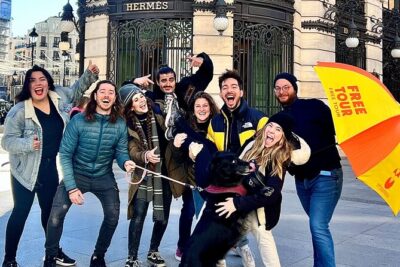

Barcelona Tapas Walking Tour: Food, Wine & History
Read our review →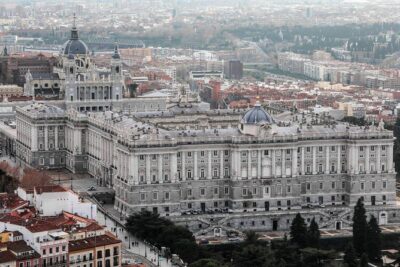
Madrid Old Town & Royal Palace Walking Tour Skip the Line Ticket
Read our review →
Browse the lists this tour appears in