
Reviewed · HISTORICAL TOURS
Tarragona: Roman Heritage Guided Walking Tour
Tarragona’s Roman past is not shut away in one museum. It is built into the city, with ancient walls beside modern streets and an amphitheater looking out toward the Mediterranean. This two-hour walk gives you a quick, useful introduction to that layered setting, including the Roman walls outside Italy and the Circus vaults where chariot races once thundered overhead.
I like the clear route and the helpful visual aids, especially the large city model and the 3D film. I also like the way the tour ends at the seaside Amphitheater, where the setting explains why this monument mattered. The main drawback is time: two hours can feel tight, particularly when the group is large or the guide stops for many questions.
Key points at a glance
- Roman walls beside the meeting point: Begin with some of Tarragona’s oldest surviving Roman defenses and learn why this hill was chosen.
- Circus vaults included: Enter the underground spaces linked to chariot racing, one of the tour’s most atmospheric stops.
- A model makes ancient Tarraco clear: See how Roman buildings once fit into the modern city center.
- 3D presentation before the Amphitheater: Use the audiovisual display to picture the monuments before seeing the arena.
- Sea views and gladiator history: Finish beside the Mediterranean at the Amphitheater, associated with gladiator fights and animal hunts.
- Good value at $17: The price is modest for a guided city walk with Circus admission, though the short schedule limits depth.
Starting beside Tarragona’s oldest Roman walls
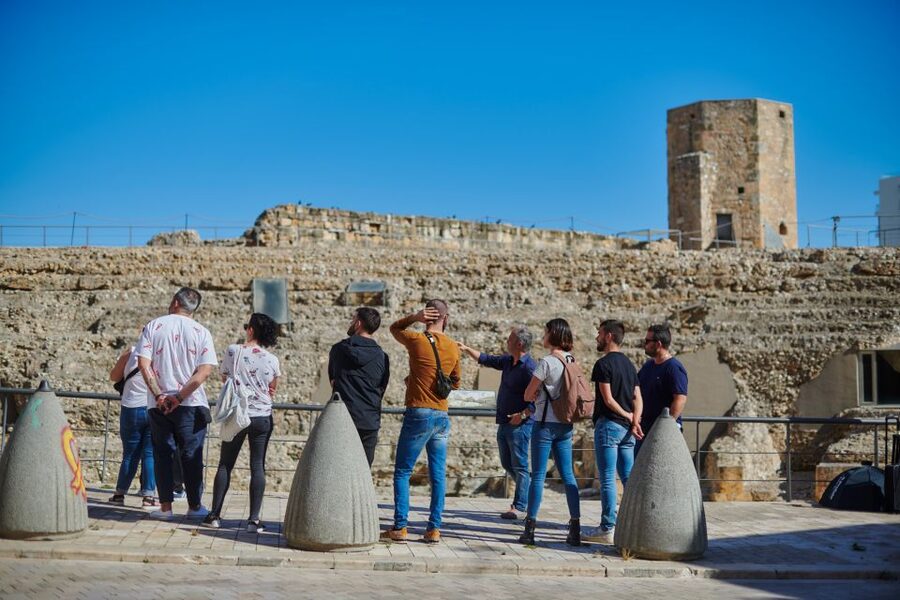
You meet 10 minutes before the start at the Itinere office beside the Roman walls. This is a smart place to begin. You do not spend the opening minutes walking through ordinary streets toward the subject of the tour. The Roman remains are already in front of you.
The guide first explains Tarragona’s place in Roman Spain. The city was chosen on a hill beside the Mediterranean as a gateway for Rome’s control of the peninsula. That location helps make sense of Tarragona’s later monuments: this was not a small outpost with a few scattered ruins, but an important Roman center with defenses, public entertainment, and civic buildings.
The walls are described as the oldest Roman walls outside Italy. That claim gives the first stop real weight, but the value comes from the setting as much as the date. You can see how the ancient fortifications sit within the modern city, with today’s streets and homes pressing close to the old stone.
An official city guide leads the walk in Catalan or Spanish. If you need another language, this experience is not presented as an English-language tour, so check the available option carefully before booking. Guide Adrià has received especially warm praise for his clear explanations, strong command of the subject, and evident pride in Tarragona and Catalonia.
More History Tours in Costa Dorada:
- Barcelona: Tapas Walking Tour with Food, Wine, and History
★ 4.8 · 4,261 reviews - Sevilla Food Tour: Tapas, Wine, History & Traditions
★ 5.0 · 3,468 reviews - Valencia Old Town Tour with Wine & Tapas in 11th Century Historic Monument
★ 5.0 · 3,234 reviews
Walking through a Roman city still in use
After the walls, the route moves into Tarragona’s historic center. This is where the tour’s subject becomes more interesting than a simple procession from ruin to ruin. Roman remains are mixed into the living city, and you see how ancient structures have been absorbed by streets, homes, and squares.
I like this part because it gives you a better sense of scale. A standalone ruin can look impressive but abstract. In Tarragona, the remains are tied to the city’s present layout, so you begin to picture how Roman public life once occupied the same hill.
The large city model is an important stop. The guide uses it to show how Tarragona looked in Roman times and to explain the purpose of its buildings. This can be more useful than hearing a long list of dates and names. You see the city as an organized place, with its public spaces and monuments connected rather than scattered across a map.
The model also helps with a practical problem: Roman Tarragona is not presented as one perfectly preserved site. Parts of it are visible in different places, and modern streets interrupt the ancient plan. The guide’s explanation gives those fragments a common shape.
The drawback is group size. One recent departure had several groups starting at the same time, creating noise and making it harder to follow the guide. A crowded start can affect a walking tour more than it affects a museum visit, since you are often standing outdoors while trying to hear. Arriving early and staying close to the guide should help, but the operator could reduce this problem by staggering departure times.
Entering the Circus vaults and picturing the races
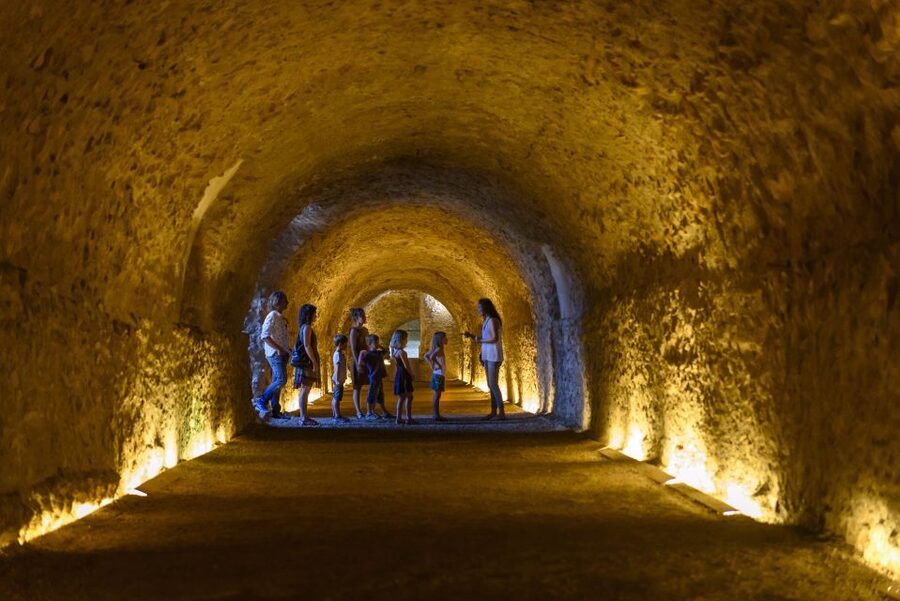
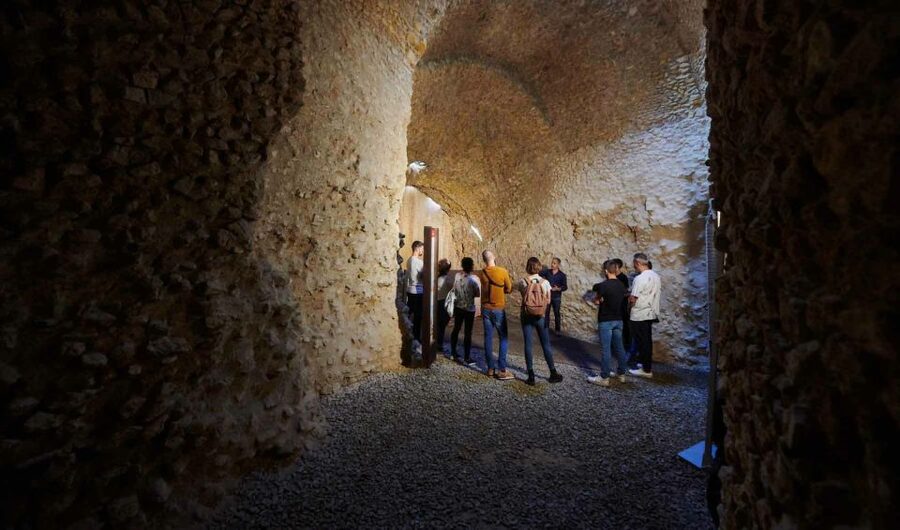
The tour includes entrance to the Circus, one of the clearest reasons the $17 price feels fair. The Circus was the Roman venue for chariot racing, and the vaults give you a chance to experience the monument from below rather than only viewing its remains from the street.
The guide uses this stop to bring the races back to life. You can picture the noise, speed, and danger of teams charging around the track, even though the surviving structure is quieter and more restrained today. The vaults also show how Roman entertainment depended on substantial engineering and circulation spaces beneath the spectacle.
This is a good stop for visitors who want more than a quick photograph. The Circus is not simply a decorative ruin. It explains how mass entertainment worked in Roman cities and how Tarragona’s public monuments served a large population.
There is one detail to keep in mind when planning your expectations. The included admission specifically covers the Circus. The tour then continues to the Amphitheater, but the provided details do not state that a separate Amphitheater entrance is included. If entering the arena is essential to you, confirm the admission arrangements before you pay. The itinerary does promise a visit to the Amphitheater area and its history, along with impressive views of the monument and sea.
Using film and 3D images to understand the monuments
Before heading to the Amphitheater, you watch an audiovisual presentation with 3D images. A film is not a substitute for seeing ancient stone in person, but here it has a practical role. It helps you imagine missing walls, original forms, and the way the monument may have functioned when it was in use.
This visual pause also breaks up the walking. Two hours is a brisk schedule, and a short presentation gives the guide a way to explain difficult details without asking you to stand beside every ruin while trying to form a mental picture. Adrià was singled out for making the video especially effective, and his clear style seems well suited to this mix of explanation and visual material.
The presentation may be particularly useful if Roman architecture is new to you. You do not need to arrive with background reading. The guide introduces the regional Roman story at the walls, explains the city plan with the model, and then uses the 3D material to prepare you for the final monument.
The tour is conducted in Catalan or Spanish, so your ability to follow the spoken explanation matters. The visual material can support understanding, but it does not remove the language issue. Check the language carefully if you are not comfortable in either of those languages.
More Walking Tours in Costa Dorada:
- Barcelona Tapas and Wine Experience Small-Group Walking Tour
★ 5.0 · 5,804 reviews - Granada: Albaicín and Sacromonte Guided Sunset Walking Tour
★ 4.9 · 2,962 reviews - Toledo Tour & Vineyard Walk with Wine Tasting from Madrid
★ 5.0 · 2,546 reviews - Madrid Walking Tour from Puerta del Sol to Retiro Park
★ 5.0 · 2,285 reviews
Arriving at the Amphitheater beside the Mediterranean
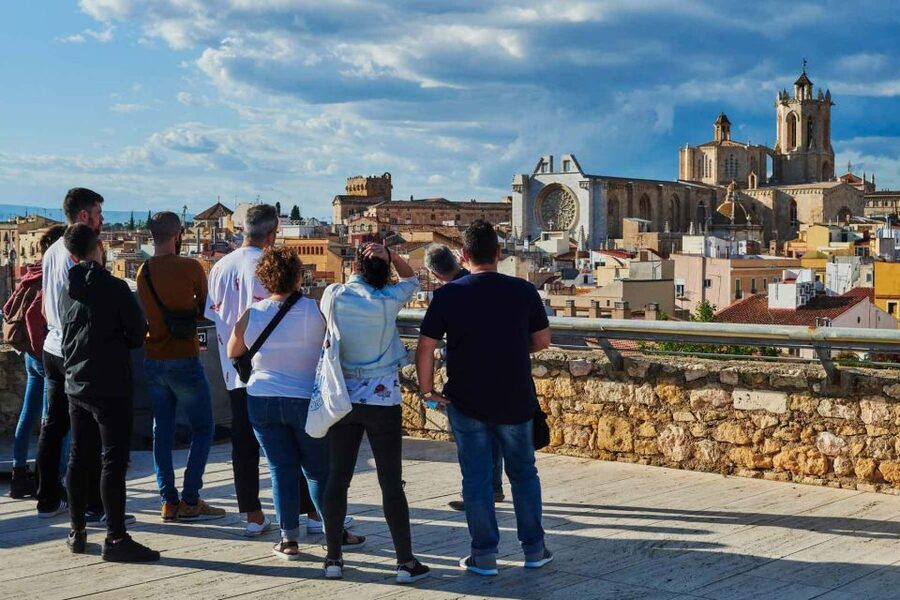
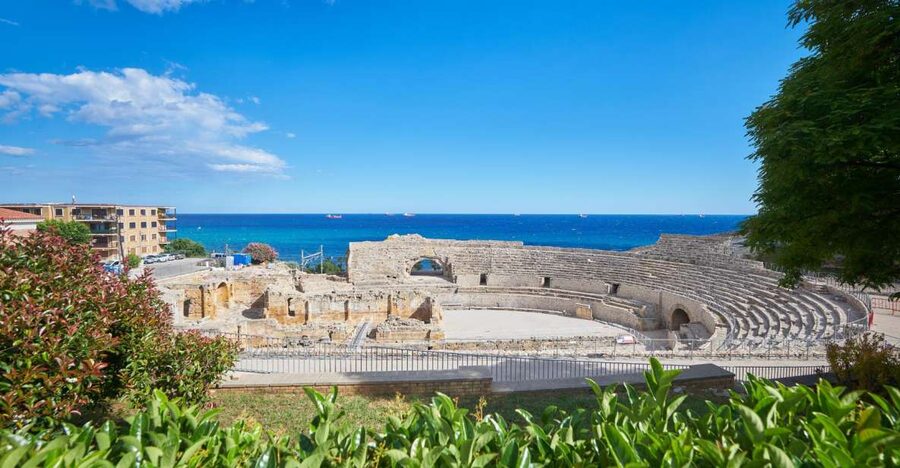
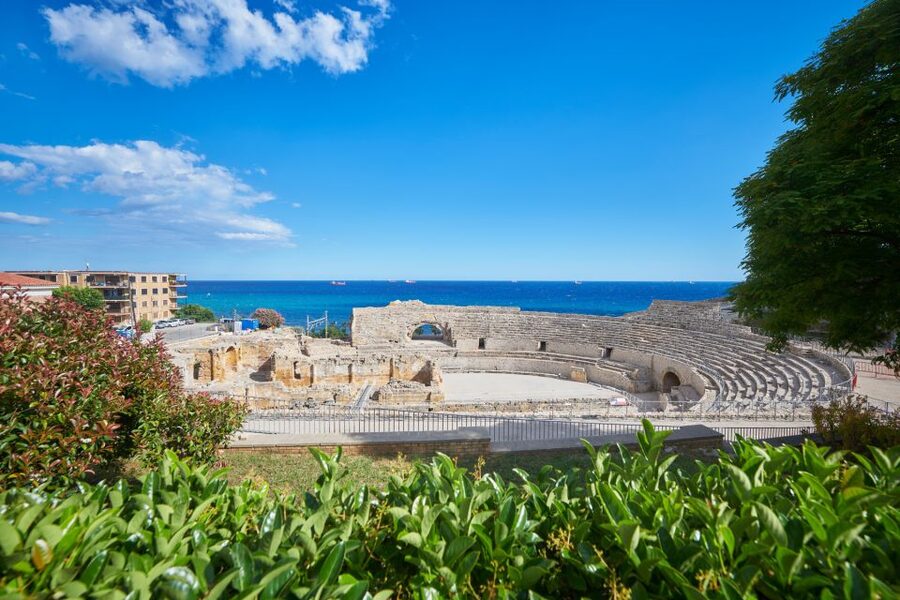
The final major stop is Tarragona’s Amphitheater, set near the sea. The location does much of the teaching. You can see why a Roman city might place a large public venue on this slope, and the open view gives the monument a stronger sense of place than an enclosed museum could provide.
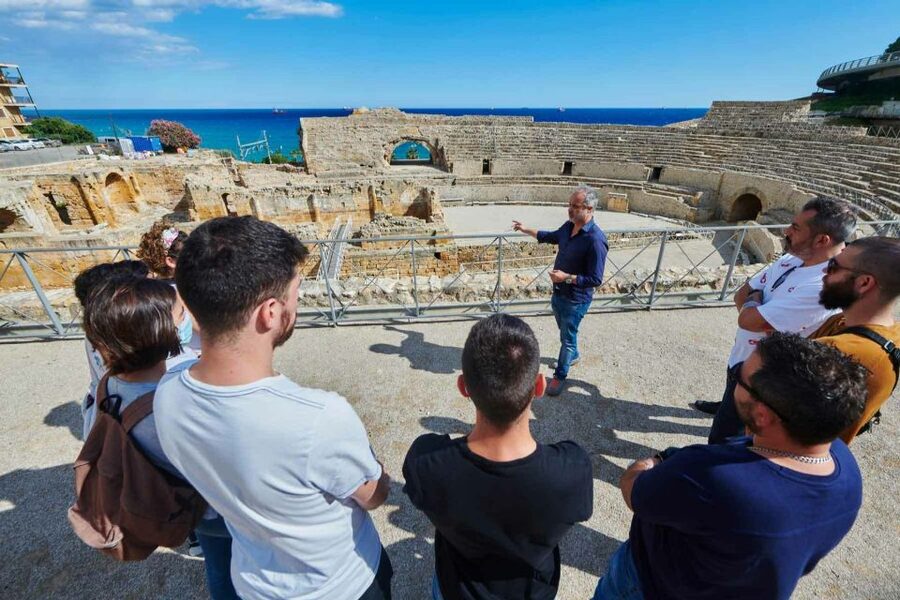
Here the guide explains gladiator fights and animal hunts held in ancient times. The subject is dramatic, but the best part is the link between the events and the building. The arena was designed for public spectacle, and its setting near the coast makes it easy to picture the Amphitheater as part of a larger Roman city rather than an isolated stage.
The tour also covers the long story of the stadium up to the present day. The supplied details do not spell out every later use or change, so you should expect an overview rather than a specialist architectural lecture. That is appropriate for a short first visit, especially if your main goal is to understand what you are seeing.
Allow a little mental space for this final stop. The Amphitheater is the point where the walls, city plan, Circus, and public entertainment all come together. You have seen the defensive edge of the city, the racing venue, and the civic layout. Now you see the arena where Rome’s public culture could become violent and theatrical.
What two hours really gives you
Two hours is enough for a strong introduction, not an exhaustive study of Tarragona’s Roman remains. One local participant felt the tour would work better at three hours, and that criticism is reasonable. The route includes several substantial subjects, and a guide who explains them carefully can easily run up against the clock.
That short duration can also be an advantage. If you have only part of a day in Tarragona, the tour gives you a focused route without consuming your entire schedule. You get the walls, historic center, Circus, visual presentation, and Amphitheater in one organized outing.
I would treat it as a foundation. Afterward, you will know which monuments deserve a slower second look, and you will understand how the Roman pieces relate to one another. If you already have a serious interest in Roman urban planning, two hours may leave you wanting more.
Weather matters, too. This is a walking tour, and much of the experience takes place outdoors. One departure continued in heavy rain and was still considered acceptable, but poor weather can make it harder to hear, move comfortably, and enjoy the views. Wear comfortable shoes, and do not bring luggage or large bags, since those are not allowed.
How the guide affects the experience
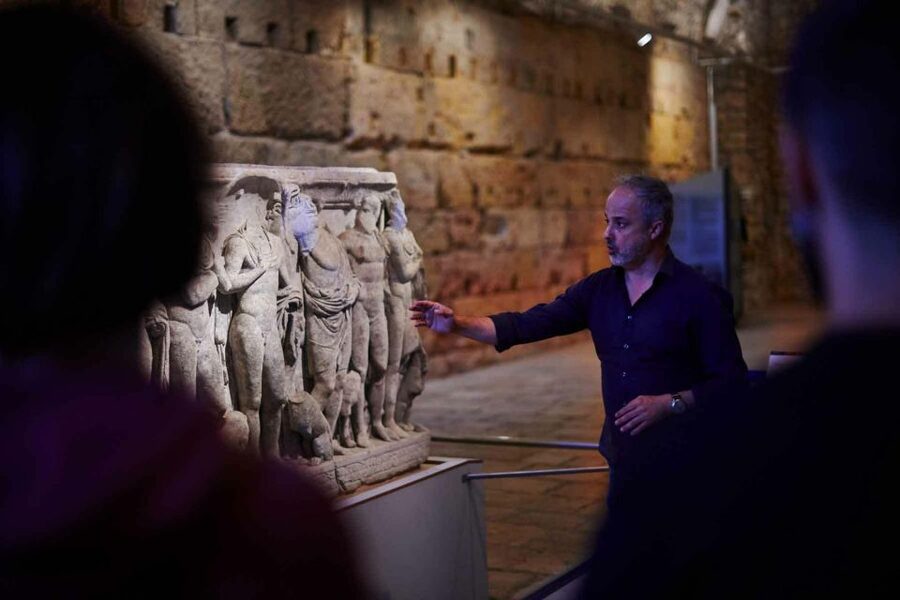
A city walk lives or dies by its guide. Here, the strongest feedback centers on Adrià. His explanations are described as easy to understand, informed, and delivered with warmth and pride in his home region. That combination matters in Tarragona, where the remains can be visually impressive but confusing without a clear explanation.
You should expect a live guide rather than an audio device or self-guided route. That gives you a chance to ask questions and follow the story as you move between sites. It also means the experience can vary with group size, weather, and the guide’s ability to keep everyone together.
There has been at least one weaker experience in a crowded departure, with several groups and enough noise to make the explanation difficult to follow. This is not a reason to dismiss the tour, but it is a useful warning. Stay near the guide, arrive early, and consider choosing a less crowded start time if availability allows.
The overall rating is 4.7 from 261 reviews, which fits the pattern here: strong approval for the guides and content, with occasional concerns about a short schedule or crowded conditions. I would give more weight to those specific practical points than to the number alone.
Is $17 good value for Tarragona?
At $17 per person, this is a reasonably priced introduction to Tarragona’s Roman center. You receive a guided walk, a live official city guide, access to the Circus, and the benefit of visual aids that help explain the ancient city. Paying separately for several site visits and arranging your own route could easily take more time and produce a less connected experience.
The value is best if you are visiting Tarragona for the first time. The guide joins together monuments that might otherwise feel like disconnected photo stops. You also avoid spending your limited time figuring out what each surviving wall or vault once did.
The price is less compelling if you want a slow, highly detailed archaeological visit. The two-hour limit means you will keep moving, and the Amphitheater admission is not specifically listed among the included items. For a specialist, a longer private tour or a separate visit to the monuments may offer more depth.
The booking terms are traveler-friendly. You can reserve now and pay later, and cancellation is free up to 24 hours before the activity for a full refund. Wheelchair access is available, though comfortable footwear remains important for everyone on this walking route.
Who should book this walking tour?
I recommend it for first-time visitors who want a clear Roman overview, families who benefit from models and video, and anyone with only a short window in Tarragona. It also suits you if you prefer a guide to connect ancient remains with the modern city instead of visiting each site alone.
It is a good fit for history-minded visitors who enjoy seeing several types of Roman monument in one outing: defenses, a Circus, an urban plan, and an arena. The sea view at the Amphitheater adds a memorable final setting without requiring a separate excursion.
I would think twice if you need an English-language tour, want a quiet small-group setting, or plan to bring large luggage. I would also choose another format if you want to spend a long time inside each monument rather than cover the main Roman story at a steady pace.
Should you book it?
Book this tour if you want an affordable, well-organized introduction to Tarragona’s Roman past and you can follow Catalan or Spanish. The walls, Circus vaults, city model, 3D presentation, and seaside Amphitheater make a satisfying two-hour route, and guide Adrià appears particularly strong at turning the material into plain, understandable storytelling.
Skip it if two hours feels too short for your interests or if entering the Amphitheater is a must and you have not confirmed that admission is included. For most first visits, though, the $17 cost is sensible, the route covers the essential Roman monuments, and the ending beside the Mediterranean gives the tour a strong finish.
FAQ
How long is the Tarragona Roman Heritage Guided Walking Tour?
The tour lasts two hours. Check the available dates for the specific starting time.
Where does the tour meet?
Meet at the Itinere office next to the Roman walls. Arrive 10 minutes before the activity begins.
What languages are available?
The live guide conducts the tour in Catalan or Spanish.
Is entrance to the Circus included?
Yes. Entrance to the Circus is included in the activity.
Is the Amphitheater entrance included?
The activity includes a visit to the Amphitheater and its history, but the included items specifically list entrance to the Circus only. Confirm the admission details if entering the Amphitheater is important to you.
Is the tour wheelchair accessible?
Yes, the activity is listed as wheelchair accessible.
What should I bring?
Wear comfortable shoes. Luggage and large bags are not allowed.
Can I cancel the booking?
Yes. You can cancel up to 24 hours in advance for a full refund. You can also reserve now and pay later.
Recently added around Costa Dorada
- Salou: PortAventura, Caribe Aquatic & Ferrari Land Passes★ 4.4 · 419 reviews
- Salou: Siurana Medieval Village Guided Tour w/ Hotel Pickup★ 4.5 · 213 reviews
- Salou: Scuba Diving for Beginners★ 4.8 · 227 reviews
- Costa Dorada: Aquopolis Entry Ticket★ 3.9 · 275 reviews
- Cambrils: Sunset Catamaran Cruise with Drinks★ 4.7 · 201 reviews
- Cambrils: Parc Samà Entry Ticket★ 4.4 · 295 reviews
- Cambrils: Costa Dorada Sunset Catamaran Cruise with Drinks★ 4.4 · 365 reviews
- From Barcelona: Tarragona & Sitges Full Day Tour with Pickup★ 4.8 · 428 reviews
Historical Tours, compared.

Tapas Walking Tour with Food, Wine, and History
Read our review →
Sevilla Food Tour: Tapas, Wine, History & Traditions
Read our review →
Valencia Old Town Tour with Wine & Tapas in 11th Century Historic Monument
Read our review →
Barcelona Tapas Walking Tour: Food, Wine & History
Read our review →
Ultimate Seville Tapas, Wine & History Small Group Tour
Read our review →
Skip-the-Line Great Mosque-Cathedral History Tour
Read our review →

Madrid Historical Tour with Local Guide in Eco Tuk Tuk Private
Read our review →Browse the lists this tour appears in