
Reviewed · TAPAS TOURS
Seafood paella cooking class, tapas and visit to Ruzafa market.
Valencia’s best cooking lesson starts before you reach the kitchen. You’ll shop at Ruzafa Market, hear why paella matters to Valencian families, then help cook the seafood version yourself. The food is only half the point. You’re also learning how local ingredients move from market stall to shared table.
I especially like the market visit and the way the class puts every participant to work. I also like the generous meal: tapas, paella, tomato salad, drinks, fruit, Valencian cake, sweet wine, and coffee. The main drawback is the meeting point, which some people have found unclear, and the eight-minute walk to the kitchen may be tiring for anyone with limited mobility.
At a glance
- Shop for paella ingredients at Ruzafa Market, with explanations about seafood, vegetables, ham, and local food customs.
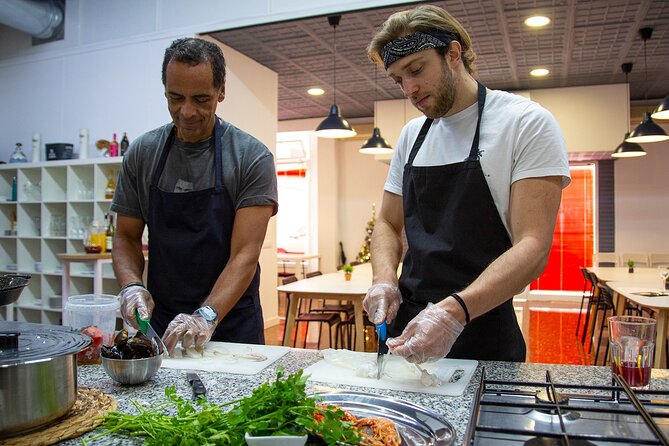
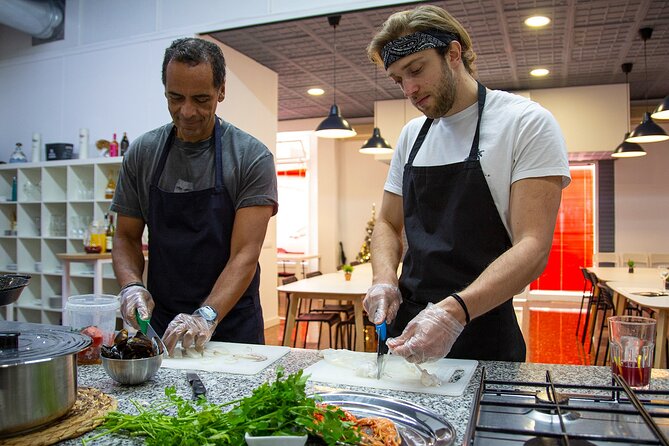
- Cook seafood paella in a small group, with hands-on jobs for participants rather than a chef-only demonstration.
- Make sangria before cooking, then enjoy tapas, wine, beer, soft drinks, or water during the meal.
- Learn from a rotating team of chefs, including Ana, José, Cristina, Valentín, and others named in class accounts.
- Eat a full Valencian-style meal, including tomato salad, seasonal fruit, Valencian cake, mistela, and coffee.
- Plan around Sunday closure, since Ruzafa Market is closed that day and the market visit does not operate as described.
Starting at San Valero and finding Ruzafa Market
The meeting point is outside San Valero Parish at Carrer del Pare Perera, 6, in Valencia’s L’Eixample district. The class starts at 11 a.m. and returns to this general meeting point after the meal.
Give yourself extra time to find the exact spot. The church address is supplied, but the meeting instructions have not always felt perfectly clear on the ground. The steps of the church are a useful landmark, and asking a nearby shopkeeper may help if you are circling the block. I would arrive 10 to 15 minutes early rather than trying to make a last-second entrance.
From there, your guide takes the group into Mercado de Ruzafa. This is not a quick photo stop followed by a cooking demonstration. You help gather the fresh products needed for the paella while hearing about Valencian customs and the dish’s place in local life.
That is a useful distinction. Paella is not simply a famous Spanish dish ordered at random around the country. In Valencia, its ingredients, cooking method, and social role matter. The market visit gives you a better sense of what you are buying and why the dish begins with fresh, ordinary products rather than a mysterious restaurant formula.
The class team also makes an effort to keep the group from blocking stalls and walkways. That matters in a working neighborhood market. You are there to learn, but local shoppers and vendors still need room to do their business.
More Cooking Classes in Valencia
- Paella Cooking Class, Wine Tasting & Central Market in Valencia
★ 5.0 · 1,150 reviews - Valencian paella cooking class, tapas and visit to Ruzafa market.
★ 5.0 · 828 reviews - Valencia: Paella Cooking Class with Central Market Tour
★ 5.0 · 721 reviews
What you see at Ruzafa Market
Ruzafa Market supplies the class with the ingredients for the meal, but it also provides the first lesson. You may hear about the seafood, vegetables, and other products before they appear in the cooking area. Some groups have also stopped to meet vendors and sample ingredients.
The guide may explain the difference between seafood selections and the products used for other paellas being prepared at the same time. Depending on the group, the kitchen may be making seafood, traditional Valencian, or vegetable paella. That can be helpful because you see how the basic method changes with the main ingredients.
The market portion is fairly brief, so do not expect a full food tour of Ruzafa. Its value is practical: you see where the ingredients come from, learn a little about the neighborhood, and understand the shopping stage of paella before handling a pan yourself.
Sunday requires special attention. Ruzafa Market is closed then, so the market visit is not available in the usual form. Check the operating day carefully before booking if this part is important to you.
The eight-minute walk to the cooking kitchen
After shopping, the group walks about eight minutes to the kitchen. That is a short distance for most people, but it is worth noting if you have trouble walking or prefer an entirely stationary activity. The tour does not provide a separate vehicle between the market and kitchen.
The walk also creates a natural break between the market lesson and the meal. Once you arrive, the cooking team welcomes you with sangria and a selection of tapas. You are not expected to begin chopping while hungry.
The class can include up to 20 participants, though some sessions are smaller. Smaller groups have an obvious advantage: it is easier to hear the chef, ask questions, and get a turn at the pan. Past groups have included around eight to 12 people, while the official maximum is 20.
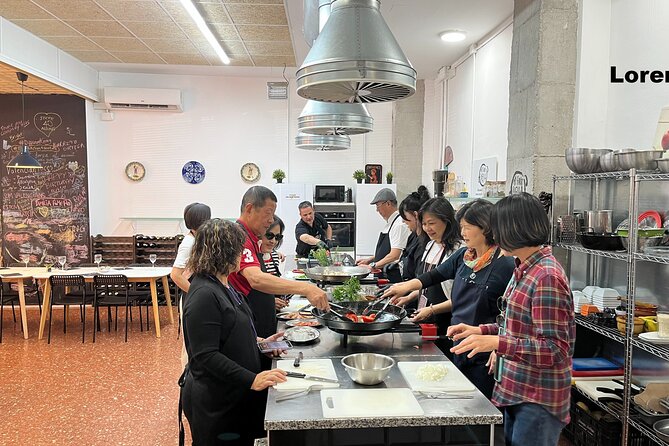
If your group reaches the maximum, the experience may feel more social than private. The cooking is generally organized around several paella pans, so you may work as part of a team rather than preparing a personal dish from start to finish.
Sangria, tapas, and the first round of food
The sangria workshop comes before the paella. A chef explains how to prepare the drink, and you get to taste the result with tapas.
The opening spread can include patatas bravas with sojanesa, Serrano ham, Manchego cheese, steamed mussels, and olives. It is a good selection for the setting: familiar Spanish bar food, local cheese and ham, and seafood that fits the day’s main dish.
Drinks are part of the experience. Included options are sangria, wine, beer, soft drinks, or water. Wine accompanies the meal, and the day ends with sweet wine, also called mistela, plus coffee.
I would keep the alcohol in mind when planning your day. The class has a cheerful, social tone, and several drinks are served across the experience. You can choose water or soft drinks, but the event is designed around shared food and drink rather than a quiet technical workshop.
Same base in Valencia, a completely different kind of day:
- Valencia: Oceanogràfic Entry Ticket
★ 4.7 · 9,893 reviews - Valencia: 24 or 48-Hour Hop-on Hop-off Bus Ticket
★ 3.9 · 5,611 reviews - Valencia: Palosanto Flamenco Show Ticket
★ 4.8 · 3,876 reviews - Valencia: Catamaran Cruise with Sunset Option
★ 4.0 · 3,566 reviews
Cooking seafood paella step by step
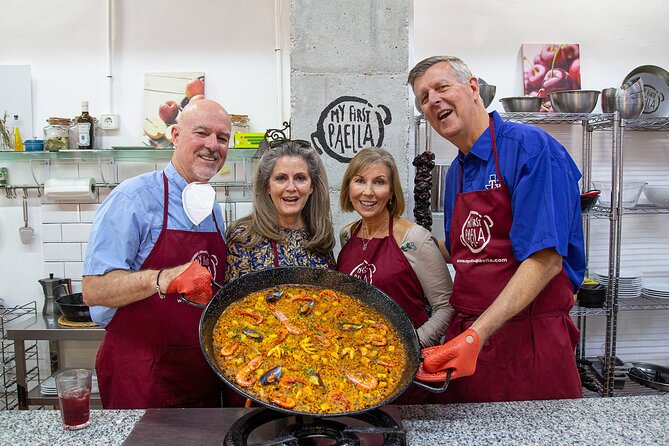
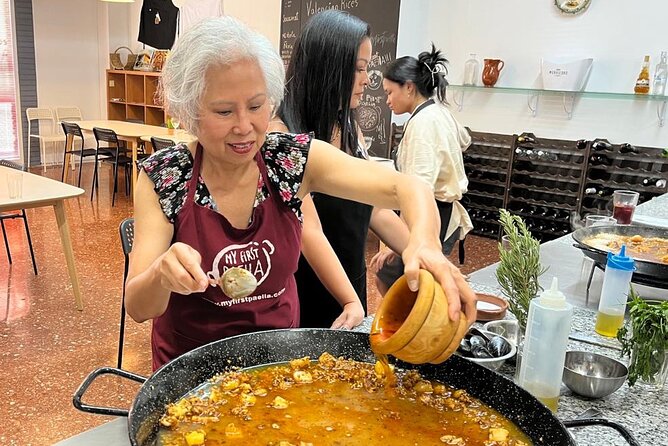
The central lesson is a hands-on seafood paella class. The chef explains the method in stages, from preparing ingredients to cooking the rice and seafood. You do not simply watch a finished pan arrive at the table. Participants help with the preparation and cooking, with the chefs supervising the process.
The instructors named in class accounts include Ana, José, Cristina or Christine, Valentín, Guillermo, and Cris. The exact team can vary, and the guide may operate in English, Spanish, or Russian. English is the advertised language, but a multilingual staff may be present.
The best part of the format is that paella becomes less intimidating. You see that the dish depends on timing, preparation, and attention to the cooking process. You also learn how small choices affect the final result, which is useful if you plan to try the recipe at home.
The class is not built around culinary-school precision. It is a group meal, with conversation, humor, and plenty of participation. One person may prepare an ingredient while another handles a different part of the process. If you want a quiet, highly technical lesson with one chef assigned only to you, this is not that.
On the other hand, the shared approach fits paella itself. The dish is meant to bring people together, and the class uses that social quality well. The cooking team keeps the pace easy enough for beginners, while still explaining the techniques that make the finished rice work.
Some sessions prepare more than one kind of paella at once. That gives you a useful comparison between seafood and traditional versions, though it also means one chef may be helping several pans. The most practical tip is to stay involved and ask for a specific job if you want more hands-on time.
Sitting down to eat what you made
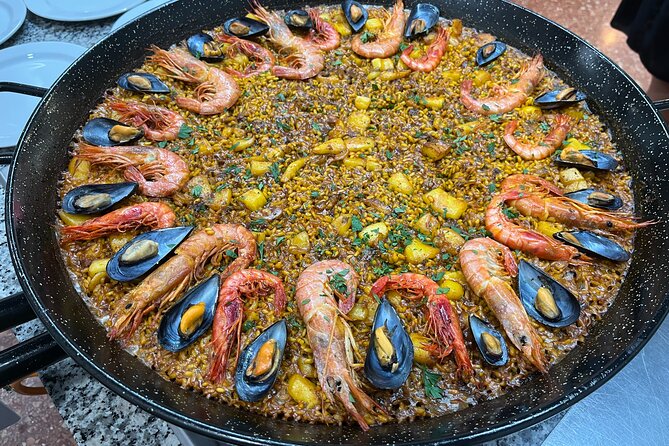
Once the paella is ready, everyone sits down for the meal. Seafood paella is served with Valencian tomato salad, followed by seasonal fruit, Valencian sponge cake, sweet wine, and coffee.
The meal is substantial for a three-and-a-half-hour activity. You begin with tapas, continue with the paella and salad, and finish with dessert. Wine, sangria, beer, water, and soft drinks are included, so the $78.64 price is not simply paying for a recipe demonstration.
That price makes the most sense if you value the full package: market visit, cultural background, cooking instruction, several courses, and drinks. A basic cooking class may cost less, and a good restaurant paella may also cost less. Neither gives you the market shopping, the practical lesson, and the chance to cook alongside other people.
The quality of your paella depends partly on the group and the instructors, but the teaching team has a strong reputation for keeping the class warm and participatory. Ana is often described as funny and clear in her explanations, while José, Cristina, and Valentín are associated with an energetic, welcoming style. Names and staffing can change, so treat those as examples rather than a guaranteed lineup.
The social side of the class
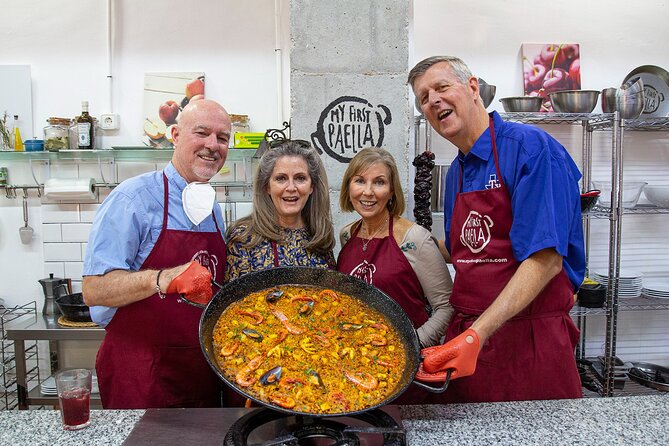
You should book this if you like meeting people over food. The group may include couples, solo participants, families, and people from several countries. By the end, everyone has worked on the same meal, which gives conversation an easy starting point.
The class also works well for a celebration. A milestone birthday group, for example, can take part without needing advanced cooking skills. Children are allowed when accompanied by an adult, though the drink-centered format may suit adults best.
The tone is lively. Expect laughter, conversation, sangria, and perhaps a few playful toasts. Several class accounts describe the staff as funny and inclusive, but this is not a formal restaurant service. Your experience will be better if you enjoy a little noise and group energy.
Solo participants can fit in easily because the cooking jobs are shared. Couples may appreciate having a joint activity rather than sitting across a table for another meal. Families should remember that the tour lasts about three and a half hours and includes a walk, several food courses, and adult beverages.
Practical details that affect your choice
The advertised price is $78.64 per person. The tour lasts approximately three hours and 30 minutes, beginning at 11 a.m. and ending back near San Valero Parish.
A mobile ticket is accepted, and confirmation is issued at booking. The maximum group size is 20. The activity is offered in English, although the guide may also speak Spanish or Russian.
Wear comfortable shoes for the market and the walk to the kitchen. The experience does not require a long hike, but you should not treat it as a seated class from start to finish. If you have limited mobility, the market movement and eight-minute walk are the main points to consider.
The cancellation policy is straightforward: cancel at least 24 hours before the local start time for a full refund. Changes or cancellations inside that 24-hour window are not accepted for a refund. The provider may also cancel or offer alternatives in unusual circumstances, such as illness among the chefs, so do not schedule a flight or another nonrefundable activity immediately afterward.
Who should book this paella class
I would choose this class if you want more than a plate of paella. It gives you the ingredient shopping, the local food context, the cooking method, and the meal in one compact morning and afternoon activity.
It is especially good for:
- First-time visitors who want a clear introduction to Valencian food.
- Couples and solo participants who enjoy social group activities.
- Home cooks who want practical paella tips.
- Families with older children, provided an adult accompanies each child.
- Anyone who wants market time without committing to a full-day food tour.
I would hesitate if you dislike group cooking, avoid alcohol, have difficulty walking, or want a highly private lesson. You can choose nonalcoholic drinks, but sangria and wine are central to the format. Also, the class is not available with the Ruzafa Market visit on Sunday.
Should you book My First Paella?
For most people who enjoy food and company, yes. The strongest part is the complete chain: market ingredients, local stories, sangria, tapas, hands-on cooking, and a meal you helped make.
Book it for the experience, not only for the recipe. You may leave with a better paella method, but you will also have spent several hours sharing a Valencian food tradition with a small group. Arrive early at San Valero Parish, confirm the meeting point, avoid Sunday, and leave room in your schedule for a generous lunch.
FAQ
Where does the paella cooking class begin?
It begins at Parroquia de San Valero, Carrer del Pare Perera, 6, in L’Eixample, Valencia. The start time is 11 a.m., and the activity ends back at the meeting point.
How long does the experience last?
The experience lasts approximately three hours and 30 minutes.
Is the Ruzafa Market visit included?
Yes. The group visits Ruzafa Market together to buy the fresh ingredients used for the paella and to discuss Valencian food customs and culture. The market is closed on Sunday, so this visit does not operate then.
What food and drinks are included?
Included food can include tapas, seafood paella, Valencian tomato salad, seasonal fruit, Valencian cake, and coffee. Drinks include sangria, wine, beer, soft drinks, or water, along with sweet wine called mistela.
Is the class suitable for children?
Children may attend, but they must be accompanied by an adult.
What is the cancellation policy?
You can cancel at least 24 hours before the local start time for a full refund. Cancellations or changes made less than 24 hours before the start are not accepted for a refund.
More Paella Classes in Valencia
- Barcelona: Paella Cooking Experience & Boqueria Market Tour
★ 4.8 · 3,661 reviews - Barcelona Paella Cooking Class with Market Visit, Tapas & Sangria
★ 5.0 · 2,531 reviews - Menorca: Natural Coves and Beaches Boat Trip & Paella Lunch
★ 4.4 · 1,753 reviews - Spanish Cooking Class Paella Tapas and Sangria in Madrid
★ 5.0 · 1,340 reviews
More Tapas Tours in Valencia
- Valencia Old Town Tour with Wine & Tapas in 11th Century Historic Monument
★ 5.0 · 3,234 reviews - Valencia: Old Town Tour, Wine & Tapas in an 11th c. Monument
★ 4.9 · 1,797 reviews
Recently added around Valencia
- Valencia: Waterfalls and Thermal Springs Tour with Swimming★ 4.8 · 643 reviews
- Valencia: Jetski experience with Guide★ 4.7 · 131 reviews
- Valencia: Historical Walking Tour★ 4.6 · 390 reviews
- From Valencia: Caves of San José Guided Tour & Boat Ride★ 4.5 · 179 reviews
- From Valencia: Peniscola Day tour, Game of Thrones★ 4.8 · 233 reviews
- From Valencia: Cala del Moraig Hiking & Beach Trip★ 4.8 · 107 reviews
- From Valencia: Albufera Day Trip with Boat Tour and Transfer★ 4.5 · 556 reviews
- From Valencia: Chulilla, Turia Canyon, Hanging bridges…★ 4.9 · 139 reviews
Tapas Tours, compared.
Montserrat & Cogwheel Train, Gourmet Wine Tasting & Tapas/Lunch
Read our review →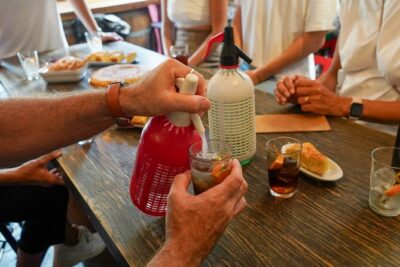
Barcelona Tapas and Wine Experience Small-Group Walking Tour
Read our review →
Montserrat with Black Madonna & Medieval Winery with Tapas/Lunch
Read our review →
Montserrat and Winery Tour with Tapas or Lunch
Read our review →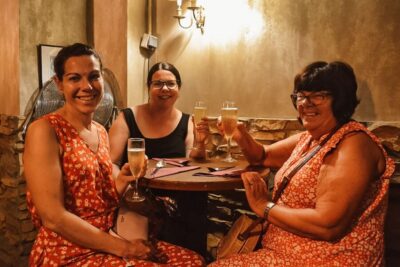
Tapas Walking Tour with Food, Wine, and History
Read our review →
Sevilla Food Tour: Tapas, Wine, History & Traditions
Read our review →
Valencia Old Town Tour with Wine & Tapas in 11th Century Historic Monument
Read our review →
Sunset or Day Catamaran Cruise with Tapa & Drink
Read our review →Browse the lists this tour appears in