Reviewed · TICKETS
Barcelona: Sant Pau Recinte Modernista Entry Ticket
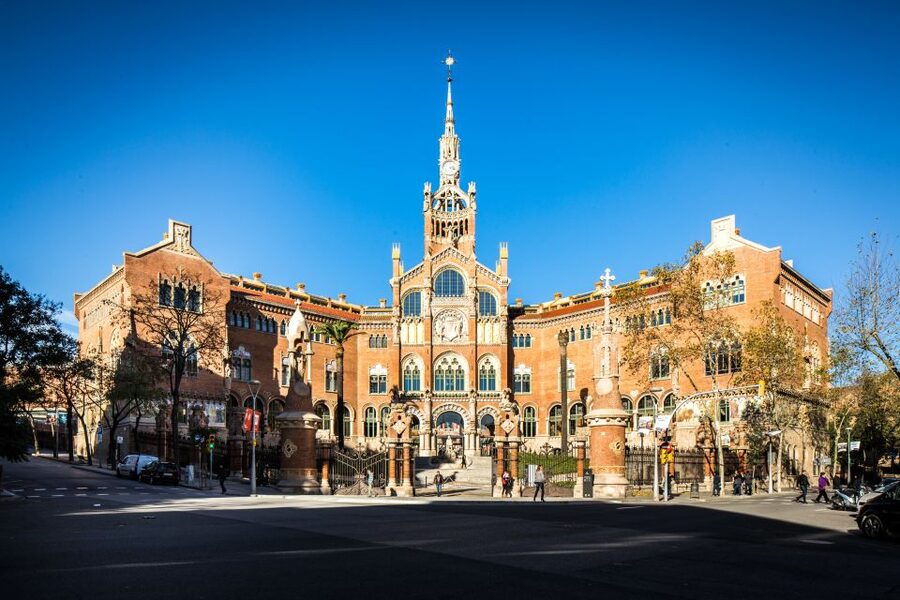
Sant Pau Recinte Modernista is a former hospital turned open-air architectural wonder, and the best part is how completely its beauty serves a practical purpose. Lluís Domènech i Montaner designed gardens, pavilions, underground passages, and sunny patient spaces as part of one carefully planned medical complex. Look up often: the decoration is everywhere.
I like the chance to see Barcelona beyond Gaudí, and I like the calm of the gardens after the city’s crowded streets. You can study mosaics, stained glass, sculpture, medical objects, and old hospital rooms without rushing from one grand room to the next. The main drawback is simple: this ticket is self-guided, so you need to read the displays or arrange an audio guide if you want the full story.
Key points
- A former working hospital: Sant Pau served Barcelona’s public for about a century before restoration turned it into a cultural and knowledge campus.
- Art Nouveau on a huge scale: The site is considered the world’s largest Art Nouveau complex, with multiple pavilions rather than one single building.
- Gardens with a medical purpose: The original plan used open air, greenery, sunlight, and separation between wards to support patient care.
- Underground connections: Tunnels link parts of the complex and form an unusual part of the visit.
- A self-paced visit: Most people should allow 1.5 to 2 hours, though the ticket is valid for one day.
- Good value near Sagrada Família: At $21, it costs less than many major Barcelona attractions and offers a quieter, more spacious experience.
Why Sant Pau Is More Than a Beautiful Building
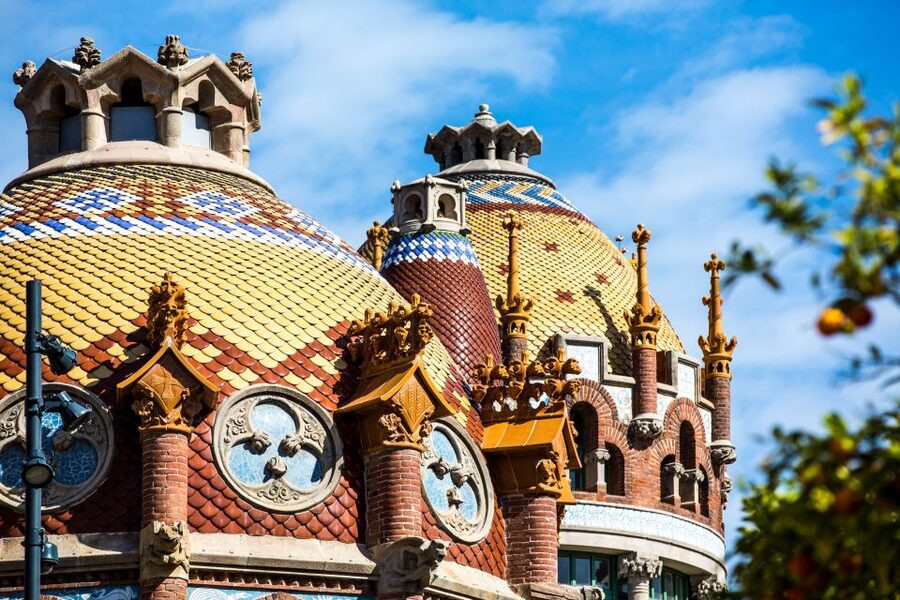
Barcelona is famous for Gaudí, but Sant Pau shows another side of Catalan Modernisme. Lluís Domènech i Montaner created a place where architecture, public health, art, and charity worked together.
The complex was built between 1905 and 1930 after Barcelona’s old Hospital de la Santa Creu in El Raval became too small. The new site was planned as a garden city for sick people, not as a dark block of crowded wards. Separate pavilions gave patients more air, light, and space. Gardens and underground passages helped organize the hospital while keeping much of the daily movement out of sight.
That idea matters when you visit. The decoration is not simply pasted onto a grand monument for show. The building reflects early twentieth-century hopes that a humane setting could help the sick recover. You see this in the layout, the greenery, the colored tiles, and the attention given to windows, sunlight, and circulation.
Sant Pau also has a social story. The hospital was linked to charitable work and care for poor people, so its costly-looking decoration was created for a public institution with a welfare mission. That contrast gives the visit more weight than a standard architecture stop.
A few more Barcelona half-days worth comparing
- Barcelona: Sagrada Familia Entry Ticket with Audio Guide
★ 4.6 · 105,312 reviews - Barcelona: Park Güell Admission Ticket
★ 4.4 · 76,534 reviews - Barcelona: Casa Batlló Entry with Self-Audioguide Tour
★ 4.7 · 25,359 reviews
Entering the Pavilions and Courtyards
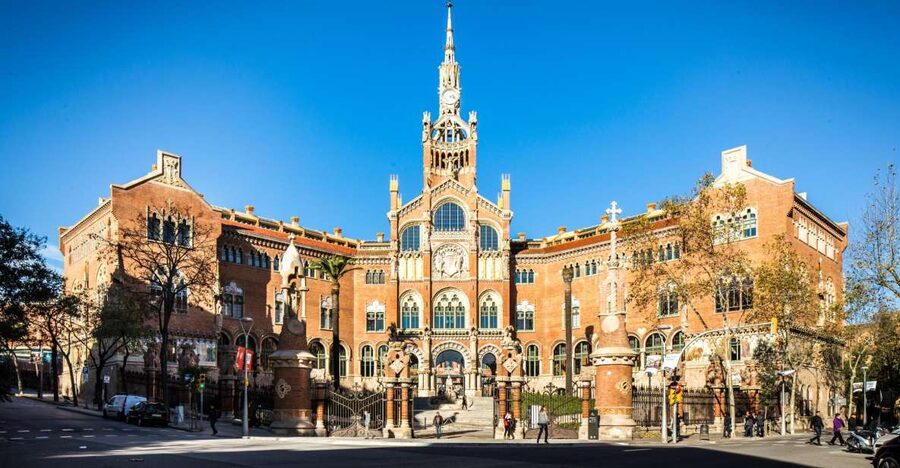
Your visit begins at Calle Sant Antoni Maria Claret, 167, in the Eixample district. The entrance is easy to reach, and a metro stop is nearby. Sant Pau is also close enough to Sagrada Família to pair with it, though I would not treat both sites as a rushed back-to-back photo stop.
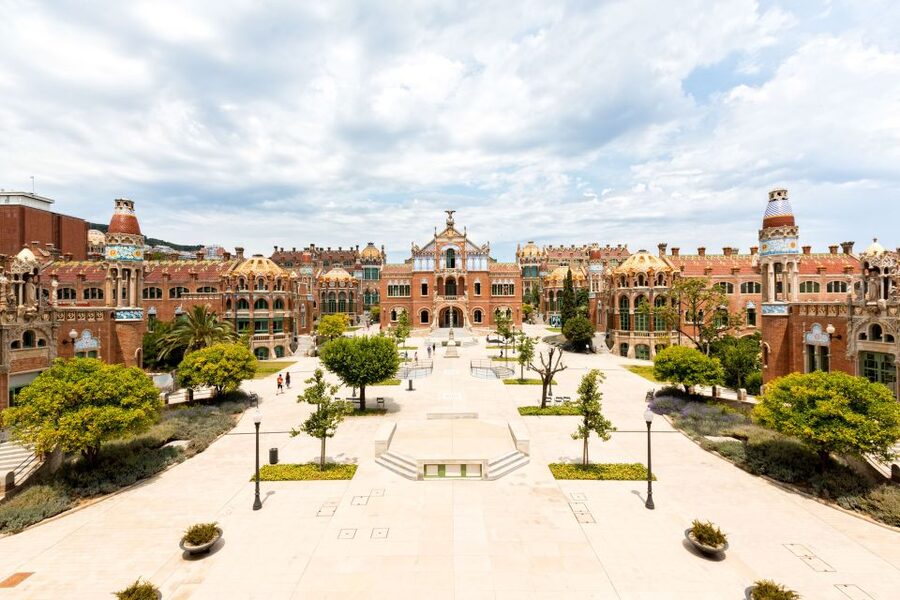
The first view gives you the scale of the project. You are not entering one ornate house. You are entering a planned medical site with pavilions arranged around gardens and linked by hidden routes.
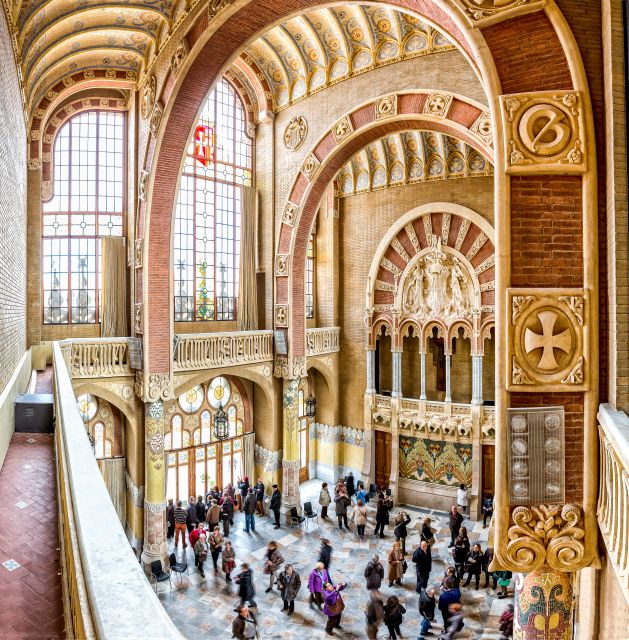
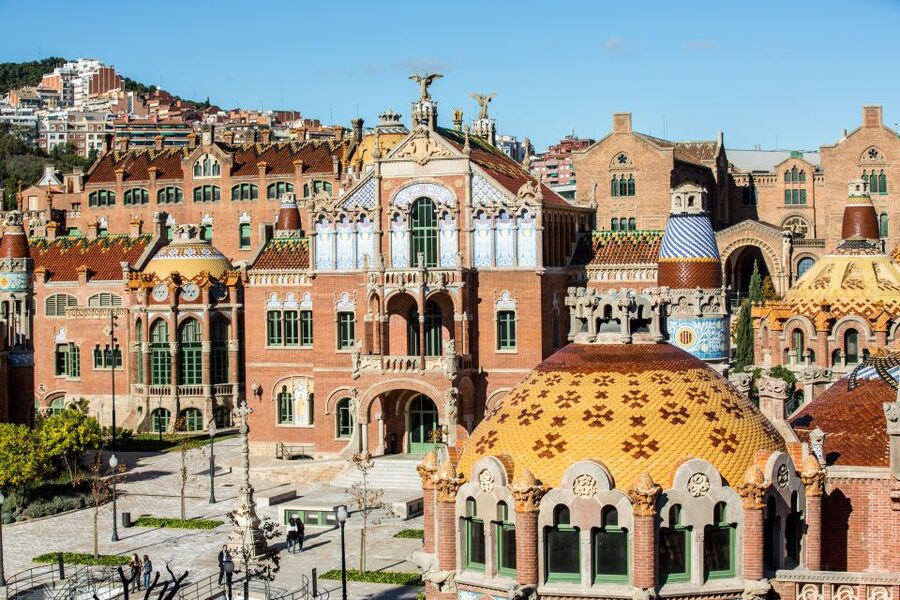
The restored buildings use brick, stone, ceramic tile, sculpture, and colorful ornament. Give yourself time before moving on. The broad views are impressive, but small details reward a slower look. Mosaics appear along walls and façades, while sculpted figures and floral patterns fill spaces that would be plain in an ordinary hospital.
A useful habit is to look above eye level. Decorative bands, arches, ceilings, and stained glass can be easy to miss if you focus only on the route ahead. One especially practical tip is to walk around the sides of the front buildings, where mural mosaics may be less obvious from the central approach.
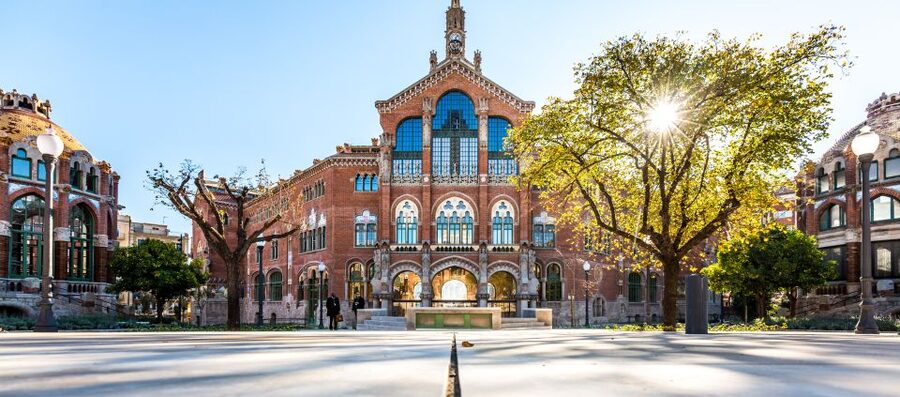
The courtyards are a major reason this visit feels different from many city monuments. They give you room to pause, take photographs, and see the pavilions as parts of a larger plan. In warm weather, the gardens also offer a cooler break from Barcelona’s hard pavement and traffic.
The Garden City Idea in Practice
The original hospital was designed around the belief that surroundings could affect health. That does not mean the gardens are merely decorative. They were part of the hospital’s working plan.
Patients were treated in a setting with air, light, plants, and separation between buildings. The pavilions helped organize care, while the open spaces reduced the feeling of being trapped inside one enormous institution. You can understand this idea best from the courtyards, where the relationship between the buildings and gardens is clear.
This is also where Sant Pau differs from a palace or a church. The site was made for people who were ill, many of whom had limited means. The ornament may look grand, but the purpose was care. I find that tension one of the most interesting things to explain to children and teenagers, since it turns a pretty building into a lesson about medicine and society.
You will not get a modern hospital tour. Instead, you see the restored setting and selected displays that explain how the institution worked. The visit can appeal to medical workers, nurses, science students, and anyone interested in the development of public healthcare. It also works for visitors who simply enjoy architecture and want something less predictable than another famous church.
Inside the Former Hospital Rooms
The interior displays help connect the decoration with daily life. You might see medical instruments and a hospital room arranged as it was in 1932. These details prevent Sant Pau from becoming only a parade of façades and pretty tiles.
A room with old equipment can be more revealing than a grand exterior. It shows the practical side of treatment and helps you picture the people who lived and worked here. The building was not always a museum. It functioned as a public hospital for roughly one hundred years, so the site has a genuine working past rather than a story invented for visitors.
Look for the information about the institution’s medical development and charitable role. The displays explain how a facility for the city’s sick was connected to changing ideas about hygiene, welfare, and treatment.
The presentation is generally easy to follow, but the amount of information depends on how carefully you read. If you move quickly from courtyard to courtyard, you may mainly remember the colors and shapes. If you stop at the medical displays and old room settings, the visit becomes much more personal.
This is where the lack of a guided tour matters. A guide could explain the building’s symbols, hospital routines, and design choices in a connected story. With the basic entry ticket, you set your own pace. That suits independent visitors, but it asks more from you.
Same base in Barcelona, a completely different kind of day:
- Barcelona: 24 or 48-Hour Hop-On Hop-Off Bus Tour
★ 4.4 · 20,872 reviews - Barcelona: Park Guell Guided Tour with Skip The Line Entry
★ 4.7 · 17,563 reviews - Barcelona in 1 Day: Sagrada Familia, Park Guell,Old Town & Pickup
★ 5.0 · 13,541 reviews - Barcelona Aquarium: Entry Ticket
★ 4.3 · 13,335 reviews
Underground Passages and Hidden Connections
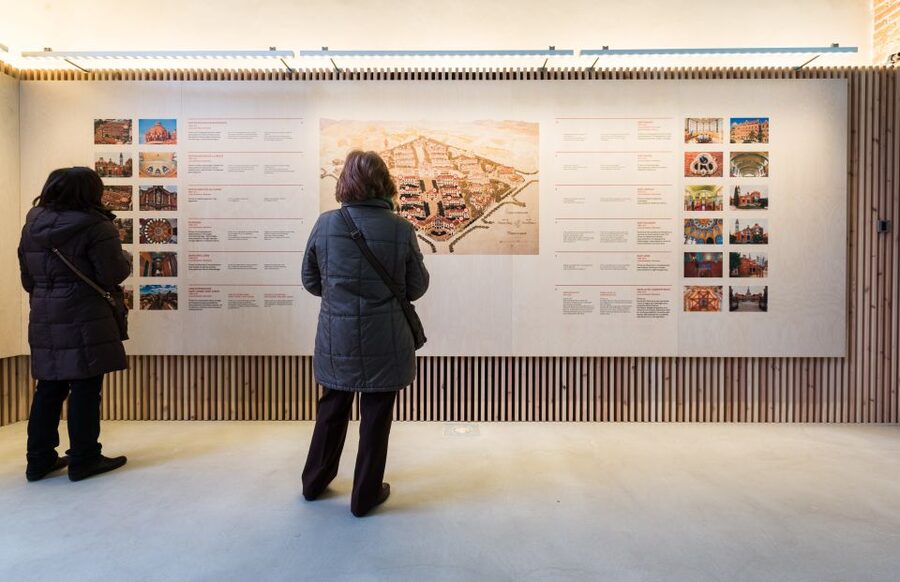
The underground passages are one of the site’s most unusual features. They connect the pavilions and show how the hospital operated behind its decorative façades.
From above, Sant Pau looks like a series of separate buildings in gardens. Below, the passages reveal the practical system tying them together. They also add a sense of discovery because you move between the public-facing architecture and the less decorative infrastructure that made the hospital function.
Do not expect a long underground adventure. The passages are part of the visit, not a separate attraction. Their value lies in the contrast: one moment you are looking at mosaics and stained glass, and the next you are seeing how people, supplies, or hospital work could move through the complex.
The tunnels also make the hospital easier to understand as a working institution. They remind you that the pavilions were not built as isolated showpieces. Every beautiful building had a job.
How Much Time to Allow
The listed visit duration is about 1.5 hours, and that is enough for a focused visit. You can see the main pavilions, courtyards, passages, and displays without lingering over every panel.
I would allow closer to two hours if you enjoy architecture, have a medical background, or want to read the historical material. The ticket is valid for one day, giving you useful flexibility if you prefer a slower morning or want to fit Sant Pau between other plans.
Early morning can be a smart choice. A visit around 9:30 has been described as especially calm, with more space to appreciate the courtyards before the day fills in. The site is also a good late-day option if you have already seen the city’s biggest attractions and want somewhere quieter.
You will walk outdoors between buildings, so your experience depends partly on the weather. Barcelona can be hot, and the gardens provide some relief, but bring water and comfortable shoes. There is no need to race. The best details are on walls, ceilings, doorways, and side façades.
Is the $21 Ticket Good Value?
At $21 per person, Sant Pau is not a bargain basement attraction, but I consider it good value for Barcelona. You are paying for access to a large architectural complex rather than a single room or viewing platform.
The price makes most sense if you spend at least 1.5 hours on site. A quick walk through the entrance area would not justify it as well. Take time to see the gardens, compare the pavilions, find the underground routes, and read about the hospital’s purpose.
It also compares well with the experience offered by more famous Barcelona sights. Sant Pau gives you architecture, social history, medical displays, and open space in one ticket. It is less crowded in feel than the city’s headline attractions, though that can vary by time and season.
There are a few limits. A guided tour is not included, and there is no promise that every part of the entire complex is open as a visitor route. One earlier visitor wished more buildings were accessible. The ticket is strongest for people comfortable exploring independently.
Small lockers are available, and carry-on-sized luggage has been stored there according to visitor information. Do not plan on using them for large suitcases. Nearby cafés make it easy to find food before or after, although there is no café inside the site according to one practical observation.
Who Will Enjoy Sant Pau Most?
I would recommend Sant Pau to anyone who enjoys architecture but wants a break from the usual Gaudí circuit. It is especially good for people who like seeing how buildings were used, not just how they look in photographs.
Medical professionals and students may find the hospital story particularly rewarding. The old equipment, ward setting, and ideas about hygiene and patient care add a layer that ordinary architecture tours do not provide.
Families can also make good use of the site. Children aged 11 and under are admitted free, but they must be accompanied by a parent or guardian. The gardens and pavilions give younger visitors room to move, while the medical history offers plenty to discuss. Very young children may not have the patience for every display, so keep the visit flexible.
Photography lovers will appreciate the colors, symmetry, mosaics, and changing views between buildings. If you prefer a fast list of famous highlights, Sant Pau may feel slower and more thoughtful than expected.
The site is wheelchair accessible, which makes the spacious layout useful for visitors who need a more manageable route. Still, it is wise to confirm the practical route for your specific needs when booking, since a large historic complex can have different conditions in different areas.
How to Make a Self-Guided Visit Work
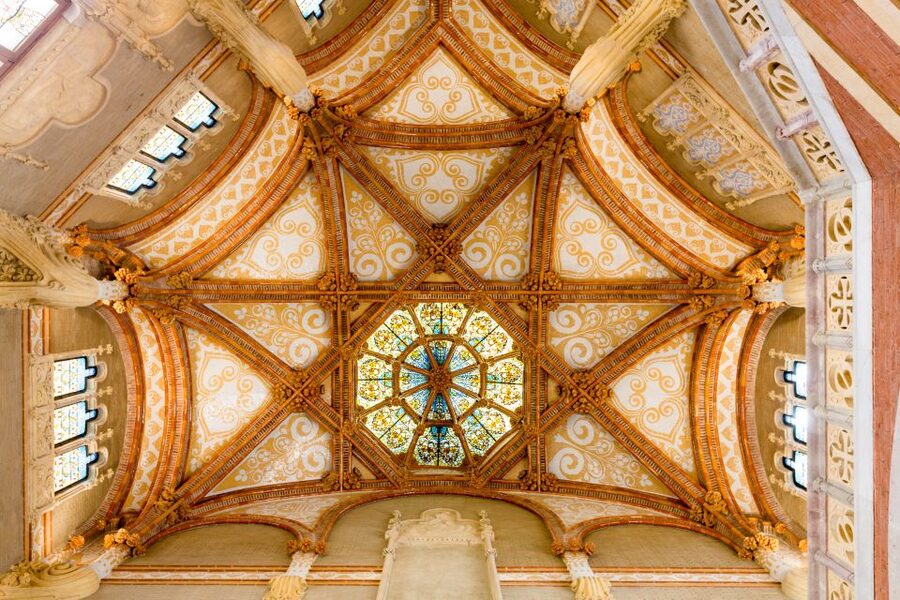
Start by looking at the overall plan before you get absorbed in details. Understand where the pavilions, gardens, and connecting passages fit together. That simple step makes the complex easier to read.
Next, choose your priorities. Architecture fans should focus on façades, stained glass, ceramics, sculpture, and the relationship between the pavilions. Medical and social-history fans should spend more time with the hospital rooms, instruments, and explanations of care for the poor.
If an audio guide is offered at the time of your visit, it may be worth considering. Several people found that extra explanation useful, while others were happy walking independently with printed information. Since the basic ticket includes no guide, decide before arrival how much context you want.
Take a slow circuit around the front buildings rather than staying only in the main courtyard. Details on the sides can be easy to miss. Then spend time in the gardens, where you can understand the original garden-city plan better than from an interior display.
Finally, look back at the buildings before leaving. Sant Pau is one of those places where the overall idea becomes clearer after you have seen the individual parts.
Should You Book Sant Pau Recinte Modernista?
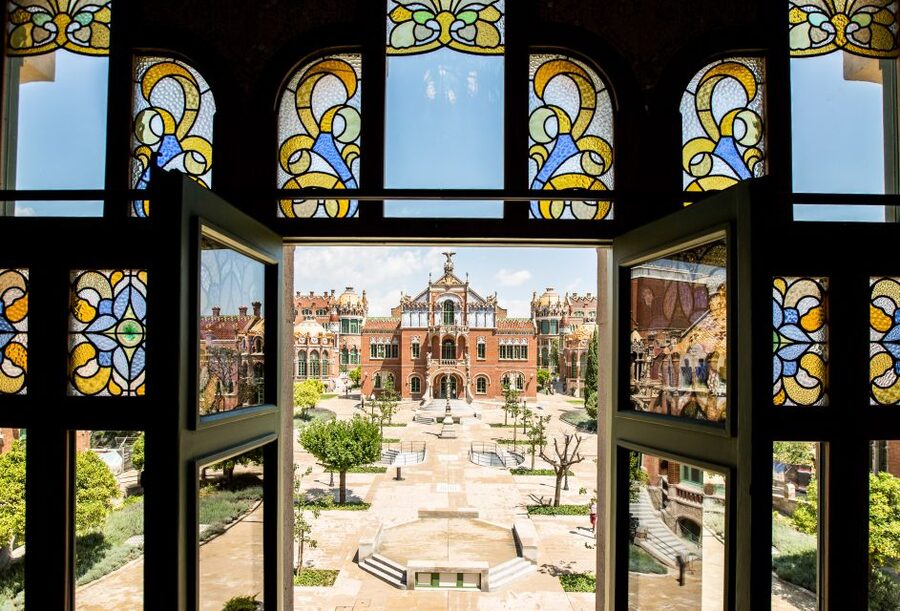
I would book it if you have already planned Sagrada Família, Parc Güell, or the Picasso Museum and want a different kind of Barcelona experience. Sant Pau is quieter, more spacious, and strongly connected to the city’s public history.
Book it especially if you like Modernista design, historic hospitals, medical progress, or places where architecture has a clear social purpose. The $21 price is fair when you use the full 1.5 to 2 hours and explore beyond the main façade.
I would skip it only if your schedule is extremely tight or if you want a live guide to explain every detail. For everyone else, this former hospital offers one of Barcelona’s most rewarding combinations of beauty, practical design, and human history.
FAQ
Where is Sant Pau Recinte Modernista?
It is located at Calle Sant Antoni Maria Claret, 167, 08025 Barcelona, Catalonia, Spain. A metro station is nearby.
How long does a visit take?
The planned visit lasts about 1.5 hours. You may want closer to two hours if you read the displays, explore the gardens slowly, and spend time with the medical exhibits.
Is a guided tour included?
No. The $21 ticket includes entry to Sant Pau Recinte Modernista, but not a guided tour.
Is the site wheelchair accessible?
Yes, Sant Pau Recinte Modernista is wheelchair accessible.
Can children visit for free?
Children aged 11 and under can enter free. A parent or guardian must accompany them.
Can I cancel the booking for a refund?
Yes. You can cancel up to 24 hours in advance for a full refund.
Is the ticket valid for the whole day?
Yes. The ticket is valid for one day, with starting times depending on availability.
Recently added around Barcelona
- Park Guell Guided Tour with Skip the Line Tickets★ 4.0 · 739 reviews
- Entrance to the Mirador Torre Glories Barcelona★ 4.5 · 193 reviews
- Bohemian Barcelona Neighborhood Evening Tapas & Wine Tour★ 5.0 · 419 reviews
- Transfers From Cruise Port to Barcelona Airport★ 4.5 · 155 reviews
- Authentic Flamenco Show Barcelona : Intimate Casa Sors Experience★ 5.0 · 809 reviews
- Barcelona Expert Tour with Local Guide in Eco Tuk Tuk Private★ 5.0 · 216 reviews
- Barcelona Sunset Cruise with Light Snacks and Open Bar★ 5.0 · 476 reviews
- Barcelona: Sagrada Familia, Park Guell & Tapas Private Tour★ 5.0 · 903 reviews
Tickets, compared.
Sagrada Familia Entry Ticket with Audio Guide
Read our review →




Live Flamenco Dancing Show Ticket at the Theater
Read our review →