
Reviewed · WALKING TOURS
Barcelona: Jewish Quarter 2-Hour Walking Tour
Barcelona’s Jewish past is easy to miss unless someone points it out. This two-hour Gothic Quarter walk leads you through narrow medieval lanes, the Sinagoga Mayor, the remains of an old synagogue, and the site of a medieval mikve. Much of the story is tucked into ordinary-looking walls, which makes a good guide essential.
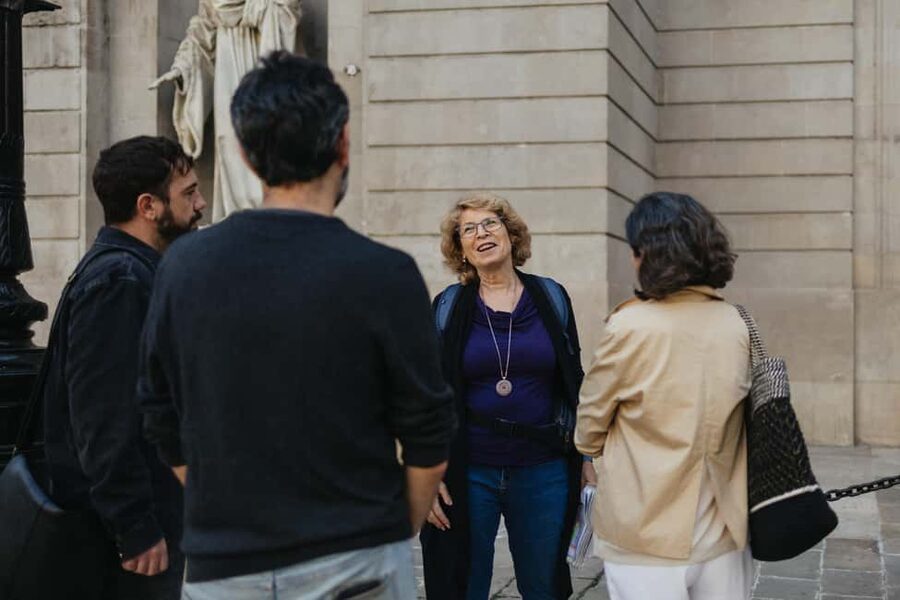
I like the small groups of six or fewer, where you can ask questions without shouting across a crowd. I also like the human pace of the tour. Guides such as Edu, Ella, Alan, and Lilach have adjusted their speed for older walkers, stopped for questions, and used maps, photographs, and reconstructions to make lost buildings easier to picture. The main consideration is price: at $76 per person, plus the synagogue museum entrance fee, this is worthwhile mainly if Jewish history is a real priority for you.
Key points at a glance
- Sinagoga Mayor: Visit what is described as Spain’s oldest synagogue and one of Europe’s oldest surviving synagogue sites.
- Four synagogue locations: Follow the traces of four synagogues in and around Barcelona’s medieval Jewish Quarter.
- Medieval mikve: See the site of a mikve, an unusual reminder of daily religious life in medieval Barcelona.
- 1391 and its aftermath: Learn how a violent attack brought Barcelona’s Jewish community to a sudden end.
- Small-group format: With no more than six participants, the guide can set a comfortable pace and answer personal questions.
- Central meeting point: Begin and end at Plaça Sant Jaume, next to the Alcampo store, in the heart of the Gothic Quarter.
Starting at Plaça Sant Jaume
The tour begins at Plaça Sant Jaume, a central square in Barcelona’s Gothic Quarter. Look for the meeting point next to the Alcampo store. Since the walk ends here too, you can easily pair it with more sightseeing in the old city afterward.
Your guide speaks English, and the small group format changes the feel of the walk. You are not simply following a flag through crowded streets. You can stop to ask how a building was used, request a clearer explanation of a date, or connect the story to your own family background. One family used the tour to fill gaps in its Jewish ancestry, a useful reminder that this subject can feel personal as well as historical.
The guides vary. Edu is known for an easy conversational style and for adjusting the pace to the group. Ella brings detailed explanations of Catalan, Barcelona, and Jewish history. Alan has used maps, photographs, and visual reconstructions to show how the area once looked. Lilach has been praised for making the subject approachable and engaging. Your guide will depend on the date you book, so do not assume you will receive a particular person.
More Walking Tours in Barcelona
- Barcelona Tapas and Wine Experience Small-Group Walking Tour
★ 5.0 · 5,804 reviews - Barcelona: Tapas Walking Tour with Food, Wine, and History
★ 4.8 · 4,261 reviews - Barcelona Tapas Walking Tour: Food, Wine & History
★ 4.5 · 1,928 reviews
Walking the medieval Jewish Quarter
The first part of the walk sets the Jewish community within Barcelona’s wider story. The community is estimated to have begun arriving in Spain in the third century, after the destruction of the Second Temple in Jerusalem in 70 CE. Over the centuries, Jewish residents became an important part of Barcelona’s political, commercial, intellectual, and spiritual life.
You will walk through streets shaped by the Middle Ages, often along narrow passages that do not immediately announce their connection to Jewish Barcelona. That is one of the tour’s strengths. The Jewish Quarter is not presented as a perfectly preserved district with signs at every corner. Instead, you learn to read faint clues in the street plan, walls, doorways, and surviving structures.
This also means the tour asks you to imagine a great deal. Many original buildings are gone, altered, or absorbed into later construction. If you want a museum-style experience with large displays and extensive objects, this walk may feel restrained. If you enjoy reconstructing the past from fragments, the setting works very well.
The guide explains how the community lived in relative peace for centuries before 1391. That year brought a brutal attack and marked the end of Jewish life in Barcelona as an organized community. The tour treats this rupture as a central part of the story, not as a footnote. You will hear about the community’s importance, then face the forces that destroyed it.
Entering the Sinagoga Mayor
The Sinagoga Mayor is the emotional center of the walk. It is described as the oldest synagogue in Spain and one of the oldest synagogue sites in Europe. Its importance lies not only in its age, but in the way it helps turn a distant historical account into a physical place.
Inside, your guide can explain the building’s structure, its connection to the medieval Jewish Quarter, and the way its surviving elements fit into the story of Barcelona’s Jewish community. The visit helps you understand that this was not an isolated settlement at the edge of the city. It was part of an active urban community.
The synagogue museum entrance fee is not included in the tour price. Check the current fee when booking, since the $76 price covers the walking tour rather than every admission. The experience is also advertised with skip-the-ticket-line access, which can save time, but it does not remove the separate entrance cost.
Opening conditions can affect the visit. One group found the old synagogue closed, so it is wise to treat access to individual interiors as subject to the day’s operating arrangements. Even if a building is unavailable, the surrounding streets and the guide’s explanation remain part of the walk, but the experience is stronger when the synagogue itself is open.
Finding the medieval mikve
The mikve is one of the tour’s most distinctive stops. A mikve is a ritual bath, and the site offers a glimpse into the practical side of religious life. It is easy to focus on grand synagogues and famous leaders, but a mikve points to the routines that supported a functioning community.
The stop also shows why a guide matters here. A surviving or partly surviving medieval feature may not look dramatic at first glance. Without context, you might walk past it. With an explanation of its purpose and setting, the site becomes evidence of the community’s religious organization and daily habits.
The mikve is not presented as a standalone attraction. It fits into the larger walk, alongside synagogue sites, homes, streets, and traces of the Roman walls. Together, these pieces help you picture a neighborhood rather than a single monument.
More old Jewish quarter walks in Barcelona:
- Córdoba: Jewish Quarter, Mosque, and Alcázar Tour
★ 4.7 · 4,279 reviews - Cordoba Mosque & Jewish Quarter Tour with Tickets
★ 4.6 · 1,996 reviews - Córdoba: Mosque-Cathedral, Jewish Quarter and Alcázar Tour
★ 4.7 · 1,426 reviews - Cordoba: Jewish Quarter and Mosque-Cathedral Guided Tour
★ 4.6 · 996 reviews
The alchemist’s house and the Old Synagogue
The walk includes the ruins of a house owned by a Jewish alchemist. This stop adds another layer to the community’s story. Jewish residents were not defined only by worship. They worked in skilled professions, took part in city life, and contributed to Barcelona’s development in different ways.
The ruins are valued for both their architecture and the story attached to them. Your guide may use photographs or mockups to help you picture the original setting. Alan, one of the guides, has used these kinds of visual aids to make ancient streets and buildings easier to understand.
You will also go to the ruins of the Old Synagogue, identified with Shlomo Ben Adret. The site offers a direct connection to a major medieval Jewish figure and to the religious life of the district. As with other stops, expect remains rather than a fully restored structure. The reward is the chance to see how the old neighborhood has been layered over time.
The combination of the Sinagoga Mayor and the Old Synagogue ruins is useful. One gives you a more tangible synagogue setting, while the other shows how much has been lost or transformed. I find that contrast more honest than a tour that presents the past as perfectly preserved.
Four synagogue sites in two hours
The route covers the locations of four synagogues in central Barcelona. Not every site will appear as a complete building. Some may be marked by archaeological remains, architectural details, or a location that makes sense only after your guide explains it.
This is where the tour earns its keep for anyone interested in Jewish Barcelona. You are not visiting one isolated monument, then leaving the subject behind. You are tracing a network of religious and residential places through the Gothic Quarter.
Two hours is long enough to build a clear outline of the community, but short enough to fit into a busy Barcelona schedule. It is also a brisk format for such a large subject. You will receive a focused introduction rather than a full academic treatment of Spanish Jewish history.
The pace has generally been flexible. Edu has adjusted his route and speaking speed for groups with older walkers, while other guides have paused when people needed a rest or had a question. Still, you are walking on city streets for the full two hours. Wear comfortable shoes, and tell the guide early if you need a slower pace.
What the 1391 attack means for the tour
The walk does not treat medieval Jewish life as a simple story of steady growth followed by a single date. You will learn about a community that became increasingly important, lived for long periods in relative peace, and then faced a violent collapse.
The events of 1391 are essential to understanding why so little visible Jewish Barcelona remains today. They explain the broken trail of buildings, the disappearance of the community, and the layers of later construction across the old quarter.
This subject can be difficult, particularly if you have a family connection to Spanish Jewish history. The small group helps here because the guide can respond to questions rather than rushing through a fixed script. The best guides also keep the tone measured. The point is not shock for its own sake, but a clearer understanding of how a community vanished from the city.
Why the small group matters
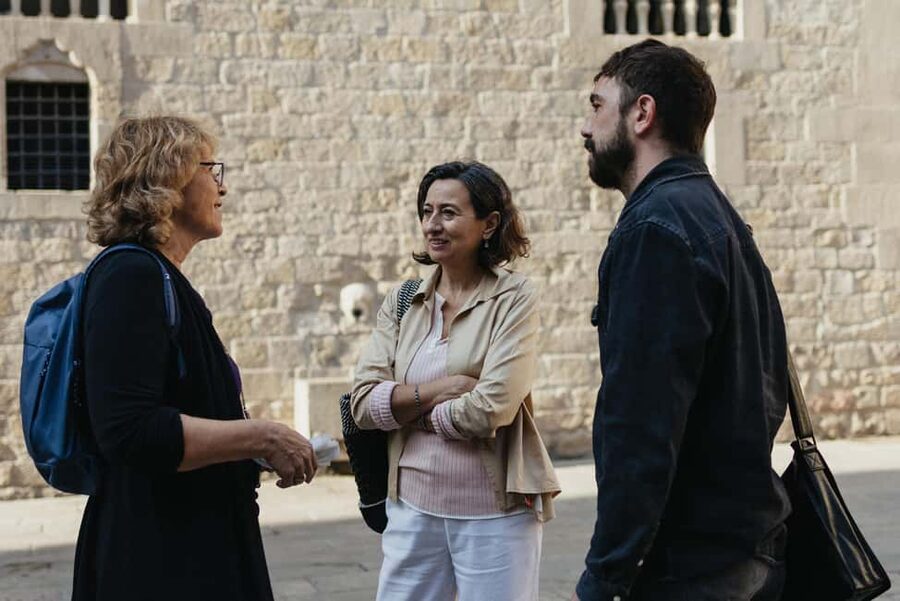
A maximum of six participants is one of the tour’s strongest features. In the Gothic Quarter, a large group can block a narrow lane or make it hard to hear beside traffic and city noise. A small group can gather around a doorway or wall without turning the walk into a procession.
You also get more room for conversation. Questions about names, dates, family history, architecture, and religious practice can take the tour in useful directions. Guides have responded well to this format, especially Edu, whose conversational approach lets the group’s interests shape parts of the walk.
The small size may also make the tour feel more personal than a standard city excursion. One group of six effectively had a private tour, while another group of four appreciated being able to cover the area in detail. At $76 per person, that intimacy is a major part of what you are paying for.
Is $76 good value?
The price is not cheap for a two-hour walk. You also pay separately for the Synagogue Museum entrance, and hotel pickup costs an additional €30. Since the meeting point is central and the tour begins and ends at Plaça Sant Jaume, most people can skip hotel pickup and meet the guide directly.
The value depends on your interests. If you are curious about Barcelona but have no particular connection to Jewish history, you may find a general Gothic Quarter walk covers more famous landmarks for less money. This tour is narrower, but its focus is also its purpose.
I think the price is easier to justify for families tracing Jewish ancestry, visitors who want a serious historical context for the Gothic Quarter, and anyone who prefers a guide-led visit to scattered remains. The small group, specialist subject, and chance to ask questions make it more than a quick stroll past old stones.
The flexible booking terms also help. You can reserve now and pay later, and cancellation is free up to 24 hours before the tour for a full refund. Those policies do not change the price, but they make it easier to fit the walk into a changing Barcelona schedule.
Who should book this walk?
Book it if you want to understand the Gothic Quarter beyond its postcard churches and Roman walls. It is especially suitable for people with Jewish family connections, readers of Spanish Jewish history, and anyone who prefers smaller tours with room for conversation.
It also suits older walkers better than many fast city tours, provided you tell the guide about your needs. Guides have paused for rests and adjusted their pace. The activity is listed as wheelchair accessible, though you should still discuss your requirements when booking because the route includes old streets and narrow medieval lanes.
Families with teenagers can enjoy it too. One guide kept both 15 and 17 year olds involved by mixing historical information with conversation. Younger children may find the material and ruins less immediately engaging, particularly because several stops depend on imagination rather than large displays.
Should you book the Barcelona Jewish Quarter tour?
Book this tour if the Jewish history of Barcelona is central to your visit, or if you want a careful introduction to a part of the city that is easy to overlook. The Sinagoga Mayor, medieval mikve, four synagogue locations, alchemist’s house, and Old Synagogue ruins create a strong two-hour route.
Skip it if you want a broad sightseeing tour, a long museum visit, or guaranteed access to every interior. The separate synagogue admission and $76 price require a clear interest in the subject.
For the right visitor, the tour offers something rare: not a polished version of the past, but a guided reading of what remains. Go early in your Barcelona stay if you want historical bearings for the Gothic Quarter, and leave time afterward to continue exploring Plaça Sant Jaume and the surrounding old city.
FAQ
How long is the Barcelona Jewish Quarter tour?
The walking tour lasts two hours. Starting times vary, so check availability for the date you want.
Where does the tour begin and end?
It begins at Plaça Sant Jaume, next to the Alcampo store, and ends back at the same meeting point.
What language is the tour offered in?
The live tour guide speaks English.
How many people can join the tour?
The group is limited to six participants.
Is the synagogue museum entrance included?
No. The entrance fee to the Synagogue Museum is separate from the walking tour price.
Is hotel pickup available?
Hotel pickup is available for an additional €30. The standard meeting point is Plaça Sant Jaume.
Can I cancel the tour?
Yes. You can cancel up to 24 hours in advance for a full refund. You can also reserve now and pay later.
More 2-Hour Experiences in Barcelona
- Barcelona: Two-Hour Midday or Sunset Sailing Cruise
★ 4.8 · 1,732 reviews - Barcelona: 2-Hour City Sights Guided Segway Tour
★ 4.9 · 453 reviews - Barcelona: 2-Hour Sailboat Tour with Snacks and Drinks
★ 4.8 · 357 reviews - 2-Hour Sailing Tour in Barcelona with Open Bar & Snacks
★ 5.0 · 318 reviews
Recently added around Barcelona
- Food and Wine Small Group Tour from Barcelona – Maximum 8 people★ 5.0 · 111 reviews
- Barcelona Off the Beaten Track Bike Tour★ 5.0 · 676 reviews
- Barcelona: Poble Espanyol Admission Ticket★ 3.0 · 159 reviews
- Spanish Wine and Tapas Tour in a Local Neighborhood in Barcelona★ 5.0 · 306 reviews
- Barcelona Guitar Trio & Dance at the Palau de la Musica★ 5.0 · 269 reviews
- Barcelona Sagrada Familia and Guell Park drink and tapa★ 5.0 · 234 reviews
- MNAC Barcelona: National Art Museum of Catalonia Admission Ticket★ 4.5 · 209 reviews
- Combo: Skip the Line Sagrada Familia & Park Guell Guided Tour★ 4.5 · 150 reviews
Walking Tours, compared.

Barcelona Tapas and Wine Experience Small-Group Walking Tour
Read our review →
Tapas Walking Tour with Food, Wine, and History
Read our review →
Albaicín and Sacromonte Guided Sunset Walking Tour
Read our review →
Toledo Tour & Vineyard Walk with Wine Tasting from Madrid
Read our review →

Barcelona Tapas Walking Tour: Food, Wine & History
Read our review →
Madrid Old Town & Royal Palace Walking Tour Skip the Line Ticket
Read our review →
Browse the lists this tour appears in