
Reviewed · MEZQUITA TOURS
Cordoba Mosque-Cathedral: Skip-the-Line Guided Tour
The most striking thing about this Cordoba tour is how clearly it explains a building that can otherwise feel like a beautiful maze. Inside the Mosque-Cathedral, you move from Visigothic beginnings to Abd al-Rahman I’s 8th-century mosque, through the great Umayyad expansions, and finally into the Christian cathedral built after the Reconquista. The red-and-white double arches are the visual hook, but the changing uses of the building give the visit its real weight.
I like two things here. First, an art historian guide can point out engineering and design details you would likely walk past alone. Second, the 90-minute length gives you a firm story without turning the visit into a half-day lecture. The main consideration is that the tour is built around a set route and a group, so you may want extra time afterward to wander and look closely at the details your guide introduced.
Key points at a glance
- A 1.5-hour history lesson inside the monument: Follow the building from the old Basilica of San Vicente to the mosque and cathedral.
- Art history adds useful detail: Guides such as Fatima, Patricia, Maria, Olivia, and Saray have been praised for clear explanations, humor, and strong command of the site.
- The double arches are more than decoration: Your guide explains how they added height and solved a demanding architectural problem.
- The Islamic and Christian layers are shown together: You see how the mosque was changed into a cathedral after Fernando III captured Cordoba.
- Entry is included: The $35 price covers the guide, guided tour, and Mosque-Cathedral admission.
- Flexible planning: English, French, and Spanish tours are offered, with free cancellation up to 24 hours before the start time.
Why the Mosque-Cathedral needs a guide
The Mosque-Cathedral is easy to admire and surprisingly hard to understand on your own. You see hundreds of columns, repeated arches, chapels, altars, and carved surfaces, but the building’s story is not arranged in a neat museum sequence. A guide gives you the order of events and helps you connect the parts.
That order matters. The monument is not simply a mosque with a cathedral placed inside it. It records several major changes in Cordoba, from the Visigothic period to the Umayyad Caliphate and then Christian rule. Each stage left something behind, and the result is visually unusual because the styles are not separated into tidy rooms.
I especially like the historical approach used on this tour. The guide does not treat the building as a collection of pretty arches. You learn why Abd al-Rahman I commissioned the first mosque, why later rulers enlarged it, and how the Reconquista changed its purpose.
The experience has received a 4.7 rating from 6,610 bookings, and the praise is quite consistent about the guides. Fatima is repeatedly singled out for clear historical explanations and enthusiasm. Patricia is praised for professionalism, warmth, and small details. Maria is described as both entertaining and well informed, while Olivia is noted for taking the historical discussion further than many standard tours.
Those details matter because the guide is the main difference between this visit and simply buying admission. You are paying for interpretation, not just access.
More Cathedral Tours in Cordoba
- Córdoba: Skip-the-Ticket-Line Mosque-Cathedral Guided Tour
★ 4.6 · 9,634 reviews - Cordoba: Mosque-Cathedral E-Ticket with Audio Guide
★ 4.1 · 2,124 reviews - Córdoba: Skip-the-Line Great Mosque-Cathedral History Tour
★ 4.7 · 1,690 reviews
Entering the monument through its layered past
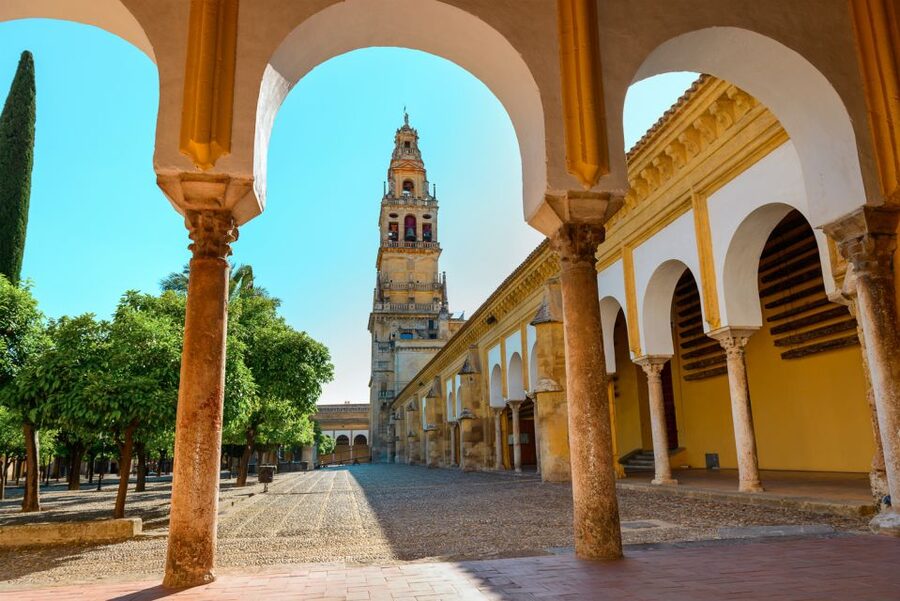
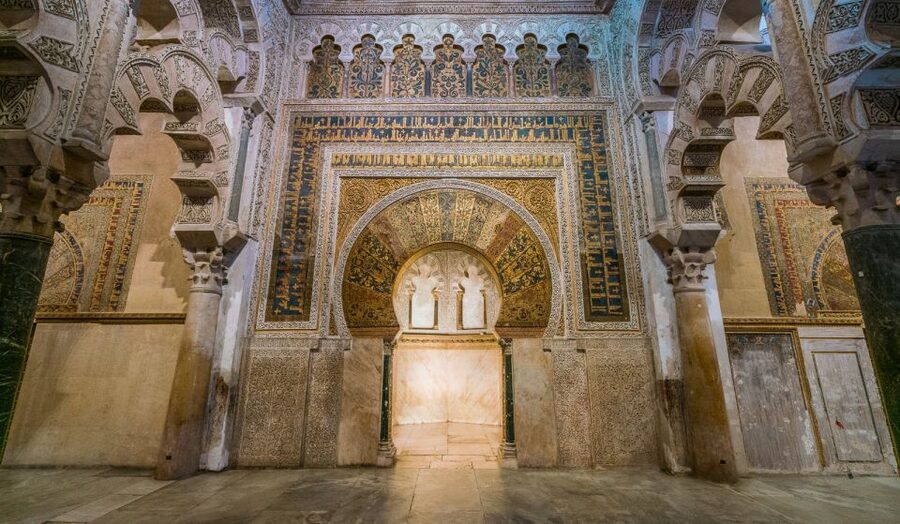
The tour begins with the building’s earlier Christian chapter. Before the mosque, this site held the Basilica of San Vicente, associated with the Visigothic period in Spain. The tour uses that earlier structure as the first part of the timeline, helping you see that the mosque was built on a site with an established religious history.
From there, the story moves to Abd al-Rahman I and the first mosque. He arrived in Cordoba after the Umayyad dynasty lost power in the East and established a new base in al-Andalus. The mosque was intended to serve the growing city and rival the great religious buildings farther east.
This is where an informed guide earns the fee. The dates and rulers can blur together when you read about them in a guidebook. A spoken explanation gives each construction phase a place in the building, so you can understand that the monument grew over time rather than appearing in one grand campaign.
You will hear about the successive expansions under Muslim rule, continuing through the era of Almanzor, the ruler of Muslim Iberia under the Umayyad Caliphate of Cordoba. The scale of the final mosque reflects the importance of Cordoba at the height of its power.
Your guide may pause often to establish direction and sequence. That is helpful inside a huge interior where one section can look much like the next. It also means you should not expect to inspect every column or chapel in detail during the guided portion. The tour gives you a strong framework, then leaves you better prepared for independent looking.
The double arches and the building’s visual rhythm
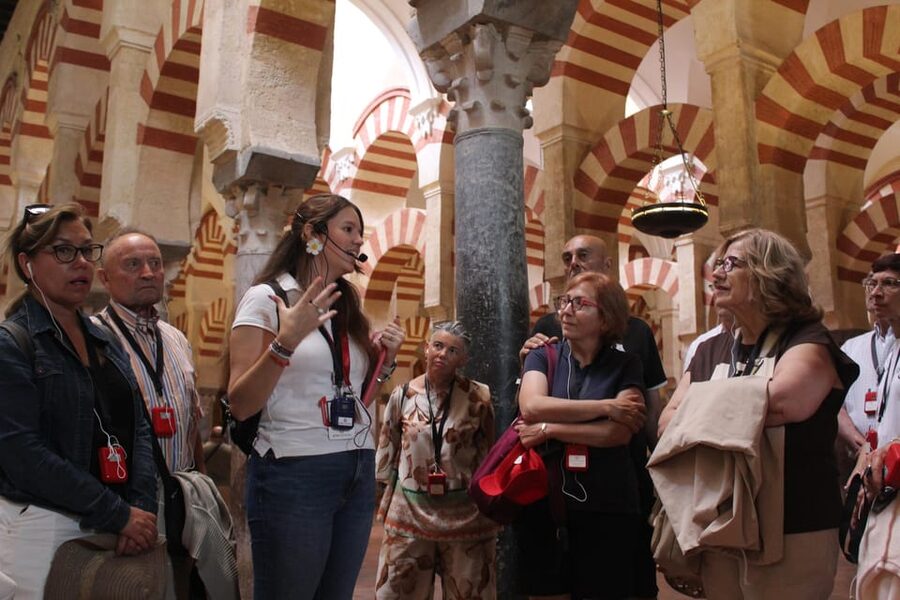
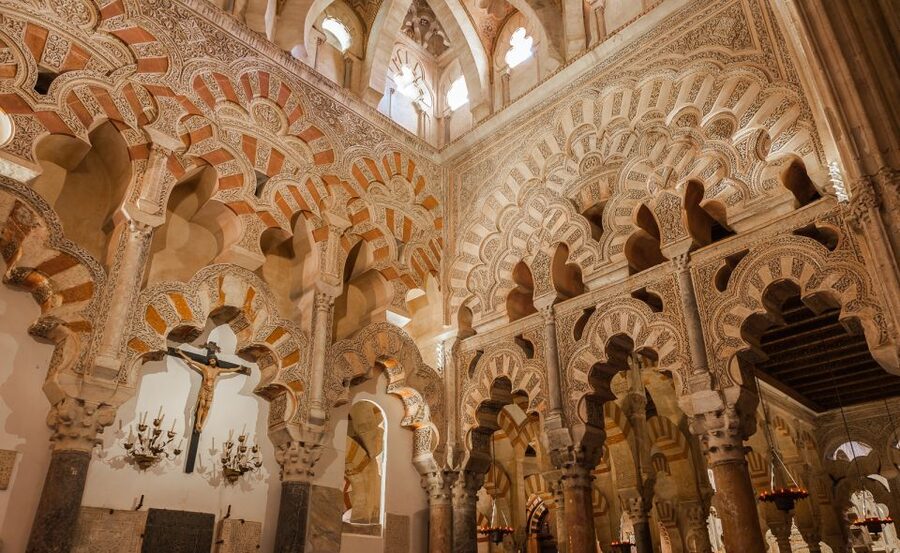
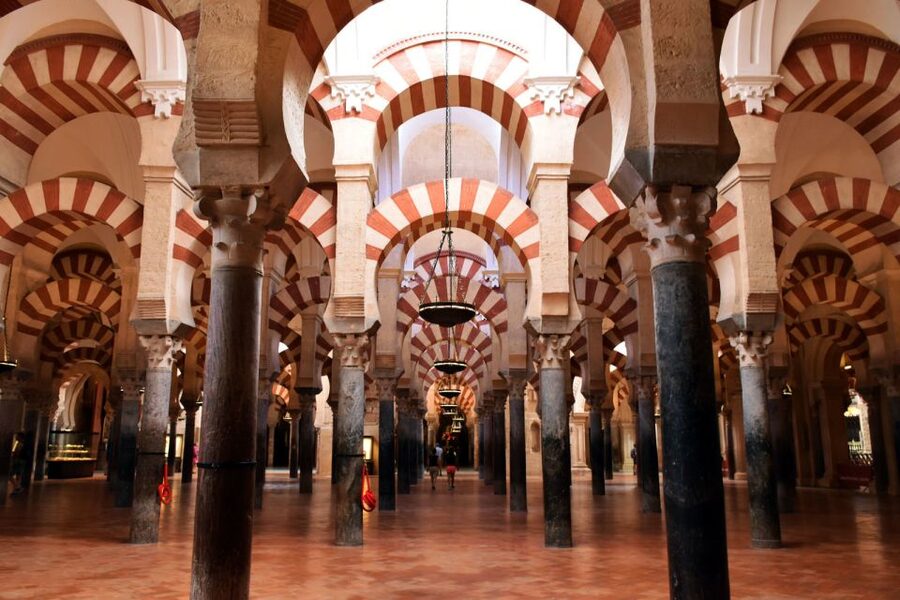
The famous double arches are the monument’s most recognizable feature. Their repeated pattern creates a striking rhythm across the prayer hall, but the tour explains that they were also a practical response to the need for greater height.
The lower horseshoe arches support the upper arches, allowing the roof to rise above the forest of columns. For the period, this was an inventive solution. You are not simply looking at decoration, you are looking at a structural idea that helped shape the whole interior.
This is one of the strongest reasons to choose a guided visit. Alone, you may notice the colors and repetition without understanding the engineering. A guide can direct your eyes upward and explain why the arches were considered revolutionary in their time.
The eastern and western influences are also easier to recognize with help. The monument combines Islamic forms with later Christian additions, creating a visual meeting point between cultures and religious traditions. The result is not uniform, and that is exactly what makes it so memorable.
The interior can feel visually overwhelming at first. I suggest letting the guide establish the broad story before trying to absorb every detail. Look for the difference between the repeating mosque architecture and the more concentrated Christian spaces inserted into it. Once you know the basic pattern, the contrasts become much easier to read.
From Umayyad mosque to Christian cathedral
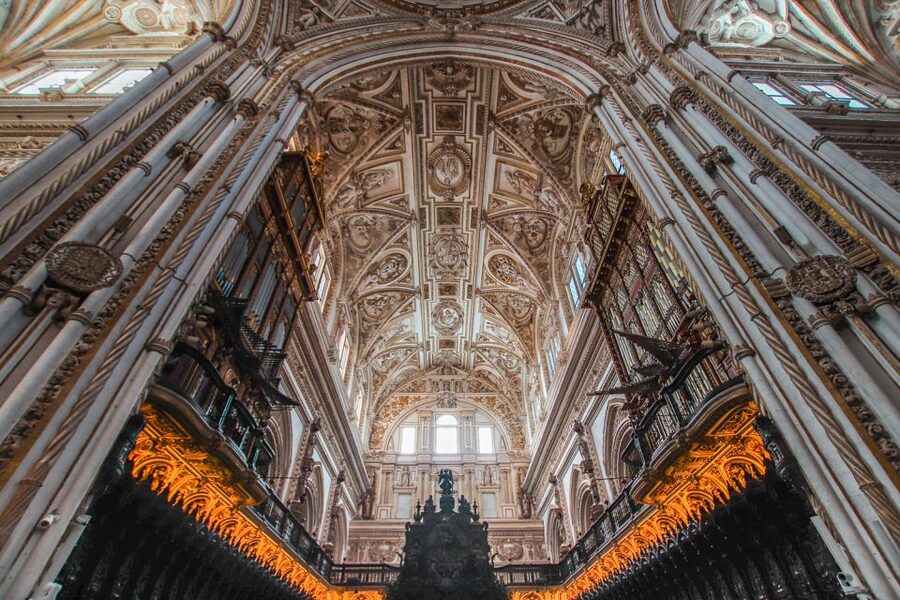
The tour then reaches the Reconquista and the capture of Cordoba by the Christian armies of Fernando III. The mosque was converted into a cathedral, and the Christian presence became another permanent layer in the structure.
This part deserves a thoughtful explanation. The change was not a minor alteration. It affected the purpose of the building and introduced new visual elements into the Islamic prayer space. Several visitors specifically appreciated guides who addressed the impact of the Reconquista directly rather than presenting the transition as a simple footnote.
That candor is useful. The monument can be discussed as a symbol of cultural coexistence, but the history also includes conquest, change, and the replacement of one religious use by another. A good guide can hold both ideas together without reducing the building to a slogan.
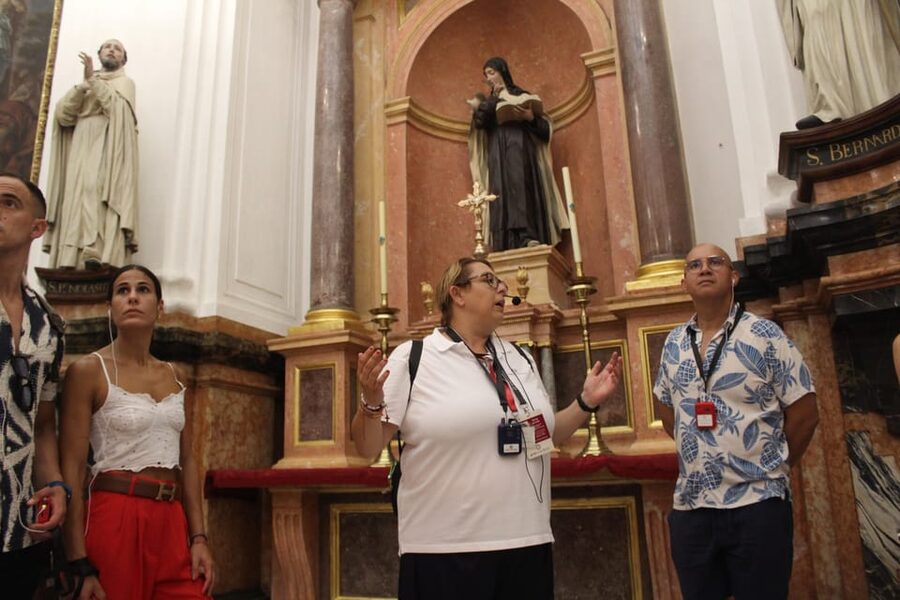
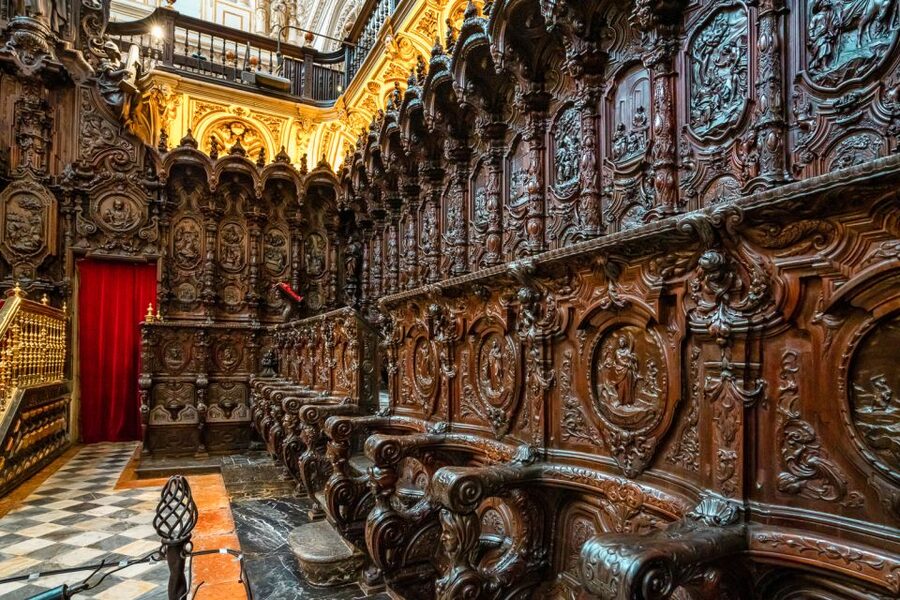
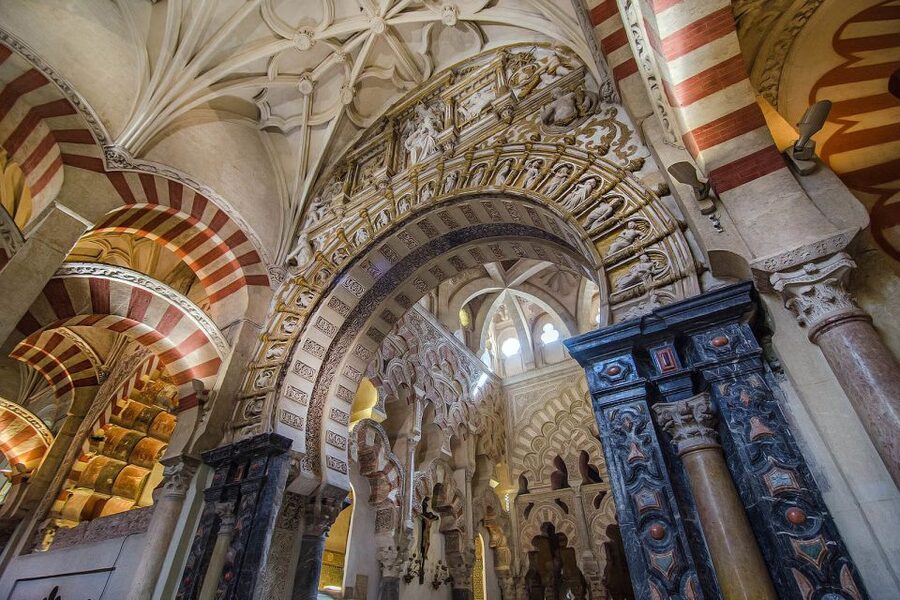
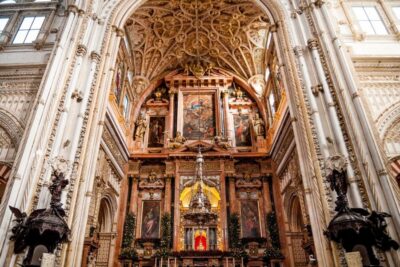
The cathedral elements create one of the most unusual experiences in Cordoba. You can look across the repeating arches and then encounter Christian chapels, altars, and other features within the same overall structure. The contrast may feel jarring, but it is also the point. The building preserves evidence of changing power and belief.
Some guides use humor and questions to keep this section lively. Others take a more formal art history approach. The exact tone depends on who leads your group, but the most praised guides, including Fatima, Patricia, Maria, Ana, and Saray, are described as engaging as well as well prepared.
More of the Mosque-Cathedral in Cordoba:
- Mosque-Cathedral of Córdoba Guided Tour with Tickets
★ 4.5 · 1,649 reviews - Córdoba: Mosque-Cathedral, Jewish Quarter and Alcázar Tour
★ 4.7 · 1,426 reviews - Cordoba & Carmona with Mezquita, Synagoge & Patios from Seville
★ 4.5 · 1,126 reviews - Cordoba: Jewish Quarter and Mosque-Cathedral Guided Tour
★ 4.6 · 996 reviews
What the 90-minute route does well
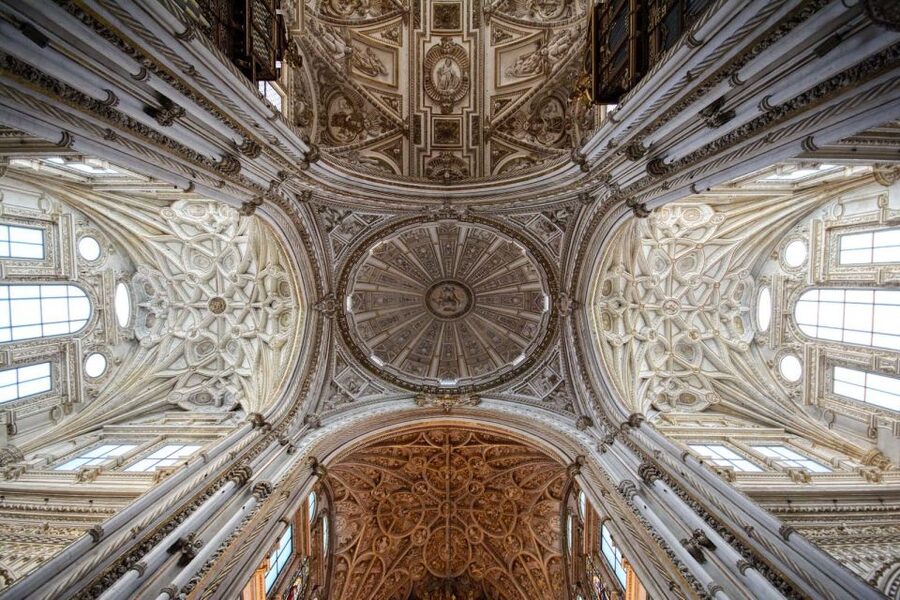
Ninety minutes is a sensible length for this monument. It is long enough to cover the major construction phases and architectural ideas, yet short enough to fit into a day trip to Cordoba.
Several visitors found the pacing particularly effective. The tour can cover the Visigothic basilica, Abd al-Rahman I, later expansions, Almanzor, the Reconquista, the cathedral conversion, and the double arches without becoming an all-day commitment.
The time limit also creates a useful discipline. You are given the essential structure of the story rather than a catalogue of every decorative detail. If you have only one visit to Cordoba, that focus is valuable.
At the end, you may have around 15 minutes of free time inside the cathedral area, depending on the guide and the day’s pacing. That short period gives you a chance to look again at a favorite section or take in the space without listening for the next historical point.
The drawback is obvious: 15 minutes is not enough for a second full visit. If you are passionate about Islamic architecture, medieval construction, or church art, you may want to plan additional time at the monument outside the guided portion. The tour is an introduction with substance, not a replacement for lingering.
Group size, pace, and the practical side
The experience is offered with a live guide in English, French, or Spanish. The meeting point can vary by the option you book, so check the precise instructions before setting out. Hotel pickup and drop-off are not included, which keeps the price focused on the monument itself.
Group size may vary. One particularly favorable experience involved a group of around 12, while other accounts describe guides managing larger groups successfully. This difference matters. A smaller group usually makes it easier to ask questions and stay close to the guide, while a larger group may require more attention to positioning and sound.
The strongest guides handle this well. Ana, for example, was praised for keeping the group together and explaining the site’s historical layers despite crowds. Maria was praised for maintaining contact with a large group while using questions and humor. Those are practical skills, not just academic ones.
The tour is wheelchair accessible. Since the meeting point may change with the booking option, confirm the route details if you have specific mobility needs. The available information supports accessibility, but it does not provide a detailed account of every surface or entrance.
The tour includes the entry ticket, so you do not need to buy admission separately. It does not include transport, food, or hotel service. You should plan your route to the meeting point yourself.
Is $35 a fair price?
At $35 per person, this is a reasonable price if you want the building to make sense rather than simply see it. Admission is included, and you receive 90 minutes with an art historian guide. That makes the extra cost easier to justify than a basic entry ticket followed by a quick solo walk.
The value is strongest for first-time visitors. The history has enough stages and political change to become confusing, especially if you are visiting Cordoba as part of a packed Spain itinerary. A guide turns a long sequence of rulers and construction phases into a story you can remember.
It is also good value for a day trip. If your time in Cordoba is limited, a structured visit helps you spend those 90 minutes well. The tour does not require a full morning or afternoon, and the extra time at the end lets you look around independently.
I would be less certain about the value for a repeat visitor who already knows the monument well. If you have studied the building or taken a previous guided tour, some of the introductory history may feel familiar. Still, an art historian’s focus on architectural details can reveal things you missed before.
The flexible booking terms add practical value. You can cancel up to 24 hours before the tour for a full refund, and you can reserve now while paying later. These policies are useful if your Cordoba plans depend on train times or a changing Spain itinerary.
Who will enjoy this tour most?
I would choose this tour for a first visit, especially if you want history explained in plain language. It also suits anyone who enjoys architecture but does not want to research the building before arriving.
Families and mixed-age groups may appreciate the short duration and story-based format. The guide can keep the visit moving, and the building itself offers plenty for adults and younger visitors to notice.
It is also a good match for travelers interested in the relationship between Islamic and Christian Spain. The tour does not stop at design. It follows the building through changes in power, worship, and construction.
You may prefer a self-guided visit if you want to move very slowly, spend long stretches photographing the arches, or focus on one specific artistic detail. The guided route gives you a strong overview, but your independent time afterward is limited.
For a repeat visit, I would book it only if you want a fresh interpretation or a more technical look at the building. The named guides praised most often, including Fatima, Patricia, Olivia, Maria, and Saray, suggest that the quality of the explanation is a major part of the experience.
A few ways to get more from the visit
Arrive ready to listen at the beginning. The first part of the story, especially the Basilica of San Vicente and Abd al-Rahman I, explains why the later architecture matters.
Pay attention when the guide discusses the double arches. They are the clearest example of the building’s practical design, and understanding their purpose makes the entire prayer hall more impressive.
Do not judge the cathedral additions too quickly. Look at how they interrupt, overlap, and contrast with the mosque architecture. The tension between the two forms is central to the monument.
Keep a little mental space for the final free time. Rather than trying to photograph everything during the explanation, note the places you want to revisit once the guide has finished.
Finally, ask questions if your group size allows it. The best accounts of this tour often point to guides who welcomed questions and added detail beyond the basic timeline.
Should you book the Mosque-Cathedral guided tour?
I would book it if this is your first time inside the Mosque-Cathedral or if your knowledge of Cordoba’s history is limited. For $35, you get admission plus a focused 90-minute explanation from an art historian, with the major Islamic and Christian phases placed in order.
The tour is especially worthwhile for a day trip, a short stay, or anyone who wants to understand the building instead of simply admire it. The main tradeoff is limited free time afterward and a group format that may vary in size.
If you want the arches, dynasties, engineering, and Reconquista to connect into one clear story, this is a practical choice. Plan to stay a little longer on your own if the monument captures your attention.
FAQ
How long does the Mosque-Cathedral tour last?
The tour lasts 1.5 hours, or 90 minutes.
What is included in the price?
The $35 price includes an art historian guide, the guided tour, and the entry ticket to the Mosque-Cathedral of Cordoba.
Is hotel pickup included?
No. Hotel pickup and drop-off are not included.
Which languages are available?
The live tour is available in English, French, and Spanish.
Is the experience wheelchair accessible?
Yes, the activity is listed as wheelchair accessible.
What historical periods does the tour cover?
The tour covers the Visigothic Basilica of San Vicente, Abd al-Rahman I’s first mosque, later mosque expansions through the time of Almanzor, and the conversion of the mosque into a cathedral after Fernando III’s Reconquista of Cordoba.
Does the tour explain the double arches?
Yes. The guide discusses the double arches, including their role in giving the building greater height and their importance as an architectural innovation.
Can I cancel for a full refund?
Yes. You can cancel up to 24 hours in advance for a full refund.
Can I reserve now and pay later?
Yes. The reserve now and pay later option allows you to hold a place without paying at the time of booking.
More Skip-the-Line Tickets in Cordoba
- Cordoba: Alcazar Guided Tour and Skip-the-Line Ticket
★ 4.2 · 1,792 reviews - Barcelona: Park Guell Guided Tour with Skip The Line Entry
★ 4.7 · 17,563 reviews - Palma: Cathedral of Mallorca Skip-the-Line Entry Ticket
★ 4.6 · 14,386 reviews - Barcelona: Sagrada Familia Skip-the-Line Entry Ticket & Tour
★ 4.8 · 12,789 reviews
Recently added around Cordoba
- Sights, Sounds, and Scents of Córdoba’s Patios★ 4.4 · 109 reviews
- Medina Azahara Guided Tour at Night★ 4.6 · 142 reviews
- From Malaga and Costa Del Sol: Cordoba Day Trip★ 4.6 · 212 reviews
- From Malaga: Cordoba Day Trip and Mosque-Cathedral★ 4.5 · 563 reviews
- From Costa del Sol & Malaga: Cordoba Guided Day Tour★ 4.1 · 231 reviews
- Cordoba: Half-Day Medina Azahara Guided Tour★ 4.6 · 288 reviews
- Cordóba: Gardens & Fortress of Catholic Monarchs Guided Tour★ 4.3 · 336 reviews
- Córdoba: Tablao Flamenco at Doble de Cepa with Optional Meal★ 4.4 · 197 reviews
Mezquita Tours, compared.
Skip-the-Ticket-Line Mosque-Cathedral Guided Tour
Read our review →
Skip-the-Line Great Mosque-Cathedral History Tour
Read our review →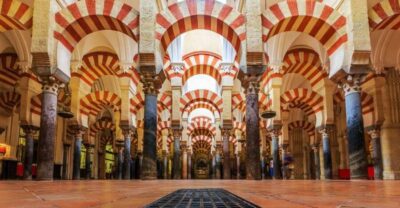
Mosque-Cathedral of Córdoba Guided Tour with Tickets
Read our review →
Mosque-Cathedral, Jewish Quarter and Alcázar Tour
Read our review →
Cordoba & Carmona with Mezquita, Synagoge & Patios from Seville
Read our review →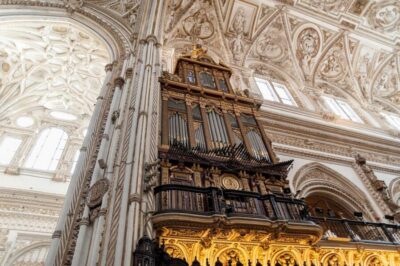
Jewish Quarter and Mosque-Cathedral Guided Tour
Read our review →
Browse the lists this tour appears in