Reviewed · TOURS
Complete Roman Tour in Merida (Spain)
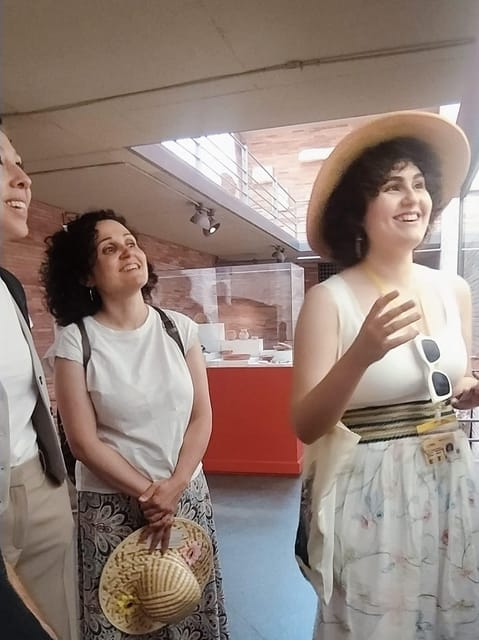
Mérida’s Roman remains are spread through the modern city, and this tour links the best of them into one clear story. You move from a private villa to the circus, baths, temple, amphitheater, and theater, seeing how ordinary life, religion, sport, and public spectacle fit together. Lucía GM is the guide to look for if you want lively explanations rather than a dry walk around stones.
I like the way the tour uses pictures, anecdotes, and children’s games to make the ruins easier to understand. I also like the practical help with photographs, especially at the theater and amphitheater. The main drawback is simple: the archaeological ticket costs extra, and this is a serious three-hour walk with stairs and uneven ground, so sturdy shoes matter.
Key points to know before you book
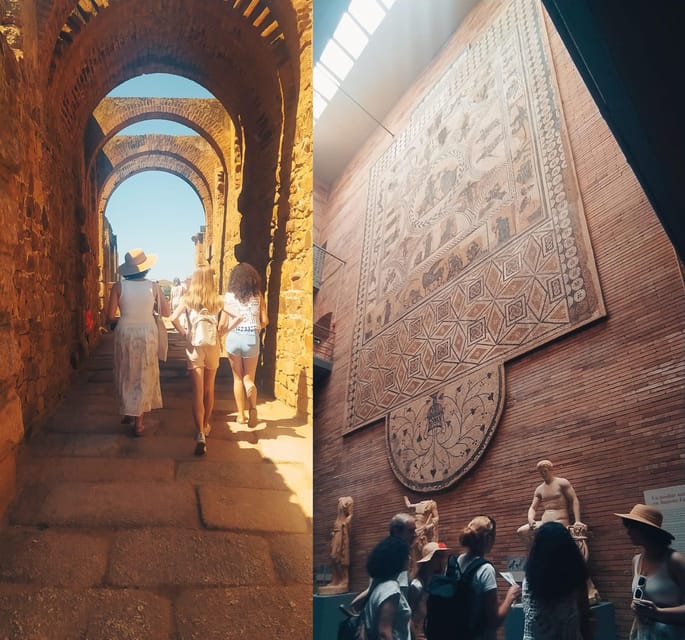
- A full Roman circuit in three to four hours: You see the main Roman sites in one morning rather than piecing them together alone.
- Lucía gives the ruins a human voice: Expect stories about food, toys, pets, worship, gladiators, chariots, and daily life.
- The Roman Circus is a major highlight: Mérida has one of Europe’s largest and best-preserved Roman circuses.
- The ticket is not included: You buy the archaeological site ticket at the start, with the final price based on age, group, date, and other conditions.
- The optional museum visit adds one hour: The National Museum of Roman Art brings together sculptures, mosaics, jewelry, and small household objects.
- Plan for heat and walking: Bring sunscreen, comfortable shoes, and enough energy for several sites connected on foot.
Why this tour works well in Mérida
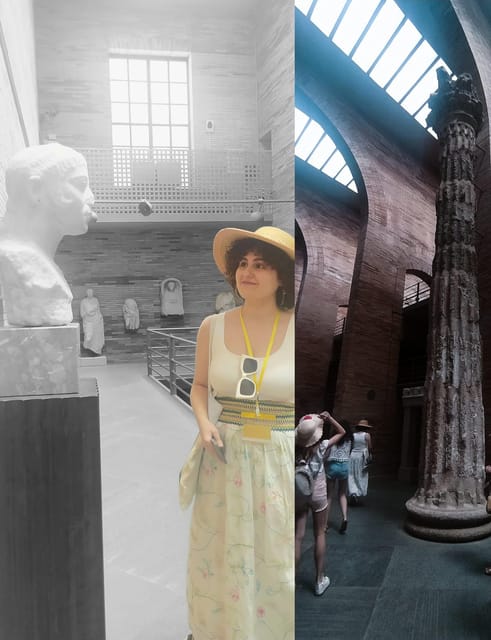
Mérida is not a place where one single monument tells the whole story. Its Roman remains are scattered among streets, gardens, shops, and modern buildings. You can see the theater on your own, then miss the villa, baths, circus, or the links between them.
This route solves that problem. It begins at the Roman House of the Amphitheatre and moves through the major monuments in a sensible order. The morning starts with the more open sites, then returns toward the center for the baths, Temple of Diana, amphitheater, and theater.
I find that sequence useful because it keeps the visit from becoming a parade of disconnected ruins. You first see how people lived, then how they raced, bathed, worshipped, fought, and watched performances. The tour gives you the basic Roman city plan without asking you to study a map first.
The pace is active, but not designed as a race. Each main stop receives about half an hour, with time for explanations and questions. Still, the whole route lasts about three hours before any extra museum time, so this is not the right choice if you want to sit quietly at every monument and read every sign.
What else people book when they book this one in Spain:
- Barcelona: Sagrada Familia Entry Ticket with Audio Guide
★ 4.6 · 105,312 reviews - Barcelona: Park Güell Admission Ticket
★ 4.4 · 76,534 reviews - Seville: Royal Alcázar Entry Ticket
★ 4.6 · 28,378 reviews
Starting at the Roman House of the Amphitheatre
Meet in front of the Casa del Anfiteatro, marked by the large MÉRIDA lettering. At this point, you buy the archaeological site ticket through the official Archaeological Consortium. The guide does not resell it, and the tour price does not cover it.
That extra ticket is worth understanding before you arrive. Its price can change according to age group, party size, family status, date, and festivities. The guide can explain available discounts and free entry, but you should allow time at the start to purchase it.
The first stop is a Roman home, and that is a smart opening. Grand monuments can make Roman life seem like a story about emperors and generals. A house brings the subject down to floor level.
You’ll see bedrooms, gardens, household details, and colorful mosaics. The explanations cover food, toys, pets, and banquets, giving you clues about the people who used the rooms. Excavation and mosaic restoration may also be visible, depending on the work taking place when you visit.
This stop rewards close attention. A mosaic is not only decoration. It can suggest taste, wealth, habits, and the kind of rooms where a family received friends or held meals. The guide’s illustrative images help you picture what is missing from the walls and floors.
Chariots at the Roman Circus
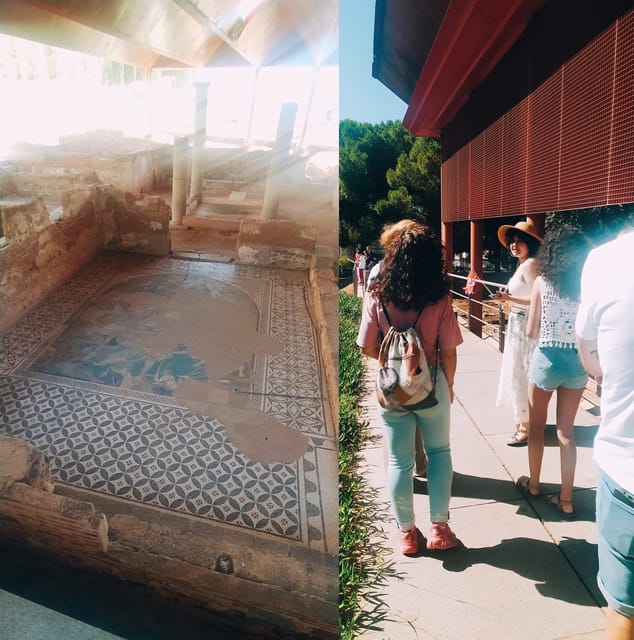
The Roman Circus is one of Mérida’s biggest surprises. It is large, open, and built for mass entertainment, not intimate theater. The remaining seats and pathways make the place easier to read than many ancient racing grounds.
Here, the focus turns to chariot races. You’ll hear about the excitement of the contests and how the space worked for a large crowd. The size of the circus matters: it shows that Mérida was not a minor provincial outpost, but an important Roman city with the money and population to support grand public events.
This is also where the early timing helps. The circus is exposed, and Mérida can be very hot. Seeing it during the cooler part of the day makes the walk more comfortable. In summer, sunscreen and water are sensible, even though only sunscreen is specifically listed among the things to bring.
Do not expect a staged race or reconstructed performance. The interest comes from the scale of the site and from learning how chariot sport fitted into Roman public life. Children often respond well to this stop, especially when the guide uses games and visual aids.
Roman baths and the practical side of comfort
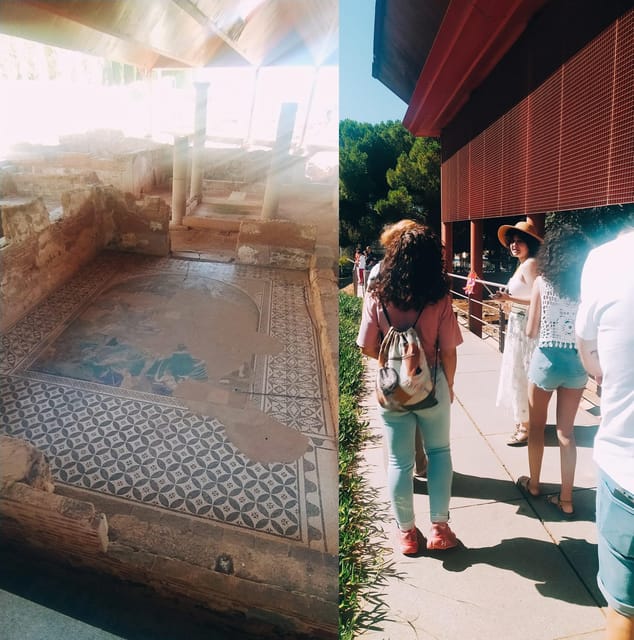
The Roman baths offer a change of mood. Instead of public spectacle, you look at a system built around cleanliness, social life, and engineering.
You’ll see how different pools were heated or cooled, including the furnaces that controlled the temperature. The snow well is an especially unusual detail. It helps explain how Roman comfort could depend on complex supply systems, not only on clever architecture.
This stop is useful because it corrects the idea that Roman buildings were impressive only from the outside. The baths required planning, fuel, water, labor, and maintenance. They were public places where people could wash, meet, talk, and spend time.
The remains may not be as immediately dramatic as the theater or amphitheater. That is where a guide earns the fee. Lucía’s explanations connect the surviving structure to the practical activity that once filled it, so you are not left trying to guess what each wall did.
Same base in Spain, a completely different kind of day:
- Barcelona: Casa Batlló Entry with Self-Audioguide Tour
★ 4.7 · 25,359 reviews - Seville: Cathedral and La Giralda Entry Ticket
★ 4.5 · 24,592 reviews - Madrid: Tour Bernabéu Entry Ticket
★ 4.5 · 21,573 reviews - Barcelona: 24 or 48-Hour Hop-On Hop-Off Bus Tour
★ 4.4 · 20,872 reviews
The Temple of Diana and Mérida’s Roman center
The Temple of Diana is one of the most recognizable Roman monuments in Mérida. Its columns rise in the modern center, making the ancient city impossible to separate from present-day life.
At this stop, the subject shifts to worship and imperial power. The temple helps you understand how religion and government overlapped in the Roman world. It was not simply a place for private prayer. Public ceremonies and respect for the emperor were part of the civic order.
The walk toward the temple passes through the remains of the Roman Forum. In ancient times, this was a center for public and commercial activity. Today, the area also has shops selling handmade terracotta and mosaic crafts, a pleasant reminder that Mérida still trades on its connection with the ancient city.
I like this section because it places archaeology in a living town. You are not visiting a sealed park far from daily life. Ancient columns, quiet streets, craft shops, cafés, and modern buildings share the same space.
Gladiators, wild animals, and the amphitheater
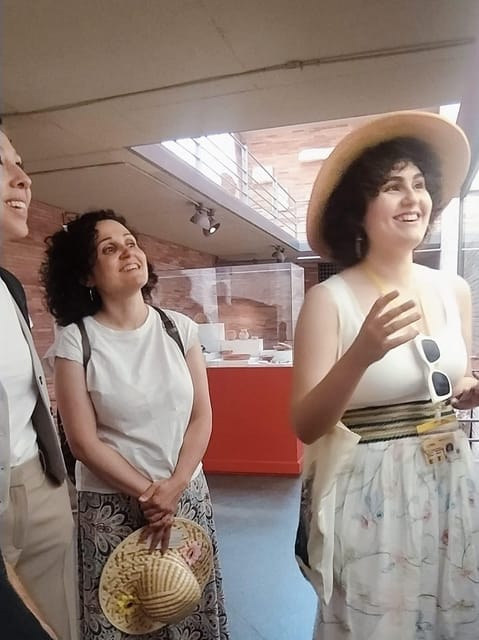
The amphitheater brings the tour back to spectacle, but with a harsher edge than the circus. This is where you hear about gladiatorial combat, fights with wild animals, and even naval battles staged in a specially prepared setting.
The guide uses images to help you imagine the missing action. That support is important because an amphitheater can look bare once its crowds, props, and wooden structures are gone. The shape of the arena and the surviving seating areas show how the audience was arranged around the violence below.
This is a good place to ask questions about the difference between a circus, amphitheater, and theater. The circus was built for chariot racing. The amphitheater hosted combat and animal shows. The theater, next on the route, was made for drama, music, and public performance.
Expect steps and uneven surfaces throughout this part of the visit. One visitor specifically noted that the route involves about three hours of walking and stairs, with summer heat making it harder. If your knees, feet, or mobility limit long walks, ask for details before booking.
The Roman Theatre, Mérida’s grand finale
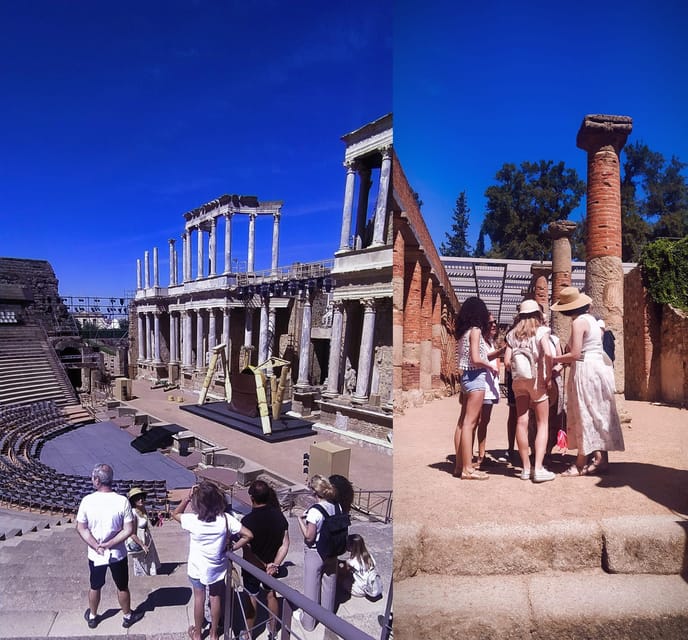
The Roman Theatre is the natural climax. It is the most theatrical setting on the route, with its stage, columns, semicircular seating, and sense of scale. It is also still tied to performance through the summer classical theater festival.
The theater is often the monument people picture when they think of Mérida, but seeing it after the house, circus, baths, temple, and amphitheater gives it more meaning. You now know the different parts of Roman public life, and the theater becomes the place where art, status, architecture, and civic identity meet.
Allow time to look beyond the stage. Notice the arrangement of the seats and the way the setting frames the performance area. Lucía can also help with photographs, including where to stand for a wider view of the columns and seating.
The planned stop lasts about half an hour. That is enough for a guided introduction, but not enough for an unhurried study of every detail. If you like photographing ruins or reading every panel, you may want to return later using the same site ticket.
After the theater, you have about half an hour for a break. The route finishes near restaurants and bars, which makes this a convenient point to stop for lunch or refreshments.
Adding the National Museum of Roman Art
The museum option adds about one hour at 1 p.m. It is a useful choice if you want objects to accompany the buildings you have just seen.
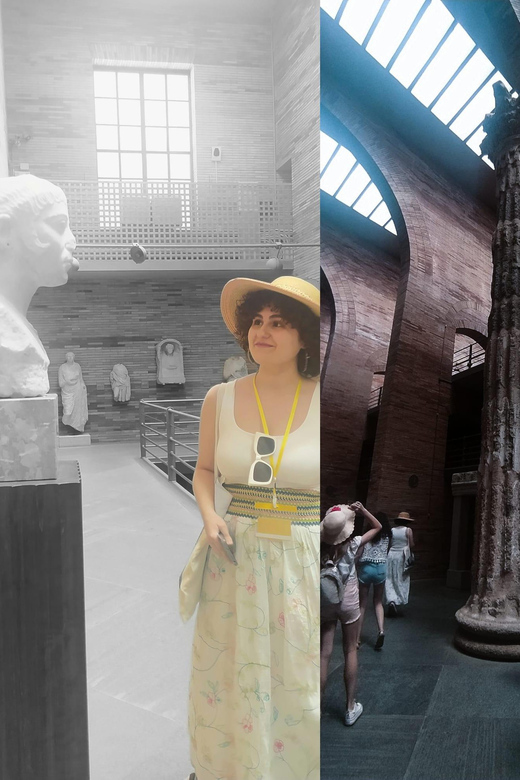
Inside, you can see finds from Mérida’s excavations, including jewelry, toys, mosaics, and large sculptures. These smaller objects help balance the grand monuments. A theater tells you about public culture, but a toy or household item can suggest how people spent ordinary days.
The museum also helps you read the ruins with more care. A sculpted figure, inscription, or mosaic pattern can carry information about belief, status, family, and local customs. Lucía’s command of Latin is particularly useful here when inscriptions and short messages need interpretation.
Choose the museum option if you have the energy for a longer morning and want a fuller archaeological picture. Skip it if the main monuments are your priority or if three hours of walking is already enough. You can also use the broad archaeological ticket to return to other sites later, depending on the ticket conditions.
What the $29 price really gets you
At $29 per person, the tour is priced more like a guided introduction than a luxury private experience. The value comes from covering many major sites efficiently and having someone explain how they connect.
You still pay separately for the archaeological ticket. That means your final cost will be higher than $29, and the ticket price is not fixed for every visitor. Check the applicable rate before you budget.
The tour includes a radio guide with earphones, illustrative images, children’s games, photo advice, and guided visits to the Roman House, circus, baths, Temple of Diana, amphitheater, and theater. It does not include food or refreshments.
For me, the strongest value is the interpretation. Mérida’s ruins are impressive on their own, but a house floor, furnace, temple column, or empty arena does not explain itself. Lucía’s friendly, humorous style and clear English have been a repeated strength, and she can also guide in Spanish. The activity information lists English and Spanish, while the wider tour description also identifies French and Portuguese ability, so confirm your preferred language when booking.
Who should book this walking tour?
I would choose this for a first visit to Mérida, especially if you have only one day. It covers the essential Roman sites and leaves you with a ticket that can be used to visit additional archaeological areas, including the Muslim citadel and quarter and the Basilica of Saint Eulalia.
Families may appreciate the games and stories about food, toys, animals, races, and gladiators. History fans will get more from the route than from a quick photo stop, and the museum option is a good add-on for anyone interested in inscriptions, sculpture, or mosaics.
The tour suits independent visitors who want context but do not want a large, formal group experience. Lucía has kept tours going even with a very small booking, and the available feedback describes occasions when one person received an almost private visit. Group size can vary, so do not assume every departure will be private.
I would be cautious if you dislike walking, stairs, heat, or outdoor ruins. The tour is not presented as suitable for people with serious knee or foot problems. Wear sturdy shoes, use sunscreen, and remember that the route is more active than the low price might suggest.
Practical details that affect your day
The meeting point is in front of the Casa del Anfiteatro, beside the giant MÉRIDA lettering. Arrive ready to buy the archaeological ticket before the walking portion begins.
The experience lasts three to four hours. The core route takes about three hours, and the museum option adds a one-hour visit after a break. Starting times vary, so check the available departure when booking.
Free cancellation is available up to 24 hours before the activity, and you can reserve now and pay later. Those terms make it easier to fit the tour into a changing Extremadura itinerary.
The guide uses a radio system with earphones. That matters in a group because you can hear the explanation while standing a little away from the guide for photographs or at a crowded monument.
Should you book it?
Book this tour if you want to understand Mérida rather than simply collect pictures of its monuments. The combination of Lucía’s warm presentation and the carefully linked route makes the ancient city easier to grasp, especially on a first visit.
Before paying, add the archaeological ticket to your budget and be honest about the walking. If you have the time and energy, choose the museum option. If you want a slower visit, use the tour as your introduction, then return on your own to the theater, circus, or other sites included on the ticket.
FAQ
Is the archaeological site ticket included in the $29 price?
No. You purchase the ticket at the beginning through the Archaeological Consortium of Mérida. The price depends on factors such as age, group size, family status, date, and festivities.
How long does the tour last?
The main walking tour lasts about three hours, and the overall activity is listed as three to four hours. The optional National Museum of Roman Art visit adds one hour after a break.
Which sites are included in the guided walk?
The route includes the Roman House of the Amphitheatre, Roman Circus, Roman Baths, Temple of Diana, Amphitheatre, and Roman Theatre.
What language is the tour offered in?
The activity is offered with a live guide in English or Spanish. The tour description also identifies French and Portuguese among the guide’s language abilities, so confirm your preferred language when booking.
Where does the tour meet?
The guide waits in front of the Casa del Anfiteatro, next to the large MÉRIDA lettering on José Ramón Mélida Street.
What should I bring?
Bring comfortable or sturdy walking shoes and sunscreen. Expect several hours of walking and stairs, especially during the summer.
Recently added around Spain
- Park Guell Guided Tour with Skip the Line Tickets★ 4.0 · 739 reviews
- Entrance to the Mirador Torre Glories Barcelona★ 4.5 · 193 reviews
- Montserrat: Cog-Wheel, Basilica, Black Madonna & Licor Tasting★ 4.5 · 886 reviews
- Bohemian Barcelona Neighborhood Evening Tapas & Wine Tour★ 5.0 · 419 reviews
- Transfers From Cruise Port to Barcelona Airport★ 4.5 · 155 reviews
- Authentic Flamenco Show Barcelona : Intimate Casa Sors Experience★ 5.0 · 809 reviews
- Barcelona Expert Tour with Local Guide in Eco Tuk Tuk Private★ 5.0 · 216 reviews
- Montserrat very early : Hiking, Abbey, very small group★ 5.0 · 127 reviews
Tours, compared.

Park Guell Guided Tour with Skip The Line Entry
Read our review →
Sagrada Familia Skip-the-Line Entry Ticket & Tour
Read our review →
Caminito del Rey Guided Tour with Transportation
Read our review →