
Reviewed · AUDIO TOURS
Barcelona: Mies van der Rohe Pavilion Ticket and Audio Guide
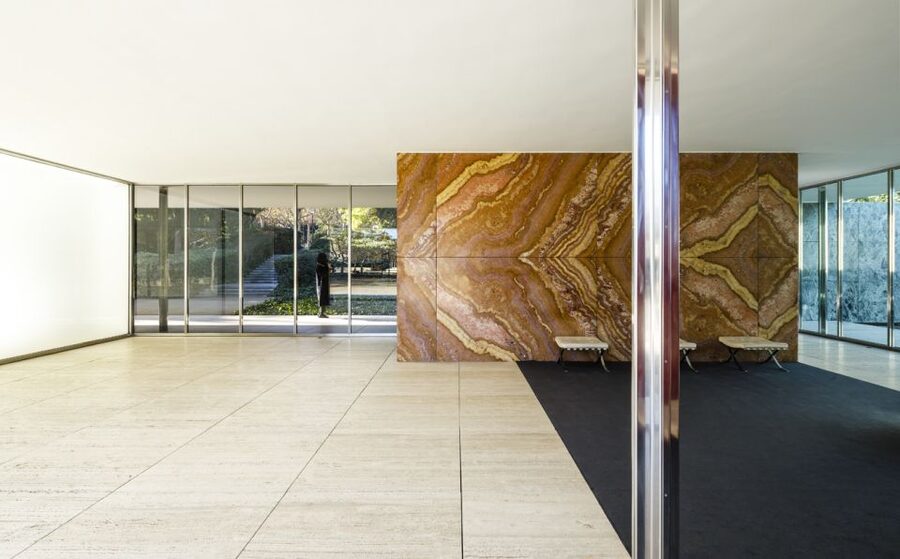
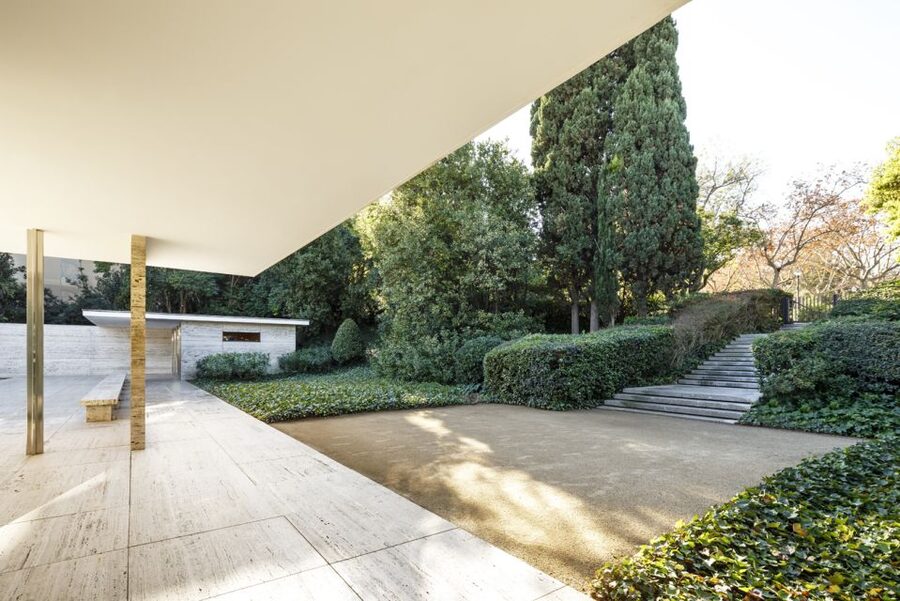
The Mies van der Rohe Pavilion is a small building with a very large influence. Its clean planes, open rooms, polished stone, and slender columns reduce architecture to a few carefully placed elements, so you notice proportion, light, and movement rather than decoration.
I like the calm, uncluttered setting and the chance to study a major work of modern architecture without committing half a day. I also like the five-language audio guide, which gives meaning to materials and design choices that can be easy to miss. The main drawback is simple: the visit is brief, and some people may feel that $10 is a lot for one compact pavilion.
Key points to know
- The pavilion began as Germany’s 1929 Barcelona International Exhibition building, then was dismantled after the event.
- The structure reopened in 1986 on its original site after a careful reconstruction.
- The audio guide is available in English, Spanish, Catalan, French, and German, adding context to the spare design.
- Expect a quiet architectural visit, not a long guided tour or a large museum experience.
- Professional photo shoots and artistic installations can sometimes change the atmosphere of the space.
- The site is wheelchair accessible, with smoking, food, drinks, pets, and tripods not permitted.
Why this little pavilion matters
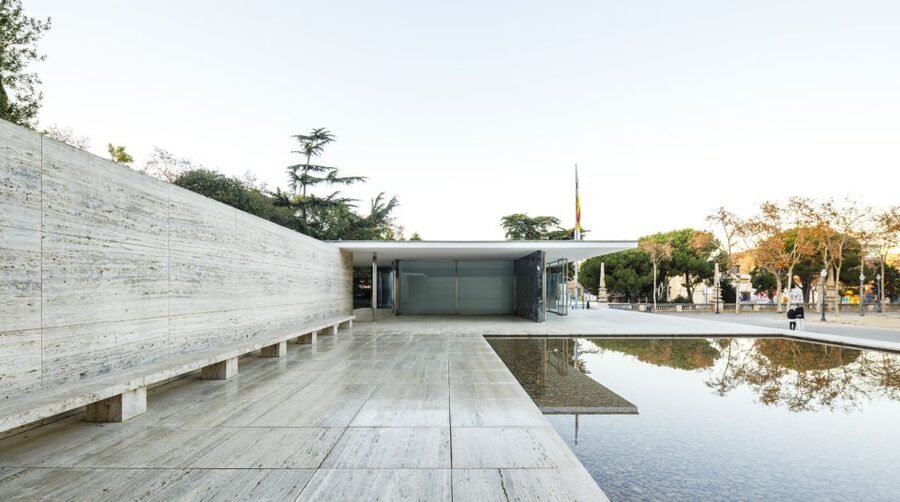
I find the pavilion most rewarding when I stop expecting a conventional attraction. There is no packed collection of rooms, no grand staircase, and no long route through historic displays. Instead, the building asks you to pay attention to a wall of marble, the reflection in a pool, or the way an interior seems to continue outdoors.
Ludwig Mies van der Rohe designed the pavilion with Lilly Reich for the German national presentation at the 1929 Barcelona International Exhibition. It was intended as a temporary building, but its influence lasted far longer than the exhibition itself.
After the event, the pavilion was taken apart. Its importance became clearer over time, and it was reconstructed on the original site, reopening in 1986. You are therefore seeing a modern reconstruction of a 1929 design, not the untouched original structure.
That distinction does not make the visit less worthwhile. In fact, it gives the audio guide an important job. It can help you understand why a building that looks almost effortless required such careful planning, and why architects and artists have continued to study it.
More audio guides in Barcelona:
- Barcelona: Sagrada Familia Entry Ticket with Audio Guide
★ 4.6 · 105,312 reviews - Casa Batllo Admission Ticket with Intelligent Audio Guide
★ 4.5 · 3,168 reviews - Barcelona: Montjuïc Cable Car Ticket with Audio Guide
★ 3.9 · 270 reviews
Arriving at the Pavilion and getting oriented
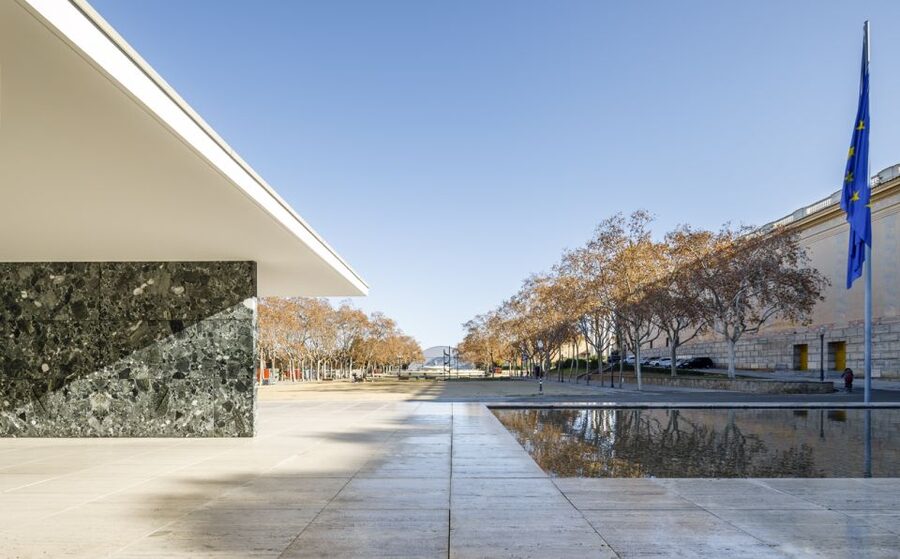
Your ticket gives you direct entry to the Mies van der Rohe Pavilion and includes the audio guide. The activity is valid for one day, with available starting times shown when you check dates.
The site is compact, so you do not need to plan a long visit. I would arrive at the scheduled time rather than treating it as an open-ended stop. One person found arriving on time especially important, and this is good advice for a small attraction with controlled entry.
Once inside, take a moment before starting the audio commentary. The pavilion makes more sense when you first look at it without instructions. Notice how little seems to be there, then ask yourself why the space feels ordered rather than empty.
The building is open enough to connect interior and exterior areas. That connection is one of its key ideas. Walls do not simply enclose rooms, and the route is not built around a series of heavy doors or formal galleries.
Reading the marble, glass, and steel
The pavilion’s materials do much of the talking. Its palette includes stone brought from the Alps, Tivoli, Atlas, and Tinos, along with glass, steel, and other precisely chosen surfaces.
I like the way the materials are not treated as background decoration. The stone patterns help shape the rooms, while the reflective surfaces alter your sense of where one space ends and another begins. The design is spare, but it is not plain in the careless sense.
The audio guide can be particularly useful here. Without context, you might simply see beautiful slabs of marble. With explanation, you can pay closer attention to how the material is cut, positioned, and contrasted with the pavilion’s straight lines.
The building’s simplicity also makes flaws more visible. In a crowded historic monument, a small distraction disappears into the detail. Here, a photographer, a model, or an unexpected installation can become part of the composition.
That can be a nuisance if you want a perfectly quiet architectural study. It can also be interesting. Professional photographers and models sometimes work in the space, and their presence may become part of what you see during your visit.
How the audio guide changes the visit
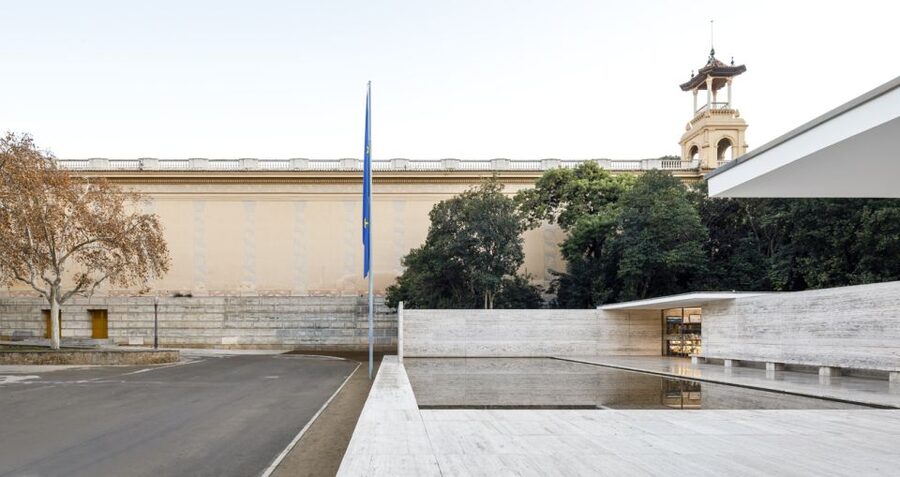
The included audio guide is available in English, Spanish, Catalan, French, and German. That makes the ticket more useful for international visitors who want more than a quick look.
I would use it selectively rather than rushing through every track. Listen to the introduction, then pause to look closely at the parts it describes. This building rewards slow observation more than constant movement.
The guide covers the pavilion’s background, its role in the 1929 exhibition, and its later reconstruction. It should also help explain the relationship between the interior and exterior, the controlled use of lines, and the contrast between the materials.
One practical point deserves attention: check that you receive or can access the audio guide before settling into the visit. One booking party reported not getting the guide and feeling confused as a result. That does not mean the same problem will occur for you, but it is worth confirming at entry.
No guide’s name is supplied for this experience, because the commentary is an audio guide rather than a live tour led by a named person. You are free to move at your own pace, which suits the pavilion well.
A few more Barcelona half-days worth comparing
- Barcelona: Park Güell Admission Ticket
★ 4.4 · 76,534 reviews - Barcelona: Casa Batlló Entry with Self-Audioguide Tour
★ 4.7 · 25,359 reviews - Barcelona: 24 or 48-Hour Hop-On Hop-Off Bus Tour
★ 4.4 · 20,872 reviews - Barcelona: Park Guell Guided Tour with Skip The Line Entry
★ 4.7 · 17,563 reviews
The 1929 story and the 1986 reconstruction
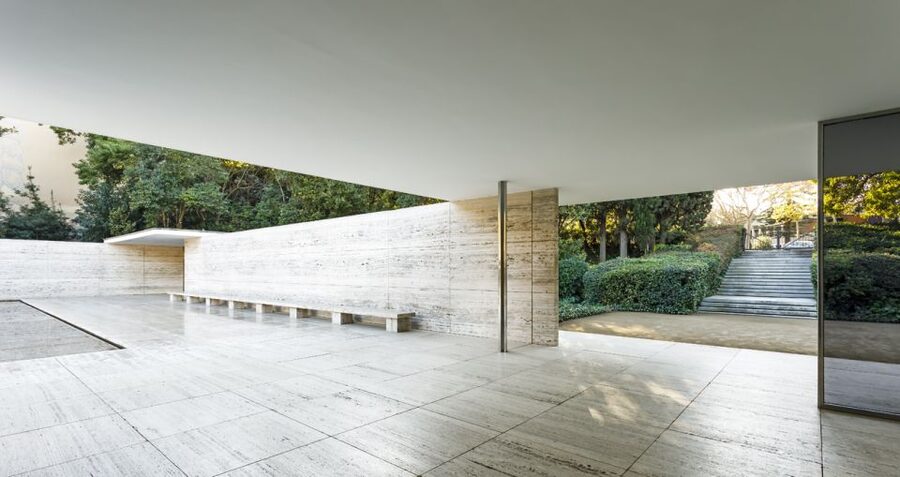
The pavilion’s history gives the visit more weight. It was built for the 1929 Barcelona International Exhibition, when national pavilions were meant to express ideas about culture and modern life.
Germany’s pavilion did that through architecture instead of a crowded display. The structure presented a controlled, modern image based on space, materials, and proportion. Its message was not delivered through a large collection of objects. The building itself was the exhibit.
When the exhibition ended, the pavilion was dismantled. That might have been the end of the story, but its design became too important to forget. The reconstructed pavilion opened in 1986 on the original site.
I think this is one of the most valuable things to understand before you go. You are not only looking at a beautiful modern building. You are looking at an attempt to recreate a temporary work that had become a landmark in architectural history.
The reconstruction also explains why the audio guide matters. Without context, the building can seem like a polished set of surfaces. With its history in mind, the spare design feels more purposeful.
A short visit with plenty to notice
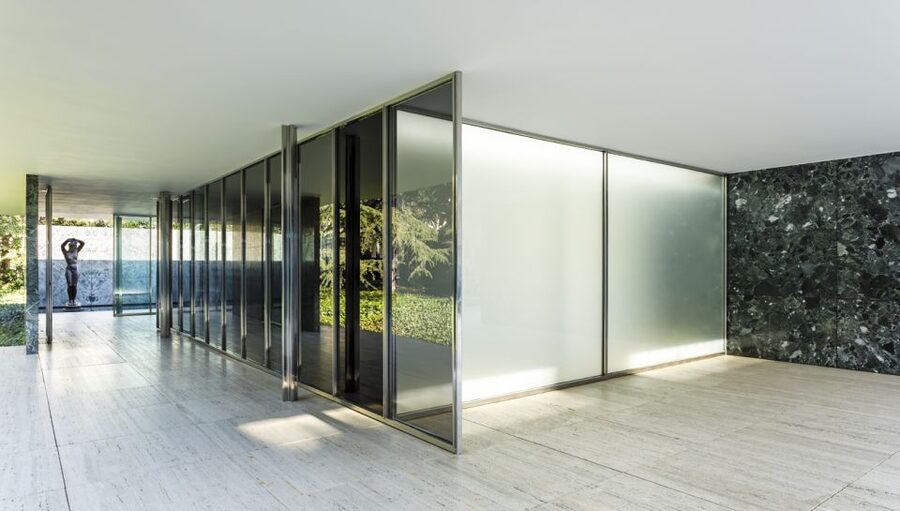
The experience lasts within a single day rather than following a long, fixed tour itinerary. The pavilion itself is compact, so you should plan for a short cultural stop, not a full-day attraction.
That makes it easy to pair with other Barcelona plans, but I would avoid squeezing it into a five-minute gap. You need enough time to look, listen, and walk through the spaces without treating the building like a photo stop.
A short nature trail near the site can add a little breathing room before or after your visit. This is not part of the pavilion tour itself, so do not expect the ticket to include an outdoor excursion. Still, the nearby path may suit you if you want to slow down after studying such a controlled architectural space.
The setting can change when artistic interventions are installed. These temporary works may alter the pavilion’s appearance, so the building you see on one visit may not look exactly the same on another.
That is useful to keep in mind if you want a pure study of the original design. It is less useful if you prefer a changing cultural program. Check the current presentation if the permanent architectural design is your main reason for going.
Is $10 a fair price?
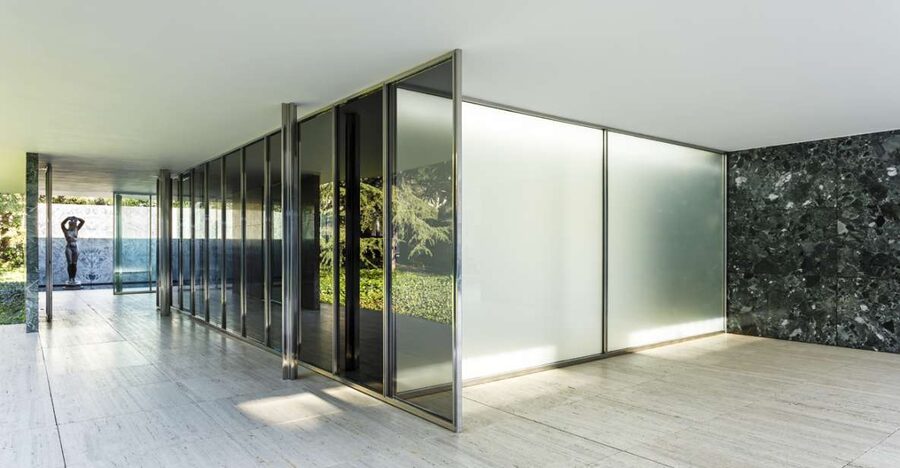
At $10 per person, the ticket is not expensive by Barcelona attraction standards, but value depends on your interests. You are paying for entry to one small building, not a large museum with hours of exhibits.
I think the price is fair for people who care about architecture, design, photography, or modern cultural history. The audio guide adds value by explaining details that are not obvious at first glance, and the skip-the-ticket-line arrangement reduces friction at entry.
I can also understand the objection from someone who expects a public landmark to be free. The pavilion is small and the visit is short, so you may feel the cost more sharply than you would at a major museum.
For me, the price works best as part of a planned architecture or Montjuïc-area outing. It is harder to justify if you are simply collecting famous Barcelona sights without much interest in modern design.
The free-cancellation policy also helps reduce the risk. You can cancel up to 24 hours before the visit for a full refund, and the reserve-now, pay-later option allows you to hold a place without paying immediately.
Who will enjoy this most
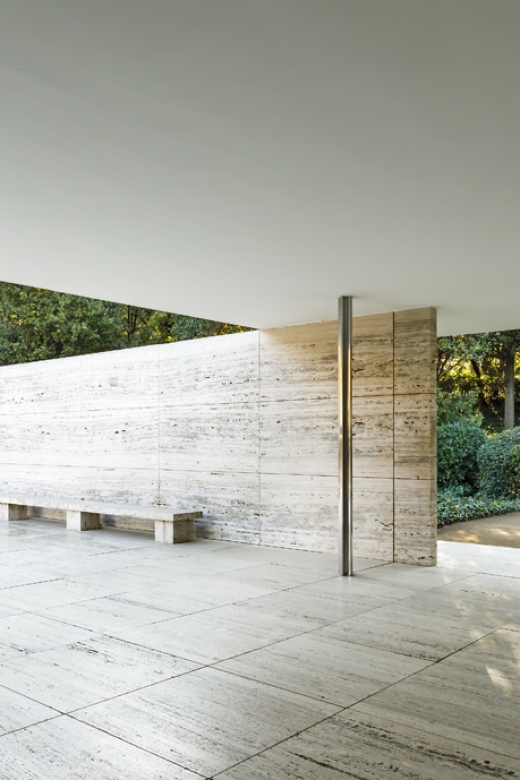
I would recommend the pavilion to you if you like buildings that reward close looking. Architecture students, designers, photographers, and visitors interested in the Modern Movement will find more here than someone seeking a grand historic interior.
It also works for a quiet break from Barcelona’s busier sights. The pavilion offers a calm visit, with none of the scale or visual overload found at the city’s biggest monuments.
The experience is less suitable if you need a long, activity-filled attraction. Children or companions who are not interested in design may finish quickly, especially if they do not use the audio guide.
The building is wheelchair accessible, which makes the visit easier to include in an accessible Barcelona plan. Smoking, food, drinks, pets, and tripods are not allowed. Assistance dogs are permitted.
Practical tips for a better visit
Arrive at the time you select. The pavilion is small, and a delayed arrival may affect how smoothly you enter.
Use the audio guide in a language you understand best. English, Spanish, Catalan, French, and German are available, so you do not need to rely on visual details alone.
Give the marble and glass a close look instead of photographing everything immediately. The design is about relationships between surfaces, lines, openings, and reflections, and those details can disappear behind a camera screen.
Avoid bringing a tripod. It is not permitted, and professional photography already sometimes takes place in the pavilion.
Expect the appearance to change if an artistic intervention is installed. This can add interest, but it may also mean that your photographs or visual impressions differ from the clean architectural image you had in mind.
Opening hours can change, so check the current schedule before setting out. The ticket is valid for one day, but that does not mean every hour is available without checking the current opening information.
Should you book the Mies van der Rohe Pavilion?
Book it if you want a short, focused architecture visit with useful audio commentary and a chance to see a modern design landmark in person. The $10 price is reasonable for the right audience, especially when you use the guide and take time to study the materials.
Skip it if you want a large museum, a long guided tour, or a major Barcelona landmark packed with historic objects. The pavilion is deliberately restrained, and its appeal depends on noticing small choices rather than chasing spectacle.
My best advice is to treat it as a thoughtful 30-minute-style stop, not a full afternoon attraction. Arrive on time, confirm the audio guide, slow down, and let the building’s quiet geometry do the work.
FAQ
Where is the Mies van der Rohe Pavilion located?
It is located in Barcelona, in Catalonia, Spain.
Who designed the Mies van der Rohe Pavilion?
The pavilion was designed by Ludwig Mies van der Rohe and Lilly Reich.
Why was the pavilion built?
It was built as the German national pavilion for the 1929 Barcelona International Exhibition.
Was the original pavilion kept after the 1929 exhibition?
No. The pavilion was dismantled after the exhibition and later reconstructed on its original site.
When did the reconstructed pavilion reopen?
The reconstructed pavilion reopened in 1986.
What does the ticket include?
The ticket includes entrance to the Mies van der Rohe Pavilion and an audio guide.
Which languages are available for the audio guide?
The audio guide is available in Spanish, Catalan, English, French, and German.
Is the pavilion wheelchair accessible?
Yes, the pavilion is wheelchair accessible.
Are food and drinks allowed inside?
No. Food and drinks are not allowed inside the pavilion.
Can I cancel the booking?
Yes. You can cancel up to 24 hours in advance for a full refund.
Recently added around Barcelona
- Park Guell Guided Tour with Skip the Line Tickets★ 4.0 · 739 reviews
- Entrance to the Mirador Torre Glories Barcelona★ 4.5 · 193 reviews
- Bohemian Barcelona Neighborhood Evening Tapas & Wine Tour★ 5.0 · 419 reviews
- Transfers From Cruise Port to Barcelona Airport★ 4.5 · 155 reviews
- Authentic Flamenco Show Barcelona : Intimate Casa Sors Experience★ 5.0 · 809 reviews
- Barcelona Expert Tour with Local Guide in Eco Tuk Tuk Private★ 5.0 · 216 reviews
- Barcelona Sunset Cruise with Light Snacks and Open Bar★ 5.0 · 476 reviews
- Barcelona: Sagrada Familia, Park Guell & Tapas Private Tour★ 5.0 · 903 reviews
Audio Tours, compared.
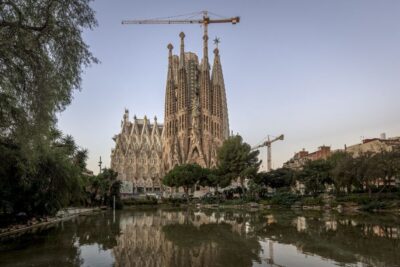
Sagrada Familia Entry Ticket with Audio Guide
Read our review →
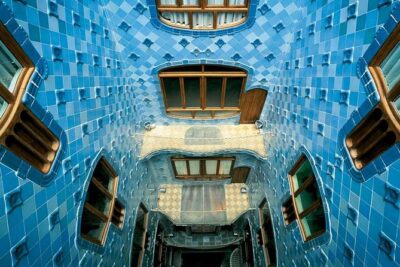
Casa Batllo Admission Ticket with Intelligent Audio Guide
Read our review →
Nerja: Caves of Nerja Entry Ticket with Audio Guide
Read our review →

Browse the lists this tour appears in