Reviewed · TICKETS
Sant Pau Recinte Modernista Entrance Ticket in Barcelona
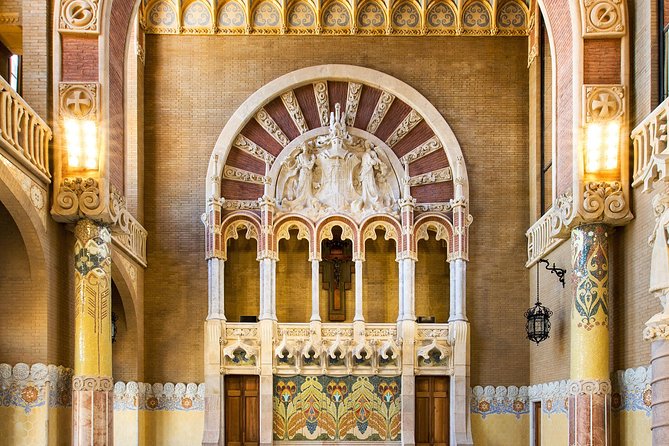
Sant Pau Recinte Modernista is a former hospital turned open-air museum, and its real surprise is how much beauty was built into a place designed for illness and recovery. You move among pavilions, gardens, tunnels, mosaics, stained glass, sculptures, and domes rather than through one single museum building. The complex was still used as a hospital in the 1990s.
I like the freedom of a self-guided visit, especially if you want to stop for photographs or read at your own speed. I also like the practical value of booking ahead: at $21.78, you pay for guaranteed entry to a popular Barcelona sight, not necessarily a long line skip. The main drawback is that the route and signs can feel unclear, and the basic ticket does not include an audio guide.
Key points to know before you go
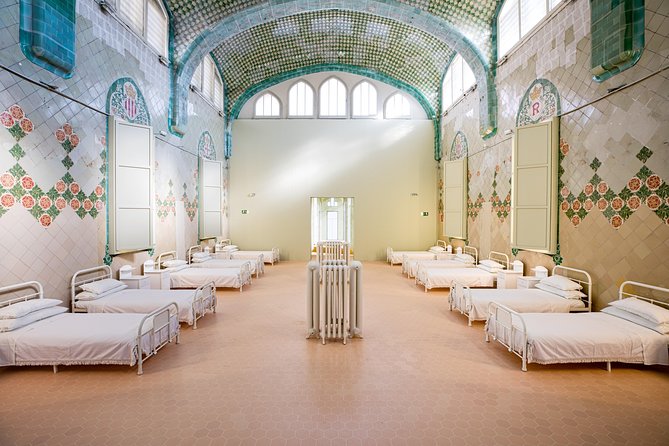
- Sant Pau is a full complex, not one building: Allow about one to two hours for the pavilions, gardens, tunnels, and exhibition rooms.
- The former hospital is the star: Learn how the Hospital de la Santa Creu i Sant Pau developed from its founding in 1401 into a modern medical center.
- Look up and look down: Tile roofs, stained glass, sculptures, mosaics, domes, and underground passageways reward slow sightseeing.
- The visit is self-guided: You receive admission, but no guide is included. An audio device costs €4 at the entrance.
- Booking ahead has real value: It guarantees admission, although a quiet Monday may have little or no line.
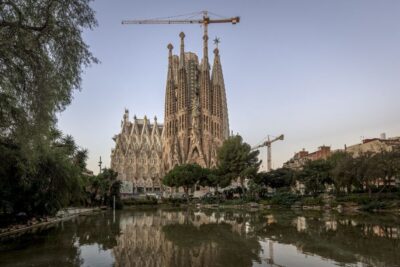
- Plan it with Sagrada Família: The complex is a short distance from Barcelona’s most famous basilica and is also near public transportation.
Why this former hospital feels like a work of art
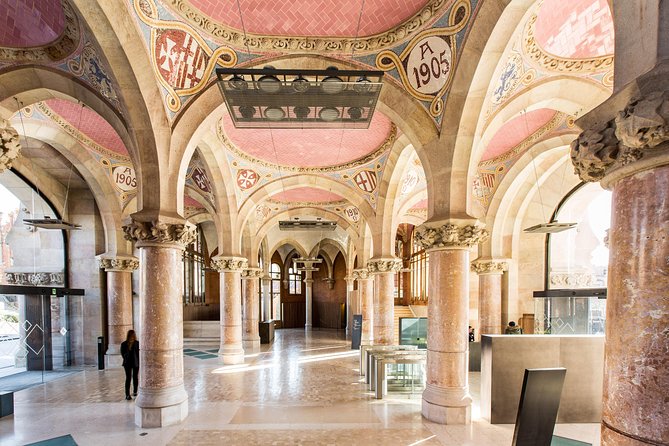
Sant Pau was built around a humane idea: a hospital should help patients recover, not simply contain them. That idea comes through in the open grounds, separate pavilions, garden setting, and underground links between buildings.
The complex belongs to Barcelona’s Modernisme movement, the Catalan form of Art Nouveau. Architect Lluís Domènech i Montaner shaped the site with colorful tilework, decorative brick, stained glass, sculpture, and elaborate roofs. Here, practical hospital design and artistic detail share the same address.
I find the contrast especially memorable. You are looking at a place created for medical care, yet the buildings feel ceremonial and carefully decorated. The beauty is not limited to a grand entrance. It appears in small tiles, patterned surfaces, carved details, and the views between the pavilions.
Sant Pau is also large enough to feel different from Barcelona’s better-known single-building attractions. The site covers a network of structures and passages, so you need time to look around rather than make one quick stop and leave.
A few more Barcelona half-days worth comparing
- Barcelona: Sagrada Familia Entry Ticket with Audio Guide
★ 4.6 · 105,312 reviews - Barcelona: Park Güell Admission Ticket
★ 4.4 · 76,534 reviews - Barcelona: Casa Batlló Entry with Self-Audioguide Tour
★ 4.7 · 25,359 reviews
Starting at the Administration Pavilion
Your self-guided visit begins at the Administration Pavilion. This is a useful starting point because the exhibition explains both the hospital’s medical role and its architectural importance.
An interactive touch table and video presentation help set the scene. They are worth your time if you want more than attractive photographs. Sant Pau is not simply a collection of decorative rooms. The displays show how the institution contributed to medical care and how its design changed over time.
The admission process is straightforward. You show your mobile voucher, and the visit proceeds at your own pace. A paper guide is available and helps you find your way around the site. Still, do not expect the structure of a guided tour. You will need to pay attention to the route and decide how long to spend in each area.
If you prefer spoken explanation, rent the audio guide at the entrance for €4. That extra cost is worth considering because the history and design are closely connected. Without some explanation, it is easy to notice the mosaics and miss the thinking behind the hospital.
Sant Salvador Pavilion and 600 years of hospital history
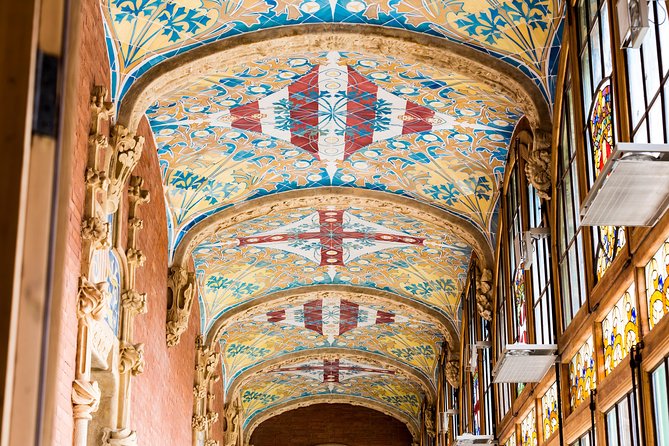
One of the key stops is the Sant Salvador Pavilion, where the story of the Hospital de la Santa Creu i Sant Pau is presented from its founding in 1401 through the 21st century.
This gives the visit its historical backbone. The buildings you see are part of a much longer medical story, not an isolated Modernisme project. The displays help connect the old institution with the later hospital complex and its continued role in Barcelona.
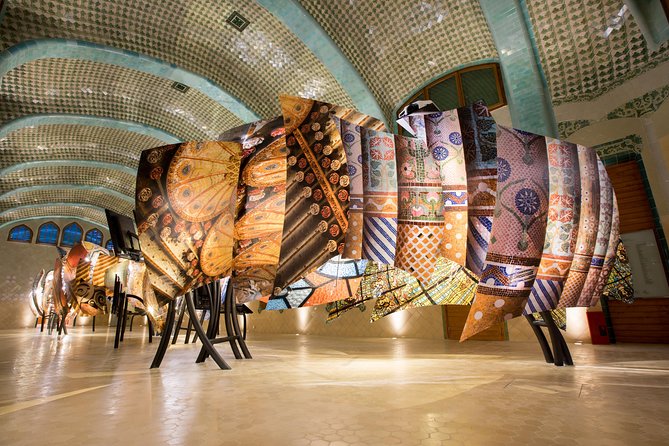
On the upper floor, a contemporary installation in the shape of a dragon honors Lluís Domènech i Montaner and his work. It is a modern addition within a historic setting, and it gives you another way to think about the architect’s influence on Catalan Art Nouveau.
If you have limited time, do not rush this pavilion. The exterior architecture may grab your attention first, but the history explains why the complex matters. It also makes the preserved rooms and old medical areas easier to understand.
Underground tunnels and the practical side of the design
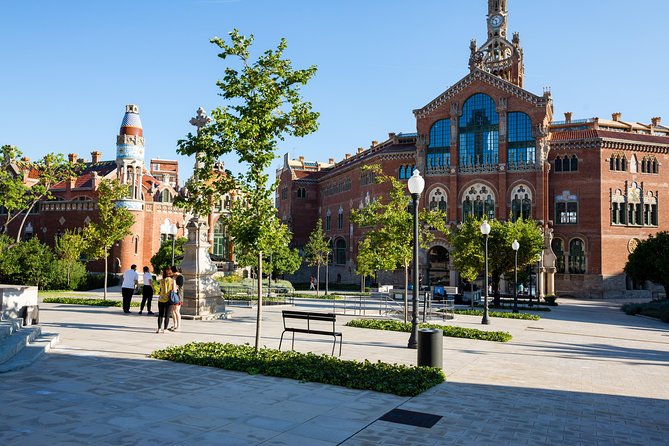
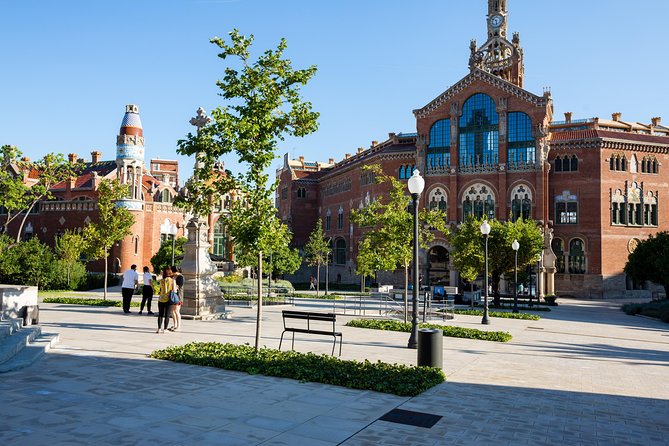
The underground tunnels are one of Sant Pau’s most unusual features. They connect the pavilions and extend toward the gardens, creating a sheltered route through the hospital complex.
These passageways show the practical side of the design. The hospital was not planned as one giant block. Separate buildings allowed different functions to operate across the site, while tunnels helped connect them.
The tiled passageways are also visually striking. They give you a change of scale after the large exterior views and decorated facades. You may find that the tunnels are among the easiest parts of the visit to remember because they combine everyday hospital use with decorative design.
Pay attention to the route here. Signposting has received mixed marks, and the self-guided layout can be confusing in places. Some sections may be closed during your visit, and it is possible to miss a building if you simply follow the first obvious path. The map and paper guide are useful, so take a moment to get your bearings before moving on.
Same base in Barcelona, a completely different kind of day:
- Barcelona: 24 or 48-Hour Hop-On Hop-Off Bus Tour
★ 4.4 · 20,872 reviews - Barcelona: Park Guell Guided Tour with Skip The Line Entry
★ 4.7 · 17,563 reviews - Barcelona in 1 Day: Sagrada Familia, Park Guell,Old Town & Pickup
★ 5.0 · 13,541 reviews - Barcelona Aquarium: Entry Ticket
★ 4.3 · 13,335 reviews
Pavilions, gardens, and the details above eye level
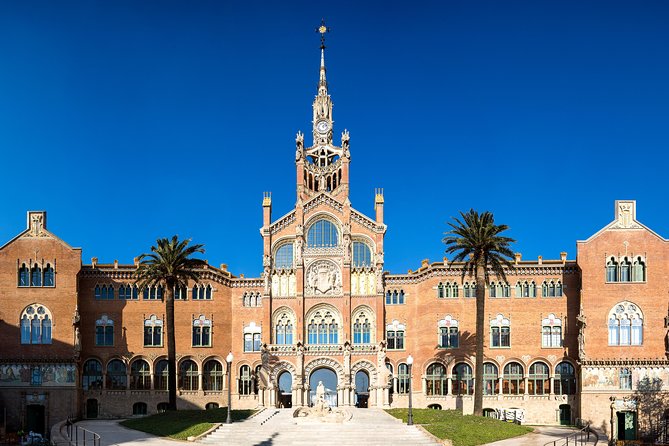
The restored pavilions are the heart of the visit. Walk slowly through the grounds and look beyond the largest decorative features.
You will find stained glass, sculptures, domes, frescoes, tilework, and colorful roofs. The exterior details are especially rewarding because they make each building feel distinct. The gardens also give you breathing room between the pavilions, and the site generally feels calmer than Barcelona’s most crowded attractions.
That quieter setting is one of Sant Pau’s strongest advantages. You can stop to study a mosaic without being pushed along by a packed group. You can also photograph the buildings from different angles and notice how the courtyards, paths, and facades work together.
The complex is carefully restored, but it still feels connected to its former medical purpose. That balance matters. You are not looking at a newly built theme park version of a hospital. You are seeing historic structures adapted for public access and exhibition use.
Bring patience for the small details. The large domes and tiled roofs make good first impressions, but the close-up work is where Domènech i Montaner’s design becomes most interesting.
The restored Sant Rafael Pavilion and old Surgery Room
The restored Sant Rafael Pavilion gives you a more direct sense of the hospital’s former operation. The old Surgery Room adds another practical layer to the visit.
These areas are especially suitable for anyone interested in medical history. You can see how the hospital once organized care, then compare that earlier approach with the modern medical developments explained in the exhibitions.
The experience is not designed as a sensational display of old equipment. Its strength is the connection between the rooms, the hospital’s mission, and the architecture around them. If hospitals are not your main interest, the decorative surroundings still make these stops worthwhile. If you enjoy social history, you will likely want to slow down here.
The complex was still functioning as a hospital in the 1990s, which makes the change into a museum and cultural site feel surprisingly recent. That detail helps bridge the gap between the ornate buildings and the modern institution they once served.
The major interior rooms
The Lluís Domènech i Montaner Room, Pau Gil Room, and Main Hall provide some of the visit’s most formal interior spaces.
Each room gives you another view of how the hospital combined function with ceremony. The Main Hall is a natural place to pause and take in the scale of the interior. The named rooms also help break up the visit, giving you clear points of interest as you move across the complex.
Do not treat these as quick photo stops. The room names, materials, and decorative features become more meaningful after you have seen the historical displays and tunnels. I like the way the visit moves between broad institutional history and close architectural observation.
You can spend a short time in each room and finish the entire site in about an hour. If you read the exhibits, use the audio guide, and take time in the gardens, plan closer to two hours.
Ending at Sant Jordi Pavilion
The Sant Jordi Pavilion hosts rotating temporary exhibitions. This means the final part of your visit can change depending on the current program.
It is a useful ending because it brings contemporary material into a historic complex. The permanent architecture tells the long story of Sant Pau, while the temporary exhibition gives the visit a changing cultural element.
Since the exhibition changes, I would treat it as an extra rather than the main reason to buy the ticket. The pavilions, tunnels, rooms, and Modernisme details are the dependable highlights. Still, Sant Jordi can add variety and may be a pleasant final stop before you leave.
Is $21.78 a fair price?
At $21.78 per person, the ticket is reasonably priced if you care about architecture, history, or unusual Barcelona attractions. You are paying for access to a large complex rather than a short look inside one landmark.
The value depends on how you visit. If you rush through in 30 minutes, the price may feel high. If you spend 90 minutes or two hours with the exhibitions, gardens, tunnels, and rooms, the admission makes more sense.
Prebooking is most useful during busy periods, when guaranteed entry matters. It may not save much time on a quiet Monday afternoon, and there may be little line to avoid. The benefit is certainty, not a promise of instant entry in every situation.
The ticket does not include food, drinks, a guide, or the audio device. Add €4 if you want the narration. For a site with a complicated layout and a long history, that small extra may improve the visit.
Getting there and planning the timing
Sant Pau is on Sant Antoni Maria Claret in central Barcelona and is close to public transportation. The green line of the hop-on hop-off bus has a stop directly outside, listed as stop 12.
The complex is also a short distance from Sagrada Família. You can pair the two attractions, but allow enough time for Sant Pau instead of squeezing it into a hurried gap. Sagrada Família is famous for its single monumental interior and exterior. Sant Pau gives you a wider architectural setting, with several pavilions and open grounds.
A one to two hour visit works well in a Barcelona itinerary. If the weather is hot or rainy, the indoor areas, seating, and air conditioning can make the stop more comfortable. Outdoor paths and gardens remain part of the experience, so plan for changing conditions.
Most people can take part, and service animals are allowed. If stairs are difficult for you, ask staff about lift access before moving through the complex, since access to lifts may not always feel obvious. Some areas may also be closed for events or temporary use, so do not assume every room will be open.
Who will enjoy Sant Pau most?
I would put Sant Pau high on the list for:
- Architecture fans who want more than one famous façade
- People interested in Barcelona’s Modernisme movement
- Anyone curious about hospitals, medicine, and social history
- Visitors who prefer a quieter sight with room to explore
- Families or couples who want a flexible visit without a fixed group schedule
- Anyone already visiting Sagrada Família and looking for a nearby second stop
It may be less suitable if you want a lively guide leading the way or a tightly organized route with constant explanation. The self-guided format gives you freedom, but it also requires more attention. The signs are not always perfect, and the site is large enough that you can miss sections.
Should you book the Sant Pau ticket?
Yes, if you want to see Barcelona’s Modernisme beyond the most famous names. Sant Pau combines beautiful architecture with a genuine medical story, and the underground tunnels, restored pavilions, gardens, and old hospital rooms give the visit plenty of variety.
Book ahead if your schedule is tight or you are visiting in a busy period. Choose the audio guide for €4 if you want help connecting the buildings to the hospital’s past. If you are happy to read at your own speed, the paper guide and exhibits can be enough.
I would skip it only if your Barcelona schedule is already packed with architecture and you dislike self-guided museums. For everyone else, this is a thoughtful two-hour stop with a calmer pace and more substance than its ornate surfaces first suggest.
FAQ
How much does the Sant Pau Recinte Modernista ticket cost?
The listed price is $21.78 per person.
How long does the visit take?
The visit takes approximately one to two hours, depending on how much time you spend with the exhibitions, rooms, gardens, and architectural details.
Is the visit guided?
No. The admission ticket provides a self-guided visit. A guide is not included.
Is an audio guide included?
No. An audio guide can be rented at the entrance for €4.
What does the admission ticket include?
The ticket includes admission to Sant Pau Recinte Modernista, including the visitor areas within the complex.
Can I use a mobile ticket?
Yes. You receive a mobile ticket and can show your prepaid voucher on your phone at arrival.
Where does the visit begin?
The self-guided visit begins at the Administration Pavilion. The Sant Salvador Pavilion presents the history of the hospital from 1401 through the 21st century.
Is Sant Pau near public transportation?
Yes. Sant Pau is near public transportation on Sant Antoni Maria Claret. The green line of the hop-on hop-off bus has a stop directly outside.
Can I cancel the ticket?
Yes. You can cancel for a full refund if you cancel at least 24 hours before the experience start time. Changes or cancellations made less than 24 hours before the start time are not accepted.
Recently added around Barcelona
- Park Guell Guided Tour with Skip the Line Tickets★ 4.0 · 739 reviews
- Entrance to the Mirador Torre Glories Barcelona★ 4.5 · 193 reviews
- Bohemian Barcelona Neighborhood Evening Tapas & Wine Tour★ 5.0 · 419 reviews
- Transfers From Cruise Port to Barcelona Airport★ 4.5 · 155 reviews
- Authentic Flamenco Show Barcelona : Intimate Casa Sors Experience★ 5.0 · 809 reviews
- Barcelona Expert Tour with Local Guide in Eco Tuk Tuk Private★ 5.0 · 216 reviews
- Barcelona Sunset Cruise with Light Snacks and Open Bar★ 5.0 · 476 reviews
- Barcelona: Sagrada Familia, Park Guell & Tapas Private Tour★ 5.0 · 903 reviews
Tickets, compared.
Sagrada Familia Entry Ticket with Audio Guide
Read our review →




Live Flamenco Dancing Show Ticket at the Theater
Read our review →