
Reviewed · SEVILLE TOURS
Seville: Casa de Pilatos Ground Floor Entry Ticket
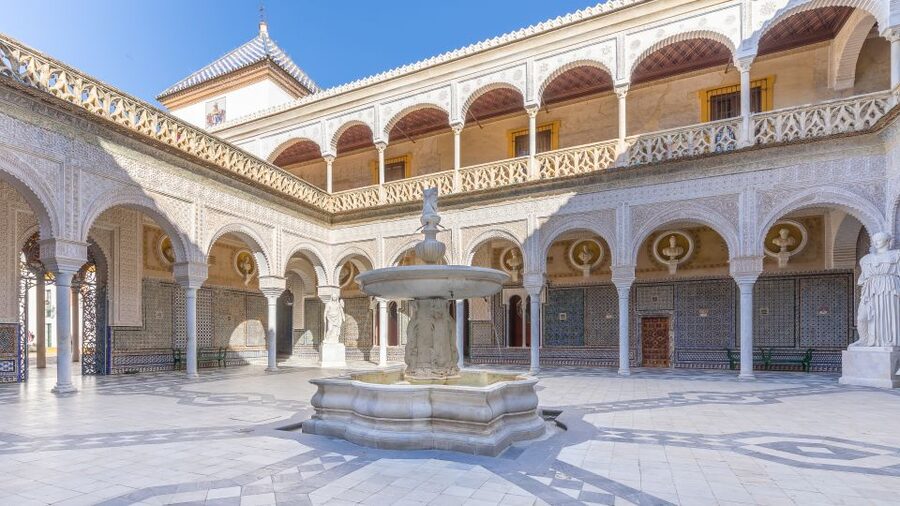
Casa de Pilatos is one of Seville’s most rewarding smaller sights, especially if you want grand architecture without the crowds and scale of the Royal Alcázar. The house brings together Mudejar-Gothic detail and Renaissance design, then softens it with courtyards, fountains, flowers, and gardens.
I like the fine glazed tiles and the collection of Classical sculptures, including Roman emperors, Aphrodite, and Apollo. I also like the freedom to move at your own pace with an audio guide rather than being tied to a group. The main consideration is simple: this ticket covers only the ground floor, and some visitors find the audio commentary longer and more detailed than they need.
Key points to know before you go
- Roman sculpture in an Andalusian courtyard: See 24 busts of Roman emperors, along with figures such as Hadrian, Aphrodite, and Apollo.
- A rare mix of styles: Mudejar-Gothic, Renaissance, Christian, and Islamic influences appear side by side.
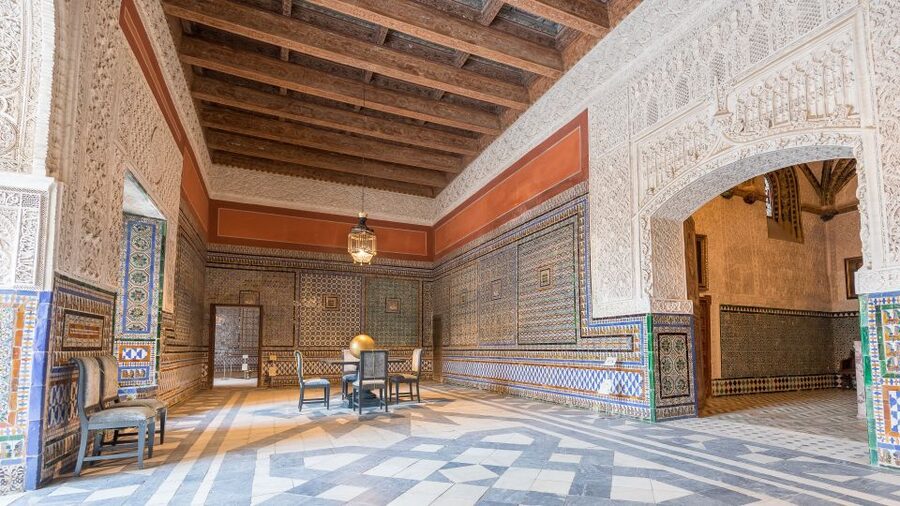
- The tilework is a major attraction: Glazed ceramic walls and floors give many rooms their color and character.
- A peaceful alternative to the Alcázar: The palace is often quieter, particularly in the morning or around 2 PM.
- The audio guide is useful but detailed: It is available in seven languages and follows the palace route.
- Ground floor only: An upstairs visit is not included, though it may be possible to add one on arrival.
Why Casa de Pilatos deserves time on your Seville plan
Seville has no shortage of famous monuments, but Casa de Pilatos offers something different. It feels more intimate than the Royal Alcázar, yet it still gives you a strong sense of the city’s changing taste and wealth.
The palace began in the 15th century under the Enríquez de Ribera family. Over time, it became the largest private residence in Seville. Its rooms show how local builders combined Islamic-influenced decoration with Christian architecture, then added the new Renaissance style arriving from Italy.
That mixture is the real point of the visit. You do not see one neat architectural period here. Instead, you move through a house shaped by generations of owners, artistic fashions, family ambition, and Seville’s place in the wider world.
I would allow at least an hour for a purposeful visit. If you like old buildings, photography, sculpture, or decorative arts, you may want much longer. One visitor spent three hours reading quietly in the house, which tells you something about the pace of the place. This is not an attraction you need to rush through.
A few more Seville half-days worth comparing
- Seville: Royal Alcázar Entry Ticket
★ 4.6 · 28,378 reviews - Seville: Cathedral and La Giralda Entry Ticket
★ 4.5 · 24,592 reviews - Seville: Live Flamenco Dancing Show Ticket at the Theater
★ 4.7 · 16,396 reviews
Entering through the marble gate
Your visit begins at a detailed Renaissance-style marble entrance. It gives you a clear hint of what follows: this was a private home built to impress, not a plain family residence.
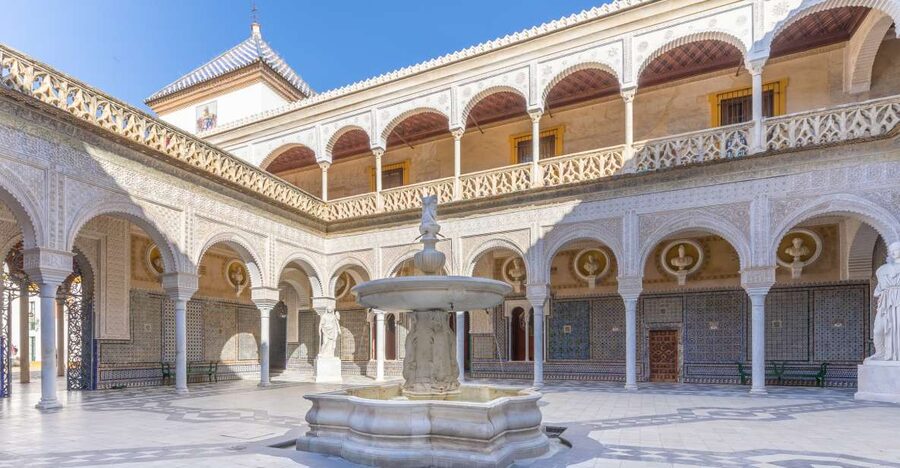
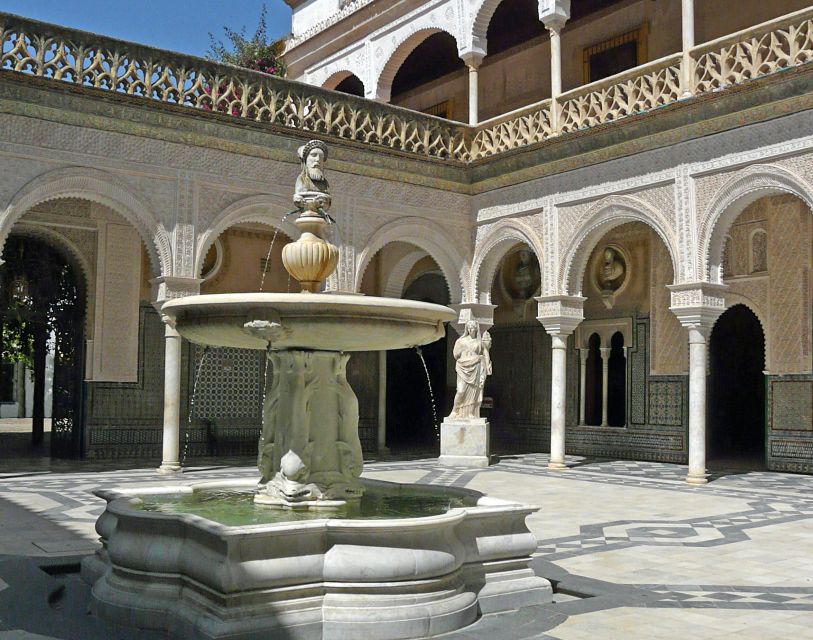
The entrance leads toward the central Andalusian courtyard, the palace’s main visual anchor. This courtyard is where Casa de Pilatos makes its strongest first impression. Water, stone, tile, sculpture, and open sky work together in a way that feels distinctly Seville.
Look closely before reaching for your phone. The design is not just decorative. The courtyard offers shade and air, frames the surrounding rooms, and gives the palace a calm center. It is also the best place to understand how the house joins Renaissance order with older Andalusian design.
The courtyard contains 24 busts of Roman emperors. You will also find figures associated with Classical mythology and art, including Hadrian, Aphrodite, and Apollo. These sculptures reflect the collecting interests of the Duke of Alcalá and his desire to connect the family home with the prestige of ancient Rome.
You do not need specialist art knowledge to enjoy this section. The useful question is what these statues were doing in a Seville palace. They were not merely ornaments. They signaled education, status, power, and a family’s interest in the culture of Classical antiquity.
The palace’s strongest feature: tilework
The glazed tiles, known as azulejos, are among the best reasons to visit. They cover walls and floors in patterns that change from room to room, giving the palace a cool, polished look.
I find the tiles especially valuable because they reward slow looking. From a distance, they create bold geometric designs. Up close, you can see repeated shapes, color changes, and careful transitions around doors, arches, and corners.
The tilework also helps explain the palace’s blended style. Its patterns belong to an Andalusian decorative tradition, while the surrounding rooms and sculpture display Renaissance taste. The result is not a museum display assembled in separate sections. It is a functioning palace where styles meet on the same wall.
Several visitors found the tilework and mosaics more memorable than expected. That makes sense. Major monuments often receive attention for their famous facades, but here the most enjoyable details are at eye level and underfoot.
Take your time in the rooms arranged around the courtyard. A self-guided route makes it easy to pause, return your attention to a particular panel, or skip an audio section that feels too technical.
The Chapel of Flagellation and the palace’s oldest layer
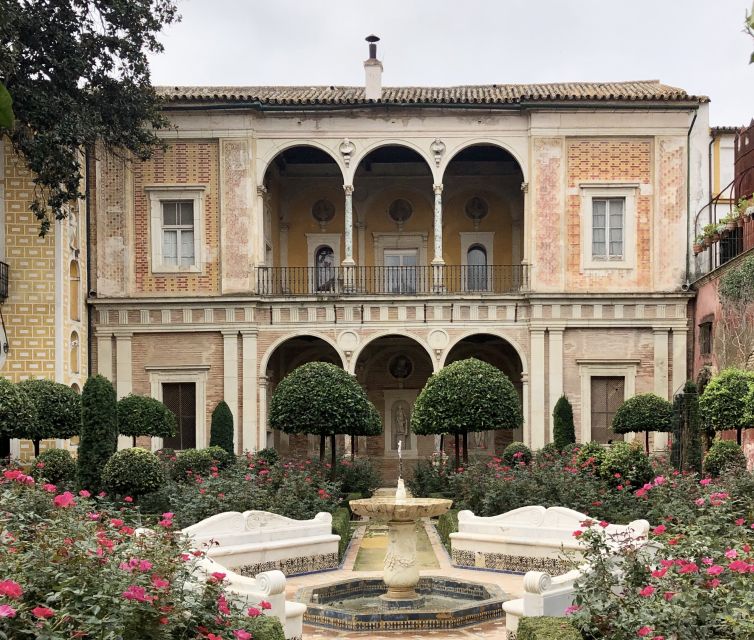
The Chapel of Flagellation is the oldest part of Casa de Pilatos. It is a small but important stop because it shows the transition between Christian and Islamic design traditions.
Look for the ornate basket-handle arch and the combination of Mudejar-Gothic and Renaissance elements. This room helps put the rest of the palace in context. The later Renaissance additions did not erase the older design language. They were added alongside it.
That is one reason the palace feels more interesting than a single-style mansion. You can see change taking place within the same building. The chapel is a good place to slow down and let the audio guide explain the architectural details, though you can still appreciate the room without listening to every section.
The palace also includes war-related imagery. Pallas Pacifera appears with a shield and helmet carved from stone. This is a reminder that the decorative program was not limited to flowers, fountains, and elegant rooms. It also used symbols of protection, military strength, and civic identity.
Same base in Seville, a completely different kind of day:
- Seville: Casa de la Memoria Flamenco Show
★ 4.8 · 12,964 reviews - Seville: 1-Hour Guadalquivir River Sightseeing Eco Cruise
★ 4.2 · 10,281 reviews - Seville: Cathedral, Giralda, and Royal Alcázar Guided Tour
★ 4.7 · 9,165 reviews - Seville: Setas de Sevilla Entry Ticket
★ 4.6 · 8,901 reviews
Salón del Pretorio and the decorated ceilings
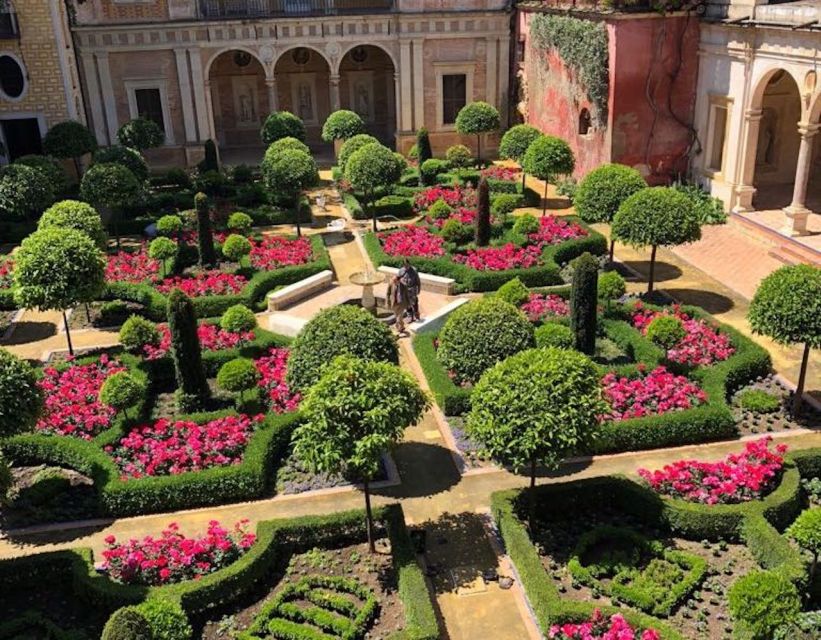
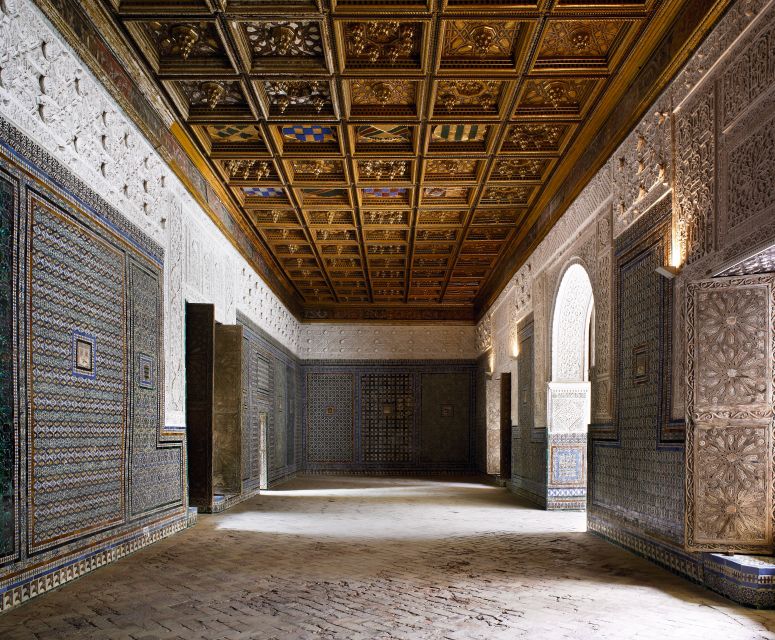
Continue to the Salón del Pretorio for one of the palace’s most detailed ceilings. The coffered ceiling is decorated with ornamental bows and other painted details that reward a look upward.
Ceilings are easy to miss in Seville, where tiled walls and courtyards naturally draw the eye. Here, the overhead decoration helps show the level of care given to every surface. The palace’s owners were making a statement from floor to ceiling.
The audio guide can be particularly helpful in these rooms. Without explanation, a ceiling may register as simply beautiful. With context, you begin to notice the choices in the design and how they relate to the palace’s Renaissance additions.
There is one practical warning. The audio material is extensive. Some people find it informative and easy to use, while others find it overlong or occasionally confusing. The route itself is clear, and QR codes and signs help you match the commentary to the correct room, but you do not have to listen to every word.
My advice is to use the guide selectively. Listen fully in the courtyard, chapel, and major rooms. In smaller spaces, a quick look may be enough. This gives you the story without turning a pleasant visit into an audio lesson.
Sculpture, art, and the story of Seville’s elite
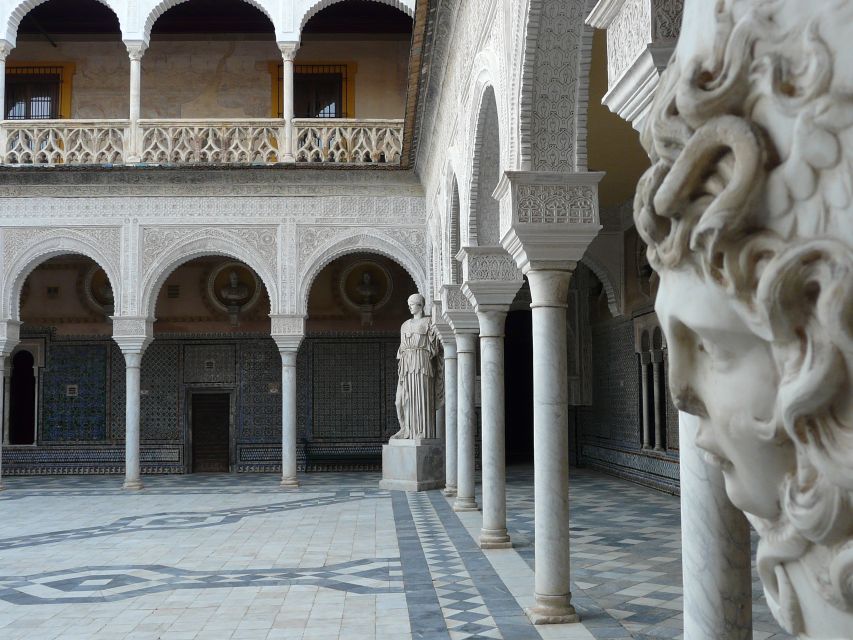
Casa de Pilatos is not only an architectural visit. Its collection of sculpture and Renaissance artwork gives the house a cultural purpose.
The Classical figures show how wealthy Seville families used art to present themselves. The palace was a home, but it was also a public statement about taste and connections. Ancient Roman imagery placed the family within a much older European tradition.
The artwork collected by the Duke of Alcalá adds another layer. Renaissance collecting was not just about filling rooms. It reflected curiosity about the ancient world, admiration for Italian art, and a wish to bring fashionable ideas to Seville.
The palace therefore tells two stories at once. One is the story of design, with its arches, tiles, ceilings, and fountains. The other is the story of social ambition. You are seeing how a powerful family chose to display its education, wealth, religious identity, and place in Seville.
The audio guide is worth using for this reason. A bare walk through the rooms can be beautiful, but the commentary helps you understand why the objects are there.
The gardens are part of the visit, not an afterthought
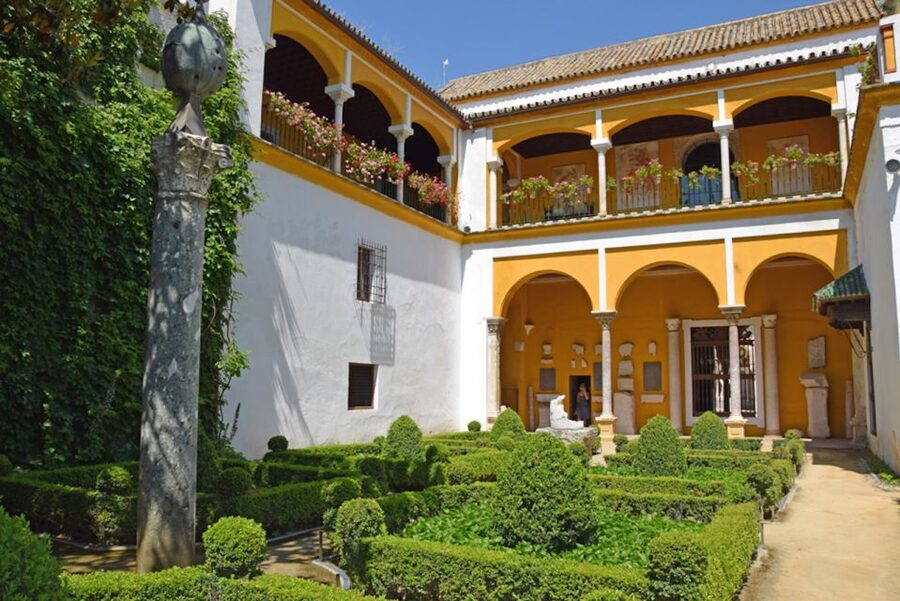
The gardens provide a welcome change after the enclosed rooms. They are designed in a Renaissance style and include sculptures and planted areas that make the palace feel less formal.
You can move from interior to courtyard to garden and back again. That changing rhythm is one of Casa de Pilatos’s pleasures. The house never feels like a series of sealed rooms. The gardens give the architecture breathing space.
The scale is manageable. You will not need a long walk to see everything, but you should not treat the gardens as a quick exit route. Stop to look back at the building, notice how the rooms open toward the outdoor areas, and take in the quieter atmosphere.
The rose garden is a favorite detail, especially in spring. Flowers vary with the season, so do not expect exactly the same appearance on every visit. Even in hot weather, the gardens can make the palace feel calmer, although the August heat may be strong in exposed areas.
For photographs, early morning and the earlier part of the afternoon can work well. Several visits around 11 AM or 2 PM were described as quiet, while larger groups appeared later in the afternoon. If you want space to look closely, avoid leaving the visit until the final entry period.
Audio guide, timing, and the ground-floor limit
The ticket includes an audio guide in English, Spanish, French, Portuguese, German, Japanese, and Italian. It is self-guided rather than led by a live guide, and the route is marked clearly enough to follow.
You may receive QR codes or use the palace’s own audio system, depending on the setup on the day. Bring a charged phone if the audio is accessed digitally. The guide provides useful background on construction, family history, art, and architecture, but it can be too detailed for a visitor who prefers a short overview.
The ground-floor ticket does not include the upper floor. This is the most important booking detail. The ground floor contains the courtyard, major decorative rooms, chapel, sculptures, ceilings, and gardens, so it is a satisfying visit on its own. Still, if you want a fuller picture of the family home, ask about adding the upstairs visit when you arrive.
The booking is valid for one day, and the stated last entry from Tuesday through Sunday is 5:30 PM. On Mondays, entry is free between 3 PM and 5:30 PM. Check the available time before planning around the Monday offer, since opening arrangements can matter more than the small saving.
Is $14 good value?
At $14 per person, I consider the ground-floor ticket fair value for Seville. You receive access to a historic private palace, the central courtyard, sculpture, artwork, tiled rooms, chapel, ceilings, and gardens, plus an audio guide.
The value is strongest if you enjoy details and set aside enough time. A quick 20-minute visit would make the price feel less convincing. Spend an hour or two looking closely, and the ticket compares well with other major sights.
The main drawback is that the price covers only the ground floor. If the upper floor matters to you, the basic ticket may feel incomplete. Still, the lower level contains the palace’s most immediately impressive spaces, and the gardens add real value.
Casa de Pilatos also works well as a quieter companion to the Royal Alcázar. One does not replace the other. The Alcázar is grander and more expansive, while Casa de Pilatos gives you a more private, domestic setting where decorative details are easier to absorb.
Who will enjoy Casa de Pilatos most?
I would recommend it to anyone interested in architecture, tilework, sculpture, gardens, or Seville’s aristocratic past. It is also a good choice if you want a beautiful indoor attraction that is usually less crowded than the city’s biggest monuments.
Photographers will find plenty of strong subjects in the courtyard, tiled rooms, fountains, gardens, and ceilings. History-minded visitors will appreciate the way the palace shows Christian, Islamic, and Renaissance influences in one place.
Families and mixed-interest groups can manage it well because the visit is self-paced. Someone who loves art can listen to every audio section, while someone else can move through the courtyard and gardens at a quicker speed.
I would be more cautious if you dislike audio guides, prefer a live guide, or want access to every part of a historic house. The absence of a live guide is clear, and the commentary can feel too long. The attraction itself remains easy to explore, but the interpretation depends heavily on the audio.
Should you book this ground-floor visit?
Yes, if you want a graceful, manageable Seville sight with superb tiles, Roman sculpture, a peaceful courtyard, and gardens. At $14, it offers a good amount to see, especially when you give it more than a quick glance.
Book it as a quieter morning stop, or visit around 2 PM when the palace may feel calm. Choose another attraction if the upper floor is essential or if you want a personal guide rather than recorded commentary.
For most people, Casa de Pilatos is an easy recommendation. It has enough beauty to impress at once, and enough detail to keep rewarding you after the first courtyard.
FAQ
What does the Casa de Pilatos ticket include?
The ticket includes entry to the ground floor and an audio guide. It does not include access to the upper floor.
Which languages are available for the audio guide?
The audio guide is available in Spanish, French, English, Portuguese, German, Japanese, and Italian.
Is Casa de Pilatos guided by a live tour guide?
No. This experience uses an audio guide rather than a live guide. QR codes and signs help you follow the information around the palace.
What are the main things to see inside Casa de Pilatos?
The main highlights include the Renaissance marble entrance, Andalusian courtyard, 24 Roman emperor busts, Classical sculptures, Chapel of Flagellation, glazed tiles, Salón del Pretorio, decorated coffered ceilings, and gardens.
When is the last entry?
From Tuesday through Sunday, the last entry is at 5:30 PM. On Mondays, entry is free between 3 PM and 5:30 PM.
Is the ground-floor ticket good value at $14?
It is good value if you take time to see the rooms, sculptures, tilework, courtyard, and gardens. The main limitation is that the upper floor is not included.
Recently added around Seville
- Seville: Alcázar Fast-Track Access with Guided Tour★ 4.2 · 432 reviews
- Seville: Small Group Jewish Quarter Tour with Tapas & Drinks★ 5.0 · 119 reviews
- Seville: Sunset Roof Top Walking Tour★ 4.5 · 122 reviews
- Seville: Small-Group Jewish Quarter Discovery Walking Tour★ 4.9 · 499 reviews
- Seville: VIP Exclusive Early Access Tour of The Alcazar★ 4.8 · 276 reviews
- Seville: Authentic and Romantic Horse-Drawn Carriage Ride★ 4.5 · 341 reviews
- Seville: Tapas, Taverns and History Guided Walking Tour★ 4.9 · 515 reviews
- Seville: Flamenco Show at Tablao Almoraima in Triana★ 4.6 · 483 reviews
Seville Tours, compared.


Live Flamenco Dancing Show Ticket at the Theater
Read our review →

1-Hour Guadalquivir River Sightseeing Eco Cruise
Read our review →
Cathedral, Giralda, and Royal Alcázar Guided Tour
Read our review →
Cathedral, Giralda & Alcazar Entry With Guided Tour
Read our review →Browse the lists this tour appears in