
Reviewed · MEZQUITA TOURS
Córdoba: Medina Azahara 3-Hour Guided Tour
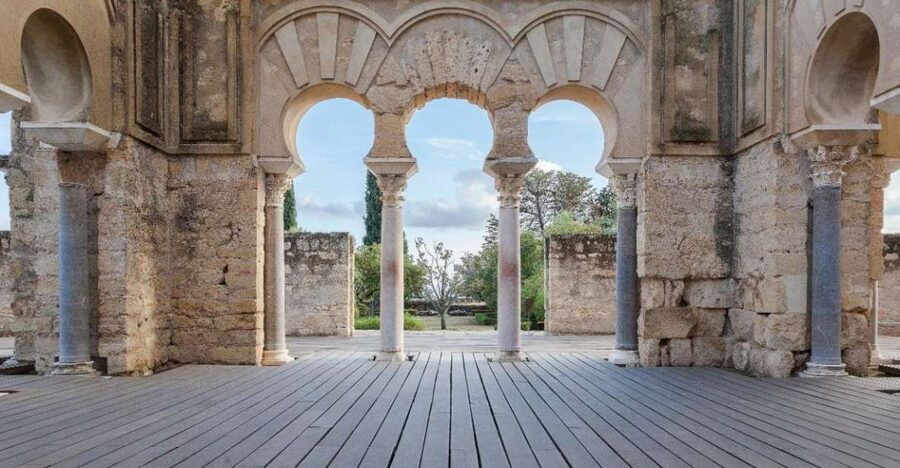
Medina Azahara is not just another ruined palace. It was a planned palace-city built for the Umayyad caliphate, and its terraces, gates, and surviving walls let you picture Córdoba at the height of Al-Andalus. This three-hour visit with an archaeologist guide gives the stones a useful voice.
I especially like the choice of round-trip transport from Córdoba and the focus on key buildings such as the House of Ja’far and the Salón Rico. The headsets and opening 3D video can also make the site easier to follow. The main catch is that the tour is conducted in Spanish, and the meeting time can change, so check the final details carefully.
Key things to know before you book
- The palace-city sits 8 kilometers from Córdoba, so transport matters if you do not have a car.
- A 15-minute air-conditioned bus ride connects Córdoba with the Medina Azahara Visitor Center when you choose the transport option.
- The archaeological guide is the main attraction, with guides including Sergio and Cristina praised for clear and engaging explanations.
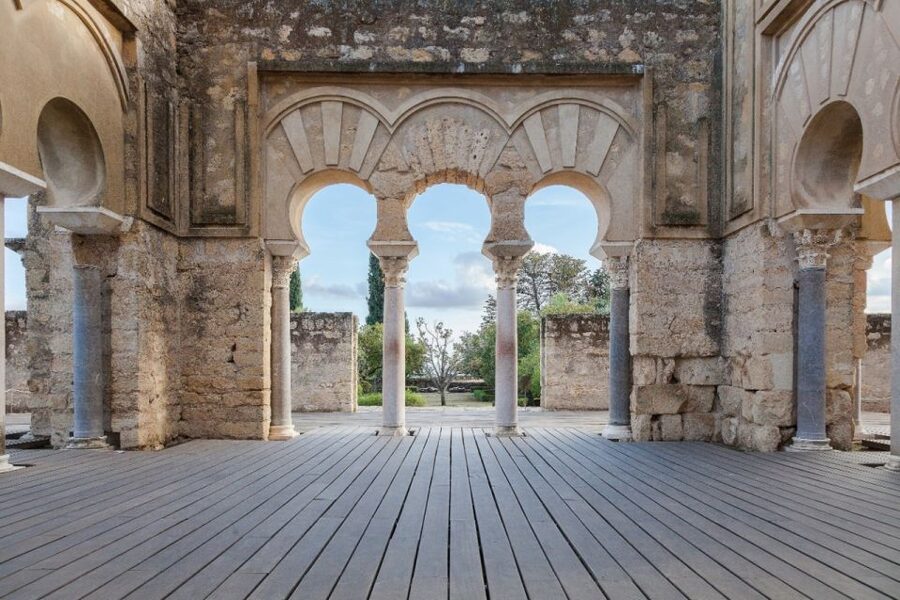
- The tour covers major remains, including the House of Ja’far, the Pórtico, and the exterior of the Salón Rico.
- The tour lasts three hours, including the transfer and guided visits, so allow enough time in your day.
- The tour is in Spanish, an important point for anyone who does not understand the language comfortably.
Why Medina Azahara deserves your time
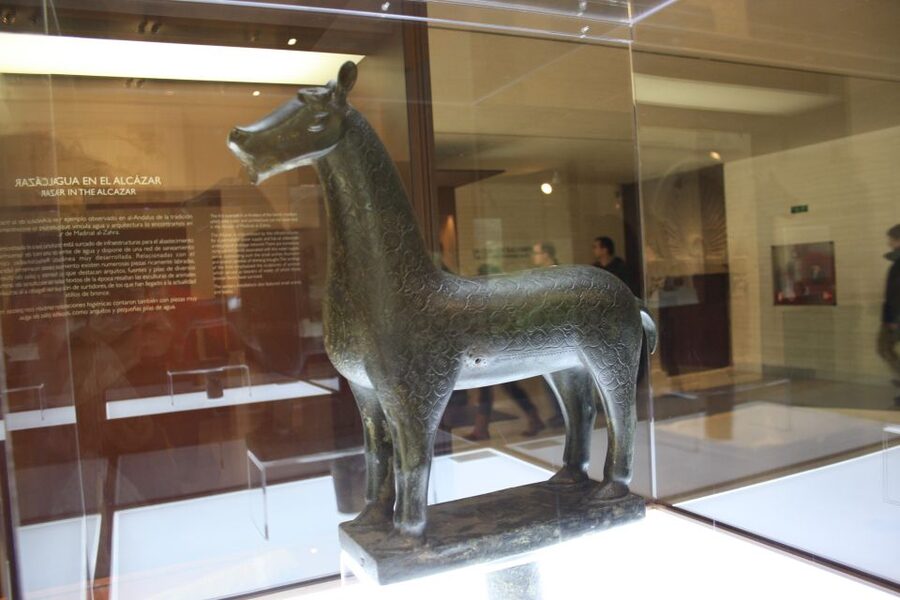
Córdoba’s Mezquita gets most of the attention, but Medina Azahara explains the political power behind the city’s golden age. The palace-city was created by the first Umayyad caliph of Al-Andalus, Abderraman III, also written as Abd-ar-Rahman III in some references.
This was not a single country house or a small royal retreat. It was a large court complex built to project authority. The remains now look quiet and stripped down, but the layout still gives you a sense of ceremony and rank. Buildings occupied different levels, and the surviving walls hint at a carefully ordered world where access depended on your place in the court.
I like visiting archaeological sites with a guide because bare stone can be hard to read. A trained guide can point out where a room once fitted into a larger plan, explain who used it, and connect the remains to the caliphate that ruled much of Al-Andalus.
That context is the real value of this tour. You are not simply walking through old foundations and taking photographs. You are learning why the complex was built, how it related to the Umayyad caliph, and what its buildings tell you about medieval Córdoba.
More of the Mosque-Cathedral in Cordoba:
- Córdoba: Skip-the-Ticket-Line Mosque-Cathedral Guided Tour
★ 4.6 · 9,634 reviews - Cordoba Mosque-Cathedral: Skip-the-Line Guided Tour
★ 4.7 · 6,610 reviews - Cordoba: Mosque-Cathedral E-Ticket with Audio Guide
★ 4.1 · 2,124 reviews
Leaving Córdoba for the Visitor Center
You can begin at one of two listed pickup points near Glorieta Cruz Roja or on Carretera Palma del Río. If you select the transport option, the trip to the Visitor Center takes about 15 minutes by air-conditioned bus or coach.
That short ride is useful for two reasons. First, it removes the need to arrange your own transport to a site outside the city. Second, it keeps the visit simple if you are staying in central Córdoba and do not want to rent a car or work out the route yourself.
The transport option is not included with every booking, so check which version you are selecting. If you book without transport, you must drive yourself to the Visitor Center. The site is about 8 kilometers from Córdoba, and the guide meets you there rather than at the city pickup point.
I would treat this as an important booking decision, not a minor extra. A low-cost tour can become less convenient if you choose the no-transport option without a car. The tourist bus should be booked ahead if you need it.
Getting your bearings at the Visitor Center
The Visitor Center is the first major stop after the transfer. This is where you begin the guided introduction before continuing into the archaeological site.
The opening 3D video is a useful touch. A ruined palace-city can be difficult to picture from foundations alone, so a visual reconstruction helps you understand the scale and shape of what once stood here. It gives you a mental map before the walking portion begins.
This introduction also prepares you for the guide’s explanations. Instead of seeing separate walls and columns, you can start to understand how the palace buildings related to each other. That is especially helpful if you have little background on Abderraman III or the Umayyad period.
The tour uses headsets, according to the experience details and visitor feedback. I consider that a practical advantage. Archaeological sites can be spread out, and clear audio means you are less likely to miss an explanation while looking at a distant building or moving with the group.
Walking through the Medina Azahara ruins
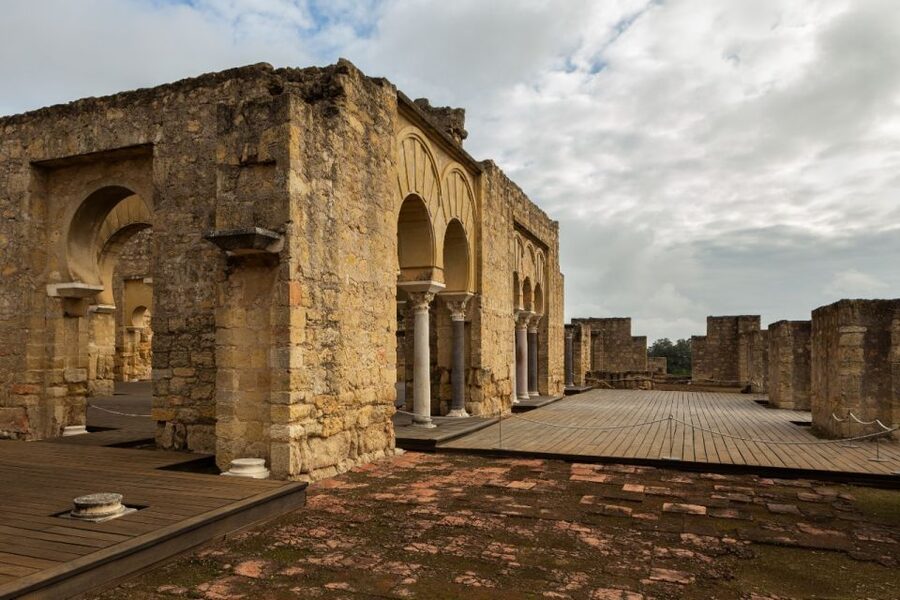
The guided visit continues into Medina Azahara itself. The complex is large, and the tour focuses on the most important surviving areas rather than trying to cover every stone.
Your guide will help you read the site as a palace-city. Look for changes in level, formal entrances, and the remains of buildings that once had distinct roles. The archaeological setting is not polished into a complete reconstruction, which is part of its appeal. You see the original remains and use the guide’s explanation to fill in what time has removed.
This kind of visit rewards patience. The grand effect comes from the overall plan as much as from any single wall. I would resist rushing from one photo stop to the next. Pay attention when the guide explains how a building fitted into the caliphal complex, since that broader plan is what makes the ruins meaningful.
The tour is three hours long, but that does not mean three hours inside the ruins without a break or transition. The time includes the Visitor Center and, if selected, the trip from Córdoba. Still, it gives you a solid visit rather than a quick look.
A few more Cordoba half-days worth comparing
- Córdoba Mosque, Jewish Quarter and Alcázar 3-Hour Tour
★ 4.7 · 292 reviews - Ibiza Ocean Club Boat Party with 3 Hours Premium Drinks and DJ
★ 4.5 · 1,473 reviews - Barcelona 3-hour Bike or E-Bike Tour: Highlights and Hidden Gems
★ 5.0 · 1,429 reviews - Best of Madrid: 3-Hour Guided Bike Tour in Small Groups
★ 4.8 · 1,417 reviews
The House of Ja’far and its earlier foundations
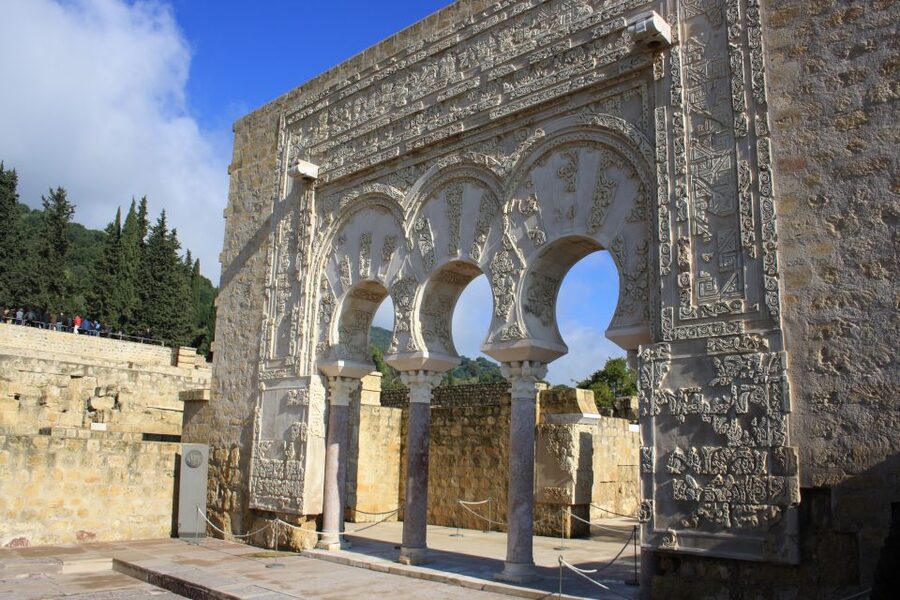
One of the most interesting stops is the large House of Ja’far. It was built over the site of three earlier houses, a detail that helps show how the palace-city changed over time.
That layering matters. Medieval royal complexes were not always created in one clean stage. Important buildings could be altered, expanded, or rebuilt as the court’s needs changed. The House of Ja’far gives the guide a chance to explain that process through the archaeology itself.
You will get more from this stop if you listen for the relationship between the earlier houses and the later structure. The point is not only that three buildings once stood there. It is that the site preserves evidence of changing plans and changing use.
This is also where an archaeologist guide can make a clear difference. A general sightseeing guide may tell you that the house is important. An archaeological specialist can direct your attention to the building phases and explain why those layers matter.
The Pórtico and the approach to power
The remains of the Pórtico de Medina Azahara are another central part of the tour. A portico is not just decoration. It shapes how people approach a building and how a formal space is experienced.
At a palace complex, entrances and covered passages help create ceremony. They guide movement and mark the transition from one part of the court to another. Even in ruin, the Pórtico helps you sense that this was a place designed for presentation and power.
This is a good point to let the guide set the scene. The Umayyad caliphate used architecture to show order and authority, and the Pórtico fits into that wider idea. You are looking at remains, but you are also looking at how a ruler controlled movement and created an impressive arrival.
The value here is interpretive rather than visual alone. If you prefer only intact monuments, Medina Azahara may feel fragmentary. If you enjoy understanding how an archaeological site worked, this stop should be one of the most rewarding.
The exterior of the Salón Rico
The Salón Rico is closely linked with the caliph Abd-ar-Rahman III, who received visitors there. The tour visits the exterior, not the interior, so you should set your expectations accordingly.
That limitation is worth noting. The name suggests a richly finished ceremonial room, but this experience does not promise an interior visit. You will instead examine the outside and hear how the space functioned within the palace-city.
Even from the exterior, the building helps explain the role of ceremony in the caliphate. Receiving important visitors was not a casual act. The setting, approach, and architecture all helped communicate the ruler’s position.
I would pay close attention to the guide here, since the story of the room is more important than a quick photograph. Cristina and Sergio are among the guides specifically praised for their explanations, though the guide on your departure may be different. The experience is in Spanish, so you should be comfortable following a spoken tour in that language.
What the guides add
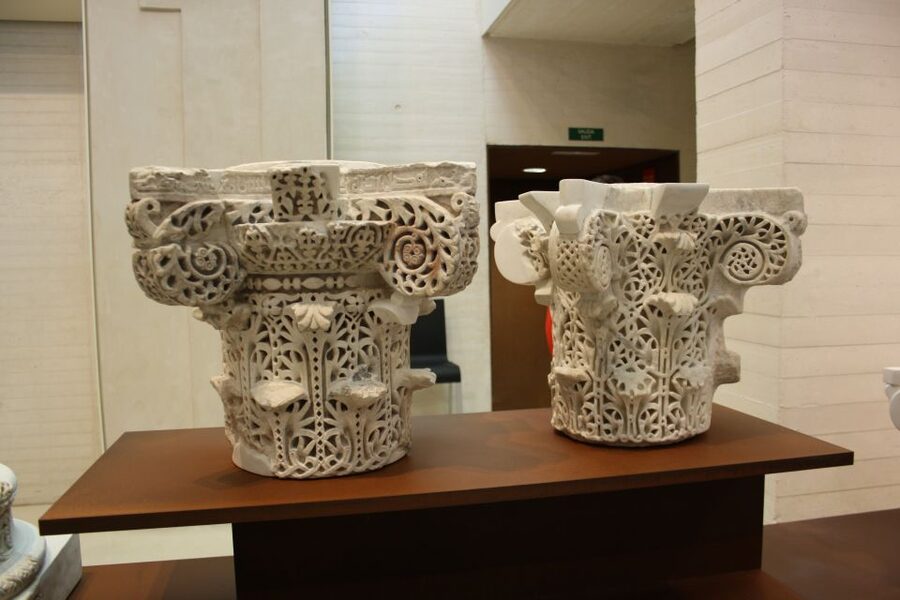
The archaeological guide is the central reason to choose this experience instead of visiting independently. Medina Azahara has enough remains to reward a self-guided walk, but the layout and building phases are not always obvious.
A good guide can turn a foundation into a room, a passage into a formal route, and a surviving wall into evidence of a larger building. That kind of help saves you from guessing at every feature.
The available feedback gives two useful names: Sergio is praised for interesting explanations, while Cristina is described as prepared, competent, and friendly. You should not assume that either guide will lead every departure, but their praise shows the level of guiding this experience aims for.
The headsets also matter. If you have ever stood at the back of a group trying to hear a guide over wind or movement, you know why audio equipment is useful. The opening 3D video adds another layer by showing the site in a form that the surviving ruins cannot provide on their own.
Is $19 a fair price?
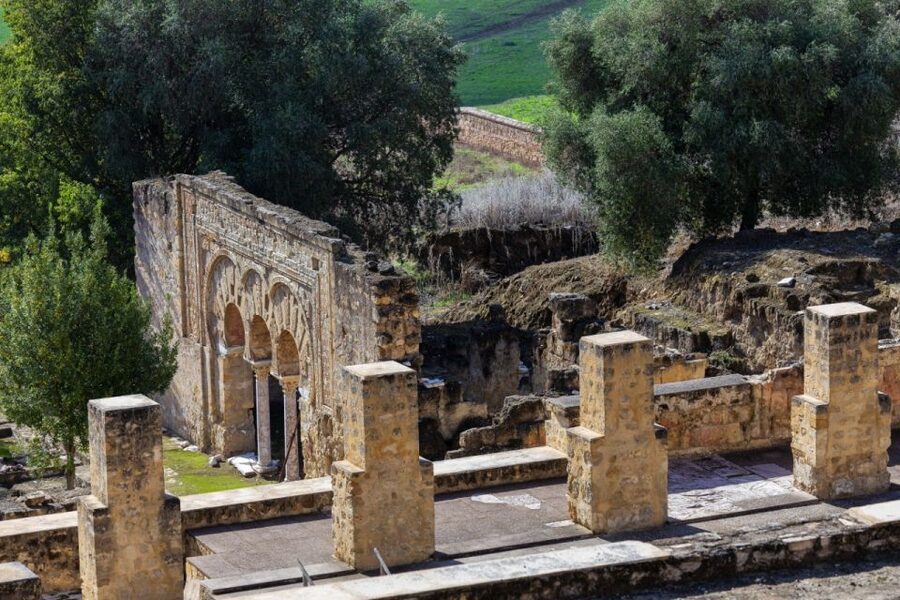
At $19 per person, the tour is reasonably priced for a three-hour guided visit that includes the entrance ticket. If you add the round-trip shuttle from Córdoba, the value improves for anyone without a car because you are paying for both access and interpretation.
The price is less compelling if you already have transport, speak Spanish well, and prefer to explore at your own pace. In that case, the main thing you are buying is the guide’s archaeological explanation and the organized entry.
I see the tour as good value for first-time visitors who want the site explained without spending a full day on it. The combination of transport, admission, an archaeological guide, audio equipment, and the Visitor Center presentation gives you a clear three-hour plan.
Food and drink are not included. Bring what you need for the outing, but leave large bags and luggage behind, since those are not allowed.
Who should book this tour?
I would recommend it to you if you are staying in Córdoba, want a short half-day activity, and prefer not to arrange transport yourself. It also suits anyone who wants historical and archaeological context rather than a silent walk among ruins.
Spanish speakers will get the most from the live commentary. If you do not understand Spanish, check the language situation carefully before booking, because the listed guide language is Spanish.
The tour is also a good fit for travelers with a strong interest in the Umayyad caliphate, medieval architecture, and the development of Al-Andalus. The House of Ja’far and Salón Rico are not just isolated sights. They are clues to how the court was built and used.
I would be more cautious if your schedule is tight. The experience has a fixed three-hour duration, transport may involve pickup and drop-off changes, and one recent booking complaint concerned a changed start time and poor communication. Confirm the final meeting details before you set up the rest of your day.
Practical advice for a smoother visit
Choose the transport option unless you have a car and are comfortable reaching the site yourself. Without transport, the guide meets you at the Medina Visitor Center, not at the Córdoba pickup points.
Bring your passport or ID card. Pets, luggage, and large bags are not allowed, so pack lightly.
Check the meeting point and starting time after booking. The listed pickup locations include Glorieta Cruz Roja and Carretera Palma del Río, but the exact point depends on the option you choose.
I would also keep the rest of your day flexible. The tour normally lasts three hours, but transport and meeting arrangements are important parts of the experience. The operator allows cancellation up to 24 hours before departure for a full refund, and the reserve-now, pay-later option gives you some added flexibility.
Should you book the Medina Azahara tour?
Book it if you want an affordable, focused introduction to one of Córdoba’s most important archaeological sites and prefer having the palace-city explained in Spanish. The guide, headsets, 3D introduction, and optional shuttle make the experience easier than arranging everything yourself.
Skip it if you need an English-language tour, want to see the interior of the Salón Rico, or prefer complete independence. For the right visitor, though, $19 is a sensible way to connect Córdoba’s medieval power with the remains of the city that expressed it.
FAQ
How long does the Medina Azahara tour last?
The tour lasts three hours.
Where does the tour begin?
There are two possible starting locations, Glorieta Cruz Roja and Carretera Palma del Río, 4P. The exact meeting point depends on the option you book.
Is transport from Córdoba included?
Round-trip shuttle transport from Córdoba is included only if you select the transport option. Without it, you travel in your own car and meet the guide at the Medina Visitor Center.
How far is Medina Azahara from Córdoba?
The archaeological site is about 8 kilometers from Córdoba.
How long is the transfer from Córdoba?
The bus or coach journey takes about 15 minutes.
What language is the tour conducted in?
The live tour guide speaks Spanish.
Which parts of Medina Azahara does the tour visit?
The tour includes the House of Ja’far, the Pórtico de Medina Azahara, and the exterior of the Salón Rico. It also includes a guided visit at the Medina Azahara Visitor Center.
What should I bring?
Bring your passport or ID card. Pets, luggage, and large bags are not allowed.
Recently added around Cordoba
- Sights, Sounds, and Scents of Córdoba’s Patios★ 4.4 · 109 reviews
- Medina Azahara Guided Tour at Night★ 4.6 · 142 reviews
- From Malaga and Costa Del Sol: Cordoba Day Trip★ 4.6 · 212 reviews
- From Malaga: Cordoba Day Trip and Mosque-Cathedral★ 4.5 · 563 reviews
- From Costa del Sol & Malaga: Cordoba Guided Day Tour★ 4.1 · 231 reviews
- Cordoba: Half-Day Medina Azahara Guided Tour★ 4.6 · 288 reviews
- Cordóba: Gardens & Fortress of Catholic Monarchs Guided Tour★ 4.3 · 336 reviews
- Córdoba: Tablao Flamenco at Doble de Cepa with Optional Meal★ 4.4 · 197 reviews
Mezquita Tours, compared.
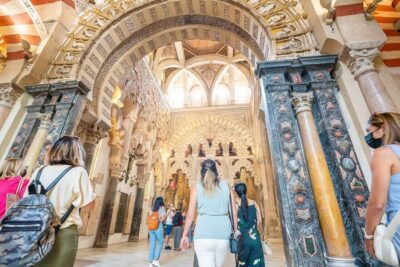
Skip-the-Ticket-Line Mosque-Cathedral Guided Tour
Read our review →
Cordoba Mosque-Cathedral: Skip-the-Line Guided Tour
Read our review →
Skip-the-Line Great Mosque-Cathedral History Tour
Read our review →
Mosque-Cathedral of Córdoba Guided Tour with Tickets
Read our review →
Mosque-Cathedral, Jewish Quarter and Alcázar Tour
Read our review →
Cordoba & Carmona with Mezquita, Synagoge & Patios from Seville
Read our review →
Jewish Quarter and Mosque-Cathedral Guided Tour
Read our review →Browse the lists this tour appears in