
Reviewed · ALHAMBRA TOURS
Granada: Alhambra Complex Guided Tour with Ticket
The Alhambra is not just one palace. It is a hilltop town, fortress, royal retreat, garden complex, and museum rolled into one. This three-hour guided visit takes you through the Nasrid Palaces, Generalife, Alcazaba, and Carlos V Palace, giving the site a clear shape instead of leaving you to wander through beautiful rooms without knowing what you are seeing.
I like that the ticket is included and that the guide meets you at the Access Pavilion, so you can avoid the long ticket queues. I also like the human touch: guides such as Luis, Amelia, Cynthia, Rocio, and Estrella are praised for mixing facts with stories, humor, and practical crowd management. The main drawback is the pace. The Alhambra can be crowded and hot, and three hours may feel short when you want to linger.
Key points before you book
- Four major areas in one tour: Visit the Nasrid Palaces, Generalife gardens, Alcazaba fortress, and Carlos V Palace.
- Tickets and headphones included: You receive your entrance ticket from the guide and use a listening device during the walk.
- Meet at the orange umbrella: The meeting point is the Access Pavilion, beside the poster marked Guides.
- Excellent guide feedback: Luis, Amelia, Cynthia, Rocio, and Estrella are among the guides praised for clear explanations, humor, and steady group handling.
- Expect a demanding walk: The site is large, crowded, and not suitable for wheelchair users or people with mobility impairments.
- Bring your passport or ID: The Alhambra requires identification, and participant details must be supplied when booking.
Why the Alhambra needs a guide
The Alhambra can look simple on a map, but it is not a simple place. You move between palace rooms, gardens, military towers, courtyards, ruins, and later additions built after the Christian conquest. Without context, it is easy to admire the tiles and fountains while missing the political and social story behind them.
A good guide helps you connect the pieces. You learn how the Nasrid rulers used the site, how the royal family spent time at Generalife, why the Alcazaba was built for soldiers, and how Carlos V’s palace belongs to a later chapter of Granada’s past.
That context is the strongest reason to pay $60 for this experience. You are not paying only for entry. You are paying for a planned route through one of Spain’s most visited monuments, a guide who can explain what you are looking at, and a ticket arranged for the correct entrance time.
The guide also helps with the practical problem of moving through crowds. Estrella was praised for guiding a group through a packed complex without losing her humor, while Rocio was valued for managing both time and space. That matters here. A guide who keeps everyone together can make the difference between a calm visit and a tiring series of wrong turns.
More ways to get into the Alhambra:
- Granada: Alhambra & Nasrid Palaces Tour with Tickets
★ 4.7 · 19,801 reviews - Granada: Alhambra and Nasrid Palaces Entry Ticket
★ 4.6 · 15,130 reviews - Granada: Alhambra & Generalife Fast-Track Guided Tour
★ 4.7 · 8,313 reviews
Meeting at the Access Pavilion
The meeting point is the Access Pavilion of the Alhambra. Look for the orange umbrella and the poster marked Guides. This is not a city-center meeting point, and the tour does not include hotel pickup or drop-off, so you need to make your own way to the Alhambra before the fixed start time.
Arrive early. The instructions are firm: the guide will not wait for late arrivals. You receive your entrance ticket from the guide before the tour begins, so being late can affect more than just the first few minutes of the visit.
Bring the same passport or ID card used when booking. The complex requires identification at entry, and the booking process asks for each participant’s name, surname, passport or ID number, nationality, and age. This is easy to overlook, but it is one of the most important details in the whole arrangement.
The guide may use a small listening device with headphones. This is useful in crowded rooms, although one headphone and the surrounding noise can make listening harder at times. If you have your own noise-canceling AirPod, one useful approach is to use it in your free ear, while keeping the tour headphone in the other.
Generalife gardens and the royal retreat
Generalife is the gentle beginning to the Alhambra story. This was the royal family’s country retreat, a place for rest, water, plants, shade, and views across Granada. The gardens give you a break from the heavy stone of the fortress and the formal grandeur of the palaces.
Expect fountains, planted terraces, walkways, and carefully arranged water channels. The appeal is not only visual. Generalife shows how the Nasrid rulers shaped comfort and privacy into the design of a royal residence.
The guide helps explain why the gardens mattered. They were not simply decoration. Water, shade, and enclosed spaces created a cooler place away from court business and military duties. The gardens also make it easier to picture the Alhambra as a living royal complex rather than a collection of empty monuments.
This part can be crowded, especially during busy periods. One four-star account described moving quickly through Generalife because so many people were there, with the pace becoming more relaxed later. That is worth knowing if you want long pauses for photographs. The guide has to keep the group moving, and you may not get as much quiet garden time as you would on an independent visit.
Still, Generalife is one of the places where a guide’s explanation adds real value. Amelia was praised for turning the visit into a lively history lesson, while other guides brought in local stories and legends without making the tour feel like a dry lecture.
The Nasrid Palaces and the art of royal display
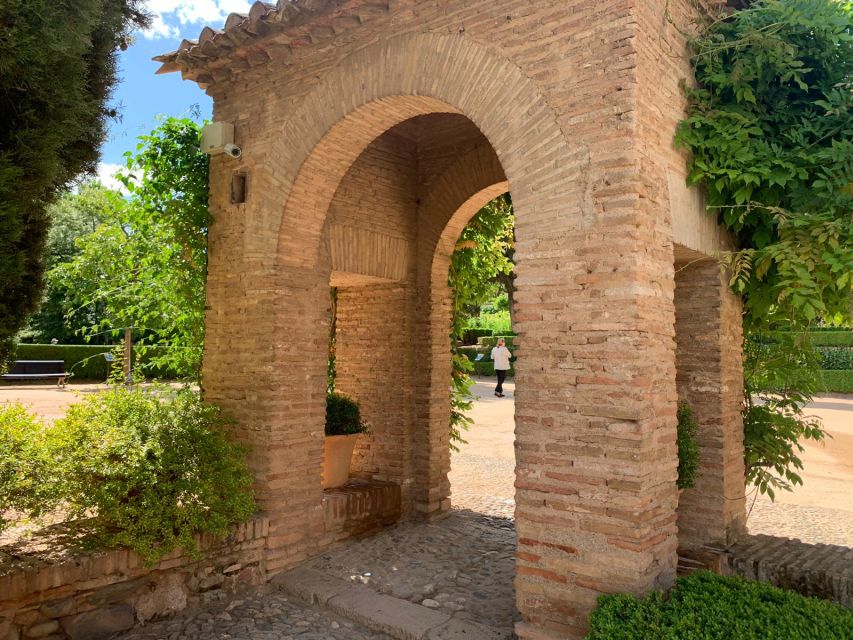
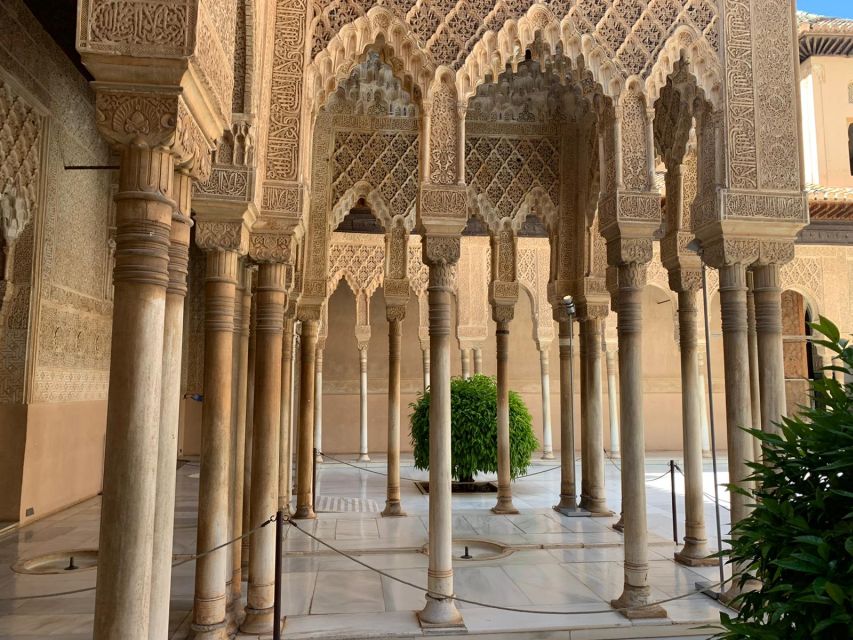
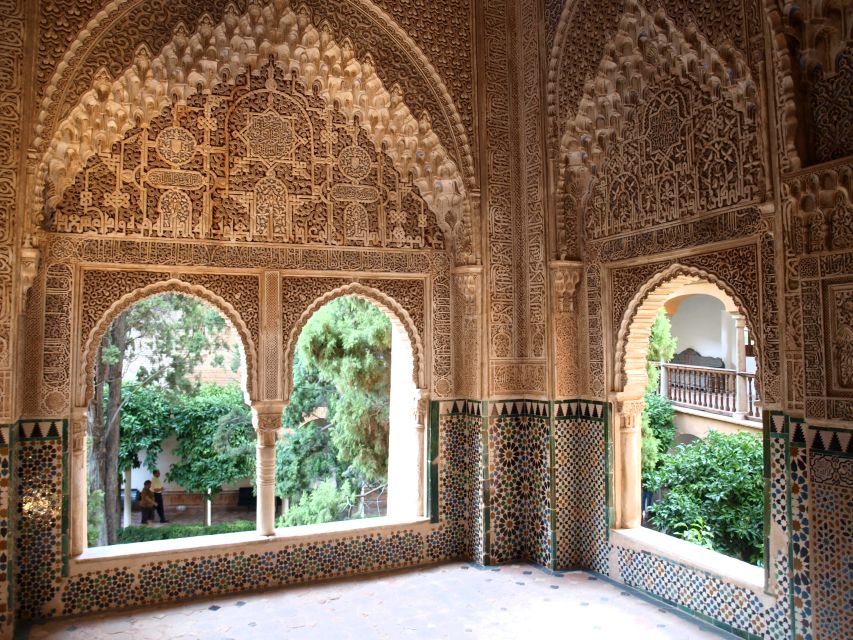
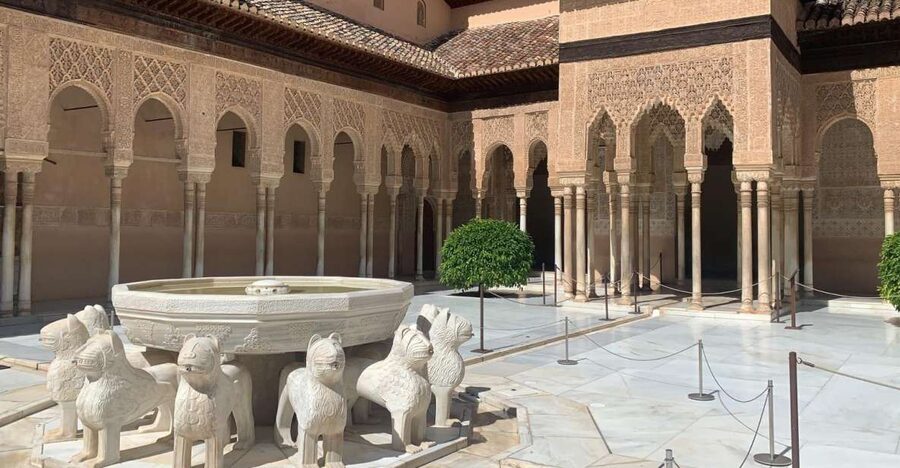
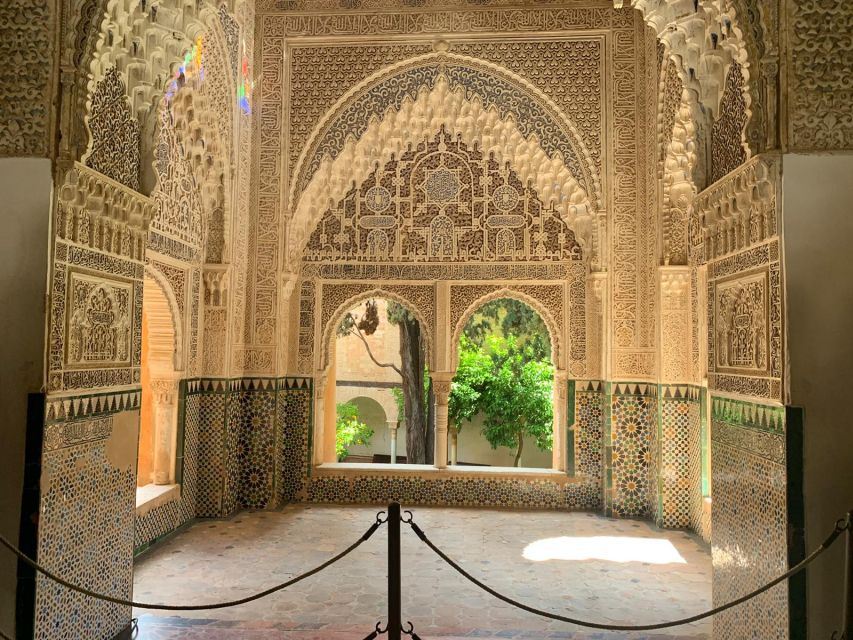
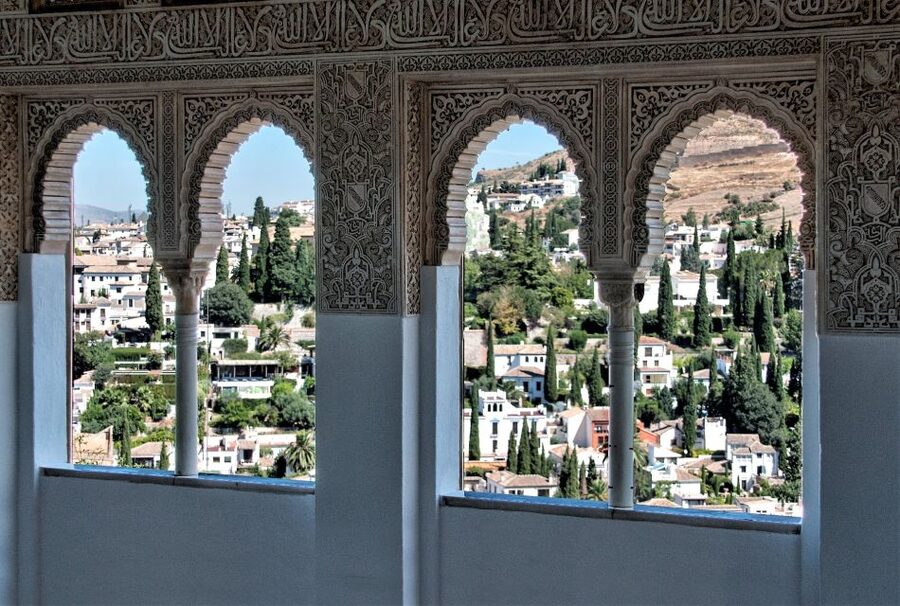
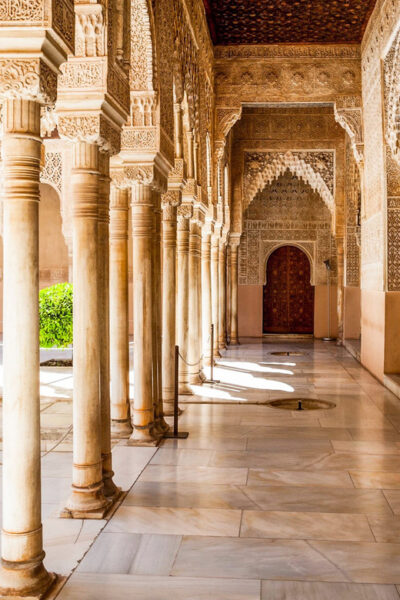
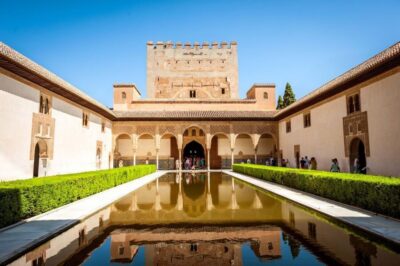
The Nasrid Palaces are the heart of the visit. Here, the Alhambra becomes more intimate. Instead of broad military walls and open gardens, you find courtyards, carved plaster, patterned tiles, inscriptions, pools, and carefully controlled views.
The rooms are famous for their beauty, but it helps to look beyond the surface. The decoration reflects the power of the Nasrid rulers, their faith, their taste, and their desire to create a world set apart from ordinary life. Water and light are used with great care. A small courtyard can feel larger because of reflection, symmetry, and the way one room leads into another.
Your guide should help you read those details. The strongest feedback about this tour centers on explanations that connect architecture with society, construction, and daily life. One guide was praised for explaining building methods and how the Alhambra may have looked in its original setting, while another mixed historical facts with stories that made the palace easier to remember.
The rooms can be crowded and noisy. You may need to listen through the provided headphones while groups pass nearby. The guide may pause in a position where everyone can hear, but you should not expect a private, silent palace experience.
The timed entry system also shapes the visit. The Nasrid Palaces are among the most restricted areas of the Alhambra, and the group must follow the assigned schedule. That is one reason the included ticket is useful. You are not simply buying admission and hoping to sort out the most important section later.
A few more Granada half-days worth comparing
- Granada: Alhambra & Gardens Tour w/Nasrid Palaces Option
★ 4.5 · 6,437 reviews - Granada: Alhambra Entry Ticket with Audio Guide
★ 4.1 · 5,950 reviews - Granada: Flamenco Show in La Alboreá
★ 4.7 · 5,423 reviews - Fast-Track Alhambra & Nasrid Palaces Guided Tour
★ 4.7 · 4,379 reviews
The Alcazaba and the soldier’s view
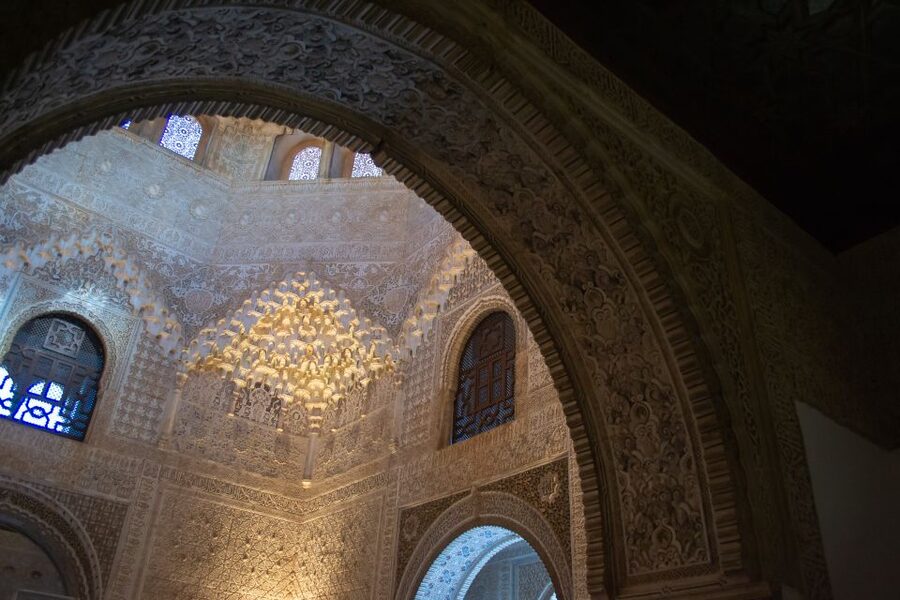
The Alcazaba is the oldest military section of the complex and gives the tour a harder edge. Here you walk among walls, towers, courtyards, and the remains of the settlement that once supported the fortress.
The tour information describes a former medina that held about 3,000 people. That detail helps you picture the Alhambra as a working community, not only a palace for rulers. Soldiers, craftsmen, servants, and other residents needed homes, supplies, and a system of protection.
Climbing the towers gives you a different view of Granada and the surrounding area. The experience is less polished than the palace interiors, but that is part of its appeal. You begin to understand the site’s defensive purpose and the daily life of an elite soldier.
This section also makes the physical demands of the tour clear. There is walking, standing, and climbing, and the entire complex covers a large area. Wear good shoes, bring water, and use sunscreen in warm weather. A previous visitor’s practical advice was simple: you will be tired at the end, so do not treat this as a quick stroll between photo stops.
The Alcazaba may appeal most to visitors who want military and urban context, not just decorative rooms. If your main aim is gardens and palace interiors, the fortress may feel more strenuous. If you want to understand why the Alhambra was built where it was, it is essential.
Carlos V Palace and the later chapter
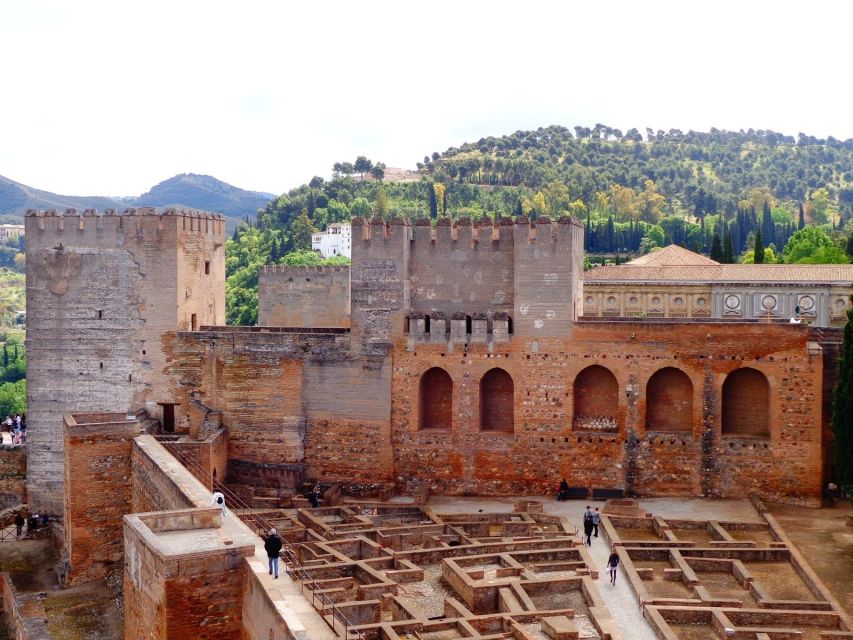
Carlos V Palace provides a sharp contrast with the Nasrid buildings. Its Renaissance design reflects the Christian rulers who took control of Granada and later built their own palace within the Alhambra complex.
The change in style is part of the lesson. The Alhambra did not stop evolving when the Nasrid kingdom ended. The palace shows how later rulers used the site, reshaped it, and added their own architectural message.
The circular courtyard and monumental exterior feel very different from the intimate Nasrid courtyards. A guide can help you understand this contrast instead of treating the building as an unrelated stop. It is a reminder that the Alhambra carries several centuries of change in one compact setting.
The Carlos V Palace is also a useful visual pause after the detailed decoration of the Nasrid Palaces. You move from delicate surfaces and water-focused courtyards to a building with a more formal Renaissance character. Even if you prefer the older palace, the comparison makes both styles easier to appreciate.
Three hours, group size, and guide quality
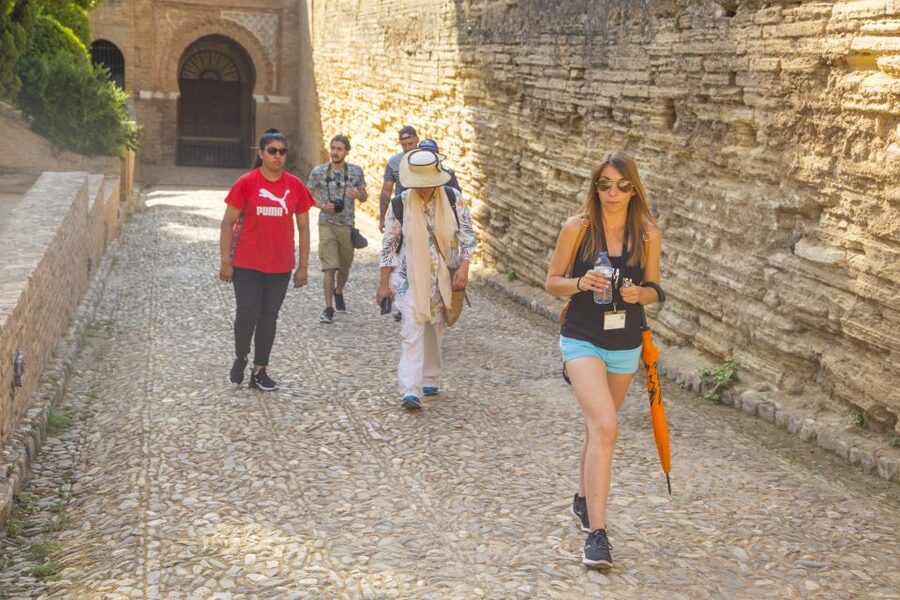
The advertised duration is three hours. That is enough to cover the main parts of the complex, but not enough to inspect every corner at leisure. Think of the tour as a well-organized introduction to the Alhambra, not a slow archaeological study.
Group size can affect the feel of the visit. Several experiences were described as small groups, including one with only six people and another with seven. Small groups make it easier to ask questions, hear the guide, and move through narrow or crowded spaces. They also allow a guide to give more individual attention.
The group may be larger on your date. The information provided does not promise a fixed maximum, so you should not book this expecting a private tour. Even so, the guide system and planned route help keep the visit workable.
Guide quality is a major part of the value. Luis is praised for adding humor and placing historical facts in context. Amelia is described as warm, enthusiastic, and especially strong at making the subject enjoyable. Cynthia is praised for presenting a complicated place in simple terms, while Estrella and Rocio receive credit for keeping groups moving through busy areas.
Language options are English, Spanish, and French. Most of the English feedback is highly positive, though a few visitors found pronunciation or intonation difficult to follow. If you are not comfortable with the selected language, ask about this before booking. The headphones help, but they cannot solve every listening problem in a noisy courtyard.
What $60 gets you
At $60 per person, this is not the cheapest way to enter the Alhambra. The value depends on how much help you want with the site’s layout, entry procedure, and historical background.
The ticket is included, and the tour covers all four major areas listed: the Nasrid Palaces, Generalife, Alcazaba, and Carlos V Palace. You also receive a guide and headphones. Since Alhambra entry is tightly controlled and the site is easy to misunderstand without context, those additions have practical value.
I would consider the price fair for a first visit, especially if you have only a short stay in Granada. One visitor booked the tour specifically for a two-day visit and found that the three hours passed quickly. That is the right way to think about it: you pay for a clear, guided introduction that helps you use limited time well.
The price is less appealing if you prefer to set your own pace, sit quietly in the gardens, or spend a long time taking photographs. The guide must keep to the schedule and move the group through crowded areas. Independent visitors may gain more freedom, but they also take on the work of arranging entry and interpreting the complex for themselves.
Practical comfort and accessibility
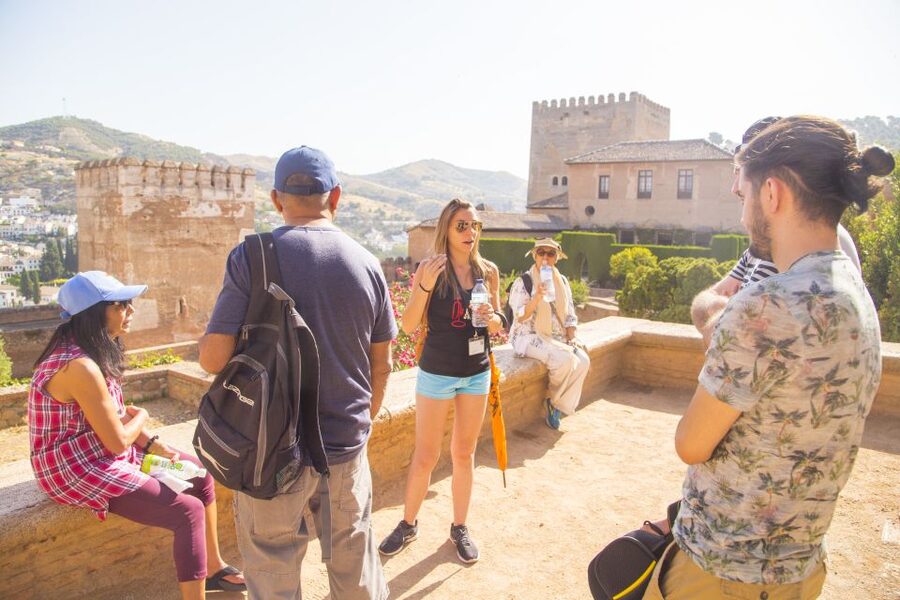
Wear supportive walking shoes. The route includes long stretches across the complex and may involve slopes, steps, and tower climbs. The tour is not suitable for wheelchair users or people with mobility impairments.
Carry water and sunscreen, especially in summer. Feedback describes hot conditions, and there is not always a comfortable place to pause when the group needs to keep moving. Weather can change the feel of the experience, too. Even in poor weather, the buildings remain impressive, but wet or cold conditions can make the outdoor sections less pleasant.
Food and drinks are not included. Plan to eat before or after the tour rather than expecting a meal break during the three hours. Bathroom breaks may be possible when the group schedule allows, but you should not assume frequent stops.
Cancellation is limited: you can cancel up to 24 hours in advance for a 60 percent refund. Check the available start times before booking, since the tour runs at fixed times and late arrivals are not held.
Who should book this Alhambra tour?
This tour suits you best if it is your first visit to Granada, you want the major Alhambra sights in one morning or afternoon, or you prefer a guide to explain the site as you walk. It is also a good fit if you worry about missing the Nasrid Palaces or wasting time in entry lines.
You will likely appreciate it if you enjoy history presented through stories, architecture, and daily life rather than a list of dates. The best guides on this tour appear to combine facts with humor and legends, which keeps three hours from feeling like a classroom session.
I would hesitate if you have mobility limits, dislike group schedules, or want to linger alone in the gardens. The crowds can be heavy, the pace may be brisk in Generalife, and the listening equipment is not perfect in noisy places.
Should you book it?
Book this tour if you want the Alhambra’s main sections explained in one organized visit and you value having the entrance ticket handled for you. At $60, it is a sensible spend for a first-time visitor who has limited time in Granada.
Skip it if you already know the complex well, need a slow photography visit, or cannot manage a substantial amount of walking and standing. For most first-time visitors who can keep up with the route, the combination of the Nasrid Palaces, Generalife, Alcazaba, and Carlos V Palace makes this a strong introduction to the Alhambra.
FAQ
How long does the Alhambra guided tour last?
The tour lasts three hours. It covers the Nasrid Palaces, Generalife, Alcazaba, and Carlos V Palace.
What is included in the $60 price?
The price includes a skip-the-line ticket for the Alhambra complex, a live tour guide, and headphones. Food, drinks, hotel pickup, and hotel drop-off are not included.
Where do I meet the guide?
Meet at the Access Pavilion of the Alhambra. Look for the orange umbrella and the poster marked Guides.
Which languages are available?
The tour is available with a live guide in English, Spanish, or French.
Do I need to bring identification?
Yes. Bring your passport or ID card. The Alhambra requires identification for entry, and you must provide each participant’s name, passport or ID number, nationality, and age when booking.
Is the tour suitable for wheelchair users?
No. The tour is not suitable for wheelchair users or people with mobility impairments. It includes extensive walking around the Alhambra complex.
Recently added around Granada
- Canyoning Adventure Rio Verde in Granada★ 5.0 · 136 reviews
- Granada: Alhambra and Nasrid Palaces Private Tour★ 4.9 · 242 reviews
- Granada: Sacromonte Caves Flamenco Show with Dinner★ 4.4 · 156 reviews
- From Granada: Alpujarra Villages Guided Day Tour★ 4.8 · 217 reviews
- Malaga: Granada Day Trip with Alhambra, Palaces and Gardens★ 4.5 · 197 reviews
- From Granada: Alpujarra Mountain Villages Tour★ 4.7 · 298 reviews
- Granada: Traditional Flamenco Show at Tablao Casa Ana★ 4.8 · 390 reviews
- Granada: Historic Center and Lower Albaicin Walking Tour★ 4.7 · 136 reviews
Alhambra Tours, compared.


Alhambra & Gardens Tour w/Nasrid Palaces Option
Read our review →
Fast-Track Alhambra & Nasrid Palaces Guided Tour
Read our review →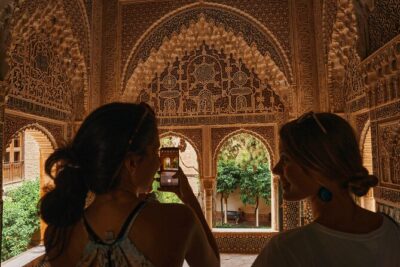
Skip The Line Alhambra and Generalife Guided Tour
Read our review →
Alhambra Ticket and Guided Tour with Nasrid Palaces
Read our review →Browse the lists this tour appears in